
Commerce nominee Wilbur Ross declares he is pro-trade, pro-union
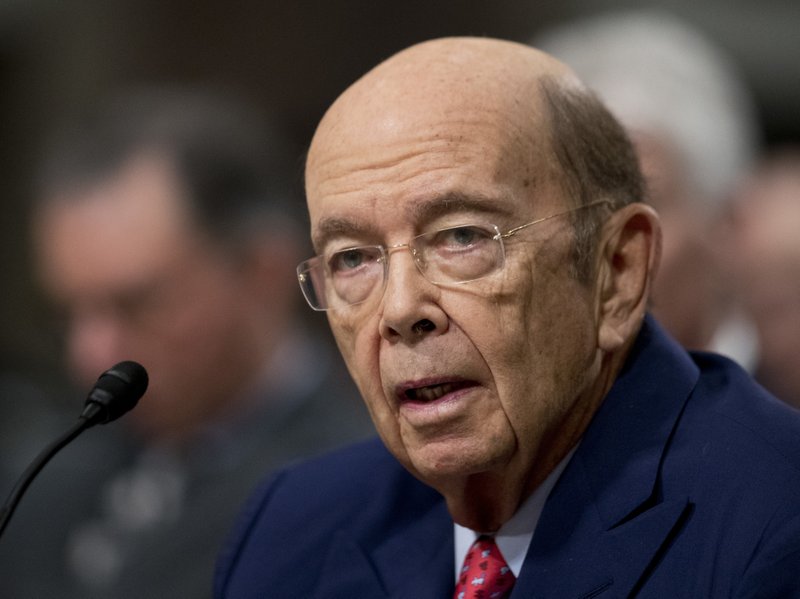
President-elect Donald Trump‘s pick for commerce secretary said Wednesday that he favors “sensible trade,” is pro-union and believes his vast business dealings have given experience fighting other countries’ unfair trade practices. Billionaire investor Wilbur Ross cited his relationship with the United Steelworkers Union, which has endorsed him for the Cabinet post, as proof that he will work to protect American jobs. “I’m pro-trade. But I’m pro-sensible trade, not trade that is detrimental to the American worker and to the domestic manufacturing base,” Ross told the Senate Commerce, Science and Transportation Committee. “I think I’ve probably had more direct experience than any prior cabinet nominee has had with unfair trade in the steel business, in the textile business, in the auto parts business and other sectors,” Ross said. Worth an estimated $2.9 billion, Ross has extensive business ties around the globe. Supporters say that makes him ideal to represent American business interests abroad. “I believe his extensive management experience in the private sector, and his understanding of the challenges faced by workers and businesses alike, will equip him well for the job of leading the Department of Commerce,” said Sen. John Thune, R-S.D., the committee chairman. During Ross’ hearing, Thune revealed that Ross had a household employee from 2009 to 2016 who could not provide documentation that he or she was in the U.S. legally. Ross said the employee provided a driver’s license and a Social Security number when hired. Ross said he rechecked the documentation for all of his household employees after he was nominated, and the employee could not provide it. Ross said the employee was fired. “We did the best that we thought we could do in order to verify the legality of the employment and it turned out that was incorrect,” Ross said. “But we did pay all the withholdings, so did that employee.” Such transgressions have derailed cabinet nominees in the past. But Sen. Bill Nelson of Florida, the top Democrat on the committee, questioned Ross only briefly about it. Trump has said Ross will play a big role in American trade policy. Trump’s views on trade are at odds with many congressional Republicans. He has pledged to re-negotiate existing trade deals and scrap a pending one with Asian countries. Ross said the North American Free Trade Agreement, involving the U.S., Canada and Mexico, “is logically the first thing for us to deal with.” “That will be a very, very early topic in this administration,” Ross added. The commerce secretary has several roles in promoting American business interests in the U.S. and abroad. The department works on trade issues, working to attract foreign investment in the U.S. The department also oversees agencies that manage fisheries, weather forecasting and the Census Bureau, which will conduct a census in 2020. Ross said he has unique experience at that agency; he was a census-taker while he attended business school. Unlike the president-elect, Ross has agreed to divorce himself from a vast financial empire. Ross has signed an ethics agreement with the Office of Government Ethics. In it, he agrees to divest from 40 different businesses and investments within 90 days of being confirmed. He agreed to divest from 40 more within 180 days. Among the businesses he will separate himself from is WL Ross & Co., the private equity firm he founded in 2000. Trump has had a run-in with the head of the ethics agency because he says he won’t completely divest himself from his business empire. Instead, Trump says he will turn control of his business over to his sons. Walter Shaub Jr., who directs the office, said Trump’s plan is insufficient to avoid conflicts of interest. Nelson praised Ross for divesting from most of his personal holdings. “I believe that’s the right thing to do and it tells me you’re committed to doing the job the right way by placing the public’s interests ahead of your own,” Nelson said. “It’s my hope that President-elect Trump will follow your lead and the example you set.” Republished with permission of The Associated Press.
A look at how Donald Trump might shake things up in Asia
Donald Trump has offered views on U.S. relations with Asia that could indicate radical shifts in long-standing policy toward the region. From opposing free trade agreements to confronting China and questioning Japan-South Korea alliances, he appears set to be charting a course far different from previous administrations. Yet, in other areas, including North Korea, India and Pakistan, Trump appears ready to carry forward well-established U.S. policy. As Trump prepares to be sworn-in as president on Friday, here is a look at some of the stand-out issues and how developments might play out: ___ TRADE Trump says he plans to scrap the 12-nation trade pact known as the Trans Pacific Partnership agreement, or TPP. The pact was the centerpiece of the Obama administration’s outreach policy to America’s Asian partners known as “the pivot,” which also involves a greater military commitment to the region. Obama said the TPP would allow the U.S. to impose higher labor, environmental and human-rights standards, as well as give U.S. businesses access to some of the fastest-growing economies. The deal would have slashed 18,000 taxes that other countries impose on American goods and services, but Congress failed to act amid skepticism from both Republicans and Democrats. Trump’s opposition to free-trade agreements has fueled fears of protectionism and puts him at odds not only with U.S. trading partners but also with many in the Republican Party. Killing the TPP may open the way for other regional free-trade initiatives, including those pushed by rival China. “With the U.S. withdrawing from TPP, Japan will have to redesign its external economic policy,” said Harukata Takenaka, politics professor at National Graduate Institute for Policy Studies. Other options “may not be easy,” Takenaka said. ___ CHINA Trump raised China in speech after speech during his campaign, at times accusing the country of ripping America off in trade and threatening a 45 percent tariff on all Chinese imports. Things turned far more serious after his election win when he took a phone call from the president of self-governing Taiwan, upending four decades of diplomatic protocol barring such direct contacts. Critics accused him of ignoring the “one-China policy,” long considered unassailable in China-U.S. relations, to which Trump responded by questioning why the U.S. should be bound by such an arrangement without economic incentives. He again touched on the issue in an interview with The Wall Street Journal published Friday, saying “everything is under negotiation, including ‘one China.’” While the Chinese government’s response was muted, the official China Daily newspaper said he was “playing with fire.” Trump has also criticized the Chinese military’s island-building program in the South China Sea, and accused it of blocking U.S. imports through high taxes and manipulating its currency to the detriment of American exports. ___ ALLIANCES WITH JAPAN AND SOUTH KOREA Trump raised eyebrows during the campaign when he appeared to question the inviolability of long-standing U.S. military alliances with Japan and South Korea, seen as bulwarks against North Korea’s military threats and China’s push for regional dominance. The two were included in a list of countries that Trump said he would be “respectfully asking … to pay more for the tremendous security we provide them.” During the campaign, Trump suggested Japan and South Korea should obtain nuclear weapons so the U.S. would no longer be burdened with the costs of defending them, a disquieting notion in many Asian capitals. But after Trump’s election win, Japan’s Shinzo Abe became the first foreign leader to meet with him, sitting down in Trump Tower with the business mogul and his daughter, Ivanka. Japan is concerned about how spill-over from China-U.S. conflicts might affect its economy and foreign relations, possibly compelling it to play a larger role in regional security, said Harukata Takenaka, politics professor at National Graduate Institute for Policy Studies. “Trump measures would be the top priority for Prime Minister Abe this year. The biggest question is that Trump is unpredictable,” he said. ___ NORTH KOREA’S NUCLEAR THREAT Trump’s approach to North Korea probably offers the least divergence from previous administrations, but he faces stark choices on countering North Korean leader Kim Jong Un‘s missile threat. After Kim, announced in his annual New Year’s address that the country had reached the “final stages” of developing an intercontinental ballistic missile, Trump responded by Twitter: “North Korea just stated that it is in the final stages of developing a nuclear weapon capable of reaching parts of the U.S. It won’t happen!” Trump has not said how his approach to the North might differ from Barack Obama‘s, although his campaign’s position paper talked of more “modern destroyers to counter the ballistic missile threat from Iran and North Korea.” That would appear to indicate continued support for deploying the advanced Terminal High-Altitude Area Defense, or THAAD, anti-missile system in South Korea, despite Chinese and Russian objections. Trump appears to be a firm believer that North Korea could be reined-in if only its sole significant ally China would tighten the screws. ___ INDIA AND PAKISTAN During the campaign, Trump was largely positive toward both India and Pakistan, even while he piled negative rhetoric on China and other nations. However, his threat to ban Muslims from entering the U.S. has raised accusations of Islamophobia. In the days after his win, Trump appeared to follow in the well-trodden path of seeking a balance between the nuclear rivals — albeit in his unorthodox style. A phone call between Trump and Pakistan’s prime minister was remarkable mainly for the effusive praise he reportedly lavished on the struggling state. Pakistan is a U.S. ally in the battle against Islamic extremism but is also close to U.S. rival in Asia, China. In its readout of that call, Pakistan said Trump described the country as “amazing” and expressed a desire to visit — something President Barack Obama did not do. India’s national security adviser followed the Pakistan exchange with a low-key visit to Washington to meet with a senior Trump aide in a sign of New Delhi’s desire to forge close ties
Terri Sewell hosts Obama trade chief Michael Froman for trade summit
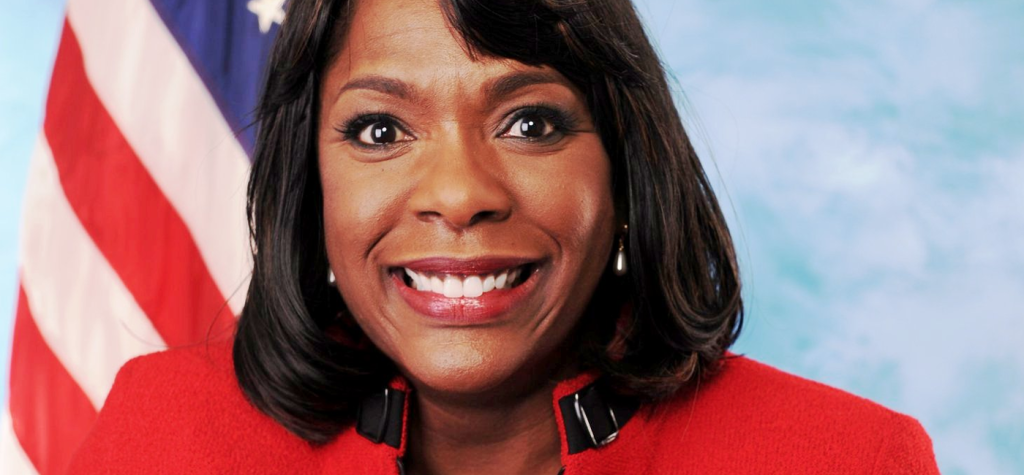
U.S. Rep. Terri Sewell says Alabama businesses and workers would benefit from expanding U.S. trade opportunities. Sewell invited U.S. Trade Representative Michael Froman, President Barack Obama’s chief official on international trade, to visit Alabama to discuss the importance of exports for the state economy. “Exports help drive Alabama’s economy,” Sewell said. “Alabama businesses exported $19.5 billion in merchandise last year, which supported more than 95,000 jobs. Access to foreign markets and fair trade policies that benefit American workers are integral, necessary components that will help Alabama exporters to continue to thrive and spur new job growth.” Froman said reducing taxes that the U.S. pays to export products from Alabama and other states, as well as improving labor standards abroad, were key to supporting jobs in the state. “By tearing down those barriers and raising the standards in other countries, we level the playing field,” Froman said. “And we know when we level the playing field, our workers, our farmers, our ranchers, and our small to medium-sized businesses can compete and win.” Alabama exports — transportation equipment, poultry, soybeans, and cotton — could face tariffs as high as 50 percent, Froman said. “If we can get rid of those taxes and we can eliminate those tariffs, right now 62 percent of all Alabama’s exports go to either the Asia Pacific or the European Union,” he said. “They can do so much more if they get rid of those other barriers. Every billion dollars of additional exports support up to 5,000 jobs. These are good, high-paying jobs.” The ambassador’s visit comes at a pivotal point in the Obama Administration’s battle with Congress over expanding the President’s authority to negotiate trade agreements. Politico reported that so far only 20 House Democrats have agreed to vote in favor of giving the president “fast-track” authority to negotiate trade agreements and that the bill has well below the votes needed on either side to pass in the House and Senate. The legislation would also grant the president authority to finish a sweeping trade deal with several Asian countries. The Trans-Pacific Partnership (TPP) has taken more than 10 years to negotiate and sets trade terms with 11 countries along the Pacific Rim, including Vietnam, Australia, Singapore, Malaysia and Japan. The group of nations has a combined gross domestic product of $28 billion and represents about 40 percent of the world economy. Sewell called the “fast track” or trade promotion authority a “hallmark” legislation that would provide a framework for the upcoming discussions over trade between the U.S., Asia, and the European Union. Passing the agreement is one of the president’s last major priorities, but so far Democrats have been unwilling to support the deal. “Congress has before it some big decisions when it comes to trade,” Sewell said. “Today has given me the opportunity to ask some very important, pressing questions from my constituents, especially labor, and to raise concerns that they’ve had. The ambassador has left me with a lot of food for thought.” Among those concerns, Sewell said, were that companies not be lured away by relaxed labor and regulatory standards in other countries. “I think it’s important that, especially in Alabama, where we’ve seen some trade agreements in the past have caused certain companies to close and take up shops overseas,” Sewell said. “I just want to make sure that the American workers are not left behind and so one of the big concerns that I had, and that some of the local labor unions had, was making sure that they had a seat at the table and that the negotiating would take into account their concerns as well.” In a prepared statement issued late Monday, U.S. Sen. Jeff Sessions called the fast track legislation “unenforceable” and said that the administration is seeking “blind faith” that the Trans-Pacific Partnership will increase U.S. jobs and wages. “Everyone supports trade. The question — the most fundamental question of all — is whether they are good trade deals, that advance America’s core national interests, or bad trade deals, that undermine them,” Sessions said. “Poorly negotiated trade deals, instead of opening new markets for our industries, tilt the playing field even further in their competitors’ direction. The result is not freer global trade, but more mercantilist market domination.” Congresswoman Sewell remains undecided on both TPP and TPA. U.S. Sens. Richard Shelby and Sessions voted against expanding trade promotion authority in 2002. It remains unclear whether Shelby will support the deal.
