
Joe Biden scraps planned visit to Australia, Papua New Guinea to focus on debt limit talks
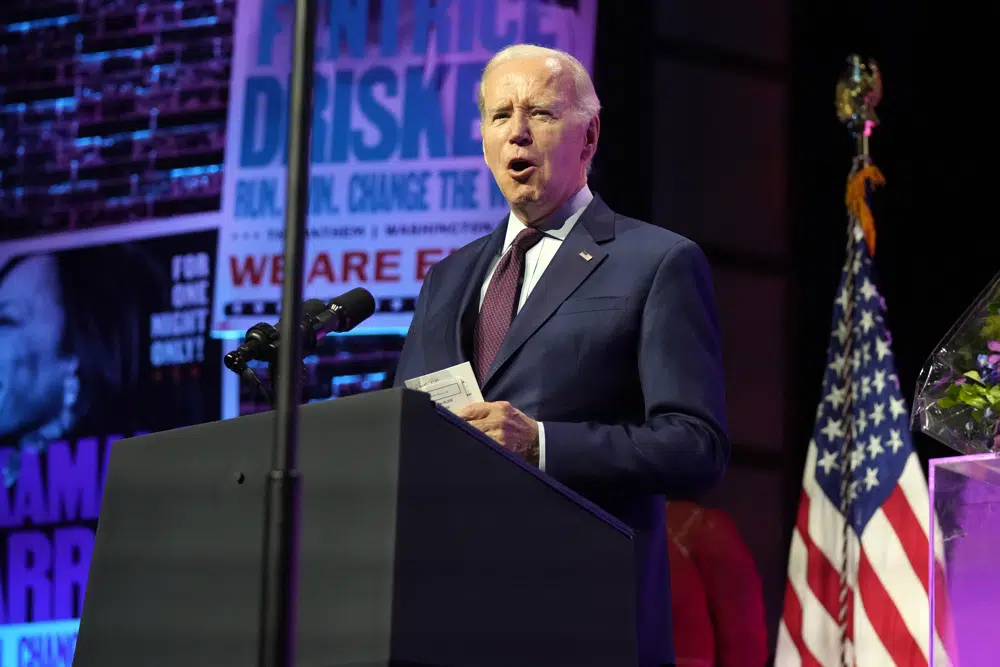
President Joe Biden said Tuesday he’s curtailing his upcoming trip to the Indo-Pacific, scrapping what was to be a historic stop in Papua New Guinea as well as a visit to Australia for a gathering with fellow leaders of the so-called Quad partnership so he can focus on debt limit talks in Washington. The scuttling of two of the three legs of the overseas trip is a foreign policy setback for an administration that has made putting a greater focus on the Pacific region central to its global outreach. Biden said he still plans to depart on Wednesday for Hiroshima, Japan, for a Group of Seven summit with leaders from some of the world’s major economies. He will return to the U.S. on Sunday. “I’m postponing the Australia portion of the trip and my stop in Papua New Guinea in order to be back for the final negotiations with congressional leaders,” Biden said at the start of a Jewish American Heritage Month event at the White House. He added, “The nature of the presidency is addressing many of the critical matters all at once. So I’m confident we’re going to continue to make progress toward avoiding the default and fulfilling America’s responsibility as a leader on the world stage.” Biden said he spoke to Australian Prime Minister Anthony Albanese earlier on Tuesday to inform him he was postponing a visit to Australia and invited him to Washington for an official state visit at a yet-to-be determined date. White House staff broke the news to Papua New Guinea Prime Minister James Marape. White House officials did not offer an immediate response to questions about when Biden might reschedule visits to the two countries. “Revitalizing and reinvigorating our alliances and advancing partnerships like the Quad remains a key priority for the President,” White House press secretary Karine Jean-Pierre said. “This is vital to our ability to advance our foreign policy goals and better promote global stability and prosperity. We look forward to finding other ways to engage with Australia, the Quad, Papua New Guinea, and the leaders of the Pacific Islands Forum in the coming year.” Japanese Prime Minister Fumio Kishida has invited Albanese, Indian Prime Minister Narendra Modi as well as Pacific Island leaders to come to Hiroshima during the G-7. Albanese, in an Australian Broadcasting Corp. interview, said that the Quad leaders are now hoping to hold a meeting in Hiroshima. “We’ll also hopefully be able to find a time when the four of us can sit down,” Albanese said. “We will have to organize the logistics of the Quad meeting now in Sydney, and we’ll be discussing with our partners in the U.S., but also Japan and India over the next day or so.” Biden had been scheduled to travel on to Papua New Guinea to meet with Pacific Island leaders and then to Australia for a meeting of the leaders of the Quad partnership, made up of the U.S., Australia, India, and Japan. The Papua New Guinea stop would have been the first visit by a sitting U.S. president to the island country of more than 9 million people. The Quad partnership first formed during the response to the 2004 Indian Ocean tsunami that killed some 230,000 people. Since coming into office, Biden has tried to reinvigorate the Quad as part of his broader effort to put greater U.S. focus on the Pacific and counter increasing economic and military assertiveness by China in the region. Biden announced his decision soon after he wrapped up a meeting on Tuesday afternoon with Republican House Speaker Kevin McCarthy, Senate Minority Leader Mitch McConnell, R-Ky., Senate Majority Leader Chuck Schumer, D-N.Y., and House Minority Leader Hakeem Jefferies, D-N.Y., for talks on the debt limit standoff. Earlier Tuesday, White House National Security Council spokesman John Kirby expressed administration officials’ frustration that the debt talks are having an impact on the president’s dealings on the international stage. “We wouldn’t have to have this conversation. I wouldn’t have to answer these questions if Congress just did the right thing,” Kirby said. Some Republican lawmakers questioned Biden’s decision to travel overseas considering the consequences of the debt limit talks. “I think he should not leave, and he should focus on the debt limit here at home,” Sen. Rick Scott, R-Fla. With the brief stop in Papua New Guinea to meet with Pacific Island leaders, Biden had hoped to demonstrate that the United States is committed to remaining engaged for the long term in the Pacific Islands. The area has received diminished attention from the U.S. in the aftermath of the Cold War, and China has increasingly filled the vacuum — through increased aid, development, and security cooperation. Biden has said that he’s committed to changing that dynamic. Last September, Biden hosted leaders from more than a dozen Pacific Island countries at the White House, announcing a new strategy to help to assist the region on climate change and maritime security. His administration also recently opened embassies in the Solomon Islands and Tonga, and has plans to open one in Kiribati. As vice president, Biden saw up close how domestic politics can complicate foreign policy during the 2013 government shutdown. President Barack Obama was forced to bail on attending the Asia-Pacific Economic Cooperation summit and the East Asia Summit in Brunei as well as a visit to Malaysia and the Philippines in the midst of a government shutdown as he negotiated with GOP leaders. President Bill Clinton opted to skip his scheduled participation in the APEC summit in Japan in the midst of the 1995 government shutdown. He opted to send Vice President Al Gore in his place. Republished with the permission of The Associated Press.
Joe Biden: U.S. would intervene with military to defend Taiwan
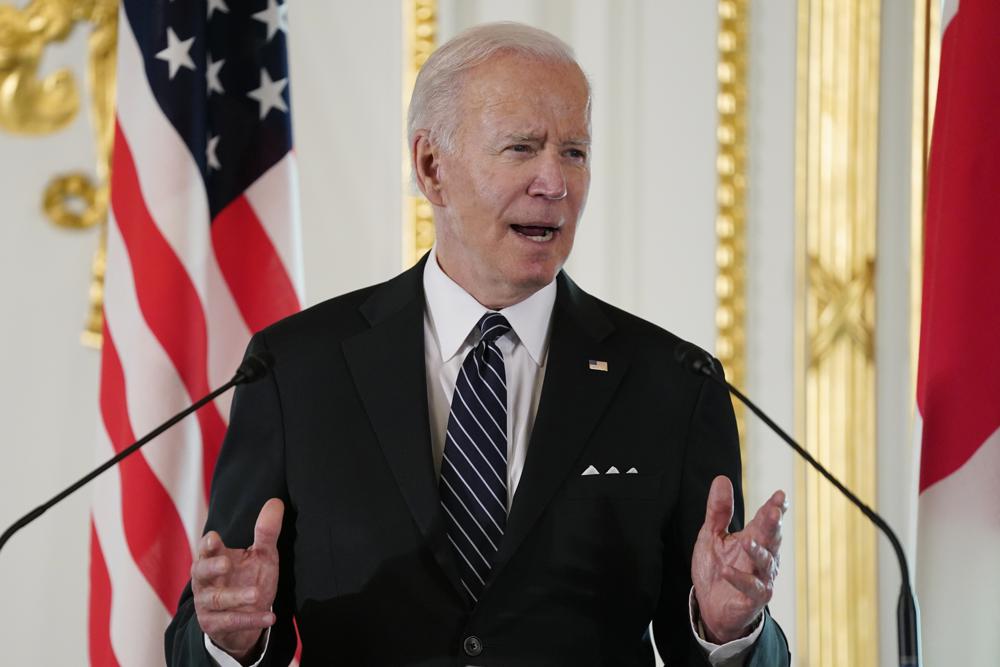
President Joe Biden said Monday that the U.S. would intervene militarily if China were to invade Taiwan, saying the burden to protect Taiwan is “even stronger’ after Russia’s invasion of Ukraine. It was one of the most forceful presidential statements in support of self-governing in decades. Biden, at a news conference in Tokyo, said “yes” when asked if he was willing to get involved militarily to defend Taiwan if China invaded. “That’s the commitment we made,” he added. The U.S. traditionally has avoided making such an explicit security guarantee to Taiwan, with which it no longer has a mutual defense treaty, instead maintaining a policy of “strategic ambiguity” about how far it would be willing to go if China invaded. The 1979 Taiwan Relations Act, which has governed U.S. relations with the island, does not require the U.S. to step in militarily to defend Taiwan if China invades but makes it American policy to ensure Taiwan has the resources to defend itself and to prevent any unilateral change of status in Taiwan by Beijing. Biden’s comments drew a sharp response from the mainland, which has claimed Taiwan to be a rogue province. Chinese Foreign Ministry spokesperson Wang Wenbin expressed “strong dissatisfaction and resolute opposition” to Biden’s comments. “China has no room for compromise or concessions on issues involving China’s core interests such as sovereignty and territorial integrity.” He added, “China will take firm action to safeguard its sovereignty and security interests, and we will do what we say.” A White House official said Biden’s comments did not reflect a policy shift. Speaking alongside Japanese Prime Minister Fumio Kishida, Biden said any effort by China to use force against Taiwan would “just not be appropriate,” adding that it “will dislocate the entire region and be another action similar to what happened in Ukraine.” China has stepped up its military provocations against democratic Taiwan in recent years aimed at intimidating it into accepting Beijing’s demands to unify with the communist mainland. “They’re already flirting with danger right now by flying so close and all the maneuvers that are undertaken,” Biden said of China. Under the “one China” policy, the U.S. recognizes Beijing as the government of China and doesn’t have diplomatic relations with Taiwan. However, the U.S. maintains unofficial contacts, including a de facto embassy in Taipei, the capital, and supplies military equipment for the island’s defense. Biden said it is his “expectation” that China would not try to seize Taiwan by force, but he said that assessment “depends upon just how strong the world makes clear that that kind of action is going to result in long-term disapprobation by the rest of the community.” He added that deterring China from attacking Taiwan was one reason why it’s important that Russian President Vladimir Putin “pay a dear price for his barbarism in Ukraine,” lest China and other nations get the idea that such action is acceptable. Fearing escalation with nuclear-armed Russia, Biden quickly ruled out putting U.S. forces into direct conflict with Russia, but he has shipped billions of dollars in U.S. military assistance that has helped Ukraine put up a stiffer-than-expected resistance to Russia’s onslaught. Taipei cheered Biden’s remarks, with Ministry of Foreign Affairs spokesperson Joanne Ou expressing “sincere welcome and gratitude” for the comments. “The challenge posed by China to the security of the Taiwan Strait has drawn great concern in the international community,” said Ou. “Taiwan will continue to improve its self-defense capabilities and deepen cooperation with the United States and Japan and other like-minded countries to jointly defend the security of the Taiwan Strait and the rules-based international order while promoting peace, stability, and prosperity in the Indo-Pacific region.” It’s not the first time Biden has pledged to defend Taiwan against a Chinese attack, only for administration officials to later claim there had been no change to American policy. In a CNN town hall in October, Biden was asked about using the U.S. military to defend Taiwan and replied, “Yes, we have a commitment to do that.” Biden’s comments came just before he formally launched a long-anticipated Indo-Pacific trade pact that excludes Taiwan. White House national security adviser Jake Sullivan confirmed Sunday that Taiwan isn’t among the governments signed up for the Indo-Pacific Economic Framework, which is meant to allow the U.S. to work more closely with key Asian economies on issues like supply chains, digital trade, clean energy, and anti-corruption. Inclusion of Taiwan would have irked China. Sullivan said the U.S. wants to deepen its economic partnership with Taiwan on a one-to-one basis. Republished with the permission of The Associated Press.
