
Donald Trump signs appropriations ‘minibus’ into law, contains critical funding for Alabama
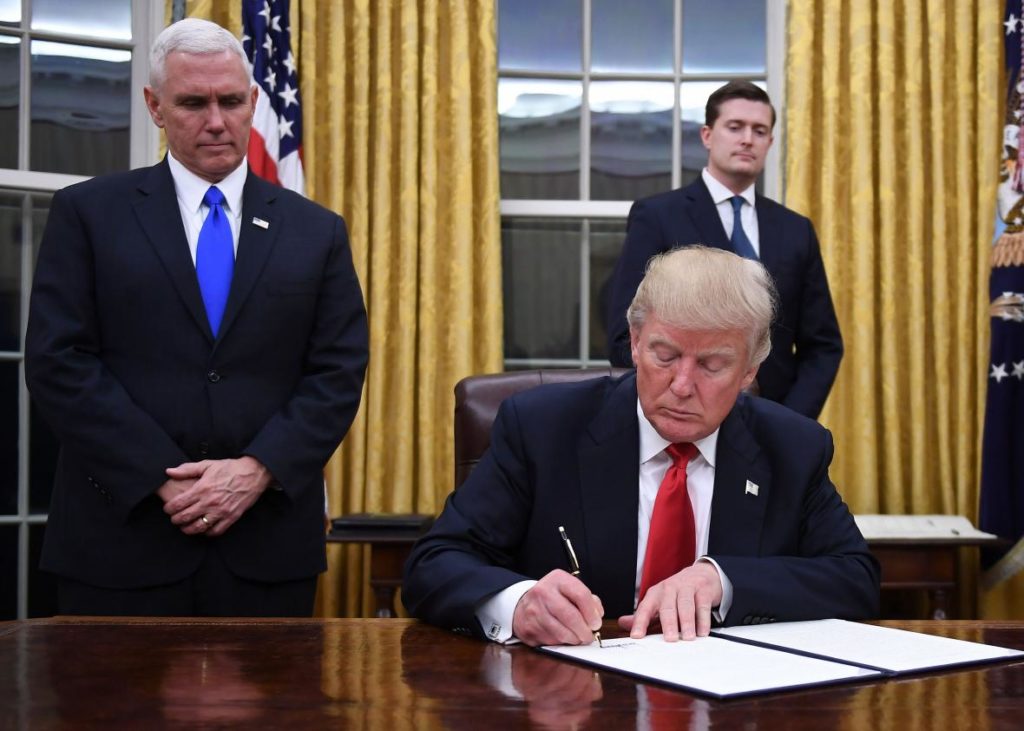
President Donald Trump on Friday signed into law a second appropriations “minibus,” which includes critical funding provisions for Alabama. H.R. 6157, is part of a larger package. It contains two critically important funding bills – Department of Defense and Labor, Health and Human Services (HHS), Education, and Related Agencies – which make up over half of the total discretionary budget. The bill also contains a continuing resolution (CR) through December 7, 2018, for any appropriations bills not enacted before October 1, 2018. Alabama U.S. Senator Richard Shelby, chairman of the Senate Appropriations Committee and its subcommittee on defense, on Wednesday praised the President’s signing of the second Fiscal Year 2019 appropriations minibus into law, which was supported by Congress with overwhelming margins. “The signing of this legislation marks a drastic turnaround in the way we have funded the government in recent years. As of today, 75 percent of the government is funded – on time and through an open, bipartisan process,” said Shelby. “This package continues a historic increase in funding for our nation’s defense, helping the President deliver on his commitment to rebuild the military and keep our Armed Forces the strongest and best trained, equipped, and prepared in the world. Shelby continued, “The critical funding impacting Alabama in this measure highlights our strong national defense capabilities and showcases our ability to lead the charge in medical breakthroughs and groundbreaking research. I am confident that this legislation will positively impact the lives of all Alabamians, and all Americans, and I hope we can continue down this path for the good of our nation.” The enactment of the Fiscal Year 2019 Defense and Labor-HHS-Education minibus marks the first time that America’s military has been funded on time through regular order in a decade. It also marks the first time that the Labor-HHS-Education bill has been enacted on time since 1996. With the President’s signature, five appropriations bills have been signed into law this month and 75 percent (74.9) of the government will be funded on schedule. This marks the most spending bills enacted on time since Fiscal Year 1997 – more than two decades ago. Both the Department of Defense and Labor-HHS-Education bills contain critical funding for the state of Alabama. Department of Defense funding The legislation includes the following provisions impacting Alabama: The legislation includes the following provisions impacting the production and use of missiles and helicopters in the Wiregrass region: An additional $95 million for Future Vertical Lift research, which will help accelerate development of helicopters flown at Fort Rucker. $10 million to upgrade Navy MH-60 Seahawk helicopters. $1.0 billion for Terminal High Altitude Area Defense (THAAD) missiles. $111 million for Long Range Anti-Ship Missiles (LRASMs). The measure also encourages the Navy to evaluate the capabilities and costs of a surface-launched LRASM. $307 million for Joint Air-to-Ground Missiles (JAGMs). $663 million for Joint Air-Surface Standoff Missile (JASSMs), which recently made its debut in strikes on Syria in response to their use of chemical weapons. $484 million for Hellfire missiles, which are made in Troy and used for training at Fort Rucker. $254 million for Javelin missiles for the Army and Marine Corps. The legislation includes the following provisions impacting North Alabama: Army Research – $11.1 billion for investments in transformational technologies to address modern and future Army warfighting needs. Missile Defense – $10.4 billion for the Missile Defense Agency (MDA), including $1.1 billion to support urgent MDA unfunded priorities and emergent threats. The measure included $191 million for Standard Missile Improvements, which are built in Decatur, and supports work done by MDA at Redstone Arsenal and many local companies. Directed Energy – $184 million in additional funding to further develop directed energy technology and transition these activities to both offensive and defensive capabilities. Hypersonics – $664 million in additional funding to support and accelerate offensive and defensive hypersonics research and prototyping efforts. Cyber – $306 million in additional funding to expand and accelerate cyber research across the Department of Defense, including $127 million for Army cybersecurity research efforts and $116 million in Missile Defense Agency cybersecurity enhancements. The bill encourages the enhanced use of cyber red teams to address cyber intrusions that threaten our weapons systems, an area of particular excellence for Huntsville. Space – $200 million in additional funding for Evolved Expendable Launch Vehicle (EELV) development efforts to ensure assured access to space. United Launch Alliance (ULA), which builds rockets in Decatur, continues to be seen as the most reliable and capable space launch provider. Advanced Shipbuilding Capabilities – $15 million to establish North Alabama as a center for classified, high power large-scale electron beam welding. This technology is critical to new Navy Columbia-class submarines and many high-performance aerospace systems such as hypersonic reentry vehicles, scramjet missiles, and rocket and jet engine turbomachinery. Small Glide Munitions – An additional $15 million to integrate Small Glide Munitions onto on Unmanned Aerial Systems. This highly successful weapon is used by Special Operations Command and built in Huntsville. The legislation includes the following provisions impacting Anniston: $276 million for Hydra rockets, which are built in Anniston and fired from Army and Marine Corps helicopters. Funding for Army Vehicles which are overhauled and maintained at Anniston Army Depot (ANAD): $2.5 billion to continue modernizing M1 Abrams tanks; $393 million for Stryker vehicles, including an additional $94 million to support increased Stryker DVH A1 conversions; An additional $110 million for Paladin Integrated Management artillery vehicles; and $18 million in additional funding for M88A2 Hercules Improved Recovery vehicles. The legislation includes the following provisions impacting Mobile’s shipbuilding industry: Two additional Littoral Combat Ships (LCS). One additional Expeditionary Fast Transport (EPF) ship. An additional $700 million in Advance Procurement for LPD and LHA amphibious ships. Labor, HHS, Education funding The Labor HHS Education bill includes the following provisions impacting Alabama: $39.084 billion, a $2 billion increase, for the National Institutes of Health. Opioid Funding – $3.8 billion, an increase of $206 million above FY2018. This level includes $1.5 billion for the State Opioid Response grant in SAMHSA, replacing the sun-setting 21st Century CURES funds,
Bradley Byrne: Setting our funding priorities
I know this may be hard for you to believe, but there was a major, bipartisan victory in Congress last week that failed to gain any of the attention it deserved. I want to highlight some of the progress we made last week and explain why it should matter to those of us back in Alabama. Last week, both the House and the Senate passed a funding bill that covered three very important parts of our government: military construction and veterans services, energy and water development, and Legislative Branch operations. I am pleased to see us passing targeted funding bills instead of waiting until the last minute to pass a massive omnibus funding bill. Over the last few years, the House has been able to pass funding bills only to see the process stall out in the Senate. Thankfully, since Alabama Senator Richard Shelby became Chairman of the Senate Appropriations Committee, the process has actually been moving again in the Senate. This has allowed us to focus on passing the smaller funding packages that are targeted toward our priorities. So why is this funding bill important? Obviously funding for the Department of Veterans Affairs (VA) is important for our state given the large number of veterans that call Alabama home. The bill includes the largest dollar amount in funding for the VA in our nation’s history. This means the VA will have the resources necessary to take care of our veterans, hire high-quality employees, and cut back on the claims backlog. There have been serious issues at the VA over the last few years, so I am pleased the funding bill dedicates more for the VA inspector general. This money will allow for stronger accountability at the VA as we work to make sure no veteran is left behind. The bill also includes funding for military construction programs in Alabama and across the country. As we work to rebuild our nation’s military, we must not forget about our military infrastructure. This funding includes money set aside for military housing programs. If we are to retain the best and brightest in our military, we need to ensure they have first class facilities. Next, the funding bill sets aside funding for the Army Corps of Engineers. Those of us in Southwest Alabama know the important work the Corps does on a daily basis to keep our waterways open and navigable. This is important to those of us who like to spend time on the water for recreational purposes, but it is especially important for our economy since so much of our commerce is conducted on waterways. Just consider the Port of Mobile and the important commerce that goes in and out of that Port each day. Under this funding bill, the Corps will receive $7 billion for navigation projects, the Harbor Maintenance Trust Fund, and to help with flood prevention and restoration projects. This money is very important for our country, but especially important for our state. Finally, the bill funds our nation’s nuclear security strategy by dedicating money to support our nation’s nuclear weapons and the Navy’s nuclear reactors. The bill sets aside money to ensure nuclear weapons do not fall into the wrong hands and funding to prevent against cyberattacks. Our national security must always be the top priority. As you can see, this commonsense government funding bill is good for our country and Alabama. I was pleased to see it pass the House on a strong vote of 377 to 20, and I hope we can keep up the positive momentum to continue getting the job done for the American people. • • • Bradley Byrne is a member of U.S. Congress representing Alabama’s 1st Congressional District.
Birmingham-based XpertDox raises $1 million in funding
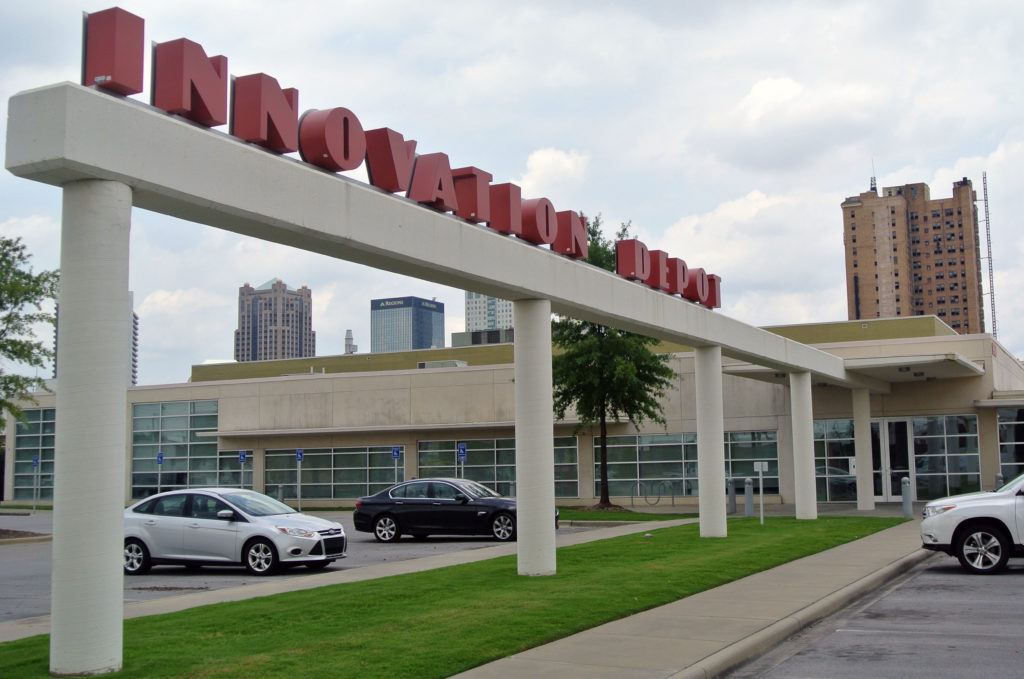
XpertDox, a Birmingham-based startup has closed a $1 million seed funding round. Led by a group of private investors based in Birmingham, Ala. with coordination from the Birmingham Business Alliance, the company will use the money to advance its technology platform and add talent to its team. XpertDox, which is located in Innovation Depot, leverages big data to improve patient access to health care and accelerate patient recruitment into clinical trials. Enabled by a proprietary algorithm, XpertDox has mapped more than 6,000 diseases, 4,500 hospitals, 18,000 clinical trials and all one million doctors in the United States, all to help patients find the best care for their disease. “The closing of this financing represents a significant milestone for XpertDox,” said Dr. Sameer Ather, president and CEO of XpertDox and a cardiologist, researcher and professor at the University of Alabama at Birmingham. “This funding will allow us to continue to invest in the business, enhancing our capabilities to assist patients in finding the best doctor, hospital or clinical trial for their condition.” “Funding is essential for high-growth startup companies like XpertDox to grow here in Birmingham,” added Devon Laney, president and CEO of tech incubator and accelerator Innovation Depot. “Locally raised funds for a startup are a sign that our ecosystem is getting stronger and that investors in our own backyard are recognizing the potential of backing our entrepreneurs.” Ather has worked extensively with, among others, the Birmingham Business Alliance to advance XpertDox’s corporate development goals. “We are grateful for the support we have received from the Birmingham business community and are dedicated to expanding our operations here,” Ather said. Jon Nugent, Vice President of Innovation and Technology at the Birmingham Business Alliance, applauded XpertDox’s recent success. “We are proud to have XpertDox in Birmingham and look forward to continuing to work with Dr. Ather and his team,” Nugent said.
Bradley Byrne: A senseless shutdown
Since coming to Washington, there have been several times when it felt like I was banging my head against the wall in frustration. One of those times was during the recent, senseless government shutdown. Last Friday at midnight, the entire federal government shutdown after the Senate failed to pass a bill to continue government funding. The bizarre thing was that Democrats did not disagree with a single provision in the bill. Instead, Senate Democrats wanted a provision included in the bill to effectively grant amnesty to individuals in our country illegally under the Deferred Action for Childhood Arrivals (DACA) program. Now, President a has indicated he wants to see a long-term solution on how to handle those in the DACA program, and Congress has been in negotiations for weeks over a bill to address DACA and other border security issues. Those talks had been productive, but differences remained. The good news was that the deadline to handle DACA is not until mid-March. Sadly, Senate Democrats refused to wait and demanded an illegal immigration provision be passed right away. When they did not get their way, they refused to vote for the funding bill and caused the entire federal government to shut down. Government shutdowns have a lot of dire consequences, especially when it comes to our nation’s military. For example, all active duty military personnel continue to work during a shutdown, but they cannot be paid. Ridiculously, during a shutdown, one of the few people in the federal government who continue to get paid are Members of Congress. I think that is wrong, so I immediately sent a letter to the Chief Administrative Officer of the House requesting that my pay be withheld until the shutdown ended. If our military was not getting paid, I did not think I should get paid either. President Trump made clear that he would not negotiate with Democrats on immigration issues until they ended their silly government shutdown. So, for a while, it seemed Democrats were going to hold the line and keep the federal government shuttered. Things seemed to change over the weekend when news headlines started to show that Democrats were getting the brunt of the blame for the shutdown. Even liberal-leaning national newspapers like the New York Times ran headlines showing that Democrats were the ones who shut down the government. So, on Monday, Senate Democrats agreed to end their senseless shutdown and vote to reopen the government. To be clear, they have absolutely nothing to show for their shutdown. Not a single promise was made in the House regarding a path forward on immigration issues. The shutdown was a total failure and nothing more than an irresponsible political stunt. There was one good piece of news to come out of the whole ordeal. The final funding bill included six years of funding for the Children’s Health Insurance Program (CHIP), which is known as AllKids in Alabama. The program helps provide health insurance to over 150,000 children right here in Alabama, and the funding will help eliminate uncertainty for the families who use the program. I am a huge supporter of CHIP, so I was proud to preside over the House when we voted to reopen the government and provide long-term funding for CHIP. At the end of the day, the government shutdown was just another example of how Washington is broken in so many ways. In the coming weeks, I will continue pushing for a long-term government funding bill that responsibly funds our military, as well as for commonsense immigration policies that punish those who break the law and help keep our borders secure. • • • Bradley Byrne is a member of U.S. Congress representing Alabama’s 1st Congressional District.
Alabama Senate OKs more money for domestic violence coalition

Legislation passed the Senate last week, which will provide “significant funding” for the Alabama Coalition Against Domestic Violence (ACADV), an organization that provides support and advocacy to battered women and their children. SB 123 from Sen. Tim Melson (R-Florence) ensures that the organization will receive $169,633 for fiscal year 2016. Further, the bill has an “accountability mechanism to protect taxpayers,” which will require ACADV to provide an operations plan and financial statements quarterly and annually. “A Senate Republican legislative priority for this year is to protect families and children,” Melson said in a news release. “Providing adequate funding for domestic violence support and prevention will give hope to people who find themselves in a seemingly hopeless situation.” According to the group’s website, about 1 in 3 women is assaulted by a partner during adulthood and two-thirds of those assaulted by an intimate partner say they were victimized several times by the same partner over a 12-month period. More than 3 million children witness violence against their mothers or female caretakers by family members and alcohol abuse is cited in about 50 percent of all abusive relationships. Officials with the ACADV were unavailable to comment on the impact of the legislation.
