
In tit-for-tat, Donald Trump threatens more tariffs against China
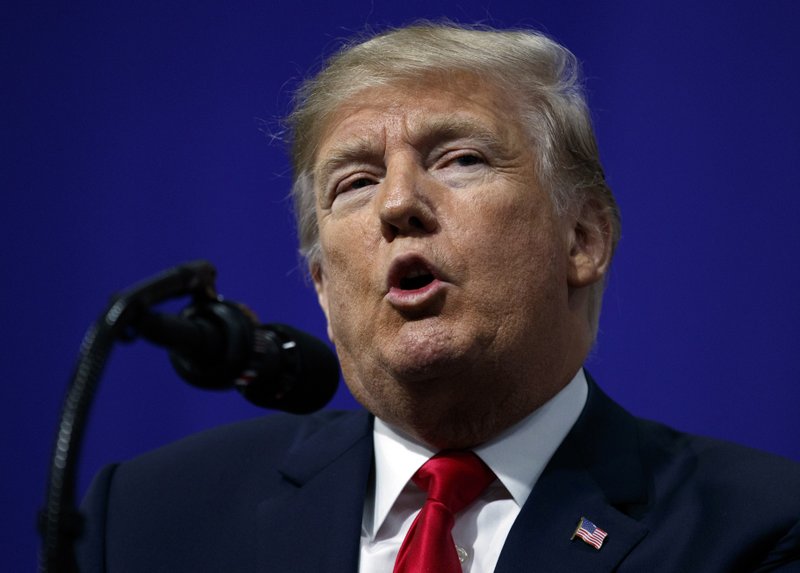
President Donald Trump has directed the U.S. Trade Representative to prepare new tariffs on $200 billion in Chinese imports as the two nations move closer to a potential trade war. The tariffs, which Trump wants set at a 10 percent rate, would be the latest round of punitive measures in an escalating dispute over the large trade imbalance between the two countries. Trump recently ordered tariffs on $50 billion in Chinese goods in retaliation for intellectual property theft. The tariffs were quickly matched by China on U.S. exports, a move that drew the president’s ire. “China apparently has no intention of changing its unfair practices related to the acquisition of American intellectual property and technology,” Trump said in a statement Monday announcing the new action. “Rather than altering those practices, it is now threatening United States companies, workers, and farmers who have done nothing wrong.” Trump added: “These tariffs will go into effect if China refuses to change its practices, and also if it insists on going forward with the new tariffs that it has recently announced.” China’s Commerce Ministry on Tuesday criticized the latest threat of tariffs, saying it was an “act of extreme pressure and blackmail that deviates from the consensus reached by both parties after many negotiations, and is a disappointment to the international community.” “If the U.S. becomes irrational and issues this list, China will have no choice but to adopt strong countermeasures of the same amount and quality,” the ministry statement said. Trump said that if China responds to this fresh round of tariffs, then he will move to counter “by pursuing additional tariffs on another $200 billion of goods.” It wasn’t immediately clear when the new tariffs could be put in place, as the trade office has yet to identify the Chinese goods to be penalized or conduct a legal review. The first round of penalties announced by both nations is set to take effect July 6. The intellectual property sanctions were the latest in a spate of protectionist measures unveiled by Trump in recent months that included tariffs on steel and aluminum imports to the U.S. and a tough rhetoric on trade negotiations from North America to Asia. The escalation in the dispute with China may also serve as a warning to other trading partners with whom Trump has been feuding, including Canada and the European Union. The move quickly drew praise from former Trump senior adviser Steve Bannon, who told The Associated Press: “President Trump told China and the world tonight that America will not back down when it comes to economic aggression.” But Wall Street has viewed the escalating trade tensions with wariness, fearful they could strangle the economic growth achieved during Trump’s watch. Gary Cohn, Trump’s former top economic adviser, said last week that a “tariff battle” could result in price inflation and consumer debt — “historic ingredients for an economic slowdown.” Trump’s comments came hours after the top U.S. diplomat accused China of engaging in “predatory economics 101” and an “unprecedented level of larceny” of intellectual property. Secretary of State Mike Pompeo made the remarks at the Detroit Economic Club as global markets reacted to trade tensions between the U.S. and China. He said China’s recent claims of “openness and globalization” are “a joke.” He added that China is a “predatory economic government” that is “long overdue in being tackled,” matters that include IP theft and Chinese steel and aluminum flooding the U.S. market. “Everyone knows … China is the main perpetrator,” he said. “It’s an unprecedented level of larceny.” “Just ask yourself: Would China have allowed America to do to it what China has done to America?” he said later. “This is predatory economics 101.” Asked to comment on Pompeo’s remarks, the Chinese foreign ministry in Beijing said in a regular briefing with reporters that the U.S. had lost credibility as a free trader. “We don’t want a trade war, but we’re not afraid of a trade war,” ministry spokesman Geng Shuang said. Pompeo raised the trade issue directly with China last week, when he met in Beijing with President Xi Jinping and others. “I reminded him that’s not fair competition,” Pompeo said. Trump had announced a 25 percent tariff on up to $50 billion in Chinese imports. China is retaliating by raising import duties on $34 billion worth of American goods, including soybeans, electric cars and whiskey. Trump also has slapped tariffs on steel and aluminum imports from Canada, Mexico and European allies. Pompeo on Monday described U.S. actions as “economic diplomacy,” which, when done right, strengthens national security and international alliances, he added. “We use American power, economic might and influence as a tool of economic policy,” he said. “We do our best to call out unfair economic behaviors as well.” In a statement, Trump says he has an “excellent relationship” with Xi, “but the United States will no longer be taken advantage of on trade by China and other countries in the world.” Republished with the permission of the Associated Press.
Donald Trump complains about trade with China
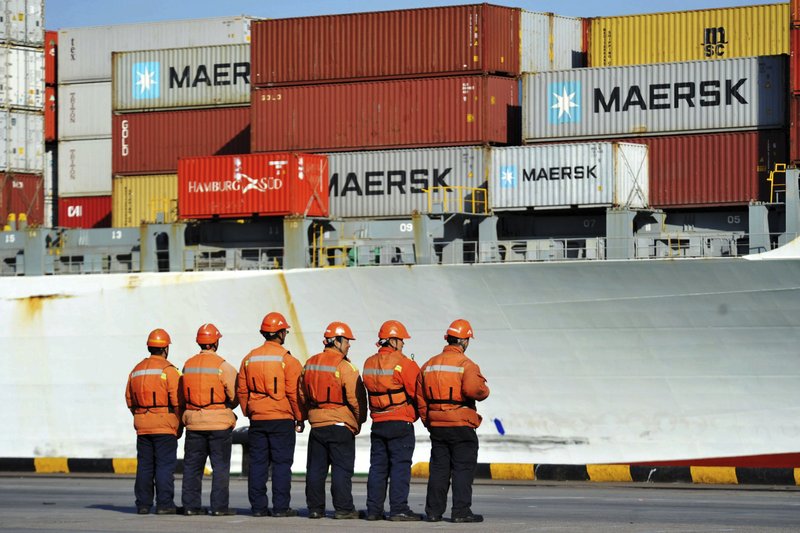
President Donald Trump on Monday complained yet again about “STUPID TRADE” with China, doing little to calm investors anxious about the escalating trade conflict between the two economic superpowers. In a tweet on Monday morning Trump said that when a Chinese-made vehicle is sent to the U.S., the tariff is only 2.5 percent, while American cars exported to China are slapped with a 25 percent tariff. Trump asked, “Does that sound like free or fair trade.” Then answered, “No, it sounds like STUPID TRADE.” China charges total duties of 25 percent on most imported cars — a 10 percent customs tariff plus a 15 percent auto tax. Since December 2016, Beijing also has charged an additional 10 percent on “super-luxury” vehicles priced above 1.3 million yuan ($200,000). Trump’s top economic advisers have offered mixed messages as to the best approach with China. Beijing has threatened to retaliate if Washington follows through with its proposed tariffs, even as Trump emphasized his bond with Chinese President Xi Jinping. “President Xi and I will always be friends, no matter what happens with our dispute on trade,” Trump tweeted Sunday. “China will take down its Trade Barriers because it is the right thing to do. Taxes will become Reciprocal & a deal will be made on Intellectual Property. Great future for both countries!” But Trump did not explain why, amid a week of economic saber-rattling between the two countries that shook global markets, he felt confident a deal could be made. The president made fixing the trade imbalance with China a centerpiece of his presidential campaign, where he frequently used incendiary language to describe how Beijing would “rape” the U.S. economically. But even as Trump cozied up to Xi and pressed China for help with derailing North Korea’s nuclear ambitions, he has ratcheted up the economic pressure and threatened tariffs, a move opposed by many fellow Republicans. The Trump administration has said it is taking action as a crackdown on China’s theft of U.S. intellectual property. The U.S. bought more than $500 billion in goods from China last year and now is planning or considering penalties on some $150 billion of those imports. The U.S. sold about $130 billion in goods to China in 2017 and faces a potentially devastating hit to its market there if China responds in kind. China has pledged to “counterattack with great strength” if Trump decides to follow through on his latest threat to impose tariffs on an additional $100 billion in Chinese goods — after an earlier announcement that targeted $50 billion. Beijing also declared that the current rhetoric made negotiations impossible, even as the White House suggested that the tariff talk was a way to spur China to the bargaining table. The new White House economic adviser, Larry Kudlow, said Sunday that a “coalition of the willing” — including Canada, much of Europe and Australia — was being formed to pressure China and that the U.S. would demand that the World Trade Organization, an arbiter of trade disputes, be stricter on Beijing. And he said that although the U.S. hoped to avoid taking action, Trump “was not bluffing.” “This is a problem caused by China, not a problem caused by President Trump,” Kudlow said on “Fox News Sunday.” But he also downplayed the tariff threat as “part of the process,” suggesting on CNN that the impact would be “benign” and said he was hopeful that China would enter negotiations. Kudlow, who started his job a week ago after his predecessor, Gary Cohn, quit over the tariff plan, brushed aside the possibility of economic repercussions. “I don’t think there’s any trade war in sight,” Kudlow told Fox. Treasury Secretary Steve Mnuchin said on CBS’ “Face the Nation” that he didn’t expect the tariffs to have a “meaningful impact on the economy” even as he left the door open for disruption. He allowed that there “could be” a trade war but said he didn’t anticipate one. Another top White House economic adviser, Peter Navarro, took a tougher tack, declaring that China’s behavior was “a wakeup call to Americans.” “They are in competition with us over economic prosperity and national defense,” Navarro said on NBC’s “Meet the Press.” ″Every day of the week China comes into our homes, our business and our government agencies. … This country is losing its strength even as China has grown its economy.” Trump’s latest proposal intensified what was already shaping up to be the biggest trade battle in more than a half century. Trump told advisers last week that he was unhappy with China’s decision to tax $50 billion in American products, including soybeans and small aircraft, in response to a U.S. move to impose tariffs on $50 billion in Chinese goods. Rather than waiting weeks for the U.S. tariffs to be implemented, Trump backed a plan by Robert Lighthizer, his trade representative, to seek the enhanced tariffs. The rising economic tensions pose a test to what has become Trump’s frequent dual-track foreign policy strategy: to establish close personal ties with another head of state even as his administration takes a harder line. The president has long talked up his friendship with Xi, whom he has praised for consolidating power in China despite its limits on democratic reforms. Further escalation could be in the offing. The U.S. Treasury Department is working on plans to restrict Chinese technology investments in the U.S. And there is talk that the U.S. could also put limits on visas for Chinese who want to visit or study in this country. For Trump, the dispute runs the risk of blunting the economic benefits of his tax overhaul, which is at the center of congressional Republicans’ case for voters to keep them in power in the 2018 elections. China’s retaliation so far has targeted Midwest farmers, many of whom were bedrock Trump supporters. Republished with the permission of the Associated Press.
Gary Cohn: Building a stronger America

A Nation’s infrastructure is a measure of its greatness. It affects everyone’s quality of life and ability to succeed. That is why President Donald J. Trump unveiled a plan this week calling on Congress to pass legislation giving Americans a network of vital infrastructure that will make them proud, strong, and safe. The President developed this plan after meeting with and listening to Members of Congress, governors, mayors, county officials, and business leaders throughout the past year. His plan of action will increase investment, streamline permitting, strengthen rural America, and modernize our workforce. He wants to do it differently than previous efforts to improve our infrastructure, and he wants to get it right. Our infrastructure is broken. The average driver spends 42 hours per year sitting in traffic, missing valuable time with family and wasting 3.1 billion gallons of fuel annually. Nearly 40 percent of our bridges predate the first moon landing. And last year, 240,000 water main breaks wasted more than 2 trillion gallons of purified drinking water—enough to supply Belgium. The President’s plan addresses this by calling for a $1.5 trillion total investment—including $200 billion in Federal funds—over 10 years that will fix our broken public works, create good jobs that pay good wages, restore our competitive edge, and unleash transformative projects to propel our Nation’s infrastructure into the 21st century. In the past, the Federal Government politically allocated funds for projects, leading to waste, mismanagement, and misplaced priorities. The answer to our Nation’s infrastructure needs is not more projects selected by bureaucrats in Washington, D.C. Instead, the President’s plan designates half of its $200 billion for matching funds to stimulate State, local, and private investment. Rather than telling governors and mayors what to do, we will partner with them as they invest in the most pressing projects in the highest-need places. And where it makes sense, we will move old infrastructure off the Government balance sheet and into private investment. President Trump’s infrastructure plan will focus one-quarter of its Federal funds on rural projects to rebuild roads, deliver clean water, expand broadband, and supply affordable and reliable power to neglected corners of our Nation. While the Federal Government owns a relatively small percentage of the Nation’s infrastructure, it regulates all major projects through the Federal environmental permitting process. This over-regulation has led to virtual unanimity on both sides of the political aisle that the project permitting process in this country is unacceptable. The President’s plan tackles this problem by replacing sequential agency analysis with concurrent reviews, with just one Federal agency leading—and accountable for—the permitting process. By eliminating redundant decision making, we can reduce the planning and permitting process from ten years to two without in any way compromising the environment. This is not only good government, it is good economics. By one estimate, further delaying needed infrastructure investments will cost our economy over $3.7 trillion. Strengthening and investing in the Nation’s infrastructure should not be done without doing the same for the American worker. This Administration is committed to helping more individuals access affordable, relevant, quality education and skills-development that leads to full-time work and long-term careers. Among other things, the President is calling on Congress to expand Pell Grant eligibility to high-quality, short-term programs and to reform licensing requirements for individuals seeking an infrastructure project job. This investment in building a stronger America is for everyone. It is for parents concerned about the quality of drinking water. It is for the small business owner working to move goods to market. And it is for the single-mom on her daily commute. It is about improving the lives of American citizens—one truckload of concrete, one I-beam of steel, and one length of cable at a time. The President has crafted a plan for making these dreams a reality. Now is the time for Congress to deliver to the American people the infrastructure they deserve. ••• Gary D. Cohn is the Director of the National Economic Council.
Donald Trump weighs replacing Fed Chair Janet Yellen with ex-Goldman exec
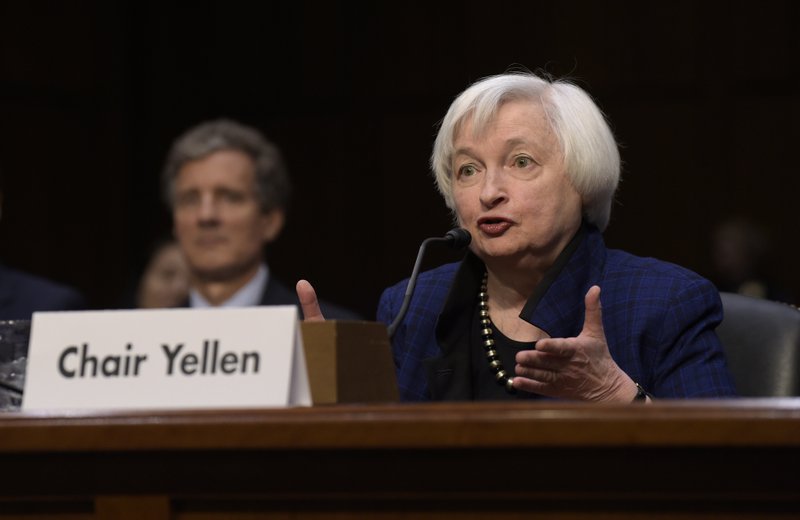
President Donald Trump said Tuesday that he’s considering either re-nominating Janet Yellen for a second term as Fed chair or replacing her with someone else, possibly Gary Cohn, who leads his National Economic Council. Trump said in an interview with the Wall Street Journal that he has a “lot of respect” for Yellen and thinks she is serving capably. The president said he’s still considering asking her to serve four more years after her term ends in February. But he said he’s also considering other candidates, including Cohn, who joined the Trump administration after a 26-year career at Goldman Sachs. Yellen has declined to say whether she wants to serve another term. She has said only that she is focused on doing her job and will remain in place through the end of her term Feb. 3. When Yellen was chosen to be Fed chair by President Barack Obama, she became the first woman to lead the central bank, succeeding Ben Bernanke in 2014. Trump said Cohn, who was present for the interview, didn’t know he was under consideration for the Fed job. Cohn has been leading the search for the next Fed leader. “I’ve known Gary for a long time, but I’ve gained great respect for Gary working with him, so Gary certainly would be in the mix,” Trump said in the interview with the Journal. Cohn, 56, would be the first business executive to lead the Fed in 38 years, since the brief tenure of G. William Miller, from March 1978 to August 1979. Miller was installed by President Jimmy Carter, who would soon make Miller his Treasury secretary to make room for Paul Volcker as chairman of the Fed. Cohn, an aggressive Wall Street operator who became president of Goldman Sachs in 2006, would mark a sharp break from the last four Fed chairs – Volcker, Alan Greenspan, Bernanke and Yellen. All came from the ranks of academia or government service. Volcker had served at Treasury and as president of the New York Federal Reserve. In Tuesday’s interview, Trump said of Yellen, “She is in the running, absolutely.” “I like her,” he said. “I like her demeanor. I think she’s done a good job.” The president added: “I’d like to see rates stay low. She’s historically been a low-interest-rate person.” The president suggested that “two or three” other contenders were in the mix, but the Journal said he declined to name them. He said he probably wouldn’t announce a nominee until the end of the year. “It’s early to make the decision,” he said, noting that Yellen’s term as Fed chair doesn’t end until February. He predicted that the Senate confirmation process would move quickly. The president’s comments were the first he has made since published reports appeared earlier this month saying that Cohn had emerged as a leading candidate for the Fed job. Trump was critical of Yellen during last year’s presidential campaign, accusing her of keeping interest rates low to favor Democrats. But since winning the election, Trump has avoided criticizing Yellen, saying that he respects her and likes her low-rate policies. Earlier this month, Yellen nominated Randal Quarles, a top Treasury official under two Republican presidents, to be the Fed’s vice chairman for supervision. Quarles will appear Thursday before the Senate Banking Committee for his nomination hearing. There are two other vacancies on the seven-member Fed board. Trump has yet to put forward nominations for those positions. Republished with permission of The Associated Press.
Donald Trump tax cut: Huge, vague and likely mild boost for economy

President Donald Trump‘s team boasted Wednesday that its tax-cut plan would lighten Americans’ financial burdens, ignite economic growth and vastly simplify tax filing. Yet the proposal so far remains short of vital details, including how it would be paid for. And based on the few specifics spelled out so far, most experts suggest that it would add little to growth while swelling the budget deficit and potentially handing large windfalls to wealthier taxpayers. Trump’s plan would replace the current seven income tax brackets with three, and the top bracket would drop from 39.6 percent to 35 percent. It would also slash the corporate rate from 35 percent all the way to 15 percent, a boon to most companies even though many don’t pay the full tax now. With tax credits and other loopholes, most corporations pay closer to 20 percent, according to calculations by JPMorgan. Perhaps the most contentious plank would enable taxpayers with business income — including those wealthy enough to pay the top tax rate — to instead pay the new 15 percent corporate rate. That’s because Trump would apply the corporate rate to “pass through” businesses. Pass-throughs include partnerships such as law firms and hedge funds as well as most small businesses — from the local florist to the family-owned restaurant on Main Street. What’s more, some privately held large companies — including Trump’s own real estate empire — are structured as pass-throughs and would benefit, too. Here’s a closer look at Trump’s proposal and its likely impact: ___ WHO BENEFITS? It’s hard to say because the administration has released so few details. The three new income tax rates would be 10 percent, 25 percent and 35 percent. But Trump’s top economic adviser, Gary Cohn, and Treasury Secretary Steven Mnuchin, weren’t ready Wednesday to say at what income levels these new rates would kick in. Tax experts said far more details were needed to determine how average Americans would be affected. “The impact on Joe Taxpayer is unknown,” said Marc Gerson, vice chair of the tax department of law firm Miller & Chevalier in Washington. “There’s not enough specificity. It’s hard for taxpayers to determine where they’ll come out.” Cohn asserted that the plan would cut taxes “especially for low and middle income families.” It purports to do so in part by doubling the standard deduction, which is used by taxpayers who don’t itemize their tax deductions. At the same time, the Trump plan would eliminate the estate tax and the alternative minimum tax, thereby benefiting some of the richest taxpayers. And that’s on top of shrinking the corporate tax rate that many affluent individuals could likely capitalize on. ___ WHY CUT CORPORATE TAXES? By making corporations more profitable, the Trump administration hopes to encourage more business spending on equipment — from computers to factories and machinery. Doing so, in turn, could make the economy more efficient and accelerate growth and hiring. Economic growth has been stuck at about 2 percent a year since the recession ended in 2009. Mnuchin says the administration wants to accelerate it above 3 percent, a pace it hasn’t touched since 2005. The corporate tax cuts are also intended to encourage more businesses to stay in the United States, which now has the highest corporate rate among advanced economies. Many large corporations are enthusiastic about lower rates and say they support the elimination of loopholes, which both reduce revenue and make taxes more complicated. ___ WHO’D BENEFIT FROM THE CORPORATE RATE CUT? Aside from most large companies, many partnerships and small businesses would benefit because they’re structured as pass-throughs, which derives from the fact that they pass on their profits to their owners. Those owners now pay individual income tax rates, which top out at 39.6 percent. With the pass-through rate dropped to 15 percent, those taxpayers could enjoy an enormous tax cut. The Trump team stressed the benefits that might flow to small businesses. But the richest windfalls would flow to the wealthy — lawyers, hedge fund managers, consultants and other big earners. Nearly 75 percent of pass-through income flows to the 10 percent wealthiest taxpayers, according to the liberal Center on Budget and Policy Priorities. “It would tremendously help high earners,” says Brian Thompson, a certified public accountant in Chicago. In Kansas, Gov. Sam Brownback eliminated state taxes on pass-throughs, which turned out to be a boon for Bill Self, the coach of the University of Kansas’ men’s basketball team. He had previously set up his own company, according to state media reports. As a result, he paid little state income tax despite earning nearly $3 million a year. Many people, particularly wealthy Americans, could set up companies and reclassify their paychecks as “business income” and have it taxed at 15 percent, experts say. In Kansas, the number of pass-through businesses jumped to more than double the level the state expected, according to the nonpartisan Tax Policy Center. That cost the state revenue without spurring more job creation. Mnuchin said the Treasury would issue rules to prevent wealthy people from capitalizing on the lower rate. But many experts are skeptical. “Good luck with that,” said Mark Mazur, director of the nonpartisan Tax Policy Center and a former Treasury official under President Barack Obama. “The tax agencies tend to be at least a couple of steps behind the businesses.” ___ HOW ELSE WOULD BIG BUSINESSES BENEFIT? The administration is also proposing to tax only corporate income earned in the United States. This is known as a “territorial” system. It would replace the current worldwide system, under which corporations pay tax on income earned in the U.S. and overseas. Yet companies can avoid the tax if they keep their foreign earnings overseas. Many businesses have kept hundreds of billions of dollars outside the United States. Mnuchin said Trump’s plan would encourage corporations to return the money to the United States and invest it in plants and equipment. Some analysts counter that corporations might instead use the money to pay dividends to
Jared Kushner, taking new White House role, faces rare scrutiny

Jared Kushner has been a power player able to avoid much of the harsh scrutiny that comes with working in the White House. But this week he’s found that even the president’s son-in-law takes his turn in the spotlight. In a matter of days, Kushner, a senior Trump adviser, drew headlines for leaving Washington for a ski vacation while a signature campaign promise fell apart. The White House then confirmed he had volunteered to be interviewed before the Senate intelligence committee about meetings with Russian officials. At the same time, the White House announced he’ll helm a new task force that some in the West Wing have suggested carries little real influence. Kushner became the fourth Trump associate to get entangled in the Russia probe. North Carolina Sen. Richard Burr, the chairman of the intelligence committee, said Tuesday that Kushner would likely be under oath and would submit to a “private interview” about arranging meetings with the Russian ambassador and other officials. The news came as the White House announced Kushner would lead a new White House Office of American Innovation, a task force billed as a powerful assignment for Kushner. But the task force’s true power in the White House remained unclear, according to a half-dozen West Wing officials and Kushner associates who spoke on the condition of anonymity. The official White House line is that the group would have sweeping authority to modernize government, acting as strategic consultants who can draw from experiences in the private sector — and sometimes receive input from the president himself — to fulfill campaign promises like battling opioid addiction and transforming health care for veterans. White House press secretary Sean Spicer said Monday that it would “apply the president’s ahead-of-schedule-and-under-budget mentality” to the government. But others inside and outside the White House cast doubt on the task force’s significance and reach, suggesting it was a lower priority for the administration and pointing out that similar measures have been tried by previous presidents with middling success. The assignment revived lingering questions about whether Kushner had opted to focus his time on a project that would put him at some distance from some Trump’s more conservative and controversial policy overhauls. The announcement came just days after Kushner and his wife, Ivanka Trump, were photographed on the ski slopes of Aspen, Colorado, as the GOP health care deal began to unravel amid protests from conservative Republicans that it did not go far enough in replacing President Barack Obama‘s Affordable Care Act. Kushner rushed back to Washington on Friday but it was too late to save the bill, which was scuttled hours later by House Speaker Paul Ryan. Two people close to Kushner vehemently denied the president was upset at his son-in-law for being absent, saying Trump had given the trip his blessing. And a senior White House official insisted the timing of the task force announcement was planned weeks in advance. Kushner, who has been at his father-in-law’s right hand since the campaign, has long been viewed as a first-among-equals among the disparate power centers competing for the president’s ear. Kushner, who routinely avoids interviews, draws power from his ability to access Trump at all hours, including the White House residence often off-limits to staffers. His portfolio is robust: He has been deeply involved with presidential staffing and has played the role of shadow diplomat, advising on relations with the Middle East, Canada and Mexico. Though Kushner and Ivanka Trump have been spotted with some frequency on the Washington social circuit, the president’s son-in-law is routinely in the office early and leaves late, other than on Fridays when he observes the Sabbath. While those close to Trump flatly state that Kushner, by virtue of marriage, is untouchable, this is a rare moment when he has been the center of the sort of political storm that has routinely swept up the likes of White House chief strategist Steve Bannon, chief of staff Reince Priebus and senior counselor Kellyanne Conway. It points to a White House whose power matrix is constantly in flux. Kushner has been closely allied with senior counselor Dina Powell and National Economic Council director Gary Cohn, the former Goldman Sachs executive and a registered Democrat. That group has, at times, been at odds with conservatives led by Bannon, who to this point has been the driving force behind the White House’s policy shop. When Kushner officially joined the administration in January as a senior adviser, it was suggested that the real estate heir would draw upon the private sector to streamline and modernize government. His task force has been meeting since shortly after the inauguration and started talking to CEOs from various sectors about ways to make changes to entrenched federal programs. “Jared is a visionary with an endless appetite for strategic, inventive solutions that will improve quality of life for all Americans,” said Hope Hicks, Trump’s longtime spokeswoman. A list supplied by the White House of some of those who have met with Kushner reads like a who’s who of the American business world, including Microsoft co-founder Bill Gates, Tim Cook of Apple and Jamie Dimon of JPMorgan Chase. Kushner usually does more listening than talking in the meetings, largely avoiding ideological arguments while asking questions about efficiency and best practices, according to a person who has attended a gathering but is not authorized to discuss private conversations. But the Trump team is hardly the first seeking to improve how the government operates. The Reagan administration tasked the Grace Commission in 1982 with uncovering wasteful spending and practices, while the Clinton administration sought its own reinvention of government in 1993 with what was initially called the National Performance Review. Previous commissions have not produced overwhelming results in changing the stubborn bureaucracy, casting some doubt on what Kushner’s team can accomplish. Philip Joyce, a professor of public policy at the University of Maryland, said the domestic spending cuts in Trump’s budget blueprint suggest that this new committee would most likely focus more
Donald Trump Month Two: Talks on health care and on tax overhaul
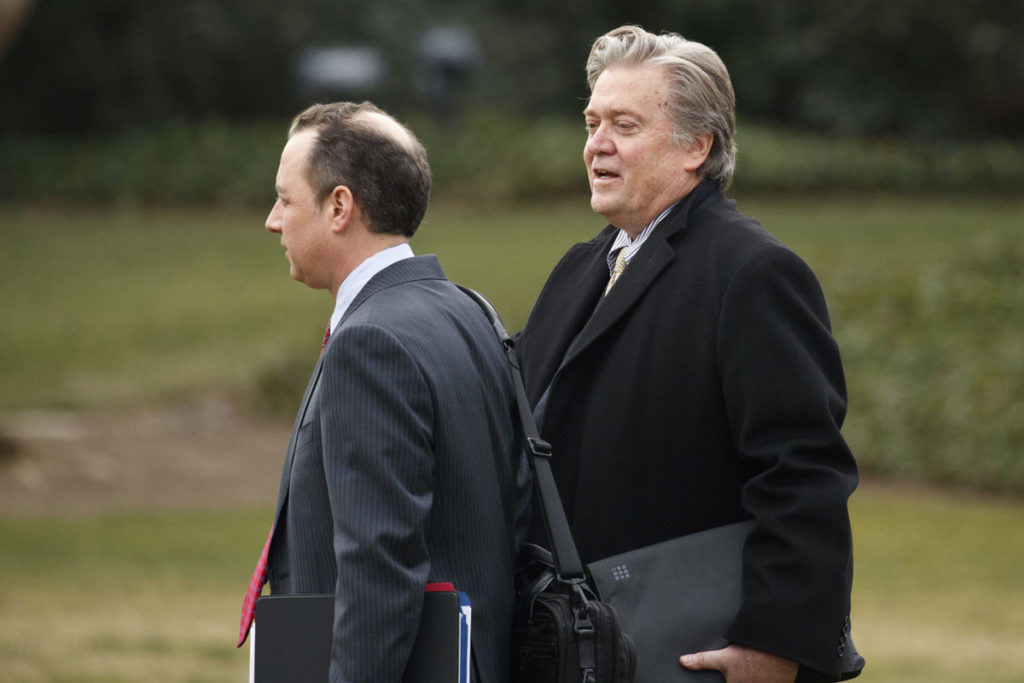
As President Donald Trump begins his second month in office, his team is trying to move past the crush of controversies that overtook his first month and make progress on health care and tax overhauls long sought by Republicans. Both issues thrust Trump, a real estate executive who has never held elected office, into the unfamiliar world of legislating. The president has thus far relied exclusively on executive powers to muscle through policy priorities and has offered few details about what he’ll require in any final legislative packages, like how the proposals should be paid for. The White House also sent conflicting signals about whether the president will send Congress his own legislative blueprints or let lawmakers drive the process. White House chief of staff Reince Priebus told The Associated Press that he expects a health care plan to emerge in “the first few days of March.” Pressed on whether the plan would be coming from the White House, Priebus said, “We don’t work in a vacuum.” On Sunday, White House advisers held a three-hour meeting on health care at Trump’s South Florida club, their third lengthy discussion on the topic in four days. Gary Cohn, the former Goldman Sachs banker now serving as Trump’s top economic adviser, and newly sworn in Treasury Secretary Steve Mnuchin have been leading talks with Republican lawmakers and business leaders on taxes. Neither man has prior government experience. Republicans long blamed Democrats for blocking efforts to overhaul the nation’s complicated tax code and make changes to the sweeping 2010 health care law signed by President Barack Obama. But with the GOP now in control of both the White House and Congress, making good on those promises rests almost entirely with the president and his party. To some Republicans’ chagrin, both issues were overshadowed during Trump’s first month. The president spent more time publicly fighting the media than selling Americans on his vision for a new health care law. Fresh questions emerged about Trump’s ties to Russia, particularly after national security adviser Michael Flynn was fired for misleading the White House about his conversations with a Russian envoy. The White House botched the rollout of a refugee and immigration executive order, Trump’s most substantive policy initiative to date, and the directive was quickly blocked by the courts. Priebus said the distractions did not slow down work happening behind the scenes on the president’s legislative priorities. “Obviously with the White House staff, you’re able to walk and chew gum at the same time,” Priebus said. “The economic team isn’t screwing around with the legal case and the lawyers aren’t screwing around with tax reform.” One of the biggest questions on Capitol Hill is how involved Trump plans to be in legislative minutia. One GOP leadership aide whose office has been working with the White House described the president as a “big picture guy” and said he expected Trump to defer to Capitol Hill on health care in particular. The aide was not authorized to speak publicly and insisted on anonymity. Priebus said he expects Congress to pass both a tax package and legislation repealing and replacing Obama’s health care law by the end of the year. But the White House’s outward confidence belies major roadblocks on both matters. After spending years criticizing “Obamacare,” Republicans are grappling with how to replace it and pay for a new law. While some lawmakers worry about getting blamed for taking health insurance away from millions of people, others worry the party won’t go far enough in upending the current system. “My worry now is that many people are talking about a partial repeal of Obamacare,” Rep. Rand Paul, R-Ky., said. “If you only repeal part of it and you leave it some sort of Obamacare light, which some are talking about, my fear is the situation actually gets worse.” Trump has said he wants to keep popular provisions like guaranteeing coverage for people with pre-existing medical conditions and allowing young people to stay on their parents’ insurance plans until age 26. He’s also raised the prospect of allowing people to buy insurance across states lines, which is not part of the law. On taxes, Republicans have a potentially more vexing impasse. House Republicans want to scrap the 35 percent tax on corporate profits, which is riddled with exemptions, deductions and credits, and replace it with a “border adjustment tax.” The system would tax all imports coming into the U.S., but exclude exports from taxation. House Speaker Paul Ryan‘s office has been vigorously promoting the idea to Trump, who has called the system “too complicated.” Some House aides have privately voiced optimism that the White House is coming around, though Priebus would only say that border adjustment was “an option we’re all discussing and debating.” The president has said he plans to release a “phenomenal” tax plan in the coming weeks. Republished with permission of The Associated Press.
Donald Trump repeating some behaviors he criticized in Clinton
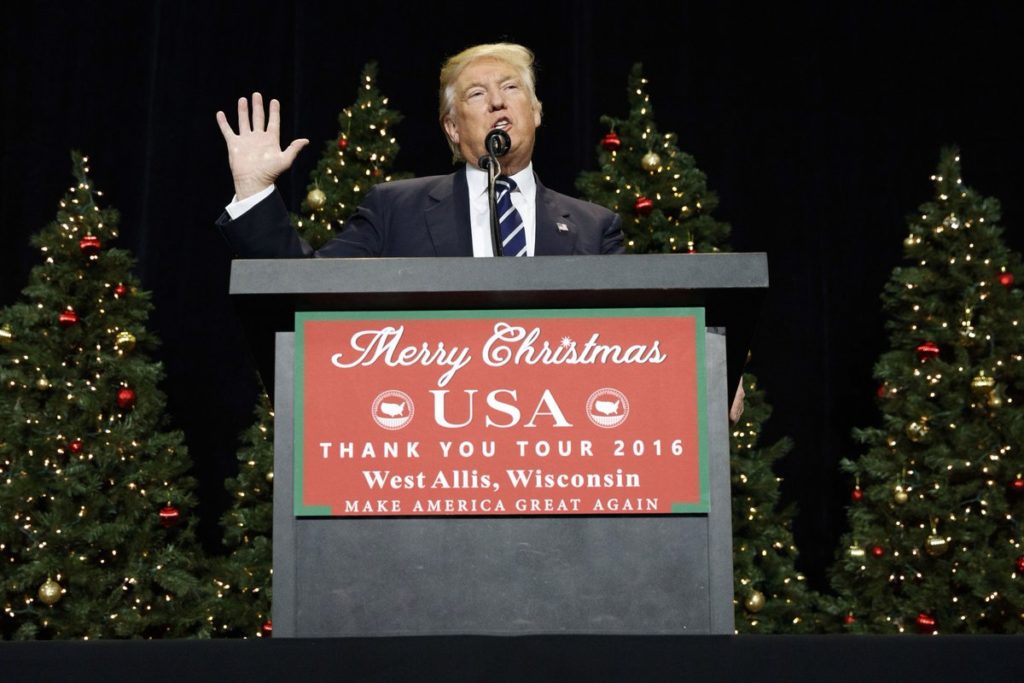
Donald Trump spent the past two years attacking rival Hillary Clinton as crooked, corrupt, and weak. But some of those attacks seem to have already slipped into the history books. From installing Wall Street executives in his Cabinet to avoiding news conferences, the president-elect is adopting some of the same behavior for which he criticized Clinton during their fiery presidential campaign. Here’s a look at what Trump said then — and what he’s doing now: ___ GOLDMAN SACHS Then: “I know the guys at Goldman Sachs,” Trump said at a South Carolina rally in February, when he was locked in a fierce primary battle with Texas Sen. Ted Cruz. “They have total, total control over him. Just like they have total control over Hillary Clinton.” Now: A number of former employees of the Wall Street bank will pay a key role in crafting Trump’s economic policy. He’s tapped Goldman Sachs president Gary Cohn to lead the White House National Economic Council. Steven Mnuchin, the Treasury secretary nominee, spent 17 years working at Goldman Sachs and Steve Bannon, Trump’s chief strategist and senior counselor, started his career as an investment banker at the firm. Trump is following in a long political tradition, though one he derided on the campaign trail: If Cohn accepts the nomination, he’ll be the third Goldman executive to run the NEC. ___ BIG DONORS Then: “Crooked Hillary. Look, can you imagine another four years of the Clintons? Seriously. It’s time to move on. And she’s totally controlled by Wall Street and all these people that gave her millions,” Trump said at a May rally in Lynden, Washington. Now: Trump has stocked his Cabinet with six top donors — far more than any recent White House. “I want people that made a fortune. Because now they’re negotiating with you, OK?” Trump said, in a December 9 speech in Des Moines. The biggest giver? Linda McMahon, incoming small business administrator, gave $7.5 million to a super PAC backing Trump, more than a third of the money collected by the political action committee. ___ NEWS CONFERENCES Then: “She doesn’t do news conferences, because she can’t,” Trump said at an August rally in Ashburn, Virginia. “She’s so dishonest she doesn’t want people peppering her with questions.” Now: Trump opened his last news conference on July 27, saying: “You know, I put myself through your news conferences often, not that it’s fun.” He hasn’t held one since. Trump skipped the news conference a president-elect typically gives after winning the White House. Instead, he released a YouTube video of under three minutes. He also recently abruptly canceled plans to hold his first post-election news conference, opting instead to describe his plans for managing his businesses in tweets. “I will hold a press conference in the near future to discuss the business, Cabinet picks and all other topics of interest. Busy times!” he tweeted in mid-December. ___ FAMILY TIES: Then: “It is impossible to figure out where the Clinton Foundation ends and the State Department begins. It is now abundantly clear that the Clintons set up a business to profit from public office. They sold access and specific actions by and really for I guess the making of large amounts of money,” Trump said at an August rally in Austin. Now: While Trump has promised to separate himself from his businesses, there is plenty of overlap between his enterprises and his immediate family. His companies will be run by his sons, Donald Jr and Eric. And his daughter, Ivanka, and son-in-law, Jared Kushner, have joined Trump at a number of meetings with world leaders of countries where the family has financial interests. In a financial disclosure he was required to file during the campaign, Trump listed stakes in about 500 companies in at least 25 countries. Ivanka, in particular, has been caught making early efforts to leverage her father’s new position into profits. After an interview with the family appeared on “60 Minutes,” her jewelry company, Ivanka Trump Fine Jewelry, blasted out an email promoting the $10,800 gold bangle bracelet that she had worn during the appearance. The company later said they were “proactively discussing new policies and procedures.” Ivanka is also auctioning off a private coffee meeting with her to benefit her brother’s foundation. The meeting is valued at $50,000, with the current top bid coming in at $25,000. “United States Secret Service will be Present for the Duration of the Experience,” warns the auction site. Trump on Saturday said he would dissolve his charitable foundation amid efforts to eliminate any conflicts of interest before he takes office next month. ___ CLINTON INVESTIGATIONS Then: “If I win, I am going to instruct my attorney general to get a special prosecutor to look into your situation, because there has never been so many lies, so much deception. There has never been anything like it, and we’re going to have a special prosecutor,” Trump said in the October presidential debate, referring to Clinton. Now: Since winning office, Trump has said he has no intention of pushing for an investigation into Clinton’s use of a private email server as secretary of state or the workings of her family foundation. “It’s just not something that I feel very strongly about,” he told the New York Times. “She went through a lot. And suffered greatly in many different ways,” he said. “I’m not looking to hurt them.” Republished with permission of the Associated Press.
