
Businesses ask Supreme Court to take gay rights case
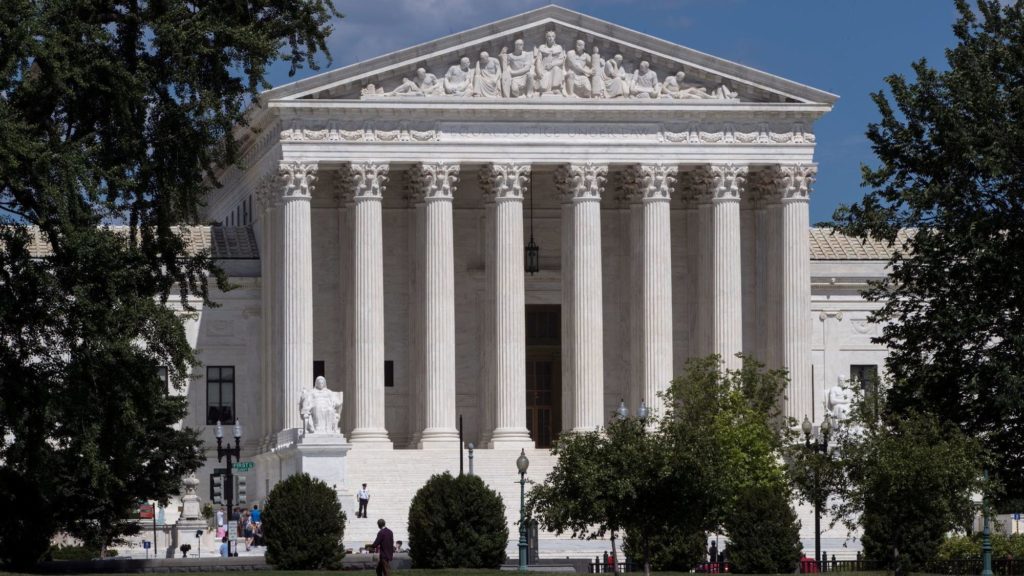
Some of America’s most well-known companies are urging the Supreme Court to rule that a federal employment discrimination law prohibits discrimination based on a person’s sexual orientation, a position opposite of the one taken by the Trump administration. The 76 businesses and organizations – including American Airlines, Apple, eBay, Facebook, Google, Starbucks and Microsoft – filed a brief Wednesday encouraging the high court to take up the issue. They want the court to take a case out of Georgia in which a gay woman who worked as a hospital security officer says she was harassed and punished for dressing in a male uniform and wearing her hair short. Jameka Evans, who worked at Georgia Regional Hospital at Savannah from 2012 to 2013, ultimately left her job and sued. The question in her case is whether a federal law barring workplace discrimination “because of…sex” covers discrimination against someone because of their sexual orientation. The Equal Employment Opportunity Commission under President Barack Obama took the view that it does. But President Donald Trump’s administration has argued that Title VII of the Civil Rights Act of 1964 bars discrimination based on gender but doesn’t cover sexual orientation. The businesses’ court filing says they and their employees would benefit if the court agreed to take the case and rule that Title VII covers sexual orientation discrimination. “Businesses’ first-hand experiences – supported by extensive social-science research – confirm the significant costs for employers and employees when sexual orientation discrimination is not forbidden by a uniform law, even where other policies exist against such discrimination,” the businesses wrote in their brief. The organizations that joined the brief also include two sports teams, the Tampa Bay Rays and the Miami Heat. The case out of Georgia is not unique. Most federal appeals courts in the past have ruled that “sex” means biological gender, not sexual orientation. But a federal appeals court in Chicago, the U.S. Court of Appeals for the 7th Circuit, ruled earlier this year that the law covers sexual orientation. In that case, a gay part-time community college instructor sued after she was repeatedly turned down for a full-time job and her part-time contract was not renewed. The New York-based U.S. Court of Appeals for the 2nd Circuit is also weighing the issue. Last month, the full court heard arguments in a case in which a skydiving instructor, Donald Zarda, claimed he was fired from his job after telling a client he was gay. He sued under the Civil Rights Act, but previous rulings have gone against Zarda, who died in an accident in Switzerland three years ago. A ruling in his case isn’t expected for some time. Republished with permission from the Associated Press.
Gay rights group launches $26M campaign ahead of midterms

The Human Rights Campaign, one of the nation’s leading gay rights groups, is launching a $26 million political organizing effort ahead of next year’s midterm elections. While the effort is nationwide, the group is focusing its resources in particular on several key states: Ohio, Pennsylvania, Michigan, Wisconsin, Arizona, and Nevada. All six states are expected to have competitive Senate races next fall, and each is a presidential battleground. HRC president Chad Griffin said the effort, which will include hiring at least 20 additional political staffers, aims to go “beyond resistance” – drawing from the phrase used by opponents of President Donald Trump‘s administration. He said the group will focus on fighting legislation curbing gay rights and backing “pro-equality candidates and initiatives.” “Resistance is really important – all of the marches and the rallies, that’s all important,” Griffin said. “But it’s also important to not only sustain that, but to take that to the next level.” HRC’s announcement comes as Democrats and liberal organization grapple with how to rebound from devastating defeats across the country in November. Despite Trump’s sluggish approval ratings, Democrats have failed to pull out victories in several special elections this year, and the party faces a difficult electoral map in 2018, with many competitive Senate races in Republican-leaning states. Griffin said the Human Rights Campaign is drawing in part on its efforts last year in North Carolina, where Democrat Roy Cooper defeated incumbent Republican Gov. Pat McCrory, who signed the controversial “”bathroom bill” law. The measure required transgender people to use restrooms corresponding to the sex on their birth certificates in many public buildings, but was rolled back as part of a compromise plan signed by Cooper after he took office. HRC spent more than $3 million in North Carolina ahead of last year’s election. “There weren’t a lot of bright spots for our community in the last election but North Carolina was a milestone,” Griffin said. Republished with permission of The Associated Press.
No LGBTQ category included in Census proposal for 2020 count
The U.S. Census Bureau is not proposing a separate count of LGBTQ Americans for its 2020 Census. The category had been sought by gay rights advocates. The bureau counts Americans according to race, gender and other characteristics. In its proposal to Congress, the people-counting agency is not asking for a separate category for LGBTQ Americans. The Census Bureau had no immediate comment. But gay rights advocates say it’s more evidence that Trump is going back on a campaign promise to protect the gay community. Last week, the Department of Health and Human Services removed questions on sexuality from two of its surveys. The Trump administration also has cancelled an Obama administration directive that students should use the bathroom that matches their gender identity. Republished with permission of The Associated Press.
Gay rights looms as hurdle to passing defense policy bill
Congressional Republicans and Democrats will have to bridge a vast cultural divide over an issue that has nothing to do with bullets and bombs to complete a must-pass defense policy bill. A key sticking point in the negotiations during the upcoming lame-duck session is a House-passed provision that Senate Democrats say would undercut protections against workplace discrimination based on sexual or gender orientation. They’ve called the measure dangerous and are demanding it be removed from the $602 billion measure. Many House Republicans, however, view the provision as a bulwark for religious liberty and just as adamantly want it kept in the final package. Donald Trump‘s victory in the presidential election has strengthened their hand should the contentious debate begin anew next year. “It’s going to be a tough one for them to figure out,” said Justin Johnson, a senior defense policy analyst at the Heritage Foundation, a conservative think tank. Drop the amendment and risk a backlash from rank-and-file Republicans, he said. Keep it in and Democrats could mobilize to block the defense bill, which authorizes spending for military programs that range from jet fighters to a pay raise for the troops. A filibuster carries risks for Democrats. They could be hammered by the GOP for stymieing legislation important to U.S. service members and their families. And even if the provision is dropped to avoid a veto by President Barack Obama, Republicans – who control both houses of Congress – could wait until Trump is in the White House and attach the provision to a different bill. “I think the election gives congressional Republicans a lot more leverage on this issue,” Johnson said. “They don’t have to be too worried about a veto threat because the situation only improves next year.” Although much of Trump’s agenda on social issues remains opaque, he assured conservatives during the campaign that he would place a high priority on religious liberty. The tenure of Indiana Gov. Mike Pence, the vice president-elect, was punctuated by his steadfast support for conservative social issues that at times drew unwanted attention to the state, most notably when a religious objections law he signed provoked a national backlash from critics who said it could sanction discrimination against gay people. David Stacy, government affairs director at the Human Rights Campaign, acknowledged that the long-term prospects for barring the amendment from passing are challenging. But he said he’s bullish about the short term. Congress has little incentive to drag out a lame-duck session and that means passing a defense bill unburdened by a provision that has no bearing on the Pentagon’s core missions, according to Stacy. “The blame could fall either way,” said Stacy, suggesting Republicans could be seen as obstructionists for insisting the amendment be preserved at the expense of speedy passage of the defense bill. The provision is brief and requires any U.S. government office to provide protections and exemptions “to any religious corporation, religious association, religious educational institution, or religious society that is a recipient of or offeror” for a federal contract. Forty Senate Democrats plus two independents wrote in a letter last month that the provision would amount to government-sponsored discrimination by permitting religiously affiliated federal contractors to refuse to interview a job candidate whose faith differs from theirs and to fire employees who marry their same-sex partners or use birth control. The provision would “vastly expand religious exemptions” under the Civil Rights Act and Americans with Disabilities Act to allow contractors “to harm hardworking Americans who deserve to be protected from workplace discrimination based on sexual orientation, gender identity, religious identity, or reproductive and other health care decisions,” they said in the letter. Republicans argued the measure merely builds on existing law by ensuring that faith-based organizations that perform work for the U.S. government aren’t forced to act against their beliefs. The measure is known as the Russell amendment, named after its sponsor, Rep. Steve Russell, R-Okla. Paradoxically, opponents of the Russell amendment may find support from Sen. John McCain of Arizona, the Republican chairman of the Senate Armed Services Committee who plays a central role in determining the contents of the defense policy bill. The Arizona legislature passed a religious freedom bill in 2014 designed to give more legal protections to people who might be accused of discrimination for actions they took in accordance with religious beliefs. A frequently cited example is a business that denies service to gay or lesbian customers. With the state facing a national backlash from business leaders, including the National Football League, McCain urged then-Gov. Jan Brewer to veto the legislation. She did. “We’re hoping he sees this the same way,” said Maggie Garrett, legislative director for Americans United for Separation of Church and State. Republished with permission of the Associated Press.
Panel sends Alabama chief justice’s ethics case to trial
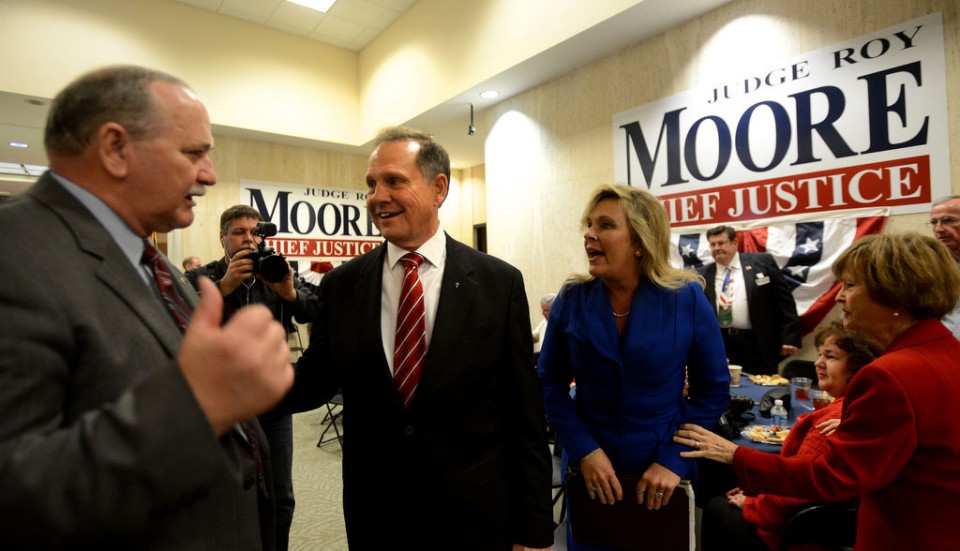
A state judicial panel on Monday refused to dismiss an ethics complaint against Alabama Chief Justice Roy Moore, saying that Moore will go to trial in September on accusations that he urged 68 probate judges to defy the federal courts on same-sex marriage. The Alabama Court of the Judiciary, a state panel that disciplines judges, refused dueling requests to either dismiss the complaint against Moore outright or go ahead and remove him from office. Chief Judge Michael Joiner said the case will go to trial Sept. 28. The panel of nine judges will hear the case and decide whether Moore violated judicial ethics and if so, what punishment he will face. The decision came down shortly after the conclusion of a 60-minute hearing in which Moore was alternately portrayed as a politician on a mission to block gay couples from marrying in Alabama or a judge who was merely trying answer questions from confused probate judges. Moore — who was ousted from office by the court in 2003 for refusing to remove a Ten Commandments monument from the state judicial building — could be removed as chief justice for a second time. “We are here to talk about Chief Justice Roy Moore and his repeated refusal to follow the rule of law,” John Carroll, a former federal magistrate representing the Judicial Inquiry Commission, told the court. Carroll said Moore abused his power as chief justice to promote a private agenda against same-sex marriage. The complaint stems from a Jan. 6 memo he sent probate judges. Moore wrote that a March order from the state Supreme Court to refuse marriage licenses to gay couples remained in full force and effect. The order came even though the U.S. Supreme Court had effectively legalized same-sex marriage nationwide six months prior and a federal judge said Alabama should follow that decision. A lawyer for Moore said the chief justice was only clarifying the status of the state injunction that was issued in March because probate judges were asking questions about it. “The probate judges were flapping in the wind. They were wondering what to do,” his lawyer, Mat Staver, told the court. Moore’s order was merely a legal “truism” that the order had not been lifted by the state court, he argued. Staver, in defending Moore, repeatedly emphasized a section of the January order where Moore told the probate judges that he was not at “liberty to provide any guidance to Alabama probate judges on the effect of (the U.S. Supreme Court ruling) on the existing orders of the Alabama Supreme Court.” Carroll countered that Moore’s intent was clear: to try to urge probate judges to fight against same-sex marriage. Moore acted on his own by sending the order after unsuccessfully urging his fellow justices to take some action regarding the March order in the wake of the U.S. Supreme Court decision, something pointing out by both sides in the hearing. The Monday hearing took on some of the theater and spectacle that accompanied the 2003 dismissal with passionate protests outside the court. Moore’s supporters and opponents held dueling rallies outside the court building ahead of the hearing, at times standing within a few feet of each other as they chanted and waved competing signs such as “No Moore” or “Judge Moore is right.” Moore entered the packed courtroom to applause from his supporters. After the hearing, he spoke to a sign-waving crowd outside, saying there is “no evidence” he broke judicial ethics and that he never told judges what to do. “They said I tried to influence them. I said it’s their decision,” Moore said. Moore said the complaint was filed against him by people who “don’t want anybody opposing any agenda of the homosexual movement.” The Southern Poverty Law Center, a civil rights legal advocacy group, filed the complaint against Moore that led to the ethics charges, and its director said Moore was clearly urging the judges to defy the courts on gay marriage and was now trying to “save his skin by playing word games.” “Alabama is a great state and deserves better than a chief justice who thinks he is above the law. We’ve said it many times. He acts as if he is the ayatollah of Alabama,” SPLC President Richard Cohen said after the hearing. Ambrosia Starling, the stage name of a small-town Alabama drag queen, was among the speakers against Moore. “We lost the war between the states. That means the Supreme Court holds the final authority over jurisdiction of law,” Starling drawled. Linda Chasom drove three hours from Georgia to attend the rally in support of Moore. She said she thought Moore was being persecuted for his conservative Christian beliefs. “My family is being persecuted. Judge Roy Moore is part of my family as a believer,” Chasom said. Republished with permission of the Associated Press.
Barack Obama to name Stonewall Inn first-ever national monument for gay rights
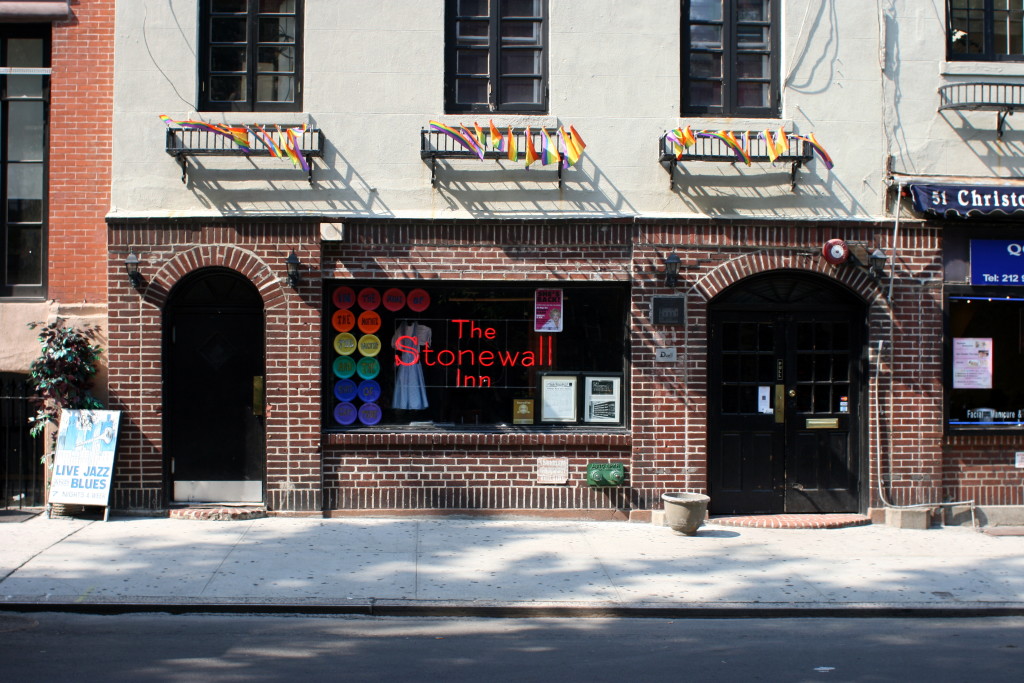
New York’s iconic Stonewall Inn, where the modern gay rights movement took root, will become the first national monument honoring the history of gays and lesbians in the U.S. under a proposal President Barack Obama is preparing to approve. Designating the small swath of land will mark a major act of national recognition for gay rights advocates and their struggles over the last half-century. Since the 1969 uprising in Greenwich Village, the U.S. has enacted anti-discrimination protections, allowed gays and lesbians to serve openly in the U.S. military and legalized same-sex marriage nationwide. Though land must still be transferred to the federal government and other details worked out, the president is expected to move quickly to greenlight the monument following a public meeting Monday in Manhattan, according to two individuals familiar with the administration’s plans. They weren’t authorized to discuss the plans publicly and requested anonymity. Next month marks Lesbian, Gay, Bisexual and Transgender Pride Month in the U.S. The gritty tavern, known colloquially as the Stonewall, became a catalyst for the gay rights movement after police raided it on June 28, 1969. Bar-goers fought back, and many more joined in street protests over the following days in an uprising widely credited as the start of large-scale gay activism in New York and around the word. Annual pride parades in hundreds of cities commemorate the rebellion. The White House declined to comment. Yet Obama has paid tribute to the site before, most notably in his second inaugural address in 2013. In what’s believed to be the first reference to gay rights in an inaugural address, Obama said the principle of equality still guides the U.S. “just as it guided our forebears through Seneca Falls, and Selma, and Stonewall.” New York lawmakers have long advocated for a national designation for the Stonewall. Last year, New York City made it a city landmark – the first named primarily because of significance to LGBT history. In Congress, Sen. Kirsten Gillibrand and Rep. Jerrold Nadler – both Democrats – are pushing legislation to make the Stonewall a national park while urging Obama to commemorate the site through executive authority. Nadler said the site would serve as “an important reminder of the struggle for equality in our country,” including the ongoing fight for rights for transgender people. Proposals the Obama administration is considering include Christopher Park, a small public area on the street where the Stonewall is located, as well as the surrounding vicinity. At 51 Christopher St., where two adjoining buildings once housed the gay bar, the building where the current Stonewall Inn operates is still a popular gay gathering place. Originally built as stables in the 1840s, the structures still have the brick-and-stucco facade that greeted bar-goers in 1969. A number of procedural steps stand between the Stonewall and formal designation by the president. The first step comes Monday evening at a public school in Manhattan, first reported by The Washington Post. The Interior Department said Interior Secretary Sally Jewell and National Park Service Director Jon Jarvis will attend an open meeting about proposals to “protect Christopher Park for future generations.” Obama has made wide use of his power to designate monuments, not only to protect millions of acres of wilderness and ocean but also to honor groups whose struggles for equal treatment have become milestones in U.S. history. Last month, Obama named a historic Washington home as the Belmont-Paul Women’s Equality National Monument. The Human Rights Campaign and other gay rights groups cheered the forthcoming announcement. Corey Johnson, an openly gay New York City councilman who represents the area, said it was “incredibly important” for the federal government to recognize the site. “What happened at Stonewall and at Christopher Park is a key chapter in American history,” Johnson said. Republished with permission of the Associated Press.
Supreme Court blocks Alabama court order in lesbian adoption case
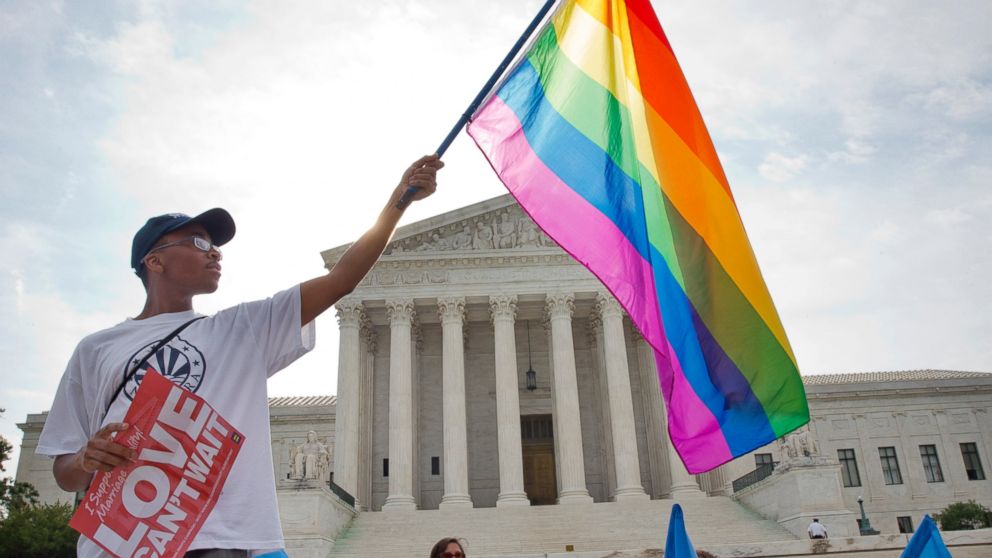
The United States Supreme Court on Monday sided with a lesbian mother who wants to see her adopted children, blocking, at least temporarily, an Alabama court’s order that declared the adoption invalid. The justices issued an order in a case that puts on display legal challenges facing gay and lesbian parents even after the Supreme Court decided that same-sex couples have the right to marry. The case involves a soured relationship between two women, and the three children they raised until the breakup. While they were together, a Georgia court in 2007 approved the woman’s adoption of the children to whom her partner gave birth during their 16-year-relationship. After the couple split, the children’s birth mother contested regular visits between the children and her former partner. In September, Alabama’s highest court refused to recognize the other woman as a parent, saying the adoption they obtained in Georgia was not valid and that the Georgia court was wrong under that state’s adoption laws to grant it. On Monday, the U.S. Supreme Court set aside the Alabama decision as the justices decide whether to hear the woman’s appeal. The noncustodial parent, known in court filings by her initials, V.L., said in a statement issued through her lawyer that she was overjoyed at the prospect of seeing her children again. “I adopted my children more than eight years ago to be sure that I could always be there to protect them. This terrible Alabama decision has hurt my family and will hurt so many other families if it is not corrected,” she said. Her ex-partner fought her visitation, saying the couple lived in Alabama but rented a home in Georgia only because they believed the court there to be friendlier to adoption petitions by gay couples. Alabama justices ruled that the Georgia adoption law didn’t allow a, “non-spouse to adopt a child without first terminating the parental rights of the current parents.” The Alabama Supreme Court earlier this year directed probate judges to refuse marriage licenses to gay couples even though a federal judge ruled the state’s ban on gay marriage was unconstitutional. The directive brought a stop to the weddings until the U.S. Supreme Court said gay and lesbian people have a fundamental right to marry. Republished with permission of the Associated Press.
Gay couples wed in once-reluctant Alabama county
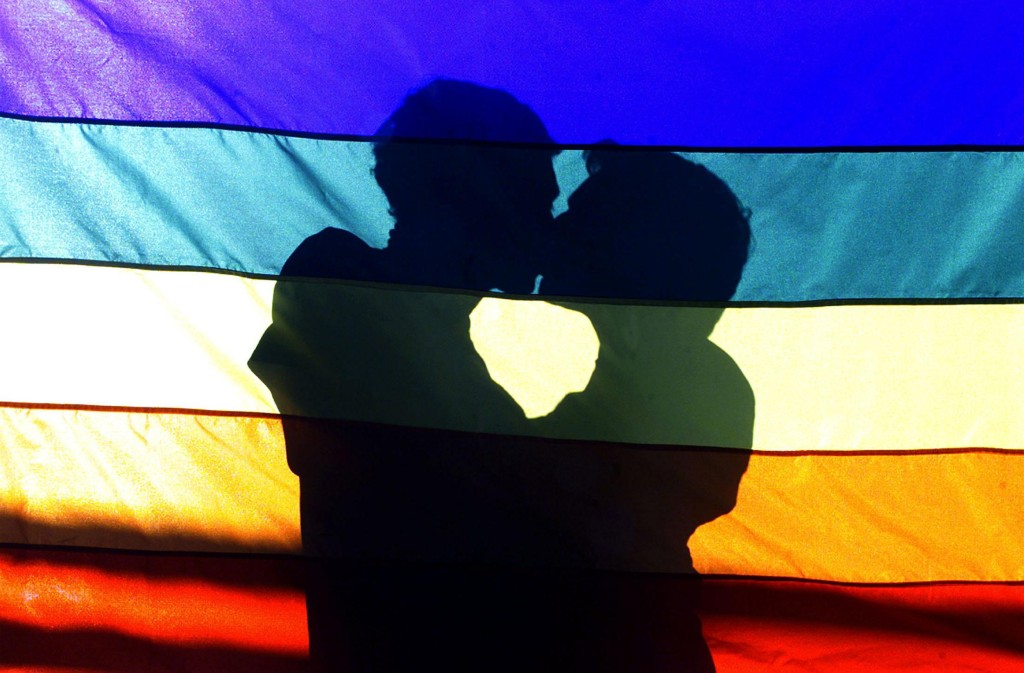
The federal judge who overturned Alabama’s gay-marriage ban ordered a reluctant county to begin issuing marriage licenses to same-sex couples, signaling to probate judges across the state that they should do the same. About an hour after U.S. District Judge Callie Granade’s ruling, Mobile County opened up its marriage license office and started granting the documents to gay couples. Gay-rights advocates said they hoped Granade’s order would smooth an uneven legal landscape where gay couples have been able to marry in some Alabama counties and not in others. However, it wasn’t immediately clear what other judges would do. At least 23 of Alabama’s 67 counties are issuing marriage licenses to gay couples. Robert Povilat and his partner Milton Persinger were the first of several couples to get a marriage license in Mobile County. They wore camellia boutonnieres and exchanged vows in the atrium. “Ecstatic. Ecstatic. We’re married,” Povilat said. Randall Marshall, legal director of the American Civil Liberties Union of Alabama, said his group was ready to litigate the case county by county, if necessary. “We hope other probate judges will look at this and see they too could soon be a defendant in a lawsuit if they don’t start treating everybody equally,” Marshall said. Mobile and other counties had refused to issue the marriage licenses after Alabama Chief Justice Roy Moore told probate judges on Sunday they didn’t have to because they were not defendants in the original case. Moore has argued that Granade’s Jan. 23 ruling striking down the Bible Belt state’s gay-marriage ban was an illegal intrusion on Alabama’s sovereignty. Moore made a name for himself by fighting to keep a Ten Commandments monument at a courthouse, refusing to remove it even though a federal judge ordered him to. His resistance cost him his job, but he won re-election as chief justice in 2012. Moore was not at the brief hearing Granade held Thursday because he was . However, he was often the subject of the discussion. Marshall called Moore’s directive, sent hours before courthouses opened Monday, a “ploy” to stop gay marriage in Alabama. A telephone message left with Moore’s office was not immediately returned Thursday. Before the hearing, Moore was steadfast in his belief that the federal courts had intruded in the state’s sovereignty. “Once they start tampering with the definition of marriage which was given of God, there is no end to it,” he said. A long-time supporter of Moore’s, who watched the hearing, predicted that this would not be the end of the fight. Orange Beach businessman Dean Young dismissed the hearing as a “dog and pony show.” “Eighty-one percent of the people voted for a constitutional amendment saying marriage is between one man and one woman,” Young said of the 2006 vote for a gay marriage ban. Michael Druhan, an attorney for Mobile County Probate Judge Don Davis, said Davis closed marriage license operations altogether this week – even for heterosexual couples – rather than navigate what seemed like a legal minefield of conflicting directives. The number of states in which gay and lesbian couples can marry has nearly doubled since October, from 19 to 37, largely as a result of terse Supreme Court orders that allowed lower court rulings to become final and rejected state efforts to keep marriage bans in place pending appeals. The U.S. Supreme Court will hear oral arguments in April and is expected to issue a ruling by June regarding whether gay couples nationwide have a fundamental right to marry and whether states can ban such unions. Republished with permission of the Associated Press.
