
New investment fuels aerospace job growth across Alabama
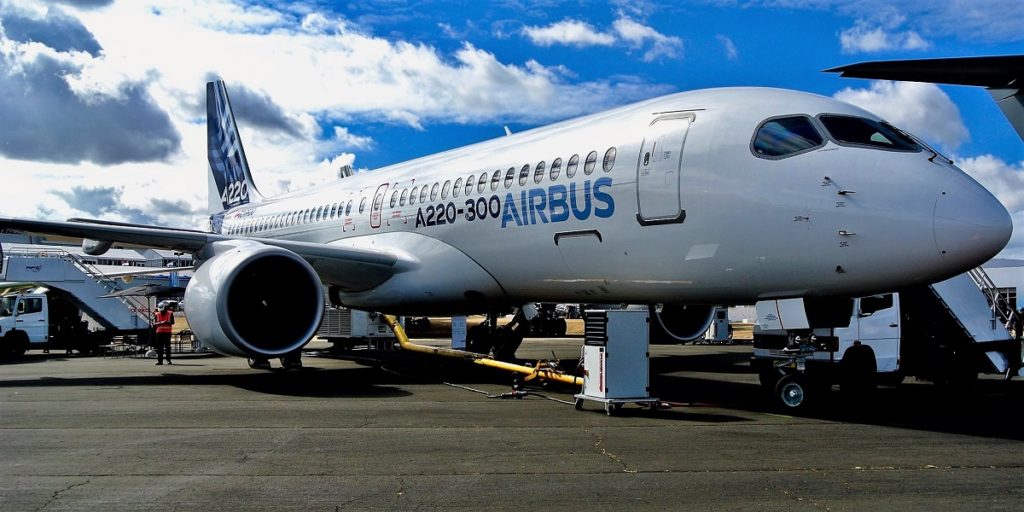
Momentum continues to build in Alabama’s aerospace industry, which is adding new investments and hundreds of jobs to produce innovative, in-demand products in communities across the state. In 2017 alone, there were announcements totaling nearly $690 million and 1,750 jobs. Those numbers increased the sector’s cumulative investment over the past seven years to almost $2.4 billion, along with 8,348 aerospace and defense jobs during the same time period. This year, there’s a hiring surge, as the plans become reality. And more jobs are on the way. At last week’s Farnborough International Airshow, defense contractor BAE Systems and Carpenter Technology Corp., a maker of premium metals and alloys used in the aerospace industry, announced expansions of their Alabama operations. Together, these projects will create more than 250 jobs in north Alabama. Meanwhile, growth plans are already in place for aerospace companies operating across the state. Airbus’ Alabama factory, for instance, is in linefor 600 new jobs, thanks to a planned second assembly line for the Bombardier C Series jetliner (renamed the A220), as well as a potential increase in the production of A320 Family aircraft. GE Aviation plans to double its 90-member Huntsville workforce in the coming year and increase to 300 when the new factory complex for silicon carbide materials reaches full production. The company is also adding workers at its Auburn facility, which mass produces a jet engine fuel nozzle using additive manufacturing, or 3-D printing technologies. Targeting growth Aerospace companies from around the world are seeing that Alabama offers plenty of advantages to help them expand their business, said Greg Canfield, secretary of the Alabama Department of Commerce. “From complex military weapons systems to innovative passenger aircraft, and many of the break-through technologies that power them all, Alabama is home to an impressive array of the industry’s leading products,” Canfield said. “How do we do it? In Alabama, we take partnerships very seriously. A company’s strategic vision and expertise, coupled with the skill and dedication of our highly trained workforce, is always a winning combination.” Canfield joined Gov. Kay Ivey and an Alabama team at Farnborough for appointments with executives of 16 aerospace companies, including Airbus, Boeing, Leonardo and GE Aviation. The talks were aimed at bringing home new investment and jobs in the aerospace sector. Aerojet Rocketdyne One of last year’s key announcements was Aerojet Rocketdyne’s $46.5 million, 800-job expansion project in Huntsville. The company is consolidating its Defense division headquarters and Rocket Shop advanced programs to the Rocket City, where it has had a presence for more than 50 years. It has also moved into a new office space at Cummings Research Park and is building a new Advanced Manufacturing Facility that will produce subassemblies and components for the AR1 rocket engine, composite cases for rocket motors, 3-D printed rocket engine components and other parts. James Ramseier, site leader for operations at the Huntsville Advanced Manufacturing Facility, said construction is about 60 percent complete and right on schedule. “We plan on opening that facility in December of 2018, and initially in 2019, we are going to go through product verification. In 2020, we will ramp up to full production,” he said. Ramseier said everyone in Huntsville, from major business groups to individual building inspectors, has been supportive and welcoming. “The culture here is, ‘Let’s all work together to help make you successful,’” he said. “It’s a pleasure working in an environment where people want you to succeed. “You don’t feel like a stranger. As soon as you move here, you’re part of the family.” Aerojet Rocketdyne’s hiring plans are moving forward as well, with support from Alabama’s top worker training agency. “AIDT is fantastic. We’re working with them every week on developing our training plans and material, and they have been outstanding to work with,” Ramseier said. Forging partnerships The company is also impressed with the ties between business and education in the community, said Bill Bigelow, chief of defense communications. “The partnerships here are very attractive to us,” he said. “We’re growing the future workforce, as we grow our presence here in Huntsville, partnering with Alabama A&M University, the University of Alabama in Huntsville and other area educational institutions, as well as the chamber of commerce and the mayor’s office.” Bigelow said the Tennessee Valley is clearly committed to bringing in the types of jobs and training programs that will grow a generational workforce. “The knowledge and the history in all things aerospace, missile-defense and industrial base operations is here, and Aerojet Rocketdyne wants to leverage that community expertise both now and well into the future,” he said. Republished with the permission of the Alabama Newscenter.
GE Aviation opens Alabama factory complex to produce unique materials for jet engines
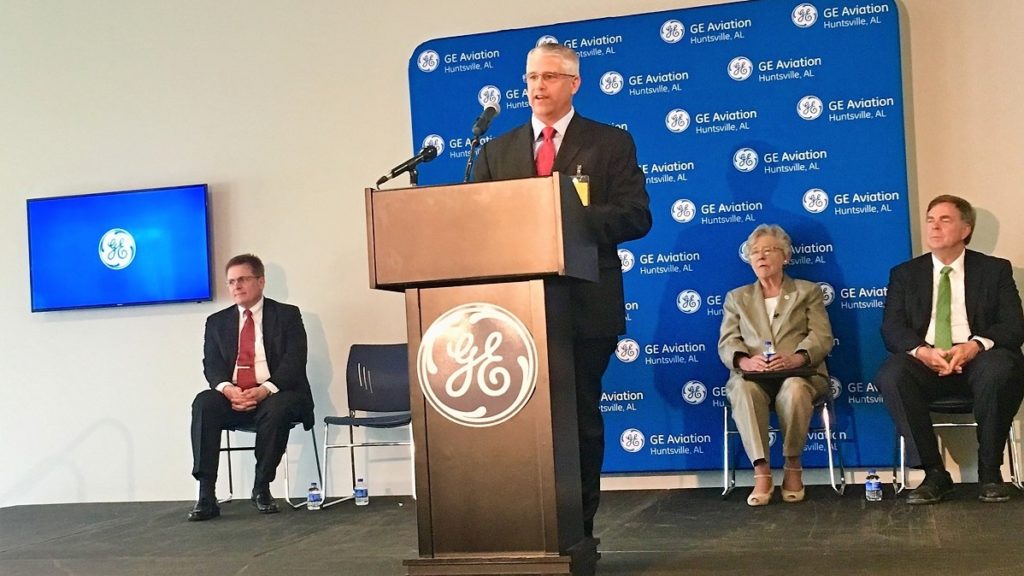
GE Aviation opened a factory complex in Alabama this week that will be the only U.S. location to produce unique materials used to manufacture ceramic components poised to revolutionize jet propulsion. The center in Huntsville comprises two adjacent factories standing on 100 acres, where silicon carbide (SiC) materials will be mass produced. The plants are critical in enabling GE Aviation to produce ceramic matrix composites (CMC) components in large volume. CMCs have ultra-lightweight properties and can withstand extremely high temperatures, making them an ideal material for use in the hottest portions of jet engines. “After years of research and testing, GE Aviation and our partners have cracked the code on mass producing CMC material,” GE Aviation executive Mike Kauffman said at a plant-opening ceremony Wednesday. He added, “The impact of these materials will be felt around the globe.” Aerospace leader GE Aviation executives joined Gov. Kay Ivey and state and local officials at the plant-opening ceremony, which comes more than two years after the company announced the project. “Alabama is recognized as a leader in the aerospace industry, and Alabamians are setting the standard in aerospace manufacturing, development and maintenance,” Ivey said. “When a company with a reputation like GE Aviation chooses to locate in our great state, it says a lot about our state and the quality of our workforce.” GE Aviation employs 90 people at the Huntsville production site, a number that is expected to double in the coming year. At full production, employment should reach 300. Production is projected to begin at the sprawling facility in the fourth quarter. Investment in the project has already exceeded $150 million and is expected to reach $200 million. “This is a great day for the State of Alabama. This is a great day for the City of Huntsville. This is a great day for GE Aviation,” Huntsville Mayor Tommy Battle said. “The partnership that we will build over the years is a partnership that will help each of us succeed.” Cutting-edge factories At the Huntsville plant complex, one factory will produce SiC ceramic fiber, the raw material used to make the unidirectional CMC tape being produced in the neighboring factory. The CMC tape will be used to fabricate CMC components for jet engines and land-based gas turbines. CMC components are much lighter than conventional jet engine parts while also being able to withstand extremely high temperatures. (GE Aviation) The fiber plant is modeled after the SiC fiber factory of NGS Advanced Fibers in Japan, a joint company of Nippon Carbon, GE and Safran of France. The expanding NGS operation is the only plant in the world today producing CMC fiber on a large scale. Demand for CMCs is expected to grow tenfold over the next decade, driven by rising jet engine production rates. This is not GE Aviation’s only cutting-edge Alabama factory. The company also produces fuel nozzles for next-generation LEAP engines using additive manufacturing at a facility in Auburn. This story originally appeared on the Alabama Department of Commerce’s Made in Alabama website. Republished with permission from the Alabama NewsCenter
GE Aviation managers in growing Alabama plant share training duties
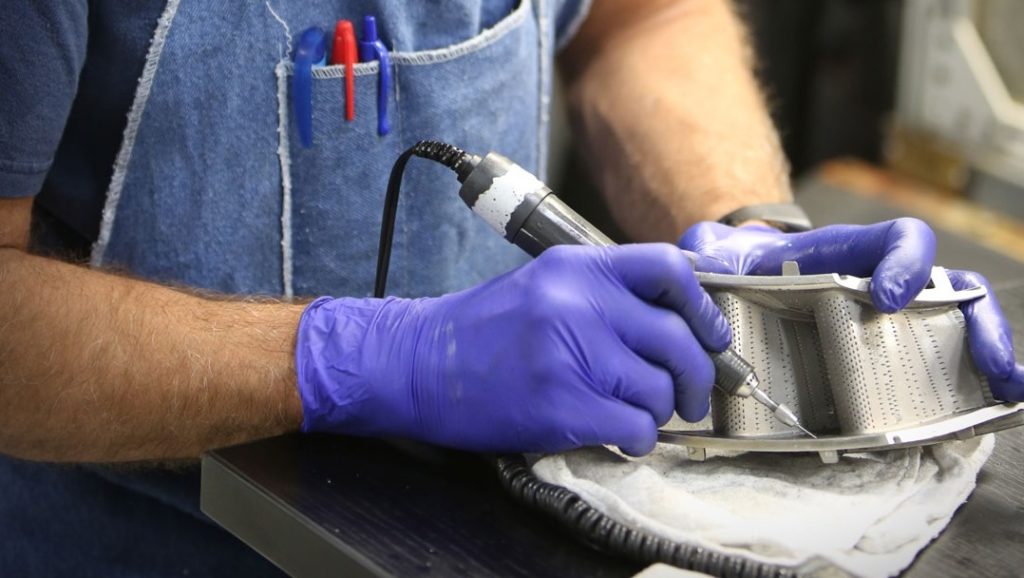
Joseph Moore works days on the shop floor at GE Aviation’s fast-growing jet engine factory in Auburn – then teaches his experiences at night in the classroom. He’s one of several operations managers at GE’s Auburn site with a teaching role during the month-long vocational training sessions at Southern Union State Community College near Auburn to prepare GE’s growing roster of hourly workers About four sessions are held annually to handle the demand for more trained workers in the GE Auburn factory. In addition to the Southern Union instructors, the program includes Moore and his GE colleagues each leading a three-hour evening of instruction each week. “I really enjoy the interaction,” said Moore, who teaches lean manufacturing, Six Sigma quality practices and compliance. “Being part of the training also allows us to get a good look at the people we are evaluating for positions at the plant.” The close cooperation between GE Aviation, Southern Union and the Alabama Department of Commerce is another example of GE Aviation preparing workers for the skill sets required in its new modern factories across the U.S. “Alabama has long been a leader in workforce development, and it’s critical that we partner with industry leaders like GE Aviation to develop cutting-edge training programs like this one,” said Ed Castile, director of AIDT and deputy secretary of the Alabama Department of Commerce. “With new technologies rapidly changing how factories and other workplaces operate, our workers must be equipped with the in-demand skills to succeed in the future.” GE’s Auburn facility uses sophisticated equipment to machine advanced turbine airfoils and structural components for jet engines. Machine operators vying for positions are first trained at Southern Union with a curriculum developed by the Commerce Department’s AIDT division and by local GE plant leaders. GE Auburn produces components for the fastest-selling jet engine in commercial aviation history, the “LEAP” engine for CFM International, the 50/50 joint company of GE and Safran Aircraft Engines of France.GE is actively involved in the training process because GE Auburn is ramping up fast. Employment reached 200 people in March and is expected to grow to 280 by year’s end, according to plant manager Ricardo Acevedo. More than 14,000 LEAP engines are on back order to power three airplanes: the Airbus A320neo (soon to be made in Alabama), Boeing737 MAX and China’s COMAC C919. The Airbus and Boeing airplanes are now in airline service. The GE and Safran factories delivered 459 LEAP engines in 2017. The LEAP delivery goal is up to 1,200 engines for 2018 and in the 1,800-engine range in 2019. In addition to machining parts, the Auburn site this year will produce more than 34,000 fuel nozzle injectors for the LEAP engine using additive manufacturing machines. Auburn’s 37 additive machines is expected to grow to 45 by midyear to handle the needed higher volume. These employees require six weeks of in-house training. GE is looking at ways to engage the local community colleges in offering additive manufacturing as part of their curriculum. GE Aviation is also engaging with engineering students at Auburn University in additive manufacturing projects as part of a groundbreaking partnership. ‘Great careers’ Training for GE’s Auburn employees is not limited to community college classes. The plant also offers training in non-destructive testing in which employees become certified to evaluate jet engine components scanned in advanced X-ray machines. “There’s a skills shortage in this field,” said Tory Landry, the plant’s human relations leader. “It’s hard to find the people. We offer in-house training to candidates who can then experience a significant pay increase.” Among the factors Acevedo attributes to high retention at the plant is the GE investment in training. “There are great careers in advanced manufacturing,” he said. Over the past decade, GE Aviation has opened eight new facilities in the United States, including the new factory in Auburn and a $200 million advanced materials production center in Huntsville. Republished with the permission of Alabama Newscenter.
GE Aviation readies unique materials factories in Alabama
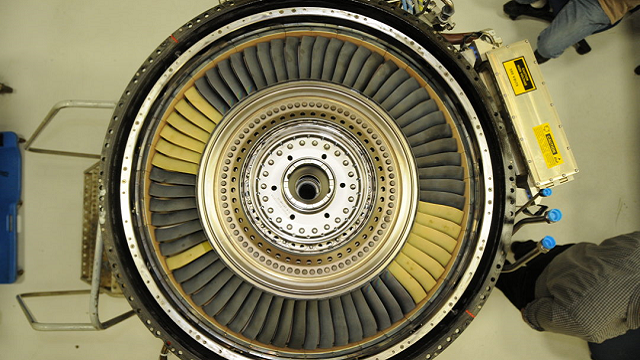
GE Aviation said initial personnel and special processing equipment are in place at a new $200 million factory complex in Alabama that will be America’s first production center for unique materials used to manufacture ceramic matrix composites (CMCs). CMCs are poised to revolutionize aerospace manufacturing because of their ultra-lightweight properties and their ability to withstand extremely high temperatures. The center in Huntsville comprises two adjacent factories standing on 100 acres, where silicon carbide (SiC) materials will be mass produced. The plants are critical in enabling GE Aviation to produce CMC components in large volume. “The equipment coming into our Huntsville factories is unique,” said Jon Lyford, plant manager for GE Aviation’s Huntsville operations. To staff the facility, GE Aviation has been hiring engineers outside the traditional areas of aerospace engineering. “We are hiring experts in the area of process-based manufacturing found in the oil and gas, chemical and the consumer packaged goods industries,” Lyford said. “Managing the production of CMC materials requires a special skill set. We have several key leadership positions in place, and we begin hiring hourly workers toward the end of the year.” GE Aviation, which announced plans for the center in 2015, expects to deliver its first CMC materials from Huntsville by mid-2018. Growth plans The company’s growing Huntsville team today numbers 40 employees. It anticipates about 150 employees in the plants by the end of 2018. About 300 employees are expected to run the operation at peak production. At the Huntsville plant complex, one factory will produce SiC ceramic fiber, the raw material used to make the unidirectional CMC tape being produced in the neighboring factory. The CMC tape will be used to fabricate CMC components for jet engines and land-based gas turbines. The fiber plant is modeled after the SiC fiber factory of NGS Advanced Fibers in Japan, a joint company of Nippon Carbon, GE and Safran of France. The expanding NGS operation is the only plant in the world today producing CMC fiber on a large scale. Surging demand Demand for CMCs is expected to grow tenfold over the next decade driven by rising jet engine production rates. Each new LEAP engine, produced by CFM International (a joint venture between GE and Safran) has 18 CMC turbine shrouds, which are stationary parts in the high-pressure turbine that direct air and ensure turbine blade efficiency. CFM is expected to deliver about 500 LEAP engines this year, 1,200 in 2018 and 1,800 in 2019. The use of lightweight, heat-resistant CMCs in the hot section of GE jet engines is a breakthrough for the jet propulsion industry. With one-third the density of metal alloys, these ultra-lightweight CMCs reduce the overall engine weight. Further, their high-temperature properties greatly enhance engine performance, durability and fuel economy. GE Aviation also produces fuel nozzles for LEAP engines using additive manufacturing at a facility in Auburn. This story originally appeared on the Alabama Department of Commerce’s Made in Alabama website. Republished with permission from the Alabama NewsCenter.
Alabama connections on display at 2017 Paris Air Show

The 2017 Paris Air Show is ground zero for the aerospace industry, a spectacle whose amazing aircraft demonstration flights are eclipsed by the billions of dollars in new deals announced and the behind-the-scenes negotiations that lead to future projects. This year was no different. Boeing and Airbus – global rivals that both have a major presence in Alabama – announced massive aircraft orders. Boeing, in particular, used the air show as a platform to announce more than $30 billion in new orders. In addition, there are plenty of Alabama connections on display at the industry trade event, reflecting the state’s growing stature in the global aerospace business. Airbus, for instance, showed off its A321neo aircraft, a model that will be added to the production lineup at its Mobile manufacturing center. And Raytheon’s exhibition hall displayed SM-3 and SM-6 missiles, which are produced in Huntsville. The fuel-efficient LEAP engine, produced by a partnership that includes GE Aviation, was spotted on Boeing and Airbus aircraft. A 3-D printed fuel nozzle made by GE Aviation in Auburn is an important feature of the engine. In addition, global aerospace and defense company Leonardo displayed its T-100 trainer jet that will be built in Tuskegee if the company wins a U.S. Air Force competition for a next-generation trainer. Massive draw During the Paris Air Show’s three-day trade show phase, an estimated 150,000 visitors were expected. New French president Emmanuel Macron was among them. He visited the European Space Agency Center, where he spoke with astronaut Thomas Pesquet, who has just spent almost 200 days at the International Space Station. As always, the demonstration flights wowed the crowds at Le Bourget. Highlights included flights by the new U.S. F35 fighter jet, the Boeing 737 MAX 9 and Airbus A350-100S, A400M and A380 aircraft. This story originally appeared on the Alabama Department of Commerce’s Made in Alabama website. Republished with permission of Alabama NewsCenter.
Governor talks Alabama aerospace growth at Paris Air Show

Gov. Kay Ivey and the Alabama team in France for the Paris Air Show connected with aerospace industry leaders at an exclusive gathering sponsored by a partnership that promotes the Gulf Coast aerospace cluster for long-term growth. The Aerospace Alliance’s event in Paris brought together delegations from Alabama, Mississippi, Florida and Louisiana with invited guests from aerospace companies and government agencies on the eve of the industry’s premier trade show. Ivey is leading an Alabama delegation at the Paris Air Show that includes business development specialists, government officials, university representatives and others. Gov. Kay Ivey speaks with Opelika Mayor Gary Fuller at the Aerospace Alliance event in Paris. (Made in Alabama) The Aerospace Alliance cruise on the River Seine gave Ivey her first chance on the Paris Air Show mission to talk business with high-level executives in the field and share her commitment to supporting aerospace industry growth in Alabama. Made in Alabama caught up with Ivey to capture her thoughts on what she wants the team to accomplish at the 52nd installment of the Paris Air Show, which started Monday at Le Bourget Airport. Made in Alabama: Why is it important for Alabama to be at the Paris Air Show? Gov. Kay Ivey: The aerospace industry in Alabama is thriving – and we want to see even more growth in this vital sector. At the Paris Air Show, we’ll get a chance to talk with many industry decision-makers in private meetings, telling them Alabama is open for business. It’s a perfect opportunity to tell them about our advantages. To make sure Alabama remains a leader in aerospace, we must be strategic and work on building the relationships that will bring more jobs and investment to the state. The Paris Air Show is the best place in the world to do that. MIA: What are your goals for the Paris Air Show mission? Ivey: The primary mission of Alabama’s economic development team at the Paris Air Show is to promote the state to aerospace companies from around the globe. I want to personally share with the leaders of these companies my commitment to make Alabama the ideal location for them. Recruiting companies like Boeing, Airbus, Lockheed Martin and GE Aviation has made Alabama a force in the aerospace industry. In Paris, we’ll be working hard to position Alabama for a new wave of growth. Aerospace is lifting off in Alabama, and we have to make sure it continues climbing. Arista Aviation CEO Rich Enderle talks with Alabama Gov. Kay Ivey at the Paris Air Show. (Made in Alabama) MIA: What specific messages will you convey at the Paris Air Show? Ivey: That’s easy. Alabama has a rich history in aerospace, going back to the Wright Brothers, who set up a flight school in Montgomery more than a century ago. Rocket scientists and engineers at NASA’s Marshall Space Flight Center in Huntsville made the moon landing possible. We have a great heritage. Today, Alabama has everything an aerospace company needs to succeed. We have the skilled workforce and top-rated training programs. We have a pro-business environment and a solid transportation infrastructure. For aerospace companies, we really have it all. MIA: Why do you want to see the aerospace sector grow in Alabama? Ivey: Aerospace in Alabama is all about high-level jobs, thriving opportunities, advanced technology and dynamic innovation. Growth in this industry will continue to propel Alabama forward, and is a sign to the world that Alabama is open and ready for businesses to invest in our state. As the former chair of the Aerospace States Association, I know how critically important this sector is across the nation. Alabama is home to 400 aerospace companies from 30 different countries. More than 83,000 Alabamians are employed in aerospace and defense. I want to see us build on the solid base of this industry. The growth prospects are good. We just need to keep working to bring home that growth – and the jobs that come with it. This story originally appeared on the Alabama Department of Commerce’s Made in Alabama website. Republished with permission of Alabama NewsCenter.
GE selects Auburn University for additive manufacturing program
A leader in additive manufacturing technologies, GE, has selected Auburn University as one of just eight universities from around the world to participate in a groundbreaking program focusing on 3-D printing research and education initiatives. Auburn, which has been strategically expanding its activities in additive manufacturing, will receive a state-of-the-art Concept Laser MLAB 100R metal printer as part of the GE Additive Education Center. The printer is valued at $250,000. Manufacturers are increasingly using additive manufacturing to produce intricate metal components with complex geometries. (Contributed) “Auburn Engineering is a national leader in industrialized additive manufacturing,” said Christopher B. Roberts, dean of Auburn’s Samuel Ginn College of Engineering. “Companies such as GE have asked for our help in graduating engineers who are well versed in additive manufacturing and prepared to lead American industry into the future.” A GE advisory group composed of engineers and additive manufacturing specialists chose Auburn out of more than 250 applicants because of its established additive manufacturing curriculum and extensive research initiatives within the engineering school. GE’s Additive Education Program was created to support colleges and universities such as Auburn that are educating students in additive manufacturing technologies. Through the program, GE is investing $8 million over five years to provide up to 50 metal additive machines to higher education institutions around the world. “Additive manufacturing and 3-D printing is revolutionizing the way we think about designing and manufacturing products,” said Mohammad Ehteshami, vice president of GE Additive. “We want a pipeline of engineering talent that have additive in their DNA. This education program is our way of supporting that goal.” Leadership position Greg Canfield, secretary of the Alabama Department of Commerce, said Auburn’s concentration on additive manufacturing is positioning its engineering school as a leader in the game-changing technology. GE Aviation produces fuel nozzles using additive manufacturing at a plant in Auburn. (Contributed) “Additive manufacturing represents a significant breakthrough that will reshape how manufacturers produce all kinds of products, and it’s critical that Alabama’s workforce is prepared for this technology,” Canfield said. “The partnership between GE and Auburn University will help ensure that we’re ready for future advances,” he added. GE already has a strong presence in Auburn. Its GE Aviation unit is using additive manufacturing to mass produce fuel nozzle injectors at a plant in the city’s Technology Park West. The company says the nozzle is the first complex jet engine component produced with 3-D printing technology. Advancing additive Roberts said Auburn has moved to greatly expand its programs in additive manufacturing. An artist’s rendering shows the renovated Gavin Engineering Research Laboratory. When it opens later this year, the laboratory will feature dedicated space for Auburn University’s additive manufacturing research. (Contributed) “We responded by developing new curricula so students learn how to design for additive manufacturing systems,” he said. ‘We are also investing millions of dollars in the latest 3-D printing technology and hiring world-class faculty to teach our students. “This award further strengthens our relationship with GE, and we look forward to even greater collaboration with them in our education and research programs.” Auburn Engineering faculty members are also researching other ways to employ additive technology, such as producing next-generation rocket engines for space flights to Mars or developing intricate medical implants for use during surgery. In addition, Auburn has created a new Center for Industrialized Additive Manufacturing, directed by materials engineering professor Tony Overfelt, and hired internationally known faculty working in this growing field of research. The university’s newly renovated Gavin Engineering Research Laboratory opens later this year and will feature dedicated space for Auburn’s additive manufacturing research, including upgraded and expanded testing equipment. In addition, Auburn has signed a Space Act Agreement with NASA to jointly explore and advance the applications of 3-D printing technologies. How it works Additive manufacturing of metal parts is typically conducted using a laser or an electron beam to heat input materials during the printing process. (GE Additive) Additive manufacturing involves fabricating parts layer-by-layer from metals, plastics or other materials based on a 3-D computer-aided design model. Because parts are made by building upon each layer, additive technology reduces waste in the manufacturing process, improves production speed and can create parts that are lighter and more durable than those made using traditional manufacturing methods. With the ability to create highly complex parts in a fraction of the time, additive technology is revolutionizing the manufacturing industry and creating new opportunities for engineers to explore. GE Aviation says the fuel nozzle produced at its Auburn plant is 25 percent lighter and five times more durable than conventional models that took longer to produce. This story originally appeared on the Alabama Department of Commerce’s Made in Alabama website. Republished with permission of Alabama NewsCenter.
GE Aviation announces $200 million investment, 300 new Alabama jobs

GE Aviation announced Tuesday its plans to invest $200 million in the Yellowhammer State to create adjacent factories on 100 acres in Huntsville. The plan will create up to 300 jobs when the factories are operational later this decade. The announcement was made at the Alabama State Capital in Montgomery by GE Aviation’s Vice President of the CMC Programs, Sanjay Correa. He was was joined by Gov. Robert Bentley and members of the Alabama delegation. One plant will be the first of its kind in the United States and will produce silicon carbide (SiC) ceramic fiber. The other factory will use the SiC ceramic fiber to produce the unidirectional ceramic matrix composite component (CMC) tape necessary to fabricate CMC components for jet engines and land-based gas turbines. It represents GE Aviation’s second significant factory investment in Alabama in recent years. Since 2013, GE Aviation has invested more than $100 million in a 300,000-square-foot factory in Auburn, where the company is engaged in jet engine component manufacturing as well as establishing the world’s highest-volume additive manufacturing center. Here’s what the Alabama government officials have to say about the announcement: Gov. Robert Bentley: We are honored that GE Aviation has chosen Huntsville for an advanced technology manufacturing operation to produce silicon carbide materials for commercial and military engines. Today’s announcement is important because Alabama is expanding our partnership with a global aviation leader. We have prioritized advanced manufacturing in aerospace and aviation, and I appreciate the investment by GE Aviation in this new Huntsville operation. U.S. Sen. Richard Shelby: GE Aviation’s decision to open two adjacent factories in Huntsville is great news for the region and our state. This announcement is a testament to the exceptional workforce in Huntsville and highlights that Alabama is open for business. I look forward to the jobs and economic growth that this investment will bring to Huntsville. U.S. Sen. Jeff Sessions: GE Aviation’s decision to build two new world-class factories in North Alabama is a vote of confidence in the strength and talent of Alabama and its workers. It continues Huntsville’s strong tradition of supporting our men and women in uniform. This $200 million investment will expand the footprint and impact of GE Aviation in the area while providing new opportunities for hundreds of workers. The cutting-edge technology employed in Huntsville demonstrates GE Aviation’s continued leadership in this industry. A strong manufacturing base is essential for a robust economy, and I am pleased that Alabama and GE Aviation have been leaders by investing in high-paying manufacturing jobs. U.S. Rep. Mo Brooks (AL-05): North Alabama prides itself on manufacturing excellence, and its high-technology workforce, making it a perfect match for global aviation leaders like GE Aviation. This investment will bolster Alabama’s pivotal role in the development of GE Aviation’s world-class engines and the future of aerospace engineering. We are grateful for this commitment to Huntsville and the additional growth it will inspire across the state. U.S. Rep. Robert Aderholt (AL-04): This is wonderful news for North Alabama. GE has been committed to this area for decades, and I’m glad to know that dedication continues with even more well paying jobs for 300 people. Job creation continues to be the number one priority for Alabama. As Ronald Reagan once said, ‘the best social program is a job.’ This investment from GE is a clear sign that Alabama is open for business. Huntsville Mayor Tommy Battle: GE is an innovation company. Huntsville is an innovation city. This announcement by GE is the latest chapter in that history of innovation. The products that will be manufactured here represent the future of aerospace. We are proud that Huntsville will help GE change the way we travel through the skies.
Auburn University signs Space Act Agreement with NASA

Auburn University has signed a Space Act Agreement with NASA to explore and advance the applications of additive manufacturing, or 3D printing. Multiple news outlets report that the act was signed Thursday by John Mason, Auburn’s vice president for research and economic development, along with Patrick Scheuermann, director of NASA’s Marshall Space Flight Center in Huntsville. The agreement will also allow students to engage in NASA’s missions and opportunities, investigate and develop technologies and share facilities and technical expertise. Mason says the agreement will also allow for more internship opportunities with NASA and GE Aviation. The Marshall Center has used additive manufacturing to build and test rocket engine components and manufacture the first 3D printed parts aboard the International Space Station. These parts are undergoing testing at Marshall. Republished with permission of The Associated Press.
