
Steve Flowers: Wes Allen worthy and unique
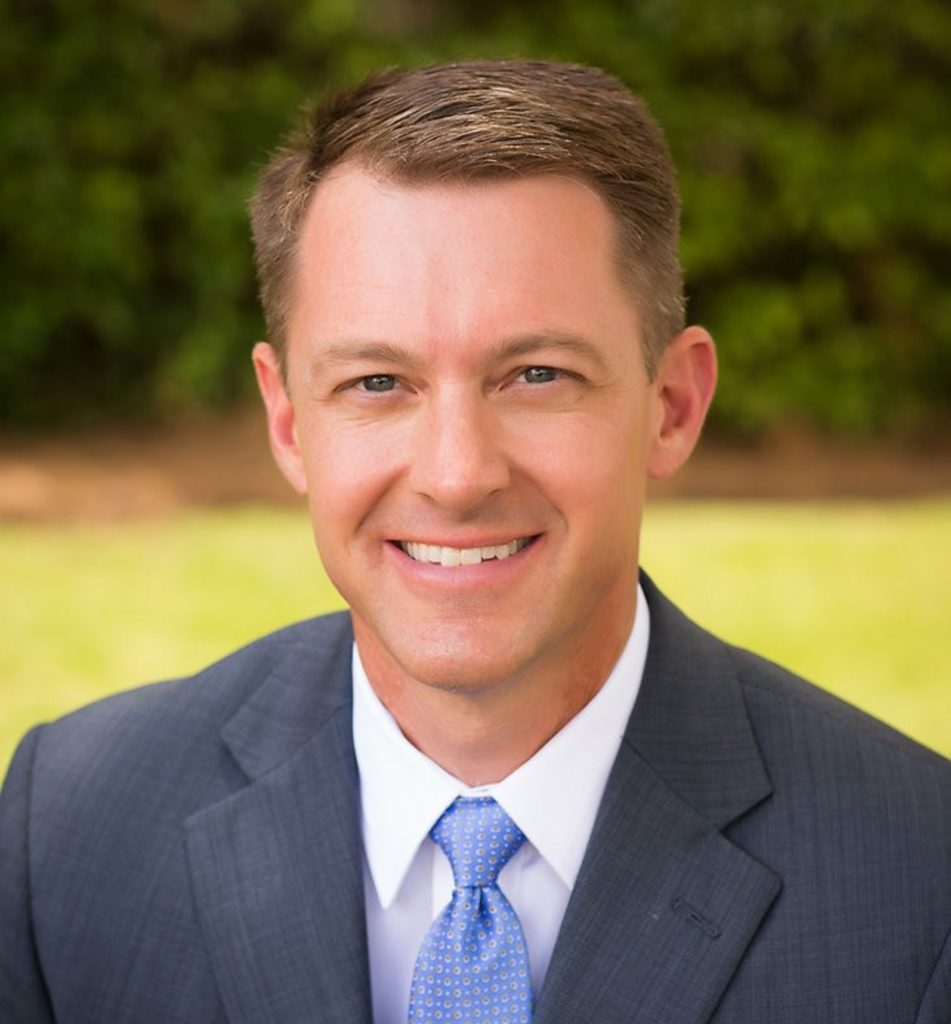
Alabama’s 54th Secretary of State Wes Allen is doing a very good job in his first term as Secretary of State of the great State of Alabama. When he ran for this office, I said he was by far the best qualified person for this important post. This constitutional office is a real working position. It has a myriad of duties with dozens of employees to oversee. The primary reason that I knew he was the most qualified person was the fact that he had been the Probate Judge of Pike County for almost a decade. Although the Secretary of State wears several hats, the administering of elections is one of the more important duties and the highest profile of this job. I also knew Wes Allen to be a young man of integrity. I have known Wes most of his life. His dad is State Senator Gerald Allen, who has represented Tuscaloosa and surrounding counties for over 30 years. I was already in the House of Representatives when Gerald came to the House in the mid 1980’s. Gerald and I bonded. He gravitated to me because he knew that Senator Richard Shelby and I were friends. Gerald was and still is a great admirer and friend of our revered and retired U.S. Senator Shelby. Both Gerald Allen and Richard Shelby hail from Tuscaloosa. While we were in the House of Representatives, Gerald asked me several times to go to lunch with him in Tuscaloosa. He wanted me to meet his son of whom he was very proud. Finally, I journeyed to the Druid City where we ate at a famous meat and three restaurant on 15th Street. His son, Wes, joined us. Wes was everything Gerald said he was, very friendly and delightful. That was 35 years ago. Little did I know that Wes would one day sit in the same House seat that I was in when Wes and I first met, which is House District 89, representing Pike and Dale Counties. Wes was a student at the University of Alabama and a walk-on split end on Gene Stallings’ Alabama football team. Dabo Sweeney was Wes’ position coach. While Probate Judge of Pike County, Wes conducted more than a dozen elections without a single error. He was and still is a pillar of the Troy/Pike County Community. I have watched him be a Christian conservative leader in the First Baptist Church in Troy. He was at every one of his children’s ballgames and coached their teams most of the time. While Probate Judge he was chosen to be President of the Probate Judges Association. In 2018, he left the Probate office and was elected overwhelmingly to the legislature. He served successfully alongside his dad for four years. I do not think we have ever seen a father/son duo serve simultaneously in the legislature in state history. When Wes Allen was elected Secretary of State in 2022 and was sworn into office in January 2023, he set another unique precedent in state history. He became only the third person in Alabama history to serve in all three branches of State Constitutional Government – Judicial/Legislative and Executive – Judicial as Probate Judge, Legislative as a member of the House of Representatives 2018 to 2022, and now Executive as Secretary of State. Only two other men have accomplished this in Alabama government, George C. Wallace and John Purifoy. Governor George C. Wallace was elected to the Alabama House of Representatives from Barbour County in 1946 at age 26. He served one four-year term and then went back home to be a Circuit Judge. In 1962 he was elected to his first of five terms as Governor of Alabama. The only other man to do what Wes Allen and George Wallace had done was John Purifoy. John Purifoy had a prolific career in Alabama politics. He was a farmer from Wilcox County. He was born in 1842 and served in the Confederate Army. He was elected Probate Judge of Wilcox County in 1880, and later was elected to the Alabama House of Representatives. He was elected Secretary of State from the legislature, like Wes. He served as Secretary of State from 1915 to 1919. He was Alabama’s State Treasurer 1911 to 1915 and State Auditor from 1892 to 1896. Wes Allen is not only a worthy Secretary of State, he has a unique place in Alabama political history. Steve Flowers is Alabama’s leading political columnist. His weekly column appears in over 60 Alabama newspapers. He served 16 years in the state legislature. Steve may be reached at steve@steveflowers.us.
Steve Flowers: Negative ads work and always have
Over the years, many of you have lamented to me and said, “I am so tired of seeing all negative ads with candidates lambasting each other in political campaigns. Why don’t candidates say what they are going to do when they are elected rather than bashing their opponent mercilessly?” People also suggest that campaigns are more negative today than in bygone years. Allow me to answer the question in the reverse order. Criticizing and slandering your opponent is not new. It was actually more vicious and incendiary in earlier American political life and much more personal. First of all, there were no television cameras or hidden studios where third-party political ad gurus brewed disingenuous ads. Folks in the old days would have to meet their opponents face-to-face at political forums, rallies, and debates. They would trade barbs and insults right in the face of each other. In early American political history, there were instances of fisticuffs and even a duel where opponents were shot. Nothing was off limits, not even peoples’ wives and children. What they did to Andrew Jackson’s wife Rachel was so bad that it eventually caused the poor lady to withdraw and die from depression. At least today, it seems inappropriate and out of bounds to attack people’s family members. Also, in the old days, it seemed you could say things about your opponent without there being any semblance of truth to the accusations. Today, there are laws requiring that any attack on the opposition must have a semblance or scintilla of truth. Therefore, it was worse in past decades than today, if you can believe that. The main point asked why do these campaign media gurus use negative ads. It is a simple answer: they work. If they did not work, they would not use them. Polling reveals that negative ads change the trajectory and standing of candidates dramatically and instantaneously. There is a direct correlation to a candidate’s polling numbers before and after being hit by a negative ad. Much more so than a soft, pretty ad advocating that you vote for someone because they are a competent person who would be the ideal elected public servant. These gurus know this fact because today’s polling is very accurate, and they can read the polls, and they react and design ads based on polling. In Alabama political history the most brilliant and unquestionably accomplished politician was George C. Wallace. In Wallace’s early years of “politiken” for his first terms as governor, polling was in its infancy and was not as scientifically accurate. However, George Wallace was born to be a political genius and a political animal. He had a God-given ability to remember names and he knew what people wanted to hear. He inherently could read the political tea leaves. He did not need polling. I would visit often with Wallace in his last term. I was a freshman legislator and actually represented his home county of Barbour. He would call me down from the House floor to visit with him in the Governor’s office. He would reminisce about past political forays and governor’s races. He would tell me a lot of inside stories that I will probably never share. However, allow me to share this sage political admonition he imparted to me one day. He looked me squarely in the eyes and told me that more people vote against someone than for someone. He further elaborated, “You have got to find a boogeyman to run against.” He lived and breathed this belief and strategy. He ran on the race issue and segregation for decades. He rode that horse as long as he could. However, when Black Alabamians were given the right to vote in 1965 and soon after constituted 25% of the Democratic Primary electorate, Wallace instantly changed his stripes and went down Dexter Avenue to Martin Luther King Jr.’s church and had a conversion experience and begged forgiveness for exploiting the race issue. The Black voters forgave Wallace and elected him governor that last term in 1982. I never said Wallace was a statesman. He was a true, natural politician, and, yes, a demagogue. Whatever it took to get elected was Wallace’s modus operandi. These political gurus of today know the George Wallace adage of finding a boogeyman to run against remains true. In this upcoming election year, that is why you will see countless negative ads on television because they work. See you next week. Steve Flowers is Alabama’s leading political columnist. His weekly column appears in over 60 Alabama newspapers. He served 16 years in the state legislature. Steve may be reached at: www.steveflowers.us.
Steve Flowers: Alabama Community College marks 60 Years
The year 1963 was a historic and turbulent year for Alabama. The race issue was the prevalent and commanding issue in southern politics. White Southerners were determined to hold onto segregation and Jim Crow laws, as was the entire South. Black Southerners were prohibited from voting by these laws and practices. Therefore, every governor’s race in the Deep South was won by whichever candidate could be the most pro-segregationist and, yes, most rhetorical and vociferous towards blacks and integration. The king of the racist anti-integration governors became our own George C. Wallace, although Georgia’s Lester Maddox and Mississippi’s Ross Barrett ran him a close second. George Wallace was obsessed with being the Governor of Alabama. He thought he would be elected in his first bid in 1958. He lost that race to John Patterson primarily because Patterson was perceived as being the most pronounced racist and segregationist. Wallace took the defeat hard. He actually went into a depression mode for about a week. He hardly got out of his bed in a Montgomery hotel room. His closest friends and allies consoled him and finally coaxed him out of bed and assured him that he had just run his “Get Acquainted Race,” a historic pattern whereby the man who ran second would run for governor again four years later and win because the sitting governor could not run again. The Alabama Constitution prohibited reelection, so one four-year term and you were out. After a week, Wallace got out of bed, shaved, showered, called his comrades together, and declared, “Boys, I am going to be elected governor in 1962, come hell or high water. I got out-segged, and I ain’t going to be out-segged again.” He grabbed hold of the race issue, and he did not let go. He worked 18 hours a day, seven days a week for four years, and he rode the race issue like a rented mule and won the 1962 governor’s race. He became Governor in January of 1963 and made his famous inaugural speech spouting, “Segregation today, segregation tomorrow, and segregation forever.” He and every legislator passed laws and resolutions espousing segregation. Wallace was sincere in his racist rhetoric. He believed in segregation, but deep down, he was more of a progressive than a racist. Wallace was born and raised from humble roots in rural Barbour County. He saw what FDR’s New Deal Democratic Progressive Plan had done for Alabama. Wallace had put together enough money to journey to Tuscaloosa with a cardboard suitcase and get into the University of Alabama as a boy. At that time, most promising students could not afford to go to college. Wallace was determined to provide an opportunity for Alabama students to be able to stay home and get a college education. In the midst of all the racist discord in 1963, Wallace and the legislature created the Alabama Junior College and Trade School System. It is his greatest legacy. The system was created 60 years ago, in 1963. This is the system’s “Diamond Jubilee.” The system has long transitioned from the junior college system for providing an easier way to get the first two years of college before transferring to a four-year college. Today, 60 years later, the Alabama Community College System is the most important and significant segment of higher education in Alabama. The Community College System is made up of Alabama students, and they are prepared to take Alabama’s highest-paying and most needed jobs. The Alabama Community College System is the new capstone of higher education in Alabama. The Alabama Community College System is made up of 24 colleges and more than 130 locations. They are the primary vehicle for providing workers and managers for Alabama businesses, large and small. There are 155,000 students attending Alabama Community Colleges. Enrollment has been up almost 10% in the last two years. Ninety-six percent of the systems students live in Alabama, and 72% of these students stay in Alabama after completing their studies. These students and alumni add an amazing $6.6 billion to Alabama’s economy each year. Nearly 100,000 jobs in Alabama are generated or supported by Alabama’s Community Colleges, their students, and alumni. This accounts for one of every 27 jobs in our state. Wallace could never have dreamed of what he was doing for Alabama’s future 60 years ago. See you next week. Steve Flowers is Alabama’s leading political columnist. His weekly column appears in over 60 Alabama newspapers. He served 16 years in the state legislature. Steve may be reached at www.steveflowers.us.
Voter turnout sagging in troubled voting rights hub of Selma
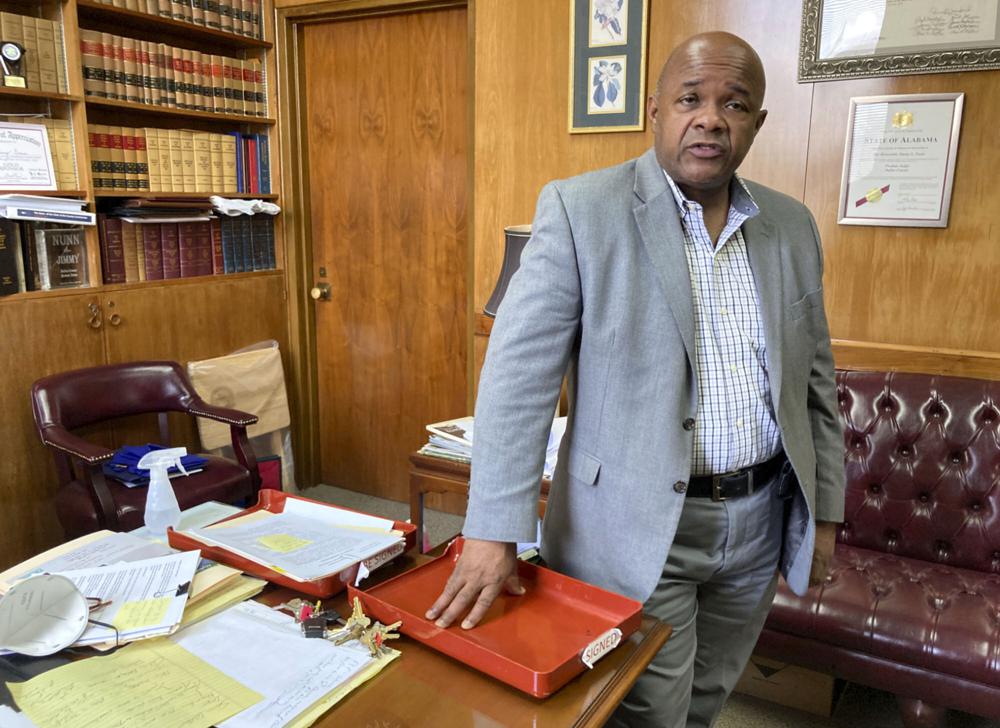
Fewer and fewer people are voting in Selma, Alabama. And to many, that is particularly heartbreaking. They lament that almost six decades after Black demonstrators on the city’s Edmond Pettus Bridge risked their lives for the right to cast ballots, voting in predominantly Black Selma and surrounding Dallas County has steadily declined. Turnout in 2020 was under 57%, among the worst in the state. “It should not be that way. We should have a large voter turnout in all elections,” said Michael Jackson, a Black district attorney elected with support from voters of all races. Thousands will gather on March 6 for this year’s re-enactment of the bridge crossing to honor the foot soldiers of that “Bloody Sunday” in 1965. Downtown will resemble a huge street festival during the event, known as the Selma Bridge Crossing Jubilee, with thousands of visitors, blaring music, and vendors selling food and T-shirts. Another Selma event, less celebratory and more activist, was held last year by Black Voters Matter. The aim was to boost Black power at the ballot box. But the issues in Selma — a onetime Confederate arsenal, located about 50 miles (80 kilometers) west of Montgomery in Alabama’s old plantation region — defy simple solutions. Some cite a hangover from decades of white supremacist voter suppression, others a 2013 Supreme Court ruling that gutted key provisions of federal voting law to allow current GOP efforts to tighten voting rules. Some Black voters, who tend to vote Democratic, simply don’t see the point in voting in a state where every statewide office is held by white Republicans who also control the Legislature. Then there is what some describe as infighting between local leaders, and low morale in a crime-ridden town with too many pothole-covered streets, too many abandoned homes, and too many vacant businesses. All are considered factors that helped lead to a 13% decline in population over the last decade in a town where more than one-third live in poverty. Despite visits from presidents, congressional leaders, and celebrity luminaries like Oprah Winfrey — and even the success of the 2014 historical film drama “Selma” by Ava DuVernay — Selma never seems to get any better. Resident Tyrone Clarke said he votes when work and travel allow, but not always. Many others don’t because of disqualifying felony convictions or disillusionment with the shrinking town of roughly 18,000 people, he said.ADVERTISEMENT “You have a whole lot of people who look at the conditions and don’t see what good it’s going to do for them,” Clarke said. “You know, ‘How is this guy or that guy being in office going to affect me in this little, rotten town here?’” But something else seems to be going on in Selma and Dallas County. Other poor, mostly Black areas have not seen the same drastic decline in turnout. Only one of Alabama’s majority Black counties, Macon, the home of historically Black Tuskegee University, had a lower voter turnout than Dallas in 2020. Selma is hardly the only place where big Black majorities don’t always translate to big voter turnout. The U.S. Census Bureau found that a racial gap persisted nationwide in voting in 2020, with about 71% of white voters casting ballots compared to 63% of eligible Black people. A majority of Dallas County’s voters are Black, and Black people made up the largest share of the county’s vote in 2020, about 68%, state statistics show. But white voters had a disproportionally larger share of the county electorate compared to Black voters, records showed. Jimmy L. Nunn, a former Selma city attorney who became Dallas County’s first Black probate judge in 2019, said the community is weighed down by its own history. “We have been programmed that our votes do not count, that we have no vote,” said Nunn, who works in the same county courthouse where white, Jim Crow officeholders refused to register Black voters, helping inspire the protests of 1965. “It is that mindset we have to change.” Selma entered voting rights legend because of what happened at the foot of the Edmond Pettus Bridge, which is named for a onetime Confederate general and reputed Ku Klux Klan leader, on March 7, 1965. After months of demonstrations and failed attempts to register Black people to vote in the white-controlled city, a long line of marchers led by John Lewis, then a young activist, crossed the span over the Alabama River headed toward the state capital of Montgomery to present demands to Gov. George C. Wallace, a segregationist. State troopers and sheriff’s posse members on horseback stopped them. A trooper bashed Lewis’ head during the ensuing melee and dozens more were hurt. Images of the violence reinforced the evil and depth of Southern white supremacy, helping build support for the Voting Rights Act of 1965. In the following decades, Selma became a worldwide touchstone for voting rights, with then-President Barack Obama speaking at the 50th anniversary of Bloody Sunday in 2015. “If Selma taught us anything, it’s that our work is never done,” he said. “The American experiment in self-government gives work and purpose to each generation.” But in Selma, voting already was on the decline. After more than 66% of Dallas County’s voters went to the polls in 2008, when Obama become the nation’s first Black president, turnout fell in each presidential election afterward. Shamika Mendenhall, a mother of two young children with a third on the way, was among registered voters who did not cast a ballot in 2020. She often goes to the annual jubilee that marks the anniversary of Bloody Sunday and has relatives who participated in voting rights protests of the 1960s, and she’s still a little sheepish about missing the election. “To choose our president we ought to vote,” said Mendenhall, 25. A Black member of the county’s Democratic Party executive committee, Collins Pettaway III spends a lot of time pondering how to get young voters like Mendenhall more engaged. Older residents who remember Bloody Sunday and the subsequent Selma-to-Montgomery voting rights march vote, he said,
Kay Ivey honors state’s first Black poet laureate
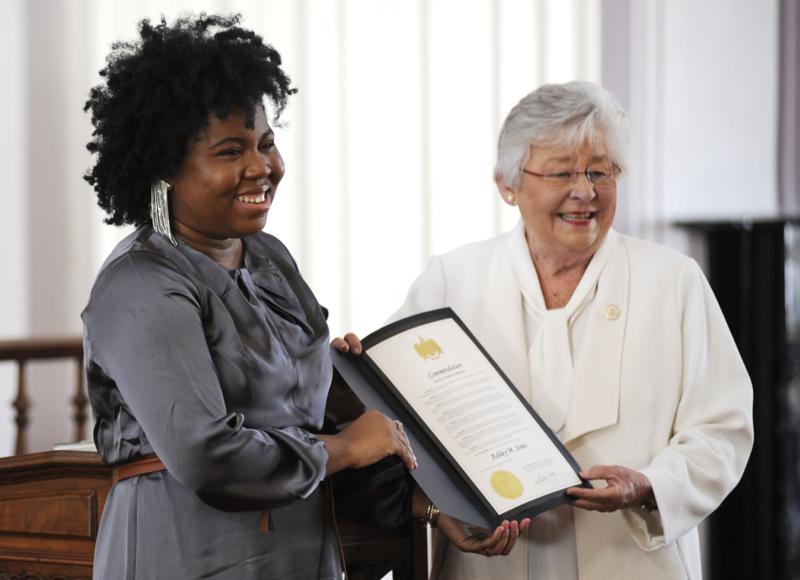
Alabama Gov. Kay Ivey recognized the state’s first Black poet laureate, a creative writing teacher who delves into inequality and the difficulty of being Black in America, on Wednesday in the same building where Southern delegates voted to form the Confederacy 160 years ago. Standing in the white-domed Capitol, the Republican Ivey presented Ashley M. Jones with a commendation for the honor, bestowed earlier this year by the Alabama Writers Cooperative for a four-year term that begins in January. “Everyone in this room, and I would add folks around the country, are proud of you for being honored with this well-deserved, historic recognition,” Ivey told Jones during a ceremony. As poet laureate, Jones will advocate for poetry and writing in general during lectures and appearances at schools, libraries, and other institutions. “I am committed to making space for all of us who write,” she said. Jones’ most recent book, released earlier this year, is a collection of poems titled “Reparations Now!” In it, she writes about reparations not just in terms of money but in the fuller sense of rebuilding a society fractured by generations of racial violence, division, and prejudice. Jones, in an interview, said she believes both poetry and history should tell the truth. “I’m hoping that through my position I can continue to spread that message and show that when we actually confront the truth it’s good for everyone. Hiding things doesn’t help at all. It actually hurts more than it helps,” she said. Jones’ appointment is “pretty revolutionary,” said Jeanie Thompson, an author and executive director of the Alabama Writers Forum. “She brings a strong statement, but she brings a lot of balance,” said Thompson. “And so I think that she will have things to say that people will hear.” Jones’ recent book includes the poem “Reparations Now, Reparations Tomorrow, Reparations Forever,” in which she takes off on the infamous “segregation now” inaugural speech by four-term Alabama Gov. George C. Wallace to talk about the depth of pain of Black people and ponders what could ever be a salve. It says, in part: “What, you think all I want is money? What, you think money can ever repay what you stole? Give me land, give me all the blood you ripped out of our backs, our veins. Give me every snapped neck and the noose you wove to hoist the body up. “Give me the screams you silenced in so many dark and lustful rooms. Give me the songs you said were yours but you know came out of our lips first. Give me back Martin Luther King Jr. and Malcolm X and Medgar Evers. Give me back the beauty of my hair. The swell of my hips. The big of my lips. Give me back the whole Atlantic Ocean. Give me a never-ending blue. And a mule.” Such words are challenging in a conservative state that’s still trying to remove racist language from a Constitution passed in 1901 to protect the political power of white people. Earlier this year, the GOP-controlled State Board of Education passed a resolution banning the teaching of critical race theory, an academic term that conservative opponents contend amounts to making white people feel bad about the racism of past generations. “We have permanently BANNED Critical Race Theory in Alabama. We’re focused on teaching our children how to read and write, not HATE,” Ivey said in a tweet in October. Jones teaches at the Alabama School of Fine Arts, which she also attended. She said receiving such an honor in a deeply conservative state was gratifying but not terribly surprising since Alabama’s writing community, like those elsewhere, is generally more progressive than the general population. “The artists always are on a different pulse,” she said. Republished with the permission of the Associated Press.
TV station donates thousands of items to Alabama Archives
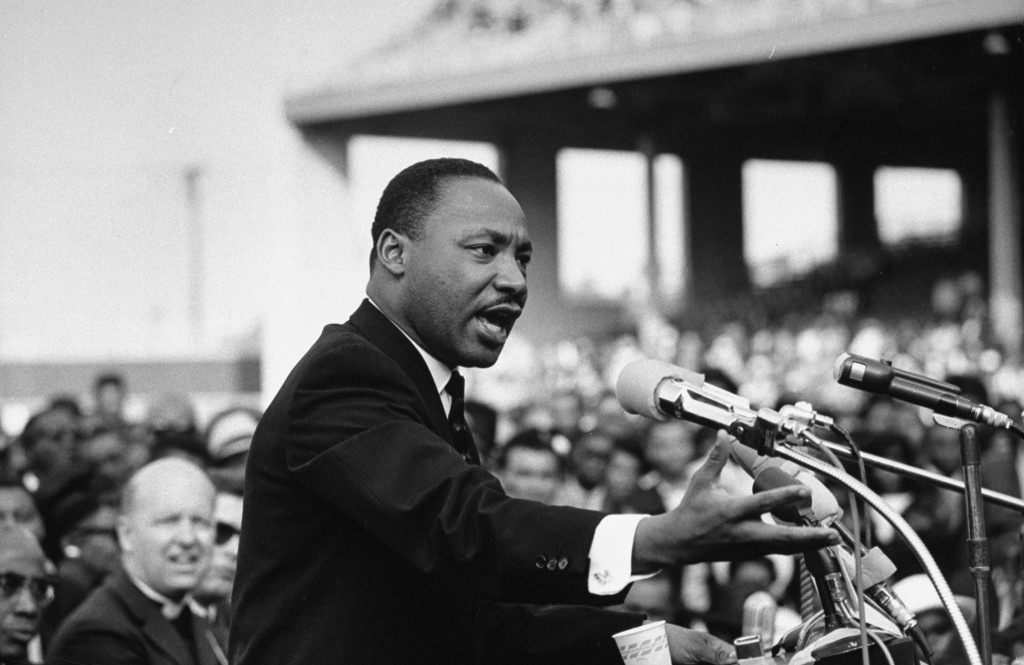
A television station has donated thousands of items including historic footage from the civil rights era to the Alabama Department of Archives and History, which will make the material available to the public. WSFA-TV in Montgomery announced it had given the agency materials dating to the 1950s, including footage from news conferences by the Rev. Martin Luther King Jr., coverage of the Freedom Riders in 1961, and original film from the “Stand in the School House Door” by then-Gov. George C. Wallace in 1963. The video also includes scenes from a visit to the NASA center in Huntsville by President John F. Kennedy and Vice President Lyndon Johnson in 1962 and special reports on the death of former University of Alabama football coach Paul “Bear” Bryant in 1983. While the TV station was planning to switch locations, managers determined it wasn’t practical to move the large numbers of delicate film reels and boxes full of video and other items. Steve Murray, the Archives director, said archivists had long suspected the WSFA studios held valuable content for historical preservation, and his department jumped at the opportunity to add to its collection when a phone call came in late 2019. “It was one of those kind of chilling moments … where the hair stands up on the back of your neck when you see these closets after closets of tapes and films,” Murray explained. “Just the opportunity to take something off the shelf and see a label … related to the civil rights movement or to other major public events and Alabama’s life and history really made you, made me appreciate the value of what was there.” The donation includes more than 7,000 audiovisual items in a variety of formats, plus WSFA-TV scrapbooks, photographs, negatives, correspondence with viewers and officials, and newsletters. “We are intimidated by this collection, to be honest with you, because it is huge,” said Meredith McDonough, digital assets director for Archives and History, “and because it is unlike anything we have.” Under the terms of the donation agreement, the department will use the material to benefit state citizens through museum exhibitions, K-12 classrooms, and other educational products. WSFA-TV will be able to broadcast and publish the content of the collection after it is digitized. The agency is processing “test batches” of film and it will take years to fully process the boxes. So far, about 15 hours of film has been digitized, which represents only 30 items in the collection. No payment was made for the collection, WSFA-TV reported. Republished with the permission of the Associated Press.
Alabama university removes Wallace name from building
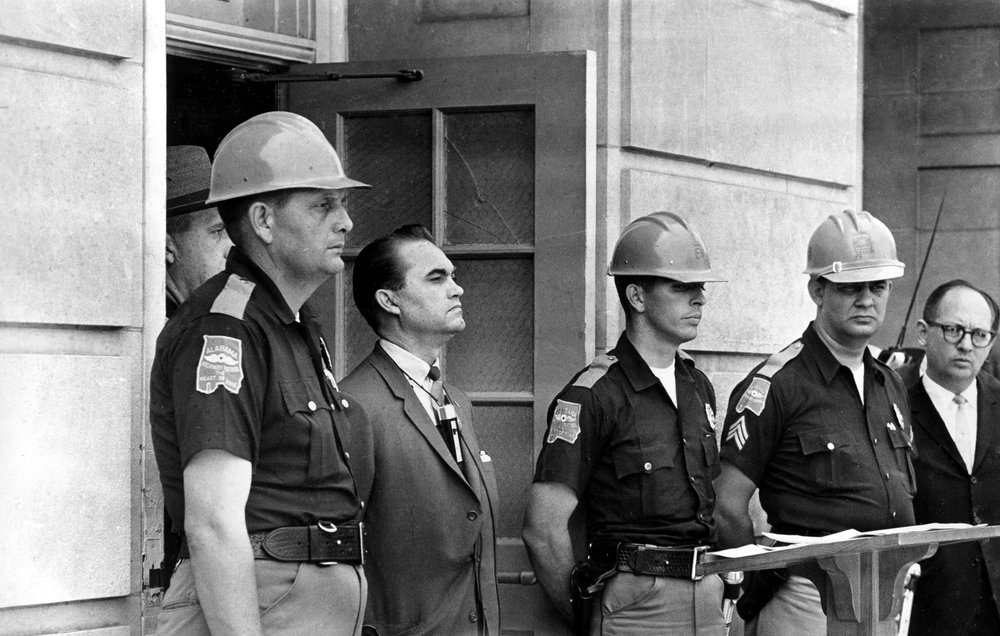
The University of Alabama at Birmingham has removed the name of four-term governor and presidential candidate George C. Wallace from a campus building over his support of racial segregation. A resolution unanimously approved by trustees Friday said Wallace rose to power by defending racial separation and stoking racial animosity. While noting Wallace’s eventual renouncement of racist policies, the resolution said his name remains a symbol of racial injustice for many. A UAB building that was named after Wallace in 1975 will now be called simply the Physical Education Building. Removing Wallace’s name from the structure “is simply the right things to do,” trustee John England Jr. said in a statement. Wallace vowed “segregation forever” at his 1963 inaugural and was paralyzed in an assassination attempt while running for president in 1972. He has a “complex legacy” that includes his apology to the late Rep. John Lewis, who was beaten by Alabama state troopers while trying to march for voting rights in Selma, England said. “That said, his stated regret late in life did not erase the effects of the divisiveness that continue to haunt the conscience and reputation of our state,” he said. Wallace was elected to his fourth term as governor in 1982 with support from Black voters and died in 1998. Multiple buildings around the state bear his name. An online petition urged Auburn University to rename a building honoring Wallace last year as protests against police killings and racial injustice swept across the nation, but no action was taken. Wallace’s son George Wallace Jr. wrote an open letter opposing such a move, which he said would fail to recognize his change late in life. Wallace’s daughter Peggy Wallace Kennedy, in a statement released by UAB, expressed support for change on the Birmingham campus. “It is important to the university to always seek positive and meaningful change for the betterment of students, faculty, and the community,” she said. Republished with the permission of the Associated Press.
Alvin Holmes wants Confederate flag removed from Capitol grounds

A Montgomery lawmaker on Tuesday said Alabama should remove Confederate flags that fly outside the Alabama Capitol next to a towering monument to Confederate soldiers. Rep. Alvin Holmes, D-Montgomery, said he will file a legislative resolution in the next legislative session to remove Confederate flags from the Capitol grounds. “I think most people realize it’s divisive,” Holmes said. “It has no place on a public building.” A spokeswoman for Gov. Robert Bentley said the governor did not have a comment at this time on whether the Confederate flags should remain on the Capitol grounds. Nor did he say whether he thought the state should stop issuing a vanity license plate for the Sons of Confederate Veterans that includes the battle flag. The Alabama Legislature is expected to meet later this summer for a special session on the budget. Four Confederate flags – the first three official flags of the Confederacy and the square-shaped Confederate battle flag – fly at each corner of an 88-foot-tall Alabama Confederate Monument beside the Alabama Capitol. Calls to remove Confederate symbols that dot the Old South reignited after the massacre of nine people at a black church in South Carolina last week. The white suspect, Dylann Storm Roof, posed in photos displaying Confederate flags and burning or desecrating U.S. flags. South Carolina Gov. Nikki Haley said Monday that the flag should be removed from the Statehouse grounds. South Carolina, like Alabama, once flew the Confederate flag atop its Capitol but moved it to a nearby Confederate monument in 2000 during a compromise with black lawmakers. Virginia Gov. Terry McAuliffe said he wanted the state to stop issuing the Confederate vanity license plates. In Alabama, former Gov. George C. Wallace ordered the Confederate flag hoisted over the Capitol dome in 1963 during a fight with the federal government over ending school segregation. Holmes led a fight in the 1990s to remove the rebel banner from the dome. A judge ruled against the state, which appealed. Then-Gov. Jim Folsom in 1993 made a decision that the Confederate flag, which was taken down in 1992 during dome renovations, would not be put back atop the Capitol when those renovations were complete. “It was really a simple decision. We are no longer part of the Confederate government. I made the decision to remove it and get it behind us,” Folsom said. Folsom said the decision was made to put the flags beside the Confederate monument to display them in “proper historical context.” Gary Carlyle, commander of the Alabama chapter of the Sons of Confederate Veterans, said the flags represent Southern history. “Our prayers and concerns are about nine great citizens who got killed in South Carolina by an evil person.” The Confederate Monument, which was erected in 1898, includes quotes paying tributes to Confederate soldiers including a poem excerpt calling them, “the knightliest of the knightly race.” Holmes said the monument is not as offensive as the flags, which he said have become a symbol of racism and hate. Republished with permission of The Associated Press.
