
Justin Branum: The 2020 Tokyo Olympics showed our resiliency, allowing the 2022 Beijing Olympics to go as scheduled would be a denial of human rights
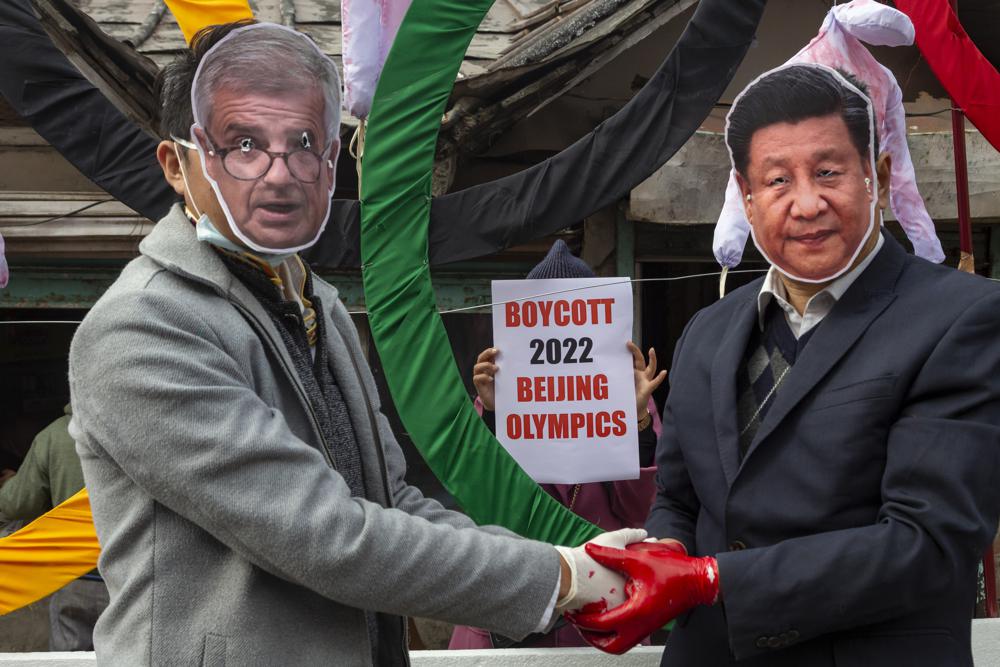
The 2020 Tokyo Olympic Games, although held a year later than originally scheduled, showcased a level of perseverance that had never before existed on the world stage. Despite Tokyo being in a state of emergency and under a quasi-lockdown for the duration of the games due to the COVID-19 pandemic and the rapidly spreading Delta variant, the games went on as smoothly as one could imagine, given the circumstances. Only 29 out of the over 11,000 athletes were forced out of the games due to a positive COVID-19 test, a number far lower than what organizers projected. The games provided us with many memorable moments, such as Simone Biles bringing her mental health issues to the forefront and showing the world that “it’s OK to not be OK,” Katie Ledecky and Caeleb Dressel leading Team USA’s continued dominance in the pool, and Alyson Felix overcoming a traumatic pregnancy to become the most decorated American Track & Field Olympian of all-time. Under most circumstances, we would have a roughly 18-month wait for the Winter Olympics, but due to the postponement of the Tokyo Games, the 2022 Beijing Olympics are set to begin in under 200 days. It is in this period where we must decide just how far we are willing to go in the protection of human rights. The proverbial elephant in the room surrounding the 2022 event is the treatment of Uyghur Muslims in China’s Xinjiang province at the hands of the increasingly powerful Chinese Communist Party. The treatment, categorized as a genocide by both former Secretary of State Mike Pompeo and current Secretary of State Antony Blinken, has included rape, forced labor, indoctrination, forced abortion, and sterilization. As a result, a bipartisan coalition including Speaker Nancy Pelosi (D-CA), Senator Mitt Romney (R-UT), Chair of the House Rules Committee Representative Jim McGovern (D-MA), and former US Ambassador to the United Nations Nikki Haley (R) have called for a boycott of the games over China’s treatment of the Uyghurs. Calls in favor of boycotting the games have not only stemmed from China’s treatment of the Uyghurs but also from China’s shady actions in the early days of the COVID-19 pandemic and a rise in questions regarding the origin of the virus. Former Director of National Intelligence Dan Ratcliffe (R) called for a boycott of the games due to his belief that China covered up the origins of the virus after it leaked from the Wuhan Institute of Virology. A report recently released by the House Foreign Affairs Committee GOP lends credence to Ratcliffe’s claim, coming to the conclusion that COVID-19 likely leaked from the laboratory. The report also notes that a number of athletes from Western countries returned home from the 2019 Military World Games in Wuhan in October of 2019 with symptoms one would now associate with COVID-19. These athletes’ infections fell nearly two months before the first COVID-19 infection was reported to the World Health Organization by the Chinese Communist Party. Fittingly, this event was the last time China hosted a major international athletics competition. With the introduction of numerous bipartisan bills calling for a boycott of the 2022 Beijing Winter Olympics in both chambers of Congress, it is clear that there is a significant appetite for taking action related to the games. While a boycott is the most popular call surrounding the games, history has shown that a boycott of the games does not always have the intended consequences. First, politicians and the federal government have no formal decision in whether the United States boycotts the Olympics—that decision lies solely in the hands of the United States Olympic & Paralympic Committee (USOPC). In 1979, President Jimmy Carter launched an intense pressure campaign on the USOPC to boycott the 1980 Moscow Summer Olympics over the Soviet invasion of Afghanistan. The issue quickly became domestic political fodder in the United States, becoming a contentious issue in the ongoing 1980 Republican Presidential Primary with Ronald Reagan and George H.W. Bush both taking mixed stances on the issue while arguing that a USOPC refusal to boycott the games would be a sign of Carter’s weak leadership. The USOPC eventually endorsed a boycott of the 1980 Olympic Games and was joined by sixty-four other countries, including China, in not attending the games. The boycott ended with no change regarding the Soviet’s invasion of Afghanistan—they would remain in the nation until 1989. The Soviets suffered minimal national embarrassment, and the games still went on with eighty nations participating. While the Soviets suffered little, the would-be Olympians of the boycotting nations suffered significantly. Statistically, nearly 75% of Olympians only participate in one Olympic Games, leading many to see their one opportunity to live out their dreams crushed in an instant by the boycott. A 2020 documentary from the Washington Post detailed the heartbreaking stories of the “invisible Olympians” who likely would have made up Team USA at the 1980 Olympic Games. With the failure of the United States’ only previous boycott of an Olympic Games, it is clear that a similar boycott of the 2022 Beijing Olympic Games would likely meet a similar fate. A significant number of nations would likely still attend the games, allowing for the Chinese Communist Party to still conduct a full slate of Olympic events and festivities. With rising COVID-19 cases across the globe, uncertainty over future variants, questions surrounding China’s handling of the early days of the pandemic, and China’s horrendous treatment of the Uyghur Muslims, it is clear that the 2022 Olympics must be relocated and reorganized into a multi-site and multi-national event. Planning and carrying out an Olympic Games is a tremendous task that takes over a decade, as evidenced by the ongoing planning of the 2032 Olympic Games in Brisbane, Australia. With less than 200 days until the scheduled start of the games, finding a location with the suitable facilities to plan and host an Olympic Games on the fly, in the middle of a pandemic, is impossible. Asking a handful of nations across
Joe Biden eyes defeated candidates for key administration roles

In politics, there can sometimes be an upside to losing. President-elect Joe Biden is eyeing several Democrats who lost congressional reelection races last month for key positions in his administration. They include outgoing Reps. Abby Finkenauer of Iowa, Donna Shalala of Florida, and Sen. Doug Jones of Alabama. Their consideration continues a long Washington tradition of defeated politicians seeking shelter in a new White House. Landing a job in a new administration can both position the losing candidates for future campaigns and provide the incoming president with important relationships on Capitol Hill. “It’s good to have people who know how to roam the halls of Congress,” said Andrew Card, who directed George W. Bush’s transition and later served as the Republican president’s chief of staff. Biden’s transition team declined to comment on the prospects of any individual contender for an administration role. He has already unveiled much of his economic and national security team and is expected to announce picks soon for key health positions. But there are still a large number of major Cabinet positions to be filled, including attorney general and leaders of the departments of Labor, Commerce, and Transportation. As Biden considers his options, his personal connection with some of the defeated lawmakers could carry significance. Finkenauer, who is under consideration as Labor secretary, owes her start in politics in part to Biden. As a college student, she worked on his ill-fated 2008 presidential campaign. A decade later, he headlined a rally for her winning congressional campaign. She was a key surrogate for Biden ahead of the Iowa caucuses. “I know they have a long relationship, and it’s been mutually supportive,” said former Assistant Dubuque City Manager Teri Goodman, who is a decades-long Biden supporter and has watched Finkenauer’s rise. Finkenauer narrowly lost her bid for a second term in a rural northeast Iowa district. But since then, the former state legislator, who made a name promoting public employee unions, has had conversations with senior Biden transition officials about leading the Labor Department, according to Democratic sources familiar with the communications. Jones, meanwhile, is in the mix to lead the Justice Department, partly due to his work as a U.S. attorney who helped convict Ku Klux Klansmen for the Birmingham church bombing that killed four Black girls. He narrowly won a special Alabama Senate election in 2017 but lost reelection last month. He also has a longstanding personal relationship with Biden, dating to Biden’s first presidential campaign in 1988. Biden spoke at Jones’ campaign kickoff in 2017, saying of Jones, “He knows your heart and will never let you down,” and was the first to telephone him on Nov. 3 after he’d lost the seat to Republican Tommy Tuberville. Shalala is perhaps the most administration-ready of 2020′s losing Democratic class. She spent eight years as secretary of health and human services under Bill Clinton and then served as president of the University of Miami before winning a south Florida House seat in 2018. She has heard from Biden transition officials. Beyond the outgoing members of Congress, Biden is also considering his former rivals in the Democratic primary for jobs. He already tapped California Sen. Kamala Harris as his vice president. Biden is weighing roles for Pete Buttigieg, the former South Bend, Indiana mayor who mounted a surprisingly strong campaign in the early stretch of the Democratic primaries. Biden has expressed deep affection for Buttigieg, who was one of the first major candidates to drop out of the race and endorse Biden. Montana Gov. Steve Bullock, who lost his Senate bid after leaving the White House race, is part of discussions for a Biden administration role, perhaps as secretary of agriculture. Another name under consideration for agriculture is former North Dakota Sen. Heidi Heitkamp, who lost in 2018 but has been a champion of reinvigorating rural America. “If they think I can be helpful, then good,” Heitkamp told The Associated Press recently. Presidents have often sought losing rivals for positions. Republican Donald Trump chose fellow 2016 GOP presidential candidates Rick Perry as energy secretary and Ben Carson for housing and urban development. Democrat Barack Obama notably chose former rival Hillary Clinton to be secretary of state after the 2008 election. Missouri Sen. John Ashcroft’s defeat in 2000 paved the way for his four years as attorney general under George W. Bush, including during the aftermath of the 2001 terrorist attacks in the United States. Former Senate Majority Leader Tom Daschle of South Dakota, who lost the election to a third term in 2004, was tapped after the 2008 election by Obama to head health and human services, which would have put him at the forefront of the health care debate. Daschle withdrew from consideration after questions arose about his failure to properly report and pay income taxes. The most successful losing congressional candidate of the past 50 years is George H. W. Bush, who as a two-term Republican U.S. House member from Texas lost his 1970 bid for Senate against Democrat Lloyd Bentsen. As a consolation, President Richard Nixon picked Bush to be ambassador to the United Nations, a disappointment for the up-and-comer who was hoping for a treasury job. But the post led to an ambassadorship to China, and the experiences were valuable when as president he found himself leading a global coalition in Operation Desert Storm. “The significance is that was the beginning of his self schooling and expertise in foreign affairs,” said Chase Untermeyer, director of White House personnel during George H. W. Bush’s administration. In a White House led by a Capitol Hill veteran like Biden, a team with a background in Congress is particularly valuable to those around the president, since Biden remains well acquainted with the rules and many members. But considering Biden hasn’t been a senator in nearly a dozen years, Card said those with more recent experience in Congress will be helpful. “More than helping the president, these people can help the White House staff dealing with members of Congress,” said Card. “They know where
Joe Biden wins White House, vowing new direction for divided U.S.
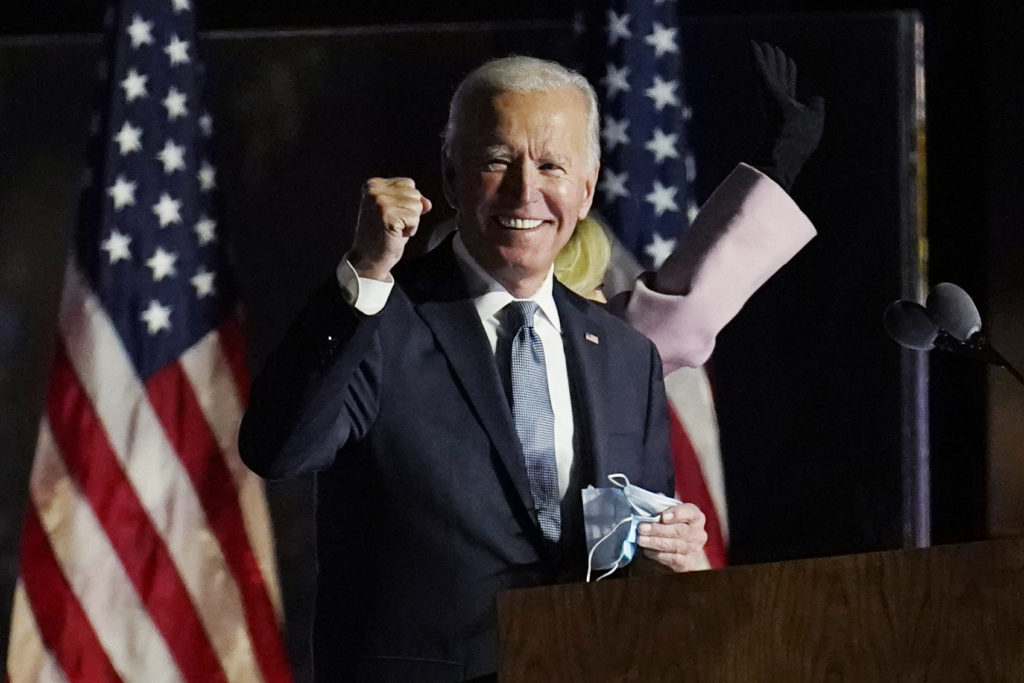
Democrat Joe Biden defeated President Donald Trump to become the 46th president of the United States on Saturday, positioning himself to lead a nation gripped by a historic pandemic and a confluence of economic and social turmoil. His victory came after more than three days of uncertainty as election officials sorted through a surge of mail-in votes that delayed the processing of some ballots. Biden crossed 270 Electoral College votes with a win in Pennsylvania. Biden, 77, staked his candidacy less on any distinctive political ideology than on galvanizing a broad coalition of voters around the notion that Trump posed an existential threat to American democracy. The strategy proved effective, resulting in pivotal victories in Michigan and Wisconsin as well as Pennsylvania, onetime Democratic bastions that had flipped to Trump in 2016. Biden was on track to win the national popular vote by more than 4 million, a margin that could grow as ballots continue to be counted. Trump seized on delays in processing the vote in some states to falsely allege voter fraud and argue that his rival was trying to seize power — an extraordinary charge by a sitting president trying to sow doubt about a bedrock democratic process. As the vote count played out, Biden tried to ease tensions and project an image of presidential leadership, hitting notes of unity that were seemingly aimed at cooling the temperature of a heated, divided nation. “We have to remember the purpose of our politics isn’t total unrelenting, unending warfare,” Biden said Friday night in Delaware. “No, the purpose of our politics, the work of our nation, isn’t to fan the flames of conflict, but to solve problems, to guarantee justice, to give everybody a fair shot.” Kamala Harris also made history as the first Black woman to become vice president, an achievement that comes as the U.S. faces a reckoning on racial justice. The California senator, who is also the first person of South Asian descent elected to the vice presidency, will become the highest-ranking woman ever to serve in government, four years after Trump defeated Hillary Clinton. Trump is the first incumbent president to lose reelection since Republican George H.W. Bush in 1992. It was unclear whether Trump would publicly concede. Americans showed deep interest in the presidential race. A record 103 million voted early this year, opting to avoid waiting in long lines at polling locations during a pandemic. With counting continuing in some states, Biden had already received more than 74 million votes, more than any presidential candidate before him. More than 236,000 Americans have died during the coronavirus pandemic, nearly 10 million have been infected and millions of jobs have been lost. The final days of the campaign played out against the backdrop of a surge in confirmed cases in nearly every state, including battlegrounds such as Wisconsin that swung to Biden. The pandemic will soon be Biden’s to tame, and he campaigned pledging a big government response, akin to what Franklin D. Roosevelt oversaw with the New Deal during the Depression of the 1930s. But Senate Republicans fought back several Democratic challengers and looked to retain a fragile majority that could serve as a check on such Biden ambition. The 2020 campaign was a referendum on Trump’s handling of the pandemic, which has shuttered schools across the nation, disrupted businesses and raised questions about the feasibility of family gatherings heading into the holidays. The fast spread of the coronavirus transformed political rallies from standard campaign fare to gatherings that were potential public health emergencies. It also contributed to an unprecedented shift to voting early and by mail and prompted Biden to dramatically scale back his travel and events to comply with restrictions. Trump defied calls for caution and ultimately contracted the disease himself. He was saddled throughout the year by negative assessments from the public of his handling of the pandemic. Biden also drew a sharp contrast to Trump through a summer of unrest over the police killings of Black Americans including Breonna Taylor in Kentucky and George Floyd in Minneapolis. Their deaths sparked the largest racial protest movement since the civil rights era. Biden responded by acknowledging the racism that pervades American life, while Trump emphasized his support of police and pivoted to a “law and order” message that resonated with his largely white base. The president’s most ardent backers never wavered and may remain loyal to him and his supporters in Congress after Trump has departed the White House. The third president to be impeached, though acquitted in the Senate, Trump will leave office having left an indelible imprint in a tenure defined by the shattering of White House norms and a day-to-day whirlwind of turnover, partisan divide and the ever-present threat via his Twitter account. Biden, born in Scranton, Pennsylvania, and raised in Delaware, was one of the youngest candidates ever elected to the Senate. Before he took office, his wife and daughter were killed, and his two sons badly injured in a 1972 car crash. Commuting every night on a train from Washington back to Wilmington, Biden fashioned an everyman political persona to go along with powerful Senate positions, including chairman of the Senate Judiciary and Foreign Relations Committees. Some aspects of his record drew critical scrutiny from fellow Democrats, including his support for the 1994 crime bill, his vote for the 2003 Iraq War and his management of the Clarence Thomas’ Supreme Court hearings. Biden’s 1988 presidential campaign was done in by plagiarism allegations, and his next bid in 2008 ended quietly. But later that year, he was tapped to be Barack Obama’s running mate and he became an influential vice president, steering the administration’s outreach to both Capitol Hill and Iraq. While his reputation was burnished by his time in office and his deep friendship with Obama, Biden stood aside for Clinton and opted not to run in 2016 after his adult son Beau died of brain cancer the year before. Trump’s tenure pushed Biden to make
