
Donald Trump pardons 15, commutes 5 sentences, including GOP allies
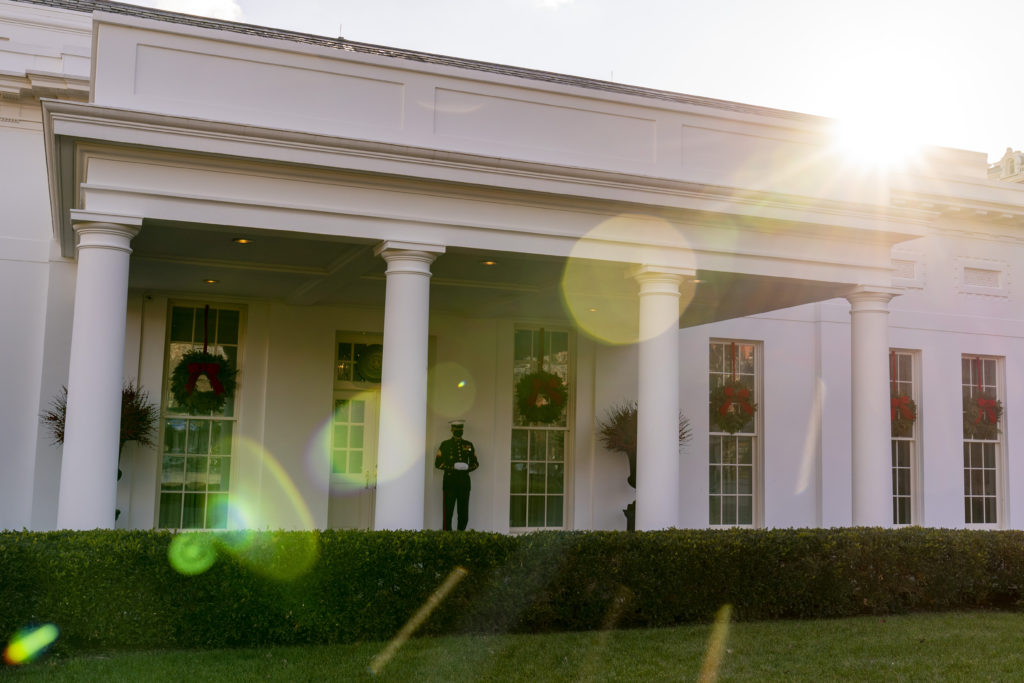
President Donald Trump on Tuesday pardoned 15 people, including a pair of congressional Republicans who were strong and early supporters, a 2016 campaign official ensnared in the Russia probe and former government contractors convicted in a 2007 massacre in Baghdad. Trump’s actions in his final weeks in office show a president who is wielding his executive power to reward loyalists and others who he believes have been wronged by a legal system he sees as biased against him and his allies. Trump issued the pardons — not an unusual act for an outgoing president — even as he refused to publicly acknowledge his election loss to Democrat Joe Biden, who will be sworn in on Jan. 20. Trump is likely to issue more pardons before then. He and his allies have discussed a range of other possibilities, including members of Trump’s family and his personal attorney Rudy Giuliani. Those pardoned on Tuesday included former Republican Reps. Duncan Hunter of California and Chris Collins of New York, two of the earliest GOP lawmakers to back Trump’s 2016 presidential campaign. Trump also commuted the sentences of five other people, including former Rep. Steve Stockman of Texas. Collins, the first member of Congress to endorse Trump to be president, was sentenced to two years and two months in federal prison after admitting he helped his son and others dodge $800,000 in stock market losses when he learned that a drug trial by a small pharmaceutical company had failed. Hunter was sentenced to 11 months in prison after pleading guilty to stealing campaign funds and spending the money on everything from outings with friends to his daughter’s birthday party. White House press secretary Kayleigh McEnany said the pardons for Hunter and Collins were granted after “the request of many members of Congress.” She noted that Hunter served the nation in the U.S. Marines and saw combat in both Iraq and Afghanistan. In the group announced Tuesday night were four former government contractors convicted in a 2007 massacre in Baghdad that left more than a dozen Iraqi civilians dead and caused an international uproar over the use of private security guards in a war zone. Supporters of Nicholas Slatten, Paul Slough, Evan Liberty, and Dustin Heard, the former contractors at Blackwater Worldwide, had lobbied for pardons, arguing that the men had been excessively punished in an investigation and prosecution they said was tainted by problems and withheld exculpatory evidence. All four were serving lengthy prison sentences. The pardons reflected Trump’s apparent willingness to give the benefit of doubt to American service members and contractors when it comes to acts of violence in war zones against civilians. Last November, for instance, he pardoned a former U.S. Army commando who was set to stand trial next year in the killing of a suspected Afghan bomb-maker and a former Army lieutenant convicted of murder for ordering his men to fire upon three Afghans. Trump also announced pardons for two people entangled in special counsel Robert Mueller’s Russia investigation. One was for 2016 campaign adviser George Papadopoulos, who pleaded guilty to lying to the FBI about a conversation in which he learned that Russia had dirt on Trump’s Democratic opponent, Hillary Clinton. The president also pardoned Alex van der Zwaan, a Dutch lawyer who was sentenced to 30 days in prison for lying to investigators during the Mueller probe. Van der Zwaan and Papadopoulos are the third and fourth Russia investigation defendants granted clemency. By pardoning them, Trump once again took aim at Mueller’s inquiry and advanced a broader effort to undo the results of the investigation that yielded criminal charges against a half-dozen associates. The pardons drew criticism from top Democrats. Rep. Adam Schiff, D-Calif., the chairman of the House Permanent Select Committee on Intelligence, said the president was abusing his power. “Trump is doling out pardons, not on the basis of repentance, restitution or the interests of justice, but to reward his friends and political allies, to protect those who lie to cover up him, to shelter those guilty of killing civilians, and to undermine an investigation that uncovered massive wrongdoing,” Schiff said. Last month, Trump pardoned former national security adviser Michael Flynn, who had twice pleaded guilty to lying to the FBI, and months earlier commuted the sentence of another associate, Roger Stone, days before he was to report to prison. Trump has granted about 2% of requested pardons in his single term in office — just 27 before Tuesday’s announcement. By comparison, Barack Obama granted 212 or 6%, and George W. Bush granted about 7%, or 189. George H.W. Bush, another one-term president, granted 10% of requests. Also among those pardoned by Trump was Phil Lyman, a Utah state representative who led an ATV protest through restricted federal lands. Lyman was serving as a Utah county commissioner in 2014 when he led about 50 ATV riders in a canyon home to Native American cliff dwellings that officials closed to motorized traffic. The ride occurred amid a sputtering movement in the West pushing back against federal control of large swaths of land and came in the wake of an armed confrontation Nevada rancher Cliven Bundy had with Bureau of Land Management over grazing fees. Lyman spent 10 days in prison and was ordered to pay nearly $96,000 in restitution. The Trump administration in 2017 lifted a ban on motorized vehicles in parts of the canyon but left restrictions in place through other areas where Lyman led his ride. Two former U.S. Border Patrol agents were also pardoned, Ignacio Ramos and Jose Compean, convicted of shooting and wounding a Mexican drug smuggler near El Paso, Texas, in 2005. Others on the list included a Pittsburgh dentist who pleaded guilty to health care fraud, two women convicted of drug crimes, and Alfred Lee Crum, now 89, who pleaded guilty in 1952 when he was 19 to helping his wife’s uncle illegally distill moonshine. Crum served three years of probation and paid a $250 fine. The White House
FBI chief: No evidence of illegal spying on Donald Trump campaign
WASHINGTON (AP) — FBI Director Chris Wray said Tuesday that he does not consider court-approved FBI surveillance to be “spying” and said he has no evidence the FBI illegally monitored President Donald Trump’s campaign during the 2016 election. His comments at a Senate Appropriations subcommittee hearing broke from Attorney General William Barr, who has described as “spying” FBI surveillance during its investigation into potential collusion between the Trump campaign and Russia. Barr has not said such surveillance was necessarily improper, but Trump nonetheless seized on those comments to suggest his campaign was spied on in an illegal and unprecedented act. Asked by Sen. Jeanne Shaheen, Democrat-New Hampshire, if he would say that the FBI is “spying” when it investigates suspected terrorists and mobsters while following “investigative policies and procedures,” Wray replied, “Well, that’s not the term I would use.” He added: “I believe that the FBI is engaged in investigative activity, and part of investigative activity includes surveillance activity of different shapes and sizes. And to me, the key question is making sure that it’s done by the book, consistent with our lawful authorities. That’s the key question. Different people use different colloquial phrases.” Wray declined to discuss in detail the FBI’s investigation into the Trump campaign because of an ongoing Justice Department inspector general probe into the origins of the Russia inquiry. Barr has said he expects the watchdog report to be done in May or June. But asked whether he was aware of evidence that the FBI had illegally spied on the Trump campaign, Wray said, “I don’t think I personally have any evidence of that sort.” Barr is investigating whether there was a proper basis for the FBI to open a counterintelligence investigation into ties between the Trump campaign and Russia. The recently concluded investigation from Special Counsel Robert Mueller did not find a criminal conspiracy between the campaign and the Kremlin to tip the outcome of the 2016 presidential election. “The attorney general is seeking to understand better the circumstances at the department and the FBI relating to how this investigation started, and we’re working to help him get that understanding,” Wray said about the Justice Department’s review. “I think that’s part of his job and part of mine.” Barr didn’t specify what he meant when he said he believed there had been spying on the Trump campaign, though he also said that he did not mean the word in a negative way. At a hearing last week, he described “spying” as a “good English word” encompassing “all forms of covert intelligence operations” and said he wouldn’t back away from using it. The FBI obtained a secret surveillance warrant in 2016 to monitor the communications of former Trump campaign aide Carter Page, whose interactions with Russia had raised law enforcement suspicions even before he joined the campaign. The New York Times reported last week that the FBI used a woman posing as a research assistant to approach ex-Trump campaign adviser George Papadopoulos, who was told by a Maltese professor in the spring of 2016 that Russia had “dirt” on Democrat Hillary Clinton in the form of stolen emails. In his book about his entanglement in the Russia probe, “Deep State Target,” Papadopoulos wrote that the woman, who identified herself as Azra Turk, asked him about his work with the Trump campaign. “She wants to know: Are we working with Russia?” he wrote. He described her question as “creepy” and said he told her he had “nothing to do with Russia.” Papadopoulos later pleaded guilty to lying to the FBI about his interactions with the professor, Joseph Mifsud.
Donald Trump says illegal crossings down; they’re up
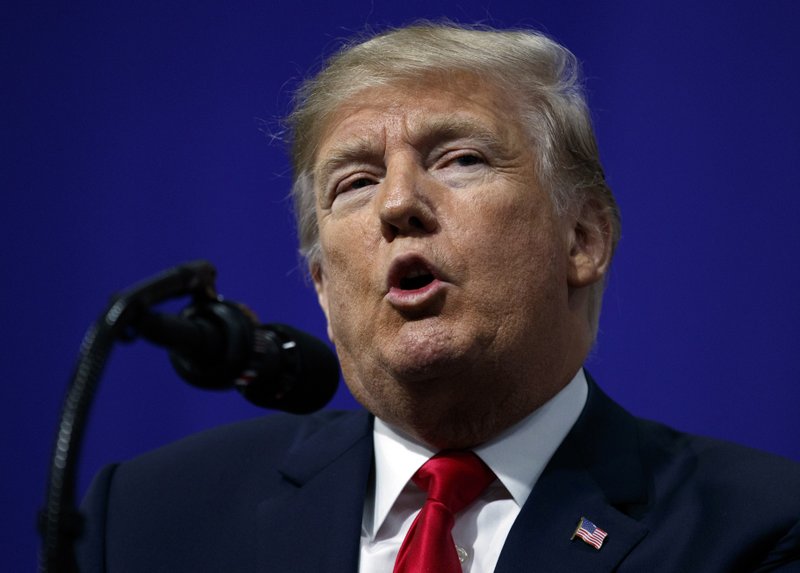
Illegal border crossings, as President Donald Trump measures them, have gone up since he took office, even as he speaks to audiences about a drop of more than 40 percent. That disconnect was among several that stood out over the past week as he opened up on the Russia investigation via Twitter, forsaking accuracy in the process, and made the false claim that he’s delivering the first big military pay increase in a decade. A look at some of his statements: TRUMP: “We’ve done a lot of work on the wall. We’re doing a lot of work on security, generally speaking, security and border — border security. The border’s down over 40 percent, and don’t forget, we have a great economy, probably the best economy the country’s ever had. So people come across, but we’re going to get the rest.” — interview broadcast Thursday with “Fox & Friends.” TRUMP: “We’re down on immigration crossing the border — more than 40 percent.” — forum Wednesday in Bethpage, New York. THE FACTS: Illegal crossings actually are up 20 percent since he became president, according to the yardstick he uses to measure them — the number of Border Patrol arrests. There is no precise measure of illegal crossings because some people don’t get caught. The Trump administration uses arrests as the best gauge of whether crossings are going up or down. The Obama administration did likewise. Border Patrol arrests did fall last year to the lowest level since 1971. But since April of last year, arrests have climbed steadily. One factor in that increase may be that people are now taking their chances to cross into the U.S. illegally after an initial wait-and-see attitude about Trump’s tough-talking approach to people sneaking into the country. Last month, there were more than 50,000 overall border arrests, which are made up of people who are stopped at land crossings and other official points of entry, according to federal data. That was more than triple the number from April 2017, which was the lowest tally on record since the Homeland Security Department was created in 2003. Overall, border arrests have increased 20 percent since January 2017, from 42,463 in January 2017 to 50,924 in April. ___ TRUMP, to U.S. Naval Academy graduates: “Going to have new equipment and well-deserved pay raises. We just got you a big pay raise. First time in 10 years. We got you a big pay increase. First time in over 10 years. I fought for you. That was the hardest one to get, but you never had a chance of losing.” — speech Friday. THE FACTS: That’s not right. U.S. military members have gotten a pay raise every year for the past 10 years and several have been larger than this year’s 2.6 percent increase. Pay increases in 2008, 2009 and 2010, for example, were all 3.4 percent or more. ___ TRUMP: “We have now the lowest number of ships that we’ve had since World War I, and very soon you’re going to get to 355 beautiful ships. 355. That’s almost a couple of hundred more ships.” — speech to academy graduates Friday. THE FACTS: No it isn’t. The Navy now has 283 ships. ___ TRUMP on former CIA Director John Brennan: “Brennan started this entire debacle about President Trump. We now know that Brennan had detailed knowledge of the (phony) Dossier…he knows about the Dossier, he denies knowledge of the Dossier, he briefs the Gang of 8 on the Hill about the Dossier, which…….they then used to start an investigation about Trump…” — tweets Monday. THE FACTS: Trump quotes conservative commentator Dan Bongino to falsely claim the Russia probe is based on a “phony dossier.” In fact, the FBI’s investigation began months before it received a dossier of anti-Trump research financed by the Democratic Party and Hillary Clinton’s campaign. The FBI probe’s origins were based on other evidence — not the existence of the dossier. The Republican-controlled House intelligence committee found the Russia probe was initiated after the FBI received information related to Trump campaign foreign policy adviser George Papadopoulos, not the dossier. The committee’s final report released in March was praised by Trump, who pointed to it as evidence that the investigation was nothing but a “witch hunt.” ___ TRUMP, on President Barack Obama’s national intelligence director, James Clapper: “Clapper has now admitted that there was Spying in my campaign. Large dollars were paid to the Spy, far beyond normal. Starting to look like one of the biggest political scandals in U.S. history. SPYGATE – a terrible thing!” — tweet Thursday THE FACTS: That’s a distortion of Clapper’s statements on ABC’s “The View” on Tuesday when he was asked about recent reports that an FBI informant spoke with several members of the Trump campaign. “They were spying on — a term I don’t particularly like but — what the Russians were doing,” Clapper said. “Trying to understand, were the Russians infiltrating? Trying to gain access, trying to gain leverage and influence? Which is what they do.” He did not say a spy was implanted “in” the campaign and he denied the FBI was spying “on” the campaign. The effort was focused on Russians, he said, was meant to “protect the campaign” and the U.S. political system. Special counsel Robert Mueller’s investigation is looking into Russian interference in the election, any collusion between Russia and the Trump campaign, possible obstruction of justice and whatever associated criminal activity might be uncovered. The probe has produced several criminal convictions of Trump campaign officials. Those charges do not implicate the president directly. Republished with the permission of the Associated Press.
Where did Donald Trump’s claim of an FBI mole come from?

President Donald Trump and his supporters are circulating an explosive theory: The FBI, they say, may have planted a mole, or “spy,” inside the 2016 campaign to bring him down. The unverified allegation has lit up conservative media and earned space on Trump’s Twitter feed just as special counsel Robert Mueller enters his second year in the Russia probe. But where did the allegation come from? The AP takes a look at what we know so far and how Trump has used similar claims in the past to try to discredit the Russia investigation. The ‘Wiretap’ Trump and his supporters have long floated the idea of an opposing “deep state” at the Justice Department and the FBI, including allegations that President Barack Obama ordered wiretaps on his phones during the election. The Justice Department denied such a wiretap, and House intelligence committee Chairman Devin Nunes, an ardent Trump supporter, later confirmed that an Obama-ordered wiretap never existed. But like many conspiracy theories, it appeared to grow out of a less sensational truth: U.S. surveillance on foreign officials — a common practice in the world of spycraft — likely picked up what’s called “incidental” communications with Americans in Trump’s orbit. That included former national security adviser Michael Flynn’s discussions with Russia’s ambassador to the U.S. during the presidential transition. The Mole At issue now isn’t a wiretap, but the identity of a top-secret FBI informant who allegedly helped investigators on the Russia probe. Trump and his lawyer, Rudy Giuliani, say they suspect the FBI planted someone inside the campaign as a setup. “Reports are there was indeed at least one FBI representative implanted, for political purposes, into my campaign for president,” Trump tweeted early Friday. “It took place very early on, and long before the phony Russia Hoax became a ‘hot’ Fake News story. If true – all time biggest political scandal!” This claim actually isn’t new for Trump supporters either. But it seemed to find new life after news reports confirmed the existence of a confidential source in the Russia investigation. The conservative National Review suggested the puzzle pieces all point toward a mole, attracting Trump’s attention. “If so, this is bigger than Watergate!” Trump tweeted. What We Know Last August, Glenn Simpson of Fusion GPS, who compiled opposition research on Trump, told a Senate panel that former British spy Christopher Steele relied on an “internal Trump campaign source” to compile his now-famous Trump dossier. A person familiar with Simpson’s testimony told the AP at the time that he did not mean to suggest the FBI had a direct source of information from within the Trump campaign. Then last week, The Washington Post reported on the existence of a U.S. citizen who had provided intelligence to the CIA and FBI in the Russia probe. The source had become of particular interest to Nunes, whose committee was quick to dismiss any allegations of collusion between Trump associates and Russia. According to the Post, the Justice Department clashed with Nunes and refused his request for specific details on the person. On Wednesday, The New York Times seemed to lend credence to the idea by reporting that “at least one government informant” met several times with former Trump campaign advisers George Papadopoulos and Carter Page. On Friday, the Times expanded its description, saying the informant is an American academic who teaches in Britain and was sent by the FBI to talk to Papadopoulos and Page because they were suspected of having “suspicious contacts” linked to Russia. What We Don’t Know A person who provides information to investigators wasn’t necessarily planted by authorities. The person could have been someone already working with Trump’s campaign before they agreed to provide information. Or it could be someone who wasn’t affiliated with the campaign and just interacted with people around it. The FBI and Mueller have been extraordinarily tight-lipped about the investigation, providing few public clues to what sources they are relying on or where the probe is headed. Trump and his lawyer, Giuliani, acknowledge they don’t have the answers either. But that hasn’t stopped them from floating the mole theory as a way of undercutting Mueller’s work as an attempt by liberals to bring down the president. Giuliani said in a Friday interview on CNN’s “New Day” that he doesn’t know for sure what happened — and the president doesn’t either. But “for a long time, we’ve been told that there’s been some kind of infiltration,” he said. Republished with the permission of the Associated Press.
Donald Trump: If FBI spied on my campaign, ‘bigger than Watergate!’
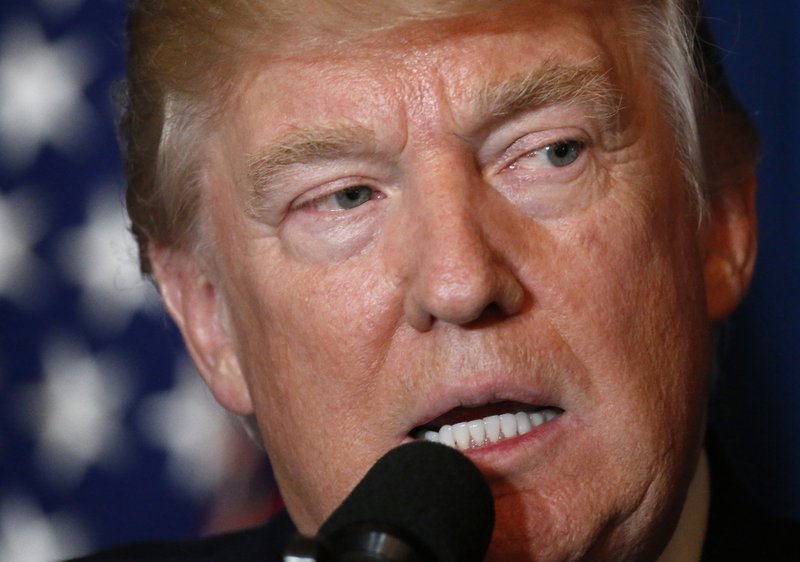
President Donald Trump lent credence Thursday to reports that FBI informants had infiltrated his presidential campaign, saying that “if so, this is bigger than Watergate!” Trump’s comments came on the anniversary of Robert Mueller’s appointment as special counsel to head the Justice Department probe into possible coordination between Russia and Trump campaign officials, an investigation Trump repeatedly has called a “witch hunt.” “Wow, word seems to be coming out that the Obama FBI ‘SPIED ON THE TRUMP CAMPAIGN WITH AN EMBEDDED INFORMANT,’” Trump said Thursday on Twitter. “Andrew McCarthy says, ‘There’s probably no doubt that they had at least one confidential informant in the campaign.’ If so, this is bigger than Watergate!” McCarthy, a contributing editor at the National Review, wrote an article published last week headlined “Did the FBI Have a Spy in the Trump Campaign?” The New York Times reported separately this week that at least one government informant met several times with Carter Page and George Papadopoulos, both former foreign policy advisers on Trump’s Republican campaign. The newspaper attributed the information to current and former FBI officials. The Watergate scandal in the early 1970s occurred following a break-in by five men at Democratic Party headquarters at the Watergate building in Washington and subsequent attempts by the administration of President Richard Nixon to hide its involvement. Nixon, a Republican, ultimately resigned from office as a result of the ensuing investigation. Meanwhile, Trump’s attorney Rudy Giuliani said that the president still wants to testify in the Russia probe. Speaking Thursday on “Fox and Friends,” the former New York mayor said Trump will only sit down with Mueller if “we feel there’s a way to shorten this thing.” He added that Trump remains eager to offer his “side of the case.” Giuliani has been urging Mueller’s team to wrap up the investigation now that the probe has reached the one-year mark. Giuliani’s team has been weighing whether to allow Trump to sit for an interview with Mueller. He said the legal team is “pretty comfortable, in the circumstances of this case, that they wouldn’t be able to subpoena him personally.” While the Supreme Court has never definitively ruled on the subject, it appears that a sitting president could be forced to testify. In 1974, justices held unanimously that a president could be compelled to comply with a subpoena for tapes and documents. If Trump were subpoenaed and did not want to testify, he could always invoke his constitutional right not to testify against himself and decline to answer questions. But that act would pose significant political risk. Giuliani also repeated that Mueller’s team has indicated it would not attempt to indict Trump, as he told The Associated Press on Friday. Justice Department legal opinions from 1973 and 2000 have suggested that a sitting president is immune from indictment and that criminal charges would undermine the commander in chief’s ability to do the job. Giuliani told Fox News Channel’s Laura Ingraham on Wednesday that Mueller “has all the facts to make a decision” after 12 months investigating Russian meddling in the election and possible collusion with Trump’s campaign. “Mueller should now bring this to a close,” said Giuliani. “It’s been a year. He’s gotten 1.4 million documents, he’s interviewed 28 witnesses. And he has nothing, which is why he wants to bring the president into an interview.” “It’s about time to say enough. We’ve tortured this president enough,” he added, describing the investigation as being “like a big weight” on the president’s back. So far, the special counsel’s office has charged 19 people — including four Trump campaign advisers — and three Russian companies. Trump’s former national security adviser, Michael Flynn, and his deputy campaign chairman, Rick Gates, have pleaded guilty and are now cooperating with the probe. Trump, however, has panned it as a “witch hunt” intended to discredit his presidency and has insisted that Russia had nothing to do with his winning campaign. Giuliani, who is working for the president pro bono, said Wednesday that the probe “is not good for the American people, and the special counsel’s office doesn’t seem to have that sort of understanding that they’re interfering with things that are much bigger than them.” Republished with the permission of the Associated Press.
