
Many experienced GOP strategists unwilling to work for Donald Trump

Donald Trump has finally acknowledged that to best compete against Hillary Clinton he needs more than the bare-bones campaign team that led him to primary success. But many of the most experienced Republican political advisers aren’t willing to work for him. From Texas to New Hampshire, well-respected members of the Republican Party’s professional class say they cannot look past their deep personal and professional reservations about the presumptive presidential nominee. While there are exceptions, many strategists who best understand the mechanics of presidential politics fear that taking a Trump paycheck might stain their resumes, spook other clients and even cause problems at home. They also are reluctant to devote months to a divisive candidate whose campaign has been plagued by infighting and disorganization. “Right now I feel no obligation to lift a finger to help Donald Trump,” said Brent Swander, an Ohio-based operative who has coordinated nationwide logistics for Republican presidential campaigns dating to George W. Bush. “Everything that we’re taught as children — not to bully, not to demean, to treat others with respect — everything we’re taught as children is the exact opposite of what the Republican nominee is doing. How do you work for somebody like that? What would I tell my family?” Swander said. Trump leapt into presidential politics with a small group of aides, some drafted directly from his real estate business, with no experience running a White House campaign. An unquestioned success in the GOP primaries, they have struggled to respond to the increased demands of a general election. As in years past, the primary season created a pool of battle-tested staffers who worked for other candidates, from which Trump would be expected to draw. But hundreds of such aides have so far declined invitations to work for him. They include several communications aides to Chris Christie, as well as the New Jersey governor’s senior political adviser, Michael DuHaime, who has rejected direct and indirect inquiries to sign on with the billionaire. Chris Wilson, a senior aide to Ted Cruz, said the Texas senator’s entire paid staff of more than 150 ignored encouragement from Trump’s team to apply for positions after Cruz quit the presidential race. Wilson said that even now, many unemployed Cruz aides are refusing to work for the man who called their former boss “Lyin’ Ted.” That’s the case for Scott Smith, a Texas-based operative who traveled the country planning events for Cruz, and earlier worked on presidential bids for Bush and Texas Gov. Rick Perry. “It’s very clear that none of us are going to work for Trump,” Smith said. “Even if I wanted to work for Trump, my wife would kill me.” Smith, like many experienced strategists interviewed for this story, noted the intense personal sacrifice required of presidential campaigns. Many advisers do not see their families for long stretches, work brutal hours on little sleep and enjoy no job security. With Trump, Smith said, “I would feel like a mercenary. I can’t be away from my young children if it’s just for money.” Trump’s need for additional staff is acute. His paltry fundraising network brought in less than $2 million last month. He has just one paid staffer to handle hundreds of daily media requests and only a few operatives in battleground states devoted to his White House bid. Last month, Trump fired Rick Wiley, who was the campaign manager for Wisconsin Gov. Scott Walker, a former 2016 candidate, and was brought on to run Trump’s nationwide get-out-the-vote effort. On Monday, Trump fired campaign manager Corey Lewandowski, who acknowledged he lacked the experience needed to expand Trump’s operation. “This campaign needs to grow rapidly,” Lewandowski told the Fox News Channel. “That’s a hard job and candidly I’ve never grown something that big.” Trump credited Lewandowski with helping “a small, beautiful, well-unified campaign” during the primary season. “I think it’s time now for a different kind of a campaign,” Trump told Fox. Campaign spokeswoman Hope Hicks did not respond to multiple requests for comment about the campaign’s hiring. A former adviser, Barry Bennett, played down any staffing challenges, suggesting the campaign should be able to double its contingent by the party’s national convention next month. Trump announced four new hires in the past week, including a human resources chief to help with hiring, to supplement a staff of about 70. That’s compared with Clinton’s paid presence of roughly 700, many of them well-versed in modern political strategy. Trump’s senior team, including campaign chief Paul Manafort and newly hired political director Jim Murphy, largely represent an older generation of political hands more active in the 1980s and 1990s. The campaign’s new Ohio director, Bob Paduchik, led state efforts for Bush’s 2000 and 2004 campaigns. A new generation of top talent active in more recent years has shown little interest in Trump. In Iowa, experienced operative Sara Craig says she will not work for Trump or even support him. “I am more interested in working on down-ballot races,” said Craig, who helped elect Joni Ernst to the Senate from Iowa and directed a pro-Bush super political action committee. Ryan Williams, who worked on Mitt Romney‘s presidential campaigns, said he’s happy working for a consulting firm, where he’s involved with various other elections across the country, as well as with corporate clients. “When you sign up for a campaign, you’re putting your name on the effort. Some of the things that Trump has said publicly are very hard for people to get behind,” Williams said. But Paduchik offered the kind of positive perspective expected of a campaign on the move. “It’s been great, the response I’ve gotten,” Paduchik said. “Republicans in every corner of Ohio are excited about Mr. Trump’s campaign.” Republished with permission of The Associated Press.
In swing state suburbs, white women are skeptical of Donald Trump
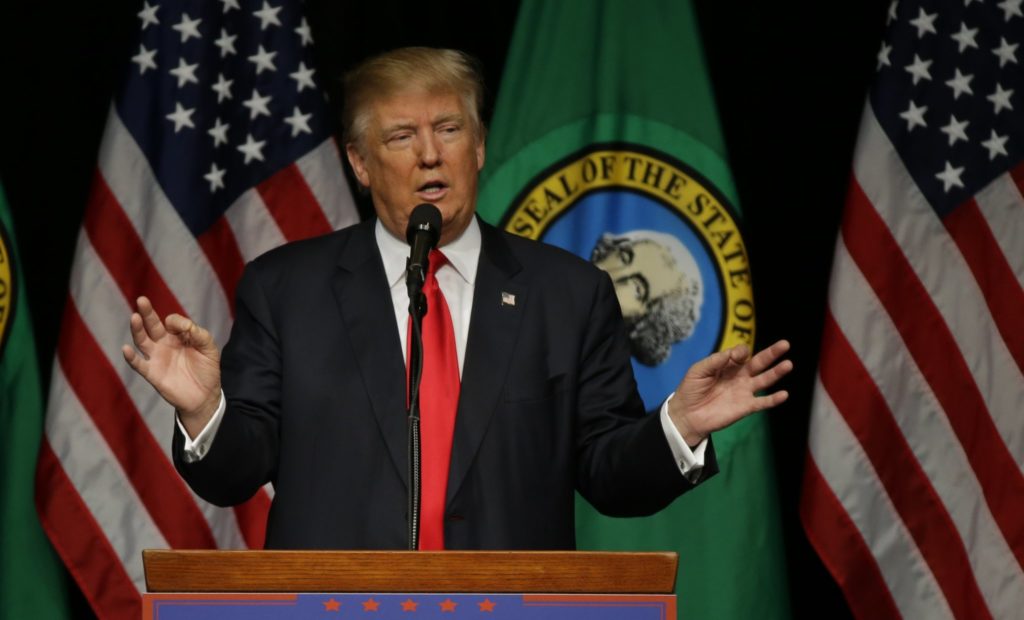
For Donald Trump to win the White House in November, he’ll need the votes of women like Elizabeth Andrus. Yet Andrus, a registered Republican from Delaware, Ohio, sees “buffoonery” in the presumptive Republican nominee and says “I am not on the Trump train.” With all the trouble in the world, she went on, “you just don’t want Donald Trump as president.” Her negative impression of Trump was shared by most of the dozens of white, suburban women from politically important states who were interviewed by The Associated Press this spring. Their views are reflected in opinion polls, such as a recent AP-GfK survey that found 70 percent of women have unfavorable opinions of Trump. Democrat Hillary Clinton‘s campaign sees that staggering figure as a tantalizing general election opening. While white voters continue to abandon the Democratic Party, small gains with white women could help put likely nominee Clinton over the top if the November election is close. Democrats believe these women could open up opportunities for Clinton in North Carolina, where President Barack Obama struggled with white voters in his narrow loss in the state 2012, and even in Georgia, a Republican stronghold that Democrats hope to make competitive. Patty Funderburg of Charlotte, North Carolina, voted for Republican Mitt Romney in 2012, but says she’s already convinced that Trump won’t get her vote. “He’s not who I’d want to represent our country,” said Funderburg, a 54-year-old mother of three. Trump insists he’s “going to do great with women.” He’s also said he will link Clinton aggressively to past indiscretions with women by her husband, former President Bill Clinton. He made good on that pledge Monday, releasing an online video featuring a photo of the former president with a cigar in his mouth and statements that appear to come from women who have accused Clinton of sexual assault. Trump sent the video from his Twitter account with the message, “Is Hillary really protecting women?” The businessman also has previewed an argument focused on national security, with echoes of the pitch that President George W. Bush successfully made to white suburban women during his 2004 re-election. “Women want, above all else, they want security,” Trump told The Associated Press recently. “They want to have a strong military, they want to have strong borders. They don’t want crime.” He said “Hillary is viewed poorly on that.” Not so in the AP-GfK poll. About 40 percent of women surveyed said Clinton would be best at protecting the country and handling the threat posed by the Islamic State group, and about 30 percent said Trump. Throughout the primary, Clinton has talked about policies meant to appeal to women: equal pay, expanded child care, paid family and medical leave and more. And Trump has his own complicated past regarding women and has faced criticism for his actions both in his personal life and at his businesses toward them. He’s vigorously defended his treatment of women, as has his daughter Ivanka Trump, who said her father “has total respect for women.” A super political action committee backing Clinton has released its first television advertisements featuring Trump’s contentious statements about women. “Does Donald Trump really speak for you?” the super PAC ad asks. For many of the women interviewed, the answer appears to be no. Andrus, a Republican who nevertheless voted twice for Obama, praised Trump’s political skills and argued his business career indicates an intellect and ability that could benefit the nation. But his temperament, she said, is somewhere between “buffoonery” and “complete narcissism.” “It would be like having Putin for president,” she added, referring to Russia’s sometimes belligerent president, Vladimir Putin. Erin Freedman, a 38-year-old from Reston, Virginia, said Trump scares her. While she’s an enthusiastic backer of Clinton’s primary rival, Bernie Sanders, she said she’d have no problem backing the former secretary of state against Trump in a general election. Even some reluctant Trump supporters say they want him to dial back the braggadocio and caustic insults, and engage people more seriously. “He’s the nominee, so I’ll vote for him,” said Renee Herman, a 45-year-old from Sunbury, Ohio, who preferred retired neurosurgeon Ben Carson and her home-state governor, John Kasich, in the GOP primary field. “But it’s time we get past all this showmanship and hear from him what he actually wants to do and his plans for how to do it.” Trump’s best opening is that Clinton, who is on the cusp of clinching her party’s nomination, would enter the November race with a majority of Americans taking a dim view of her candidacy. Fifty-five percent have a negative view of Clinton, including 53 percent of women, in the AP-GfK poll. “Anybody but Hillary,” said Carolyn Owen, a 64-year-old educator from Clayton, North Carolina, near Raleigh. She said Trump wasn’t her first choice, “but it’s better than the alternative.” While Obama won the support of women overall in his two White House campaigns, white women have increasingly been shifting toward the Republican Party in recent elections. Obama only won 42 percent of white women in 2012. Romney won 56 percent of white women, more than Bush and the party’s 2008 nominee, Sen. John McCain. Clinton’s hopes will largely hinge on replicating Obama’s coalition of blacks, Hispanics and young people. In both of his elections, Obama earned near-unanimous support from black women, while drawing the votes of roughly 7 in 10 Hispanic women. But she would have more room for error with those groups if she can increase Democrats’ share of white women. Another potentially favorable scenario for Clinton involves Republican and independent women who can’t stomach a vote for Trump but also don’t want to vote for a Democrat. Maybe they simply stay home, keeping the GOP nominee’s vote totals down. For Angee Stephens of Indianola, Iowa, that seems to be the only option at this point. She’s wary of Clinton’s use of a private email server while she was secretary of state, which is the subject of an FBI investigation, and her
Darryl Paulson: Donald Trump goes a-courting

On May 18, 2016, Republican presidential nominee Donald Trump released a list of 11 judges that he would “most likely” use to select his appointees to the Supreme Court. The list of 11 names included 11 whites and eight males. Six of the 11 were appointees of George W. Bush, and the other five are currently serving on their states’ supreme court. The average age of the potential nominees is 50, compared to the average age of 68.75 on the current court. The youngest nominee is David Stras of the Minnesota Supreme Court. Stras, if nominated, would be the youngest candidate put forward for the court since the FDR administration. The response to Trump’s list of potential nominees was as expected. On the political left, Nan Aron of the Alliance for Justice Action Campaign, said the nominees “reflect a radical-right ideology that threatens fundamental rights.” Ilyse Hogue, president of NARAL Pro-Choice America, called the list “a woman’s nightmare,” and said the judges would overturn Roe vs. Wade. Conservative attorney John Woo praised Trump for starting to unify the party. “Everyone on the list,” noted Woo, “is an outstanding legal scholar.” Woo called the selections a Federal Society all-star list of conservative jurisprudence.” Carrie Severino of the Judicial Crisis Network, said the nominees have “a record of putting the law and Constitution ahead of their political preferences.” The Trump campaign said the list was “compiled, first and foremost, based on constitutional principles, with input from highly respected conservatives and Republican Party leadership.” The following is a quick summary of Trump’s potential nominees to the Supreme Court: Stephen Colloton: Member of the Court of Appeals 8th Circuit since 2003. Clerked for Chief Justice William Rehnquist. Allison Eid: Colorado Supreme Court justice since her 2006 appointment by Republican Governor Bill Owens. Clerked for Clarence Thomas. Raymond Gruender: Appointed to Court of Appeals for 8th Circuit by George W. Bush in 2004. On the Heritage Foundation list of possible conservative appointees to the Supreme Court. Thomas Hardiman: On the Court of Appeals for 3rd Circuit since 2007. Appointed by George W. Bush and unanimously confirmed. Clerked for Antonin Scalia. Raymond Kethledge: On the Court of Appeals for 6th Circuit since appointed by George W. Bush in 2008. Clerked for Justice Anthony Kennedy. Joan Larson: Appointed to Michigan Supreme Court in 2015 by Republican Governor Rick Snyder. Clerked for Scalia. Thomas Lee: Associate Justice on Utah Supreme Court since 2010. Brother of Utah U.S. Sen. Mike Lee, a Trump critic, and backer of Ted Cruz. William Pryor: On Circuit Court of Appeals for 11th Circuit since 2004. On Heritage Foundation list of conservative appointees to the Supreme Court. David Stras: On the Minnesota Supreme Court since 2010. Appointed by Republican Governor Tim Pawlenty. Clerked for Clarence Thomas. Diane Sykes: On Circuit Court of Appeals for 7th Circuit since 2004. Previously on the Wisconsin Supreme Court. Ex-wife of conservative radio host Charlie Sykes, who was an outspoken critic of Trump during the campaign. Don Willett: Appointed to Texas Supreme Court by Republican Governor Rick Perry in 2005. Willett was a frequent Twitter critic of Trump during the campaign. Among his Tweets: Can’t wait till Trump rips his face Mission Impossible-style & reveals a laughing Ruth Bader Ginsburg (Aug. 27, 2015). Low-energy Trump University has never made it to #MarchMadness. Or even the #NIT. Sad! (March 15, 2016). We’ll rebuild the Death Star. It’ll be amazing, believe me. And the rebels will pay for it (April 8, 2016). Whenever lists are announced, there is an interest in both who is on the list and who has been left off. Missing from Trump’s list of possible court nominees are Judge Brett Kavanaugh of the DC Circuit Court and former Bush Administration Solicitor General Paul Clement. Both Kavanaugh and Clement appear on most lists of conservative court nominees. It is unusual to put out such a list before assuming office. Why would Trump put out such a lengthy list at this time? First, it is an attempt to solidify support among the Republican base, in particular among those who are skeptical of Trump’s conservative credentials. Second, Trump may be trying to show he is open-minded by selecting several individuals who clearly were not Trump supporters during the campaign. Finally, several of Trump’s nominees come from battleground states such as Colorado, Minnesota, Michigan and Texas that Trump needs to win if he hopes to get elected. Although many conservatives and Republicans were pleasantly surprised by the names on Trump’s list, some are still skeptical. Conservative writer Charles Krauthammer noted that Trump said that nominations “would most likely be from the list.” “Most likely” leaves too much wiggle room for many of Trump’s critics, who note he has flip-flopped on many issues during the campaign and, sometimes, on the same day. ___ Darryl Paulson is professor emeritus of government at USF St. Petersburg.
Darryl Paulson: Voters don’t understand or like the Electoral College

Here are a few basic facts about the electoral-college system. First, very few voters understand how it works. Second, most voters hate the system. Third, the system is almost impossible to change. Those who drafted the Constitution had little trust in democracy. James Madison, in The Federalist Papers, wrote that unfettered majorities tend toward “tyranny.” John Adams, signer of the Declaration of Independence and second President, noted that “Democracy never lasts long. It soon wastes, exhausts, and murders itself. There never was a democracy that did not commit suicide.” Reflecting their distrust of democracy, the drafters of the Constitution wanted to create a process where the president would be indirectly selected. Direct election was rejected because they believed that most voters were incapable of making a wise choice. Voters would likely vote for a well-known person, especially one from a voter’s home state. A Committee of Eleven was appointed and they recommended a compromise where each state would appoint presidential electors equal to the number of representatives and senators. The electors would cast a vote for president and vice president. The candidate with the most votes would be president and the candidate with the second highest vote would be vice president. The compromise was accepted and Alexander Hamilton described the electoral-college plan “if the manner of it be not perfect, it is at least excellent.” The compromise worked until the 1800 presidential election when electors cast an equal number of votes for Thomas Jefferson, who the Anti-Federalists wanted to be president and Aaron Burr, who they wanted as vice president. After 36 ballots, the House selected Jefferson as president. The 12th Amendment, adopted in 1804, separated the electoral vote for president and vice president. There is little doubt that Americans hate the Electoral College system and prefer the direct election of the president. The system has allowed the election of four presidents who lost the popular vote, but won the electoral vote. In 1824, Andrew Jackson won the popular vote, but lost when the House selected John Quincy Adams. In 1876, Samuel Tilden won the popular vote by a quarter million votes, but lost the electoral vote to Republican Rutherford B. Hayes. In 1888, Grover Cleveland received more popular votes but lost to Republican Benjamin Harrison. Finally, in 2000, Democrat Al Gore won the popular vote, but lost the election when Florida’s electoral votes were awarded to George W. Bush. Another complaint about the electoral college is that the winner-take-all feature does not reflect the popular will. A candidate with a plurality of the popular vote would win all of a state’s electoral votes in a three or four person race. Critics contend that the system discourages candidates from campaigning in states that they are sure to win or lose. No sense wasting time and money campaigning in those states. Instead, all of the attention is focused on a half-dozen competitive states like Florida and Ohio. If no candidate gets a majority of the electoral votes (270), the election is thrown into the House of Representatives. Each state, regardless of population, gets one vote. The least populated state has one vote; the most populated state gets one vote. If a state delegation’s vote is equally split, they get no vote until the deadlock is broken. Although reforms of the system have been pushed, the likelihood of reform is small. Small states, which have disproportionate power under the plan, are not likely to give up that power to support direct election. Supporters of direct election argue that it is the most democratic, which is precisely why the drafters of the Constitution dismissed it. Supporters also argue that it would force candidates to conduct national campaigns since every vote would matter. Critics of direct election argue that it would create gridlock in close elections. Imagine having to review over 100 million votes in a close election to see if they should be counted or dismissed. Would voters have confidence if a candidate won by a few thousand votes? What does the electoral-college system tell us about 2016. Hillary Clinton is a flawed candidate seeking a third consecutive win for Democrats, something that is difficult to do. However, we know that Republicans are not happy with either Donald Trump or Ted Cruz. The possibility of a contested convention further muddies Republican chances. A look at the electoral-college maps shows that Democrats usually win fewer states than Republicans, but they win the states with large numbers of electoral votes. While the electoral-college map of America looks overwhelmingly red, it is likely the Republicans will end up feeling blue. Larry Sabato, of the University of Virginia, projects that in a Clinton-Trump election, Clinton is likely to win 347 electoral votes to Trump’s 191. If so, an easy Clinton victory means there will be no pressure to reform the electoral-college system. *** Darryl Paulson is Professor Emeritus of Government at USF St. Petersburg.
AP Poll: Improved economic outlook boosts Barack Obama approval
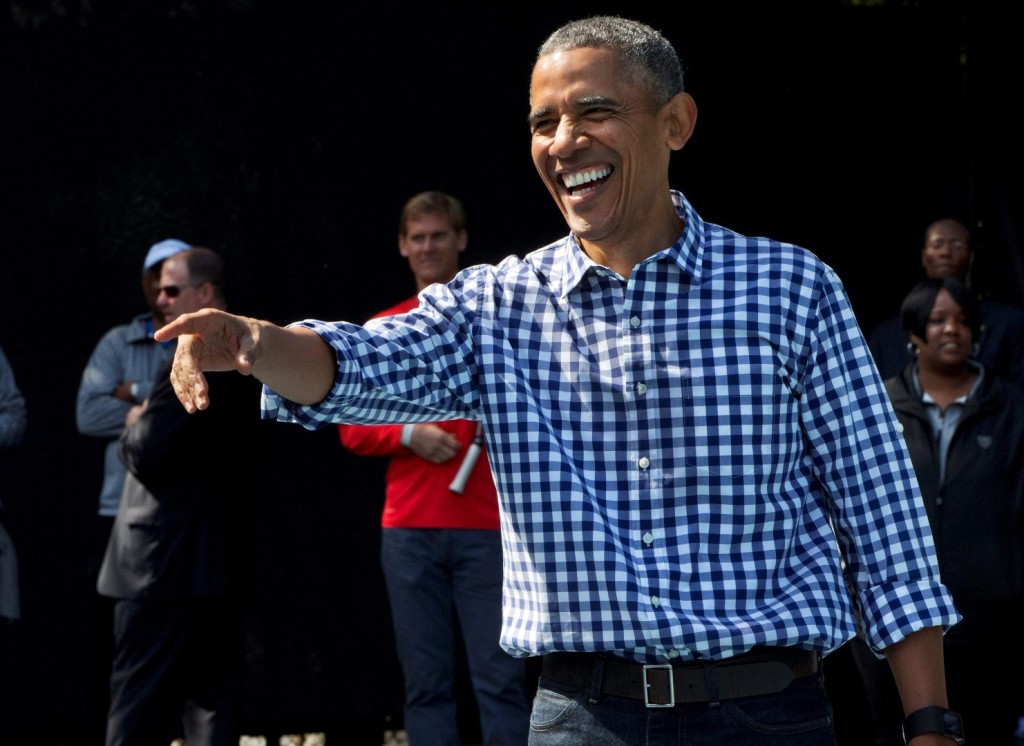
As many in the United States hold their noses in the search for the next president, they’re increasingly warming to the president they already have. Buoyed by some good economic news and a surge of goodwill from his base of supporters, President Barack Obama is seeing his approval rating rise. That puts Obama, who leaves office in January, in a position to remain a force in the political debate at a point in his final term when some others faded into the background. For the first time since 2013, half of those questioned approve of the job Obama is doing in office, according to an Associated Press-GfK poll. The survey found the apparent uptick in approval extended across issues, including foreign affairs, immigration and, most notably the economy, where people said they felt slightly better about their own prospects and Obama’s stewardship. Asked about their opinion of Obama more generally, those surveyed were more likely to give him a positive rating than any of the candidates for president, Republican or Democrat. Terry Trudeau, 66, said he preferred Obama to “all of them” running for the White House. “One of the qualities I like is he’s been able to work with other countries and make deals,” Trudeau said, citing Obama’s climate change pacts with China as an example. “Donald Trump will never be able to do that. He would try to bully them.” Obama’s numbers remain modest. Compared with his predecessors, he’s well above Republican George W. Bush, who had about a 30 percent approval rating at this point in his presidency, but below Democrat Bill Clinton‘s roughly 60 percent, according to polls conducted by Gallup. Still, where each of those second-term presidents largely sat on the sidelines during the races to replace them, Obama is poised to stay in the game. Approval ratings generally are tied to how people feel about the economy. Obama has enjoyed and promoted a steady trickle of positive economic news. The survey showed people were slightly more likely to describe the economy as good and slightly more optimistic about their own financial situations than they were in February. Still, 54 percent characterize the economy as poor. While the poll found an increase in approval among Democrats and with people under 50, there is no evidence that Republican opposition is thawing or that the president has become a less polarizing figure. Only about 1 in 10 Republicans expressed a positive opinion of Obama or the job he’s doing. “I just feel that he’s out of touch with what’s going on. I feel like he’s more concerned with his legacy than making change,” said Angela Buckmaster, a 47-year-old Republican from Lansing, Michigan. Still, the numbers may help explain some of Obama’s recent swagger and why it’s likely to continue as he tries to rally his party behind its eventual 2016 nominee — Hillary Clinton or Bernie Sanders. Obama has been quick to take aim at GOP candidates. This past week, he called front-runner Trump’s latest immigration proposal “half-baked.” The president seized the spotlight with a new rule and aggressive critique aimed at corporate tax dodgers, risking riling Wall Street but capitalizing on the populism of the moment. He has put himself at the front and center of the fight over the Supreme Court, returning on Thursday to the law school where he once taught and portraying the GOP blockade of his nominee as a threat to democracy. Obama also conducted his first interview as president with “Fox News Sunday,” a favorite show for conservatives. The White House says Obama always planned to squeeze every last minute out of his two terms, regardless of his popularity. Aides have promised more policy announcements, particularly economic initiatives, as several efforts long in the works come to fruition. Also, he probably will be a force in the campaign, working to fire up his core coalition of young, African-American and Hispanic voters, and backers in Rust Belt states, where he has continued to show strength. Eighty-one percent of those questioned in the poll say the economy is a very or extremely important issue to them personally, compared with the 74 percent who say that about health care or the 69 percent about the threat posed by the Islamic State group. People were split 49 percent to 49 percent, in their approval or disapproval of Obama’s handling of the economy. But that divide was a slight improvement over the 44 percent approval in February. On other issues, views of Obama are not as rosy. More in the survey disapprove than approve of his handling of world affairs, the threat from IS, immigration, and health care. But on each measure, Obama has improved at least slightly since February. The AP-GfK Poll of 1,076 adults was conducted online March 31-April 4, using a sample drawn from GfK’s probability-based KnowledgePanel, which is designed to be representative of the U.S. population. The margin of sampling error for all respondents is plus or minus 3.3 percentage points. Republished with permission of the Associated Press.
AP Poll: Americans overwhelmingly view Donald Trump negatively
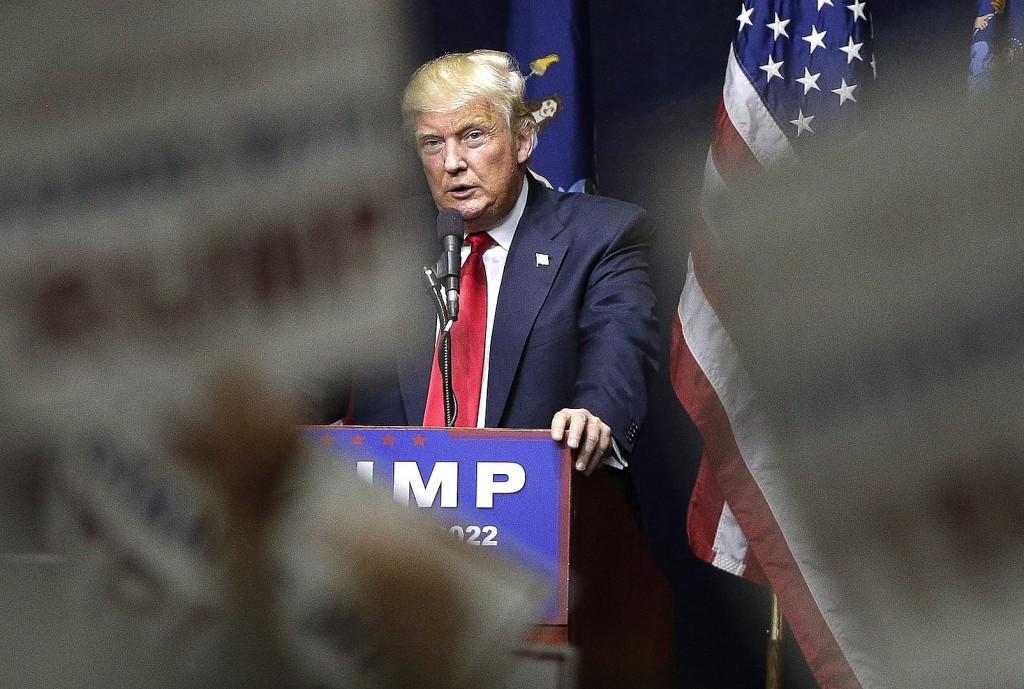
For Americans of nearly every race, gender, political persuasion and location, disdain for Donald Trump runs deep, saddling the Republican front-runner with unprecedented unpopularity as he tries to overcome recent campaign setbacks. Seven in 10 people, including close to half of Republican voters, have an unfavorable view of Trump, according to a new Associated Press-GfK poll. It’s an opinion shared by majorities of men and women; young and old; conservatives, moderates and liberals; and whites, Hispanics and blacks — a devastatingly broad indictment of the billionaire businessman. Even in the South, a region where Trump has won GOP primaries decisively, close to 70 percent view him unfavorably. And among whites without a college education, one of Trump’s most loyal voting blocs, 55 percent have a negative opinion. Trump still leads the Republican field in delegates and has built a loyal following with a steady share of the Republican primary electorate. But the breadth of his unpopularity raises significant questions about how he could stitch together enough support in the general election to win the White House. It also underscores the trouble he may still face in the Republican race, which appears headed to a contested convention where party insiders would have their say about who will represent the GOP in the fall campaign. “He’s at risk of having the nomination denied to him because grass-roots party activists fear he’s so widely disliked that he can’t possibly win,” said Ari Fleischer, a former adviser to President George W. Bush. Beyond their generally negative perception of Trump, large majorities also said they would not describe him as civil, compassionate or likable. On nearly all of these measures, Trump fared worse than his remaining Democratic or Republican rivals. Not that voters have all that much love for those rivals. But their negative perceptions don’t match the depth of the distaste for Trump. Texas Sen. Ted Cruz, who is seeking to catch Trump in the Republican delegate count, is viewed unfavorably by 59 percent, while 55 percent have negative views of Democratic front-runner Hillary Clinton. Another problem for Trump is that his public perception seems to be getting worse. The number of Americans who view him unfavorably has risen more than 10 percentage points since mid-February, a two-month stretch that has included some of his biggest primary victories but also an array of stumbles that suggested difficulties with his campaign organization and a lack of policy depth. A survey conducted by Gallup in January found Trump’s unfavorable rating, then at 60 percent in their polling, was already at a record high level for any major party nominee in their organization’s polling since the 1990’s. Candi Edie, a registered Republican from Arroyo Grande, California, is among those whose views on Trump have grown more negative. “At first, I thought he was great. He was bringing out a lot of issues that weren’t ever said, they were taboo,” Edie said. Now the 64-year-old feels Trump’s early comments masked the fact that he’s “such a bigot.” “I don’t know if he’s lost it or what,” she said. “He’s not acting presidential.”Trump’s unpopularity could provide an opening for Cruz, though he is loathed by many of his Senate colleagues and other party leaders. After a big win Tuesday in Wisconsin, Cruz is angling to overtake Trump at the July GOP convention. Clinton’s campaign believes Trump’s sky-high unfavorable ratings could offset some questions voters have about her own character, and perhaps even give her a chance to peel off some Republicans who can’t stomach a vote for the real estate mogul. Andrew Glaves, a “hard core” Republican from Bothell, Washington, said he might have to side with Clinton if Trump becomes the nominee, even though she’s out of step with his views on gun rights, his top election issue. “I’d be willing to take that as opposed to doing so much harm to the country’s reputation,” said Glaves, 29. More than 60 percent of all registered voters and 31 percent of Republicans said they definitely would not vote for Trump in the general election. One group that is still with him includes those who describe themselves as both Republicans and supporters of the tea party movement. Sixty-eight percent of them have a favorable view. Pennsylvania Republican Robert Paradis plans to vote for Trump in his state’s primary this month. The 76-year-old said that while Trump’s uneven temperament makes him cringe “all the time,” he’s hopeful the front-runner’s bluntness can shake up Washington. “He’s not a politician; he says it the way he feels it,” Paradis said. ___ The AP-GfK Poll of 1,076 adults was conducted online March 31-April 4, using a sample drawn from GfK’s probability-based KnowledgePanel, which is designed to be representative of the U.S. population. The margin of sampling error for all respondents is plus or minus 3.3 percentage points. Respondents were first selected randomly using telephone or mail survey methods and later interviewed online. People selected for KnowledgePanel who didn’t otherwise have access to the Internet were provided access at no cost to them. Republished with permission of the Associated Press.
Mark McKinnon says The Circus will evolve when presidential race becomes two-person contest
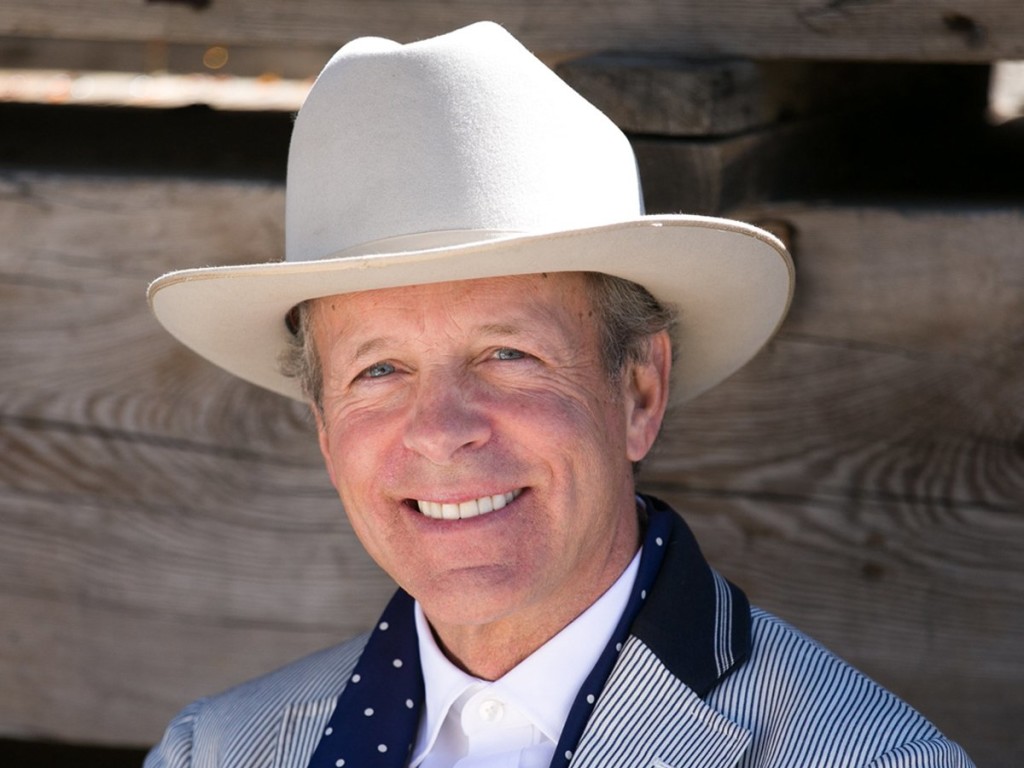
Mark McKinnon is a man of many hats. Cowboy hats, that is, which is his signature look. He’s done a lot of things in his life, but he’ll probably always be best known for his association as an ad man for George W. Bush‘s presidential campaigns. He’s also the co-creator, co-executive producer and co-host of “The Circus,” a weekly Showtime documentary series on the presidential campaign. The show is a co-production between Showtime and Bloomberg Politics. FloridaPolitics.com spoke with McKinnon last week from Columbus, Ohio, on Super Tuesday III. We mentioned to him how we’ve seen him twice on the campaign trail this year – A week earlier at the Tampa Convention Center for a Marco Rubio rally, and in Derry, New Hampshire when Barbara Bush came out in a much-publicized announcement for a campaign appearance with son Jeb. Florida Politics: You’ve been constantly covering the campaign for The Circus since mid-January. Do you ever get home these days? Mark McKinnon: I get home about one day every couple of weeks. This has been such a circus, and a fascinating one. We got really lucky picking this election to do this, but there’s been no absence of drama. So yeah, I’ve been kicking around in New Hampshire like you were, in Florida where you are, in Columbus today. Sometimes I don’t know until 11 p.m. at night where I’m going to be, which was the case before last, where I thought I was going to Florida, then I got a call that Romney was going to be with (John) Kasich, so I just flipped my plans at midnight and went to Ohio. FP: How big of a crew do you have to capture so much footage for your show each week, and get it edited each Sunday night? MMK: Well, it’s a massive challenge. When I pitched this to television networks – I could write a whole book about how that works – I had the idea 10 years ago. That’s how long it took to get on. The real challenge, and what scared most television executives, was this notion of doing it weekly. Because they’re used to seeing shows months ahead of time. In this case, Showtime only sees it hours before it airs, and at that point, they can’t change much. But to me, the whole idea behind the concept was to produce a great documentary that shows this fascinating world of a presidential campaign. The public sees maybe 1 percent of what really goes on the news. So there’s all this other stuff that happens which is really interesting and entertaining and informative, so I thought it’d be fascinating and dramatic for viewers to see this and see sort of human side of politics and what these people go through. Also importantly, I thought it needed to be in real time as much as possible. So that people were not only seeing an interesting world, but seeing it as it was unfolding, so that it was topical and they feel like they were kind of up on what’s happening. I thought the political junkies would love it — which they do — but people who are casually interested in politics would love it as well because of the way in which every Sunday night they can tune in and in a way that’s much more interesting than a Sunday talk show or reading the newspaper, they can get up to speed on what’s happening. We have 60 people working on this and four crews spanning out across the country, and we have to make a full-blown documentary every week and then wake up every Monday morning, and make another one. So, the production challenge, I mean, it’s a crushing schedule. The logistics of managing of the schedules and moving these crews around is incredible, but Showtime gave us the best in the business, and we’re really excited to be doing it. FP: One of the most interesting scenes to date in the show is one I viewed online dealing with the Trump phenomenon and the general freaking out by the Republican Party establishment. You showed this private lunch in D.C. with of GOP establishment figures, lamenting the rise of Trump and discussing, what if anything can be done about it (Those six men were Ron Hohlt, Vin Weber, Ron Kaufman, Ed Rogers, Ed Goeas and Mike Duncan). MMK: That scene has been one of the most provocative of the season, and it’s gotten a huge response. The idea was that we would find what’s left of the establishment and take them to lunch, and it turns out that there’s six guys left who are the establishment, and we found them, and they’re right out of central casting: They couldn’t be less diverse (laughs). It’s just a bunch of old white guys who have been around Washington forever, and they’re super smart, and they’ve been in every presidential campaign as far back as you can remember, and they’re movers and shakers, and they’re the go-to guys. If you randomly picked 100 people and said who were the six most influential guys, they’d picked these six guys. But the fascinating thing was they agreed to join us at a classic Washington restaurant with black leather and chrome and martinis, but they just opened up and they were completely candid, which you feel sort like you dropped in on a Mafia Boss meeting. But what was surprising about it was A) how candid they are in the situation they find themselves in, but B) that they were very clear that they don’t have a clue about what to do. They have no clear idea or consensus how to approach it. In fact, all six at the table basically had six different ideas on what to do. FP: Your show began in January, when there was so much interest heading into Iowa. We’ll see how soon this race turns into a one-on-one race between the Democratic and Republican nominee. Right now there’s still so much to cover, but do you have any concerns when it slows down to two people and one race. Will the show be able to
Jeb Bush, seeking a much-needed revival in SC, calls in family

Jeb Bush has long kept his family at arm’s length in his effort to become commander-in-chief, but with the South Carolina primary looming, he’s embracing them like never before in the state that has historically stood by the Bush family in its previous White House bids. It’s a drastic shift from the approach he took at the start of his campaign hinting at how precarious his fortunes have become. Now, with his back to the wall, Bush is grabbing hold of the legacy, and hoping his front-row view of the world’s most difficult job means more to South Carolina’s military-minded Republican voters than a few awkward exchanges on the campaign trail ahead of Saturday’s critical primary. In Beaufort, S.C., Wednesday, Bush told an audience he had experienced “watching history unfold, in a unique way,” a reference to his father’s and brother’s wartime administrations. Bush’s best-known South Carolina advocate, the state’s senior Sen. Lindsey Graham, echoed that sentiment, stressing that Bush’s family is one of his biggest strengths and assets. “He understands the job because his brother and his father have had that job,” Graham said. Bush said in an Associated Press interview Thursday that his family legacy is actually what sets him apart from the others. “You get insight into things that are personal.” For example, Bush recounted the days when he saw the “burden of leadership that my dad felt” in the weeks leading up to the 1991 Persian Gulf War. “He didn’t talk specifically about what he was doing, or going to do,” Bush said. “You could just see the burden.” Bush also lists dozens of admirals, generals and Medal of Honor recipients who have endorsed him. And he points to his time as governor in charge of Florida’s robust national guard, consultation with military and foreign policy experts and vigorous foreign travel while in office and as a private businessman as evidence. But the family reference is a stark change from a year ago, when Bush, then weighing a potential run, said of his father George H.W. Bush and older brother George W. Bush during a Chicago speech: “I admire their service to the nation and the different decisions they had to make. But I am my own man and my views are shaped by my own thinking and own experiences.” Bush’s frequent family references this week reflect the name’s popularity in South Carolina, where both the former wartime presidents won the first-in-the-South primary. It also suggests how desperate Bush and his supporters are for signs of momentum, despite having built the 2016 race’s largest combined warchest of more than $150 million. And yet he finished sixth in Iowa’s leadoff caucuses on Feb. 1 and fourth in the New Hampshire primary on Feb. 8. Despite his efforts in South Carolina, where his family name still maintains some political clout, Bush’s attempt to gain traction hit a rough patch this week. The week started on a high note — a joyous reception from audiences as he campaigned with his former president brother, who came out of public political isolation to assist his younger brother’s at a critical juncture in his campaign. But the following day, Bush was ridiculed for posting a picture on Twitter of a handgun, inscribed with his name and given to him by a manufacturer in Columbia he visited. On an outdoor campaign stop in Summerville Wednesday, Bush fielded more advice on how to improve his underperforming campaign than questions about policy. That was the same day Rubio won the prized endorsement of South Carolina Gov. Nikki Haley, even after she met with George W. Bush in Columbia. Even little things wrinkled Bush’s efforts this week. In Summerville, his clip-on microphone didn’t work. And in Myrtle Beach, Bush, who has recently abandoned glasses for contact lenses, complained to staff about the lighting as he left the hall rubbing his eyes. Bush was hoping his fortunes would reverse on Friday when he was scheduled to campaign with his 90-year-old mother Barbara Bush, a beloved figure among a segment of South Carolina Republicans. Barry Wynn, a member of Bush’s national finance team and former South Carolina Republican Party chairman, says he is convinced Bush can benefit from the family’s popularity, but he also acknowledges the pressure Bush faces. Wynn and other Bush supporters have said he needs to beat or finish very close to Sens. Ted Cruz of Texas and Marco Rubio of Florida to justify asking donors to help him finance the next round of campaigning, which includes the Nevada caucuses and, more importantly, the Mar. 1 Super Tuesday primaries. All three trailed billionaire Donald Trump in a scrum according to most public polls of primary voters. “We’ve got to make sure that when they cut off the tail here, we’re not the tail,” Wynn said. “And then we have to have the resources to stay in the game.” MaryBeth Lewis of Florence put it more directly to Bush after a stop Thursday at the farmer’s market in her town. “Go get ’em!” she told Bush as she squeezed his hand. “I’m still standing,” Bush replied. Republished with permission of the Associated Press.
Jeb Bush tells NBC News he’s in race for “long haul”

Jeb Bush is in the race for “the long haul.” Or at least that’s what the former Florida governor told NBC News reporter Peter Alexander during an interview this week. Bush brushed off questions about whether South Carolina would be his campaign’s last stand, saying he is doing well in the Palmetto State. “The obituaries have been written probably once a week and, we’re in it for the long haul,” said Bush. “But we are going to do well here.” Bush said he thinks Donald Trump has hijacked the Republican Party. Bush said he thinks that support is temporary, and said Trump “is not going to win the presidency.” “This guy is not serious,” said Bush, according to a transcript of the interview. “In a serious dangerous time, we need a serious person with a steady hand to be president of the United States.” Bush has spent the past week in South Caroling trying to rally support. On Monday, former President George W. Bush campaigned for his brother in the Palmetto State; and Barbara Bush is expected to hit the trail with Jeb Bush this week. CNN reported that the former first lady is expected to arrive in South Carolina on Thursday and will stay through the primary. Bush is in fourth place in South Carolina, according to polling averages compiled by RealClearPolitics. Bush told NBC News that he planned to go on to Nevada if he places fourth in South Carolina. “This is a, this is a long haul process particularly you now the rules of the Republican Party set up this time,” he said. Watch Jeb Bush’s interview with NBC News’ Peter Alexander.
Martin Dyckman: Refusing to approve Obama nominee could hurt the Party of No in November
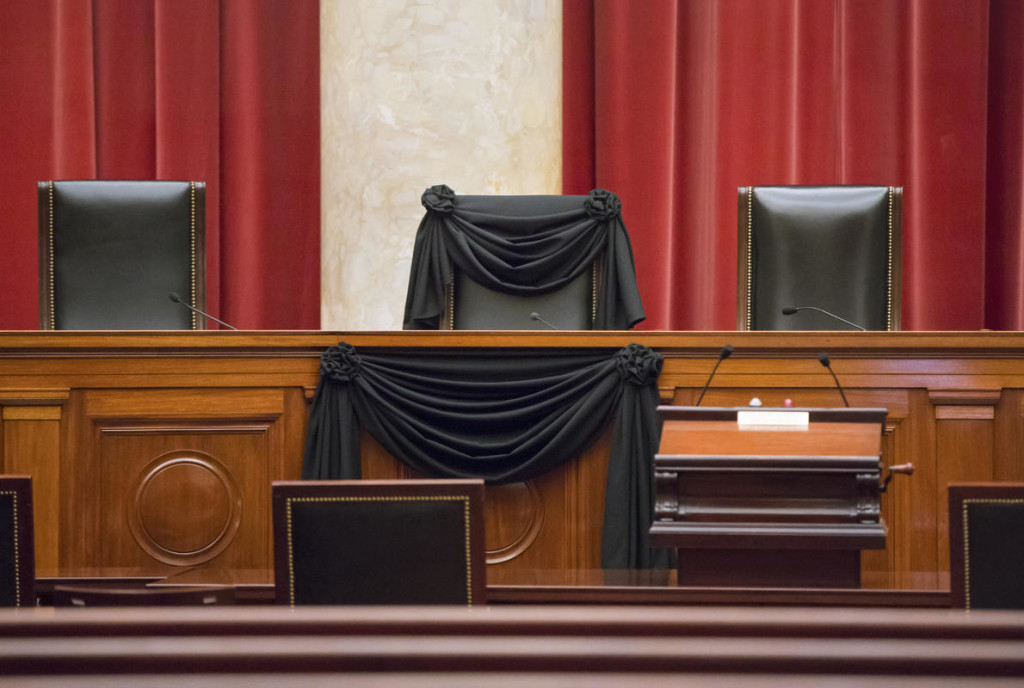
Mitch McConnell couldn’t even wait until Justice Antonin Scalia‘s corpse was cold before exploiting his death for partisan politics. The oleaginous majority leader means to keep the seat empty, no matter the likelihood of that paralyzing the sharply divided Supreme Court for a year, on the chance that voters might elect a Republican president to appoint Scalia’s replacement. The people, he said, “should have a voice in the selection of their next Supreme Court justice.” As Elizabeth Warren promptly reminded him, voters had that choice when they elected President Barack Obama and re-elected him four years ago with a winning margin of nearly 5 million votes. Most Americans understand that short of making or preventing war, the appointment of a Supreme Court justice has the longest-lasting consequences of anything a president does. They have trusted Obama with that responsibility. Twice. But the Party of No has never forgiven him for winning and has treated him with degrees of obstructionism and contempt that were never practiced by Democratic Congresses against Ronald Reagan or George W. Bush. The scheme of keeping Scalia’s seat empty for a year is consistent with the Party of No having shut down the executive branch to try win with extortion what it couldn’t win at the ballot box — the repeal of Obamacare. Belying the current Republican reinvention of history, there has never been a policy of deliberately perpetuating Supreme Court vacancies on the rare occasions when they occur during the last year of a president’s term. Quite the contrary. Some examples: There were only 10 months left in Reagan’s when the Senate unanimously confirmed Justice Anthony Kennedy, as Reagan urged it to do. John Adams had only four months left in his term when he appointed John Marshall to be chief justice in December 1800. That was easily the most consequential appointment ever. Thomas Jefferson, who had defeated Adams, could do nothing but gnash his teeth over the Federalists’ parting shot. Herbert Hoover was in the last year of his term, and facing all-but-certain defeat in the 1932 election, when he successfully nominated Benjamin Cardozo. When President Lyndon Johnson failed to promote Justice Abe Fortas to chief justice, it wasn’t because of timing but because Fortas had woeful ethical problems. There is nothing in the Constitution to require — or authorize — Congress to wait for an intervening election before carrying out any duty other than counting electoral votes. The 27th amendment merely postpones the effective date of any congressional salary increase until after the ensuing election for the House. That was James Madison‘s idea, 202 years before it was finally ratified, on the premise that lawmakers should think twice about giving themselves a pay raise of which the voters might disapprove. Today, there are Republican senators up for re-election who might want to rethink the McConnell scheme to hold the Supreme Court hostage for the next election. Five of the 17 seats the party is defending are in states, including Florida, which Obama carried four years ago. Obama will fulfill his constitutional duty to nominate a justice even if the Republican senators insist on defaulting on their duty to advise and consent. The voters will then have an opportunity to judge the senators. Two of the people said to be on Obama’s shortlist are circuit court of appeals judges whom the Senate confirmed unanimously two and three years ago. One would be the first Indian-American justice. The other is from Iowa and was enthusiastically supported by Iowa Sen. Charles Grassley, chairman of the judiciary committee, who is up for re-election this year. Is Grassley really prepared to stonewall her? Maybe not. He’s now saying he might hold hearings on a nominee although he still thinks the next president should make the appointment. At least the Party of No is making it vividly clear to voters what’s at stake for the Supreme Court — and for the entire concept of equal justice under law — this year. For the first time since Lyndon Johnson’s presidency, a majority of the court might be Democratic appointees. More to the important point, will the new justice be an ideologue like Scalia, or disposed to compromise like Sandra Day O’Connor and David Souter, both of whom were Republicans? They were the last justices who had ever held political office — O’Connor as a legislator and Souter as an attorney general — and the court was richer for that experience. The Supreme Court did its greatest work — Brown v. Board of Education comes to mind — when it valued consensus. It has been at its worst — think Citizens United — when an ideological majority insisted on scoring points that weren’t necessary to resolving the case. The American people want a new justice who will be judicious in every sense of the word. If Obama nominates such a person and the Republicans refuse to confirm him or her, it will be as good a reason as any for voters to reject the Party of No on Nov. 8. *** Martin Dyckman is a retired associate editor of the newspaper formerly known as the St. Petersburg Times. He lives in suburban Asheville, North Carolina.
George W. Bush: From South Carolina cameo to starring role

George W. Bush won a bruising South Carolina presidential primary on his way to the Oval Office, as his father did before him. Now it’s his brother’s turn, and for Jeb Bush, the most consequential foreign policy decisions of his brother’s time in office are suddenly front-and-center of his bid to keep alive his campaign for the Republican presidential nomination — thanks to Donald Trump. The former president had already announced plans to campaign for his younger brother on Monday in South Carolina, marking his most direct entry into the 2016 race to date, when the GOP front-runner used the final debate before the state’s Feb. 20 primary as an opportunity to excoriate George W. Bush’s performance as commander-in-chief. The former president, Trump said, ignored “the advice of his CIA” and “destabilized the Middle East” by invading Iraq on dubious claims that Saddam Hussein had weapons of mass destruction. “I want to tell you: they lied,” Trump said. “They said there were weapons of mass destruction, there were none. And they knew there were none.” Trump didn’t let up as Bush tried to defend his brother, dismissing his suggestion that George W. Bush built a “security apparatus to keep us safe” after the 9/11 attacks. “The World Trade Center came down during your brother’s reign, remember that,” Trump said, adding: “That’s not keeping us safe.” The onslaught — which Jeb Bush called Trump enjoying “blood sport” — was the latest example of the billionaire businessman’s penchant for mocking his rival as a weak, privileged tool of the Republican Party establishment, special interests and well-heeled donors. But the exchange also highlighted the former Florida governor’s embrace of his family name and history as he jockeys with Florida Sen. Marco Rubio and Ohio Gov. John Kasich to emerge from South Carolina as the clear challenger to Trump, who won the New Hampshire primary, and Texas Sen. Ted Cruz, the victor in Iowa’s caucuses. The approach tacks away from Bush’s months-long insistence that he’s running as “my own man,” but could be a perfect fit for South Carolina. Noted South Carolina Sen. Lindsey Graham, who ended his GOP presidential campaign in December and endorsed Jeb Bush in January, said: “The Bush name is golden in my state.” George W. Bush retains wide appeal among Republicans, from evangelicals to chamber of commerce business leaders and retired members of the military. All are prominent in South Carolina, with Bush campaign aide Brett Foster going so far as to say that George W. Bush is “the most popular Republican alive.” After the debate, some Republicans again suggested Trump had gone too far. Bush wasn’t alone on stage leaping to his brother’s defense, with Rubio coming back to the moment to say, “I thank God all the time it was George W. Bush in the White House on 9/11 and not Al Gore.” The attack on George W. Bush carries risk for Trump, given the Bush family’s long social and political ties in South Carolina and the state’s hawkish national security bent, bolstered by more than a half-dozen military installations and a sizable population of veterans who choose to retire in the state. Trump has repeatedly defied predictions that his comments might threaten his perch atop the field. And as he jousted Saturday with Trump, Jeb Bush said, “this is not about my family or his family.” But the Bush family does have a history in the state that’s hard to overlook. In 2000, George W. Bush beat John McCain in a nasty contest, marred by rumors that McCain had an illegitimate black child. McCain adopted a child from Bangladesh. Exit polls showed George W. Bush won nearly every demographic group. George H.W. Bush, the 41st president, won twice here, beating Bob Dole in 1988 and demolishing Pat Buchanan in 1992. One of the elder Bush’s top strategists, Lee Atwater, hailed from South Carolina and remains a legend in GOP campaign annals. Last week, Jeb Bush touted the endorsement of Iris Campbell, the widow of former South Carolina Gov. Carroll Campbell, a national co-chairman of previous Bush presidential campaigns. Yet even as he defended his brother’s presidency at Saturday’s debate, Jeb Bush found a way to distance himself from George W. Bush’s business affairs and to criticize Trump at the same time. The issue: eminent domain. Before entering politics, George W. Bush was part-owner of the Texas Rangers, and their home city of Arlington, Texas, used eminent domain to take private land and build a stadium for the team. Trump has defended such uses of eminent domain as a way to foster economic development. Retorted Bush, who argued eminent domain should be reserved for public infrastructure projects, “There is all sorts of intrigue about where I disagree with my brother. There would be one right there.” Republished with permission of the Associated Press.
George W. (finally) to campaign for Jeb Bush
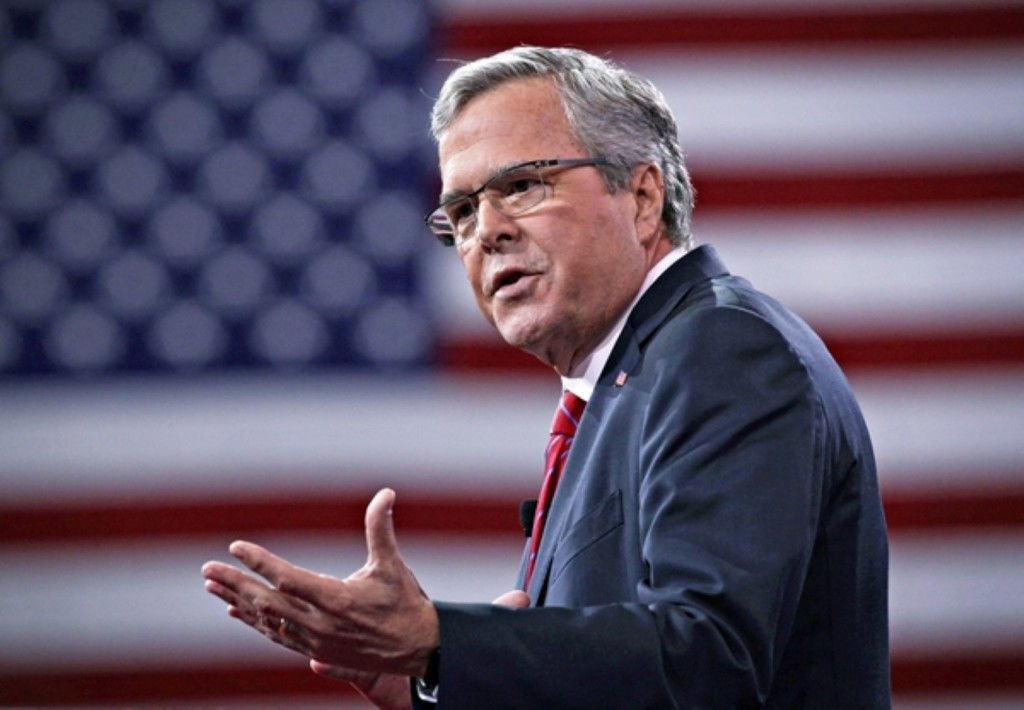
Jeb Bush’s South Carolina director says the presidential candidate may finally appear on the campaign trail alongside his brother, former President George W. Bush. Brett Doster says “George W. Bush is the most popular Republican alive” and that the GOP in South Carolina is “eager” for the visit. South Carolina holds a Feb. 20 primary, 11 days after New Hampshire. Jeb Bush has a large organization in the state, which gave his father and brother hard-fought primary victories on their paths to the 1988 and 2000 nominations, respectively. Doster says plans are not final, but notes that George W. Bush is popular among a cross-section of important South Carolina GOP groups, from evangelical Christians to the military community and large veterans presence. Republished with permission of the Associated Press.
