
Joe Biden win confirmed after pro-Donald Trump mob storms US Capitol

Congress confirmed Democrat Joe Biden as the presidential election winner early Thursday after a violent mob loyal to President Donald Trump stormed the U.S. Capitol in a stunning attempt to overturn America’s presidential election, undercut the nation’s democracy and keep Trump in the White House. Lawmakers were resolved to complete the Electoral College tally in a display to the country, and the world, of the nation’s enduring commitment to uphold the will of the voters and the peaceful transfer of power. They pushed through the night with tensions high and the nation’s capital on alert. Before dawn Thursday, lawmakers finished their work, confirming Biden won the election. Vice President Mike Pence, presiding over the joint session, announced the tally, 306-232. Trump, who had repeatedly refused to concede the election, said in a statement immediately after the vote that there will be a smooth transition of power on Inauguration Day. “Even though I totally disagree with the outcome of the election, and the facts bear me out, nevertheless there will be an orderly transition on January 20th,” Trump said in a statement posted to Twitter by an aide. The Capitol was under siege Wednesday, as the nation’s elected representatives scrambled to crouch under desks and don gas masks while police futilely tried to barricade the building, one of the most jarring scenes ever to unfold in a seat of American political power. A woman was shot and killed inside the Capitol, and Washington’s mayor instituted an evening curfew in an attempt to contain the violence. The rioters were egged on by Trump, who has spent weeks falsely attacking the integrity of the election and had urged his supporters to descend on Washington to protest Congress’ formal approval of Biden’s victory. Some Republican lawmakers were in the midst of raising objections to the results on his behalf when the proceedings were abruptly halted by the mob. Together, the protests and the GOP election objections amounted to an almost unthinkable challenge to American democracy and exposed the depths of the divisions that have coursed through the country during Trump’s four years in office. Though the efforts to block Biden from being sworn in on Jan. 20 were sure to fail, the support Trump has received for his efforts to overturn the election results have badly strained the nation’s democratic guardrails. Congress reconvened in the evening, with lawmakers decrying the protests that defaced the Capitol and vowing to finish confirming the Electoral College vote for Biden’s election, even if it took all night. Pence reopened the Senate and directly addressed the demonstrators: “You did not win.” Republican Senate Majority Leader Mitch McConnell said the “failed insurrection” underscored lawmakers’ duty to finish the count. Democratic House Speaker Nancy Pelosi said Congress would show the world “what America is made of” with the outcome. The president gave his supporters a boost into action Wednesday morning at a rally outside the White House, where he urged them to march to the Capitol. He spent much of the afternoon in his private dining room off the Oval Office watching scenes of the violence on television. At the urging of his staff, he reluctantly issued a pair of tweets and a taped video telling his supporters it was time to “go home in peace” — yet he still said he backed their cause. Hours later, Twitter for the first time locked Trump’s account, demanded that he remove tweets excusing violence, and threatened “permanent suspension.” A somber President-elect Biden, two weeks away from being inaugurated, said American democracy was “under unprecedented assault, ” a sentiment echoed by many in Congress, including some Republicans. Former President George W. Bush said he watched the events in “disbelief and dismay.” The domed Capitol building has for centuries been the scene of protests and occasional violence. But Wednesday’s events were particularly astounding both because they unfolded at least initially with the implicit blessing of the president and because of the underlying goal of overturning the results of a free and fair presidential election. Tensions were already running high when lawmakers gathered early Wednesday afternoon for the constitutionally mandated counting of the Electoral College results, in which Biden defeated Trump, 306-232. Despite pleas from McConnell, more than 150 GOP lawmakers planned to support objections to some of the results, though lacking evidence of fraud or wrongdoing in the election. Trump spent the lead-up to the proceedings publicly hectoring Pence, who had a largely ceremonial role, to aid the effort to throw out the results. He tweeted, “Do it Mike, this is a time for extreme courage!” But Pence, in a statement shortly before presiding, defied Trump, saying he could not claim “unilateral authority” to reject the electoral votes that make Biden president. In the aftermath of the siege, several Republicans announced they would drop their objections to the election, including Sen. Kelly Loeffler, R-Ga., who lost her bid for reelection Tuesday. Earlier, protesters had fought past police and breached the building, shouting and waving Trump and American flags as they marched through the halls, many without masks during the COVID-19 crisis. Lawmakers were told to duck under their seats for cover and put on gas masks after tear gas was used in the Capitol Rotunda. Some House lawmakers tweeted they were sheltering in place in their offices. Rep. Scott Peters, D-Calif., told reporters he was in the House chamber when rioters began storming it. Security officers “made us all get down, you could see that they were fending off some sort of assault.” He said they had a piece of furniture up against the door. “And they had guns pulled,” Peters said. Glass panes to a House door were shattered. The woman who was killed was part of a crowd that was breaking down the doors to a barricaded room where armed officers stood on the other side, police said. She was shot in the chest by Capitol Police and taken to a hospital where she was pronounced dead. City police said three other people died from medical emergencies during
Pro-Donald Trump mob storms US Capitol in bid to overturn election
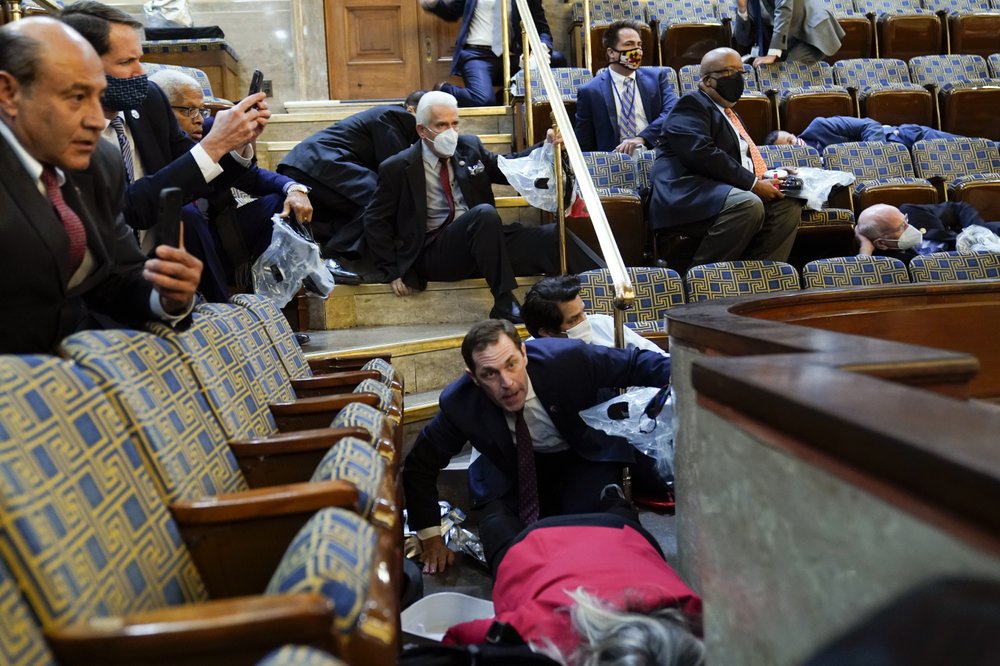
A violent mob loyal to President Donald Trump stormed the U.S. Capitol on Wednesday and forced lawmakers into hiding, in a stunning attempt to overturn America’s presidential election, undercut the nation’s democracy and keep Democrat Joe Biden from replacing Trump in the White House. The nation’s elected representatives scrambled to crouch under desks and don gas marks while police futilely tried to barricade the building, one of the most jarring scenes ever to unfold in a seat of American political power. A woman was shot and killed inside the Capitol, and Washington’s mayor instituted an evening curfew in an attempt to contain the violence. The rioters were egged on by Trump, who has spent weeks falsely attacking the integrity of the election and had urged his supporters to descend on Washington Wednesday to protest Congress’ formal approval of Biden’s victory. Some Republican lawmakers were in the midst of raising objections to the results on his behalf when the proceedings were abruptly halted by the mob. Together, the protests and the GOP election objections amounted to an almost unthinkable challenge to American democracy and exposed the depths of the divisions that have coursed through the country during Trump’s four years in office. Though the efforts to block Biden from being sworn in on Jan. 20 were sure to fail, the support Trump has received for his efforts to overturn the election results have badly strained the nation’s democratic guardrails. House Speaker Nancy Pelosi said lawmakers were resuming the counting of electoral votes Wednesday evening after the Capitol was cleared of the pro-Trump occupiers. The president gave his supporters an added boost Wednesday morning during an appearance at a rally outside the White House, where he urged them to march to the Capitol. He spent much of the afternoon in his private dining room off the Oval Office watching scenes of the violence on television. At the urging of his staff, he reluctantly issued a pair of tweets and a taped video telling his supporters it was time to “go home in peace” — yet he still said he backed their cause. Hours later, Twitter, for the first time, locked Trump’s account, demanded that he remove tweets excusing violence, and threatened “permanent suspension.” A somber President-elect Biden, two weeks away from being inaugurated, said American democracy was “under unprecedented assault,” a sentiment echoed by many in Congress, including some Republicans. Former President George W. Bush said he watched the events in “disbelief and dismay.” “What happened here today was an insurrection, incited by the President of the United States,” said Republican Sen. Mitt Romney of Utah. There were harsh words from major business organizations and the Republican National Committee, too, suggesting uneasy relations with Trump were skidding into divorce as he leaves Washington. “Our soldiers have died carrying the American flag into battle for our freedom,” tweeted RNC communications director Michael Ahrens. “To see that flag used in the name of unfounded conspiracy theories is a disgrace to the nation, and every decent American should be disgusted by it.” Trump, unrepentant, had tweeted, “These are the things and events that happen when a sacred landslide election victory is so unceremoniously & viciously stripped away from great patriots who have been badly & unfairly treated for so long.” “Remember this day forever!” The domed Capitol building has for centuries been the scene of protests and occasional violence, including a 1954 shooting involving Puerto Rican nationalists. But Wednesday’s events were particularly astounding both because they unfolded at least initially with the implicit blessing of the president and because of the underlying goal of overturning the results of a free and fair presidential election. Tensions were already running high when lawmakers gathered early Wednesday afternoon for the constitutionally mandated counting of the Electoral College results, in which Biden defeated Trump, 306-232. Despite pleas from Republican Senate Majority Leader Mitch McConnell, more than 150 GOP lawmakers planned to support objections to some of the results, though lacking evidence of fraud or wrongdoing in the election. Trump spent the lead-up to the proceedings publicly hectoring Vice President Mike Pence, who had a largely ceremonial role in the proceedings, to aid the effort. He tweeted on Wednesday: “Do it, Mike, this is a time for extreme courage!” But Pence, in a statement shortly before presiding, defied Trump, saying he could not claim “unilateral authority” to reject the electoral votes that make Biden president. Shortly after the first GOP objections, protesters fought past police and breached the building, shouting and waving Trump and American flags as they marched through the halls. Lawmakers were told to duck under their seats for cover and put on gas masks after tear gas was used in the Capitol Rotunda. Some House lawmakers tweeted they were sheltering in place in their offices. Rep. Scott Peters, D-Calif., told reporters he was in the House chamber when rioters began storming it. Security officers “made us all get down, you could see that they were fending off some sort of assault, it looked like. They had a piece of furniture up against the door, the door, the entry to the floor from the Rotunda, and they had guns pulled,” Peters said. “And they just told us to take our pins off,” he added, referring to lapel pins members wear so Capitol Police can quickly identify them. Then the lawmakers were evacuated. Staff members grabbed the boxes of Electoral College votes as the evacuation took place. Otherwise, said Sen. Jeff Merkley, D-Ore., the ballots likely would have been destroyed by the protesters. Trump supporters posting on internet forums popular with far-right fringe elements celebrated the chaos. Messages posted on one turned from profane frustration over the content of Trump’s speech to glee when supporters stormed the building. At least one leading figure was live streaming video from inside the Capitol during the siege. The mob’s storming of Congress prompted bipartisan outrage, as lawmakers accused Trump of fomenting the violence with his relentless falsehoods about election fraud. Several
Dividing party, Republicans poised to challenge Joe Biden win

Republicans mounting an unprecedented challenge to Joe Biden’s election win are setting up a congressional showdown on Wednesday that threatens to divide their party and the country for years to come. With protestors already gathering in Washington to support President Donald Trump, the House and the Senate will convene a joint session to count the electoral votes cast in November’s election. Trump has repeatedly said there was widespread fraud, but his claims have been roundly rejected by Republican and Democratic election officials in state after state and by judges, including at the Supreme Court, further cementing Biden’s victory. Trump sees the joint session of Congress as one of his final attempts to overturn the results, even though there is no credible path for that to happen. Echoing Trump’s baseless claims, some of his Republican allies in Congress plan to formally object to the results, focusing on six battleground states — Arizona, Georgia, Michigan, Nevada, Pennsylvania, and Wisconsin. But a growing number of their GOP colleagues, especially in the Senate, said they would not sign on. If an objection has support from both a House member and a senator in writing, then both chambers will vote on it. That could happen three or more times on Wednesday as Republican Sens. Josh Hawley of Missouri, Ted Cruz of Texas, and Kelly Loeffler of Georgia, along with at least ten other GOP senators, have indicated they will support at least some of the House challenges. It is unclear just what the Republican senators will do, but the process could drag into the night as the two chambers will have to consider each objection individually. There could be more than 100 Republicans in the House willing to object. The challenge to the presidential election is on a scale unseen since the aftermath of the Civil War, though the typically routine process of confirming Electoral College votes has been hit with brief objections before. In 2017, several House Democrats challenged Trump’s win, but Biden, who presided at the time as the vice president, swiftly dismissed them to assert Trump’s victory. In 2005, a challenge by a Democratic House member and a Democratic senator to George W. Bush’s victory in Ohio was quickly dismissed by both chambers. The effort this week is expected to be much broader but is all but certain to fail. Biden is set to be inaugurated Jan. 20. Republicans had not yet settled on a full strategy the night before the joint session. A late-night meeting on Monday convened by Cruz reached few conclusions, according to two Republicans familiar with the situation and granted anonymity to discuss it. Cruz will object to electoral results from Arizona, another Republican said — likely to be the first objection considered, in a state Biden won. Hawley has said he will object to the Pennsylvania results, and Loeffler may object to Georgia, where she was vying to keep her seat in a runoff election on Tuesday. With mounting desperation, Trump declared at a campaign rally for Loeffler and David Perdue in Georgia Monday that he would “fight like hell” to hold on to the presidency and he appealed to Republican lawmakers to reverse his election loss. Perdue is seeking another six years in the Senate, but his term expired Sunday. The days ahead will be defining for his presidency. Trump is whipping up crowds and people are gathering in Washington, where security is on alert. Lawmakers are being told to arrive early at the Capitol and some are considering sleeping overnight in their offices to ensure they can safely access the building amid the protests. Vice President Mike Pence will be closely watched as he presides over the session. He is under growing pressure from Trump and others to tip the results in Trump’s favor. But Pence has a ceremonial role that does not give him the power to affect the outcome. “I promise you this: On Wednesday, we’ll have our day in Congress,” Pence said while himself campaigning in Georgia ahead of Tuesday’s runoff elections that will determine control of the Senate. But he did not detail what that meant. The high-stakes decisions on whether to ally with Trump are splitting the Republican Party. A range of Republican officials — including Gov. Larry Hogan of Maryland; Rep. Liz Cheney of Wyoming, the third-ranking House GOP leader; and former House Speaker Paul Ryan — have criticized the GOP efforts to overturn the election. And more than a dozen Republican senators have said they will not support the effort. “The 2020 election is over,” said a statement Sunday from a bipartisan group of 10 senators, including Republicans Susan Collins of Maine, Lisa Murkowski of Alaska, Bill Cassidy of Louisiana, and Mitt Romney of Utah. Several others have said they, too, will not back objections, including Republican Sens. John Thune of South Dakota, the No. 2 Republican in the Senate who said last month he thought any challenges would go down “like a shot dog.” In a statement Tuesday, South Carolina Sen. Tim Scott said that as he reads the Constitution, “there is no constitutionally viable means for the Congress to overturn an election wherein the states have certified and sent their electors.” Senate Majority Leader Mitch McConnell has tried to prevent his party from engaging in the battle, which could help define the GOP in the post-Trump era and create lingering resentments among Republican voters. Both Hawley and Cruz are potential 2024 presidential contenders, vying for Trump’s base of supporters. Some other potential candidates, including Arkansas Sen. Tom Cotton, have chosen not to challenge the results. Cruz’s coalition of 13 senators has said it will vote to reject the Electoral College tallies unless Congress launches a commission to immediately conduct an audit of the election results. Congress is unlikely to agree to that. Facing the criticism from many in his own party, Cruz has attempted to put a finer point on his challenge. The commission remains his focus, he has said, not to undo the election
Donald Trump’s tactics to overturn election could have staying power
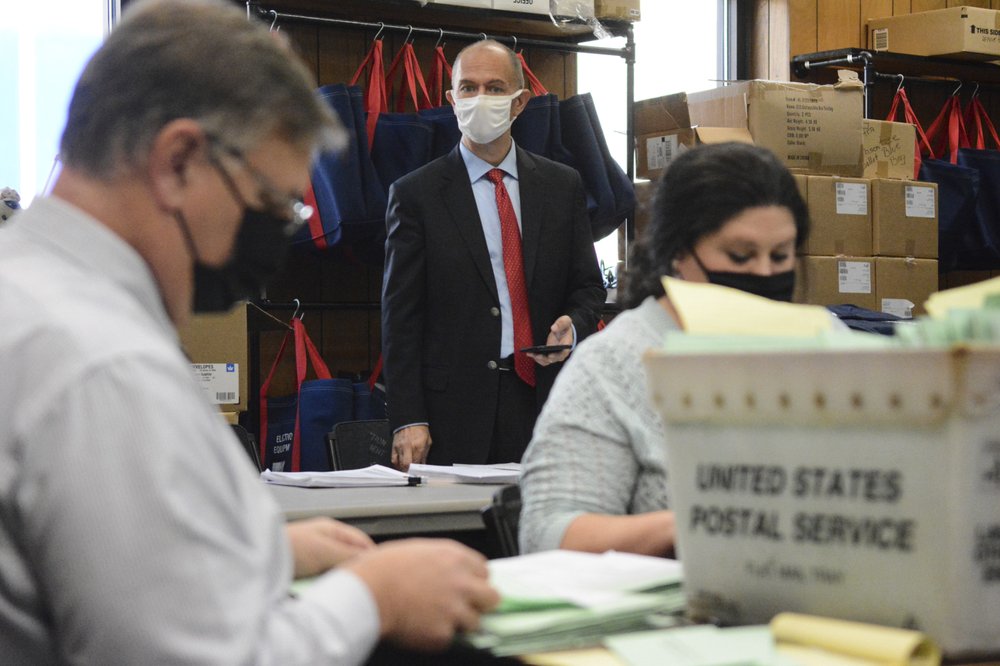
Even after he exits the White House, President Donald Trump’s efforts to challenge the legitimacy of the election and seeking to overturn the will of voters could have staying power. Trump’s tactics are already inspiring other candidates and have been embraced by a wide array of Republicans. Supporters include congressional candidates, state lawmakers, party chairs, conservative legal groups, and appointees to previously little-known state vote-certification boards. The breadth of support for Trump’s effort could be a troubling sign for future elections. “What this president is doing is poisoning democracy,” former Michigan Gov. Jennifer Granholm said. “And, yes, he is setting a precedent, suggesting that it is OK to violate these norms that have made our country great.” Granholm, a Democrat, joined with former New Jersey Gov. Christine Todd Whitman, a Republican, to raise concerns about Trump’s refusal to concede and efforts to undermine the integrity of elections. “This is not who we are as Americans, and we don’t want the public coming away from this thinking this is the norm,” said Whitman, who served in President George W. Bush’s administration. Trump and his allies have pushed conspiracies involving voting machines manipulated by dead foreign leaders and tens of thousands of fraudulent mail ballots that somehow escaped layers of security and scrutiny by election workers across the country. They have filed lawsuits without evidence, tried to pressure state lawmakers into seating their own presidential electors, and sought to influence low-level party members who sit on the state and local boards that certify election results. This is despite the fact that the federal government’s own cybersecurity arm declared the presidential election “the most secure in American history,” and Attorney General William Barr said the Department of Justice uncovered no evidence that would change the outcome. Even so, Trump has found friendly lawmakers and party officials willing to bolster his claims and adopt his tactics. On Friday, a group of 64 GOP lawmakers in Pennsylvania signed a statement urging Congress not to accept the state’s slate of electors for Democrat Joe Biden. They cited a litany of complaints over how the election was conducted. “A number of people have shown themselves willing to go along or at least being perceived of going along instead of just condemning the entire operation,” said Wendy Weiser with the Brennan Center for Justice at New York University Law School. “It was not written off as it should have been.” In recent days, lawmakers in battleground states have provided friendly forums for Trump allies to air their suspicions. A group of GOP state lawmakers in Arizona held an unofficial meeting where Trump’s lawyers repeated claims of irregularities with the state’s vote count but provided no evidence of widespread fraud. The chairwoman of the Arizona GOP asked a court to overturn Biden’s win in the state. The effort then shifted to Michigan, where Trump lawyer Rudy Giuliani appeared at a four-hour legislative hearing to argue that fraud had occurred. “Throughout this hearing, my colleagues continued to speak in circles about ‘getting to the bottom of this.’ But we’re already at the bottom, and there’s nothing down here,” said Michigan state Rep. Darrin Camilleri, a Democrat. “Down here at the bottom of all this, it’s just a dark, empty place.” On Thursday, a legislative committee in Georgia received testimony from a Trump campaign attorney about purported irregularities despite a hand count and machine audit that revealed no major problems with the vote. Election law experts say time will tell whether Trump’s approach and the support it has generated in the GOP represent a shift in how candidates handle defeat. “Next time could be worse,” constitutional law expert Edward B. Foley warned in an op-ed last week while offering praise for the few Republicans willing to stand up to Trump. Those included Georgia Secretary of State Brad Raffensperger, who certified his state’s election amid calls for his resignation from fellow Republicans and threats, and Aaron Van Langevelde, one of two Republicans on the Michigan board that certified that state’s results. While the other Republican on the Michigan board abstained, Van Langevelde said he was required under state law to certify Biden’s win. The result, Foley noted, could have easily been different if other Republicans more open to Trump’s arguments had occupied those same positions. “What makes this year’s narrow escape so unnerving is how far the plot to overthrow the election got with so little factual ammunition,” Foley said. Others believe Trump’s behavior is more of a fluke and unlikely to result in any lasting damage to the electoral process. “Everybody knows that it’s just because they lost,” said Pennsylvania Lt. Gov. John Fetterman, a Democrat. “There isn’t anyone from the president on down that genuinely believed that there was any real fraud. That’s what makes it so disingenuous.” A few candidates have followed Trump’s lead, refusing to concede and seeking extraordinary measures to address their concerns. A Pennsylvania congressional candidate who lost his race has yet to concede and signed on to a lawsuit challenging the validity of all mail ballots cast this year. A Republican candidate for U.S. Senate in Michigan called on the state to take the unprecedented step of delaying certification so an audit could be done — despite an extensive county canvassing process that did not find significant irregularities. He ultimately conceded. Using the 2020 election as a springboard to create more trust in the process would help, said David Carroll, head of the democracy program at the Carter Center, founded by former President Jimmy Carter and his wife, Rosalynn. That could involve requiring state and local election officials to be nonpartisan and appointed rather than elected by party, clarifying vague election laws, implementing federal standards for parts of the process, and ensuring more training for election workers and volunteers. “There was a lot of discussion before the election that the process might not be credible. Those are the things we see around the world where democracy is weak,” Carroll said. “It will be important for us to sit down as a nation and as a society and say we don’t want this
Joe Biden eyes defeated candidates for key administration roles

In politics, there can sometimes be an upside to losing. President-elect Joe Biden is eyeing several Democrats who lost congressional reelection races last month for key positions in his administration. They include outgoing Reps. Abby Finkenauer of Iowa, Donna Shalala of Florida, and Sen. Doug Jones of Alabama. Their consideration continues a long Washington tradition of defeated politicians seeking shelter in a new White House. Landing a job in a new administration can both position the losing candidates for future campaigns and provide the incoming president with important relationships on Capitol Hill. “It’s good to have people who know how to roam the halls of Congress,” said Andrew Card, who directed George W. Bush’s transition and later served as the Republican president’s chief of staff. Biden’s transition team declined to comment on the prospects of any individual contender for an administration role. He has already unveiled much of his economic and national security team and is expected to announce picks soon for key health positions. But there are still a large number of major Cabinet positions to be filled, including attorney general and leaders of the departments of Labor, Commerce, and Transportation. As Biden considers his options, his personal connection with some of the defeated lawmakers could carry significance. Finkenauer, who is under consideration as Labor secretary, owes her start in politics in part to Biden. As a college student, she worked on his ill-fated 2008 presidential campaign. A decade later, he headlined a rally for her winning congressional campaign. She was a key surrogate for Biden ahead of the Iowa caucuses. “I know they have a long relationship, and it’s been mutually supportive,” said former Assistant Dubuque City Manager Teri Goodman, who is a decades-long Biden supporter and has watched Finkenauer’s rise. Finkenauer narrowly lost her bid for a second term in a rural northeast Iowa district. But since then, the former state legislator, who made a name promoting public employee unions, has had conversations with senior Biden transition officials about leading the Labor Department, according to Democratic sources familiar with the communications. Jones, meanwhile, is in the mix to lead the Justice Department, partly due to his work as a U.S. attorney who helped convict Ku Klux Klansmen for the Birmingham church bombing that killed four Black girls. He narrowly won a special Alabama Senate election in 2017 but lost reelection last month. He also has a longstanding personal relationship with Biden, dating to Biden’s first presidential campaign in 1988. Biden spoke at Jones’ campaign kickoff in 2017, saying of Jones, “He knows your heart and will never let you down,” and was the first to telephone him on Nov. 3 after he’d lost the seat to Republican Tommy Tuberville. Shalala is perhaps the most administration-ready of 2020′s losing Democratic class. She spent eight years as secretary of health and human services under Bill Clinton and then served as president of the University of Miami before winning a south Florida House seat in 2018. She has heard from Biden transition officials. Beyond the outgoing members of Congress, Biden is also considering his former rivals in the Democratic primary for jobs. He already tapped California Sen. Kamala Harris as his vice president. Biden is weighing roles for Pete Buttigieg, the former South Bend, Indiana mayor who mounted a surprisingly strong campaign in the early stretch of the Democratic primaries. Biden has expressed deep affection for Buttigieg, who was one of the first major candidates to drop out of the race and endorse Biden. Montana Gov. Steve Bullock, who lost his Senate bid after leaving the White House race, is part of discussions for a Biden administration role, perhaps as secretary of agriculture. Another name under consideration for agriculture is former North Dakota Sen. Heidi Heitkamp, who lost in 2018 but has been a champion of reinvigorating rural America. “If they think I can be helpful, then good,” Heitkamp told The Associated Press recently. Presidents have often sought losing rivals for positions. Republican Donald Trump chose fellow 2016 GOP presidential candidates Rick Perry as energy secretary and Ben Carson for housing and urban development. Democrat Barack Obama notably chose former rival Hillary Clinton to be secretary of state after the 2008 election. Missouri Sen. John Ashcroft’s defeat in 2000 paved the way for his four years as attorney general under George W. Bush, including during the aftermath of the 2001 terrorist attacks in the United States. Former Senate Majority Leader Tom Daschle of South Dakota, who lost the election to a third term in 2004, was tapped after the 2008 election by Obama to head health and human services, which would have put him at the forefront of the health care debate. Daschle withdrew from consideration after questions arose about his failure to properly report and pay income taxes. The most successful losing congressional candidate of the past 50 years is George H. W. Bush, who as a two-term Republican U.S. House member from Texas lost his 1970 bid for Senate against Democrat Lloyd Bentsen. As a consolation, President Richard Nixon picked Bush to be ambassador to the United Nations, a disappointment for the up-and-comer who was hoping for a treasury job. But the post led to an ambassadorship to China, and the experiences were valuable when as president he found himself leading a global coalition in Operation Desert Storm. “The significance is that was the beginning of his self schooling and expertise in foreign affairs,” said Chase Untermeyer, director of White House personnel during George H. W. Bush’s administration. In a White House led by a Capitol Hill veteran like Biden, a team with a background in Congress is particularly valuable to those around the president, since Biden remains well acquainted with the rules and many members. But considering Biden hasn’t been a senator in nearly a dozen years, Card said those with more recent experience in Congress will be helpful. “More than helping the president, these people can help the White House staff dealing with members of Congress,” said Card. “They know where
Among first acts, Joe Biden to call for 100 days of mask-wearing
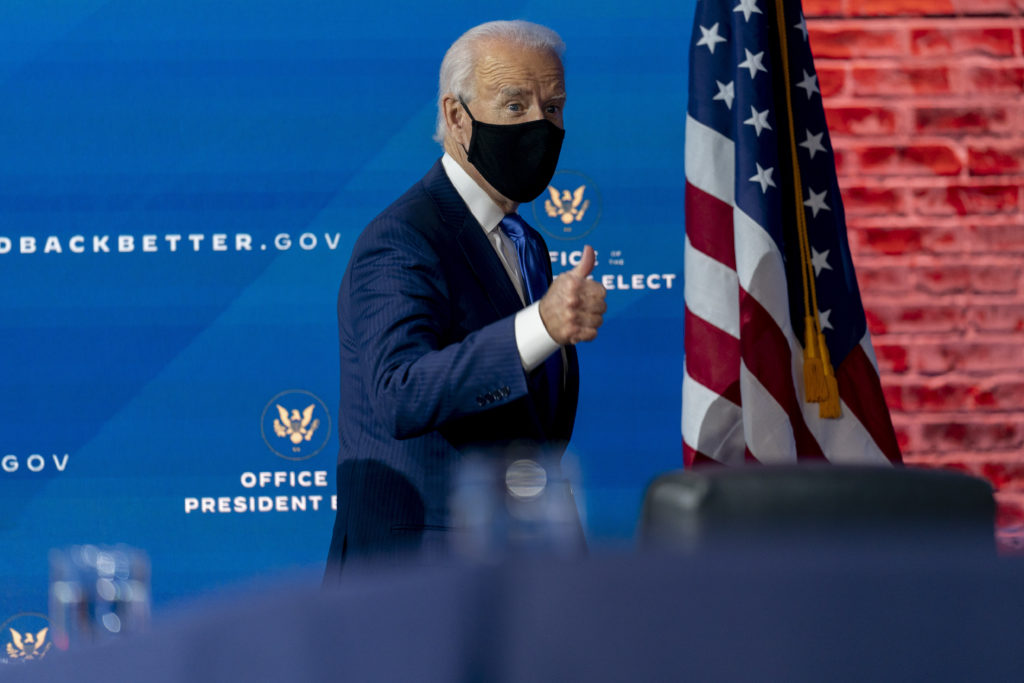
Joe Biden said Thursday that he will ask Americans to commit to 100 days of wearing masks as one of his first acts as president, stopping just short of the nationwide mandate he’s pushed before to stop the spread of the coronavirus. The move marks a notable shift from President Donald Trump, whose own skepticism of mask-wearing has contributed to a politicization of the issue. That’s made many people reticent to embrace a practice that public health experts say is one of the easiest ways to manage the pandemic, which has killed more than 275,000 Americans. The president-elect has frequently emphasized mask-wearing as a “patriotic duty” and during the campaign floated the idea of instituting a nationwide mask mandate, which he later acknowledged would be beyond the ability of the president to enforce. Speaking with CNN’s Jake Tapper, Biden said he would make the request of Americans on Inauguration Day, Jan. 20. “On the first day I’m inaugurated, I’m going to ask the public for 100 days to mask. Just 100 days to mask — not forever, just 100 days. And I think we’ll see a significant reduction” in the virus, Biden said. Biden also said he asked Dr. Anthony Fauci to stay on in his administration, “in the exact same role he’s had for the past several presidents,” as the director of the National Institute of Allergy and Infectious Diseases, the nation’s top infectious-disease expert. The president-elect said he’s asked Fauci to be a “chief medical adviser” as well as part of his COVID-19 advisory team. Regarding a coronavirus vaccine, Biden said he’d be “happy” to get inoculated in public to assuage any concerns about its efficacy and safety. Three former presidents — Barack Obama, George W. Bush, and Bill Clinton — have said they’d also get vaccinated publicly to show that it’s safe. “People have lost faith in the ability of the vaccine to work,” Biden said, adding that “it matters what a president and the vice president do.” In the same interview, Biden also weighed in on reports that Trump is considering pardons of himself and his allies. “It concerns me in terms of what kind of precedent it sets and how the rest of the world looks at us as a nation of laws and justice,” Biden said. Biden committed that his Justice Department will “operate independently” and that whoever he chooses to lead the department will have the “independent capacity to decide who gets investigated.” “You’re not going to see in our administration that kind of approach to pardons, nor are you going to see in our administration the approach to making policy by tweets,” he said. Vice President-elect Kamala Harris added that any decision coming out of the Department of Justice “should be based on facts, should be based on the law — it should not be influenced by politics.” Republished with the permission of the Associated Press.
Joe Biden moves forward without help from Donald Trump’s intel team
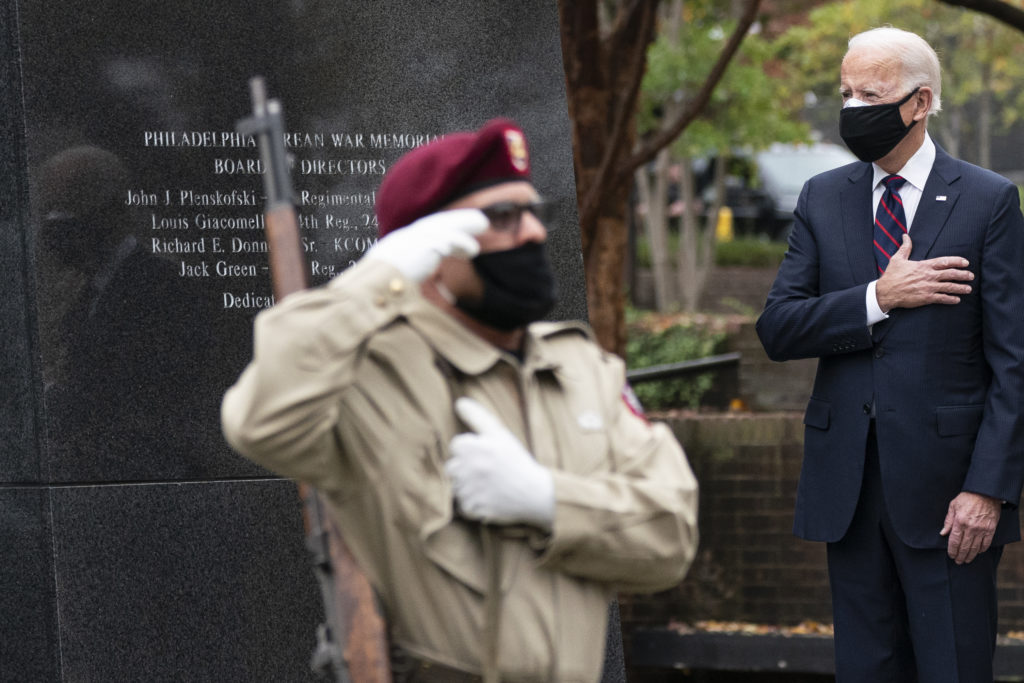
The presidential race was hovering in limbo in 2000 when outgoing President Bill Clinton decided to let then-Gov. George W. Bush read the ultra-secret daily brief of the nation’s most sensitive intelligence. Clinton was a Democrat and his vice president, Al Gore, was running against Republican Bush. Gore had been reading the so-called President’s Daily Brief for eight years; Clinton decided to bring Bush into the fold in case he won and he did. President Donald Trump has not followed Clinton’s lead. As he contests this year’s election results, Trump has not authorized President-elect Joe Biden to lay eyes on the brief. National security and intelligence experts hope Trump changes his mind, citing the need for an incoming president to be fully prepared to confront any national security issues on Day One. “Our adversaries aren’t waiting for the transition to take place,” says former Michigan Republican Rep. Mike Rogers, who was chairman of the House intelligence committee. “Joe Biden should receive the President’s Daily Brief starting today. He needs to know what the latest threats are and begin to plan accordingly. This isn’t about politics; this is about national security.” U.S. adversaries can take advantage of the country during an American presidential transition and key foreign issues will be bearing down on Biden the moment he steps into the Oval Office. Among them: Unless Trump extends or negotiates a new nuclear arms accord with Russia before Inauguration Day, Biden will have only 16 days to act before the expiration of the last remaining treaty reining in the world’s two largest nuclear arsenals. Perhaps U.S. spies have picked up tidbits about the Russians’ redlines in the negotiations, or about weapons it really wants to keep out of the treaty. That’s the type of information that might be in the PDB, a daily summary of high-level, classified information and analysis on national security issues that’s been offered to presidents since 1946. It is coordinated and delivered by the Office of the National Intelligence Director with input from the CIA and other agencies. It is tailored for each president, depending on whether they prefer oral or written briefs or both, short summaries or long reports on paper or electronically. Having access to the PDB also could help Biden craft a possible response to North Korea, which has a history of firing off missiles or conducting nuclear tests shortly before or after new presidents take office. Biden has decades of experience in foreign affairs and national security, but he likely has not been privy to the latest details about how Iran is back to enriching uranium, or the active cyber attack operations of Russia, China and Iran. China’s crackdown on Hong Kong is heating up. And the threat from Islamic extremists, although curbed, still remains. Biden is trying to play down the significance of the delay in getting access to the PDB. “Obviously the PDB would be useful but, it’s not necessary. I’m not the sitting president now,” Biden said Tuesday. He didn’t answer a question about whether he’d tried to reach out to Trump himself on this or any other issue, saying only, “Mr. President, I look forward to speaking with you.” He was also asked about needing access to classified information as soon as possible if Trump doesn’t concede the race. “Look, access to classified information is useful. But I’m not in a position to make any decisions on those issues anyway,” Biden said. “As I said, one president at a time. He will be president until Jan. 20. It would be nice to have it, but it’s not critical.” Biden is familiar with the PDB, having read it during his eight years as vice president. But threats are ever-changing and as Inauguration Day nears, his need for Trump to let him get eyes on the intelligence brief will become more critical. Sen. James Lankford, R-Okla., predicted that the issue of whether Biden will get access to the intelligence brief will be resolved soon. “I’ve already started engaging in this area. … And if that’s not occurring by Friday, I will step in and push and say this needs to occur so that regardless of the outcome of the election, whichever way that it goes, people can be ready for that actual task,” Lankford told KRMG in Tulsa, Oklahoma, on Wednesday. He said Vice President-elect Kamala Harris also should be getting the briefings, which should not be a problem because she already has security clearances as a member of the Senate intelligence committee. While the Bush team had access to the intelligence brief in 2000, an election recount delayed the Bush team’s access to government agencies and resources for more than five weeks. Biden is missing out on all counts: More than a week into his transition, Biden doesn’t have access to the PDB, the agencies or government resources to help him get ready to take charge. “President-elect Joe Biden and his transition team should not suffer a similar delay,” John Podesta, who served as White House chief of staff under Clinton, and Bush’s chief of staff Andrew Card wrote in a joint op-ed published this week in The Washington Post. “We have since learned the serious costs of a delayed transition,” they wrote. “Less than eight months after Bush’s inauguration, two planes flew into the World Trade Center, killing nearly 3,000 Americans.” The 9/11 Commission Report on the Sept. 11, 2001, attacks warns of the danger in slow-walking presidential transition work in general, not just the intelligence piece. The Bush administration didn’t have its deputy Cabinet officers in place until the spring of 2001 and critical subcabinet positions were not confirmed until that summer — if then, the report said. For now, the office of National Intelligence Director John Ratcliffe says it can’t begin talking with the Biden transition team until a federal agency starts the process of transition, which the Trump administration is delaying. The office, which oversees more than a dozen U.S. intelligence agencies, said it must follow
Joe Biden eyes Washington veterans for key administration posts
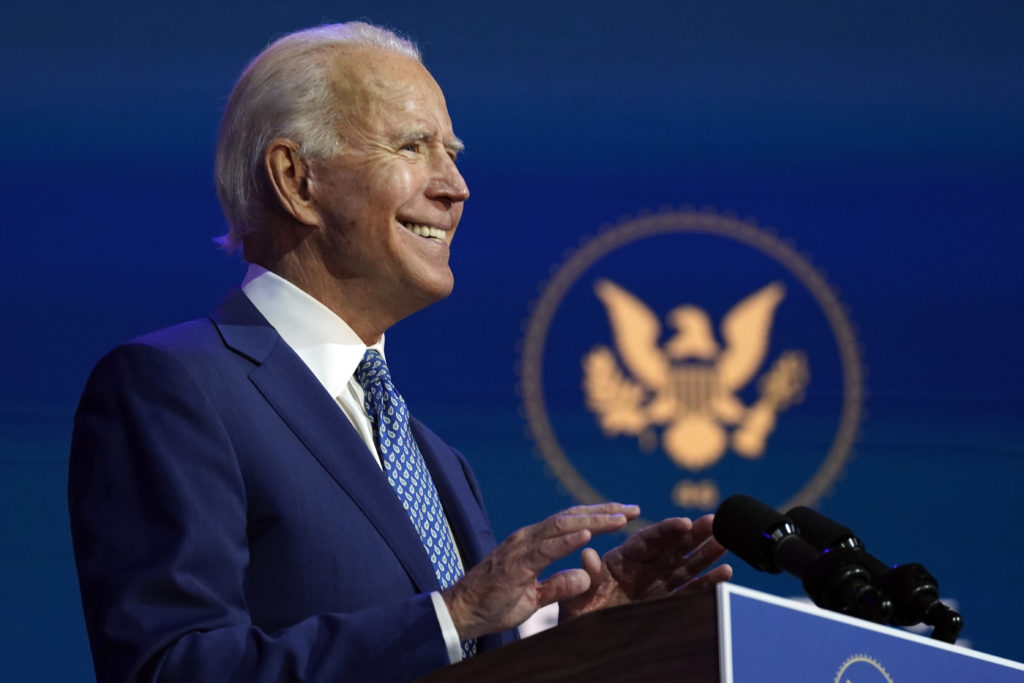
President-elect Joe Biden is looking to build out his nascent White House staff with more traditional Washington insiders, a notable departure from four years in which President Donald Trump filled his team with outsiders and government antagonists. Ron Klain is an early favorite to become Biden’s chief of staff, according to multiple people familiar with planning who spoke on condition of anonymity to speak freely about private discussions. He has decades of Washington experience that includes being Biden’s chief of staff when he was vice president, in addition to serving as the Ebola response coordinator in 2014 and having a central role in the Obama administration’s financial crisis response. Delaware Sen. Chris Coons, a longtime Biden ally and friend, is seen as a potential choice for secretary of state. Rep. Karen Bass of California, whom Biden considered for vice president, is seen as a potential housing and urban development secretary. Both served in Congress for the past decade. Biden is expected to move quickly to name a chief of staff, but other top Cabinet positions will likely take longer. The names under consideration represent Biden’s effort to move Washington past the tumult of President Donald Trump’s administration and fill out his government with more seasoned professionals. The task is taking on even greater urgency than in past transitions because Biden will take office in January amid a raging pandemic that will likely consume the early days of his presidency and require a full government response. Biden made clear on Monday that he would focus on the pandemic by forming a coronavirus advisory board. Former Surgeon General Vivek Murthy, who was named a co-chair of that panel, is seen as a contender for the top job at the Department of Health and Human Services. New Mexico Gov. Michelle Lujan Grisham, who ran her state’s health department, is also being eyed for the position. Even for roles where Biden has the opportunity to make history and appoint the first woman or African American Cabinet secretary, like at defense and treasury, Biden is said to be considering options with decades of experience in their chosen fields. Roger Ferguson, who served as vice-chair of the Federal Reserve under Bill Clinton and George W. Bush, is a potential treasury secretary, while Michele Flournoy, a former undersecretary of defense, is seen as a top pick to lead the Pentagon. Some Democrats are hopeful that the more traditional picks will help rebuild morale among the thousands of civil servants who felt thwarted at doing their jobs under Trump. “You’re not only talking about people who have an expertise in government functions, you’re talking about people who have a great deal of respect for government functions,” said Ed Espinoza, former western states political director for the Democratic National Committee. “That’s a key distinction between the Trump administration and a Biden administration.” It’s a striking shift from Trump, who built out his Cabinet with a raft of unorthodox picks, many of whom were openly skeptical of the federal government’s role in the jobs they were tasked with. Betsy DeVos, an advocate for steering federal money to private charter schools, led the Education Department. Scott Pruitt, the former Oklahoma attorney general who’s a skeptic of the science showing humans contribute to climate change, ran the Environmental Protection Agency. And Republican Rep. Mick Mulvaney of South Carolina, who initially served as White House budget director, supported shutting down the government to rein in federal spending and was critical of some of the proposals Trump aimed to invest in, like a massive infrastructure policy. Still, Biden faces a number of major unknowns as he prepares for the presidency. First, the scope of Biden’s first-term agenda will hinge on which party controls the Senate, which remains in question with two special Senate elections in Georgia scheduled for the first week in January. Democrats have acknowledged they will likely need to pare back some of Biden’s campaign trail promises even if they do hold the majority in a closely divided Senate, and a slim majority could also affect the kinds of nominees Biden can hope to get approved for top Cabinet slots. The most imminent unknown for Biden, however, remains to what extent Trump and his administration will work with the former vice president as his team begins its efforts to transition the government. The General Services Administration is tasked with formally recognizing Biden as president-elect, beginning the transition process. But the agency’s Trump-appointed administrator, Emily Murphy, has not started the process and has given no guidance on when she will do so. That lack of clarity is fueling questions about whether Trump, who has not publicly recognized Biden’s victory and has falsely claimed the election was stolen, will impede Democrats as they try to establish a government. There is little precedent in the modern era of a president erecting such hurdles for his successor. The stakes are especially high this year because of the coronavirus pandemic, which will require a comprehensive government response. “America’s national security and economic interests depend on the federal government signaling clearly and swiftly that the United States government will respect the will of the American people and engage in a smooth and peaceful transfer of power,” Jen Psaki, a Biden transition aide, tweeted Sunday. South Carolina Rep. Jim Clyburn, an ally of Biden’s on Capitol Hill, said that if Trump continues to drag his feet, then he hopes that “my conservative friends in Congress will have an intervention.” “This country is bigger than one person, and to allow the people of this country to suffer — we are near 245,000 deaths, and we’re still messing around and won’t get the relief that people need,” he said. Indeed, some Republicans on Capitol Hill called for a smooth transition Monday. Maine Sen. Susan Collins, a moderate Republican and occasional Trump antagonist, congratulated Biden on his victory and said in a statement that “presidential transitions are important” and that Biden and Vice President-elect Kamala Harris should “be given every opportunity
Fraud claims aimed in part at keeping Donald Trump base loyal
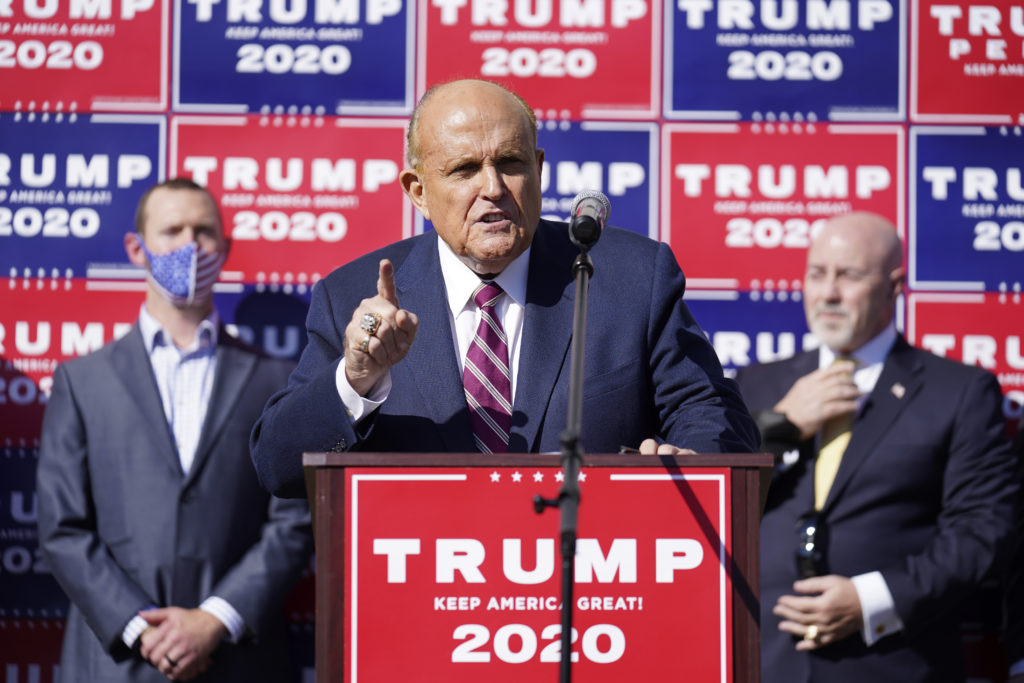
President Donald Trump has promised legal action in the coming days as he refused to concede his loss to Democrat Joe Biden, making an aggressive pitch for donors to help finance any court fight. Trump and his campaign have leveled accusations of large-scale voter fraud in Pennsylvania and other states that broke for Biden, so far without proof. But senior officials, campaign aides, and allies told The Associated Press that overwhelming evidence of fraud isn’t really the point. The strategy to wage a legal fight against the votes tallied for Biden in Pennsylvania and other places is more to provide Trump with an off-ramp for a loss he can’t quite grasp and less about changing the election’s outcome, the officials said. They spoke to AP on the condition of anonymity to discuss internal strategy. Trump aides and allies also acknowledged privately the legal fights would — at best — forestall the inevitable, and some had deep reservations about the president’s attempts to undermine faith in the vote. But they said Trump and a core group of loyalists were aiming to keep his base of supporters on his side even in defeat. There has been no election in decades in which such widespread fraud was alleged. The closest was the 1960 election in which Democrat John F. Kennedy beat Republican Richard Nixon, and there were allegations that fraud helped Kennedy win. Moments after the AP called the race for Biden, Trump attorney Rudy Giuliani stood in front of campaign banner taped over the garage door of a landscaping company in Philadelphia, wedged between a cremation center and an adult book store, with a handful of poll watchers and declared they’d been kept too far away to check for any inaccuracies. “We have no way of knowing, because we’ve been deprived of the right to inspect ballots,” he said. Partisan poll watchers are designated by a political party or campaign to report any concerns they may have. They are not poll workers who actually tally ballots. Monitoring polling places and election offices is allowed in most states, but rules vary and there are certain limits to avoid any harassment or intimidation. They are not allowed to interfere with the conduct of the election and are typically required to register in advance with the local election office. This year, because of the coronavirus that has killed more than 230,000 people across the country, there was litigation in a few states, including Pennsylvania, over where poll watchers could stand to ensure social distancing. Lawyers could potentially argue the vote tally should be cast aside over fraud observed by poll watchers, but in order to win that argument, they’d need evidence, not just allegations the monitors weren’t allowed to see clearly enough. Judges are loathe to disenfranchise any voters and there would need to be substantial proof that fraud had damaged the count so much that it must be set aside. Democratic poll watchers, who were also given the same access, have not raised concerns. Giuliani called evidence of fraud circumstantial at the news conference. He said he’d be filing suit in federal court, but the issue has already been before judges. A federal judge in Philadelphia Thursday night ordered the two sides to work out an agreement on the number of poll watchers and how close they could be to the counting. The judge also voiced concerns about the safety of poll workers during the pandemic if poll watchers were allowed to peer over their shoulders. On Fox News Channel’s “Sunday Morning Futures” Sunday, Giuliani said two additional lawsuits were in the process of being drafted, in addition to existing litigation in Pennsylvania. By the end of this week, Giuliani predicted the campaign would have filed “four or five” lawsuits, with a total of 10 possible. Voter fraud is extremely rare, and when it does happen, people are generally caught and prosecuted and it does not change the outcome of the election. Typically, it involves someone wanting to honor the wishes of a loved one who recently died and either knowingly or not commits a crime by filling out that ballot. Trump campaign officials have also alleged that more than 21,000 had been cast in the name of the dead in Pennsylvania. The claims stem from a conservative legal group’s lawsuit against the Secretary of State, accusing her of wrongly including some 21,000 supposedly dead residents on voter rolls. The federal judge who has the case, John Jones, has said he was doubtful of the claims. He said the Public Interest Legal Foundation that brought the claims was asking the court to accept that there were dead people on voter rolls, and he asked for proof and questioned why they had waited until the “eleventh hour” to file suit. “We cannot and will not take plaintiff’s word for it —in an election where every vote matters, we will not disenfranchise potentially eligible voters based solely upon the allegations of a private foundation,” he wrote in an Oct. 20 ruling. Even Trump’s own administration has pushed back at the claims of widespread voter fraud and illegal voting though it didn’t mention Trump was the one making the allegations. The Cybersecurity and Infrastructure Security Agency, the federal agency that oversees U.S. election security, also noted local election offices have detection measures that “make it highly difficult to commit fraud through counterfeit ballots.” Top election officials in the battleground states of Arizona, Georgia, Michigan, Pennsylvania, and Nevada – both Republican and Democrat – have all said they see no widespread voting irregularities, no major instances of fraud or illegal activity. Meanwhile, on a call with supporters Saturday, Trump campaign manager Bill Stepien encouraged them to be ready to continue the fight for Trump, including standing by for rallies and demonstrations. Other aides outlined what they argued were irregularities in the count. And Republicans were sticking to the idea that all “legal” votes must be counted — the language freighted with a clear implication that Democrats want
Will Sellers: In defense of the Electoral College

This article originally appeared in City Journal. I came of age politically with the 1968 presidential election. Alabama governor George Wallace was running as an independent against Richard Nixon and Hubert Humphrey. My parents were Nixon supporters, and I, their five-year-old son, hopped on the Nixon bandwagon with gusto. The dinnertime conversations in the month preceding the election were all about whether Wallace’s third-party candidacy could work. This all fascinated me, so I asked my mother to let me watch her vote on Election Day. She agreed, but to my dismay, when I joined her in the voting booth, I did not see Nixon, Humphrey, or Wallace listed on the ballot. This made no sense to me; I thought we were here to vote for Richard Nixon? My mother then explained that we didn’t vote for the presidential candidate directly. Instead, we voted for men and women called presidential electors. These people were well-regarded and appointed for the special privilege of casting the deciding votes in presidential elections. This system seemed out of place to me, because in every other election the candidates were listed by name on the ballot. Why not for president? Why should my mother vote for nine people, who would then vote later for president, instead of voting directly for the president? This was my first encounter with the Electoral College. It would not be my last. The first electoral college was a medieval construct dating back at least to the twelfth century, when specific princes were chosen to elect the Holy Roman Emperor. They were influential noblemen, who, because of the importance of their respective kingdoms, were given the hereditary title of “elector.” After the death of the emperor, they met, much like the College of Cardinals, to choose a successor. Whether this idea influenced the deliberations of the Constitutional Convention is speculation, but, like most of the other aspects of the Constitution, the mechanics of the new government were based on historical facets of self-government. The new American nation was built on traditions of representative government expressed in the English parliamentary system, the organization of Protestant church government, and the colonial experience with various local governments in the New World. Important questions necessarily arose during the Constitutional Convention concerning the process of electing the president. How exactly would a president be chosen, and to whom or what would he owe allegiance? Some advocated for election to take place in the House of Representatives, or in the Senate, or even in the several states. The obvious problem with these proposals is that they would create an axis between the president and the electing body. If the states elected the president, then the larger, wealthier, and more populous states would receive greater attention and more favorable treatment by the executive branch than would the smaller, less populous states. A similar imbalance of power would occur were the president chosen by the House or the Senate. Thus, the mechanics of electing the chief executive required balancing various interests to give the executive branch the requisite independence from other political bodies, while maintaining co-equality. According to the chosen scheme, each state would appoint “electors” based on the number of House and Senate members comprising the state’s congressional delegation. These electors were appointed for the sole purpose of electing the president, and a simple majority of their votes would decide the election. This created another means by which the spheres of Congress and the federal government were balanced and divided from that of the states. The Constitutional Convention viewed electors as not necessarily aligned with a faction, but as citizens of honesty, integrity, and political acumen. Originally, electors voted for two people; the person with the most electoral votes became president, and the runner-up became vice-president. Flaws in this system became evident with the presidential election of 1796, when John Adams was elected as president and his archrival, if not nemesis, Thomas Jefferson, was elected vice president. Four years later, Jefferson and Aaron Burr received the same number of electoral votes—neither had the required majority. This unworkable situation was remedied by the 12th Amendment to the Constitution, which prescribed that electors would separately vote for a president and vice president on the same ballot. Later, state legislatures, as they were constitutionally permitted and as the two-party system grew, allowed electors to run as proxies for the presidential and vice-presidential party nominee. For at least the first 100 years, the system worked well, and, other than the 12th Amendment, no major attempts were made to alter the process of electing the president and vice president. Several times, the election was submitted to the House of Representatives after the electors failed to achieve a majority vote for president. For example, in 1824, the election was submitted to the House, where power plays resulted in the election of John Quincy Adams, though Andrew Jackson won significantly more of the popular and the electoral vote. Rutherford B. Hayes, a Republican, lost the 1876 popular vote to Samuel Tilden, a Democrat, but became president because he had prevailed in the electoral vote, though voter fraud in some jurisdictions seemed certain. Many Democratic candidates running for federal office embraced the idea of abolishing the Electoral College, not least Sam Rayburn, who, in his first congressional election in 1912, advocated electing the president by popular vote. If there was any momentum for this aspect of the Progressive movement, it lost steam as other, more critical issues advanced. Today, the constitutional method for electing the president is under siege. The result of the 2016 election—with Donald Trump winning the presidency despite losing the popular vote—led pundits and politicians to call for the presidential election to be based on the popular, not electoral, vote. But lamenting results that saw two presidents in recent memory fail to win the popular vote obscures the effect that abolishing the Electoral College would have on a national campaign. A presidential campaign aimed at achieving a popular vote majority would completely ignore
Bradley Byrne: After the election: One nation under God
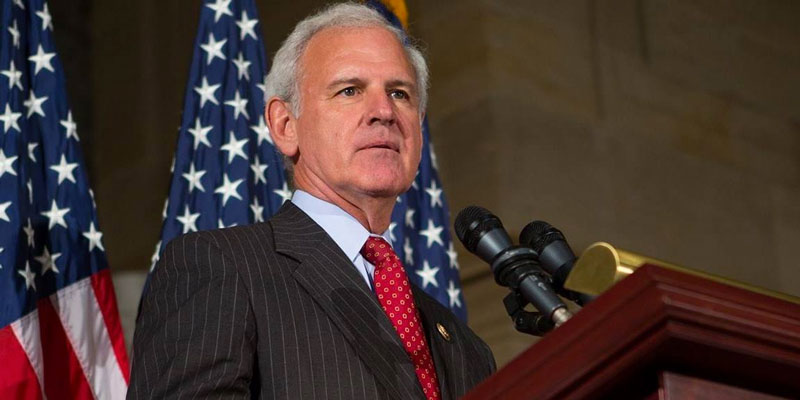
I’ll never forget sitting in the US House Chamber in January of 2017, watching the counting of the Electoral College votes from the 2016 presidential election. Under the Twelfth Amendment to the Constitution, the sitting Vice President opens and counts the votes as submitted and certified by the electors chosen from each state, and the Vice President must do so “in the presence of the Senate and the House of Representatives.” Because Inauguration Day was still several days away, the sitting Vice President was Joe Biden, and as a member of the House, I was entitled to be there. Procedurally, any Representative or Senator can object to any state’s electoral college votes, but at least one member from the other house must agree with the objection before it can be considered. Alabama was the first state up, and Jim McGovern, a very liberal Democrat member from Massachusetts who served on the Rules Committee with me, stood up and objected because the Russians supposedly interfered with our vote for Donald Trump. He also made a blatantly false allegation that our state violated the Voting Rights Act and suppressed thousands of votes. No Senator agreed with him, and Vice President Biden ruled the objections out of order, which kept me from having to argue against McGovern’s silly and frankly slanderous objections. The count went on, and as every Trump state’s votes came up, a Democrat House member would stand up and object, but because no senator agreed with the objections, Biden would rule them out of order. Finally, after several of these, Biden leaned into the microphone and said firmly to his fellow Democrats, “it’s over.” Though they hated the result, he was saying, the Constitution calls for the person with the most electoral votes to be President. And that person was Donald Trump, not Hillary Clinton. This has been an extraordinary year, with the pandemic, a record economic downturn and recovery, riots and violence, and an unprecedented number of hurricanes. It will be an extraordinary election, too, as record numbers of people have already voted in many states, but their votes can’t be counted until election day, and many of those states’ election processes require days to count all those votes. There will also be challenges to the counting of some, perhaps many, ballots because they weren’t filled in or submitted properly. So, we aren’t likely to know the result on Election Day. We didn’t know the result of the 2000 election until December, weeks after the election, and that took an extraordinary decision by the Supreme Court to resolve it in favor of George W. Bush. The Twelfth Amendment was passed and ratified because the 1800 presidential election resulted in an electoral college tie between Thomas Jefferson and his supposed running mate Aaron Burr. That threw the election into the House of Representatives which took 36 ballots to finally make Jefferson the president, three months after the election. In both cases, the nation moved on and accomplished great things. Though this year’s election isn’t likely to be over as quickly as we are used to, all of us should be patient and trust in our Constitution and the institutions which have served us so well for over 230 years. There will be plenty of eyes on the process, and nothing inappropriate is going to go unnoticed. Our intelligence and law enforcement communities have been closely monitoring foreign actors and will continue to do so after the election. Be careful of the information you receive during and after the election because we know there’s a lot of truly fake “news” out there, designed to divide us as a nation. And when we have a result, if your candidate doesn’t win, let’s not have a replay of 2016 when Democrats refused to accept the result, who wouldn’t let it be “over” and shamefully called themselves the “resistance,” a slap in the face of the Constitution and our tradition of peaceful transfer of power. We’ve wasted too much time in Washington over the Mueller report and a failed impeachment effort, attempting to reverse the 2016 election. And we’ve had too much violence this year – we don’t need more due to the election. If your candidate loses, the appropriate response is to be the loyal opposition – loyal to our nation and its Constitution but opposed to the policies of the victorious party. Remember, in American politics, today’s loser is often tomorrow’s winner. Our greatest enemy isn’t a foreign nation but our internal division, driven by a hyper-partisan news media and entertainment industry ready to exploit every fault line in our country and craven before the far worse fault lines of countries where that industry makes a lot of money. Let’s ignore the media and entertainment industry and return to what we learned in school about the traditional values which make us great. As a unified nation there is nothing we can’t do, no problem or issue we can’t solve. We are one nation under God. Let’s keep it that way. Congressman Bradley Byrne currently represents Alabama’s 1st congressional district.
Supreme Court Justice Ruth Bader Ginsburg dies at 87
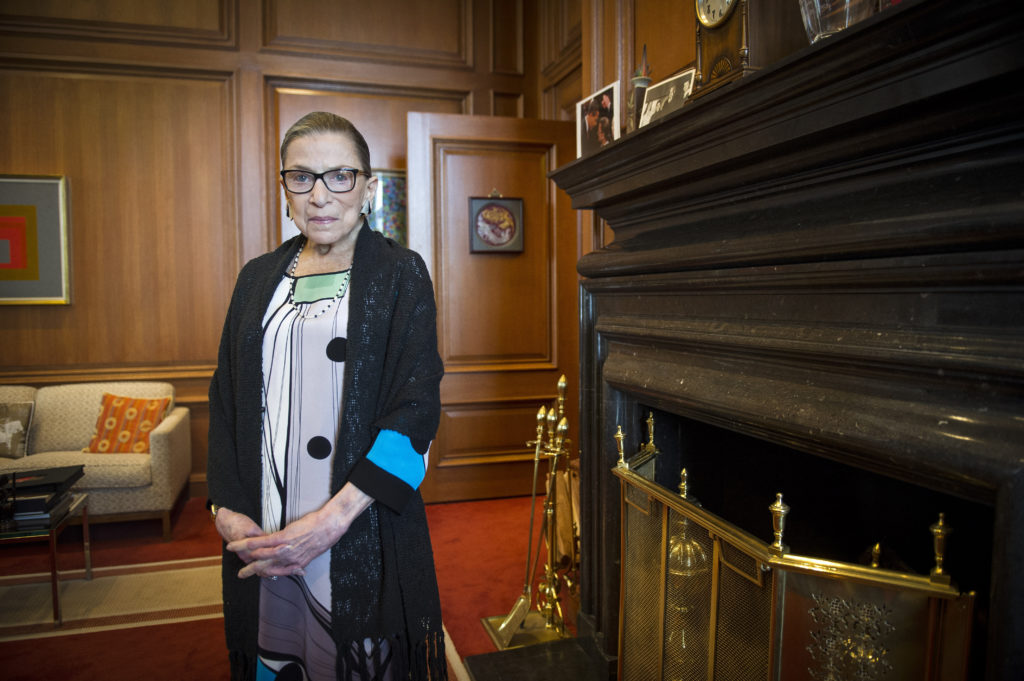
Supreme Court Justice Ruth Bader Ginsburg, a diminutive yet towering women’s rights champion who became the court’s second female justice, died Friday at her home in Washington. She was 87. Ginsburg died of complications from metastatic pancreatic cancer, the court said. Her death just over six weeks before Election Day is likely to set off a heated battle over whether President Donald Trump should nominate, and the Republican-led Senate should confirm, her replacement, or if the seat should remain vacant until the outcome of his race against Democrat Joe Biden is known. Chief Justice John Roberts mourned Ginsburg’s passing. “Our Nation has lost a jurist of historic stature. We at the Supreme Court have lost a cherished colleague. Today we mourn, but with confidence that future generations will remember Ruth Bader Ginsburg as we knew her — a tireless and resolute champion of justice,” Roberts said in a statement. Ginsburg announced in July that she was undergoing chemotherapy treatment for lesions on her liver, the latest of her several battles with cancer. Ginsburg spent her final years on the bench as the unquestioned leader of the court’s liberal wing and became something of a rock star to her admirers. Young women especially seemed to embrace the court’s Jewish grandmother, affectionately calling her the Notorious RBG, for her defense of the rights of women and minorities, and the strength and resilience she displayed in the face of personal loss and health crises. Those health issues included five bouts with cancer beginning in 1999, falls that resulted in broken ribs, insertion of a stent to clear a blocked artery, and assorted other hospitalizations after she turned 75. She resisted calls by liberals to retire during Barack Obama’s presidency at a time when Democrats held the Senate, and a replacement with similar views could have been confirmed. Instead, Trump will almost certainly try to push Ginsburg’s successor through the Republican-controlled Senate — and move the conservative court even more to the right. Ginsburg antagonized Trump during the 2016 presidential campaign in a series of media interviews, including calling him a faker. She soon apologized. Her appointment by President Bill Clinton in 1993 was the first by a Democrat in 26 years. She initially found a comfortable ideological home somewhere left of center on a conservative court dominated by Republican appointees. Her liberal voice grew stronger the longer she served. Ginsburg was a mother of two, an opera lover and an intellectual who watched arguments behind oversized glasses for many years, though she ditched them for more fashionable frames in her later years. At argument sessions in the ornate courtroom, she was known for digging deep into case records and for being a stickler for following the rules. She argued six key cases before the court in the 1970s when she was an architect of the women’s rights movement. She won five. “Ruth Bader Ginsburg does not need a seat on the Supreme Court to earn her place in the American history books,” Clinton said at the time of her appointment. “She has already done that.” On the court, where she was known as a facile writer, her most significant majority opinions were the 1996 ruling that ordered the Virginia Military Institute to accept women or give up its state funding, and the 2015 decision that upheld independent commissions some states use to draw congressional districts. Besides civil rights, Ginsburg took an interest in capital punishment, voting repeatedly to limit its use. During her tenure, the court declared it unconstitutional for states to execute the intellectually disabled and killers younger than 18. In addition, she questioned the quality of lawyers for poor accused murderers. In the most divisive of cases, including the Bush v. Gore decision in 2000, she was often at odds with the court’s more conservative members — initially Chief Justice William H. Rehnquist and Justices Sandra Day O’Connor, Antonin Scalia, Anthony M. Kennedy, and Clarence Thomas. The division remained the same after John Roberts replaced Rehnquist as chief justice, Samuel Alito took O’Connor’s seat, and, under Trump, Neil Gorsuch and Brett Kavanaugh joined the court, in seats that had been held by Scalia and Kennedy, respectively. Ginsburg would say later that the 5-4 decision that settled the 2000 presidential election for Republican George W. Bush was a “breathtaking episode” at the court. She was perhaps personally closest on the court to Scalia, her ideological opposite. Ginsburg once explained that she took Scalia’s sometimes biting dissents as a challenge to be met. “How am I going to answer this in a way that’s a real putdown?” she said. When Scalia died in 2016, also an election year, Senate Majority Leader Mitch McConnell refused to act on Obama’s nomination of Judge Merrick Garland to fill the opening. The seat remained vacant until after Trump’s surprising presidential victory. McConnell has said he would move to confirm a Trump nominee if there were a vacancy this year. Reached by phone late Friday, Sen. Lindsey Graham, R-S.C., the chairman of the Judiciary Committee, declined to disclose any plans. He said a statement would be forthcoming. Ginsburg authored powerful dissents of her own in cases involving abortion, voting rights, and pay discrimination against women. She said some were aimed at swaying the opinions of her fellow judges while others were “an appeal to the intelligence of another day” in the hopes that they would provide guidance to future courts. “Hope springs eternal,” she said in 2007, “and when I am writing a dissent, I’m always hoping for that fifth or sixth vote — even though I’m disappointed more often than not.” She wrote memorably in 2013 that the court’s decision to cut out a key part of the federal law that had ensured the voting rights of Black people, Hispanics, and other minorities was “like throwing away your umbrella in a rainstorm because you are not getting wet.” Change on the court hit Ginsburg especially hard. She dissented forcefully from the court’s decision in 2007 to
