
Senate advances effort to resist Joe Biden’s gun actions

Alabama lawmakers on Thursday advanced legislation aimed at resisting a half-dozen executive actions by President Joe Biden to combat gun violence. The Alabama Senate voted 24-5 for legislation that would prohibit state and local officials from participating in the “administration or enforcement of any presidential gun control order.” However, the bill includes an exemption if doing so would jeopardize federal funding. The measure is part of red-state efforts to seek, both tangible and symbolic, resistance to federal gun control measures. The approval came over the objections of Democrats who derided the measure as unconstitutional and election-year pandering. The bill now moves to the Alabama House of Representatives. “The Second Amendment says the right to bear arms shall not be infringed upon, and this bill is about safeguarding our God-given rights to protect our families and homes,” Sen. Gerald Allen, a Republican from Tuscaloosa, said in a statement about his bill. Two Democratic senators sharply criticized the measure. “This is an election piece, here,” said Senate Minority Leader Bobby Singleton, a Democrat from Greensboro. Sen. Rodger Smitherman, a Democrat from Birmingham, said the bill, if approved, would almost certainly be challenged in court. “I’m telling y’all again that this is going to be unconstitutional. You are going to spend all these millions of dollars trying to defend this and we are going to lose and look bad,” Smitherman said. The president has limited ability to enact gun control measures without congressional approval. Biden last year issued an order that included moves to crack down on “ghost guns,” homemade firearms that lack serial numbers used to trace them and are often purchased without a background check and to tighten regulations on pistol-stabilizing braces. An original version of the Alabama law would have also applied to federal gun laws. Idaho and Missouri have approved similar measures. The Justice Department last year warned Missouri officials that the state can’t ignore federal law after the governor signed a bill that banned police from enforcing federal gun rules. The Alabama legislative action came the same week that lawmakers rejected a measure that would allow people with mental health issues to voluntarily place themselves on a “do not sell” list to temporarily block themselves from buying firearms. The bill failed on a procedural vote required to bring the measure up for debate in the Alabama House of Representatives. Alabama will also become the latest state to allow people to carry concealed handguns without first undergoing a background check and getting a state permit. Alabama Gov. Kay Ivey this month signed legislation ending the requirement for a person to get a concealed carry permit to carry a loaded handgun concealed under their clothes, in a purse or bag, or in a car. Republished with the permission of the Associated Press.
Steve Flowers: Incumbency reigns supreme in State Senate
Being an incumbent state senator in Alabama is like owning that seat. The level of re-electability odds is probably better than that of an incumbent congressman, which is about the same as being elected to a seat in the Russian Communist Politburo. Being a freshman state senator in Alabama is a more powerful position than being a freshman U.S. congressman, especially if you want to affect public policy. Many times, a 50-year old, successful person who is interested in seeking a representative role will approach me and seek my advice about running for either a state senate seat or an open congressional seat. I will quickly advise them that as a state senator, you are one of 35, and you immediately have an impact on your first year as a state senator. However, if you win a congressional seat, you are one of 435. Because of the seniority system, it will be 15 years before they know your name in Washington and 25 years before you are chairman of a committee, and then it is time to retire. In the 35-member Alabama Senate, there are 27 Republicans and 8 Democrats – a pretty supermajority for the GOP. Twenty-four of the twenty-seven senate Republicans are running for reelection. Republicans Jimmy Holley, Del Marsh, and Jim McClendon are retiring. These seats will be filled by another Republican. Therefore, when the Senate organizes next January, the 27 to 8 supermajority will remain the same. The lines are drawn to protect incumbents on both sides of the aisle. The Constitution provides the power of the pencil for legislators to draw their own legislative districts. Seventeen of the 24 Republican incumbents have no opposition in the Republican Primary. Of the seven Republican senators who drew a Republican opponent, they only got an opponent the last day of qualifying, and their opposition is token at best. All 24 Republican incumbents will be reelected. If my prognostication is correct, that is a 100% re-electability rate. There are only two GOP incumbents that were first thought to have viable opponents. Tom Whatley, at first blush, was rumored to have a race. However, polling and fundraising reveal he will win easily. The only interesting race may be in the Huntsville area, where incumbent Tom Butler is being challenged by Bill Holtzclaw, who previously served in that senate seat. The rule of incumbency also prevails on the Democratic side of the aisle. There is only one Democratic seat open. Priscilla Dunn holds the post in name only. She has never attended a senate day in Montgomery for this entire quadrennium. The Senate has, in essence, been operating with 34 senators. In actuality, the Democrats have only seven senate seats. There are 150,000 residents of Jefferson County who have had no voice or vote in the Alabama Senate for four years. There are two Democratic House members vying to fill this seat, Merrika Coleman and Louise Alexander. Ms. Coleman is favored to win this open Senate seat. The cadre of leadership on the Democratic side will return, including powers Bobby Singleton, Rodger Smitherman, and Vivian Figures. Hank Sanders will return to represent Selma and the Black Belt after a four-year sabbatical. His daughter was in the seat this last quadrennium. The entire leadership of the Republican-led Senate will return unopposed, including Greg Reed, Jabo Waggoner, Clay Scofield, Arthur Orr, Greg Albritton, Steve Livingston, Gerald Allen, and especially Clyde Chambliss. They will be joined by a superstar freshman class, who will become even more powerful. This class of leaders includes Will Barfoot, Garlan Gudger, April Weaver, Sam Givhan, Donnie Chesteen, and a trio contingency of Baldwin/Mobile senators Chris Elliott, Jack Williams, and David Sessions. Another member of this sterling class, Dan Roberts of Jefferson, has an opponent but will be reelected. The three open Republican seats and one Democratic open seat will give us some interesting senate races to follow. One of, if not the most important ingredients which creates the power of incumbency is the almighty campaign dollar. Money is the mother’s milk of politics. Most of this campaign money comes from Special Interest Political Action Committees. Ninety percent of those special interest dollars go to incumbents. Thus, over 90% of Alabama state senators are reelected. See you next week. Steve Flowers is Alabama’s leading political columnist. His weekly column appears in over 60 Alabama newspapers. He served 16 years in the state legislature. Steve may be reached at: www.steveflowers.us.
Steve Flowers: Incumbency prevails in secondary constitutional offices
Incumbency is a potent, powerful, inherent advantage in politics. That fact is playing out to the nines in this year’s Alabama secondary constitutional and down ballot races. Several of the constitutional office incumbents do not have Republican or Democratic opposition. Of course, having a Democratic opponent is the same as not having an opponent in a statewide race in Alabama. A Democrat cannot win in a statewide contest in the Heart of Dixie. Lt. Governor Will Ainsworth will be elected to a second four-year term without opposition. He will be waiting in the wings to follow Kay Ivey as Governor. Agriculture Commissioner Rick Pate will be reelected without opposition. He has done a good job in this important state post. State Treasurer Young Boozer is running unopposed for another four-year term. He does an excellent job and is uniquely qualified for the Treasurer’s job. State Supreme Court Justice Kelli Wise is running for reelection unopposed. Kelli is popular and is a good jurist. She is home free for six more years on the state’s high tribunal. Attorney General Steve Marshall has token opposition in his run for reelection. One Republican and one Democrat qualified against Marshall. However, he will coast to reelection. There are two seats up for election on the Alabama Public Service Commission. There are three seats on this regulatory panel. The President of the PSC runs in a presidential year. Twinkle Cavanaugh is President and pretty much runs the ship. The two incumbents are Jeremy Oden and Chip Beeker. Oden has two unknown Republican opponents. Beeker has two opponents in the GOP Primary. One has some name identification, who has run before. Beeker and Oden will probably win reelection. There are only three hotly contested and interesting secondary statewide races. That is because these three posts are open without an incumbent on the scene. Popular Supreme Court Justice Mike Bolin, the former Probate Judge of Jefferson County, is term-limited by an antiquated law that prohibits a judge from running for the court after age 70. There are two qualified candidates seeking to follow Judge Bolin. Birmingham Defense Attorney Greg Cook is facing Anniston Circuit Judge Debra Jones. Cook appears to be the favorite to win. It is apparent that the business community in the state is backing Cook. He has also been endorsed by the Alabama Farmers Federation. The latest campaign finance reports reveal Cook has $552,000 to spend compared to Jones’s $15,000. The State Auditors position is open. Jim Ziegler has served his eight-year stint. This will be an interesting three-man race for this benign position. Former Mobile State Representative and State Senator Rusty Glover is facing Muscle Shoals State Representative Andrew Sorrell and Jefferson County Pastor Stan Cooke. All three are getting out and working the state. The race to succeed John Merrill as Secretary of State will be a good race. Merrill is term-limited after eight years. State Auditor Jim Ziegler is wanting to move next door in the Capitol and become Secretary of State. Because of his name identification advantage, Ziegler will be favored to win the race. However, he will get a significant challenge from State Representative Wes Allen. Young Wes Allen has been running for over a year and has a good many significant endorsements, including Alfa. He has an impressive resume having served a decade as Probate Judge of Pike County and four years as a State Representative. He also has two home bases. He has lived and served in office in Troy in Southeast Alabama and was born and raised in Tuscaloosa, where his father, Gerald Allen, has been a long-time State Senator. Ed Packard, who has run the Elections Division of the Secretary of State’s office for decades, is also running. He is very well qualified. The aforementioned current Secretary of State, John Merrill, is not seeking any elective office in 2022, even though he is still relatively young. I have said this before, and it holds true today, Merrill is currently the best and most prolific retail politician in the state and one of the best I have seen in Alabama. He has a real grassroots organization in Alabama. He is literally everywhere. Even though he is not on the ballot running this year, he is outworking every candidate mentioned in this column. You have not heard the last of John Merrill. See you next week. Steve Flowers is Alabama’s leading political columnist. His weekly column appears in over 60 Alabama Newspapers. He served 16 years in the state legislature. Steve may be reached at www.steveflowers.us.
Senate votes to allow concealed handguns without permit

The Alabama Senate approved legislation Thursday that would end the state’s requirement for a person to get a permit to carry a concealed handgun in public. Senators voted 23-6 for the House-passed bill. The legislation now returns to the House of Representatives where members will decide whether to accept minor Senate changes to the bill. The proposal is championed by gun rights advocates who call it “constitutional carry” and argue that people should not have to get a permit, which requires a background check and a fee, to carry a concealed handgun. Opponents, including state sheriffs and others in law enforcement, said the permits help combat crime and enhance public safety. “It wasn’t meant for us to pay a fee, or a dime, or anything to be able to arm ourselves to protect our families, our properties. It’s a right,” Republican Sen. Gerald Allen said in reference to the Second Amendment. Republicans, who hold a lopsided majority in the chamber, cut off debate after an hour and forced a vote on the bill. “We are fixing to open ourselves up to the wild, wild west,” Sen. Rodger Smitherman, a Democrat from Birmingham, said. “You are going to literally have conflicts settled in wide-open shootouts because everybody is going to have their gun on them.” Proponents of the bill noted there are 21 states that allow concealed weapons in public without a permit. Opponents pointed to the state’s already high rate of gun violence. Alabama in 2020 had the country’s fifth-highest rate of gun-related deaths – including suicides and murders — with 1,141 deaths, according to numbers from the Centers for Disease Control and Prevention. “We’ve got a war going on right here in Alabama, and we want to add fuel to the fire,” Sen. Linda Coleman-Madison, a Democrat from Birmingham, said. Democratic Sen. Bobby Singleton of Greensboro, accused Republicans of kowtowing to political pressure from groups like the National Rifle Association. “The conservative party of the state of Alabama wants to defund the police … You are taking tools out of the toolbox to be able to protect citizens,” Singleton said. Permit fees have gone to sheriffs’ offices. One Senate change to the bill would steer $5 million in state funds to sheriffs’ offices to compensate for the funding loss. But Singleton said that would take money from other state needs. Alabama currently requires people to get a concealed carry permit, which requires a background check, to carry a handgun under their clothes or in a purse or bag when they go in public. The bill, sponsored by Republican Rep. Shane Stringer of Citronelle, would do away with the requirement, although people could still choose to get a permit if they wanted. It would also do away with the current requirement for people without concealed carry permits to keep handguns unloaded and secured when driving. The House of Representatives could give the legislation final approval as soon as next week. Proponents of the bill said the Alabama Law Enforcement Agency is developing a database, authorized by existing state law creating a lifetime concealed carry permit option, that officers will be able to use to flag people not legally entitled to carry a handgun. The president of the Alabama Sheriffs’ Association has said he does not think the database will effectively replace the safety checks provided by the permits. Amanda Wasden, a spokesperson for the Alabama Law Enforcement Agency, said the agency hopes to have the database operational by October 1. Republished with the permission of the Associated Press.
Tripp Powell announces end to candidacy for Senate District 21
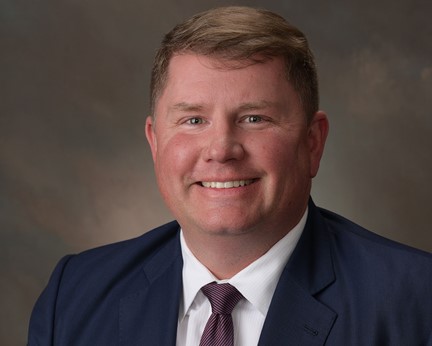
Tripp Powell announced Monday that he will not run for State Senate District 21. Powell was dropped from the GOP Primary in Birmingham after the ALGOP winter meeting in February. The decision to drop Powell stemmed from a $500 donation given to the Democratic gubernatorial primary campaign of Mayor Walt Maddox in 2018. Powell, a lifelong Republican and Tuscaloosa native, was running for the seat currently held by Gerald Allen before the state GOP executive committee prohibited him from challenging Allen in the GOP primary. “Today, I am announcing that I have instructed my campaign team to cease all campaign operations, and I am terminating my bid for this office,” Powell said. “This decision is against my nature as a competitor, as a fighter. But it is true to my nature and to my convictions as a conservative. I am the same Republican today that I was two weeks ago. I cannot – and I will not – become someone else just to seek election to this office.” Powell said because he was a Republican, he must abide by the rules set out by the Republican Party and thanked his supporters. “I do not agree with the decision of this 21-person committee, but if I am, in fact, a Republican, I must agree with the process followed by the Republican Party. If I disagree with that process, then I should take steps to change it. But I can’t stop being a Republican,” Powell said. “It is with the deepest humility and gratitude that I thank those who have already shown support for our campaign. I believe with all my heart we would have been victorious. I will not forget you.” Powell attended the University of Alabama and played football for the Crimson Tide. He bought his family’s wholesale and retail gasoline business in 2009. He has been married to his wife, Lesley, for 20 years, and they have two daughters, Leigh, 15, and Libby, 11.
Anson Knowles dropped from Primary election ballot for House District 10
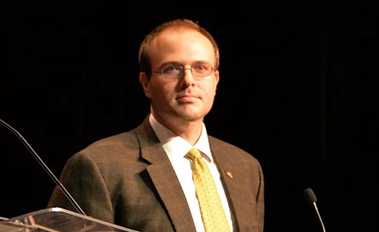
The Alabama Republican Party Candidate Committee voted to remove Anson Knowles from the Primary election ballot on February 18. Knowles was running for Alabama House of Representatives District 10. The GOP hearing was conducted in Birmingham after the ALGOP winter meeting. The decision to drop Knowles from the ballot was because of his prior Libertarian Party activity. In 2015, Anson was the Chairman of the Libertarian Party in Madison County, Alabama, for fifteen months. Additionally, after his time with the Libertarian Party, Knowles donated to a Libertarian candidate’s campaign. During the same meeting, Tuscaloosa businessman and Republican candidate Tripp Powell was dropped from the GOP Primary in Alabama Senate District 21. Dropping Powell effectively handed the Republican nomination to longtime incumbent Sen. Gerald Allen. The decision to drop Powell stemmed from a $500 donation given to the Democratic gubernatorial primary campaign of Mayor Walt Maddox in 2018. Knowles said he was left with more questions than answers when he found out that his name would not appear on the GOP primary ballot. Knowles spoke to Patch.com on Monday, arguing that he was never given a physical copy of the ballot challenge. Therefore, he doesn’t know who was responsible for the challenge. “The evidence presented against me was in closed session, so there’s no way to know what was said,” Knowles stated. “The challengers were given the opportunity to speak for five minutes, but I can’t speculate what that decision-making process was because I wasn’t in the room.” He referred to the GOP’s Steering Committee as a “kangaroo court,” arguing that although he had spent some time with the Libertarian Party, he has also contributed funds to Republican candidates for years. Since his time as a Libertarian, Knowles served as Secretary and Chairman of the Madison County Young Republican Club and is also an at-large voting member of the Madison County Republican Executive Committee (MCREC). “I am a Republican,” Knowles stated. “I just finished telling a room full of people Republicans that I am a Republican. I will not run unless the GOP allows it.” Both Powell and Knowles can appeal the Committee’s decision if they can get signatures from 50 members of the state executive committee. That would force the chair of the party to call a special meeting. If a quorum is reached at the special called party meeting, then the appeal of the decision of the Steering Committee could be voted on.
Bill seeks higher fines for taking down Confederate statues
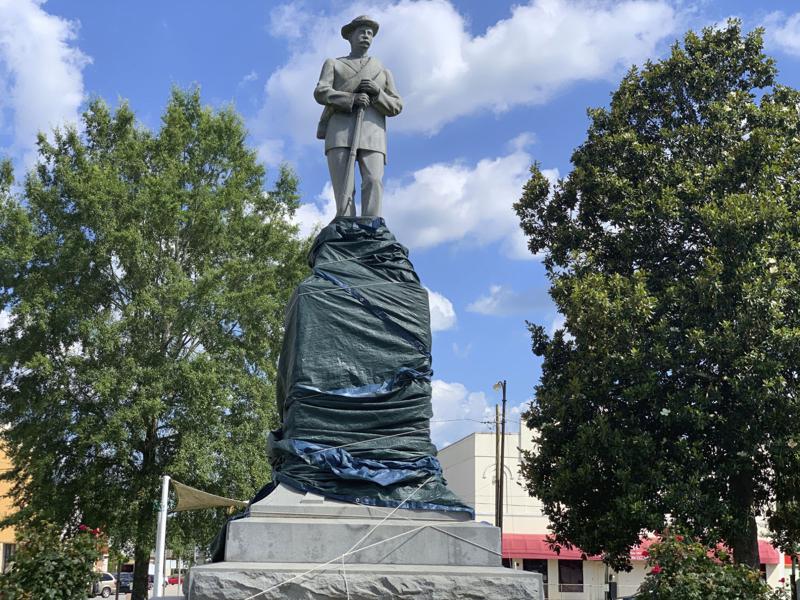
A legislative committee advanced a proposal Tuesday to increase the fines on cities that take down Confederate monuments in Alabama. The Senate Governmental Affairs Committee advanced a bill by Republican Sen. Gerald Allen of Tuscaloosa that would increase the fine for violating the Alabama Memorial Preservation Act, which prohibits the removal and renaming of monuments and memorials that have stood for at least 40 years. The bill would increase the fine from a $25,000 one-time fee to a $5,000 per day fine that would accumulate until the monument is replaced. Allen said he believed the heftier fine would serve as a deterrent. Some Alabama cities have opted to pay the current $25,000 fine as part of the cost of taking down a Confederate monument “The fine will stay there until the monument, statue, street sign — whatever it may be — is replaced,” Allen told the committee. Sen. Linda Coleman-Madison, a Democrat from Birmingham, said she believed the $5,000 daily fine was excessive, particularly for smaller cities. “You are going up and up and up and up, and now you are in the punitive stage,” Coleman-Madison said of the total fines a city could face. While the Alabama Memorial Preservation Act does not mention Confederate monuments, it was enacted as some Southern states and cities began removing monuments and emblems of the Confederacy. Birmingham and several other cities have been fined under the law for taking down Confederate monuments. Most recently, the Alabama attorney general’s office told Montgomery officials that the city faces a $25,000 fine for renaming Jeff Davis Avenue for Fred Gray, a famed civil rights attorney who represented Rosa Parks and the Rev. Martin Luther King Jr. The bill also calls for the Alabama Historical Commission to design, construct and place a statue of the late civil rights leader John Lewis by the Edmund Pettus Bridge in Selma. Lewis, a native of Alabama who became a long-serving Georgia congressman, was beaten by state troopers on the bridge in a melee known as Bloody Sunday. The committee also advanced a bill that would make it a felony offense, punishable by up to 20 years in prison, to damage a historic monument while “participating in a riot, aggravated riot, or unlawful assembly.” Both bills now move to the full Alabama Senate. Republished with the permission of the Associated Press.
Lawmakers advance bill on permitless carry
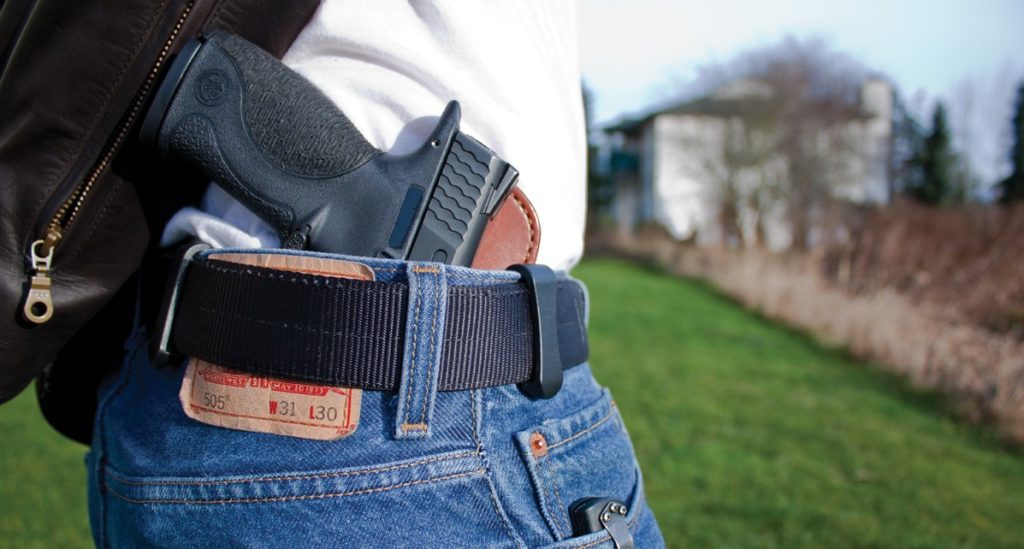
Alabama lawmakers on Wednesday advanced legislation to end the requirement to get a permit to carry a concealed handgun in public. The Senate Judiciary Committee voted 6-4 for the legislation. The bill now moves to the full Alabama Senate. House Republicans have named the bill a priority for the year, but the committee approval came over the objections of law enforcement officials who spoke against it. The legislation, sponsored by Republican Sen. Gerald Allen of Tuscaloosa, would end the requirement to obtain a permit to carry a concealed handgun although people could still get one if they choose. Rep. Shane Stringer, a Republican from Citronelle, has filed similar legislation in the House of Representatives. The proposal, as it has in past years, drew opposition from law enforcement officers during a public hearing Wednesday. Lee County Sheriff Jay Jones told the committee that the bill would take away a valuable tool for law enforcement officers to remove stolen weapons from the streets and to solve and prevent crimes. Edward Delmore, the chief of police for the Gulf Shores Police Department, said officers can now ask a person if they have a permit when they encounter a gun. Delmore said Oklahoma City bomber Timothy McVeigh was initially arrested for carrying a concealed weapon without a permit after a trooper noticed the gun during a traffic stop. “If you pass this, that arrest would not have happened in the same situation here,” he said. Representatives from gun rights groups, including the National Rifle Association, urged lawmakers to advance the bill, arguing that 21 states allow concealed carry without a permit. They argued Alabama already allows open carry— meaning that a person can legally carry a non-concealed handgun — and that it doesn’t make sense to require a permit if the person puts on a jacket or gets in a car. “As an elected official who swore to uphold the constitutions of this state and country, I will always do everything in my power to preserve the rights of Alabamians, especially those granted by the Second Amendment,” Allen said in a statement, commenting on committee passage. Democrats on the committee voted against the legislation. “A life is a way more important than the inconvenience of somebody having to get a permit to carry a gun,” Democratic Sen. Rodger Smitherman of Birmingham said. The bill has been introduced for several years without success, but House Republicans have named the bill a priority for the year. Republished with the permission of the Associated Press.
House GOP backs end of handgun permit requirement
Republicans in the Alabama House of Representatives said Wednesday that abolishing the permit requirement to carry a concealed handgun will be among their top priorities in the upcoming legislative session. The Alabama House Republican Caucus announced a legislative agenda that includes the so-called “constitutional carry” legislation that does away with the requirement to get a permit to carry a concealed handgun in public. The backing increases the chances of approval for the proposal that has failed for several years in Montgomery under opposition from state sheriffs. The House GOP agenda for the final session before May primaries also includes anti-critical race theory legislation, the creation of a felony crime for assaulting a first-responder and pay raises for state employees and teachers. Rep. Shane Stringer, R-Citronnelle, introduced legislation to do away with the requirement to get a permit — which requires a person to undergo a background check — to carry a concealed handgun in public or a loaded handgun in their car. “I am a firm believer that law-abiding citizens should not be punished and forced to get a permit to carry a firearm when the criminal element is not,” Stringer said. Similar legislation has been introduced in Montgomery for the last five years. State sheriffs and other law enforcement officials have opposed the bills, arguing that the permits provide a crucial tool to combat crime and enhance public safety. “There are those who do not need to be carrying concealed weapons in our restaurants, clubs, and sports bars,” Mobile County Sheriff Sam Cochran told the Mobile County Commission last month, according to al.com. “The biggest thing is safety of our citizens and officers.” A telephone message left with the Alabama Sheriffs Association was not immediately returned. Stringer, a former captain with the Mobile County sheriff’s office, said the Alabama Law Enforcement Agency is developing a database, authorized by a state law creating a lifetime concealed carry permit option, that should flag people not legally entitled to carry a handgun. The proposal drew condemnation from a gun safety group. “I don’t understand how these lawmakers can claim to support law enforcement in one breath, and then, in the next, push an extremist policy like permitless carry that law enforcement has clearly and vehemently spoken out against,” said Paula Wilson, a volunteer with the Alabama chapter of Moms Demand Action. “If this bill passes, there’ll be more unvetted people carrying concealed, loaded handguns in public places with no training and no questions asked,” Wilson said. This is the first year House Republicans put the item on their session agenda. Stringer said the authorization of the database has eased opposition to the bill among some GOP lawmakers. The lobbying arm of the National Rifle Association says 20 states do not require such permits. Georgia Gov. Brian Kemp also said Wednesday he will push for a new state law that will loosen requirements to carry a handgun in public in that state. State Sen. Gerald Allen, who introduced similar legislation unsuccessfully for at least five years, said this might be the year it succeeds. “You should not have to pay a fee to fulfill your constitutional right — for the right to protect your life, your family, your property,” Allen, R-Tuscaloosa, said. Republished with the permission of the Associated Press.
Steve Flowers: State Senate will have little turnover in 2022
2022 was anticipated to be an exciting competitive election year. However, it is going to be a yawn of a political year. If you thought there was no competition for the constitutional offices and the House of Representatives seats in next year’s elections, then you have not seen anything like the lack of turnover in the Alabama State Senate. Incumbency will prevail. In fact, the power of incumbency in the Alabama State Senate is on par with the incumbent return percentage for Congress, which is probably comparable to the Russian Communist Politburo. There are 35 state Senate seats; 27 of the 35 are held by Republicans. Out of the 27 Republican state senators, 24 are running for reelection, and all 24 probably will be reelected. Almost all of them have no opposition. The Democratic minority has just as high a reelection bar. Of the eight Democrats, seven probably will be running unopposed. The only Democrat not running will be Priscilla Dunn, who has not been to the Senate this entire four-year term. Most of the first-term State Senators have never met her. According to rumors, she is in poor health and cannot attend. The 150,000 people in Senate District 19 in Jefferson County have been without a voice or vote in the Alabama Senate for four years. The three retiring Republican State Senators are giants. Del Marsh, Jimmy Holley, and Jim McClendon’s shoes will be hard to fill. These three seats will be filled by new Republicans. The 27-8 super Republican majority will continue. State Senator Del Marsh (R-Anniston) has been a leader in the Senate for 23 years. He served as President Pro Tempore of the Senate most of that time. He ran a very effective ship of state. State Senator Jimmy Holley (R-Elba/Coffee) is an icon. He was a master of Senate rules. He also was a mentor to a good many young senators. State Senator Jim McClendon (R-St. Clair) will be sorely missed in the state senate. The gentleman from St. Clair served with honor and distinction for eight years in the State Senate and 12 years before that in the House of Representatives. This freshman class of senators has bonded and work cohesively with the veteran leaders. The Freshman Class includes Will Barfoot (R-Pike Road), Tom Butler (R-Huntsville), Sam Givhan (R-Huntsville), Dan Roberts (R-Jefferson), Garlan Gudger (R-Cullman), Randy Price (R-Lee), Donnie Chesteen (R-Geneva/Houston), David Sessions (R-Mobile), Jack Williams (R-Mobile), Chris Elliott (R-Baldwin) and Andrew Jones (R-Cherokee/Etowah). Senator April Weaver (R-Shelby/Bibb) won her seat recently when Cam Ward left to become head of Pardons and Paroles. April Weaver previously served in the House of Representatives. She is the only female GOP Senator. She has a bright future. All twelve of these new senators have done an excellent job, and all will be reelected. Ten of the twelve will probably run unopposed. There are some exceptionally talented and dedicated veterans in the Senate that will coast to reelection. Most, if not all, will be unopposed. This stellar group of legislative leaders includes President Pro Tem Greg Reed (R-Jasper/Walker), Senate Majority Leader Clay Scofield (R-Guntersville), Senator Clyde Chambliss (R-Autauga/Elmore), Senator Steve Livingston (R-Scottsboro/Jackson), Senator Shay Shelnutt (R-Jefferson), Senator Tom Whatley (R-Auburn/Lee), Senator Gerald Allen (R-Tuscaloosa), Senator Greg Albritton (R-Escambia) the Chairman of the Senate Finance General Fund, Senator Arthur Orr (R-Decatur) Chairman of Senate Finance Education, and last but certainly not least, the legendary Jabo Waggoner (R-Vestavia), who chairs the Senate Rules Committee. There will be some outstanding veteran Democrats returning to the State Senate. There are several giants, who include Senator Bobby Singleton (D-Greene), Senator Vivian Figures (D-Mobile), Senator Rodger Smitherman (D-Birmingham), and Senator Billy Beasley (D-Barbour). Senator Kirk Hatcher (D-Montgomery) is new to the senate. However, he bears watching. He is gregarious, likable, and a quick study. He will be effective for Capitol City. The senate abounds with outstanding leadership on both sides of the aisle. The lack of competition the members are garnering is a testament to their good work. This returning group of leaders could well portend for a successful future quadrennium. With this kind of experience and leadership, they will also be an independent group. They will not be a rubber stamp for the governor. See you next week. Steve Flowers is Alabama’s leading political columnist. His weekly column appears in over 60 Alabama newspapers. He served 16 years in the state legislature. Steve may be reached at www.steveflowers.us.
Alabama Legislature: What passed and failed on the last day
Alabama lawmakers on Monday concluded the 2021 legislative session. Here is a look at the key developments on the session’s final day: WHAT BECAME LAW MEDICAL MARIJUANA Alabama Gov. Kay Ivey signed legislation creating a medical marijuana program in Alabama. The new law would allow people with one of 16 qualifying medical conditions— including cancer, a terminal illness, depression, epilepsy, panic disorder, and chronic pain— to purchase medical marijuana with the recommendation of a doctor. Sen. Tim Melson, the bill’s sponsor, estimated it will be 15 months before medical marijuana is available in the state. The approval came eight years after a medical marijuana bill in 2013 won that year’s so-called “Shroud Award” for the “deadest” bill of the year in the House of Representatives. WHAT PASSED CURBSIDE VOTING BAN Lawmakers gave final approval to a bill by Republican Rep. Wes Allen of Troy that would forbid election workers from setting up curbside areas for people to vote as well as forbid the setting up of voting machines outside a polling place. The bill now goes to Ivey. The legislation sparked partisan debate as Republicans argued curbside voting is not secure but Democrats argued the state should be expanding voting access instead of restricting it. YOGA IN SCHOOLS Alabama lawmakers approved legislation to lift the state’s decades-old ban on yoga in public schools. It now goes to Ivey. The Alabama Board of Education voted in 1993 to prohibit yoga, hypnosis, and meditation in public school classrooms. The bill by Democratic Rep. Jeremy Gray would allow schools to offer yoga although all poses must have English names. Gray said he was unhappy with Senate-added language that requires parents to sign a permission slip and bans meditation, “associated with or derived from mystical traditions of the East.” THIRD GRADE READING PROMOTION REQUIREMENT After COVID-19 disrupted two school years, Alabama lawmakers voted to delay an upcoming state requirement for third graders to meet reading benchmarks before moving up to the fourth grade. The bill now goes to Ivey. Supporters argued it would be unfair to force the requirement on students who were out of the traditional classroom for long stretches during the pandemic. The bill would move the implementation from the 2021-2022 school year to the 2023-2024 school year. GENERAL FUND Lawmakers gave final approval for the general fund budget for the next fiscal year. The $2.4 billion spending plan is up a modest 3.6% over this year. The budget includes a 2% pay raise for state employees. The spending plan now goes to the governor. WHAT DIED GAMBLING Alabama lawmakers ended the 2021 legislative session without a House vote on a Senate-passed lottery and casino bill. House Speaker Mac McCutcheon said House leaders chose not to bring the bill up for debate on the busy final legislative day after negotiations fell apart earlier this month. Ivey’s office indicated she will only call a special session on the issue if lawmakers can reach an agreement. TRANSGENDER TREATMENT The session adjourned without a House vote on a controversial measure to outlaw the use of puberty-blockers or hormones to help transgender minors with their transition. The Alabama Senate approved the bill in March, but it did not get a vote in the House. Opponents, including parents and trans youth, say such measures interfere with medical decisions and target trans individuals for the sake of politics. Sponsors counter that they are trying to protect children from decisions that should wait until adulthood. Arkansas earlier this year became the first state to enact such a measure. OPPOSING FEDERAL GUN LAWS The session also closed without a House vote on legislation to make it a crime for local police officers to enforce any new federal gun restrictions. The bill is part of a wave of GOP nullification proposals to try to resist any new gun control measures. Senators voted 21-5 for the bill by Republican Sen. Gerald Allen of Tuscaloosa, but it did not get a vote in the House. Republished with the permission of the Associated Press.
Alabama lawmakers return for final day of session
Alabama lawmakers return Monday for the final day of the legislative session with several large and controversial issues before them. The legislative session by law is limited to 30 meeting days and must conclude Monday. Here is a look at where some key issues stand: GENERAL FUND One of the most pressing issues is to give final approval for the general fund budget for the next fiscal year. The bill is in conference committee to work out differences between the House of Representatives and Alabama Senate. The $2.4 billion spending plan is up a modest 3.6% over this year. The budget includes a 2% pay raise for state employees. CURBSIDE VOTING BAN The bill by Republican Rep. Wes Allen of Troy would explicitly forbid election workers from setting up curbside areas for people to vote as well as forbid the setting up of voting machines outside a polling place. Curbside voting is a voting method that civil rights organizations had sought during the COVID-19 pandemic and have argued that it would make it easier for people to vote, particularly the elderly, disabled, and parents with young children. The House approved the bill, and it is awaiting a vote in the Senate. GAMBLING House leaders are doubtful a gambling bill will return for a House of Representatives vote on the last day. The Senate-passed proposal would allow a state lottery and nine casinos in the state. However, negotiations in the House of Representatives fell apart. Republican Rep. Chris Blackshear, who handled the bill in the House, said he doesn’t expect either the gambling bill to make a return in any form. Blackshear said if lawmakers can come to an agreement, he is hopeful Alabama Gov. Kay Ivey will call a special session on the issue later this year. TRANSGENDER TREATMENT The bill would make it a felony punishable by up to 10 years in prison for a doctor to prescribe puberty-blockers or hormones or perform surgery to aid in the gender transition of people 18 or younger. The Alabama Senate approved the bill in March, and it awaits a vote in the House. Opponents, including parents and trans youth, say such measures interfere with medical decisions and target trans individuals for the sake of politics. Sponsors counter that they are trying to protect children from decisions that should wait until adulthood. Arkansas, earlier this year, became the first state to enact such a measure. OPPOSING FEDERAL GUN LAWS The Alabama Senate approved legislation to make it a crime for local police officers to enforce any new federal gun restrictions, part of a wave of GOP nullification proposals to try to resist any new gun control measures. Senators voted 21-5 for the bill by Republican Sen. Gerald Allen of Tuscaloosa. The bill is awaiting a vote in the House. Republicans in several states are pushing such measures. Opponents of the bill argued that the U.S. Constitution already protects gun rights and that Republican lawmakers are going to get the state embroiled in a costly lawsuit that they will ultimately lose. THIRD GRADE READING PROMOTION REQUIREMENT After COVID-19 disrupted two school years, Alabama lawmakers are weighing a pause in an upcoming state requirement for third graders to pass a reading test before moving up to the fourth grade. The Senate-passed bill by Sen. Rodger Smitherman, D-Birmingham, would delay the promotion requirement now set to take effect next year. Smitherman and others said it would be unfair to force the requirement on students who were out of the traditional classroom for long stretches during the pandemic. Rep. Terri Collins, who sponsored the original law creating the requirement, said she would prefer to wait until after spring test scores are in before deciding if a delay is needed. YOGA BAN The bill by Democratic Rep. Jeremy Gray of Opelika would allow public schools to teach yoga. He says he is weighing whether to accept the changes or go to conference committee and risk running out of time to pass the bill on the busy final legislative day. Gray says he thought some of the Senate changes showed phobias or blatant disrespect to the Hindu culture. Gray is attempting to void a decades-old ban on yoga in public schools. The Alabama Board of Education voted in 1993 to prohibit yoga, hypnosis, and meditation in public school classrooms. Republished with the permission of the Associated Press.
