
Gerrymandering lawsuits linger as next redistricting nears
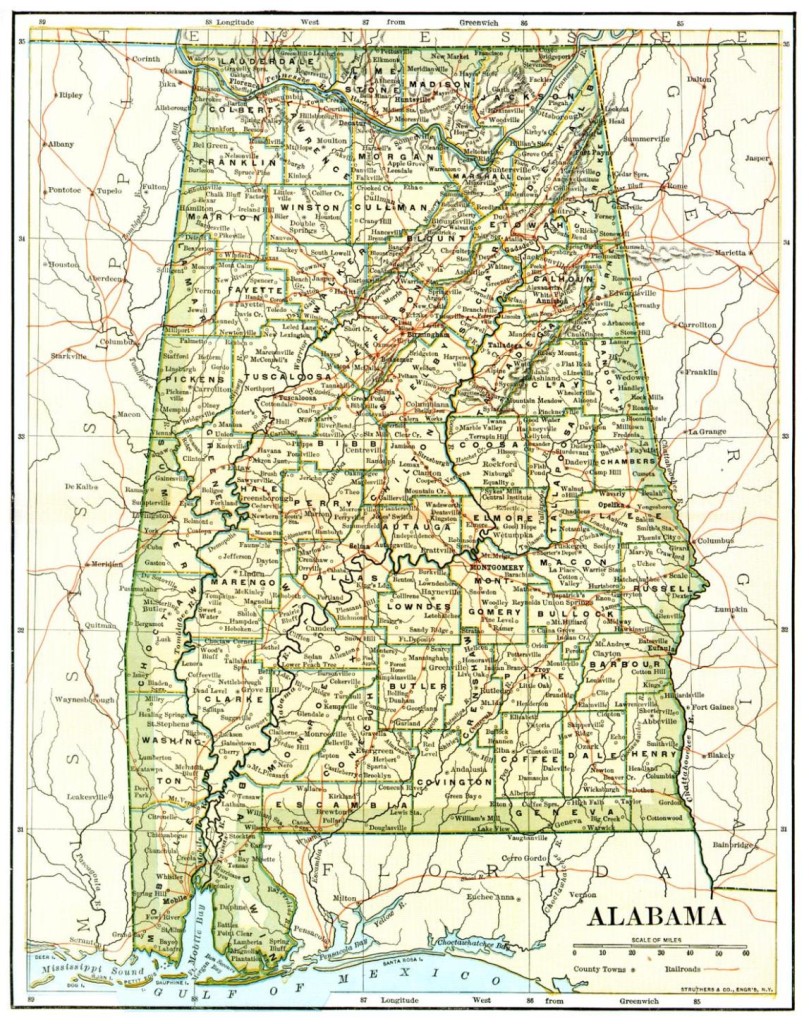
As the 2019 state legislative sessions get underway, a busy year of legal battles also is beginning over lingering allegations that hundreds of electoral districts across the country were illegally drawn to the disadvantage of particular voters or political parties. First up was a court hearing Thursday in Virginia, where a federal judicial panel reviewed several proposals from an outside expert to redraw some state House districts. The court had previously determined that those districts were racially gerrymandered. The expert, University of California, Irvine political science professor Bernard Grofman, answered questions about his revisions. “My focus was on remedying constitutional infirmities,” he said. Next on the schedule is a February trial in Michigan, where a lawsuit by Democratic voters alleges U.S. House and state legislative districts were illegally gerrymandered by Republican officials to dilute the voting power of Democrats. A similar partisan gerrymandering trial is scheduled for March involving Ohio’s congressional districts. The U.S. Supreme Court also has agreed to hear arguments in March on separate cases appealing rulings of unconstitutional partisan gerrymandering of congressional districts by Republicans in North Carolina and Democrats in Maryland. Then a new trial is scheduled for April in Wisconsin in a case in which federal judges previously determined that Republicans had illegally gerrymandered the state Assembly districts to the disadvantage of Democrats. The pending lawsuits are contesting districts drawn based off 2010 Census data. They seek to force new district boundaries before the next legislative elections. But depending on the timing and scope of the rulings, they also could set precedents for states to follow during the next round of mandatory redistricting that will occur after the 2020 Census. Here’s a state-by-state look at the pending redistricting cases, as well as some that were recently decided by the courts: ___ ALABAMA Partisan breakdown: U.S. House: six Republicans, one Democrat. The claim: Racial gerrymandering. The case: A federal lawsuit filed last June and backed by a national Democratic redistricting group alleges the U.S. House maps approved in 2011 by the state’s Republican-led Legislature and GOP governor illegally limit the voting influence of black residents. A separate lawsuit previously alleged that state House and Senate maps had packed too many black voters into certain districts. The U.S. Supreme Court in 2015 ordered those maps to be reconsidered by a lower court, which subsequently struck down a dozen districts. The Legislature then redrew 25 of the 35 state Senate seats and 70 of the 105 state House seats. The court dismissed a challenge to the new maps in October 2017. ___ ARKANSAS Partisan breakdown: U.S. House: four Republicans. The claim: Racial gerrymandering. The case: A federal judicial panel in August ruled that the publisher of the Little Rock Sun, a black community newspaper, did not have legal standing to bring a lawsuit alleging the boundaries of an eastern Arkansas congressional district were drawn to dilute the voting strength of black residents. The U.S. Supreme Court dismissed an appeal Dec. 10. Democrats controlled both the Legislature and governor’s office during the 2011 redistricting. ___ CONNECTICUT Partisan breakdown: State Senate: 24 Democrats, 12 Republicans; State House: 92 Democrats, 59 Republicans. The claim: Prison gerrymandering. The case: A federal lawsuit filed last June by the NAACP alleges unconstitutional prison gerrymandering in the drawing of state House and Senate districts. It challenges the state’s decision to count prisoners as residents of the district where they are incarcerated instead of their home districts. The suit says prisoners are disproportionately black and Latino and from urban areas, but they are often placed in prisons in rural areas predominated by white residents. The districts were drawn in 2011 by a bipartisan commission. ___ GEORGIA Partisan breakdown: U.S. House: nine Republicans, five Democrats. State House: 103 Republicans, 75 Democrats, two seats vacant pending the outcome of special elections. The claim: Racial and partisan gerrymandering. The cases: A federal lawsuit filed last June and backed by a national Democratic redistricting group alleges that a U.S. House district was redrawn in 2011 by the state’s Republican-led Legislature and GOP governor to illegally limit the voting influence of black residents. A separate federal case filed in 2017 by the NAACP and Democratic voters alleges that two state House districts were unconstitutionally gerrymandered by the Republican-led Legislature in 2015 to increase the percentage of white voters and decrease the percentage of black voters. In September, a federal judicial panel allowed the plaintiffs to add a partisan gerrymandering claim to the lawsuit. ___ LOUISIANA Partisan breakdown: U.S. House: five Republicans, one Democrat. The claim: Racial gerrymandering. The case: A federal lawsuit filed last June and backed by a national Democratic redistricting group alleges the U.S. House maps approved in 2011 illegally limit the voting influence of black residents by packing a large number into one majority-minority district and spreading other black voters out among multiple districts. Republicans controlled both legislative chambers and the governor’s office at the time the redistricting plan was approved during a special legislative session. __ MARYLAND Partisan breakdown: U.S. House: seven Democrats, one Republican. The claim: Partisan gerrymandering. The case: The U.S. Supreme Court has scheduled arguments in March on an appeal of a ruling that western Maryland’s 6th Congressional District is an unconstitutional partisan gerrymander that diluted the voting power of Republicans. Democratic Attorney General Brian Frosh appealed a Nov. 7 federal court order to redraw congressional districts by March 7 using traditional redistricting criteria that show regard for “natural boundaries.” The 6th District had been held by a 20-year Republican incumbent. But the Democratic governor and Democratic-controlled Legislature redrew it in 2011 to extend into suburban Washington, D.C., adding tens of thousands of Democratic voters while dropping Republican voters. Democrats have won the district in each election since then. While the case is pending, Republican Gov. Larry Hogan has created a nine-member commission to recommend new congressional district boundaries to his office by April. The revised map then would be submitted to the Legislature for a vote. ___ MICHIGAN Partisan breakdown: U.S. House:
Missouri first to adopt fairness test against gerrymandering
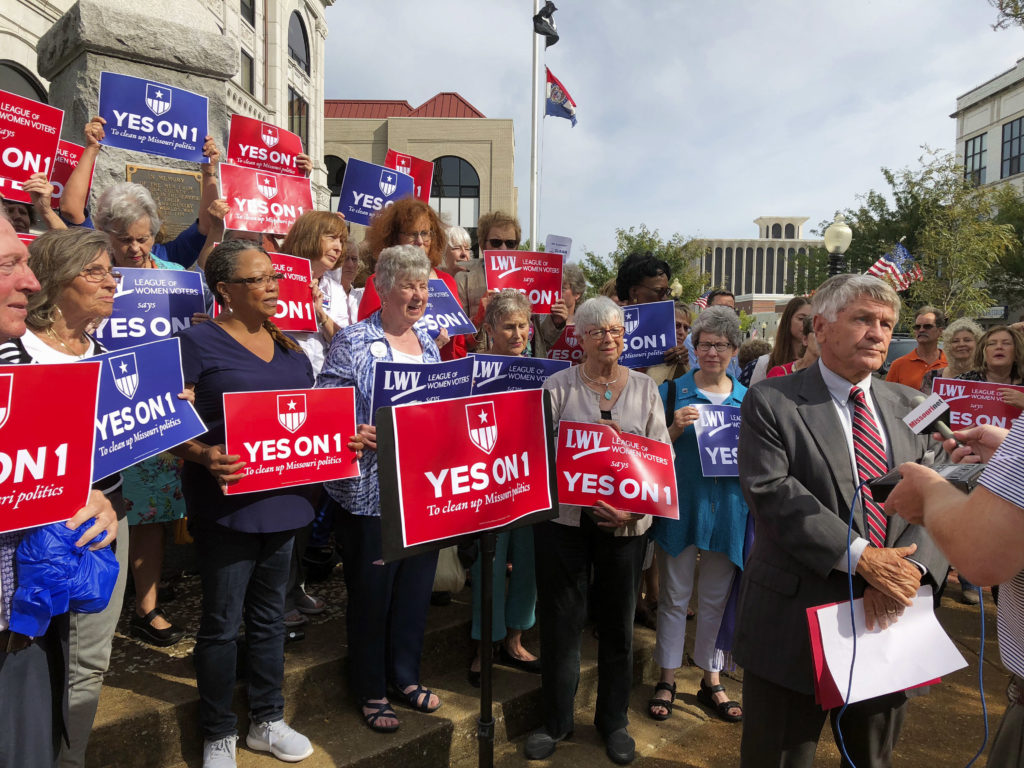
The votes won’t be cast for another four years, yet Democrats already appear likely to gain seats in Missouri’s Republican-dominated Legislature in 2022. The reason: a one-of-its kind redistricting initiative approved by voters in the recent midterm elections. Missouri’s initiative marks a new frontier in a growing movement against partisan gerrymandering that has now notched ballot-box victories in eight states over the past decade. Other states have created independent commissions and required bipartisan votes to redraw legislative and congressional districts. Missouri will be the first to rely on a new mathematical formula to try to engineer “partisan fairness” and “competitiveness” in its state legislative districts; the Legislature will continue drawing the state’s congressional districts. An Associated Press analysis of the new Missouri formula shows it has the potential to end the Republicans’ supermajorities in the state House and state Senate and move the chambers closer to the more even partisan division that is often reflected in statewide races. But the size of the likely Democratic gains remains uncertain, partly because the formula has never been put to a test. “Missouri’s engaged in an experiment,” said Sam Wang, director of the Princeton University Gerrymandering Project, which uses math to measure partisan advantages in redistricting. “Democrats have a fighting chance in a way that they didn’t before,” Wang added. But “a lot of it depends on what they do with it.” After the 2010 census, Republicans nationwide controlled more state legislatures and governor’s offices than Democrats. They used that power to draw legislative and congressional districts that benefited the GOP. Since then, advocates have been trying to reform the system to eliminate or greatly reduce partisan gerrymandering, which has been used by both parties over the years to draw political boundaries in ways that give the dominant party a disproportionate hold on power. They have succeeded in making the process less partisan in a number of states, mostly through ballot initiatives approved by voters. Nov. 6 was the latest example of the trend, when voters in Colorado, Michigan and Utah joined Missouri in approving new redistricting systems. All states must redraw their congressional and state legislative districts after the 2020 census. Those new maps generally will kick in for the elections two years later. Although the criteria vary by state, most require districts to contain similar populations, keep communities together when possible and give minorities a chance to elect candidates of their choice. The constitutional amendment approved by Missouri voters in November keeps those criteria. But it also requires a new nonpartisan state demographer to base state House and Senate districts on the votes cast in the previous three elections for president, governor and U.S. senator — races that are decided by voters statewide and are not affected by gerrymandering. The districts must come as close as practical to achieving “partisan fairness” as measured by a formula called “the efficiency gap.” That formula was created earlier this decade by Eric McGhee, a researcher at the nonpartisan Public Policy Institute of California, and University of Chicago law professor Nick Stephanopoulos. It compares the statewide share of the vote a party receives with the statewide percentage of seats it wins, taking into account a common political expectation: For each 1 percentage point gain in its statewide vote share, a party normally increases its seat share by 2 percentage points. Although the efficiency gap has been cited in court challenges to politically gerrymandered districts in Wisconsin and elsewhere, no other state has made it a legally required test for redistricting. California, which adopted an independent redistricting commission for the 2010 census, prohibited political favoritism in drawing districts but included no test to determine if that occurs. Since then, Democratic dominance has increased in both the state’s congressional delegation and its state legislative chambers. McGhee, who was not involved in Missouri’s initiative, said the formula will constrain what mapmakers can do to inflate partisan majorities. Missouri’s current state Senate districts were adopted by a bipartisan commission after the 2010 census. Its House districts were drawn by a judicial panel after a bipartisan commission failed to agree on a plan. In the November elections, Republican candidates received an average of 57 percent of the two-party vote across Missouri’s 163 House districts, yet Republicans won 71 percent of the seats. That gave them a 116-47 majority over Democrats. That equates to an 8 percent efficiency gap favoring Republicans — or an additional 13 GOP seats beyond what would be expected from the total votes, according to an AP analysis. The Republican majorities in Missouri’s two legislative chambers remained unchanged after this year’s elections despite the fact Democrats fielded their highest number of candidates since 2002. Stronger Republican fundraising and messaging make it difficult for Democrats to win legislative races in parts of Missouri, said Rep. Peter Merideth, who led the Democrats’ House Victory Committee. But “certainly, the way that they’ve drawn the districts is part of it,” he added. Like many states, Missouri’s urban centers of St. Louis and Kansas City have high concentrations of Democratic voters while the rural areas are overwhelmingly Republican. That results in a lot of lopsided state legislative races, even though statewide races often are highly competitive. By requiring legislative districts to be based on the votes for top statewide races, Democrats are likely to gain influence. The new redistricting formula takes into account nine statewide elections from 2012 to 2020. In the seven that already have been held, Republicans received 51 percent of the vote to Democrats’ 49 percent. To achieve partisan fairness, the new legislative maps would have to be drawn so Democrats would be projected to win about 48 percent of the seats. That means some urban Democratic voters likely would have to be mixed together with rural Republican voters in elongated districts that could look more gerrymandered than the current ones. But it still might not be possible to obtain perfect partisan fairness. Democrats topped out at around 44 percent of the House seats in a simulated map
SCOTUS punts on partisan gerrymandering, let maps stand for now
The U.S. Supreme Court (SCOTUS) on Monday essentially punted on extreme partisan gerrymandering as it declined to definitively decide whether it’s constitutional for states to create electoral maps that give an advantage to one political party over another. The court took up two cases, one out of Wisconsin and one out of Maryland. In Wisconsin, the nine justices unanimously ruled against Democrats in the landmark case that challenged the state’s legislative districts they said gave Republicans an edge in the state legislature. The SCOTUS said the Democrats failed to prove they had a right to sue statewide rather than challenging individual legislative districts. “We lack jurisdiction to decide this case, much less to draw speculative and advisory conclusions regarding others,” Chief Justice John Roberts wrote on behalf of the court. The court also decided against Maryland Republicans, saying the lower court was right to leave the current system in place. The decision dashed the hopes of political reformers who were seeking a landmark ruling to change the future of American politics. The lack of definitive ruling also leaves the door open for a third case based out of North Carolina to reach the court next term.
Controversial redistricting plans approved by state legislature in final hours of session
Despite objections, in the final 24 hours of the legislative session Alabama lawmakers approved controversial plans to draw new state district lines for voters. The Legislature was tasked with drawing new district plans following a January decision from a three-judge federal court, which found the Legislature improperly used race as the primary factor in drawing nine House districts and three Senate districts in 2012. The court ruled the 12 districts in question could not be used in the 2018 elections. Tweaking the lines of those 12 districts affected other districts across the state, which democratic members of the Black Caucus claimed continued the state’s history of racial gerrymandering in order to maintain Republican dominance. Nevertheless, after Democrats in both chambers tried to stall the votes and asked for the bill to be read aloud once more – a process that took more than 30 hours of combined reading time – the chambers voted and passed the new plans. Representatives approved the Senate districts plans in a 71-32 party line vote on Thursday night after the reading was finished. Meanwhile, state senators waited through the marathon reading of the 541-page bill before they voted, 21 to 8, Friday afternoon to approve the new House district lines. Both plans now head to Gov. Kay Ivey‘s desk for her signature. If she signs off on them, they will also be subject to federal court approval.
Martin Dyckman: Winner-take-all winner could be Trump

Our next president may well owe the office to arrogant billionaires or be one himself. Meanwhile, The New York Times reports that fewer than 400 families account for nearly half the $388-million already invested in that election still more than a year away. Did America shed blood to be rid of monarchy only to have it come to this? And yet the vast moral and political corruption unleashed by the U.S. Supreme Court’s confusion of free spending with free speech is only one of four ways in which government of the people, for the people and by the people has gone off the track. Voting districts in nearly every state are drawn by the party in power to control the outcomes. The elections themselves are monopolized by two increasingly polarized political parties, excluding the increasing numbers of citizens who want nothing to do with either of them. The elections, whether primary or general, can be won with much less than majorities by unpopular candidates who would not be the second choices of most voters. Florida is powerless to control the money. That will take a constitutional amendment or the election of a president who would insist that his or her Supreme Court nominees agree that the Buckley and Citizens United cases were wrongly decided. Florida has made inroads on the gerrymandering through the adoption of the Fair Districts initiatives five years ago and the state Supreme Court’s willingness to enforce them. But that fortunate condition is imperiled by the next four court appointments, which will be controlled by Rick Scott‘s nominating commission. Time is running very short for people who believe in judicial independence to do something about that. The “All Voters Vote” initiative petitions now circulating would break the shared monopoly of the Republicans and Democrats by allowing everyone to vote in an open primary that could nominate two candidates of the same party — or of no party — for state offices and Congress. That’s good for the growing number of voters who claim no party — presently 27 percent — or who identify with the Greens and other minor parties. To that extent, it would be a significant improvement for everyone. Jim Smith, the former Florida secretary of state and a supporter of the initiative, acknowledges that it hasn’t done much to change the lineup of elected officials in Louisiana and California, the other two open-primary states. He is right, however, in saying that it has “changed the conversation — and it’s a conversation that a broader spectrum of voters want to hear candidates talk about.” Republican candidates in districts with sizable Democratic minorities would have to think twice about toeing the Tea Party line. Democratic candidates in safely blue districts would need to court Republican votes for the first time. But “Top Two” is still vulnerable to the winner-take-all weakness. In 1991, a 12-candidate field in Louisiana’s open primary left voters with a dismal runoff choice: former Gov. Edwin Edwards, whose corruption was flagrant, or David Duke, a former Ku Klux Klan grand wizard and an avowed Nazi. There were bumper stickers saying, “Elect the crook — it’s important,” and so the voters did. Edwards went to federal prison in 2002. That same year, 16 candidates sought the French presidency. Nearly everyone assumed there would be a runoff between a conservative, Jacques Chirac, whose ethics were as suspect as Edwards’, and the prime minister, Socialist Lionel Jospin. Chirac ran first, as expected, with 19.8 percent of the vote. But Jospin was edged out of the running by Jean Marie le Pen of the far right National Front, an ultranationalist party. Although nearly two-thirds of the voters had preferred other candidates, their final options were, as in Louisiana, between two obviously unappealing politicians: a suspected crook and a presumed fascist. (Chirac won.) There’s a way to avoid such dismal outcomes. It’s called ranked-choice voting, a task that computer science makes simple. To see how simple — and have some fun — go to this website: www.fairvote.org. There are links on the page to exercises where you can cast rank-ordered votes for political parties and for the Republican and Democratic presidential candidates. Here’s how the presidential game played out for me and for other participants on Monday. In the Republican poll, Donald Trump led the first round, but with only 18 percent. Bobby Jindal ran last and was eliminated. The second-choice votes of his supporters were distributed. There were 15 more rounds, all conducted instantly by computer. Marco Rubio fell out in the 12th and Jeb Bush in the 13th. In the 16th and last round, Trump finally gave way to Rand Paul, who won the nomination with 51.28 percent support. Bernie Sanders led the Democrats with 46 percent. Hillary Clinton ran third, trailing Joe Biden, who isn’t an announced candidate. Martin O’Malley ran last, with 6 percent, and the second choices of his supporters were counted. Clinton was gone in the fourth round. In the sixth and final, Sanders’s support increased to 51.9 percent and he became the nominee. These results are hardly scientific and not necessarily predictive. The samples were small and self-selected. Anyone could vote in either race, and the biases were obviously liberal. But they’re interesting nonetheless. The two “nominees,” Paul and Sanders, project more authenticity than nearly all the others. As for Trump, he piled up more second-choice votes than everyone except Paul. If the Republican Party of Florida still insists on a March 15 winner-take-all primary, which will be well after many of the trailing and financially poorer candidates have dropped out, Trump could easily win it all. Martin Dyckman is a retired associate editor of the St. Petersburg Times. He lives in Western North Carolina.
Judges will only consider race in legislative district fight

Judges say they will only look at accusations of racial gerrymandering as they review Alabama’s legislative districts for a second time. A judicial panel ruled in a Friday decision that they will only examine whether majority-black legislative districts were unconstitutionally gerrymandered. The U.S Supreme Court in March said the lower court must take another look at whether Alabama’s Republican-led legislature relied too heavily on race in drawing the lines. Black lawmakers challenged the plan, saying it limited minority voting power by packing black voters into designated districts. An attorney representing black lawmakers said he was disappointed and will ask the court to reconsider. He said the judges should also consider whether lawmakers improperly split counties as they drew the districts. Republished with permission of The Associated Press.
