
Katie Britt votes for appropriations bill with funding to upgrade South Alabama’s severe weather detection system
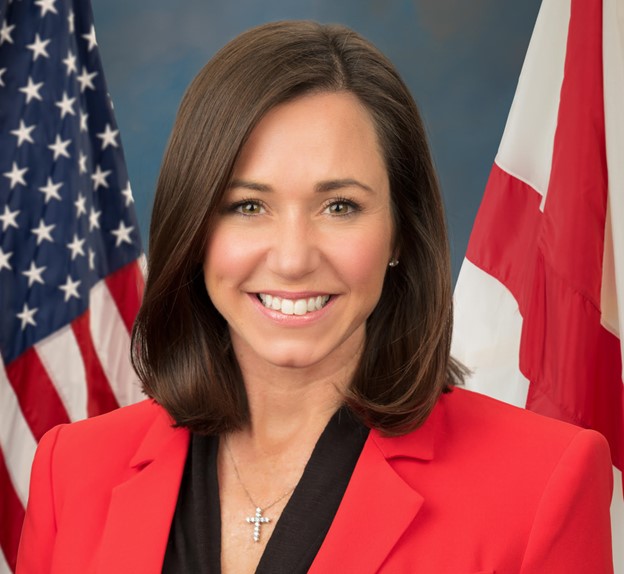
U.S. Senator Katie Britt, as a member of the Senate Committee on Appropriations, voted for a fiscal year 2024 appropriation that included additional funding to modernize severe weather detection equipment and forecasting technology to save lives across Alabama. She voted last week to advance the FY 2024 Commerce, Justice, Science, and Related Agencies Appropriations Act, which includes significant measures secured by Sen. Britt to accomplish her goal of modernizing the system. “Across Alabama, families have had to make split-second, life-or-death decisions in the face of tornadoes,” said Sen. Britt. “I know firsthand that funding severe weather detection equipment and putting accurate data in the hands of our meteorologists will allow more people to prepare and get to safety. As a member of the Senate Committee on Appropriations, I am proud to fight for this critical funding, and I look forward to working with my colleagues to ensure that we continue investing in these essential programs.” At Senator Britt’s request, the legislation would appropriate $3 million for the expansion and upgrade of the South Alabama Mesonet, a network of automated weather stations located in Mobile, Baldwin, Escambia, Conecuh, Covington, Coffee, Geneva, and Houston Counties, in addition to southeastern Mississippi and northwest Florida. The South Alabama Mesonet provides information to meteorologists to ensure accurate forecasts and adequate severe weather warnings to residents. The expansion is expected to lead to better monitoring and forecasts of weather and severe weather conditions, particularly in Southwest Alabama. The bill would block the Biden Administration’s proposed Fiscal Year 2024 cuts to the VORTEX program and dedicate $12 million to the initiative, which works to reduce the loss of life and economic damage of tornadoes. Through this program, experts at the University of Alabama in Huntsville work to improve tornado forecasts and warnings, and this funding would ensure the program continues to improve tornado forecasts and warnings. The Biden Administration has asked that Congress defund the program. Earlier this year, Britt raised her concerns with the Biden Administration’s proposed cuts to both the South Alabama Mesonet and the VORTEX program with U.S. Secretary of Commerce Gina Raimondo during her testimony before the committee. Britt is a native of Enterprise. Enterprise drew national headlines sixteen years ago when an EF4 tornado struck the city, with Enterprise High School taking a direct hit – killing nine. Since the U.S. first began keeping accurate records in the late 1940s, more Alabamians have been killed by tornadoes than people in any other state. Texas, with a much bigger population, is second. In 2022, Alabama recorded 98 tornadoes, the second-highest year on record. Since 1993 the USA has averaged 71 tornado deaths per year – Alabama has averaged 14 – more than any other state. Missouri is second with 8. Sixty-three Americans have already died from tornados this year. The FY 2024 Commerce, Justice, Science, and Related Agencies Appropriations Act now moves to the full Senate for consideration. Britt was elected to the Senate in 2022. To connect with the author of this story or to comment, email brandonmreporter@gmail.com.
Rep. Mike Rogers and colleagues warn that Russians are helping China obtain plutonium
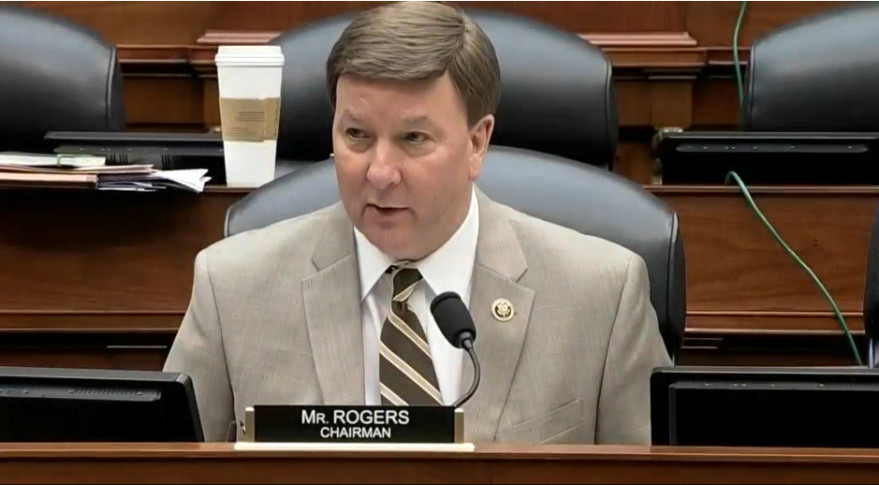
On Thursday, House Armed Services Committee Chairman Mike Rogers, House Foreign Affairs Committee Chairman Michael McCaul, and House Permanent Select Committee on Intelligence Chairman Mike Turner urged National Security Advisor Jake Sullivan, Secretary of State Antony Blinken, Secretary of Defense Lloyd Austin, Secretary of the Treasury Janet Yellen, Secretary of Energy Jennifer Granholm, Secretary of Commerce Gina Raimondo, and Director of National Intelligence Avril Haines, to utilize the full application of sanctions, export controls, and diplomacy, to hinder the nuclear cooperation between Russia’s Rosatom and China. In the letter, Rogers and the other Chairmen wrote, “Russia’s state-owned nuclear energy corporation, Rosatom, is helping the People’s Republic of China (PRC) acquire enough weapons-grade plutonium to fuel its strategic nuclear breakout. Beyond fueling the PRC’s strategic nuclear breakout, then-U.S. Strategic Command commander Admiral Charles Richard called “breathtaking,” Rosatom helps fuel Putin’s war efforts in Ukraine. We call on the Administration to view this cooperation for what it is, a direct threat to U.S. security and more evidence that Russia and China are working in tandem against the United States. The Administration should use all tools at its disposal to stop Rosatom and the PRC’s dangerous cooperation.” “Despite these malign activities, Rosatom’s position in the global market is only getting stronger,” Rogers et al. wrote. “The longer we wait to act, the more difficult it will be to address Rosatom’s nefarious and malign dealings. Putin uses these funds to fund his war machine and keep his favorite weapons programs on schedule. In short, every dollar and euro that Rosatom brings in directly finances the death and destruction we see in Ukraine, China’s nuclear weapon expansion, and is a direct threat to the American way of life.” The chairmen say in the letter is based on “Our classified correspondence from earlier this year.” “Russia’s role in China’s nuclear energy program is well documented,” the Chairmen wrote. “Rosatom opened an office in Beijing in 2016 and partnered extensively with the PRC’s China National Nuclear Corporation (CNNC) on major projects worth billions. On May 19, 2021, Xi Jinping and Vladimir Putin tuned in via video link to witness the commencement ceremony of two of the countries’ major nuclear energy cooperation projects, the Tianwan Nuclear Power Plant and Xudabao Nuclear Power Plant.” “Rosatom now appears to be supplying equipment and highly enriched uranium (HEU) for the PRC’ CFR-600 sodium-cooled fast breeder nuclear reactors, which will produce plutonium, fissile material critical to the PRC’s nuclear breakout,” the Chairmen wrote. “Russian deliveries of HEU to the PRC are slated to begin this year. The Department of Defense’s 2022 report to Congress on the Military and Security Developments Involving the People’s Republic of China noted the key role that increased weapons-grade plutonium production is key to the PRC nuclear program, stating: “The PRC is also supporting this expansion by increasing its capacity to produce and separate plutonium by constructing fast breeder reactors and reprocessing facilities.” The DoD report also cites the CFR-600 reactors and notes that each will be capable of producing “enough plutonium for dozens of nuclear warheads annually.” This buildup puts the PRC in violation of Article VI of the NPT, requiring states to make good-faith efforts to cease an arms race and to engage in good-faith arms control negotiations. Make no mistake, the PRC and Russia’s actions constitute an acceleration of their ongoing arms race.” According to the U.S. Intelligence National Threat Assessment, “China is building hundreds of new ICBM silos.” “Moscow continues to develop long-range nuclear-capable missile and underwater delivery systems meant to penetrate or bypass U.S. missile defenses,” said the report. “Russia is expanding and modernizing its large, diverse, and modern set of nonstrategic systems, which are capable of delivering nuclear or conventional warheads because Moscow believes such systems offer options to deter adversaries, control the escalation of potential hostilities, and counter U.S. and allied conventional forces.” In response to China and Russia’s modernization of their strategic forces, including the development of hypersonics, the U.S. is rushing to deploy hypersonics. The U.S. Air Force is expected to deploy Air-launched Rapid Response Weapon, a boost-glide vehicle, as soon as this fall. Russia has begun deploying its conventionally armed Kinzhal hypersonic missiles in Ukraine. Kyiv says that it is unable to defend itself against the strikes. Rogers is in his eleventh term representing Alabama’s Third Congressional District. To connect with the author of this story or to comment, email brandonmreporter@gmail.com.
Katie Britt and Tom Cotton lead bipartisan letter to Biden Administration about surge of Mexican steel

U.S. Senators Katie Britt and Tom Cotton, along with a bipartisan group of 11 of their Senate colleagues, sent a letter to Secretary of Commerce Gina Raimondo and U.S. Trade Representative Katherine Tai urging them to take action against the surge of Mexican steel imports, which they claim is unsustainable. The Sens. claim that the rising steel imports from Mexico raise grave concerns in America’s steel industry and steel communities such as those in Alabama. They also claim that this surge violates a 2019 agreement between the United States and Mexico negotiated by the Trump Administration. The letter contends that the United States deserves and should demand fair treatment from all trading partners, including its friends. “We urge the Biden administration to immediately begin consultations under the 2019 agreement to address this surge of Mexican steel and return imports to ‘historic volumes of trade,’ with quotas, if necessary,” the Senators wrote. “However, if the Mexican government refuses to remedy this breach, we regretfully urge the administration to consider other mechanisms to ensure compliance and protect American jobs, including the reapplication of Section 232 tariffs.” “The Administration has a responsibility to strongly enforce trade agreements to ensure fairness for hardworking Americans,” said Sen. Britt. “This unprecedented, unacceptable surge in Mexican steel imports is endangering good-paying Alabama jobs and negatively impacting communities across our nation. Additionally, our domestic iron and steel industry is critical for our national security. I will continue to fight to grow opportunities for families in every corner of Alabama and America, while keeping our homeland safe and strong.” Alabama still has a significant iron and steel industry. The iron and steel industry is an original economic engine for the state and supports approximately 15,000 jobs and indirectly supports more than 76,000 jobs, including subcontractors and suppliers. The average annual Alabama wage in the industry is nearly $100,000. Every two Alabama iron and steel industry jobs also supports ten additional jobs throughout the supply chain. Co-signing the letter are Senators Sherrod Brown (D-Ohio), John Boozman (R-Arkansas), Bob Casey (D-Pennsylvania), Thom Tillis (R-North Carolina), Tammy Baldwin (D-Wisconsin), Ted Budd (R-North Carolina), Elizabeth Warren (D-Massachusetts), Tina Smith (D-Minnesota), Rick Scott (R-Florida), Marco Rubio (R-Florida), and J.D. Vance (R-Ohio). The American Iron and Steel Institute (AISI) says that imports of finished steel increased by more than 18 percent in January compared with December. Mexico was the second-largest supplier (behind Canada) of finished and semi-finished steel to the U.S. in January. Mexico shipped 456,000 tons of steel to the U.S. in January – an increase of 10 percent from December. Britt is also a member of the National Security and International Trade and Finance Subcommittee of the Senate Committee on Banking, Housing, and Urban Affairs. To connect with the author of this story or to comment, email brandonmreporter@gmail.com.
Senate passes bill to boost computer chip production in U.S.

A bill designed to encourage more semiconductor companies to build chip plants in the United States passed the Senate on Wednesday as lawmakers raced to finish work on a key priority of the Biden administration. The $280 billion measure, which awaits a House vote, includes federal grants and tax breaks for companies that construct their chip facilities in the U.S. The legislation also directs Congress to significantly increase spending on high-tech research programs that lawmakers say will help the country stay economically competitive in the decades ahead. Senate passage came by a 64-33 vote. The House vote is expected later this week as lawmakers try to wrap up business before returning to their home states and districts in August. House Speaker Nancy Pelosi, D-Calif., has said she is confident there is enough GOP support to overcome potential defections from Democrats who view the subsidy effort to boost semiconductor companies as a misplaced priority. Seventeen Republicans voted for the measure. Sen. Bernie Sanders, I-Vt., broke ranks with Democrats in voting against the bill. Proponents of the legislation say other countries are spending billions of dollars to lure chipmakers. Backers say the U.S. must do the same or risk losing a secure supply of the semiconductors that power automobiles, computers, appliances, and some of the military’s most advanced weapons systems. Senate Majority Leader Chuck Schumer, D-N.Y., said the bill represented one of the nation’s largest investments in science and manufacturing in decades and that with the Senate’s approval, “we say that America’s best years are yet to come.” Opponents have been critical of the bill’s price tag. It is projected to increase federal deficits by about $79 billion over ten years. President Joe Biden said the bill would create jobs and lower costs on a wide range of products from cars to dishwashers. “For decades, some ‘experts’ said we needed to give up on manufacturing in America. I never believed that. Manufacturing jobs are back,” Biden said. “Thanks to this bill, we are going to have even more of them. The House should promptly pass it and send this bill to my desk.” The bill has been in the works for years, starting with efforts by Schumer and Sen. Todd Young, R-Ind., to increase the government’s investment in high-tech research and development. While the bill has taken several twists and turns, one constant theme that lawmakers repeatedly emphasized during Wednesday’s debate was the need to keep up with China’s massive investments in cutting-edge technology. China’s government is planning on “winning the (artificial intelligence) race, winning future wars and winning the future,” Young said. “And the truth is, if we’re being honest with ourselves, Beijing is well on its way to accomplishing these goals.” Sen. Roger Wicker, R-Miss., said: “Regrettably, we are not in the driver’s seat on a range of important technologies. China is.” Congress, he said, now has “a chance to move us back in the right direction and put America back into a place to win the game.” The bill provides more than $52 billion in grants and other incentives for the semiconductor industry, as well as a 25% tax credit for those companies that invest in chip plants in the U.S. It calls for increased spending on various research programs that would total about $200 billion over ten years, though Congress will have to follow through by approving that money in future spending bills. Despite years of work, the bill’s future did not look so promising about a month ago. That’s when Senate Republican leader Mitch McConnell tweeted that there would be no chips legislation as long as Democrats pursued a party-line package of energy and economic initiatives. GOP support is critical in the Senate to get the 60 votes needed to overcome a filibuster. But when Sen. Joe Manchin of West Virginia quashed the idea of imposing higher taxes on the rich and corporations, key Republicans said that was an opening to go forward on semiconductors. Meanwhile, the Biden administration pushed to get a bill passed before the August recess, even if meant considerably narrowing the focus to just the $52 billion in semiconductor incentives. Commerce Secretary Gina Raimondo told lawmakers behind the scenes and publicly that semiconductor companies were making plans on how to meet the increased demand for chips. She said the growth in the industry would move forward with or without the United States and if lawmakers didn’t act quite soon, those companies would simply choose to build in other countries offering significant financial incentives. Schumer said that after McConnell’s statement, he called the CEOs of chipmakers and companies such as General Motors and Ford and reached out to “unlikely allies” like the U.S. Chamber of Commerce and the Business Roundtable. He urged them to reach out to Republican senators about the importance of the bill. “And they changed things,” Schumer told The Associated Press. “They really, for the first time, industry really helped a good government program.” The House could take up the bill as soon as Thursday. While most Republicans are expected to oppose it, some of the ranking Republicans on committees dealing with national security — Reps. Michael McCaul of Texas, Michael Turner of Ohio, and John Katko of New York — support the measure. So do many of the Republicans on a bipartisan group called the Problem Solvers Caucus, which is made up of moderates from both parties. Republished with the permission of The Associated Press.
Nancy Pelosi positive for COVID-19, was at White House with Joe Biden

House Speaker Nancy Pelosi has tested positive for COVID-19, a day after appearing unmasked at a White House event with President Joe Biden. Pelosi, D-Calif., received a positive test result for COVID-19 and is currently asymptomatic, her spokesman Drew Hammill said Thursday in a tweet. He said she had tested negative earlier in the week. “The Speaker is fully vaccinated and boosted and is thankful for the robust protection the vaccine has provided,” Hammill said. Pelosi, he said, will “quarantine consistent with CDC guidance, and encourages everyone to get vaccinated, boosted and test regularly.” The White House said Biden and Pelosi had only “brief interactions over the course of the last two days” and that the President was not considered a close contact of the speaker by CDC guidance — sustained unmasked contact within 6 feet for more than 15 minutes over a 24-hour period. “Last night, as a part of his regular testing cadence, the President tested negative,” the White House said in a statement. “He will continue to be tested regularly. The President wishes Speaker Pelosi a speedy recovery.” The 82-year-old Democratic leader’s announcement came ahead of her weekly press appearance on Capitol Hill, which was abruptly called off. The House is set to start a two-week spring recess. Pelosi also postponed a planned congressional delegation trip to Asia she was scheduled to lead. Washington has experienced a rush of new COVID-19 cases as restrictions have lifted and more events and gatherings are happening across Washington, D.C. On Wednesday, Attorney General Merrick Garland and Commerce Secretary Gina Raimondo announced positive tests. The officials were among more than a dozen attendees of the Saturday night Gridiron Club dinner to test positive for the virus. Pelosi did not attend the dinner, her spokesman said. Washington D.C. Mayor Muriel Bowser also announced Thursday that she tested positive for COVID-19 and would “work at home while following isolation protocols.” Several lawmakers have announced positive test results and are isolating, including Sen. Susan Collins, R-Maine. Collins’ office announced she had tested positive late Thursday, shortly after the Senate voted to confirm Supreme Court nominee Judge Ketanji Brown Jackson. The CDC says people vaccinated and boosted against COVID-19 are much less likely to suffer adverse outcomes, including serious illness and death, from the virus compared to those who are unvaccinated. White House press secretary Jen Psaki has faced a flurry of questions in recent days about the COVID-19 protocols surrounding Biden, as more members of the administration and others in Washington have tested positive for the coronavirus. Psaki said Biden planned to continue with his public schedule despite the uptick in cases, including hosting large events, such as one on Friday celebrating Jackson’s confirmation to the Supreme Court. “The most important message we’re sending to the public is that we have steps in place that we can take to continue to address it, and even as we’re continuing to fight COVID, we can, for the most part, return to our normal routines,” she said Thursday. Asked whether there was a concern that the Friday event could be a “super-spreader” for the virus, like President Donald Trump’s Rose Garden ceremony announcing the nomination of now-Justice Amy Coney Barrett, Psaki emphasized that the risks from the virus are now much lower now because of vaccinations and treatments. “At that point in time, vaccines were unavailable; people were not vaccinated; it certainly puts us in a different space,” Psaki said. Biden has not been identified as a close contact by the White House Medical Unit, despite being photographed hugging and kissing Pelosi, because they did not spend more than 15 minutes in close proximity over a 24 period — the CDC’s standard. Psaki said if he was ever identified as a close contact, Biden would follow the CDC’s guidance, including wearing a mask when around other people. “If he is in close contact, that is exactly what he will do,” she told reporters. Psaki also defended Vice President Kamala Harris’ decision not to wear a mask in the Senate chamber while presiding over the Jackson vote, despite being identified as a close contact of a staff member who tested positive for COVID-19. CDC guidance recommends close-contacts who are fully vaccinated wear a tight-fitting mask when around other people. “I know that she was alone kind of on the dais for most of that, but of course, she’s been wearing a mask otherwise,” said Psaki. Republished with the permission of the Associated Press.
State of the Union: Joe Biden vows to halt Russia, hit inflation

Addressing a concerned nation and anxious world, President Joe Biden vowed in his first State of the Union address Tuesday night to check Russian aggression in Ukraine, tame soaring U.S. inflation and deal with the fading but still dangerous coronavirus. Biden declared that he and all members of Congress, whatever their political differences, are joined “with an unwavering resolve that freedom will always triumph over tyranny.” He asked lawmakers crowding the House chamber to stand and salute the Ukrainians as he began his speech. They stood and cheered. It was a notable show of unity after a long year of bitter acrimony between Biden’s Democratic coalition and the Republican opposition. Biden’s 62-minute speech, which was split between attention to war abroad and worries at home — reflected the same balancing act he now faces in his presidency. He must marshal allied resolve against Russia’s aggression while tending to inflation, COVID-19 fatigue, and sagging approval ratings heading into the midterm elections. Aiming to build on momentum from the speech, Biden will head to Wisconsin on Wednesday in an effort to show Americans that his domestic agenda is working. His vice president and Cabinet members will fan out around the country to amplify the message. Biden heads again to an old bridge set to be repaired — increasingly a symbol for his administration, tangible evidence of the nation that he’s working to update. This time, it’s a wrought-iron bridge that connects Duluth, Minnesota, and Superior, Wisconsin, across the St. Louis Bay. The bridge will be replaced using funds from the massive infrastructure plan signed into law last year, a signature piece of bipartisan legislation and proof — Biden says — that the GOP and Democrats can still work together. In Tuesday’s speech, Biden highlighted the bravery of Ukrainian defenders and a newly reinvigorated Western alliance that has worked to rearm the Ukrainian military and cripple Russia’s economy through sanctions. He acknowledged costs to the American economy, as well, but warned ominously that without consequences, Russian President Vladimir Putin’s aggression wouldn’t be contained to Ukraine. “Throughout our history, we’ve learned this lesson – when dictators do not pay a price for their aggression, they cause more chaos,” Biden said. “They keep moving. And, the costs and threats to America and the world keep rising.” As Biden spoke, Russian forces were escalating their attacks in Ukraine, having bombarded the central square of the country’s second-biggest city and Kyiv’s main TV tower, killing at least five people. The Babi Yar Holocaust memorial was also damaged. Biden announced that the U.S. is following Canada and the European Union in banning Russian planes from its airspace in retaliation for the invasion of Ukraine. He also said the Justice Department was launching a task force to go after Russian oligarchs, whom he called “corrupt leaders who have bilked billions of dollars off this violent regime.” “We are coming for your ill-begotten gains,” he said, pledging that the U.S. and European allies were after their yachts, luxury apartments, and private jets. Biden pivoted in his speech from the troubles abroad to those at home. Even before the Russian invasion sent energy costs skyrocketing, prices for American families had been rising, and the COVID-19 pandemic continues to hurt families and the country’s economy. Biden outlined plans to address inflation by reinvesting in American manufacturing capacity, speeding supply chains, and reducing the burden of childcare and eldercare on workers. “Too many families are struggling to keep up with the bills,” Biden said. “Inflation is robbing them of the gains they might otherwise feel. I get it. That’s why my top priority is getting prices under control.” In one sign of national progress on the pandemic, Biden entered the House chamber without a mask, as coronavirus cases decline and new federal guidance tries to nudge the public back to pre-pandemic activities. But there was evidence of ongoing tension as well: The Capitol was newly fenced due to security concerns after last year’s insurrection. Set against disquiet at home and danger abroad, the White House had conceived Tuesday night’s speech as an opportunity to highlight the improving coronavirus outlook, rebrand Biden’s domestic policy priorities, and show a path to lower costs for families grappling with soaring inflation. But events took a turn toward world affairs with last week’s Russian invasion of Ukraine and nuclear saber-rattling by Putin. As is customary, one Cabinet secretary, in this case, Commerce Secretary Gina Raimondo, was kept in a secure location during the address, ready to take over the government in the event of a catastrophe. The State of the Union is typically an address targeted to a national audience, but this year’s had the world watching. In an interview with CNN and Reuters, Ukrainian President Volodymyr Zelenskyy urged Biden to deliver a strong and “useful” message about Russia’s invasion. In a show of unity, Ukrainian Ambassador to the U.S. Oksana Markarova joined first lady Jill Biden in the House gallery for the speech. In a rare discordant moment, Rep. Lauren Boebert of Colorado yelled out that Biden was to blame for the 13 service members who were killed during last August’s chaotic U.S. withdrawal from Afghanistan. “You put them in. Thirteen of them,” Boebert yelled as Biden mentioned his late son Beau, a veteran who died from brain cancer and served near toxic military burn pits, used extensively in Iraq and Afghanistan. Biden is pursuing legislation to help veterans suffering exposure and other injuries. While the crisis in Eastern Europe may have helped to cool partisan tensions in Washington, it didn’t erase the political and cultural discord that is casting doubt on Biden’s ability to deliver. A February AP-NORC poll found that more people disapproved than approved of how Biden is handling his job, 55% to 44%. That’s down from a 60% favorable rating last July. Biden used his remarks to highlight the progress from a year ago — with the majority of the U.S. population now vaccinated and millions more people at work — but also acknowledged that the job is
$196 million in American Rescue Plan grants awarded to states to accelerate tourism

U.S. Secretary of Commerce Gina Raimondo announced that the Department’s Economic Development Administration (EDA) is awarding $196 million in American Rescue Plan State Travel, Tourism, and Outdoor Recreation grants to 24 states and territories. Last month, 34 states and the District of Columbia received a total of $314 million as part of the first batch of awards. The funds are part of EDA’s $750 million American Rescue Plan program, which includes $510 million in State Tourism grants. These investments will support marketing, infrastructure, workforce, and other projects to rejuvenate safe leisure, business, and international travel. The EDA plays a critical role in facilitating regional economic development efforts in communities across the nation. It is a part of the U.S. Department of Commerce, and the agency makes investments in economically distressed communities in order to create jobs for U.S. workers, promote American innovation, and accelerate long-term sustainable economic growth. Projects vary in scope based on locally driven needs. Alabama was awarded $3,689,493 in funding. “Rebuilding the travel and tourism industry is a key component of the Biden Administration’s plan to build back better and restore the competitiveness of the United States on the global stage,” stated Raimondo. “The State Tourism grants give states and territories the flexible opportunity to boost their local tourism industry and ensure that jobs are restored and tourists return safely.” “The coronavirus pandemic devasted the travel and tourism industry – the linchpin of many local economies across the country,” said Assistant Secretary of Commerce for Economic Development Alejandra Castillo. “EDA is proud to give state and territory leaders the resources to build back better through locally-led strategies that uniquely address the challenges and opportunities of their state’s travel tourism and outdoor recreation industry.” The following states and territories were awarded grants today: Alabama American Samoa California Florida Georgia Guam Hawaii Idaho Kentucky Northern Mariana Islands Republic of Marshall Islands Federated States of Micronesia Mississippi New Jersey North Carolina Oregon Republic of Palau Pennsylvania Puerto Rico South Carolina Tennessee U.S. Virgin Islands Virginia West Virginia
Kay Ivey wants Joe Biden to prioritize getting states 2020 Census data
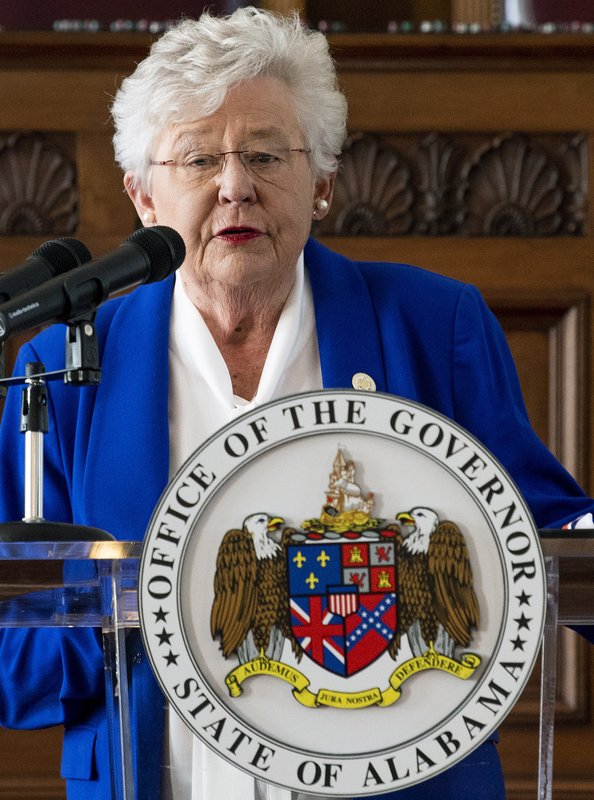
Gov. Kay Ivey and fourteen other governors wrote a joint letter to Secretary of Commerce Gina Raimondo urging a swift release of the census redistricting information. The letter addresses the main issue: the delay in releasing the data has made state legislatures unable to redraw district lines before the 2022 election cycle. The letter stated, “While we recognize the difficulties associated with completing a decennial census amid a pandemic, the ongoing delay in the release of 2020 Census redistricting data places our states in a nearly impossible situation to redraw lines prior to the 2022 election cycle. Consequently, we urge you to release redistricting data this month or as soon as possible prior to the delayed release date of September 30, 2021, and the release of the “legacy format” data on August 16, 2021.” The 2020 Census became a challenge to complete during the pandemic. In July 2020, Ivey warned the state’s current participation rate was 59.8%, or two percentage points behind the national average. At the time, Alabama was in danger of losing House seats because of a lack of participation. On Twitter, Ivey commented, “The stakes were high for Alabama in the #2020Census, and because of our efforts on the local and state levels, we succeeded. I’m proud to join fellow governors in urging the Biden Administration to not further delay the release of the redistricting data.” The stakes were high for Alabama in the #2020Census, and because of our efforts on the local and state levels, we succeeded. I’m proud to join fellow governors in urging the Biden Administration to not further delay the release of the redistricting data. #alpolitics @SecRaimondo pic.twitter.com/oMxsIodsoK — Governor Kay Ivey (@GovernorKayIvey) June 22, 2021 The letter continued, “Districts for the U.S. House of Representatives cannot be drawn until the data has been released. Districts for state legislatures also cannot be drawn until this data has been released. Districts for county, parish, township and municipal governing bodies cannot be drawn until states have had the opportunity to draw congressional and state legislative districts. Lastly, districts for school district seats cannot be drawn until county, parish, township, and municipal governing bodies have had the opportunity to draw their own respective districts. As a result of such negative impacts to our constitutional responsibilities, we seek the release of redistricting data as soon as possible—and in line with traditional timelines—so that states may begin to perform important redistricting tasks on behalf of our constituents.” Other governors signing the letter were Asa Hutchinson (AR), Brian Kemp (GA), Ron DeSantis (FL), Doug Ducey (AZ), Kim Reynolds (IA), Mike Parson (MO), Pete Ricketts (NE), Greg Gianforte (MT), Mike DeWine (OH), Henry McMaster (SC), Bill Lee (TN), Greg Abbott (TX), and Mark Gordon (WY), Doug Burgum (ND).
Joe Biden, GOP senators upbeat, plan more infrastructure talks
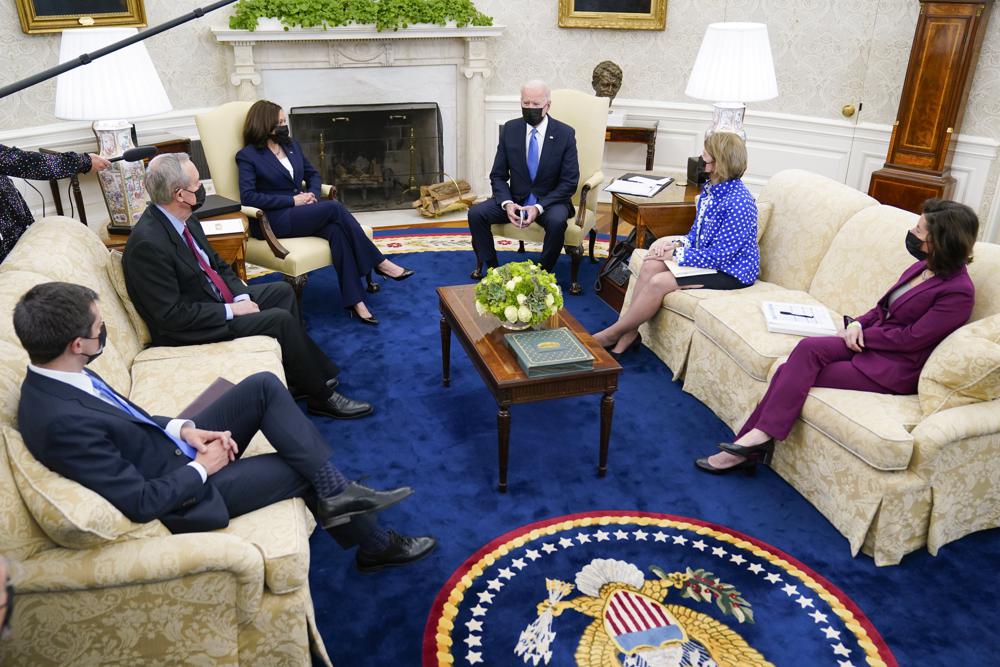
After meeting at the White House, President Joe Biden and a group of Republican senators agreed to talk again early next week as negotiations intensified Thursday over a potentially bipartisan infrastructure package that could become one piece of the administration’s ambitious $4 trillion public investment plan. The GOP senators exited the more than 90-minute meeting “encouraged” about their discussions with the president and prepared to build on the $568 billion proposal they had put forward last month as an alternative to his sweeping American jobs and families plans. “The president asked us to come back and rework an offer so that he could then react to that,” said Sen. Shelley Moore Capito of West Virginia, who is leading the group. “We’re very encouraged,” she told reporters outside the White House. “The attitude the president had in the Oval Office with us was very supportive and desirous of striking a deal.” Biden also emerged upbeat. “I am very optimistic that we can reach a reasonable agreement — and even if we don’t it’s been a good-faith effort,” Biden said in the Rose Garden. Biden is intent on at least trying to strike a deal with Republicans rather than simply going it alone with a Democrats-only bill, which might in some ways be a more politically viable route in a Congress held by the president’s party with only the slimmest of majorities. One strategy that appears to be coming into focus would be for Biden to negotiate a more limited, traditional infrastructure bill of roads, highways, bridges, and broadband as a bipartisan effort. Then, Democrats could try to muscle through the remainder of Biden’s priorities on climate investments and the so-called human infrastructure of child care, education, and hospitals on their own. “I’m willing to negotiate,” Biden said earlier at the White House. But the president has indicated that he’s not about to wait indefinitely for a compromise that may or may not come, and reiterated his view Thursday that “doing nothing is not an option.” The White House said the president stressed that inaction was a “red line for him.” He set a Memorial Day deadline for progress on a bipartisan deal. Those gathered included some of the top-ranking Republicans — Sens. John Barrasso of Wyoming, Roy Blunt of Missouri, Mike Crapo of Idaho, Pat Toomey of Pennsylvania, and Roger Wicker of Mississippi. Joining Biden were Vice President Kamala Harris, Transportation Secretary Pete Buttigieg, and Commerce Secretary Gina Raimondo. Thursday’s meeting followed a lengthy session at the White House with the congressional leadership the day before. Republican leader Mitch McConnell has said his side will accept spending as much as $800 billion, but Republicans made it clear they would refuse to embrace Biden’s broad proposals or his idea of raising taxes on corporations and the wealthy to pay for the plans. The White House outreach is part political strategy, part practical legislating. Striking a deal with Republicans would give all sides a political win — a rare bipartisan accomplishment — without fully forfeiting the president’s broader goals, which are largely shared by Democrats. It also acknowledges the “red line” that McConnell has drawn agaiTfnst GOP votes for undoing the 2017 tax law by raising taxes on corporations or those earning more than $400,000. “I want to get a bipartisan deal on as much as we can get a bipartisan deal on — and that means roads, bridges, broadband, all infrastructure,” Biden said Wednesday on MSNBC. “And then fight over what’s left and see if I can get it done without Republicans if need be.” Capito has taken the lead for Senate Republicans, keeping in close contact with both the president’s team and McConnell, she said, as she shuttles between the White House and Capitol Hill. The West Virginia senator is no stranger to the legislative process, serving more than a decade in the House and now as the ranking Republican on the Senate Energy and Public Works Committee. She ushered a $35 billion bipartisan water resources bill to passage in the Senate and is hard at work with the panel’s Democratic chairman, Tom Carper of Delaware, a Biden ally, on a big surface transportation bill. Biden personally reached out to Capito late last week after the water bill cleared the Senate. “The president he expressed on the phone with me, and has with others, that you know he’s anxious to move forward,” she said. “His desire is to define where we have common ground and I think we’ll probably spend the bulk of the time talking about that.” Biden has insisted he doesn’t want working-class Americans to bear the “burden” of paying for all the new infrastructure investments alone, resisting GOP plans for taxes and user fees, like tolls, to fund the projects. One potential new funding source could be the more than $1 trillion in unpaid taxes each year. House Speaker Nancy Pelosi has mentioned tapping that potential funding source and she said Biden discussed it at their meeting Wednesday. Republicans have not resisted it. “That’s a big chunk that would go a long way,” she said Thursday. McConnell and House Republican leader Kevin McCarthy have insisted they want the infrastructure bills to go through the committee process, where lawmakers can hammer out the details and take ownership of the proposals, rather than have the package negotiated in their leadership suites. Republished with the permission of the Associated Press.
16 states back Alabama’s challenge to Census privacy tool
Sixteen other states are backing Alabama’s challenge to a statistical method the U.S. Census Bureau is using for the first time to protect the privacy of people who participated in the 2020 census, the nation’s once-a-decade head count that determines political power and funding. A federal judge on Monday allowed the 16 states to file a brief in a support of a lawsuit brought by Alabama last month. The suit seeks to stop the Census Bureau from applying the method known as “differential privacy” to the numbers that will be used for redrawing congressional and legislative seats later this year. The states supporting Alabama’s challenge are Alaska, Arkansas, Florida, Kentucky, Louisiana, Maine, Mississippi, Montana, Nebraska, New Mexico, Ohio, Oklahoma, South Carolina, Texas, Utah and West Virginia. Maine and New Mexico have Democratic attorneys general, while all the other states have Republican ones. A three-judge panel in federal court in Alabama is hearing the case, which could go directly to the Supreme Court if appealed. Differential privacy adds mathematical “noise,” or intentional errors, to the data to obscure any given individual’s identity while still providing statistically valid information. Bureau officials say the change is needed to prevent data miners from matching individuals to confidential details that have been rendered anonymous in the massive data release, which is expected as early as August. It will be applied to race, age and other demographic information in geographic areas within each state. “It’s a statistical technique that is intended to protect people’s privacy … There can be privacy hacks today that technologically weren’t possible 10 years ago,” said Department of Commerce Secretary Gina Raimondo last week during a White House briefing. “So in order for us to keep up with that and protect people’s privacy, we have to implement new techniques, and this is one of those new techniques.” The Commerce Department oversees the Census Bureau. The 16 states supporting Alabama said that differential privacy’s use in the redistricting numbers will make the figures inaccurate for all states, especially at small geographic levels, and the Census Bureau could use other methods to protect people’s privacy. Differential privacy “would make accurate redistricting at the local level impossible,” violating the constitutional obligation that districts have equal populations, and it also could harm long-running research on health and safety, their brief said. “Because differential privacy creates false information — by design — it prevents the states from accessing municipal-level information crucial to performing this essential government functions,” the 16 states said. “And the distorting impact of differential privacy will likely fall hardest on some of the most vulnerable populations — rural areas and minority racial groups.” A pair of civil rights groups also raised concerns, saying an examination of test Census data showed differential privacy produced numbers that were less accurate for determining if a racial or ethnic minority group formed a majority in a particular community, potentially diluting their local political power. Democratic-led lawmakers in California, the nation’s largest state, also raised concerns about differential privacy in a recent letter to President Joe Biden’s chief of staff, Ronald Klain. The Alabama lawsuit also challenges the Census Bureau’s decision to push back the release of redistricting data from March 31 to August at the earliest. The statistical agency says the changed deadline was needed because of delays caused by the pandemic, and it had to prioritize the processing of figures used for divvying up congressional seats among the states. That data set is going to be released later this month. Twenty-seven states are required to finish redistricting this year. The delay has sent states scrambling for alternative plans such as using other data, utilizing previous maps, rewriting laws dealing with the deadlines or asking courts to extend deadlines. The state of Ohio filed a similar lawsuit over the changed deadlines. A federal judge dismissed the case, but Ohio has appealed. In a response to the appeal, the Census Bureau said Monday that Ohio was seeking the redistricting data “without regard to the Bureau’s own views of its completeness and accuracy.” “The Bureau recognizes the states’ interest in receiving redistricting data, but Ohio does not explain how the public interest would be served by foreshortening the Bureau’s work to produce less accurate, complete, or usable data at an earlier date,” the agency said in court papers. Republished with the permission of the Associated Press.’
Joe Biden’s ‘Jobs Cabinet’ to sell infrastructure
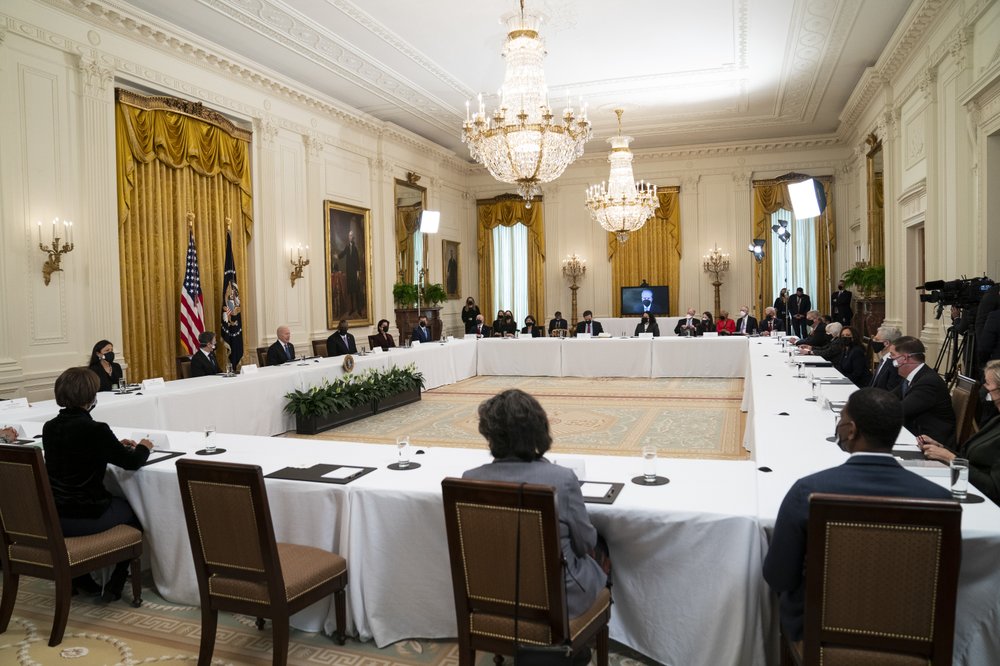
President Joe Biden set about convincing America it needs his $2.3 trillion infrastructure plan on Thursday, deputizing a five-member “jobs Cabinet” to help in the effort. But the enormity of his task was clear as Senate Minority Leader Mitch McConnell’s vowed to oppose the plan “every step of the way.” Speaking in Kentucky, McConnell said he personally likes Biden, and they’ve been friends a long time. But the president will get no cooperation from the GOP, which objects to the corporate tax increases in the plan and says they would hurt America’s ability to compete in a global economy. “We have some big philosophical differences, and that’s going to make it more and more difficult for us to reach bipartisan agreements,” the Republican leader said. White House chief of staff Ron Klain said the key to any outreach is that the proposal’s ideas are already popular. Americans want smooth roads, safe bridges, reliable public transit, electric vehicles, drinkable water, new schools, and investments in manufacturing, among the plan’s many components, he said. “We kind of think it’s just right,” Klain said in a televised interview with the news organization Politico. “But we’re happy to have a conversation with people, less about the price tag, more about what are the elements that should be in the plan that people think are missing.” Those conversations could be limited to Democrats as McConnell declared: “I’m going to fight them every step of the way.” Biden told his Cabinet at its first meeting that he is enlisting several of them to help with the push: Transportation Secretary Pete Buttigieg, Energy Secretary Jennifer Granholm, Housing and Urban Development Secretary Marcia Fudge, Labor Secretary Marty Walsh, and Commerce Secretary Gina Raimondo. “Working with my team here at the White House, each Cabinet member will represent me in dealings with Congress, engage the public in selling the plan and help organize the details as we refine it and move forward,” Biden said. The task will involve lots of salesmanship for a legacy-making piece of legislation that Biden announced in a Wednesday speech. His administration must sway Congress. It needs to rally voters. It’s also looking to outside economists to back the plan. It’s monitoring Wall Street for any celebrations or jitters. It’s forming alliances with advocates while dealing with critics of the plan’s corporate tax hikes and project details. And Biden’s administration also intends, per the plan, to cajole other nations to stop slashing their own tax rates in what has been a race-to-the-bottom to attract and retain multinational businesses. Biden’s vehicle for financing his infrastructure plans is a key dividing line. Republicans object to raising the corporate tax rate to 28% from 21%, one of the many changes so that business taxes would fund infrastructure. Republicans had cut the corporate rate from 35% in 2017, a hallmark policy achievement of Donald Trump’s presidency. Within Washington and corporate board rooms, the administration is attracting its share of accolades and rebukes on his proposal. In Biden’s own party, liberal Democrats in Congress want him to go bigger. And Democrats representing high-tax states want to remove a 2017 tax code change that limited deductions of state and local taxes for individuals. House Speaker Nancy Pelosi expressed no qualms about the proposal’s scope. “It was in the tradition of America — to think big,” Pelosi said at a press conference Thursday. “And now, in this century, President Biden is undertaking something in the tradition of thinking big, being transformational, and creating jobs for America.” While many leading business groups oppose the higher taxes, some major companies see reason for optimism because of the innovations that would be encouraged by the plan. Automakers Ford, General Motors, and Toyota endorsed the general concepts of Biden’s plan, which calls for the construction of 500,000 electric vehicle charging stations by 2030 in what would be a shift away from gasoline-powered cars. But some environmentalists said the plan’s shift away from fossil fuels that cause climate change was not substantial enough. “Biden has pledged to cut carbon emissions 50% and decarbonize our electricity sector, but this proposal won’t even come close,” said Brett Hartl, government affairs director at the Center for Biological Diversity. The White House was quick to address the climate change concerns. Climate adviser Gina McCarthy said the administration expects the infrastructure package to include Biden’s pledge to set a national standard requiring utilities to produce 100% carbon-free electricity by 2035. The proposed electricity standard “is going to be fairly robust, and it’s going to be inclusive,” McCarthy said. “I think we can get to the results that we’re looking for in a number of different ways. If a clean energy standard can be done, we think it should be done.’’ For every criticism of the plan’s details, there were also plaudits for its broader approach. Harvard University economist Larry Summers, a former treasury secretary, endorsed Biden’s plan after previously criticizing the $1.9 trillion coronavirus relief plan because of its size and debt-based financing. He downplayed any risks from corporate tax hikes since low-interest rates mean the costs of obtaining capital are already low for many companies. “I am excited,” Summers said on Twitter. “The economy’s capacity will go up.” The plan also carries a political dimension as organized labor is mobilizing to get the package passed, an important push given the steady recent Republican gains among working-class voters. Biden’s plan, with its focus on construction and manufacturing jobs, has the potential to reverse some of that slide — and the unions that backed him in 2020 are promising to help deliver votes on infrastructure. “Our members are an army a half-million strong, that will make calls, visit members of Congress and rally for good jobs building our nation’s infrastructure,” said Terry O’Sullivan, general president of Laborers International Union of North America, one of the largest construction trades unions. “We did it with boots on the ground to get President Biden elected.” Republished with the permission of the Associated Press.
Time, transparency needed as Joe Biden inherits frazzled census
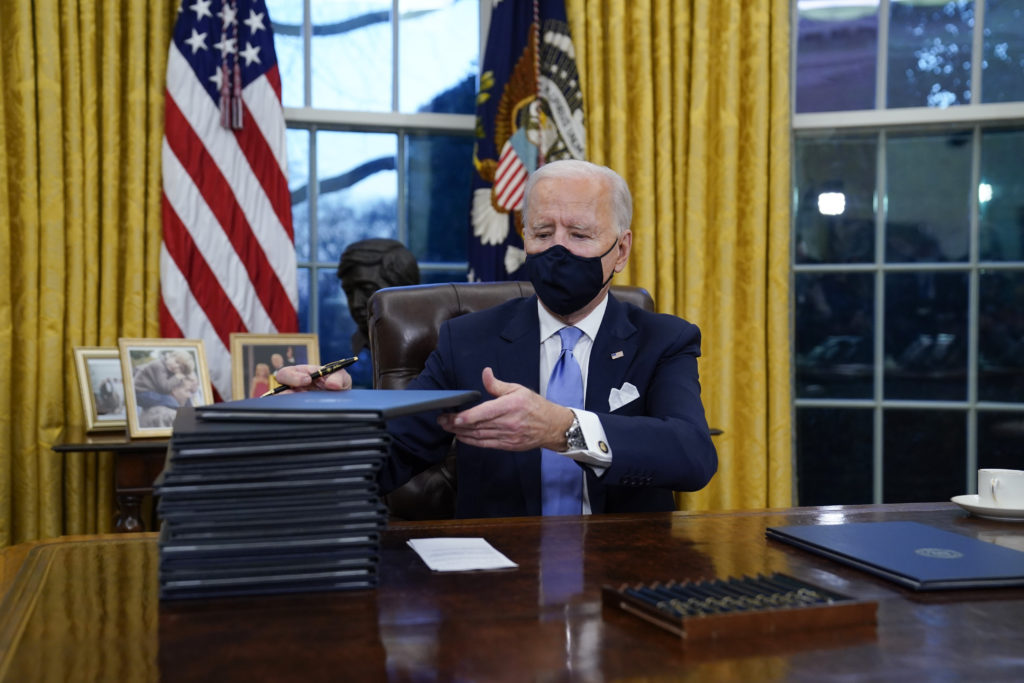
Battered by criticism that the 2020 census was dangerously politicized by the Trump administration, the U.S. Census Bureau under a new Biden administration has the tall task of restoring confidence in the numbers that will be used to determine funding and political power. Picking up the pieces of a long, fractious process that spooled out during a global pandemic starts with transparency about irregularities in the data, former Census Bureau directors, lawmakers and advocates said. They advised the new administration to take more time to review and process population figures to be sure they get them right. The high-stakes undertaking will determine how many congressional seats and Electoral College votes each state gets as well as the distribution of $1.5 trillion in federal spending each year. “We are optimistic that things at the Census Bureau will be better. The question is whether the damage caused by the Trump administration can be rectified,” said Marc Morial, president and CEO of the National Urban League. Morial’s organization, along with other advocacy groups and municipalities, sued former President Donald Trump’s administration last year over a decision to end the once-a-decade headcount early. According to critics, that damage includes a failed effort to add a citizenship question to the 2020 census questionnaire and a Trump order to figure out who is a citizen and who is in the U.S. illegally. They say another Trump directive to exclude people in the country illegally from the apportionment of congressional seats, shortened schedules to collect and process data, and four political appointments to top positions inside the bureau also threatened the count’s integrity. Census workers across the country have told The Associated Press and other media outlets that they were encouraged to falsify responses in the rush to finish the count so the numbers used for determining how many congressional seats each state gets could be produced under the Trump administration. Census Bureau officials said such problems were isolated. Census advocates were heartened Wednesday by President Joe Biden’s quick revocations of Donald Trump’s order to produce citizenship data and the former president’s memo attempting to exclude people in the U.S. illegally from the apportionment count. The Biden administration also has pledged to give the Census Bureau the time it needs to process the data. The Census Bureau also said Thursday that redistricting data it’s releasing later this year for states and municipalities to use in creating legislative districts won’t include information on citizenship or immigration status. It also said the agency is suspending all work on trying to produce the immigration status of U.S. residents for the census. “President Biden’s swift action today finally closes the book on the Trump administration’s attempts to manipulate the census for political gain,” said Dale Ho, director of the ACLU’s Voting Rights Project, who argued against the legality of the apportionment memo before the Supreme Court last year. The high court ruled that any challenge was premature. After the bureau missed a year-end deadline for turning in the apportionment numbers, it said the figures would be completed as close to the previous deadline as possible. Trump administration attorneys recently said they won’t be ready until early March because the bureau needs time to fix irregularities in the data. There will be flaws, likely undercounts of communities of color and overcounts of whites, but “they will just have to ‘bake the best cake possible’ through identifying and correcting the errors they can find,” said Rob Santos, president of the American Statistical Association. Trump’s four political appointments to the Census Bureau last year were denounced by statisticians and Democratic lawmakers worried they would politicize the once-a-decade head count. The Office of Inspector General last week said two of them had pressured bureau workers to figure out who is in the U.S. illegally before Trump left office, with one whistleblower calling the effort “statistically indefensible.” Then-Census Bureau Director Steven Dillingham ordered a technical report on that effort but halted it after blowback. He resigned this week after Democratic lawmakers and civil rights groups called for his departure. The bureau’s new interim chief, Deputy Director Ron Jarmin, didn’t respond to a request for an interview. He will report to Biden’s new pick to head the Commerce Department — which oversees the Census Bureau — Rhode Island Gov. Gina Raimondo. Former Census Bureau Director Kenneth Prewitt said he’s optimistic the final product will be as accurate as past censuses, especially now that Jarmin is at the helm. “They know how to do it right. It just takes time,” said Prewitt, who served in the Clinton administration. Another former bureau director, John Thompson, said the exit of Trump’s appointees will help eliminate distractions to finishing the 2020 census, but the agency needs to hold a public forum to discuss what anomalies bureau statisticians have found in the data and what they’re doing to fix them ahead of the apportionment numbers being turned in. U.S. Sen. Brian Schatz, a Democrat from Hawaii, asked Biden to set up a nonpartisan commission to review the apportionment data to make sure it’s fair and accurate before it’s delivered to the House of Representatives. “The Census Bureau faced a number of challenges with the 2020 Census,” Schatz said in a letter. “Some, like the pandemic, were beyond the agency’s control. However, the Trump Administration actively interfered with the agency’s operations.” Despite facing pressures from their political bosses, the Census Bureau’s career staff did a good job of resisting the Trump administration’s most questionable orders by coming forward when they found errors in the data without worrying about the deadline and by whistleblowing to the inspector general when they felt pressured to produce citizenship of dubious accuracy, according to Morial, Santos, and Thompson. “They deserve to be honored,” Santos said. Republished with the permission of the Associated Press.
