
Google to launch “candidate cards” feature during Thursday GOP debate

Google is testing a new feature that provides users with unique content from presidential campaigns. As reported by USA TODAY, Google launches “candidate cards” Thursday, an experimental feature that allows both parties to deliver content through a particular window appearing on the result page of searches for related content. Content will include images, text and video in an eight-card carousel controlled by the campaigns. Newer cards will replace older ones on a rotating basis. Cards will offer everything from text snippets to YouTube videos and GIFs, which Google says will load “natively” on a search page – meaning users do not have to click a link to access the content, although there will be embedded links available. “We believe that what a candidate has to say is just as important as what others say about them,” Google product manager Joe Bose told USA TODAY. “This new, experimental feature will now allow searchers to hear directly from presidential candidates right in Google search results — whether it’s their thoughts on an issue, photos from a recent debate or their latest stump speech.” Candidate cards is still in the testing phase, with a possibility of expansion to include content beyond political campaigns. Carousels will be introduced during Thursday evening’s GOP debate, in what Google calls a “parallel debate” cosponsored by Fox News. USA TODAY reporter Paul Singer writes that searches related to the on-stage discussion will automatically get a window featuring cards from candidates, updated in real time both during the undercard and main debate to reflect active questions and answers.
Facebook hails U.S. presidential race as 2015’s top topic

The U.S. won’t elect a president until next year but the debate over the crowded field of candidates jostling for the Oval Office emerged as the hottest topic on Facebook this year. The race for the Democratic and Republican party nominations eclipsed an outpouring of emotions over deadly attacks, strife, social issues and disasters. The rankings released Wednesday open a window into the cultural mindset by analyzing how frequently specific high-profile events, politicians, entertainers, athletes, movies and TV shows were mentioned in the posts of Facebook’s 1.5 billion users. “This year, the most talked about global topics reflected the serious challenges people are facing all over the world — and how our global community is connecting and coming together in ways we have never seen before,” said Sheryl Sandberg, Facebook Inc.’s chief operating officer. Google, the owner of the Internet’s dominant search engine, will provide another snapshot of what people were thinking and talking about when it releases its annual breakdown of the year’s most frequent requests for more information. Here’s a glimpse at how the world looked on Facebook this year: ___ TOP TOPICS The polarizing candidacy of billionaire former reality-TV star Donald Trump helped drive early interest in who will win next year’s race to succeed President Barack Obama. Facebook says last week’s shootings in San Bernardino didn’t trigger enough discussion to break into the top five. 1. U.S. presidential election 2. Nov. 13 attacks in Paris 3. Syrian civil war and refugee crisis 4. Nepal earthquakes 5. Greek debt crisis ___ TOP ENTERTAINERS British singer Ed Sheeran doesn’t have as many followers as Taylor Swift and other singers on Twitter but the voice behind the Grammy-nominated song “Thinking Out Loud” topped Facebook’s charts this year. All five of the top spots were held by singers. 1. Ed Sheeran 2. Taylor Swift 3. Kanye West 4. Nicky Jam 5. Wiz Khalifa ___ TOP TV SHOWS No surprise here after the HBO series “Game of Thrones” enthralled audiences during its fifth season and won a record 12 times, including the prize for best drama, at the Emmy awards in September. 1. “Game of Thrones” 2. “The Walking Dead” 3. “The Daily Show” 4. “Saturday Night Live” 5. “WWE Raw” ___ TOP MOVIES The anticipation for the Walt Disney Co.’s revival of the “Star Wars” franchise loomed over theaters like the Death Star for most of the year, even though the film won’t be released until next week. 1. “Star Wars: The Force Awakens” 2. “Furious 7” 3. “Jurassic World” 4. “Avengers: Age of Ultron” 5. “American Sniper” ___ TOP ATHLETES The long-awaited May duel between two of the past decade’s best boxers captivated sports fans. Reflecting Facebook’s worldwide reach, none of the most popular pastimes in the U.S. placed an athlete in the top five. New England Patriots quarterback Tom Brady came in sixth place on Facebook’s list, while Golden State Warriors guard Stephen Curry occupied the seventh spot to beat the Cleveland Cavaliers’ LeBron James in the basketball arena. 1. Boxer Floyd Mayweather Jr. 2. Boxer Manny Pacquiao 3. Mixed martial arts fighter Ronda Rousey 4. Soccer star Lionel Messi 5. Soccer star Cristiano Ronaldo ___ TOP POLITICIANS Fascination over who might replace him next year wasn’t enough to overshadow the current U.S. president as he wrapped up in his penultimate year in office. 1. U.S. President Barack Obama 2. Republican presidential candidate Donald Trump 3. Brazil President Dilma Rousseff 4. Democratic presidential candidate Hilary Clinton 5. Democratic presidential candidate Bernie Sanders Republished with permission of the Associated Press.
Ad blockers could jeopardize $1 billion presidential campaign online-ad industry
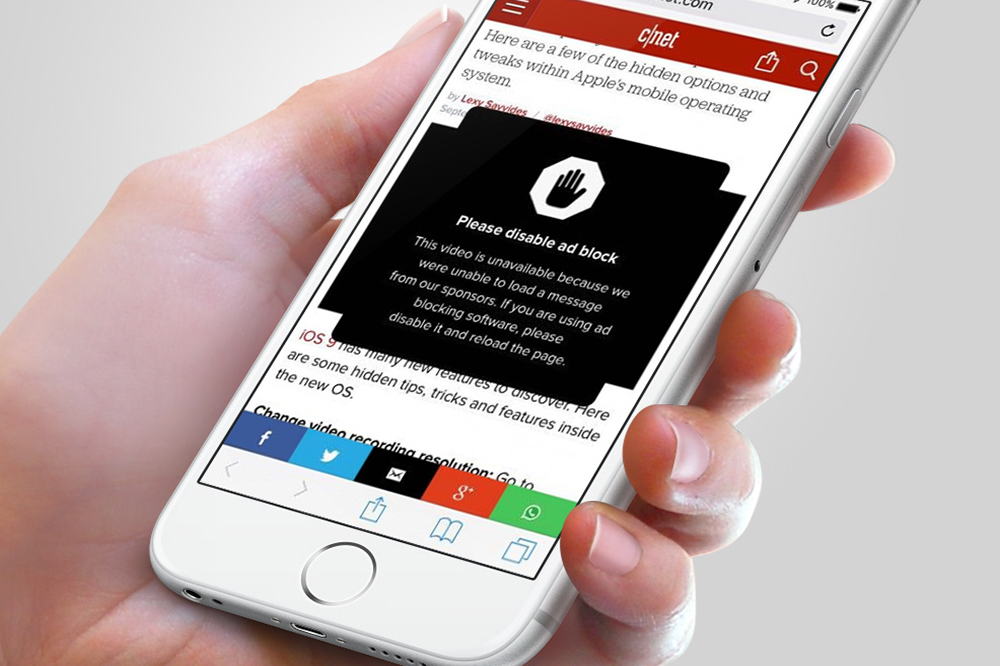
Online political advertising seems like a win-win proposition; an affordable way for campaigns to get the message out and a steady stream of revenue to keep websites and business. And it is a lucrative proposition, too. Presidential contenders are expected to spend nearly $1 billion in online ad revenue for the 2016 cycle. However, according to Zach Montellaro of the National Journal, the advent of ad blocking software – low-cost or, in some cases, free – puts the industry in jeopardy. With campaigns, for online advertising to work, voters must see the ads. But if software prevents an audience from seeing them, the intended effect is lost. That creates a challenge for both sides, Montellaro writes: how to get campaigns to pay for ad space when they know that users can block the ads at any time. Matt DeLuca, vice president at Engage, a digital agency that produces and distributes ads, believes that ad-blocking software is something the industry should be concerned about. “To just write it off, I think, is just negligent to the client,” he told the Journal. The popularity of ad-blocking software makes it difficult to overlook. Adobe estimates the number of number ad-blocking software users at 45 million in just the United States. A report by the Reuters Institute for the Study of Journalism found that 47 percent of Internet users in America regularly apply ad-blocking software to eliminate ads. Around a third will “actively avoid sites where ads interfere with content.” But the industry is not taking this lightly and has taken some steps to ensure the ads being paid for are actually viewed. To start, Montellaro writes that the Media Rating Council, an industry coalition and the Interactive Advertising Bureau, an online advertiser trade association, or redefining standards of “viewable impressions” for website ads. Viewable impressions for desktop ads are now considered “50 percent of {the ad’s] pixels viewable for a minimum of one second, with some allowances made for the size of the ad. For desktop video, the threshold is two seconds of visibility. Next, verification services for such first-party systems as Google and Facebook, as well as third-party services like Nielsen, gauge what percentage of the ads are actually viewable. “Almost every single verification service will run in two ways,” DeLuca explains. The first is making sure both the page and the ad renders properly on a desktop or mobile device, with nothing in front of it or behind. Next is that they keep a list of which publishers, IPs, computers, vendors, networks, and anyone having problems with viewable ads. The two-step verification process will allow advertisers to understand how much of their ads are actually viewable on the page, and which ones are being blocked by software, or by other means like hijacking malware. The services will then submit the information to an advertising network to make sure clients get the viewable impressions they pay for. Avoiding ads is nothing new for consumers and advertisers. The Reuters Institute report says that nearly 30 percent of Americans simply ignore advertising, so blocking online ads may be new, but avoiding ads altogether is not. Regardless of the method used, people who do not want to look at ads will just avoid them – whether it is digital video recorders for television, or by throwing away junk mail. Now, Internet advertisers can join the party, of those searching for new ways to get ads seen by more viewers.
