
Anxiety over GOP health plan for those with severe illnesses
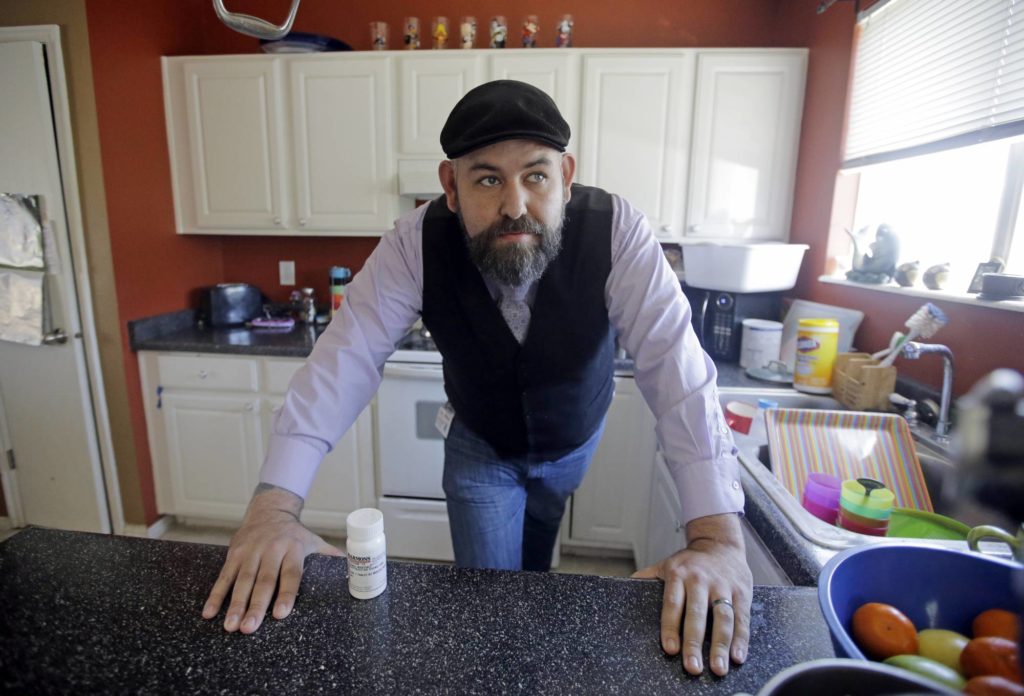
Unease and uncertainty are settling over Americans with serious illnesses as Republicans move closer to dismantling Democratic former President Barack Obama‘s health care system. A New Orleans attorney with multiple sclerosis fears he’ll be forced to close his practice if he loses coverage, while a Philadelphia woman with asthma is looking at stockpiling inhalers. The Republican health care bill pushed through the House on Thursday leaves those with pre-existing conditions fearful of higher premiums and losing coverage altogether if the Affordable Care Act is replaced. The bill sets aside billions of dollars more to help people afford coverage, but experts say that money is unlikely to guarantee an affordable alternative for people now covered under a popular provision of the existing law that prevents insurers from rejecting them or charging higher rates based on their health. What happens to those with pre-existing conditions under the Republican plan remains unknown. Several people unsettled by the prospects expressed these concerns. ___ FORMER UTAH CHEF Jake Martinez said he’s worried about getting health insurance in the future because he has epilepsy, considered a pre-existing condition by insurers. For the last several years, he, his wife and their three children have settled into a comfortable place using health insurance under the Affordable Care Act. But now the Murray, Utah, residents are worried about what may happen with this new health care bill. “Today, it really kind of sunk in that not only are we not going to potentially have health care coverage but that it was done as a political win rather than a well-thought-out plan,” said Martinez, a 32-year-old former chef who’s studying social work. “That’s what stings about it.” ___ KENTUCKY ATTORNEY Shortly after being diagnosed with type I diabetes, Amanda Perkins learned about the perils of pre-existing conditions when she starting trying to buy health insurance. Now she worries that protections under the Affordable Care Act that made sure certain essential health benefits, like insulin prescriptions, could be eliminated. The new Republican plan would let some states allow insurers to charge higher premiums for people with pre-existing conditions, but only if those people had a lapse in insurance coverage. Supporters say those states would need to have programs in place to help people pay for expensive medical treatments, including high-risk pools. But Perkins said Kentucky’s previous high-risk pool had a 12-month waiting period and was too expensive for her. “I bought a house just a couple of months ago. Will it come down to me paying my mortgage payment or paying my health insurance so I don’t have a lapse in coverage?” said Perkins, an attorney for a small firm in Lexington, Kentucky. ___ KANSAS GRAPHIC DESIGNER Janella Williams has a rare neurological disorder that forces her to receive expensive IV drugs every seven weeks. Without it, she would not be able to walk. Williams, who owns her own graphic design company in Lawrence, Kansas, pays $480 under an Obamacare plan. It keeps her out-of-pocket maximum at $3,500 a year and provides her coverage despite her pre-existing condition. “I’m terrified of becoming disabled. If I’m being completely honest, I’ve thought of ending my life if it comes to that,” she said. High-risk pools run by the state are not the answer, she says. The Republican plan would also bring back lifetime caps on coverage, which Williams says she would meet after only her first IV treatment. She and her husband both work full time, but wouldn’t be able to afford the roughly $600,000 a year her treatments cost once the cap is met. “I have really lost my faith in humanity,” she said. “It’s terrible how little we care for the sick.” ___ NORTH CAROLINA FINANCIAL ADVISER John Thompson credits his survival in large part because he bought a family insurance policy through the Affordable Care Act marketplace. Thompson, of Greensboro, North Carolina, was laid off in 2013, lost his employer-backed insurance and diagnosed with cancer during the year he was unemployed. If the House proposal allowing insurers to make coverage for pre-existing conditions unaffordable takes hold, he fears his cancer history will make him uninsurable if he would lose his current job as a retirement financial adviser. “Like many of us here, whether you have asthma or a heart condition or diabetes or like me, cancer, any type of pre-existing condition, you go back to the way it was before, you give insurance companies carte blanche to do their underwriting and to exclude you,” Thompson said. ___ FLORIDA MOM Shelby Jehlen, of New Port Richey, Florida, was diagnosed six years ago with leukemia and says she wouldn’t be able to afford insurance if she lost her roughly $400 a month subsidy. Jehlen saves about $1,000 every three months to see her cancer doctor under her Obamacare plan, but still pays about $1,500 for the check-ups. She was forced to quit work because of all the X-rays and other chemicals she was exposed to daily as a veterinary assistant and now cuts corners, sacrificing phones and school activities for her two teen daughters, to afford the monthly premiums. The stress has caused her to struggle with depression and anxiety. “Absolutely, I’m scared. I’m worried I’m going to have to figure out what I’m going to do with all my side effects with my leukemia if they take this away from me,” she said. ___ PHILADELPHIA BUSINESSWOMAN Adrienne Standley has been preparing for the possibility of losing her insurance since President Donald Trump took office. Three days after the inauguration, she set up an appointment for a birth control implant so she would be covered for four years, no matter what happens. The 29-year-old operations director at a start-up apparel business in Philadelphia also has asthma and attention deficit disorder. “I’m looking at stockpiling, making sure I have an inhaler,” she said. “I’m pretty scared to lose coverage.” ___ NEW ORLEANS ATTORNEY John S. Williams says he’ll be forced to close his practice and find a job with a group insurance
Americans offer hope, prayer in assessing Donald Trump’s 100 days

They are young and old: a high school student who can’t yet vote, a Vietnam vet who did so proudly. They hail from all corners of the United States and very different walks of life: a “downhome boy” from Kentucky, a third-generation Mexican-American from Texas, a stay-at-home mom in Pennsylvania, an Iranian immigrant in Los Angeles. Some oppose Donald Trump and all that he stands for, while others voted enthusiastically for him. Now, they are critiquing him. One hundred days into Trump’s presidency, The Associated Press returned to some of the everyday people interviewed these past months to ask them to write a letter to the president, evaluating the job he’s done so far and looking ahead to the months to come. One supporter tells the president he “might have fallen a little short” — on Obamacare, in particular — but he signs off “with hope.” A refugee implores Trump to “make America more friendly,” but finds optimism in the president’s reaction to this month’s chemical attack in Syria: “I hope this is a turning point.” A Trump objector calls his biggest accomplishment “waking up the public to fight.” She offers this advice: “Make decisions with your heart. It will give you wisdom.” ___ FROM RURAL AMERICA, A SUPPORTER SEES HOPE IN TRUMP’S PRESIDENCY Alan Halsey, 31, is a self-described “downhome boy” from Campton, Kentucky, who along with his wife owns and operates The Swift Creek Courier, a weekly newspaper, and Halsey’s Country Store, “a small business that is a chunk of 1950 set down in 2017.” He says he works seven days a week to try to provide for his family, but is struggling and tired of government regulation and red tape. He wrote: ” … I supported you quite strongly in the 2016 election, even to the point of hanging one of your signs on the front door of my business. I particularly related to your foreign policy of ‘America First,’ and your promise to bring business back to the United States. So far, I believe you’re heading in the right direction on that front, and I find a glimmer of hope in the future of the American economy. “Overall, I think you might have fallen a little short on your first 100 days, but I don’t put a lot of weight into a time frame that small. Provided you serve two terms, 100 days is about 4 percent of that. I still feel that something needs to be done with the Affordable Care Act, although I’m not certain exactly what. … I know many ACA recipients that visit a doctor more than once a week, while those that purchase their own insurance wait until a visit to a doctor is imperative to their survival. There must be a middle to that scenario. …” He signed his letter: “With Hope.” ___ CANCER SURVIVOR WORRIES OVER TRUMP’S PROPOSED BUDGET CUTS, BUT PRAYS FOR HIM Rebecca Esparza, 45, is a freelance writer in Corpus Christi, Texas, who didn’t vote for Trump. A cancer survivor, Esparza fears proposed budget cuts targeting the nation’s premier medical research institution, the National Institutes of Health, will hurt Americans who battle illness. She wrote: “. I cannot say I’m proud of your work so far. However, I have respect for the Office of the President, even if I disagree with your political aspirations. … I could write a dissertation on the many ways I disagree with your political ideals. I’m a third-generation Mexican-American, born and raised in South Texas. Your disdain for Mexico, its descendants and immigrants in general troubles me. Your plan to dismantle the Affordable Care Act, leaving millions of Americans with no other health insurance options, leaves me anguished. “But what distresses me most is your plan to cut nearly $6 billion in funding from the National Institutes of Health (NIH). On Thanksgiving Day in 2001, at age 30, I was diagnosed with ovarian cancer. … Cancer research saved my life. … The cuts you are proposing are disconcerting not only for cancer survivors, but for millions of Americans suffering from many types of chronic and rare diseases. … “I’ll be praying for you, President Trump. … I pray you will carefully consider how your decisions have life or death consequences for hard-working Americans.” Read more about Esparza. ___ ONE-TIME OBAMA VOTER FEELS PRIDE IN TRUMP’S WORK Laverne Jones Gore, 60, owns an executive leadership development company in Cleveland and voted for Trump after previously supporting Barack Obama. Gore calls herself a “middle-class American who happens to be black” and says she felt uncomfortable voicing her opinion during the Obama years, but Trump has “made me proud to be an American again.” Part of a military family — her deceased husband was a Marine and a son graduated from West Point — Gore’s one hesitation these past 100 days is over Trump’s airstrike in Syria. She wrote: ” … Mr. President you have absolutely met my expectations. I actually believe you have shown a strength that I had not given to you, and I am surprised by your willingness to meet head on the challenges and resistance within your governing bodies. I don’t believe you have been afforded an opportunity to really show us what you have to offer in the form of leadership of our nation. “I have no issue with you as it relates to ‘Russians.’ I personally believe most of it was contrived. I have no issue with you as it relates to immigration. I think the issues were in need of control. … I have some reservations about your use of Twitter, but I understand the difficulty you have getting your intended message out. “Yes, you surprised me with the Syria strike and I am not certain how I feel about another war or thought of war. I am still contemplating your action and observing the responses to come from the world theatre as they absorb your full intent.” ___ ‘YOUR SIGNATURE CRUSHED MY FAMILY’ Marjan Vayghan, 32, an artist and writer
Senate confirms Alex Acosta as Donald Trump’s secretary of labor
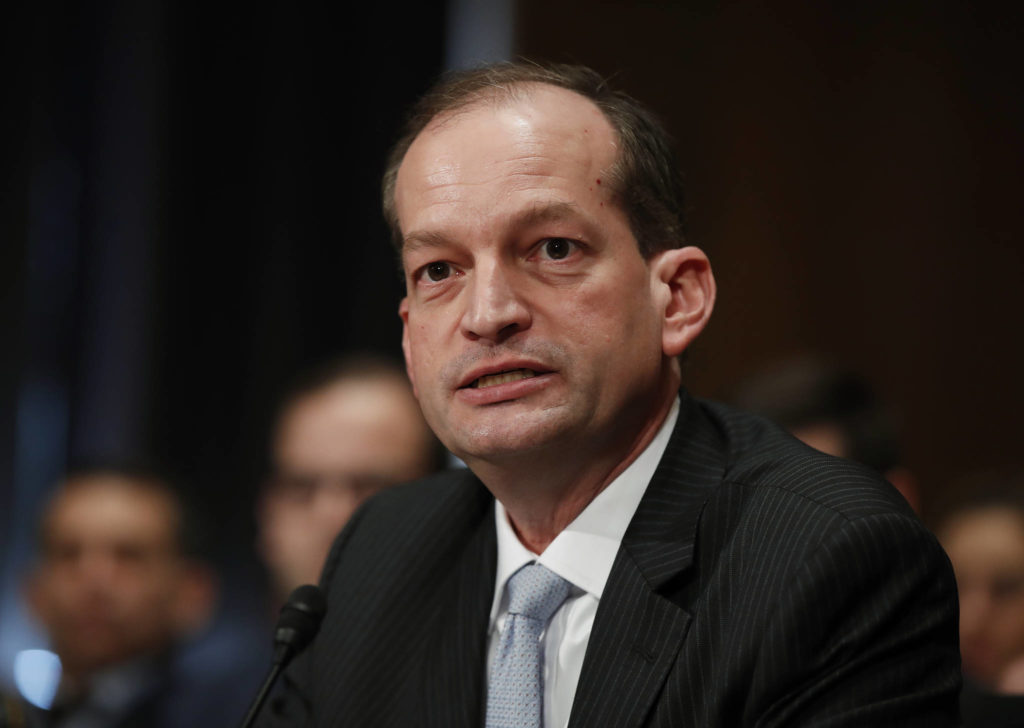
The Senate on Thursday confirmed Alex Acosta as Labor secretary, filling out President Donald Trump‘s Cabinet as he approaches his 100th day in office. The 60-38 vote confirms Acosta to the post. Once sworn as the nation’s 27th Labor secretary, the son of Cuban immigrants will lead a sprawling agency that enforces more than 180 federal laws covering about 10 million employers and 125 million workers. Sen. Tim Scott, R-S.C., spoke for many Republicans with a statement issued just after the vote saying he hopes Acosta’s focus will be “promoting labor policies that are free of unnecessarily burdensome federal regulations.” Scott said he wants Acosta to permanently revoke rules governing financial advisers and adding Americans eligible for overtime pay. Democrats said any Labor secretary should advocate for the American workers to whom Trump promised so much during his upstart presidential campaign. They said Acosta has given no such commitment. “Acosta failed this basic test,” tweeted Sen. Elizabeth Warren, D-Mass. Acosta has been a federal prosecutor, a civil rights chief at the Justice Department and a member of the National Labor Relations Board. He will arrive at the top post with relatively little clear record on some of the top issues facing the administration over key pocketbook issues, such as whether to expand the pool of American workers eligible for overtime pay. Acosta wasn’t Trump’s first choice for the job. Former fast food CEO Andrew Puzder withdrew his name from consideration last month, on the eve of his confirmation vote, after becoming a political headache for the new administration. Puzder acknowledged having hired a housekeeper not authorized to work in the U.S. and paying the related taxes years later — after Trump nominated him — and came under fire from Democrats for other issues related to his company and his private life. Acosta’s ascension would come at a key moment for Trump, just two days before he reaches the symbolic, 100-day marker. The White House has sought to cross the threshold with its own list of Trump’s accomplishments. Trump can say the Acosta vote was bipartisan, because eight Democrats and one independent voted yes. Joining the Republicans in his favor were Democratic Sens. Catherine Cortez Masto of Nevada, Heidi Heitkamp of North Dakota, Joe Manchin of West Virginia, Claire McCaskill of Missouri, Bob Menendez of New Jersey, Bill Nelson of Florida, Jon Tester of Montana and Mark Warner of Virginia. Independent Sen. Angus King of Maine also voted for Acosta. Labor secretary is the last Cabinet post for Trump to fill. Trump’s choice for U.S. trade representative, a job considered Cabinet-level, is awaiting a Senate vote. From the beginning, Acosta’s was a quiet march to confirmation that stood out because it didn’t attract the deep partisan battles faced by some of Trump’s other nominees, including Education Secretary Betsy DeVos and Secretary of State Rex Tillerson. Justice Neil Gorsuch‘s nomination provoked such a fight that majority Senate Republicans used the “nuclear option” to remove the 60-vote filibuster barrier for Supreme Court picks. Thursday’s vote marks the fourth time Acosta has been confirmed for the Senate. Democrats and most labor groups were mostly muted in their response to Acosta’s nomination. At his confirmation hearing, Democratic Sens. Patty Murray of Washington and Warren hammered Acosta for answers on a selection of issues important to labor and whether Acosta would cave to political pressure from Trump. Acosta refused to answer the policy questions until he’s confirmed, and he vowed to be an independent and fair voice for workers. Both senators said they had great concerns, and both voted no. Our standard can’t be ‘not Puzder,’” Murray said Wednesday on the Senate floor. But tellingly, even as Acosta’s nomination wound through the Senate, Democrats and their allies also tried to move on to other, labor-related issues — namely, a minimum wage hike to $15 an hour, which Trump opposes. Meanwhile, the Labor Department’s online landing page bears a glimpse of Acosta’s policy priorities: “Buy American, Hire American.” That’s the title of Trump’s executive order this week directing the secretaries of labor and other agencies to issue guidance within 60 days on policies that would “ensure that, to the extent permitted by law” federal aid “maximize the use of materials produced in the United States, including manufactured products; components of manufactured products; and materials such as steel, iron, aluminum, and cement.” Republished with permission of The Associated Press.
House Freedom Caucus chairman says there’s ‘no deal’ on the GOP health care legislation after White House meeting

The Latest on the upcoming health care vote in the House (all times local): 1:35 p.m. The chairman of the conservative House Freedom Caucus says there’s “no deal” on the GOP health care legislation after a meeting at the White House with President Donald Trump. The assertion from Congressman Mark Meadows of North Carolina throws plans for a vote on the bill later Thursday into doubt. Two dozen or so Freedom Caucus members have opposed the legislation pushed by GOP leaders, saying it doesn’t go far enough to repeal “Obamacare.” But the group had been negotiating directly with the White House in hopes of reaching agreement to eliminate additional requirements on insurers. Without a deal with the Freedom Caucus, and with moderate-leaning members defecting, it seems unlikely GOP leaders will have the votes they need to go forward with a vote later Thursday as they had planned. ___ 10:06 a.m. Former President Barack Obama is celebrating the seventh anniversary of his landmark health care law, saying in a statement on Thursday that “America is stronger because of the Affordable Care Act.” Obama does not directly address GOP efforts to repeal his law, which are coming to a head Thursday as House leaders push toward a vote on their repeal legislation. Republicans remain short of votes. The former president does say that if Republicans are serious about lowering costs and expanding coverage, and are prepared to work with Democrats, “That’s something we all should welcome.” But, Obama says, “we should start from the baseline that any changes will make our health care system better, not worse for hardworking Americans.” He notes 20 million Americans gained coverage under his law. ___ 9:40 a.m. President Donald Trump is urging people to call their lawmakers to express support for the Republican legislation to repeal and replace “Obamacare.” Trump posted a video on Twitter Thursday asking people to get behind the plan. He says that people were “given many lies” about the Affordable Care Act. Trump added that the legislation was “terrific” and “you’re going to be very, very happy.” The GOP legislation was on the brink hours before Republican leaders planned to put it on the House floor for a showdown vote. Trump was spending the final hours trying to close the deal with conservatives who have opposed the plan. ___ 9:00 a.m. The GOP’s long-promised legislation to repeal and replace “Obamacare” stands on the brink, just hours before Republican leaders planned to put it on the House floor for a showdown vote. The stakes are high, and Republicans are staring at the possibility of a failure that would throw prospects for their other legislative goals into uncertainty. Speaking to members of the conservative Freedom Caucus mid-day Thursday, Trump is pitching concessions to representatives who want to limit the requirement for health plans to include benefits including substance abuse and maternity care. But those changes appear to be scaring off at least some moderate Republicans. In a count by The Associated Press, at least 26 Republicans say they opposed the bill, enough to narrowly defeat the measure. Republished with permission of The Associated Press.
Donald Trump nominee decried criticism of judges, senators agree
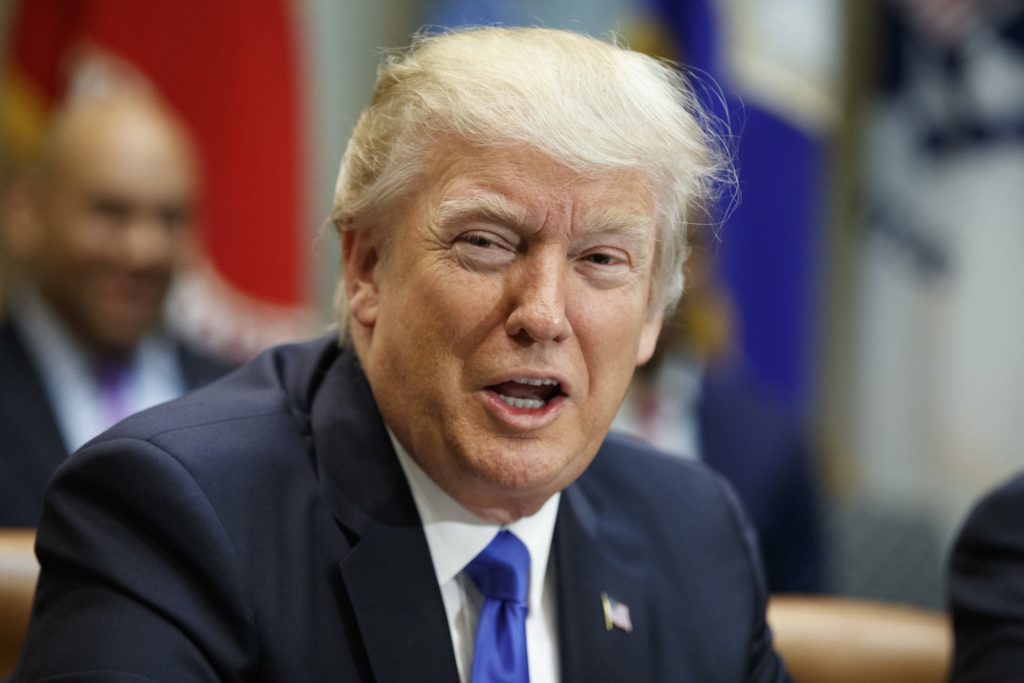
President Donald Trump insisted Thursday that comments by his Supreme Court nominee criticizing his own attacks on the judiciary were “misrepresented,” even as Republican and Democratic lawmakers vouched for the veracity of the remarks. Trump responded after private rebukes from Judge Neil Gorsuch, who said in meetings with lawmakers on Wednesday that the president’s comments about federal judges were “disheartening.” Gorsuch, who was nominated by Trump last week to the nation’s highest court, made the comments in meetings with senators after Trump accused an appeals court panel considering his immigration and refugee executive order of being “so political.” Over the weekend, he labeled a judge who ruled on his executive order a “so-called judge” and referred to the ruling as “ridiculous.” Democratic Sen. Richard Blumenthal of Connecticut first relayed Gorsuch’s remarks on Wednesday following a meeting with him. Trump’s own confirmation team for Gorsuch later confirmed he had made the remarks. But Trump said during a Thursday luncheon with senators that Blumenthal had misrepresented Gorsuch. “His comments were misrepresented. And what you should do is ask Senator Blumenthal about his Vietnam record that didn’t exist after years of saying it did,” he said. Blumenthal, who served in the Marine Corps Reserves during Vietnam, apologized in 2010 for saying he had served in Vietnam. The president made the comments while making the case for Gorsuch during a luncheon with 10 senators, including six of Blumenthal’s fellow Democrats. Blumenthal, a former state attorney general, argued Thursday that Gorsuch would need to go further to publicly denounce Trump’s verbal assault on judicial independence. “He needs to condemn Donald Trump’s attacks publicly and it needs to be much stronger, more explicit and direct than has been done so far,” Blumenthal said. “Unless it is done publicly in a clear condemnation, it will not establish his independence.” Lawmakers from both parties quickly vouched for the veracity of the remarks the senator said Gorsuch made. GOP former Sen. Kelly Ayotte, who is helping with Gorsuch’s confirmation and was at the meeting, issued a statement saying Gorsuch made clear he was not referring to any specific case. But she said the nominee said he finds any criticism of a judge’s integrity and independence to be “disheartening and demoralizing.” Senate Minority Leader Chuck Schumer, D-N.Y., and Sen. Ben Sasse, R-Neb., each confirmed that Gorsuch made the same comments to them. Sasse told MSNBC’s “Morning Joe,” ”Frankly, he got pretty passionate about it.” He added that Gorsuch said any attack on the “‘brothers or sisters of the robe is an attack on all judges’.” Fellow Connecticut Democratic Sen. Chris Murphy came to Blumenthal’s defense Thursday, lashing out in a tweet directed at Trump: “Ha! As a prosecutor, Dick used to put guys like u in jail. Now, u use your position to mock vets, he uses his to make their lives better.” Gorsuch’s comments came at the end of a week of meetings with members of the Senate, which is considering his nomination. His response may have been aimed at drawing a line of separation with the new president. The 9th U.S. Circuit Court of Appeals is weighing the appeal of Trump’s executive order on immigration, which included a temporary travel ban on people from seven Muslim-majority countries. In a hearing Tuesday, judges on the appeals court challenged the administration’s claim that the ban was motivated by terrorism fears, but they also questioned an attorney’s argument that it unconstitutionally targeted Muslims. Trump told visiting police chiefs Wednesday that a portion of the immigration law gives him the power to enact the ban, calling it “beautifully written” and saying, “A bad high school student would understand this.” “Courts seem to be so political and it would be so great for our justice system if they would be able to read a statement and do what’s right,” Trump added. “And that has to do with the security of our country, which is so important.” Since a lower-court judge blocked the order last week, Trump has assailed the decision, leading legal experts, Democrats and some Republicans to question whether his remarks might jeopardize the independence of the judiciary. Others have expressed fears he may be attempting to use political influence to sway the courts. The president has repeatedly said foreigners are “pouring in” since the ban was put on hold and suggested that blocking the order would be dangerous for U.S. citizens. On Wednesday he tweeted, “Big increase in traffic into our country from certain areas, while our people are far more vulnerable, as we wait for what should be EASY D!” The administration has not provided any information to support his claims. Republished with permission of The Associated Press.
Dems force delays in votes on Jeff Sessions, Steve Mnuchin, Tom Price
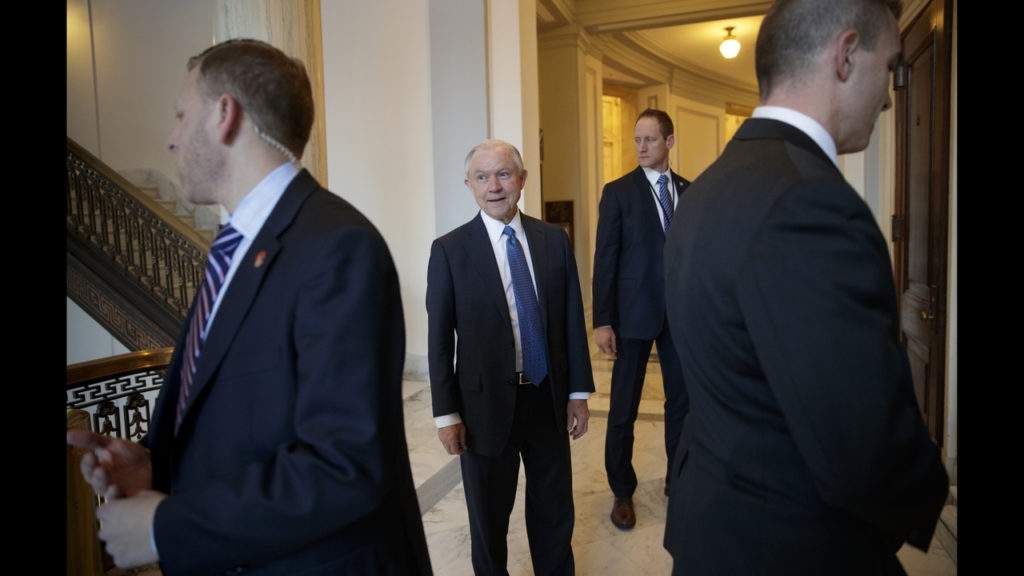
Democrats forced delays Tuesday in planned Senate committee votes on President Donald Trump‘s picks for Health and Treasury secretaries and attorney general, amid growing Democratic surliness over the administration’s aggressive early moves against refugees and an expected bitter battle over filling the Supreme Court vacancy. Democrats abruptly boycotted a Senate Finance Committee meeting called to vote on Rep. Tom Price, R-Ga., the Health nominee and Steve Mnuchin, Trump’s Treasury selection, saying both had misled Congress about their financial backgrounds. The Democrats’ action prevented the Finance panel from acting because under committee rules, 13 of its members — including at least one Democrat — must be present for votes. It was unclear when the panel would reschedule to votes. At the Senate Judiciary Committee, a meeting considering Sen. Jeff Sessions, R-Ala., to be attorney general lasted so long — chiefly because of lengthy Democratic speeches — that Chairman Charles Grassley, R-Iowa, said the panel would meet again Wednesday. The meeting on Sessions’ nomination was coming with Democrats and demonstrators around the country in an uproar over Trump’s executive order temporarily blocking refugees. Even some Republicans were warning it could hinder anti-terrorism efforts. Not everything ground to a halt. The Senate education committee voted 12-11 to send Trump’s pick to head the Education Department, Betsy DeVos, to the full Senate for a confirmation vote. The Senate Energy and Natural Resources Committee quickly approved former Texas Gov. Rick Perry as Energy secretary by 16-7, and Rep. Ryan Zinke, R-Mont., to head Interior by 16-6. And the full Senate easily confirmed Elaine Chao to become transportation secretary by a 93-6 vote. Chao was labor secretary under President George W. Bush, and is wife of Senate Majority Leader Mitch McConnell, R-Ky. Just before the Finance committee was scheduled to vote on Price and Mnuchin, Democrats called a briefing for reporters and announced their plan to force a delay. Sen. Debbie Stabenow, D-Mich., said Price and Mnuchin would hold positions “that directly affect peoples’ lives every day. The truth matters.” Finance Committee Chairman Orrin Hatch, R-Utah, accused Democrats of “a lack of desire to fulfill their constitutional responsibilities.” “They ought to stop posturing and acting like idiots,” he said. In 2013 when Democrats controlled the Senate, Republicans boycotted a committee vote on Gina McCarthy to head the Environmental Protection Agency, temporarily stalling it. Democrats cited one report in The Wall Street Journal that Price received a special, discounted offer to buy stock in a biomedical company, which contradicted his testimony to Congress. They said another report in The Columbus Dispatch showed documents revealing that Mnuchin had not been truthful with the Senate in the confirmation process in comments about how his bank OneWest had handled home foreclosures. Republicans have supported both men, and both have strongly defended their actions. Democrats have opposed Price, a seven-term congressional veteran, for his staunch backing of his party’s drive to scuttle Obama’s health care law and to reshape Medicare and Medicaid, which help older and low-income people afford medical care. They’ve also assailed Price for buying stocks of health care firms, accusing him of using insider information and conflicts of interest for backing legislation that could help his investments. Price says his trades were largely managed by brokers and that he’s followed congressional ethics rules. Democrats have criticized Mnuchin for not initially revealing nearly $100 million in assets, and were expected to vote against both nominees. They’ve also accused him of failing to protect homeowners from foreclosures and criticized him for not initially disclosing all his assets. DeVos, a wealthy GOP donor and conservative activist, has long supported charter schools and allowing school choice. That’s prompted opposition from Democrats and teachers’ unions who view her stance as a threat to federal dollars that support public education. Critics have also mocked her for suggesting that guns could be justified in schools to protect students from grizzly bears. Two prominent Republicans on the education committee, Sens. Susan Collins of Maine and Lisa Murkowski of Alaska, said they remained uncertain if they will vote for her on the Senate floor. Murkowski said DeVos has yet to prove that she deeply cares about America’s struggling schools and its children. Republished with permission of the Associated Press.
Cuba’s Fidel Castro, who defied U.S. for 50 years, dies at 90

Former President Fidel Castro, who led a rebel army to improbable victory in Cuba, embraced Soviet-style communism and defied the power of 10 U.S. presidents during his half-century rule, has died at age 90. With a shaking voice, President Raul Castro said on state television that his older brother died at 10:29 p.m. Friday. He ended the announcement by shouting the revolutionary slogan: “Toward victory, always!” Castro’s reign over the island-nation 90 miles (145 kilometers) from Florida was marked by the U.S.-backed Bay of Pigs invasion in 1961 and the Cuban Missile Crisis a year later that brought the world to the brink of nuclear war. The bearded revolutionary, who survived a crippling U.S. trade embargo as well as dozens, possibly hundreds, of assassination plots, died 10 years after ill health forced him to hand power over to Raul. Castro overcame imprisonment at the hands of dictator Fulgencio Batista, exile in Mexico and a disastrous start to his rebellion before triumphantly riding into Havana in January 1959 to become, at age 32, the youngest leader in Latin America. For decades, he served as an inspiration and source of support to revolutionaries from Latin America to Africa. His commitment to socialism was unwavering, though his power finally began to fade in mid-2006 when a gastrointestinal ailment forced him to hand over the presidency to Raul in 2008, provisionally at first and then permanently. His defiant image lingered long after he gave up his trademark Cohiba cigars for health reasons and his tall frame grew stooped. “Socialism or death” remained Castro’s rallying cry even as Western-style democracy swept the globe and other communist regimes in China and Vietnam embraced capitalism, leaving this island of 11 million people an economically crippled Marxist curiosity. He survived long enough to see Raul Castro negotiate an opening with U.S. President Barack Obama on Dec. 17, 2014, when Washington and Havana announced they would move to restore diplomatic ties for the first time since they were severed in 1961. He cautiously blessed the historic deal with his lifelong enemy in a letter published after a month-long silence. Obama made a historic visit to Havana in March 2016. Carlos Rodriguez, 15, was sitting in Havana’s Miramar neighborhood when he heard that Fidel Castro had died. “Fidel? Fidel?” he said, slapping his head in shock. “That’s not what I was expecting. One always thought that he would last forever. It doesn’t seem true.” “It’s a tragedy,” said 22-year-old nurse Dayan Montalvo. “We all grew up with him. I feel really hurt by the news that we just heard.” Fidel Castro Ruz was born Aug. 13, 1926, in eastern Cuba’s sugar country, where his Spanish immigrant father worked first recruiting labor for U.S. sugar companies and later built up a prosperous plantation of his own. Castro attended Jesuit schools, then the University of Havana, where he received law and social science degrees. His life as a rebel began in 1953 with a reckless attack on the Moncada military barracks in the eastern city of Santiago. Most of his comrades were killed and Fidel and his brother Raul went to prison. Fidel turned his trial defense into a manifesto that he smuggled out of jail, famously declaring, “History will absolve me.” Freed under a pardon, Castro fled to Mexico and organized a rebel band that returned in 1956, sailing across the Gulf of Mexico to Cuba on a yacht named Granma. After losing most of his group in a bungled landing, he rallied support in Cuba’s eastern Sierra Maestra mountains. Three years later, tens of thousands spilled into the streets of Havana to celebrate Batista’s downfall and catch a glimpse of Castro as his rebel caravan arrived in the capital on Jan. 8, 1959. The U.S. was among the first to formally recognize his government, cautiously trusting Castro’s early assurances he merely wanted to restore democracy, not install socialism. Within months, Castro was imposing radical economic reforms. Members of the old government went before summary courts, and at least 582 were shot by firing squads over two years. Independent newspapers were closed and in the early years, homosexuals were herded into camps for “re-education.” In 1964, Castro acknowledged holding 15,000 political prisoners. Hundreds of thousands of Cubans fled, including Castro’s daughter Alina Fernandez Revuelta and his younger sister Juana. Still, the revolution thrilled millions in Cuba and across Latin America who saw it as an example of how the seemingly arrogant Yankees could be defied. And many on the island were happy to see the seizure of property of the landed class, the expulsion of American gangsters and the closure of their casinos. Castro’s speeches, lasting up to six hours, became the soundtrack of Cuban life and his 269-minute speech to the U.N. General Assembly in 1960 set the world body’s record for length that still stood more than five decades later. As Castro moved into the Soviet bloc, Washington began working to oust him, cutting U.S. purchases of sugar, the island’s economic mainstay. Castro, in turn, confiscated $1 billion in U.S. assets. The American government imposed a trade embargo, banning virtually all U.S. exports to the island except for food and medicine, and it severed diplomatic ties on Jan. 3, 1961. On April 16 of that year, Castro declared his revolution to be socialist, and the next day, about 1,400 Cuban exiles stormed the beach at the Bay of Pigs on Cuba’s south coast. But the CIA-backed invasion failed. The debacle forced the U.S. to give up on the idea of invading Cuba, but that didn’t stop Washington and Castro’s exiled enemies from trying to do him in. By Cuban count, he was the target of more than 630 assassination plots by militant Cuban exiles or the U.S. government. The biggest crisis of the Cold War between Washington and Moscow exploded on Oct. 22, 1962, when President John F. Kennedy announced there were Soviet nuclear missiles in Cuba and imposed a naval blockade of the island. Humankind held its
Updates from the 1st presidential debate

The Latest on the first of three presidential debates between Democrat Hillary Clinton and Republican Donald Trump (all times EDT): 10:45 p.m. Both candidates concluded the first presidential debate by saying they will accept the outcome if the other wins. Hillary Clinton spoke directly to viewers and said, “It’s not about us, it’s about you.” Donald Trump initially dodged the same question, saying he would make a “seriously troubled” America “great again.” He added: “I’m going to be able to do it. I don’t believe Hillary Clinton will.” But Trump finished his answer by saying that if Clinton wins, “I will absolutely support her.” ___ 10:43 p.m. Hillary Clinton is punching back at Donald Trump’s assertions that she doesn’t have the “stamina” to be president. Trump has questioned whether Clinton has the physical fitness to be president and he repeated the criticism to her directly during the debate. Clinton’s response? Trump shouldn’t talk about stamina until he’s tried out the busy schedule she kept up as secretary of state. Trump didn’t answer moderator Lester Holt’s original question about his past comments that Clinton doesn’t have the “presidential look.” Clinton suggested the remarks were about gender, and she reminded the crowd of Trump’s past comments calling women “pigs” and other derogatory names. ___ 10:42 p.m. Donald Trump says NATO needs to “go into the Middle East with us” to combat the Islamic State group. And he is taking credit for NATO focusing resources on combating terrorism. In fact, the alliance agreed in July to contribute aircraft and conduct training in Iraq and has increased intelligence coordination there. And NATO set up an anti-terrorism program in 2004 — years before Trump criticized them as a presidential candidate. Earlier this year, Trump criticized NATO for not focusing on terrorism. He said that afterward, he saw an article reporting that NATO was opening a new, major anti-terrorism division. He said Tuesday that NATO’s action was “largely because of what I was saying, and my criticism of NATO.” ___ 10:40 p.m. Donald Trump is avoiding a specific declaration on how he would use nuclear weapons if he’s elected president. The Republican nominee said during the first presidential debate that he “would not do first strike” because “once the nuclear alternative happens, it’s over.” That statement suggests he would not authorize a nuclear attack unless the U.S. was struck first. But in the same answer Trump said he “can’t take anything off the table.” He mentioned adversary nations such as North Korea and Iran. President Barack Obama has considered changing existing policy to state clearly that the United States would not deploy nuclear weapons without first being attacked by nuclear weapons. But he met resistance and has elected not to make such a shift. ___ 10:38 p.m. Hillary Clinton is accusing Donald Trump of being too easily provoked to keep the United States from going to war — perhaps even one involving nuclear weapons. Trump says: “I have much better judgment than she does. I have much better temperament.” That drew laughs from some in the debate crowd, and prompted Clinton to exclaim: “Woo! OK!” Clinton then pivoted to policy, defending the U.S.-led war in Afghanistan. Clinton said Iran was “weeks away” from a nuclear bomb when she became secretary of state — and says the Obama administration thwarted that progress. She continued that Trump didn’t have “good judgment or the right temperament” because he could take the country to war over small issues, like being mocked on Twitter. ___ 10:35 p.m. Donald Trump is continuing to insist he opposed the Iraq War before the U.S. invasion despite evidence to the contrary. Trump says during the debate that he “did not support the war in Iraq,” calling that charge “mainstream media nonsense.” But there is no evidence Trump expressed public opposition to the war before the U.S. invaded. Trump was asked in September 2002 whether he supported a potential Iraq invasion in an interview with Howard Stern. Trump briefly hesitated, then responded: “Yeah, I guess so.” Presented with the comment during the debate, Trump responds: “I said very lightly, I don’t know, maybe, who knows.” He’s also telling reporters to call Fox News host Sean Hannity to confirm private conversations he said they had about the war. Hannity is a top Trump supporter. Clinton voted in favor of the invasion in 2002 while she was a New York senator. She has since said it was a mistake. ___ 10:27 p.m. Donald Trump is interrupting the moderator of the first presidential debate to insist he has the best temperament for the office. Trump repeatedly made the assertion after clashing with moderator Lester Holt over his early support for the Iraq War. Then he segued to his temperament. “I think my strongest asset by far is my temperament,” Trump said. “I know how to win.” Clinton and her allies have repeatedly hit Trump over his temper and inability to take criticism. ___ 10:23 p.m. Hillary Clinton says one key to fighting terrorism in the United States is working closely with Muslims living here. Clinton says Donald Trump has “consistently insulted Muslims abroad, Muslims at home.” She says Muslim people can provide information that law enforcement may not be able to obtain anyplace else. Both candidates were asked to explain how they would combat terrorism in the U.S. Clinton says her plan includes an intelligence surge to obtain “every scrap of information” and to “do everything we can to vacuum up intelligence from Europe, from the Middle East.” ___ 10:20 p.m. Hillary Clinton says defeating the Islamic State group and taking out its leaders would be a top priority as president. Clinton says she’s hopeful the Islamic State group would be pushed out of Iraq by the end of the year. She says the U.S. could then help its allies “squeeze” the terrorist group in Syria. Clinton says she would do everything possible to take out the group’s leaders, and make that one of her administration’s organizing principles
