
Appeal filed in lawsuit over Alabama minimum wage law

Civil rights groups are appealing a federal judge’s dismissal of a lawsuit challenging an Alabama law that blocked the city of Birmingham’s plans to raise the minimum hourly wage to $10.10. Last month, U.S. District Judge R. David Proctor dismissed the lawsuit filed by the Alabama Chapter of the NAACP and Greater Birmingham Ministries on behalf of minimum wage workers. The groups claimed Alabama unconstitutionally targeted minorities by enacting a law that blocked the majority-black city’s local minimum wage hike. Proctor made his decision saying the racial claims were not valid because the policy is statewide, not just in Birmingham. “On its very face, the Act applies statewide, prohibiting ‘[a]ny [local] ordinance, policy, rule, or other mandate’ that is inconsistent with its prescribed, uniform minimum wage,” Proctor explained in his dismissal. The plaintiffs in the lawsuit filed an appeal Thursday to the 11th U.S. Circuit Court of Appeals. Alabama Today’s attempts to reach the Alabama NAACP and Greater Birmingham Ministries on Thursday were unsuccessful.
NAACP sues Alabama over its voter ID law
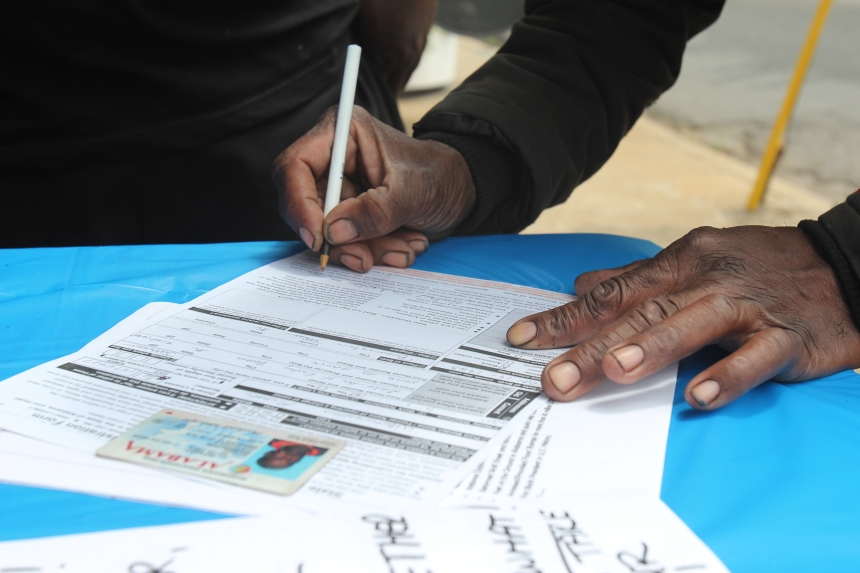
A civil rights group has filed a lawsuit against the state of Alabama, claiming that its law requiring voters to have photo identification will prevent thousands from casting ballots. The National Association for the Advancement of Colored People and Greater Birmingham Ministries filed the federal lawsuit Wednesday. The lawsuit cites state estimates that at least 280,000 people will be disenfranchised because of the law. The complaint says those affected are disproportionately black and Hispanic, and it says that amounts to intentional racial discrimination. The state attorney general’s office had no immediate comment. A requirement that went into effect last year requires voters to show valid, state-issued photo identification at polling places. The state’s Republican-controlled Legislature approved the law in 2011, saying it was meant to prevent fraud. Republished with permission of The Associated Press.
