
Greenetrack will reopen tonight
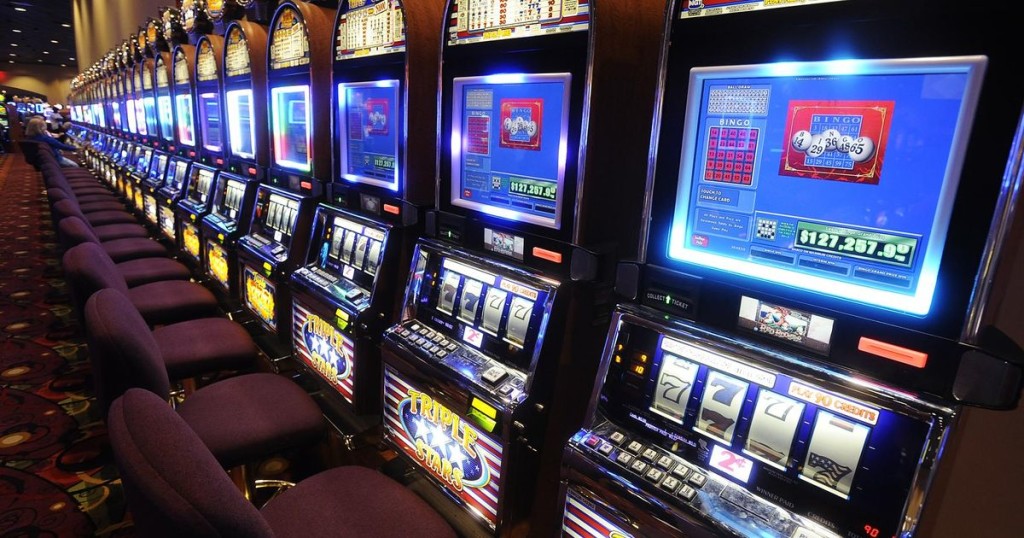
Greenetrack will hold a grand re-opening tonight of its Gaming Center. The casino closed in the aftermath of the Alabama Supreme Court decision finding for the state, stripping the “charity bingo” of its non-profit status and ordering Greenetrack to pay $76 million in disputed back taxes. Greenetrack is reopening on very shaky legal ground. The Alabama Supreme Court ruled last week that three other casinos in Lowndes and Macon County were illegal gambling halls, not bingo halls as their owners maintain. The state’s highest court remanded the case back to the lower court and ordered those judges to issue orders that those three casinos close within thirty days. The Court on Friday expounded on earlier court decisions going back to 2009 that bingo is a game played on paper cards. The court has ruled that gambling machines at the facility, very similar to the ones at Greenetrack, are (under Alabama law) illegal gambling machines and not electronic bingo machines as their operators claimed to the court. Alabama Attorney General Steve Marshall said in a statement that he was pursuing a separate court action to permanently close Greenetrack. Greenetrack CEO Luther Winn told the Tuscaloosa Thread that the casino will reopen Friday at 5 p.m. and will offer “Las Vegas-style games, mechanical reels, new titles,” and more. “We’re reopening with a product proven to be the top-growing market in the United States with historical horseracing,” Winn said, “We’ll have really nice games that are very competitive and fun to play.” Winn said Greenetrack, which employs an estimated 80 people in Eutaw, is essential to the Greene County economy. “Re-opening means that Greene County, I’m hoping, can take a deep breath, and people can depend on Greenetrack again for employment for years to come,” Winn said. The Alabama Constitution of 1901 outlaws games of chance. That 121-year-old document has not been reversed. Confusion entered into the law when certain counties, including Greene, Macon, Jefferson, and Mobile, passed local county-wide constitutional amendments allowing dog and/or horse racing in Alabama. Greenetrack opened as a dog track where people could bet on live dog races. That was followed by amendments allowing charity bingo. Over time, the tracks went to bingo and then put in electronic bingo machines, which state officials allowed. The Poarch Band of Creek Indians (PCI), Alabama’s only federally recognized Indian tribe, asked for and got a license from the U.S. Bureau of Indian Affairs to build their own “electronic bingo” halls in Atmore and Wetumpka under the 1986 Indian Gaming Act. Then-Attorney General Troy King issued an attorney general’s opinion that affirmed that electronic bingo was legal under the charity bingo amendments to the Alabama Constitution. Then Gov. Bob Riley appointed Mobile County District Attorney John Tyson, a political rival of King’s, to head a gambling task force that began seizing the electronic gambling machines. The Alabama Supreme Court found that Riley and Tyson were correct and that bingo cannot be played on a machine. Robert Bentley followed Riley as Governor, closed down the Governor’s gambling task force, and issued an executive order that prohibited state troopers from enforcing the law against gaming. Gov. Kay Ivey has continued the Bentley policy on gambling. In 2020 the Governor’s task force on gambling issued a lengthy report urging the Legislature to pass legislation allowing the current casinos to operate legally and impose a state lottery. State Sens. Greg Albritton and Del Marsh both separately brought the governor’s legislation, and it passed the State Senate in 2021 and 2022. The Alabama House of Representatives did not. Gov. Ivey has said that her greatest regret from her first term is that the Legislature has not passed gambling legislation. Marshall, meanwhile, has pursued legal actions to shut down the casinos. The Greenetrack Gaming Center has been in the process of remodeling and refurbishing its gambling machines since August. It reopens tonight, but its legality and its future remain in doubt. To connect with the author of this story, or to comment, email brandonmreporter@gmail.com.
Alabama Supreme Court says state can seize over 800 Greenetrack bingo machines

The Alabama Supreme Court has reversed a lower court and says the state can seize more than 800 electronic bingo machines from a west Alabama gambling hall. The unanimous decision released Friday involves the Greenetrack gambling facility, located in Greene County southwest of Birmingham. The justices say that 825 machines confiscated from Greenetrack amount to illegal slot machines under state law. The justices rejected arguments that the machines are legal under laws that regulate bingo games. And they cited a previous ruling which said it’s time to enforce Alabama laws against electronic gambling machines. The decision overturns a lower court ruling which ordered the state to return gaming machines seized in 2010. That judge said the machines complied with a local constitutional amendment authorizing electronic bingo machines in Greene County. Republished with permission of The Associated Press.
VictoryLand electronic bingo machine bill fails in Senate
A bill that would have allowed electronic gambling machines at VictoryLand dog track failed on a procedural vote Tuesday night in the Alabama Senate. Filed by Sen. Billy Beasley (D-Clayton), SB320 — which would allow VictoryLand in Macon County to operate the same bingo machines being used by the Poarch Creek Indians at casinos in Wetumpka, Atmore and Montgomery — was narrowly supported 14-13 for debate, however, a three-fifths majority is required to debate bills before lawmakers pass state budgets. Beasley said the bill would stand to reinforce the current amendment allowing bingo in the county and help to recoup the more than 2,000 jobs lost when the gambling hall was closed down. Late last month, the Alabama Supreme Court ruled once again that electronic bingo is illegal in the Yellowhammer state, making the bill’s passage necessary to continue operations at VictoryLand. VictoryLand owner Milton McGregor has said he plans to reopen despite losing a three-year legal battle over the legality of electronic bingo machines. The VictoryLand bill was the second electronic bingo bill to fall short in the Alabama Senate this month. Last week, a proposal by Sen. Bobby Singleton (D-Greensboro) to add an amendment to the state constitution that would keep GreeneTrack’s bingo casino operational failed by four votes shy of the necessary 21.
GreeneTrack casino constitutional amendment fails in Alabama Senate
A proposal to add an amendment to the state constitution that would keep GreeneTrack’s bingo casino operational has failed. The amendment, sponsored by Sen. Bobby Singleton (D-Greensboro), failed Wednesday four votes shy of the necessary 21. Earlier this month, the Alabama Supreme Court’s ruled once again that electronic bingo is illegal in the Yellowhammer state, making the amendment’s passage necessary to continue operations at GreeneTrack. Singleton’s amendment would have limited “bingo gaming” in Greene County to “a licensed racetrack where pari-mutuel wagering is currently legal”; defined bingo to allow it to be played on electronic machines; and it would have transferred oversight of bingo from the sheriff to a Greene County Gaming Commission.
Committees OK bills to allow Alabama casinos to operate bingo machines

Committees approved two bills Wednesday aimed at gambling halls VictoryLand and GreeneTrack to resume operations without interference from state law enforcement. The Senate Committee on Tourism and Marketing approved SB320 from Sen. William Beasley (D-Clayton), which would allow VictoryLand in Macon County to operate the same bingo machines being used by the Poarch Creek Indians at casinos in Wetumpka, Atmore and Montgomery. Beasley’s bill would codify the legality of the machines and allow the now-closed casino to resume normal operations. He said the bill would stand to reinforce the current amendment allowing bingo in the county and help to recoup the more than 2,000 jobs lost when the gambling hall was closed down. The bill was approved with little discussion. The House Committee on Economic Development and Tourism approved HB419 from Rep. Artis McCampbell (D-Livingston), does essentially the same thing as Beasley’s: It codifies the legality of bingo on electronic devices used by Native American casinos and establishes a gaming commission to oversee the operations. However, McCampbell’s legislation is a constitutional amendment, which means that, if it is passed by the legislature, the voters of Greene County would have the final say in whether or not is in enacted. Beasley’s bill will have to go before the governor if it is able to clear the legislature. Gov. Robert Bentley said last year that he has no further plans to go after gambling operations in the state. Further, Attorney General Luther Strange, who had previously taken the lead in unraveling many state gaming operations, has demonstrated an unwillingness to attack such operations recently. The two bills aim to ensure that the gambling halls are safe from prosecution once Bentley’s time has expired. After gaining favorable reports, both bills are slated to go before their respective houses when the legislative session resumes April 5.
