
Texas erects more wire barriers along Rio Grande River as lawsuit continues
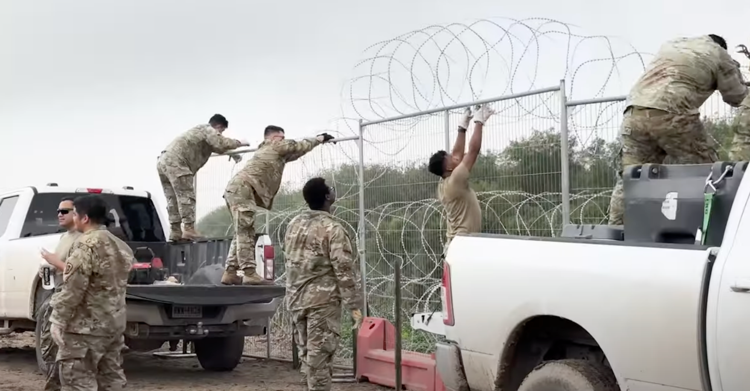
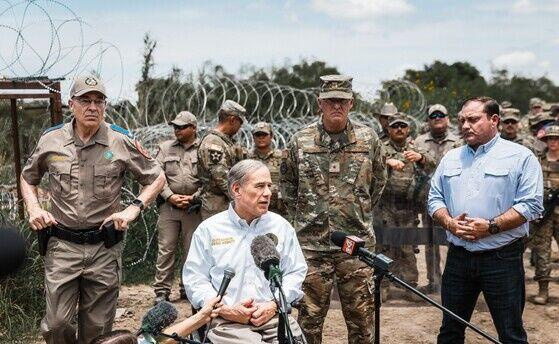
As Texas’ lawsuit continues against the federal government over its right to defend its border, Texas National Guard soldiers continue to erect concertina wire barriers along the Rio Grande River. The Fifth Circuit U.S. Court of Appeals recently handed Texas a temporary win in the lawsuit, staying its own court panel’s previous ruling, and blocking the federal government from taking down or destroying Texas’ barrier. In October, Texas sued the Biden administration after Border Patrol agents began bulldozing concertina wire barriers on Texas soil to allow foreign nationals to illegally enter Texas between ports of entry. A district judge initially issued a temporary restraining order, blocking the federal government from destroying Texas’ concertina barriers, then reversed her ruling allowing them to do so. Texas appealed and a Fifth Circuit panel of judges initially stayed the district court ruling until they heard the case. They then reversed course, siding with the district judge. Texas then appealed to the full Fifth Circuit, which recently issued a stay until the entire court could hear the case. Gov. Greg Abbott has argued that Texas has a right to defend its sovereign border and is prepared to go all the way to the U.S. Supreme Court. In the meantime, Abbott says, “Texas National Guard soldiers continue to install and reinforce razor wire barriers along the Texas-Mexico border. While [President Joe] Biden’s dereliction of duty at the border continues, Texas holds the line.” This week in Brownsville, Texas National Guard Engineer Special Response Teams repaired existing concertina wire barriers damaged by illegal crossers and installed a new anti-climb barrier (ACB), which is a fence erected behind the concertina barrier. The concertina barrier is in place along the riverbank close to the water to prevent illegal entry after someone swims or walks across the river, depending on the location. Some have thrown blankets, clothes, or towels to climb over the concertina barrier. Others use wire clippers to cut pieces to tear down or to cut holes to climb through. The ACB is comprised of connected 8-foot by 12-foot gates, reinforced by concertina wire, “to make it even more anti-climb,” Capt. Chris Daniel, SRT-1 officer in charge explained in a video published by the Texas Military Department. “There’s a heavy amount of cutting” in the Brownsville area, he said. “We have bad actors that are coming, opening up the wire allowing traffic to move through as we lay more wire in. The ACB reinforcement with the c-wire will slow that down a little bit. They’re going to have to do a lot more cutting to get through the ACB. They absolutely can’t manipulate it or push it down by putting clothes on it. Climbing will be a very hard task for them to complete. We’re trying to create a barrier that’s going to allow” Operation Lone Star officers to intercept “bad actors, stop them from being able to manipulate these barriers,” he said. OLS efforts continue after the Texas Legislature allocated over $11.5 billion towards border security efforts, including $1.5 billion recently allocated to continue building Texas’ first border wall. They also continue after Texas has borne the brunt of illegal border crossings, with at least over 1.9 million people illegally entering Texas since President Joe Biden’s been in office, according to data first reported by The Center Square.
Fifth Circuit stays its own ruling on Texas concertina wire barrier lawsuit
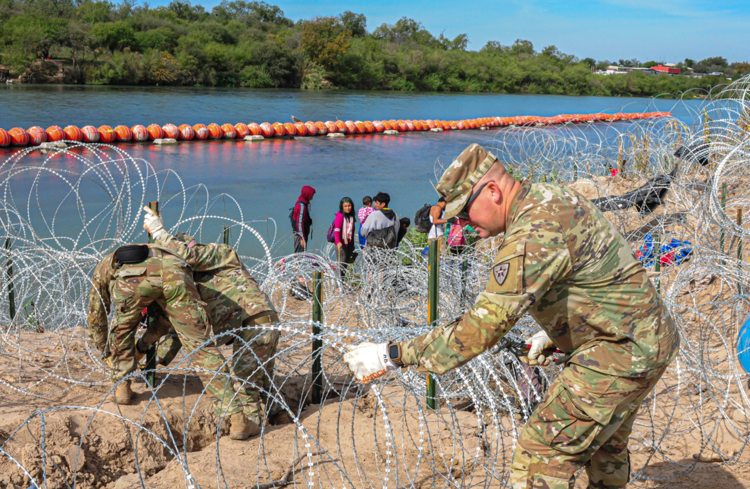
By Bethany Blankley | The Center Square contributor In what has been back-and-forth rulings among the courts, the Fifth Circuit Court of Appeals on Monday overturned its previous ruling, issuing an administrative stay in a case filed by Texas over the federal government tearing down concertina wire border fencing. In October, Texas and the Texas Public Policy Foundation sued the Biden administration after Border Patrol agents began bulldozing concertina wire barriers on Texas soil to allow foreign nationals to illegally enter Texas between ports of entry. The district judge in the border town of Del Rio, Texas, initially granted Texas’ request and issued a temporary restraining order, blocking the federal government from destroying Texas’ concertina barriers. The judge then reversed course, after a recent hearing, and lifted the TRO. Texas appealed to the Fifth Circuit and two of three judges on a panel affirmed the lower court’s ruling. Texas then appealed to the full court to hear its case. In Monday’s ruling, the court granted Texas’ request for a TRO. It also set a deadline for a response to the motion by 5 p.m. Friday, Dec. 8. The TRO prohibits the federal government from damaging Texas’ concertina wire fencing as the U.S. Department of Justice prepares a response to Texas’s motion for an injunction pending appeal of the district court’s order. Gov. Greg Abbott has argued that Texas has a right to defend its sovereign border and will take the issue all the way to the U.S. Supreme Court. This is one of three recent lawsuits related to Texas border barriers installed as part of Abbott’s border security mission, Operation Lone Star. Two are before the Fifth Circuit Court of Appeals in New Orleans. Another lawsuit before the Fifth Circuit was filed by the federal government against Texas after Abbott installed marine barriers in the Rio Grande River south of Eagle Pass in response to an ongoing surge of illegal border crossers in the area. A district court first ordered Texas to move the marine barriers closer to its shoreline, which The Center Square first reported. Confusion about the case resulted from multiple news outlets misreporting that the court ordered Texas to remove the buoys altogether. Texas appealed the district court’s ruling, and the Fifth Circuit stayed the ruling until it heard the case, then reversed it on Friday. The ruling put back in place the district court order, which issued a preliminary injunction requiring Texas to “cease work on the barrier and shift it to the Texas riverbank.” Abbott said Friday night, “The 5th Cir. Court of Appeals’ denial of Texas’ sovereign authority to secure the border with floating marine barriers is clearly wrong.” Texas then sought an immediate rehearing by the full court. “We’ll go to SCOTUS if needed to protect Texas from Biden’s open borders,” Abbott said. In the meantime, Texas National Guard soldiers are continuing to install concertina wire on Texas soil along the Rio Grande River through OLS. “Texas National Guard soldiers continue to install and reinforce razor wire barriers along the Texas-Mexico border,” Abbott said. “While [President Joe] Biden’s dereliction of duty at the border continues, Texas holds the line.” Texas is also continuing to build its own border wall. “Texas is the first and ONLY state in America to build our own border wall. While Biden refuses to enforce federal immigration laws, Texas will use every tool and strategy to secure the border,” he said. Texas is the first and ONLY state in America to build our own border wall.While Biden refuses to enforce federal immigration laws, Texas will use every tool and strategy to secure the border. pic.twitter.com/jTgdf4xf9n— Greg Abbott (@GregAbbott_TX) December 4, 2023 As of last month, since Abbott launched Operation Lone Star, Texas law enforcement officers have apprehended nearly 500,000 illegal foreign nationals and made over 36,600 criminal arrests, with more than 33,200 felony charges reported. Texas law enforcement officers have also seized more than 435 million lethal doses of fentanyl, enough to kill more than the combined populations of Canada and the United States. Republished with the permission of The Center Square.
Texas Gov. Greg Abbott: More than 50,000 illegal border crossers bused to sanctuary cities
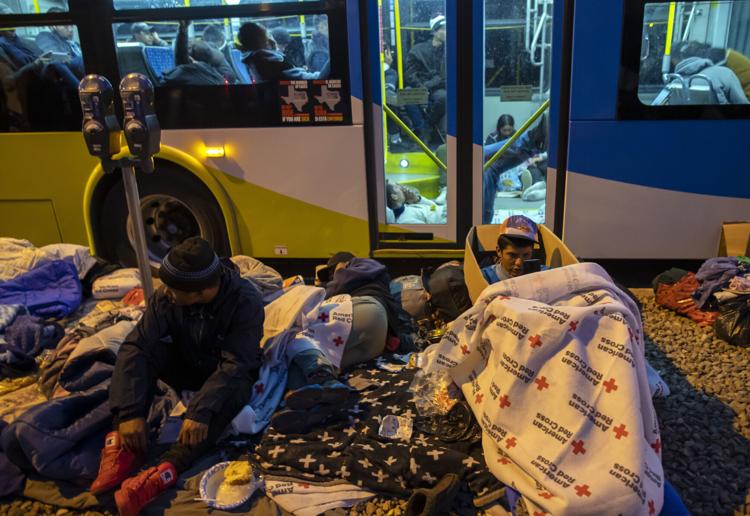
By Bethany Blankley | The Center Square contributor Texas has bused more than 50,000 people who’ve illegally entered the U.S. and were unlawfully released into the U.S., Gov. Greg Abbott said Friday. The majority have been bused to New York City, followed by Chicago, Washington, D.C., Philadelphia, Denver, and Los Angeles. Abbott began the busing strategy in April 2022. He first sent foreign nationals who illegally entered the U.S. in Texas to Washington, D.C. Since then, over 12,500 people chose to be transported to the nation’s capital. Last year, he expanded the strategy to send people to New York City, Chicago, and, Philadelphia. Since last August, Texas bused more than 18,500 people to New York City and over 13,500 people to Chicago. Since last November, Texas bused over 3,200 people to Philadelphia. This year, he began busing people to Denver and Los Angeles. So far, more than 3,200 people have arrived in Denver since May 18 and over 940 to Los Angeles since June 14. The governor recently directed additional buses to Eagle Pass and El Paso, Texas, after a surge of people came roughly two weeks ago. He said he was sending them to self-declared sanctuary cities to provide much-needed relief to overrun Texas border towns. “Until President [Joe] Biden upholds his constitutional duty to secure America’s southern border, Texas will continue to deploy as many buses as needed to relieve the strain caused by the surge of illegal crossings,” Abbott said. Adults must sign a waiver for themselves and minors under their care, provide their Department of Homeland Security documentation, and choose which of the six self-described sanctuary cities they want to go to. Texas border mayors and county judges have been instructed to notify the Texas Department of Emergency Management of any DHS-facilitated drop-off in their communities so the agency can help move people out of Texas. The majority seeking Texas-taxpayer-funded transportation north are choosing to go to the cities of New York and Chicago, according to state data. The same is true for those arriving in El Paso. Chicago and New York City remain the primary destinations, however, Denver has been added as a third destination. The Democratic-led city of El Paso began its own busing strategy over a year ago, but it’s funded through money it receives from FEMA. The city says the current wave of people began arriving in April 2022; “the sudden surge began in late August.” The overwhelming majority are coming from Venezuela, roughly 70%; the remainder are from Ecuador, El Salvador, Haiti, Nicaragua, and Cuba. As of Friday, Oct. 6, the city of El Paso was releasing 1,534 border crossers into the community every day. Roughly 480 people are being bused to Chicago, New York City, and Denver every day from El Paso. Every day, five charter buses full of people are leaving El Paso and arriving in Chicago. New York City and Denver are each receiving three charter buses full of people a day, according to city data. Republished with the permission of The Center Square.
Democratic governors to Joe Biden: Migrant crisis is ‘untenable,’ border ‘too open’
By Greg Bishop | The Center Square Illinois Gov. J.B. Pritzker is telling President Joe Biden the number of migrants arriving to Chicago from the southern U.S. border is accelerating. The situation is overwhelming, untenable and uncoordinated, he added. In a letter Pritzker sent the White House Monday, the governor said “the humanitarian crisis is overwhelming our ability to provide aid to the refugee population.” More than 15,000 migrants have arrived in Chicago in the past 13 months. With the letter, Pritzker joined a growing list of Democrats calling on the White House to do more. “Unfortunately, the welcome and aid Illinois has been providing to these asylum seekers has not been matched with support by the federal government,” the letter first reported by Capitol Fax said. “Most critically, the federal government’s lack of intervention and coordination at the border has created an untenable situation for Illinois.” Illinois taxpayers have covered more than $330 million on services for the migrants, a number Pritzker said is growing each day. “That’s a massive amount of money for a state still overcoming the health and economic effects of COVID-19,” Pritzker said. “Add to that the over $100 million the city of Chicago contributed.” Pritzker told Biden the situation is “untenable” and “requires your immediate help beyond the coming work authorizations for some of the asylum seekers.” The Biden administration should have one person provide oversight of the nation’s efforts at the border, Pritzker said, noting there are too many different federal department contacts who are not coordinated with each other. “A single office with an identified leader must be assigned to work for the cities and states across the silos of government to manage the challenges we all face,” Pritzker said. “It is time for the federal government to take a much more active role in managing the transport and destination of the transport of asylum seekers.” Pritzker said it is untenable to allow “just one state to lay the burden upon a certain few states run by Democrats …” While Texas Gov. Greg Abbott, a Republican, has been critical of Biden’s handling of the border by overseeing transportation of migrants crossing the southern U.S. border to Chicago, New York City, Washington D.C., and elsewhere, Democratic Mayor of El Paso Oscar Leeser has also been involved. In Arizona Monday, Gov. Katie Hobbs also expressed frustration with the flood of illegal border crossers and told The Center Square that the busing policy of some migrants from Arizona to other areas of the country is still in effect. “Yeah. As we’re seeing increases in folks coming in the NGO network at their capacity, we’re continuing to provide support, and that includes busing,” she said. In New York, a senior advisor to New York City Mayor Eric Adams urged Biden to “close the border.” “The federal government needs to do its job,” Adams’ advisor Ingrid Lewis-Martin told PIX 11. “We need the federal government, the Congress members, the Senate, and the president to do its job: Close the borders.” New York Gov. Kathy Hochul told CBS Sunday that the border “is too open right now.” “People coming from all over the world are finding their way through, simply saying they need asylum, and the majority of them seem to be ending up in the streets of New York, and that is a real problem for New York City,” she said. White House press secretary Karine Jean-Pierre addressed border security concerns. “You have a president that has delivered record funding, record funding to make sure that we have additional … border patrol federal employees at the border,” Jean-Pierre said. “We’ve made clear that attempting to cross the border unlawfully will result in prompt removal, a five-year ban on reentry, and potential criminal prosecution.” Among other recommendations Pritzker offered Biden include waiving fees for temporary protected status applications, increasing the logistical coordination and data collection, provide financial support to state, local government and non-government organizations for housing, food and social services, and approve Illinois’ requests for Medicaid waivers, housing vouchers, and federal coordination and support. “Today, Illinois stands mostly unsupported against this enormous strain on our state resources,” Pritzker said. “Mr. President, I urge you … and the rest of your administration to take swift action.” Republished with the permission of The Center Square.
Joe Biden looks to provide relief from extreme heat as record temperatures persist

With millions of Americans facing broiling heat across the Southwest, President Joe Biden on Thursday plans to announce new steps to improve weather forecasts and make drinking water more accessible, according to the White House. He’ll be joined by the leaders of the Federal Emergency Management Agency and the National Oceanic and Atmospheric Administration. Karine Jean-Pierre, the White House press secretary, described the heat wave as “a difficult time” and said Biden was treating climate change with “the urgency it requires.” Climate activists and some Democrats have pushed Biden to declare a climate “emergency,” but the White House has resisted. The mayors of Phoenix and San Antonio, two cities that have suffered from the heat waves, are expected to participate in the White House event virtually. Phoenix has seen at least 26 days in a row of temperatures exceeding 110 degrees. Maricopa County, where the city is located, reported recently that there were 18 heat-associated deaths between April 11 and July 15. Another 69 deaths remain under investigation. There were 425 heat-associated deaths in the county last year. San Antonio saw 15 straight days of 100-plus degrees. At least 13 deaths in Texas have been blamed on the extreme heat. Thursday’s announcement follows other steps that the administration has taken to adapt to increasing threats from extreme heat. Among those it is highlighting: The Department of Labor is developing a standard for how workplaces deal with heat. The proposed rule by the Occupational Safety and Health Administration would require employers to provide adequate water and rest breaks to outdoor workers, as well as medical services and training to address signs and symptoms of heat-related illness. OSHA is holding meetings this summer to hear comments on how the heat standard would affect small businesses. In order to keep low-income populations cool, the Department of Health and Human Services expanded its Low Income Home Energy Assistance Program to provide more access to air conditioning and cooling centers such as libraries, senior centers, or other public buildings. The Environmental Protection Agency also has provided assistance to help communities develop cooling centers within schools. The National Oceanic and Atmospheric Administration has been helping cities and towns map “heat islands” with dense buildings and fewer trees, and the Department of Agriculture issued guidance for creating more tree canopy coverage, which helps with cooling environments. In addition, the administration launched a website called heat.gov with interactive maps, weather forecasts and tips for keeping cool amid record-breaking heat. More than 100 members of Congress, led by Texas Democratic Reps. Greg Casar and Sylvia Garcia, and Rep. Judy Chu, D-Calif., have called on the administration to implement the new heat standard for outdoor workers as quickly as possible. “We know extreme weather events such as heat waves are becoming more frequent and more dangerous due to climate change. Urgent action is needed to prevent more deaths,″ the lawmakers wrote in a letter Monday. The United Farm Workers and other groups also called on OSHA to immediately issue a nationwide rule protecting outdoor workers after farm worker deaths this month in Florida and Arizona. “Farm workers need and deserve the access to shade, water, and paid breaks,’’ said UFW President Teresa Romero. “How many more workers will we let dangerous heat and callous employers kill before this nation acts?” Douglas Parker, assistant Labor secretary for occupational safety and health, called heat illness prevention a top priority. As OSHA works toward a final rule, the agency is enhancing enforcement efforts “to make sure employers and workers understand the dangers of heat illness and how to prevent it,’’ Parker said in a statement. Casar, 34, a freshman lawmaker from Austin, staged a “thirst strike” Tuesday outside the U.S. Capitol, forgoing water breaks for nearly nine hours, to protest a new Texas law that bans local governments from requiring water breaks and other safety measures for outdoor workers. Casar called the law “insane″ and accused Republican Gov. Greg Abbott of being “on the wrong side of history.’’ At least 42 workers died in Texas between 2011 and 2021 from environmental heat exposure, according to the U.S. Bureau of Labor Statistics. “Democrats are going to stand up for common sense and for working people,″ Casar said. Ladd Keith, an assistant professor at the University of Arizona who studies heat policy and governance, said the record-breaking heat much of the nation is experiencing “is very much in line with climate change projections.” While not surprising, “they’re certainly a continuation of a concerning trend of climate impacts that we’ve seen,” he said. Despite the recent headlines, rising temperatures have typically not received the same level of attention as other climate risks, such as flooding and wildfires. Keith said. “Heat has just not been a topic at the national level or local level that we’ve even considered addressing until the last couple of years,” he said. However, Keith said the administration has ramped up its focus because of searing weather events, such as the heat dome in the Pacific Northwest in 2021 that prompted record temperatures and dozens of deaths across the region. OSHA fined a Florida farm supervisor last month for exposing workers to excessive heat after a 28-year-old worker from Mexico died at a farm in Parkland, Florida. Investigators determined the worker’s death could have been prevented if a labor contractor had followed established safety practices regarding heat-related hazards. Republished with the permission of The Associated Press.
DOJ sues Texas over Rio Grande barriers; Greg Abbott says feds ‘left me no other choice’
On the same day the U.S. Department of Justice filed a civil complaint against Texas over a floating barrier of buoys strung together in the Rio Grande River, Gov. Greg Abbott sent a letter to President Joe Biden saying that Texas has a right to defend its border. The Department of Justice said the floating barrier was constructed without federal authorization as required under the Rivers and Harbors Act and creates a humanitarian threat. The complaint seeks to stop construction of the barrier and to require Texas to remove it. But Abbott is having none of it. The Texas governor’s formal letter sent Monday is a follow-up to the notice he gave on Friday in response to the DOJ saying its civil action was coming. DOJ’s lawsuit also was filed Monday. Abbott’s two-page letter copies Attorney General Merrick Garland and three Texas officials: the provisional attorney general and heads of the Texas Military Department and Department of Public Safety. He also includes copies of two letters he previously sent to the president, the first of which was sent last November explaining Texas’ constitutional right to secure its border. The second he hand-delivered on January 8, 2023, outlining solutions the president could take immediately to secure the border. Abbott, a former Texas Supreme Court justice, wrote, “In accordance with Article I, § 10, Clause 3 of the U.S. Constitution, I have asserted Texas’s “sovereign interest in protecting [her] borders,” citing Justice Antonin Scalia’s dissent in the 2012 U.S. Supreme Court case, Arizona v. United States. “I have done so in my role as the commander-in-chief of our State’s militia under Article IV, § 7 of the Texas Constitution,” citing a ruling in the 2023 case, Abbott v. Biden, when the federal judge in this case held that “the Constitution forbids President Biden from bypassing the States [and] stepping into Governor Abbott’s shoes.” Abbott also states that the president’s “ongoing violation of Article IV, § 4 of the U.S. Constitution has left me no other choice” than to secure the Texas border and block illegal entry. He also points to arguments he made in the letters he previously sent and reiterates what he told the president in El Paso, Texas, on January 8: “All of this is happening because you have violated your constitutional obligation to defend the States against invasion through faithful execution of federal laws.” In response to DOJ attorneys claiming Texas’s floating marine barriers violate Section 10 of the Rivers and Harbors Act, Abbott says their analysis “misses the mark. In that statute, Congress decreed that ‘it shall not be lawful to build . . . any wharf, pier, dolphin, boom, weir, breakwater, bulkhead, jetty, or other structures in any . . . water of the United States.’ “To state the obvious, that statute does not describe any action by the State of Texas.” Texas began the Rio Grande initiative to prevent illegal entry on state land between ports of entry. Abbott also places the blame on Biden for any humanitarian crisis at the border. Responding to DOJ attorney accusations, he writes, “Mr. President, your finger points in the wrong direction. Neither of us wants to see another death in the Rio Grande River. Yet your open-border policies encourage migrants to risk their lives by crossing illegally through the water instead of safely and legally at a port of entry. Nobody drowns on a bridge. “If you truly care about human life, you must begin enforcing federal immigration laws,” he continued. “By doing so, you can help me stop migrants from wagering their lives in the waters of the Rio Grande River. You can also help me save Texans, and indeed all Americans, from deadly drugs like fentanyl, cartel violence, and the horrors of human trafficking.” The letter came as over 175,000 foreign nationals were reported illegally entering the southern border alone in June, including at least 70,200 in Texas, and as Department of Homeland Security Secretary Alejandro Mayorkas continues to claim the border is secure. Republished with the permission of The Center Square.
International coalition calls for new U.S. policy strategy with Mexico
An international coalition, led by the Texas Public Policy Foundation, is calling on office holders and policymakers in Washington, D.C., to alter its policy with Mexico. The newly formed Conservative U.S.-Mexico Policy Coalition argues “the old policy consensus that undergirded NAFTA, USMCA, and a generation of cooperative and friendly U.S.-Mexico relations has collapsed. The Mexican government is not an ally to the United States and can no longer properly be described as a partner.” “The Mexican government and Mexican criminal cartels exist in conscious and willing symbiosis, at multiple levels, up to and including the Mexican presidency,” the group argues, which is devastating the lives of citizens of Mexico and the United States. “The current president of Mexico has expressed his openness to a pact with the cartels and spoken of his willingness to defend them from American action,” the group argues. As a result, the Mexican government “is failing in its obligation to exercise full sovereignty over its own territory and citizenry,” and is “failing in its obligation to preserve its territory from use as a base of operations against its neighbors,” referring primarily to Texas, New Mexico, Arizona and California. In response to the ongoing border crisis, Texas Gov. Greg Abbott and the Texas legislature have committed to protect the sovereignty of Texas. For the first time in Texas history, they designated Mexican cartels as Foreign Terrorist Organizations. Abbott is also expected to call a special legislative session for the legislature to pass other border security measures. TPPF president Greg Sindelar last September argued that “until Mexico is a good neighbor, Texas must act” and declare an invasion. So far, the judges and commissioners of at least 46 counties have declared an invasion. TPPF’s Chief of Intelligence and Research, Josh Treviño, told The Center Square the coalition’s call was important because “policy must be based in reality, and when it isn’t, policy fails. Nowhere have we failed to develop policy informed by reality more than in our relationship with Mexico. The Mexican state is not a partner, not an ally, and not a friend, yet Washington DC continues to pretend it is – and unnumbered Americans and Mexicans alike suffer for it. “It is past time we understand Mexico as it is – and make policy accordingly. When we do that, we start to move toward the solutions both countries need – and build a future that is now out of reach.” In addition to TPPF, the coalition includes The Heritage Foundation, Center for Renewing America, Fundación Patria Unida, Center for a Secure Free Society, and America First Policy Institute. The group also argues that the Mexican government is “a willing partner in a regional authoritarian leftist alliance that is fundamentally anti-American, actively interventionist, and increasingly an arena and base for hostile powers from outside the Western Hemisphere.” Mexico’s president is also “actively interfer[ing] in the domestic electoral process of the United States,” the coalition maintains. Mexican President Manuel Lopez Obrador recently called on Americans to not vote for Florida Gov. Ron DeSantis after Florida passed one of the strongest immigration reform and border security bills in the country. After the state’s E-verify law went into effect July 1, Mexico’s Foreign Relations Department said the Florida law “will affect the human rights of thousands of people, Mexican girls and boys, exacerbating hostile situations that could result in hate crimes against the migrant community.” Florida has begun investigating human trafficking, including of children, from Mexico into the U.S. Violations of child labor laws, and allegations of human trafficking and sex trafficking of minors, including of unaccompanied minors released into the U.S. by the Biden administration, has resulted in several federal and state investigations. On the same day, the coalition made its announcement, Lopez Obrador also publicly called for “compatriots” in the U.S. to not vote for Abbott or members of the Texas legislature because of Operation Lone Star’s effectiveness in preventing illegal entry along the Rio Grande River. Abbot is not up for reelection. He is currently serving the beginning of his third term, after he was resoundingly reelected in November. Since Abbott launched OLS in March 2021, OLS officers working in Texas alone have apprehended more than 390,500 illegal foreign nationals, and made over 30,800 criminal arrests, with more than 28,700 felony charges reported. They’ve also seized over 421 million lethal doses of fentanyl pouring through the Texas-Mexico border, enough to kill more than everyone in the United States. Republished with the permission of The Center Square.
Republican governors ask Biden administration to rescind Title IX guidance

Twenty-five of the nation’s 26 Republican governors have asked the Biden administration to shelve its intent to expand Title IX protections to transgender athletes. The letter, led by the signature of Mississippi Gov. Tate Reeves, says the U.S. Department of Education’s proposed regulation should be withdrawn pending litigation that could be addressed by the U.S. Supreme Court. “The Department’s proposed regulation would attempt to coerce compliance with an uncertain, fluid, and completely subjective standard that is based on a highly politicized gender ideology,” the letter reads. The letter comes as the public comment period ends Monday on a proposed revision to Title IX that would ban state and local governments from prohibiting transgender students from participating on sports teams aligned with their gender identity. Title IX was created to increase opportunities for female athletes. Federal funds can be withheld from those found to be in violation. The law, which was passed in 1972, prohibits discrimination based on sex for school districts, universities, museums, and other educational institutions that receive federal funds. “Compelling a subjective, athlete-by-athlete analysis controlled by a student’s self-identified ‘gender identity’ enforced under threat of Department retribution affords no clarity,” the letter reads. “It does the opposite. This ‘fluid’ subjective standard ensures chaos and confusion in schools and will no doubt result in protracted and disruptive litigation.” Twenty-one states prohibit transgender students from participating on sports teams that do not align with their biological sex at birth, according to the Movement Advancement Project that tracks state policies. The letter was signed by Alabama Gov. Kay Ivey, Alaska Gov. Mike Dunleavy, Arkansas Gov. Sarah Sanders, Florida Gov. Ron DeSantis, Georgia Gov. Brian Kemp, Idaho Gov. Brad Little, Indiana Gov. Eric Holcomb, Iowa Gov. Kim Reynolds, Missouri Gov. Mike Parson, Montana Gov. Greg Gianforte, Nebraska Gov. Jim Pillen, Nevada Gov. Joe Lombardo, New Hampshire Gov. Chris Sununu, North Dakota Gov. Doug Burgum, Ohio Gov. Mike DeWine, Oklahoma Gov. Kevin Stitt, South Carolina Gov. Henry McMaster, South Dakota Gov. Kristi Noem, Tennessee Gov. Bill Lee, Texas Gov. Greg Abbott, Utah Gov. Spencer Cox, Virginia Gov. Glenn Youngkin, West Virginia Gov. Jim Justice, and Wyoming Gov. Mark Gordon. The signature of Vermont Republican Gov. Phil Scott is not on the letter. Republished with the permission of The Center Square.
Bipartisan congressional caucus forms to address fentanyl crisis
Labeling the smuggling of illicit fentanyl into the U.S. from Mexico “a national crisis,” a group of lawmakers has formed a bipartisan caucus to address the issue. Led by Republican California Reps. Ken Calvert and Darrell Issa and Democratic Reps. Joe Neguse of Colorado and Madeleine Dean of Pennsylvania, the Bipartisan Fentanyl Prevention Caucus was formed to “coordinate with members from both sides of the aisle to combat the nationwide spike in fentanyl-related overdoses and drug poisonings.” The group says it will work with federal and state law enforcement and “to educate the public and the Congress, in cooperation with prevention and awareness groups to better understand the ongoing threat of fentanyl in communities across America.” “Fentanyl is devastating the lives of Americans in every corner of our country. With fentanyl-related deaths climbing every year, we need new solutions to stop this alarming trend,” Calvert said. “This is not a partisan issue – it’s a national crisis.” Rather than pledging to end the fentanyl crisis, Calvert said he hoped the caucus would “educate Americans on the dangers of fentanyl and provide real solutions that will stop the destruction of this deadly drug.” “Fentanyl is not a new danger. But the deadly threat it poses has now reached every corner of our country, and no community is being spared,” Issa said. “The stakes could not be more clear: If we don’t win the fentanyl fight, we’re not going to just lose my community or my neighbor’s. Or any one of my colleagues. We’re going to lose this country. This caucus is needed now as we tell the truth, develop solutions, and save lives.” When announcing its formation, the caucus didn’t call on the president or Secretary of State Antony Blinken to declare Mexican cartels as Foreign Terrorist Organizations, as Texas Gov. Greg Abbott and 21 attorneys general have repeatedly done. Last September, Abbott issued an executive order designating the Sinaloa Cartel, the Jalisco New Generation Cartel, and any similarly situated Mexican drug cartels as foreign terrorist organizations” under Section 219 of the Immigration and Nationality Act. He also requested President Joe Biden do likewise, the second time he’d made the request since April 2021. In his September 21, 2022 letter, Abbott said since then, “There was no action, no response.” He’s still received no response, his office has told The Center Square. Last week, Blinken told Congress he’d consider designating cartels as FTOs. Two weeks prior, the White House said it didn’t have any intention of doing so. Republican U.S. Sens. Rick Scott of Florida and Roger Marshall of Kansas introduced the Drug Cartel Terrorist Designation Act, which Florida Attorney General Ashley Moody said will “do the job Biden refuses to do – protect the American people.” The caucus also hasn’t demanded the president designate fentanyl as a weapon of mass destruction, as 18 attorneys general have done led by Moody. Fentanyl poisoning remains the leading cause of death among adults between the ages of 18 and 45. Two milligrams, the weight of a mosquito, is lethal. In fiscal years 2021 and 2022, CBP agents confiscated enough fentanyl to kill nearly 5 billion people. Since March 2021, Texas Operation Lone Star officers have seized over 373 million lethal doses of fentanyl. Florida law enforcement officers in a few month’s time last year seized enough fentanyl to kill everyone in Florida. The U.S. Drug Enforcement Administration has issued several public alerts warning Americans about the dangers of fentanyl. Most recently it issued another public alert about the “sharp increase in the trafficking of fentanyl mixed with Xylazine,” an animal tranquilizer referred to on the streets as “Tranq.” It did so after the FDA, CDC, and multiple state agencies issued warnings about Xyzaline being detected in an increasing number of illicit drug mixtures and a growing number of overdose deaths nationwide. “Xylazine is making the deadliest drug threat our country has ever faced, fentanyl, even deadlier,” DEA Administrator Anne Milgram said. DEA has so far seized Xylazine and fentanyl mixtures in 48 of 50 states. Caucus members also include Angie Craig (D-MN), Chris Pappas (D-NH), Raja Krishnamoorthi (D-IL), Melanie Stansbury (D-NM), Chrissy Houlahan (D-PA), Ruben Gallego (D-TX), Nikki Budzinski (D-IL), Marc Veasey (D-TX), Sheila Jackson Lee (D-TX), Raúl Grijalva (D-AZ), Doug Lamborn (R-CO), Sharice Davids (D-KS), Don Bacon (R-NE), Claudia Tenney (R-NY), Andre Carson (D-IN), Ralph Norman (R-SC), Chris Smith (R-NJ), Lance Gooden (R-TX), Bob Latta (R-OH), Andy Biggs (R-AZ), Jake LaTurner (R-KS), Barry Moore (R-AL), David Valadao (R-CA), and Robert Aderholt (R-AL). Republished with the permission of The Center Square.
Twenty-one attorneys general want Joe Biden to designate Mexican cartels as Foreign Terrorist Organizations
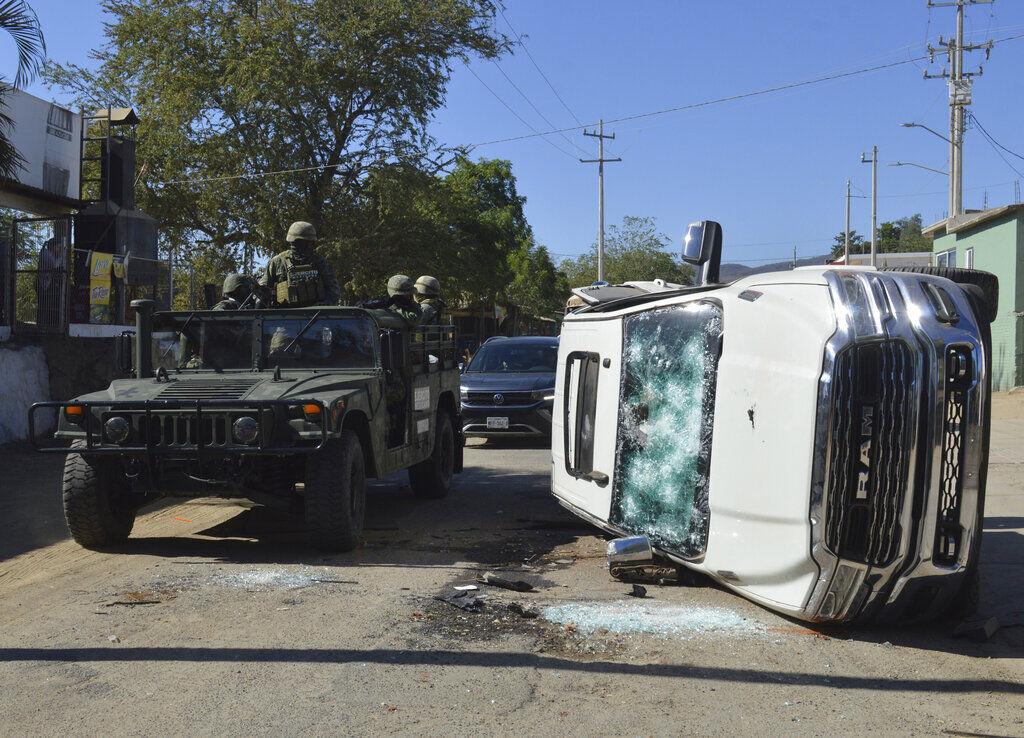
Five months after Texas Gov. Greg Abbott designated two Mexican cartels as Foreign Terrorist Organizations and called on President Joe Biden to do the same, 21 attorneys general also called on the president to do so. The attorneys general sent a letter to the president and Secretary of State Antony Blinken last week after the president’s state of the union address in which he didn’t designate illicit fentanyl as a Weapon of Mass Destruction or designate the cartels as FTOs, requests previously made by attorneys general and Gov. Abbott. Last September, Abbott issued an executive order designating the Sinaloa Cartel, the Jalisco New Generation Cartel, and any similarly situated Mexican drug cartels as foreign terrorist organizations” under Section 219 of the Immigration and Nationality Act. He also requested the president do likewise, the second time he’s made the request since April 2021. In his September 21, 2022 letter, Abbott said since then, “There was no action, no response.” “But if you are ready to make Americans safer,” he wrote the president, “it will be better late than never. As the number of American deaths continues to rise due to the cartels’ terrorist behavior, now is the time to act. We do not have more time to waste.” Still receiving no response, he’s said within one year of Joe Biden’s presidency, fentanyl had killed nearly 20 times more people than those killed in terrorist attacks over decades. Through Abbott’s Operation Lone Star, Texas law enforcement officers have seized over 360 million lethal doses of fentanyl, enough to kill more than everyone in the U.S. Florida law enforcement officers in just a few months last year also seized enough fentanyl to kill everyone in the state. Law enforcement officers in other states are seizing record amounts. While Biden mentioned last week that U.S. Customs and Border Protection agents had seized over 28,000 pounds of fentanyl, he didn’t mention they’ve done so since February 2021 or that in fiscal years 2021 and 2022, they’d seized enough fentanyl to kill nearly 5 billion people. Two milligrams, roughly the weight of a mosquito, is considered a lethal dose. The attorneys general echoed Abbott’s concerns in their letter, pointing to the fentanyl crisis being facilitated by Mexican cartels manufacturing fentanyl and trafficking it, its precursors, and other drugs laced with it through the southern border. They also point to the ruthless violence being committed by Mexican cartels on both sides of the border. Mexican cartels are “assassinating rivals and government officials, ambushing and killing Americans at the border, and engaging in an armed insurgency against the Mexican government,” the AGs write. “This dangerous terrorist activity occurring at our border will not abate unless we escalate our response.” “The Mexican drug cartels threaten our national security beyond the sale of these deadly drugs,” they continue. “Over the past decade, Mexican drug cartels have developed well-organized armed forces to protect their reprehensible trade from rivals and from the Mexican government. The existence of such forces just across our southwestern land border, and the Mexican government’s inability to control them, pose a threat to our national security far greater than a typical drug-trafficking enterprise. That threat is made greater still by the known links between the Mexican drug cartels and [FTOs] like Hezbollah, who already intend to do us harm. Our national security requires the federal government to disrupt this collaboration between cartels and terrorist groups.” Virginia Attorney General Jason Miyares led a coalition of 21 attorneys general representing the states of Alabama, Alaska, Arkansas, Florida, Georgia, Indiana, Iowa, Kentucky, Louisiana, Missouri, Montana, Nebraska, New Hampshire, Ohio, Oklahoma, South Carolina, Tennessee, Texas, Utah, and West Virginia. Miyares last year joined a coalition of 18 AGs led by Florida Attorney General Ashley Moody calling on Biden to designate fentanyl as a WMD, about which he said, “To date, no action has been taken.” In a separate statement, AG Moody said, “It’s evident that the Mexican drug cartels are terrorist organizations,” referring to them “trafficking deadly fentanyl directly across the border … killing tens of thousands of Americans,” and “fueling extreme violence at the southwest border and beyond.” “Sadly, the Biden administration has only emboldened the cartels to commit even more crimes on both sides of the border,” she said, citing a story published by The Center Square about a recent “cartel-style execution [that] occurred in California that reportedly involved a Mexican drug cartel.” She’s also called on the president to hold Mexico and China accountable for their role in creating the fentanyl crisis and has yet to hear back. The AGs argue the cartels’ “recent embrace of extreme violence further justifies their designation as an FTO.” Under 8 US Code, Section 1189, the Secretary of State may designate an organization as an FTO, which gives state and federal agencies the authority to freeze assets, deny entry to cartel members and pursue stricter punishments. Instead, President Biden said his plan to address the fentanyl crisis involved having “more drug detection machines,” implementing greater inspection of cargo to “stop pills and powder [coming in through] the border,” “working with couriers, like FedEx, to inspect more packages for drugs,” and implementing “strong penalties to crack down on fentanyl trafficking.” In response, Texas lawmakers blasted his plan, and Gov. Abbott said, “Once again, President Biden proved Texas leads, and Washington follows.” Republished with the permission of The Center Square.
25 GOP governors ask Biden administration to hit pause on broader clean water rule

Twenty-five Republican governors oppose a revised federal rule regulating U.S. waterways, citing uncertainty from an undecided U.S. Supreme Court case related to the rule. The governors sent a letter to the Biden administration on Monday asking it to delay the implementation of the revised Waters of the United States rule since the U.S. Supreme Court is currently considering Sackett v. EPA. The revised WOTUS rule, released on Dec. 30, reinstates pre-2015 water protections under the federal Clean Water Act. The rule was scaled back under the Trump administration, which triggered lawsuits from environmental groups. “The substance of the rule hinders State governments as we seek to give clarity and consistency to businesses, farms, and individuals regarding the regulatory framework for water,” the 25 GOP governors wrote. “The broad definitions used in the 514- page document only add to the confusing and complicated history of WOTUS. In fact, it appears that the EPA is seeking to regulate private ponds, ditches, and other small water features.” The U.S. Environmental Protection Agency said in December the revised rule applies to “traditional navigable waters, the territorial seas, interstate waters, as well as upstream water resources that significantly affect those waters.” “When Congress passed the Clean Water Act 50 years ago, it recognized that protecting our waters is essential to ensuring healthy communities and a thriving economy,” EPA Administrator Michael Regan said in a statement. “Following extensive stakeholder engagement, and building on what we’ve learned from previous rules, EPA is working to deliver a durable definition of WOTUS that safeguards our nation’s waters, strengthens economic opportunity, and protects people’s health while providing greater certainty for farmers, ranchers, and landowners.” The governors also questioned the timing of the new rule, given ongoing inflation. “Another burdensome and overbroad regulation from the federal government could not come at a worse time for America,” they wrote. “Having already squandered much of America’s energy independence, you should not increase costs for consumers by tying up energy production with even more red tape.” Environmental groups praised the Biden administration’s revised WOTUS rule. “This comes at a time when we’re seeing unprecedented attacks on federal clean water protections by polluters and their allies,” Jon Devine, director of federal water policy for the Natural Resources Defense Council, said in a statement last month. “While the nation still has significant work to do to fully protect important waters, it’s encouraging to see the country taking a step in the right direction to protect the waters we need for everyone’s health and the environment.” The letter was signed by Idaho Gov. Brad Little, Alabama Gov. Kay Ivey, Alaska Gov. Mike Dunleavy, Arkansas Gov. Sarah Sanders, Florida Gov. Ron DeSantis, Georgia Gov. Brian Kemp, Indiana Gov. Eric Holcomb, Iowa Gov. Kim Reynolds, Mississippi Gov. Tate Reeves, Missouri Gov. Mike Parson, Montana Gov. Greg Gianforte, Nebraska Gov. Jim Pillen, Nevada Gov. Joe Lombardo, New Hampshire Gov. Chris Sununu, North Dakota Gov. Doug Burgum, Ohio Gov. Mike DeWine, Oklahoma Gov. Kevin Stitt, South Carolina Gov. Henry McMaster, South Dakota Gov. Kristi Noem, Tennessee Gov. Bill Lee, Texas Gov. Greg Abbott, Utah Gov. Spencer Cox, Virginia Gov. Glenn Youngkin, West Virginia Gov. Jim Justice, and Wyoming Gov. Mark Gordon. Republished with the permission of The Center Square.
Joe Biden walks stretch of U.S.-Mexico border, amid GOP criticism
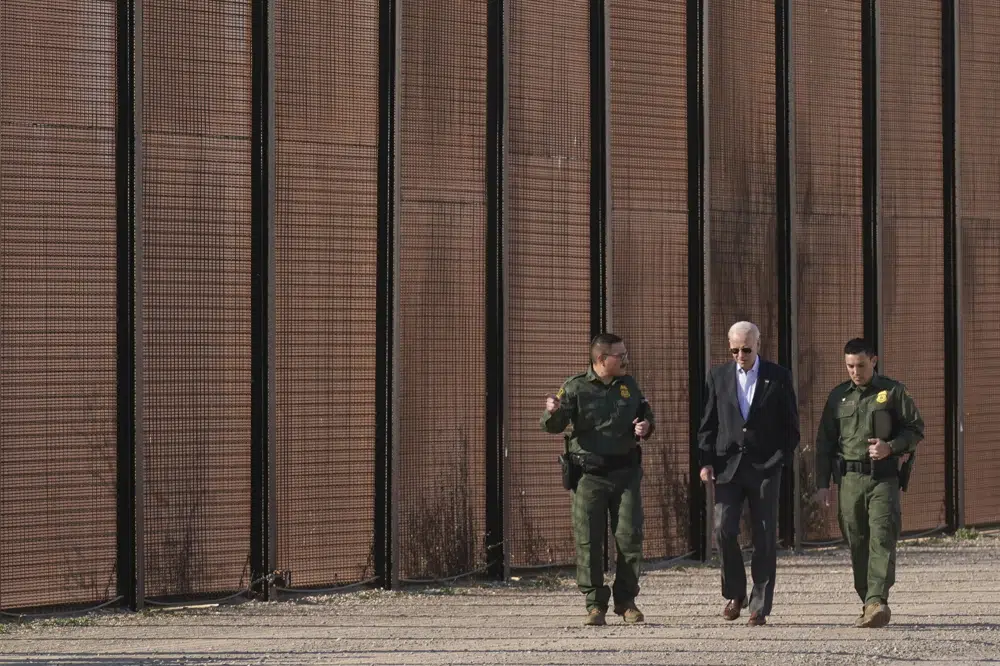
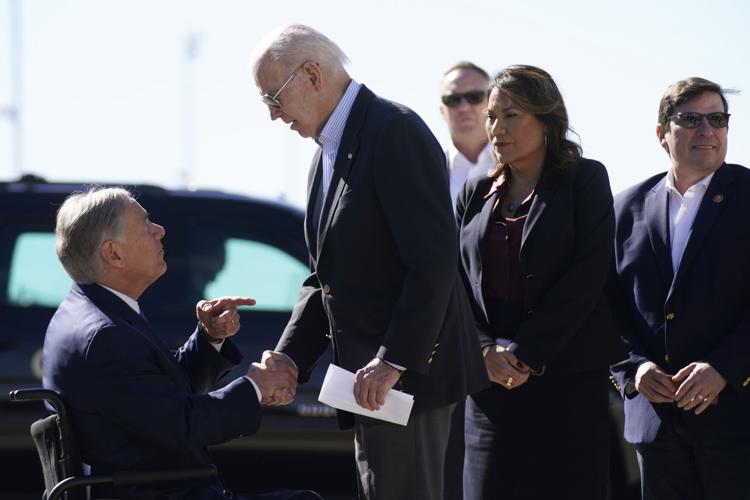
President Joe Biden walked a muddy stretch of the U.S.-Mexico border and inspected a busy port of entry Sunday on his first trip to the region after two years in office, a visit shadowed by the fraught politics of immigration as Republicans try to blame him for the record numbers of migrants crossing into the country. At his first stop, the president observed as border officers in El Paso demonstrated how they search vehicles for drugs, money, and other contraband. Next, he traveled to a dusty street with abandoned buildings and a small playground. Near the street was a metal border fence that separated the U.S. city from Ciudad Juarez. Biden walked slowly along the border wall, initially joined by two Border Patrol agents. In a sign of the deep tensions over immigration, Texas Gov. Greg Abbott, a Republican, handed Biden a letter upon his arrival in the state that said the “chaos” at the border was a “direct result” of the president’s failure to enforce federal laws. Biden later took the letter out of his jacket pocket during his tour, telling reporters, “I haven’t read it yet.” Asked what he’s learned by seeing the border firsthand and speaking with the officers who work along it, Biden said: “They need a lot of resources. We’re going to get it for them.” Immigration for years has been a serious point of conflict, exposing both the dysfunction of the U.S. system as well as the turmoil within migrants’ home countries that has pushed many to flee. Administration officials have tried to counter Republican criticism by saying Congress should work with them to increase border security funding and overhaul immigration policy. Biden was spending just a few hours in the city, which is currently the biggest corridor for illegal crossings, in large part due to Nicaraguans fleeing repression, crime, and poverty in their country. They are among migrants from four countries who are now subject to quick expulsion under new rules enacted by the Biden administration in the past week that drew strong criticism from immigration advocates. The president also was to visit the El Paso County Migrant Services Center and meet with nonprofits and religious groups that support migrants arriving to the U.S. It was not clear whether he would talk to any migrants. Biden’s announcement on border security and his visit to the border are aimed in part at quelling the political noise and blunting the impact of upcoming investigations into immigration promised by House Republicans. But any enduring solution will require action by the sharply divided Congress, where multiple efforts to enact sweeping changes have failed in recent years. From El Paso, Biden was to continue south to Mexico City, where he and the leaders of Mexico and Canada will gather on Monday and Tuesday for a North American leaders summit. Immigration is among the items on the agenda. In El Paso, where migrants congregate at bus stops and in parks before traveling on, border patrol agents stepped up security before Biden’s visit. “I think they’re trying to send a message that they’re going to more consistently check people’s documented status, and if you have not been processed they are going to pick you up,” said Ruben Garcia of the Annunciation House aid group in El Paso. Migrants and asylum-seekers fleeing violence and persecution have increasingly found that protections in the United States are available primarily to those with money or the savvy to find someone to vouch for them financially. Venezuelan migrant Jose Castillo, who said he traveled without family members for five months from his home on Margarita Island to arrive in El Paso on December 29, said he hoped Biden “will take us into consideration as the human beings we are.” Castillo was among a group of about 30 migrants who gathered for prayers Sunday morning outside the Sacred Heart Catholic Church where many of the newcomers have been camping. “We have suffered a lot since entering the jungle of the Darien Gap and passing through Mexico. It has all been a battle, battle, battle,” he said. “I know that we are here illegally, but please give us a chance.” The numbers of migrants crossing the U.S.-Mexico border has risen dramatically during Biden’s first two years in office. There were more than 2.38 million stops during the year that ended Sept. 30, the first time the number topped 2 million. The administration has struggled to clamp down on crossings, reluctant to take hard-line measures that would resemble those of former President Donald Trump’s administration. The policy changes announced this past week are Biden’s biggest move yet to contain illegal border crossings and will turn away tens of thousands of migrants arriving at the border. At the same time, 30,000 migrants per month from Cuba, Nicaragua, Haiti, and Venezuela will get the chance to come to the U.S. legally as long as they travel by plane, get a sponsor and pass background checks. The U.S. will also turn away migrants who do not seek asylum first in a country they traveled through en route to the U.S. Migrants are being asked to complete a form on a phone app so that they can go to a port of entry at a pre-scheduled date and time. Homeland Security Secretary Alejandro Mayorkas told reporters aboard Air Force One that the administration is trying to “incentivize a safe and orderly way and cut out the smuggling organizations,” saying the policies are “not a ban at all” but an attempt to protect migrants from the trauma that smuggling can create. The changes were welcomed by some, particularly leaders in cities where migrants have been massing. But Biden was excoriated by immigrant advocate groups, which accused him of taking measures modeled after those of the former president. Administration officials disputed that characterization. For all of his international travel over his 50 years in public service, Biden has not spent much time at the U.S.-Mexico border. The only visit that the White House could point to was Biden’s drive
