
Negotiations, disagreements on use of state virus funds
Alabama lawmakers, attempting to decide how to spend more than $500 million in pandemic relief funds, on Thursday generally agreed on funding broadband and water and sewer projects but disagreed about whether to steer some money to state parks. Lawmakers anticipate meeting as soon as next week in a special session called by Gov. Kay Ivey to discuss how to use the remaining $580 million from the state’s first installment from the American Rescue Plan. “You can imagine with this kind of money everybody’s at the trough,” said Sen. Del Marsh, a Republican from Anniston. Marsh said he expects the special session to happen next week, while other lawmakers only said it was a possibility. Senate President Pro Tem Greg Reed said there have been requests “on a plethora of different topics” for using the remaining $580 million. “We’re trying to make sure that we isolate on those things that have the biggest investment benefit for the future,” said Reed, a Republican from Jasper. The massive $1.9 trillion American Rescue Plan provided aid for state, local and tribal governments to help shore up their finances, pay the ongoing costs of fighting the coronavirus pandemic and invest in longer-term projects to strengthen communities. Alabama received the first half of its $2.12 billion allotment in June. The state has $580 million remaining after steering $80 million to hospitals and nursing homes and $400 million to a controversial prison construction plan. Republicans and Democrats have expressed general support for using the money for broadband, water, and sewer infrastructure and relief to health care providers, although the specifics of the plans remain under discussion. But using the money for state parks emerged as a subject of contention on Thursday. House Speaker Mac McCutcheon and other legislative leaders said one of the ideas under discussion is using a portion of the money for improvements at state parks and historic sites. Assistant House Minority Leader Merika Coleman said House Democrats had some concerns about that proposal. “What we don’t want to happen with this money is for people to use it as an opportunity for pet projects because it is an election year. The money should go to the entities that need it the most, that have been on the frontlines of this pandemic for the past two years,” said Coleman, a Democrat from Pleasant Grove. Senate Minority Leader Bobby Singleton said he thought money for parks could wait until the next round of funding when the state receives its second $1 billion allocation. “We need to deal with the pandemic,” said Singleton, a Democrat from Greensboro. “I would love to see more things that are more sustainable with this pandemic and being able to help people.” When asked about the idea, some members noted the importance of state parks to local tourism. Sen. Tim Melson, a Republican from Florence, said Joe Wheeler Park hasn’t been repaired after being struck by a tornado. “It needs to be done so we can get it back to functionality, and we can get tourism back in there,” Melson said. Lawmakers in New Mexico earmarked $14.5 million of that state’s money for state parks and historic sites. Sen. Greg Albritton, who chairs the Senate General Fund budget committee, said regarding the question of how to spend the relief money, “most everything you can dream of has been thought of and looked at.” “We’re deep into it. I thought we were past the yelling stage, but I’m not sure we completely are yet,” Albritton, a Republican from Atmore, said when asked about negotiations. Lawmakers expect to allocate the $580 million this session and leave decisions on the second $1 billion installment until the state receives it. Republished with the permission of the Associated Press.
Alabama lawmakers begin session amid COVID surge, elections
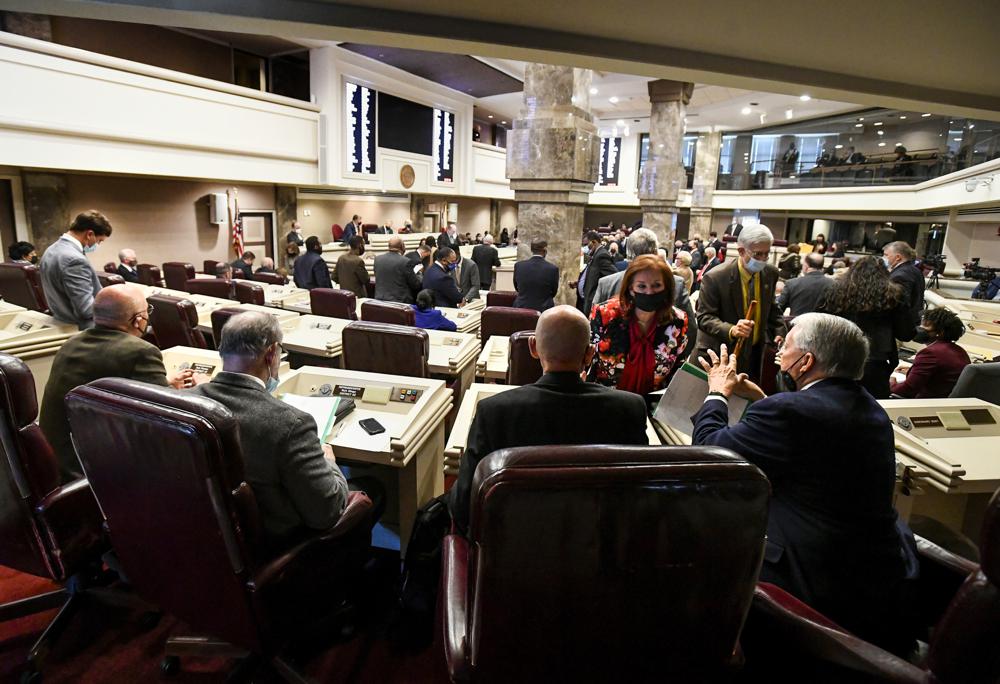
Alabama lawmakers returned to Montgomery on Tuesday to begin the 2022 legislative session against a backdrop of rising coronavirus cases and looming elections, faced with major decisions, including how to use the state’s remaining pandemic relief funds. Congress allocated $2.12 billion for Alabama through the American Rescue Plan. The state received the first half in June and has $580 million remaining after steering $80 million to hospitals and nursing homes and $400 million on a controversial prison construction plan. A key topic for the session will be how to use those remaining pandemic dollars. “We’re going to be looking at major priorities such as water and sewer grants for the state. Broadband will be an issue and health care,” House Speaker Mac McCutcheon said. Senate President Pro Tem Greg Reed agreed those will be funding priorities and said it is important lawmakers spend the money on projects that will have lasting effects. “We talked about water and sewer projects. These are things that we can spend the resources on that are beneficial for the people of Alabama for many, many years in the future,” Reed said. House Minority Leader Anthony Daniels, a Democrat from Huntsville, said that in addition to needs like broadband, Democrats would like to see health care, child care, affordable housing, and pandemic recovery for businesses addressed. “COVID-19 is not going away. In fact, the numbers are at their highest right now with this new variant,” said Daniels, who just recovered from his second bout with the coronavirus. “We just have to think through where our investments will be more well-spent and yield the returns that we need long term.” Key lawmakers said there are discussions with Gov. Kay Ivey about holding a special session to focus on the pandemic relief funds. A spokesperson for Ivey said last week that the governor “wants this to be an early priority for the Legislature.” Unlike previous years, state budgets are seeing significant growth because of increases in sales and income tax collections. Lawmakers are expected to approve a pay raise for teachers and state employees. Key lawmakers, including Sen. Greg Albritton, chairman of the Senate General Fund budget committee, said raises up to 4% are under discussion for both teachers and state employees. Lawmakers are coming to the Statehouse as Alabama experiences a record jump in COVID-19 cases fueled by the highly contagious omicron variant. The Statehouse is open to the public, but some safety precautions have been put in place. The 105-member Alabama House of Representatives is requiring masks in common areas such as hallways. Seating will be limited at Ivey’s State of the State address. Representatives can choose to vote from an overflow room if they feel unsafe in the crowded chamber. House Republicans this year are pushing what they have dubbed the “Standing Tall for Alabama” agenda, which includes legislation to do away with the requirement to get a permit to carry a concealed handgun in public. The backing increases the chances of approval for the proposal that has failed for several years in Montgomery. However, the proposal continues to face opposition from state sheriffs who say it will undermine public safety. The House GOP agenda also includes anti-critical race theory legislation and the creation of a felony crime for assaulting a first-responder. Daniels called the GOP agenda a “waste of time” as the state continues to deal with the ongoing COVID-19 pandemic. Lawmakers face primaries on May 24. An election-year session traditionally brings a flurry of legislation and resolutions that lawmakers believe will appeal to their voters. However, legislators also will feel pressure to finish up the session quickly in order to hit the campaign trail. Republished with the permission of the Associated Press.
Todd Stacy’s inaugural Capitol Journal show to air January 7
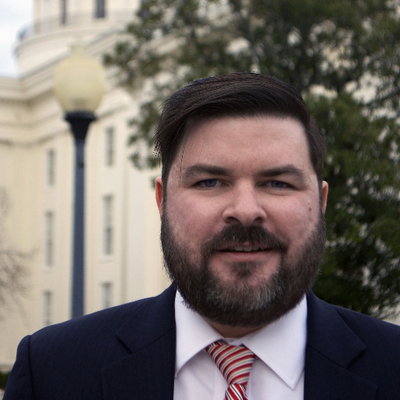
Alabama Public Television’s public affairs series CAPITOL JOURNAL will begin the new year with its new host, Todd Stacy. Stacy, a Montgomery resident and publisher of Alabama Daily News, is taking over the reins on January 7 after previous host Don Dailey retired in December after 10 years in the anchor’s chair. Stacy will join veteran reporters Karen Goldsmith and Randy Scott as the Alabama Legislature begins its 2022 regular session. “I’m grateful to the Alabama Public Television leadership for their confidence in me to host such a meaningful news space in Alabama politics,” Stacy said. “I grew up watching APT and have enjoyed working with their team professionally over the years. It’s more than a little intimidating to fill the shoes of Don Dailey, who is a mainstay at the State House and universally well respected, but I’m honored by the opportunity and eager to get started.” Stacy is a veteran of both Washington, D.C. and Montgomery politics. He previously worked for former Gov. Bob Riley and former U.S. Rep. Martha Roby. He launched Alabama Daily News in January 2018 and will continue as publisher. Phil Hutcheson, interim executive director and CFO of Alabama Public Television stated, “We are excited to welcome Todd Stacy to the team. Viewers can rely on CAPITOL JOURNAL for straight-forward and balanced coverage of news from Montgomery and around the state and the most in-depth television coverage of the Legislature available.” Guests for this Friday’s show include Senate President Pro Tem Greg Reed, House Minority Leader Anthony Daniels, Finance Director Bill Poole, and State Health Officer Dr. Scott Harris.
Issues to watch in the 2022 legislative session
Alabama lawmakers return to Montgomery on January 11 for the 2022 legislative session. Here are some issues to watch as the session begins. PANDEMIC RELIEF FUNDS Lawmakers face decisions on how to spend over $1.5 billion in state relief funds from the American Rescue Plan. Congress allocated $2.12 billion for Alabama through the American Rescue Plan. The state has so far received $1 billion and has $580 million remaining after using $400 million for prison construction and $80 million to reimburse hospitals and nursing homes. Key lawmakers say they expect infrastructure projects to be among the proposed uses. GUN PERMITS Lawmakers are expected to again debate legislation that would do away with the need to get a permit to carry a concealed handgun. The legislation, known as “constitutional carry” to proponents, has been introduced for several years but never passed as it faced opposition from law enforcement. “I think, based on the feedback that I’m getting from members of the Senate, there’s going be a lot of interest in the constitutional carry legislation. I’ve heard that from both House and Senate members. So I think it will definitely be an issue that will be debated and will be something that we will deal with in session, for sure,” Senate President Pro Tempore Greg Reed said. ABORTION Nearly two dozen House Republicans are backing legislation similar to a Texas law that would ban most abortions and allow anyone to file civil lawsuits against violators and collect damages. The bill titled the “Alabama Heartbeat Act” would prohibit medical providers from performing an abortion once cardiac activity is detected, usually around six weeks and before some women know they are even pregnant. The measure would allow private citizens to file civil lawsuits against anyone who “aids or abets” an abortion and to collect at least $10,000 in damages for each performed abortion. GAMBLING Lottery and casino legislation will again be introduced in Alabama’s upcoming legislative session — with the goal of getting the measure before voters in November — but the outlook for the proposal is unclear. Some leaders in the House of Representatives have expressed skepticism that the bill will get a vote this year. Republican Sen. Greg Albritton of Atmore said he plans to propose a constitutional amendment that would include a state lottery, a compact with the Poarch Band of Creek Indians, and a yet-to-be-determined number of other gambling sites. Gambling legislation has failed in past sessions under a mix of conservative opposition and disputes over the number of casinos and who would have casino licenses. EDUCATION BILLS Republican Sen. Arthur Orr of Decatur is proposing an overhaul in math instruction that would include more math coaches in schools, summer programs, and interventions. Eventually, in 2028 fifth grade students would need to show they were meeting certain math benchmarks to move to the sixth grade under the proposal. Lawmakers previously approved a similar promotion requirement for third-graders with reading. However, Alabama Gov. Kay Ivey has said she will ask lawmakers for a one-year delay of the reading promotion requirement after the pandemic interrupted classrooms. The high-stakes promotion requirement for third-graders is currently set to take effect this spring. REMOVING RACIST LANGUAGE The Committee on the Recompilation of the Constitution has proposed a plan to strip racist language, such as provisions about segregated schools, from the state’s governing document. The sections were invalidated by court rulings but remain in the document. It also reorganizes the massive, sprawling document that has nearly 1,000 constitutional amendments to try to make it more user-friendly. If approved by lawmakers, it would go before voters in November 2022. TRANSGENDER TREATMENT BAN Lawmakers could again debate an attempt to forbid doctors from providing gender-confirming hormone treatment, puberty blockers, or sex reassignment surgery to treat transgender minors. The Alabama Senate approved the bill in 2021, but it did not get a vote in the House of Representatives. Arkansas became the first state to enact such a measure, but a federal judge in June blocked it from taking effect. ELECTION YEAR INFLUENCE Alabama legislators are up for reelection this year. For lawmakers seeking another term, the session brings the last opportunity to shore up their records before voters make their decisions. That traditionally brings a flurry of legislation and resolutions that legislators believe will appeal to their voters. The primary is May 24. However, lawmakers will also feel the need to finish up the session quickly in order to hit the campaign trail. Republished with the permission of the Associated Press.
Lawmakers face decisions on $1.5 billion in relief funds

Alabama lawmakers face decisions in the coming months on how to spend more than $1.5 billion in pandemic relief funds, and legislative leaders say infrastructure projects — such as broadband and sewer projects — are expected to be a spending priority. Congress allocated $2.12 billion for Alabama through the American Rescue Plan. The state received the first half in June and has $580 million remaining after steering $80 million to hospitals and nursing homes and $400 million on a controversial prison construction plan. The state will receive a second $1.060 billion in May or June of this coming year. The state also has $191 million allocated through the America Rescue Plan’s Capital Projects Fund. Senate President Pro Tempore Greg Reed, R-Jasper, said how to use the money will be one of the major issues before lawmakers in the session that begins January 11. He said proposals are still being developed, but he expects money to be steered toward a combination of local and regional projects as well as reimbursements to hospitals and other health care providers that have been hard hit during the pandemic. “You’re going to be looking at projects that are going be for individual communities,” Reed said adding that would likely be done by establishing a grant or application process. He said they are also considering line-item expenditures for “major projects that are going to be regional projects” as well as tasking the Department of Finance with managing additional reimbursement to health care providers. “There would be potentially additional dollars in healthcare that would need to go over and above the resources that we’ve already given that would go for reimbursement with hospitals, nursing homes, others.” Senate Finance and Taxation General Fund Chairmen Greg Albritton, R-Atmore, said legislative leaders plan to meet with Gov. Kay Ivey next week. He said every lawmaker has their own idea of how the remaining $580 million should be utilized. “I want this money to be invested in the future, not paying for the past. I want this money to go into matters that will make a difference for the next generation,” Albritton said. House Ways and Means General Fund Chairman Steve Clouse, R-Ozark, said he expects lawmakers will allocate the $580 million this session and leave decisions on the $1 billion — which the state won’t receive until after the session is concluded — until a later time. He anticipates a large amount of money will be put toward rural broadband and water and sewer projects. Clouse said the pandemic highlighted the lack of internet access with many children not having internet access as they tried to learn from home. “I don’t think we need to get into operating expenses and stuff that is going to require recurring revenue streams. This should be one-time capital type projects,” Clouse said. Alabama took criticism for using $400 million of pandemic relief funds for prison construction. Legislative Republicans said it was an allowed use, but critics argued it was not a proper use of the money. “Maybe our priorities will finally catch up after our $400 million we spent on prisons,” Rep. Chris England, D-Tuscaloosa, said. England said hospitals and nursing homes will be seeking additional resources, which he said is “especially relevant now that it looks like we are in the middle of another surge.” Hospitals have seen labor costs surge as they turn to contract travel staff to fill staff shortages as well as expenses for setting up clinics for monoclonal antibodies. “We’ve missed several opportunities to spend a lot of that money on education. While we were running CRT (critical race theory) out of the classroom, we ignored COVID sitting right there. We probably need to focus a little bit more resources on making sure our kids are safe from a real problem, versus an imaginary one,” England said. Republished with the permission of the Associated Press.
Steve Flowers: We lost some good ones in 2021
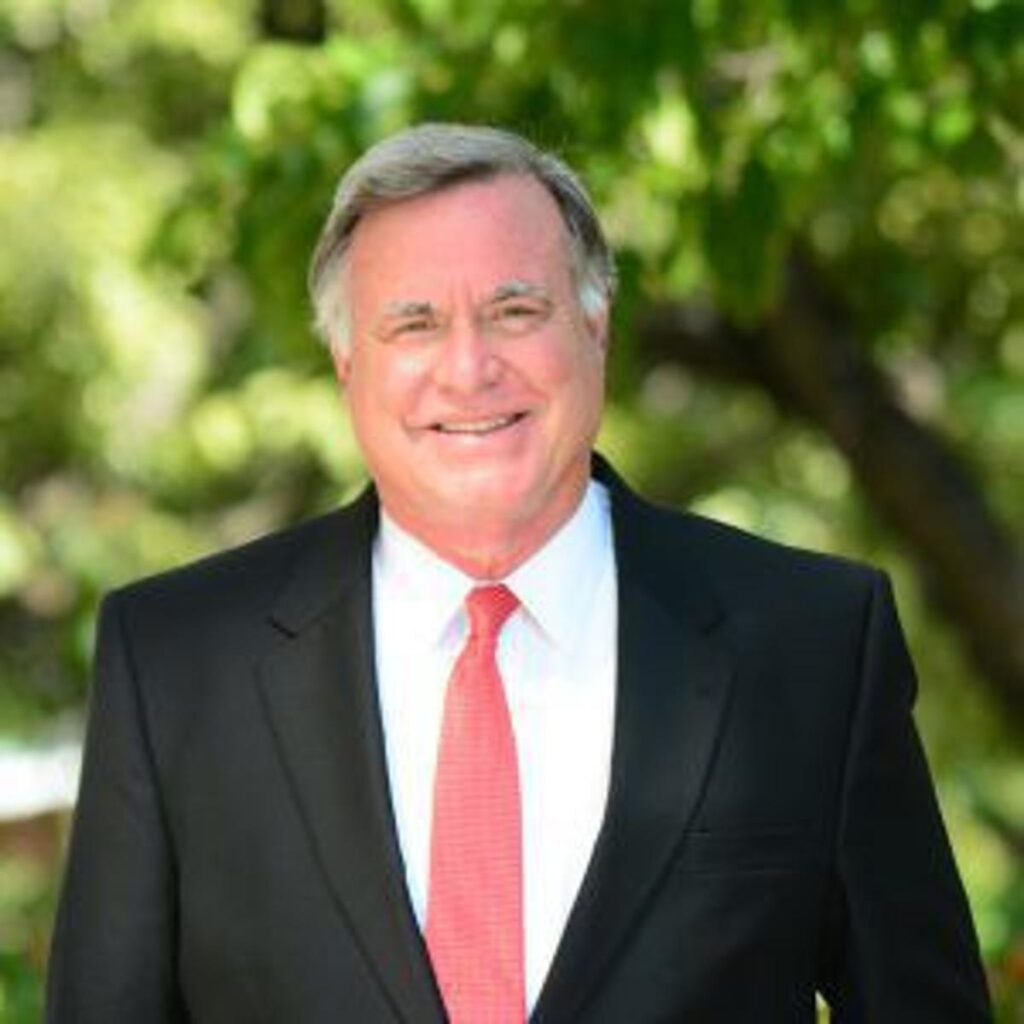
As has been my custom for 18 years, I like for my yearend column to be a remembrance of Alabama political figures who have passed away during the year. We lost some good ones this year. We lost our oldest past governor, John Patterson in June. Governor Patterson passed away at age 99 at his ancestral home in rural Tallapoosa County surrounded by his family. Patterson was Governor from 1959-1963. He defeated George Wallace in the 1958 Governor’s Race, which featured a field of 14 candidates. He is the only man to beat George Wallace in a governor’s race. Patterson was Attorney General of Alabama prior to being elected Governor. He subsequently was appointed to the Court of Criminal Appeals by Wallace and was reelected numerous times and retired as a Judge of the Alabama Court of Appeals. He was a treasure trove of Alabama political history. He was Governor during a turbulent time in Alabama history. Former Alabama Attorney General Jimmy Evans died in February at 81. Evans was a native of Montgomery and was Montgomery County District Attorney prior to being elected Attorney General. Retired Alfa lobbyist Milton Parsons passed away in March at 91. Milton was renowned on Goat Hill as a straight arrow and straight shooter. He was an honest, trustworthy, Christian gentleman. He was Alfa’s chief lobbyist for 50 years. He was a devoted family man and devout Christian. Former Troy mayor, Jimmy Lunsford died in May at 78. He was mayor of Troy for 30 years. Economic development was his forte. He was a tremendous steward of the city’s finances. He left Troy in good shape financially. Former Mobile congressman Sonny Callahan passed away at 88 in late June. He was one of a long line of popular and effective congressmen from the first district. The list includes Frank Boykin, Jack Edwards, Jo Bonner, Bradley Byrne, and Sonny. Congressman Callahan served 10 terms in the U.S. House of Representatives. Prior to his two decades in Congress, he served in the Alabama House of Representatives and then six years in the State Senate. He was successful in the trucking business in conjunction with his legislative and congressional career. State Representative Thad McClammy of Montgomery passed away at 79 in August. McClammy represented parts of Montgomery County for 27 years. I had the privilege to serve with Thad in the legislature. He was a real gentleman. His word was as good as gold. He had a tremendous turnout for his funeral. State Senator Kirk Hatcher did a fabulous job singing two favorite hymns. Former State Legislator and longtime Geneva County Probate Judge Harold Wise died in August at 96 years old. He lived an amazing and colorful life. He was a loved and respected Geneva County political figure. He was the uncle to Supreme Court Justice Kelli Wise. Kelli adored him. He was her mentor. She says he sparked her love of politics and her desire to have a career in public service. Retired Winston-Marion County Circuit Judge Bobby Aderholt passed away in September at 85. He was a 50-year public servant, as well as lay minister. People say he probably married or buried half the folks in and around Haleyville and that part of Northwest Alabama. There was a tremendous turnout for his funeral. He was revered. State Senator Greg Reed sang at his funeral. Judge Aderholt was the father of our senior congressman, Robert Aderholt who is completing his 25th year in Congress. Former State Senator Jim Preuitt of Talladega died in September at 86. He was also a State Representative and Probate Judge of Talladega County. He was a successful businessman and family man. We lost some good ones this year. Happy New Year! Steve Flowers is Alabama’s leading political columnist. His weekly column appears in over 60 Alabama Newspapers. Steve served 16 years in the state legislature. Steve may be reached at www.steveflowers.us.
Steve Flowers: Jimmy Holley
Legendary state senator Jimmy Holley has decided to not seek reelection to the State Senate next year after 44 years in the legislature. He will be missed in the State Senate. For the past decade, Holley has become a mentor and confidante for incoming State Senators, especially the members of this quadrennium’s freshman class. Senator Will Barfoot (R-Pike Road), has told me on more than one occasion that he has relied on Senator Holley’s wisdom and experience on a daily basis. Holley is generally considered the most knowledgeable person in the Senate when it comes to parliamentary procedure and the rules of the Senate. Others like Senator Clyde Chambliss (R-Prattville) have been mentored by Holley. In fact, at the beginning of each quadrennium, there was a clamor and struggle to seek the seat next to Jimmy Holley by members so that they could learn the intricacies of the senate rules and gather his institutional knowledge and wisdom. Jimmy Holley has been my close friend for 40 years. We served together and sat next to each other for 16 years in the House of Representatives. We represented adjoining counties. I have never seen a more diligent and capable legislator. When his hometown of Elba lost their schools to flooding, I saw Holley singlehandedly fight and secure extra funds from the Special Education Trust Fund Budget to build them new schools. Years later, when a tornado destroyed Enterprise High School, which was and is the largest high school in his district, he secured funds from the state to build a new, state-of-the-art high school for Enterprise. Jimmy would work at being a good and knowledgeable legislator. When most legislators would simply show up to vote and enjoyed the nightly social events hosted by lobbyists and associations, Jimmy would go back to his hotel room and study legislation and sharpen up on the rules. One day Holley and I were sitting at our desks working on a myriad of legislation put out by the Rules Committee. I looked at the calendar and was unfamiliar with a looming bill about three bills down on the agenda. I asked Jimmy about a certain piece of legislation. He calmly told me all about the bill and told me I probably was not going to vote for it since it was a trial lawyer bill. He knew my pro-business propensity. It occurred to me that he had read the bill in its entirety as well as all the bills on the calendar the night before in his hotel room. Jimmy was born and raised in Elba in Coffee County and has lived his entire life there except for the four years he went to college in Tennessee, which is by the way where he met his lovely wife, Mary. Jimmy and Mary have two fine and successful sons. They all live close by Jimmy and Mary, so they have had the opportunity to watch their grandchildren grow up and go to all their ballgames and school events. They have a wonderful family life. However, even though Jimmy is only 77, he has had some health problems. The state and primarily his four-county senate district will miss him immensely. Holley has spent over half of his life as a lawmaker. He is in his sixth term in the Senate and, prior to that, served five terms in the state House of Representatives. He currently chairs the Senate Government Affairs Committee and has been a fixture on the Legislative Council. His district includes Coffee, Covington and Pike Counties, and the northern portion of Dale County. Senate President Pro Tem Greg Reed (R-Jasper) summed up Holley’s departure well. He said, “Senator Jimmy Holley is an institution in the Alabama Senate, and our Body will not be the same without him. I further appreciate the decades of service he has given to his district and to our state in his long tenure in the Senate, and I am grateful for the wisdom and experience he has shared with our membership.” Jimmy Holley has a place in Alabama political history as one of the all-time legendary state lawmakers. Merry Christmas. Steve Flowers is Alabama’s leading political columnist. His weekly column appears in over 60 Alabama newspapers. He served 16 years in the state legislature. Steve may be reached at www.steveflowers.us.
Steve Flowers: State Senate will have little turnover in 2022
2022 was anticipated to be an exciting competitive election year. However, it is going to be a yawn of a political year. If you thought there was no competition for the constitutional offices and the House of Representatives seats in next year’s elections, then you have not seen anything like the lack of turnover in the Alabama State Senate. Incumbency will prevail. In fact, the power of incumbency in the Alabama State Senate is on par with the incumbent return percentage for Congress, which is probably comparable to the Russian Communist Politburo. There are 35 state Senate seats; 27 of the 35 are held by Republicans. Out of the 27 Republican state senators, 24 are running for reelection, and all 24 probably will be reelected. Almost all of them have no opposition. The Democratic minority has just as high a reelection bar. Of the eight Democrats, seven probably will be running unopposed. The only Democrat not running will be Priscilla Dunn, who has not been to the Senate this entire four-year term. Most of the first-term State Senators have never met her. According to rumors, she is in poor health and cannot attend. The 150,000 people in Senate District 19 in Jefferson County have been without a voice or vote in the Alabama Senate for four years. The three retiring Republican State Senators are giants. Del Marsh, Jimmy Holley, and Jim McClendon’s shoes will be hard to fill. These three seats will be filled by new Republicans. The 27-8 super Republican majority will continue. State Senator Del Marsh (R-Anniston) has been a leader in the Senate for 23 years. He served as President Pro Tempore of the Senate most of that time. He ran a very effective ship of state. State Senator Jimmy Holley (R-Elba/Coffee) is an icon. He was a master of Senate rules. He also was a mentor to a good many young senators. State Senator Jim McClendon (R-St. Clair) will be sorely missed in the state senate. The gentleman from St. Clair served with honor and distinction for eight years in the State Senate and 12 years before that in the House of Representatives. This freshman class of senators has bonded and work cohesively with the veteran leaders. The Freshman Class includes Will Barfoot (R-Pike Road), Tom Butler (R-Huntsville), Sam Givhan (R-Huntsville), Dan Roberts (R-Jefferson), Garlan Gudger (R-Cullman), Randy Price (R-Lee), Donnie Chesteen (R-Geneva/Houston), David Sessions (R-Mobile), Jack Williams (R-Mobile), Chris Elliott (R-Baldwin) and Andrew Jones (R-Cherokee/Etowah). Senator April Weaver (R-Shelby/Bibb) won her seat recently when Cam Ward left to become head of Pardons and Paroles. April Weaver previously served in the House of Representatives. She is the only female GOP Senator. She has a bright future. All twelve of these new senators have done an excellent job, and all will be reelected. Ten of the twelve will probably run unopposed. There are some exceptionally talented and dedicated veterans in the Senate that will coast to reelection. Most, if not all, will be unopposed. This stellar group of legislative leaders includes President Pro Tem Greg Reed (R-Jasper/Walker), Senate Majority Leader Clay Scofield (R-Guntersville), Senator Clyde Chambliss (R-Autauga/Elmore), Senator Steve Livingston (R-Scottsboro/Jackson), Senator Shay Shelnutt (R-Jefferson), Senator Tom Whatley (R-Auburn/Lee), Senator Gerald Allen (R-Tuscaloosa), Senator Greg Albritton (R-Escambia) the Chairman of the Senate Finance General Fund, Senator Arthur Orr (R-Decatur) Chairman of Senate Finance Education, and last but certainly not least, the legendary Jabo Waggoner (R-Vestavia), who chairs the Senate Rules Committee. There will be some outstanding veteran Democrats returning to the State Senate. There are several giants, who include Senator Bobby Singleton (D-Greene), Senator Vivian Figures (D-Mobile), Senator Rodger Smitherman (D-Birmingham), and Senator Billy Beasley (D-Barbour). Senator Kirk Hatcher (D-Montgomery) is new to the senate. However, he bears watching. He is gregarious, likable, and a quick study. He will be effective for Capitol City. The senate abounds with outstanding leadership on both sides of the aisle. The lack of competition the members are garnering is a testament to their good work. This returning group of leaders could well portend for a successful future quadrennium. With this kind of experience and leadership, they will also be an independent group. They will not be a rubber stamp for the governor. See you next week. Steve Flowers is Alabama’s leading political columnist. His weekly column appears in over 60 Alabama newspapers. He served 16 years in the state legislature. Steve may be reached at www.steveflowers.us.
Kay Ivey and Condoleezza Rice release Alabama Innovation Commission recommendations to boost innovation, entrepreneurship
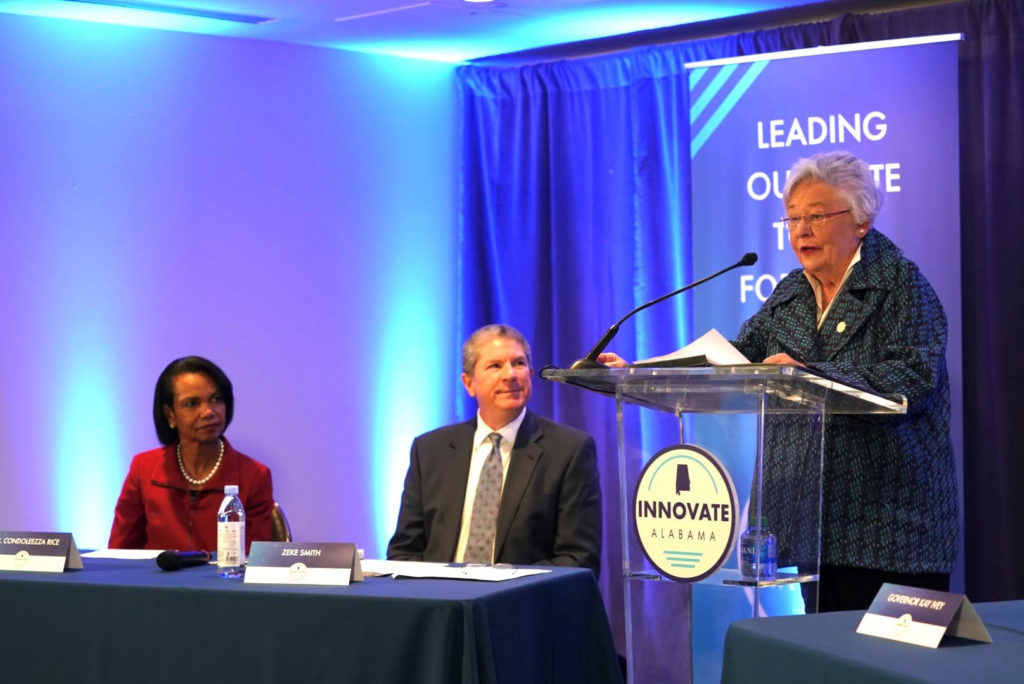
Governor Kay Ivey and Condoleezza Rice, 66th U.S. secretary of state and director of the Hoover Institution, joined state leaders on Tuesday to share the Alabama Innovation Commission’s policy recommendations and announce the Alabama Innovation Corporation board of directors. Governor Ivey established the commission and its advisory council in July 2020. “The Alabama Innovation Commission has done incredible work, and I’m excited to see how we as a state can implement smart policies that will foster innovation and develop a talented workforce for the future,” stated Governor Ivey. “I’m inspired by the promising growth for Alabama’s economy, and I look forward to working with the Alabama Legislature and the Alabama Innovation Corporation to help Alabama reach new heights.” Alabama Innovation Commission (Innovate Alabama) is the state’s first commission focused on entrepreneurship, technology, and innovation. The commission brings together private-sector experts and policymakers to develop forward-thinking policies that work to create a strong economy to help Alabama remain competitive in the 21st century. Ivey commented on Twitter, “Alabama. Where you can dream big, play hard, and live comfortably. We’re building a better state – a place where equitable opportunity exists. Now, we have a playbook to take us there.” The commission, led by Alabama Finance Director Bill Poole and state Sen. Greg Reed, includes a six-member advisory council of innovation leaders in Alabama and those outside the state who have strong ties to Alabama. The advisory council, led by Alabama Power Executive Vice President Zeke Smith, included innovation leaders from across the nation, and a partnership with Hoover Institution research scholars led by Director Rice, to support the commission’s work. “I’m proud to be a daughter of Alabama and believe that Alabama’s education, job training, and workforce development can be second to none. This state is poised for an even greater future here, and we are excited to be a part of that,” said Dr. Rice. “The Hoover Institution will continue to partner with the state and the Alabama Innovation Corporation to support this initiative as Alabama continues to push for strengthening its economy so life can be good for all Alabamians.” State Finance Director and Innovation Commission Chair Bill Poole added, “I’m proud of the commission’s work and know that its efforts will have a tremendous impact on our state. The ideas, recommendations, and strategies in this report give us a path forward for how Alabama can be a leader in the fields of innovation, technology, and research. I look forward to seeing partners from private, and public sectors continue working together through the Innovation Corporation to grow our economy.” Members of the Innovation Corporation board of directors are: Governor Kay Ivey (ex-officio) Alabama Speaker of the House Mac McCutcheon (ex-officio) Senate President Pro Tempore Greg Reed (ex-officio) House Minority Leader Anthony Daniels (ex-officio) Senator Minority Leader Bobby Singleton (ex-officio) Rich Bielen – President and CEO, Protective Life Corporation (at-large director) Dr. Michael Chambers – Assistant Vice President for Research Innovation, University of South Alabama (at-large director) Abe Harper – President, Harper Technologies (at-large director) David King – President, Dynetics (at-large director) Bill Poole – Director, Alabama Department of Finance (chairman) Britney Summerville – Founder, Birmingham Bound (at-large director) The policy recommendations and findings detailed five areas that address current challenges. Entrepreneurship and Access to Capital: Identifying and supporting opportunities to fuel entrepreneurial development at every stage of business growth. Talent Attraction and Retention: Recruiting and retaining a workforce with the skills, knowledge and credentials necessary to create innovation ecosystems throughout the state. Increasing Commercialization: Fostering an environment that increases commercialization activities, research and development efforts and supports the state’s economy as a whole. Bridging Digital and Economic Divides: Leveraging initiatives and resources that support growth throughout Alabama. Knowledge Economy: Developing a skilled workforce ready to meet the demands of the future. “These policy recommendations are a culmination of 18 months of hard work, time, and effort from a variety of different highly qualified individuals and organizations working together to chart a strong path forward for our state’s economy, and I couldn’t be any happier with the product that the commission was able to produce,” said Sen. Reed. “This report outlines a road map to spurring entrepreneurship, startup businesses, and innovation in our state, and I look forward to seeing the impact it will have on the future of Alabama.”
Republicans advance bill for claiming vaccine exemptions
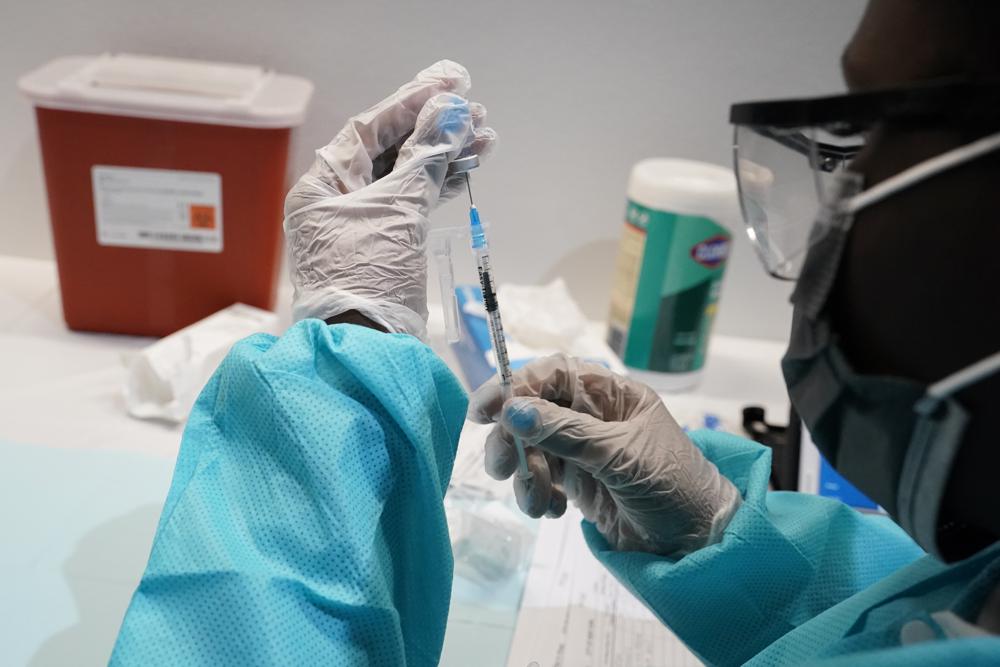
Alabama lawmakers on Tuesday advanced legislation aimed at protecting employees who choose not to get vaccinated against COVID-19 by setting out an easy process to claim a religious or medical exemption. The legislation comes as Republican leaders in many states have expressed opposition to the federal vaccine mandate, calling it an infringement on personal decisions. But opposed lawmakers said Republicans were authorizing people to “lie” to avoid getting vaccinated and thereby risk the lives of others. The Alabama Senate voted 26-5 for the bill by Republican Sen. Chris Elliott of Fairhope would mandate businesses requiring COVID-19 vaccinations to distribute a form where employees could claim a religious or medical exemption by checking a box. An employee submitting the form could not be fired over not getting the vaccination unless the business appealed and got permission from the Alabama Department of Labor. State senators also voted 26-4 for a separate bill that gives the state attorney general authority to enforce an existing state law that prohibits businesses from refusing service to unvaccinated customers. It also requires parental consent for a child to get a COVID-19 vaccine. Both bills now move to the Alabama House of Representatives. Elliott said the federal government already allows exemptions for religious and medical reasons, and they are trying to “make it as easy as possible on the employee to claim those exemptions so that they can keep their job.” “I’ve got constituents in my district that are losing their jobs right now at various different employers that have a vaccine mandate right now. I think we need to do everything we can to protect those jobs and protect those folks that are just trying to provide for their family,” Elliott said. Democratic Sen. Bobby Singleton of Greensboro said Republicans were giving people the ability to “tell a big lie” to avoid getting vaccinated. He said the Labor Department would have limited or no ability to investigate the sincerity of the employee’s claim of a religious or medical reason for declining the vaccine. “We as a Legislature are about to manufacture an excuse for people not to take the vaccine,” Singleton said, predicting that “everybody will claim some sort of illness” or religious reason. Democratic Sen. Vivian Davis Figures of Mobile said Republicans supporting the bill were putting the lives of others at risk and interfering with the ability of a business to make decisions about its workplace. “All of the thousands and thousands and thousands of people who have died of COVID since early 2020, and you have the audacity to introduce a bill like this to sanction the death of so many others,” Figures said. Alabama has seen at least 15,629 COVID-19 related deaths and has the second-highest per capita death rate from COVID-19 among states, according to researchers from Johns Hopkins University One of the state’s largest business groups opposed the bill, saying it interferes with private business decisions and puts federal contractors in a difficult situation that could cost jobs. “This legislation would prevent Alabama employers from making personnel decisions and place that authority in the hands of state government,” the Business Council of Alabama said in a statement. The group said court action was the best way to challenge the mandate. Senate President Pro Tem Greg Reed said lawmakers are trying to do what they can, within their authority, to address the federal vaccine mandate. “The Biden administration’s vaccine mandates are a reckless federal government overreach that infringe on Alabamians’ liberty and freedom of personal choice and could cause significant economic harm to Alabama and Americans across the country,” Reed said in a statement. Republican-led states have turned to a mix of lawsuits, executive orders, and legislation to try to resist President Joe Biden’s COVID-19 vaccine mandate. Nineteen states, including Alabama, have filed lawsuits against Biden’s requirement that all employees of federal contractors be vaccinated against the coronavirus by Dec. 8, arguing that the mandate violates federal procurement law and is an overreach of federal power. Republished with the permission of the Associated Press.
Steve Marshall advises Alabama federal contractors not to investigate employees seeking vaccine exemption
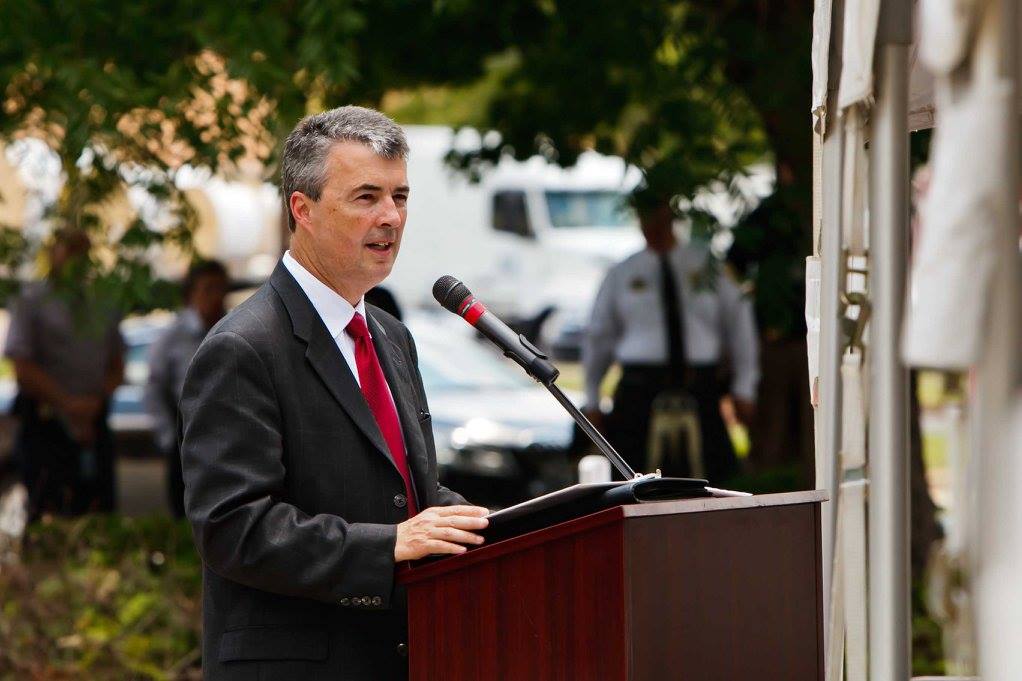
Alabama Attorney General Steve Marshall, along with Republican state legislative leaders and the state Personnel Office, have issued an advisory regarding the COVID-19 vaccine mandate for federal contractors. The advisory urges federal contractors in the state to not investigate employees seeing a religious exemption to the COVID-19 vaccine. The letter states, “Alabama-based employers, and particularly public university employers, should liberally construe—in favor of the employee—any exemption sought by an employee for medical or religious reasons. In reviewing an employee’s request for a religious exemption, employers should not inquire into the validity of an employee’s religious beliefs, including the motives or reasons for holding the belief.” The letter was co-signed by State Personnel Department Director Jackie Graham, Mac McCutcheon, Greg Reed, Danny Garrett, Arthur Orr, Steve Clouse, and Greg Albritton. The letter comes after the University of Alabama and Auburn University said they will require all federal employess to be vaccinated by December 8. The schools issued a joint statement last week saying, “As federal contractors, and like most higher education institutions, the University of Alabama System campuses – including The University of Alabama, the University of Alabama at Birmingham, and the University of Alabama in Huntsville – and Auburn University must comply with the executive order and accompanying guidance, unless that executive order is withdrawn or modified.” “Failure to comply will place our universities in jeopardy of losing hundreds of millions of dollars received through federal contracts and awards, as well as thousands of jobs funded by those dollars.” Marshall also added that any public university employee that is denied a reasonable request for exemption should contact the Civil Division of the Attorney General’s Office. The letter explains, “No employee of a public university in Alabama, nor any employee of Alabama state government, will forfeit their livelihood as a result of the federal government’s flagrant overreach.” “The Attorney General’s Office, working with the State Personnel Department, will assist in transferring these employees into other public university/state employment,” the letter continued. Marshall also added that the Attorney General’s Office is preparent a lawsuit to fight the mandate. Marshall stated on Twitter, “Alabama-based employers should liberally construe – in favor of the employee – any exemption sought by an employee for medical or religious exemptions with regards to vaccine mandates. My office is preparing its lawsuit to challenge the federal government.”
Kay Ivey to call special session on prison construction
Alabama Gov. Kay Ivey is calling lawmakers into a special session later this month to vote on a prison construction plan that would use part of the state’s virus relief funds to jumpstart the building of three new lock-ups. In a letter to lawmakers announcing the special session, Ivey painted the construction project as a partial solution to the state’s longstanding prison woes — that have included a Department of Justice lawsuit over violence and a separate federal court order to improve mental health treatment behind bars. “We face an urgent need to address Alabama‘s long-standing prison infrastructure challenges,” Ivey wrote to lawmakers. “Failure to timely resolve these issues outlined in federal lawsuits could result in detrimental consequences for our state. Achieving an Alabama solution to these problems — rather than a federal court-ordered solution — is paramount.” While proponents said the construction would be a partial solution to the state’s long-standing prison problems, one lawmaker said it would put “old problems in new buildings” unless the state made additional reforms. “Just building prisons without engaging in some sort of comprehensive criminal justice reform is the definition of kicking the can down the road,” Rep. Chris England, D-Tuscaloosa, said. On the use of federal virus funds on the project, England said there are “obviously better uses of the money.” Ivey said the special session would begin Sept. 27 The proposal calls for three new prisons — at least a 4,000-bed prison in Elmore County with enhanced space for medical and mental health care needs; another at least 4,000-bed prison in Escambia County; and a women’s prison — as well as renovations to existing facilities. The projects would be done in phases and partly funded with $400 million from the state’s $2.2 billion share of American Rescue Plan funds, a key lawmaker who drafted the proposal said. “Right now, it looks like we’ve got the votes, but you never know until you get into session,” said Republican Rep. Steve Clouse, who is sponsoring the legislation. Clouse said construction is a “piece of the puzzle” in fixing the prison system and said this could be a defining moment for lawmakers. Tapping some of the state’s virus relief funds will enable the state to get started immediately with cash instead of waiting for a bond issue, Clouse said. “The stakes are high – without taking action on this issue, the federal government could take control of our prison system at a high cost to Alabama taxpayers and could even result in the forced release of prisoners. It’s time to finally resolve this issue for the people of Alabama,” Senate President Pro Tempore Greg Reed said in a statement. The U.S. Department of Justice has sued Alabama over conditions in the state’s prisons, saying it is failing to protect male inmates from inmate-on-inmate violence and excessive force at the hands of prison staff. The American Civil Liberties Union of Alabama said the Justice Department is concerned about more than just buildings. “Buildings alone will NOT address the DOJ concerns. We need real leaders who will,” the ACLU of Alabama wrote in a tweet. Republished with the permission of the Associated Press.
