
FBI releases newly declassified record on September 11 attacks
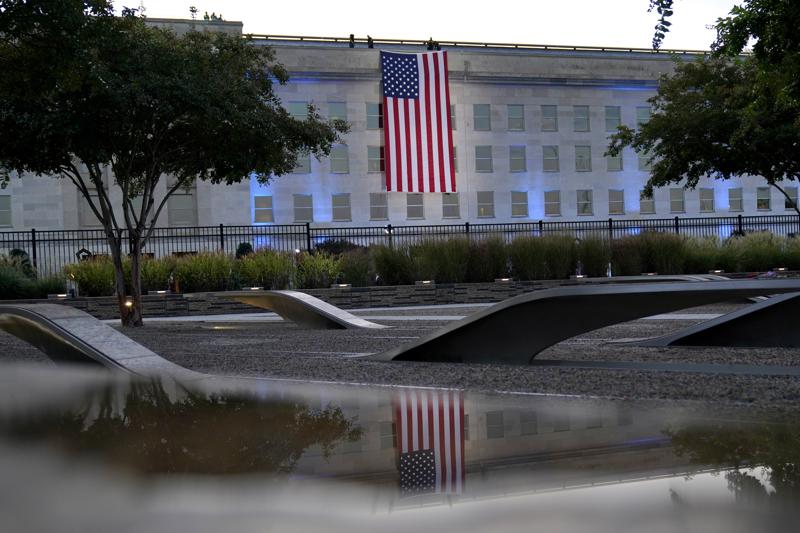
A declassified FBI document related to logistical support given to two of the Saudi hijackers in the run-up to the Sept. 11 attacks details contacts the men had with Saudi associates in the United States but does not provide proof that senior kingdom officials were complicit in the plot. The document released Saturday, on the 20th anniversary of the attacks, is the first investigative record to be disclosed since President Joe Biden ordered a declassification review of materials that for years have remained out of public view. The 16-page document is a summary of an FBI interview done in 2015 with a man who had frequent contact with Saudi nationals in the U.S. who supported the first hijackers to arrive in the country before the attacks. Biden ordered the Justice Department and other agencies to conduct a declassification review and release what documents they can over the next six months. He was under pressure from victims’ families, who have long sought the records as they pursue a lawsuit in New York alleging that Saudi government officials supported the hijackers. The heavily blacked-out document was released hours after Biden attended Sept. 11 memorial events in New York, Pennsylvania, and at the Pentagon. Victims’ relatives had said they would object to Biden’s presence at those remembrances as long as the documents remained classified. The Saudi government has long denied any involvement in the attacks. The Saudi Embassy in Washington has supported the full declassification of all records as a way to “end the baseless allegations against the Kingdom once and for all.” The embassy said that any allegation that Saudi Arabia was complicit was “categorically false.” The documents have come out at a politically delicate time for the U.S. and Saudi Arabia, which have forged a strategic, if difficult, alliance, particularly on counterterrorism matters. The Biden administration in February released an intelligence assessment implicating Crown Prince Mohammed bin Salman in the 2018 killing of U.S.-based journalist Jamal Khashoggi but drew criticism from Democrats for avoiding a direct punishment of the royal himself. Victims’ relatives said the document’s release was a significant step in their effort to connect the attacks to Saudi Arabia. Brett Eagleson, whose father, Bruce, was killed in the World Trade Center attack, said the release of the FBI material “accelerates our pursuit of truth and justice.” Jim Kreindler, a lawyer for the victims’ relatives, said in a statement that “the findings and conclusions in this FBI investigation validate the arguments we have made in the litigation regarding the Saudi government’s responsibility for the 9/11 attacks. “This document, together with the public evidence gathered to date, provides a blueprint for how (al-Qaida) operated inside the US with the active, knowing support of the Saudi government,” he said. That includes, he said, Saudi officials exchanging phone calls among themselves and al-Qaida operatives and then having “accidental meetings” with the hijackers while providing them with assistance to get settled and find flight schools. Regarding Sept. 11, there has been speculation of official involvement since shortly after the attacks, when it was revealed that 15 of the 19 attackers were Saudis. Osama bin Laden, the leader of al-Qaida at the time, was from a prominent family in the kingdom. The U.S. investigated some Saudi diplomats and others with Saudi government ties who knew hijackers after they arrived in the U.S., according to previously declassified documents. Still, the 9/11 Commission report in 2004 found “no evidence that the Saudi government as an institution or senior Saudi officials individually funded” the attacks that al-Qaida masterminded, though it noted Saudi-linked charities could have diverted money to the group. Particular scrutiny has centered on the first two hijackers to arrive in the U.S., Nawaf al-Hazmi and Khalid al-Mihdhar, and the support they received. In February 2000, shortly after their arrival in Southern California, they encountered at a halal restaurant a Saudi national named Omar al-Bayoumi who helped them find and lease an apartment in San Diego. He had ties to the Saudi government and had earlier attracted FBI scrutiny. Bayoumi has described his restaurant meeting with Hazmi and Mihdhar as a “chance encounter,” and the FBI, during its interview, made multiple attempts to ascertain if that characterization was accurate or if the meeting had actually been arranged in advance, according to the document. The 2015 interview that forms the basis of the FBI document was of a man who was applying for U.S. citizenship and who years earlier had repeated contacts with Saudi nationals, who investigators said, provided “significant logistical support” to several of the hijackers. Among the man’s contacts was Bayoumi, according to the document. The man’s identity is blacked out throughout the document, but he is described as having worked at the Saudi consulate in Los Angeles. Also referenced in the document is Fahad al-Thumairy, at the time an accredited diplomat at the Saudi Consulate in Los Angeles who investigators say led an extremist faction at his mosque. The document says communications analysis identified a seven-minute phone call in 1999 from Thumairy’s phone to the Saudi Arabian family home phone of two brothers who later were detained at the Guantanamo Bay, Cuba, prison. Republished with the permission of the Associated Press.
Jeff Sessions to visit Guantánamo Bay for updates on operations
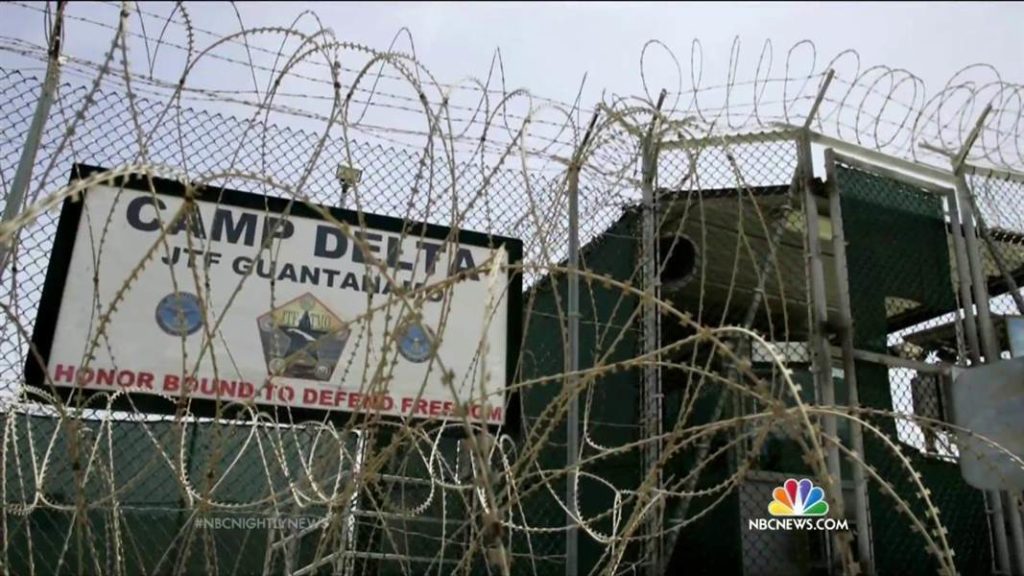
Attorney General Jeff Sessions is visiting Guantánamo Bay for “understanding of current operations.” “Keeping this country safe from terrorists is the highest priority of the Trump administration,” Justice Department spokesman Ian Prior said in a statement first reported Friday by POLITICO. “Recent attacks in Europe and elsewhere confirm that the threat to our nation is immediate and real, and it remains essential that we use every lawful tool available to prevent as many attacks as possible.” Joining the former Alabama senator on the trip is his deputy, Rod Rosenstein. Prior explained the visit “is to gain that understanding by meeting with the people on the ground who are leading our government-wide efforts at GTMO.” Among the executive actions drafted (but not yet enacted) by the Trump administration regarding Guantánamo include keeping the base open and possibly bring in new prisoners. As a candidate, Trump promised to load the facility – formally known as Naval Station Guantanamo Bay – with “some bad dudes.” However, no any new detainees have been sent yet. Then-candidate Barack Obama, ran in 2008 on a promise to empty and close the facility, but in his two terms as president, he did not follow through after facing strong political opposition. Sessions is a staunch supporter of the detention camp, telling radio host Hugh Hewitt in March that he has “no legal problem whatsoever” with sending new detainees to the detention facility.
Rumors surround Justice Anthony Kennedy exit, but he’s not talking

As one justice settles into his new job at the Supreme Court, is another about to leave? Eighty-year-old Justice Anthony Kennedy is so far refusing to comment on speculation that he may soon retire after 29 years on the court. But that hasn’t stopped President Donald Trump and, obliquely, the Republican senator in charge of high court confirmation hearings from weighing in on the prospect that Kennedy could step down as soon as this spring or summer. If not this year, several former law clerks said they would not be surprised to see the justice retire in 2018. “I’ve heard the same rumors that a lot of people have heard. And I have a lot of respect for that gentleman, a lot,” Trump told The Washington Times in an interview published Sunday. Sen. Chuck Grassley of Iowa, chairman of the Senate Judiciary Committee, told reporters last month, “I would expect a resignation this summer.” He did not name any names but cited a “rumored” retirement. Kennedy’s departure would give Trump a second Supreme Court vacancy and the chance to cement conservative control of the court for a decade or more. Justice Neil Gorsuch, Trump’s first nominee, joined the court last month. Trump said he would choose from the same list of candidates he unveiled during the campaign from which he plucked Gorsuch. Kennedy has been the crucial swing vote on the high court for more than a decade. He has sided with the liberal justices on gay rights and abortion rights, as well as some cases involving race, the death penalty and the rights of people detained without charges at the Guantanamo Bay naval base. He has written all the court’s major gay-rights decisions, including the 2015 ruling that declared same-sex marriage is a constitutional right nationwide. He also has been a key vote when conservatives have won major rulings on the outcome of the 2000 presidential election in favor of George W. Bush, gun rights, limiting regulation of campaign money and gutting a key provision of the landmark federal Voting Rights Act. There are few outward signs that Kennedy is getting ready to retire. He has hired his allotment of four law clerks for the term that begins in October and he is planning to spend part of the summer as he typically does, teaching a law school class in Salzburg, Austria. But Kennedy scheduled his reunion of law clerks a year earlier than usual, on the last weekend in June. That change, first reported by the Above the Law legal blog, first fueled speculation that Kennedy is considering retirement. Kennedy sent his former clerks an invitation in September, two months before the election. Supreme Court spokeswoman Kathy Arberg explained the earlier reunion as a chance to mark Kennedy’s 80th birthday before the justice turns 81 in July. Some of the roughly 100 clerks who have worked for Kennedy at the Supreme Court thought there might be more to the change. One former clerk, speaking on condition of anonymity in adherence to long-held court tradition on clerk-justice relationships, said he thought the reunion was scheduled in that manner because of the thought that Kennedy would be retiring. The same clerk said he also would not be surprised if Kennedy remains on the bench for another year. Other clerks, who also would not agree to be named, said Kennedy naturally is considering retirement because he is past his 80th birthday and thinks that some of his colleagues remained in their jobs too long. A nominee of President Ronald Reagan, Kennedy also would prefer to be replaced by a Republican, those clerks said. It is unclear how Trump’s election may have shaped Kennedy’s thinking. But he appears to have a warmer relationship with Trump and his family than was known or necessarily expected. Kennedy invited Ivanka Trump to a February argument at the court, where she and her daughter sat in a section reserved for justices’ guests. Kennedy’s younger son, Gregory, spent time on the Trump team that worked at NASA beginning with Trump’s inauguration. Trump and Kennedy themselves had a brief but warm exchange on the floor of the House of Representatives following Trump’s first address to Congress in February. Few obstacles seem to stand in the way of confirming a new justice this year or next. Republicans control the Senate, and after changing the rules, have wiped out the filibuster for Supreme Court nominees and the need for 60 votes to defeat it. Among the reasons Kennedy could remain on the bench are the chance to continue to serve with Gorsuch, his onetime clerk; put some space between vacancies that can upset the settled ways of the court, and control the decisive vote on a court that is split between liberals and conservatives on a range of high-profile issues. The other two older justices, Ruth Bader Ginsburg, 84, and Stephen Breyer, 78, are Democratic appointees who would not appear to be going anywhere during a Trump administration if they can help it. “I love my job,” Ginsburg told a Georgetown University audience last week. Republished with permission of The Associated Press.
Donald Trump admin pursues rethinking of national security policy
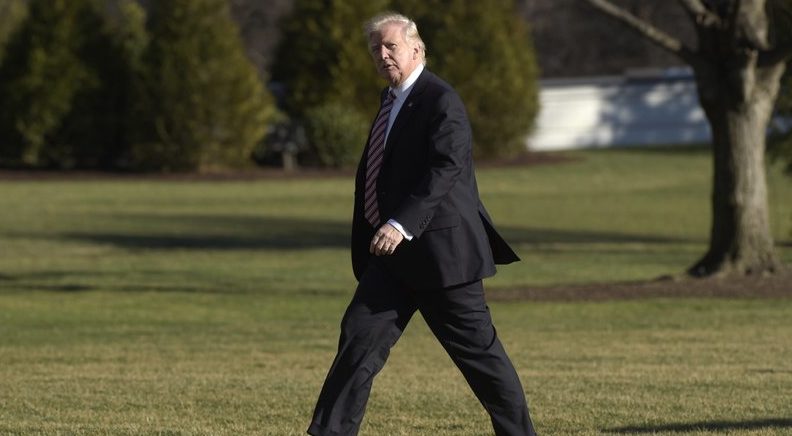
President Donald Trump is embracing the idea of Guantanamo Bay as a jail for terror suspects, a repudiation of the Obama administration’s longtime push to prosecute captured militants in the U.S. court system. A draft order spelling out a tougher line in the fight against terror dramatically rethinks how the U.S. should detain, monitor and prosecute terrorist suspects. It would reverse Obama’s efforts to close the military detention center at Guantanamo Bay, Cuba, and reopen the idea of establishing CIA detention facilities outside the United States. In its support of Guantanamo the document is likely to renew a debate, which the Obama administration considered closed, about whether military tribunals offshore or civilian trials in American courts offer a fairer and more efficient path to justice. “To take a step backward would be both practically misguided and morally indefensible,” said Eric Freedman, a constitutional law professor at Hofstra University and a legal consultant for Guantanamo detainees. “The United States, for better or worse, sets an example for governments and social movements alike throughout the world, and it’s already the case that the groups opposed to American values have made extraordinarily effective use of Guantanamo and its betrayal of American values,” Freedman said. Though the draft order, which the White House said was not official, takes a more expansive view of national security power, it also in some instances relies on legal authorities that remained in place during the Obama administration but went unused. Guantanamo was open for the duration of the Obama administration, leaving it available for use by a new administration. And though Obama opted not to indefinitely detain newly captured suspects, courts have recognized the government’s authority to keep without trial suspects captured during wartime and connected to specific terror groups like al-Qaida. “The authorities are still there, and there’s no legal reason why it wouldn’t be available to a President Trump,” said Stephen Vladeck, a national security law professor at the University of Texas at Austin. Aspects of the draft order weren’t surprising given Trump’s campaign promise to fill Guantanamo with “bad dudes.” His pick for attorney general, Alabama Sen. Jeff Sessions, said at his confirmation hearing that he thought the prison, opened to take terror suspects after the Sept. 11 terror attacks, had served its purpose “marvelously well.” Support for it now represents a total reversal of eight years of efforts to close it. The Obama administration sent no new detainees there, and while not fulfilling a promise to close it, whittled the population from 242 to 41. Obama’s Justice Department maintained that the U.S. civilian court system was the most legally sound forum in which to prosecute terror suspects captured in the U.S. and overseas and cited hundreds of convictions in New York and other cities as proof. Former Attorney General Eric Holder sought unsuccessfully in 2009 to move the suspected ringleader of the Sept. 11 attacks, Khalid Sheikh Mohammed, from Guantanamo to New York for trial, and though the plan was derailed by political opposition, has since expressed vindication as the military tribunal system at Guantanamo stalled. The son-in-law of Osama bin Laden, Sulaiman Abu Ghaith, was convicted in New York in 2014 on terror-related charges after being captured in Jordan. Ahmed Abu Khattalah, accused in the deadly 2012 attacks on a State Department compound in Benghazi, was captured in Libya in 2014 and is awaiting trial in Washington, D.C. And despite occasional objections from congressional Republicans, the Justice Department in the Obama administration has consistently used American courts to try suspects captured in the U.S. — including Boston Marathon bomber Dzhokhar Tsarnaev and the man accused in the Manhattan and New Jersey bombings last year. Sessions and other Republicans have long expressed concern that civilian courts afford legal protections to which suspected terrorists are not entitled. He has warned that valuable intelligence can be lost if a detainee is advised of his right to remain silent and to have a lawyer. But in several major cases, federal officials have used a public safety exemption to interrogate for intelligence purposes high-value suspects, including Tsarnaev, before advising them of their Miranda rights and restarting the questioning. Arguments that Guantanamo is a better forum than civilian courts have been “debunked by successful prosecution after successful prosecution,” Todd Hinnen, who served as acting assistant attorney general for national security in the Obama Justice Department, said before the new draft order was announced. “As a result, sending them before a less well-established, less tested system that’s viewed as less legitimate by much of the world, would be a step backward,” Hinnen said. But Robert Turner, a national security law professor at the University of Virginia, disagreed, saying the military tribunal process has fewer “theatrics” that accompany a civilian court case, where a “fast-talking lawyer” could come in and mislead the jury. The tribunal process, he said, has “no-nonsense rules.” “I don’t think Gitmo as a detention facility, per se, is one of the problems,” he said. Still, said Vladeck, the draft document lacked enough “teeth” and specifics for the public to know how much of its agenda could actually be implemented or survive inevitable statutory and political hurdles. “Morally it’s a terrifying document, but legally, I think it’s mostly a lot of hot air,” he said. Republished with permission of The Associated Press.
Alabama delegation reacts to Barack Obama’s plan to close Gitmo “once and for all”
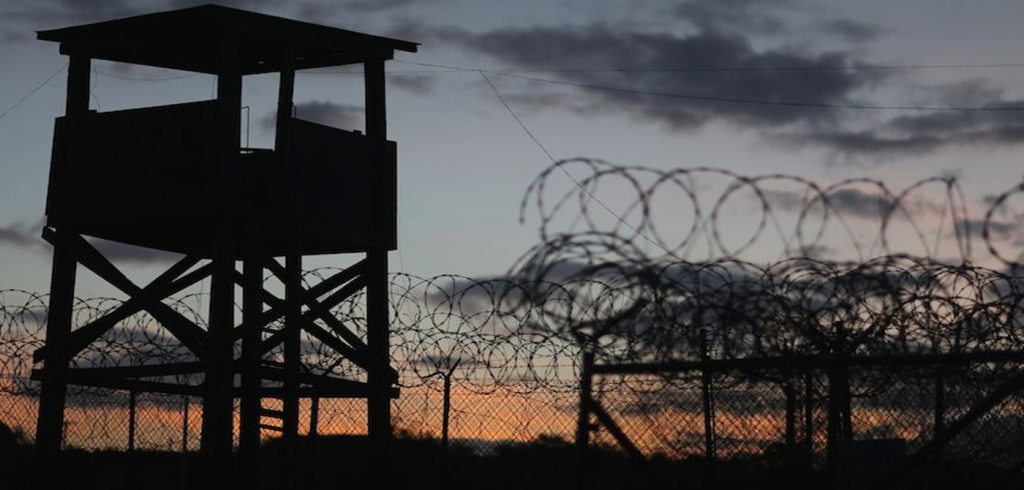
President Barack Obama Tuesday proposed to “once and for all” close the detention center at Guantanamo Bay, Cuba. The President delivered his plans to Congress, which also call to transfer remaining detainees to a facility in the U.S., though his plan does not specify where. It didn’t take long for the Alabama delegation to weigh in on the President’s plans: U.S. Sen. Richard Shelby: Since taking office in 2009, President Obama has vowed to act on his campaign promise to close the Guantanamo Bay detention facility. I believe that closing Guantanamo and moving radical terrorists onto U.S. soil is imprudent and reckless, especially when the President failed to detail any specifics to his so-called plan. The prisoners housed at Guantanamo pose a serious threat to our national security, and their release or transfer should not be centered on President Obama’s desire to score political points. Current law prohibits the terrorists held at Guantanamo from being transferred onto U.S. soil. I will fight against this dangerous and misguided decision by the Administration to blatantly disregard the law. U.S. Rep. Bradley Byrne (AL-01): The law couldn’t be clearer: the President cannot transfer detainees from Guantanamo Bay into the United States. Today’s announcement, like many others we have seen from this President, isn’t a serious proposal. It is short on details and fails to outline how this proposal would help keep the American people safe. Congress should just say no. U.S. Rep. Martha Roby (AL-02): Did not respond to request for comment. U.S. Rep. Mike Rogers (AL-03): President Obama’s plan to transfer many of the remaining detainees at Gitmo to U.S. soil is nothing more than nonsensical lip service to fulfill a campaign promise. While we are still waiting for a comprehensive strategy to defeat and destroy ISIL, Obama continues to push for 10,000 Syrian refugees to be resettled in the U.S. These examples demonstrate to me that he is not serious about the very real and dangerous threats posed by terrorists to our homeland. I will continue to strongly oppose any plan by Obama to close Gitmo or allow Syrian refugees on our soil. U.S. Rep. Robert Aderholt (AL-04): Did not respond to request for comment. U.S. Rep. Mo Brooks (AL-05): Did not respond to request for comment. U.S. Rep. Gary Palmer (AL-05): Closing Guantanamo Bay would be irresponsible and detrimental to America’s national security, and the authority to do so resides with Congress, not the President. Congress has consistently expressed the position, most recently in the National Defense Authorization Act, that those dangerous detainees should not be brought to facilities in our homeland. Our priority is to keep Americans safe and our enemies off American soil. I strongly urge the President to reconsider this plan and to put the safety of this great nation’s citizens first. U.S. Rep. Terri Sewell (AL-07): Did not respond to request for comment.
Marco Rubio laughs off suggestion to “waterboard” Hillary Clinton
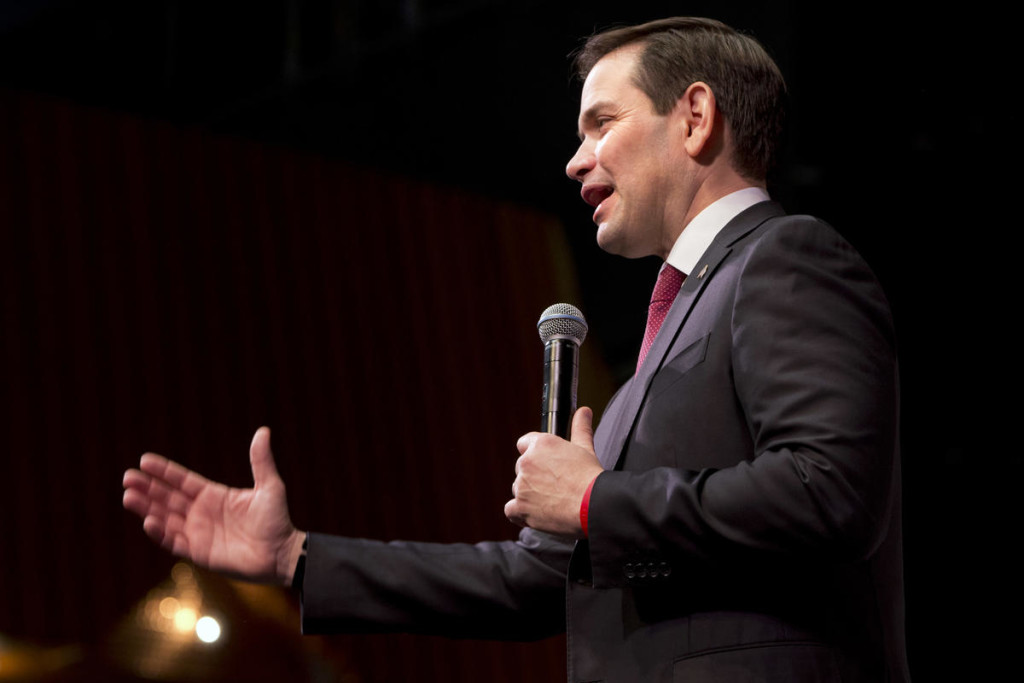
Republican presidential candidate Marco Rubio laughed off a supporter’s suggestion that he ‘‘waterboard’’ Democrat Hillary Clinton. The suggestion came just after the Florida senator promised to keep the US base at Guantanamo Bay open ‘‘forever.’’ A supporter at a Tuesday evening rally in North Myrtle Beach shouted, ‘‘Waterboard Hillary,’’ referring to the interrogation technique that has long been considered torture. Rubio laughed, noting, ‘‘The press is here.’’ He smiled and added: ‘‘I didn’t hear what they said. I know it wasn’t a bad word.’’ Republished with permission of the Associated Press.
