
Richard Shelby, Doug Jones join forces, urge fairness for Gulf mineral development program
Alabama U.S. Senators Richard Shelby and Doug Jones reached across the aisle and joined forces on Wednesday asking the Chairman and Ranking Member of the Senate Energy and Natural Resources Committee to ensure coastal states receive their fair share of revenues from any new federal mineral reserves development. “Our states have experienced significant impacts from federal offshore mineral development, including environmental damage to our coasts,” the senators wrote. “We are committed to ensuring that our states are treated fairly and that our states are not forgotten when decisions are made about the disposition of unallocated federal mineral revenues.” Pending legislation would allow unallocated federal mineral revenues to be committed to specific causes, including the maintenance of national parks and increased support for the Land and Water Conservation Fund. The senators note that the majority of this funding would be generated from offshore oil and gas development in the Gulf of Mexico. Under the current Gulf of Mexico Energy Security Act (GOMESA), which governs offshore federal mineral development in the Gulf of Mexico, the states of Alabama, Mississippi, Louisiana, and Texas receive only 37.5 percent of the revenue generated from oil and gas reserves within their borders. Revenue is capped at $500 million and must be divided among the four states. In contrast, other states receive 50 percent of the revenue generated from mineral development within their borders and those revenues are not subject to an arbitrary cap. They were joined by Senators Roger Wicker (R-Miss.), John Cornyn (R-Texas), John Kennedy (R-La.), Ted Cruz (R-Texas), and Cindy Hyde-Smith (R-Miss.) in their request. The full text of the senators’ letter to Senators Lisa Murkowski (R-Alaska), and Maria Cantwell (D-Wash.), can be found below: Dear Chairman Murkowski and Ranking Member Cantwell: We strongly support addressing parity in revenue sharing for coastal states in any package that may be considered by your Committee or the Senate. Legislation is moving forward that would allow unallocated federal mineral revenues to be committed to various programs. The majority of this funding will be generated from offshore oil and gas development in the Gulf of Mexico. If Congress moves to designate federal mineral revenues to specific uses, then it is important this opportunity achieves equitable revenue sharing for the coastal producing states. You are well aware that mineral revenues generated from federal lands located within a state are governed by the Mineral Lands Leasing Act of 1920. Under that Act, 50 percent of the mineral funds generated are shared with the host state to offset the impacts of the federal mineral development. There is no cap on the amount of federal revenues that may be shared with these states. By contrast, under the Gulf of Mexico Energy Security Act, our states that host offshore federal mineral development receive only a 37.5 percent share of the revenue generated off our coasts, with a cap of $500 million annually that we must share among our four states. The current revenue sharing with coastal producing states is not equivalent to the sharing that is occurring with the mineral lands states. Our states have experienced significant impacts from federal offshore mineral development, including environmental damage to our coasts. We are committed to ensuring that our states are treated fairly and that our states are not forgotten when decisions are made about the disposition of unallocated federal mineral revenues. We look forward to working with both of you and your colleagues on the Senate Energy and Natural Resources Committee to ensure that parity in revenue sharing is included in any legislation that allocates federal mineral revenues, which in this case are primarily generated off our coasts. Thank you for your attention to the concerns of our coastal producing states.
Gulf Coast ports fear tariffs could reduce ship traffic and jobs
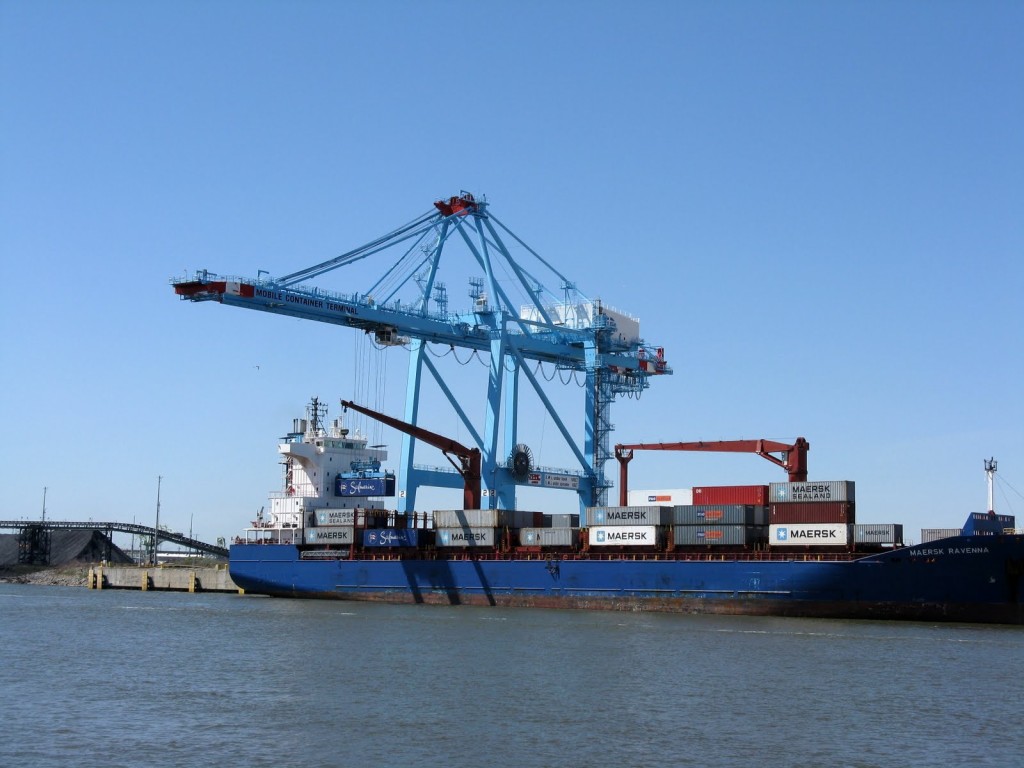
Ports and ground terminals in nearly every state handle goods that are now or will likely soon be covered by import tariffs. Port executives worry that this could mean a slowdown in shipping that would have ripple effects on truckers and others whose jobs depend on trade. The Associated Press analyzed government data and found that from the West Coast to the Great Lakes and the Gulf of Mexico, at least 10 percent of imports at many ports could face new tariffs if President Donald Trump’s proposals take full effect. Since March, the U.S. has applied new tariffs of up to 25 percent on nearly $85 billion worth of steel and aluminum and various Chinese products, mostly goods used in manufacturing. Trump said in a recent tweet, “Tariffs are working big time.” He has argued that the tariffs will help protect American workers and force U.S. trading partners to change rules that the president insists are unfair to the United States. In New Orleans, port officials say a tariff-related drop in shipments is real, not merely a forecast. Steel imports there have declined more than 25 percent from a year ago, according to the port’s chief commercial officer, Robert Landry. The port is scouting for other commodities it can import. But expectations appear to be low. “In our business, steel is the ideal commodity,” Landry said. “It’s big, it’s heavy, we charge by the ton so it pays well. You never find anything that pays as well as steel does.” The port of Milwaukee imports steel from Europe and ships out agricultural products from the Midwest. Steel imports haven’t dropped yet because they are under long-term contracts, said the port director, Adam Schlicht. But there has been “an almost immediate halt” in outbound shipments of corn because of retaliatory duties imposed by the European Union on American products. Much of the corn, he said, “is just staying in silos. They are filled to the brim.” Many other ports have been humming along and even enjoyed an unexpected bump in imports during June and July as U.S. businesses moved up orders to ship before the new tariffs took effect. That started with manufacturing goods and is now spreading to retail items for back-to-school and Christmas. “Some of my retail customers are forward-shipping the best they can to offset proposed tariffs,” says Peter Schneider, executive vice president of T.G.S. Transportation, a trucking company in Fresno, California. Port officials were encouraged by this week’s announcement that the United States and Mexico had reached a preliminary agreement to replace the North American Free Trade Agreement, hoping it might lead to reduced trade barriers. Canada’s participation in any new deal to replace NAFTA, though, remains a major question mark. The port officials continue to worry, though, that Trump will make good on a plan to expand tariffs to an additional $200 billion in Chinese imports — a list that includes fish and other foods, furniture, carpets, tires, rain jackets and hundreds of additional items. Tariffs would make those items costlier in the United States. And if Americans buy fewer of those goods, it would likely lead to fewer container ships steaming into U.S. ports. The impact will be felt keenly at West Coast ports like Los Angeles and Long Beach. Los Angeles Mayor Eric Garcetti, relying on information from his port officials, said his port — the biggest in the United States — could suffer a 20 percent drop in volume if the additional $200 billion in tariffs are imposed against Chinese goods. Jock O’Connell, an economist in California who studies trade, said he doubts a downturn would be so severe — that would match the slump that accompanied the global recession of 2008 — “but we will see a definite impact.” Here are some of the key findings from the AP analysis: — U.S. tariffs will cover goods that are imported at more than 250 seaports, airports and ground terminals in 48 states. — At 18 of 43 customs districts — including those representing ports around Los Angeles, San Francisco, New Orleans and Houston — at least 10 percent of their total import value could be covered by new tariffs if all Trump’s proposals take effect. — Retaliatory duties by China and other countries cover $27 billion in U.S. exports. Eugene Seroka, executive director of the Los Angeles port, worries that “if tariffs make it too expensive to import, there will be an impact on jobs.” Seroka and others don’t expect layoffs on the docks. Union longshoremen — whose average pay last year on the West Coast was $163,000, according to the Pacific Maritime Association, which negotiates for the ports — often have contract provisions ensuring that they are paid even if there’s no work. And there are fewer of them than there were a few decades ago because the advent of shipping containers has reduced the need for people on the docks. Dwayne Boudreaux, an International Longshoremen’s Association official in Louisiana, said, though, that his stevedores are handling about 10 percent less steel from Japan because of the new tariffs. “We don’t think it’s going to (get) worse,” he said. But, he added, “who knows — that could change from the next press conference.” The impact might be greater on truck drivers and warehouse workers. Fewer will be needed, according to O’Connell. Many drivers who deliver shipping containers from the dock to warehouses are independents contracted by trucking companies, and they don’t get paid if there is nothing to haul. Some might leave the profession, said Weston LaBar, CEO of the Harbor Trucking Association in Long Beach, California. “It’s hard to retain drivers,” he said. “If we don’t have work for those drivers, we’re worried they will leave for some other segment of the trucking business or go into another business, like construction.” Less shipping means less revenue for the ports — something that could limit their ability to pay for expansion and improvement projects, according to Kurt Nagle, president of the
National fisheries administration approves Alabama snapper program
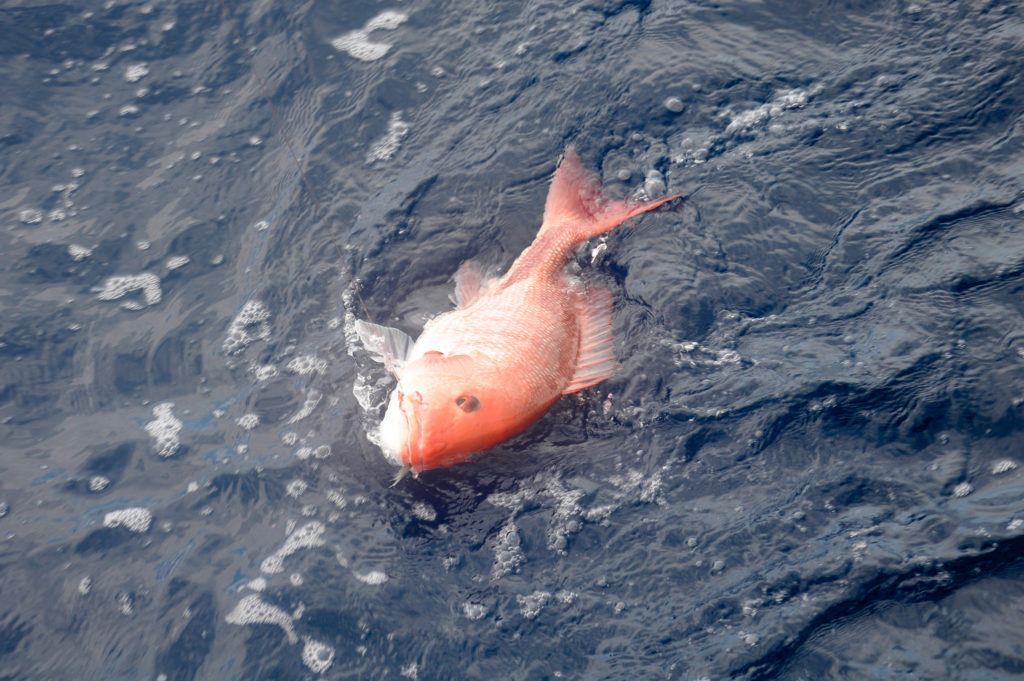
The federal government has approved a system developed by the state of Alabama to count the number of red snapper caught in the Gulf of Mexico. Gulf states, fishing groups and the NOAA Fisheries have disagreed for years about how many snapper can be caught. The decision means Alabama’s numbers can be used in the federal count. The state’s Marine Resources director, Scott Bannon, says anglers are frustrated with short snapper seasons. He says the federal decision is a “huge step” toward managing gulf waters. The state developed the Snapper Check program in 2014. It uses a combination of electronic reporting by anglers and dockside checks to verify the number of snapper that boats are keeping. NOAA Fisheries says it will work with the state to further implement the program. Republished with the permission of the Associated Press.
$315 million to fund projects in Mobile and Baldwin counties
A $315 million from the RESTORE Act and the Alabama Gulf Coast Recovery Council will help fund projects in southwestern areas of the state. Fifty projects will be given funding for infrastructure, environmental restoration and economic development, AL.com reported. The biggest include $56 million for five major road expansion projects in Baldwin County, $28 million for a new facility at the Port of Mobile, $27 million for projects affecting Dauphin Island’s Aloe Bay and $21 million to redevelop the docks in Bayou La Batre. Funds will also help improve water-sewer systems and eliminate sewage overflows. The money comes from penalties paid by companies involved in the 2010 Deepwater Horizon oil disaster in the Gulf of Mexico. The RESTORE Act established a trust fund to hold much of that money aside for “programs, projects, and activities that restore and protect the environment and economy of the Gulf Coast region.” Eliska Morgan, the council’s executive director, said more than 400 projects were submitted by various organizations and government entities. Some that didn’t make the cut will be considered in the future. “There are some really great ones,” Morgan said. “We’ve been working toward this end for some time.” Mobile County had more requests, totaling nearly twice the money as Baldwin County requests. Republished with the permission of the Associated Press.
Alabama couple part of human chain in Panama City Beach rescue
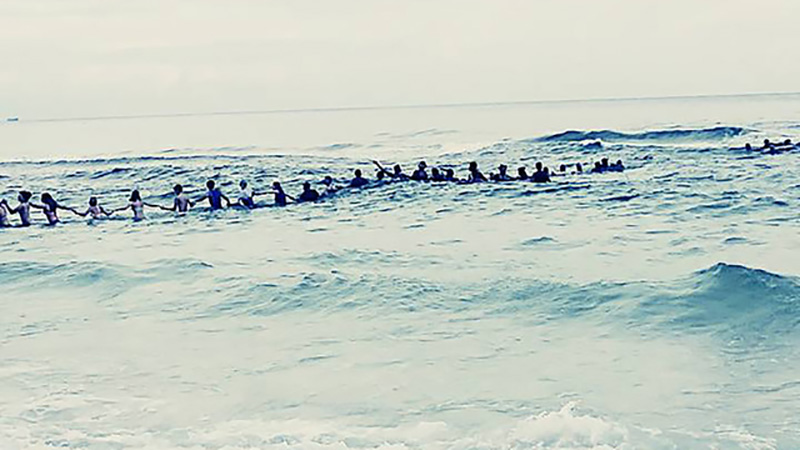
Alabama natives Jessica and Derek Simmons were part of an 80-person chain to rescue nine members of a family caught in a riptide off Panama City Beach and pulled too far from shore. Roberta Ursrey and her family were enjoying the day at M.B. Miller County Pier on the Gulf of Mexico when she noticed her sons were missing, the Panama City News Herald reported. She went looking for them and soon heard them screaming from the water that they were trapped by the current. Others warned her not to go in the water, but Ursrey, her mother, and five other family members swam to the boys’ aid, but then found themselves also trapped in 15-feet of water. Jessica Simmons, who had stopped with her husband at the beach for dinner, had just found a discarded boogie board when she saw people pointing at the water. She thought they were pointing at a shark, but when she realized people were drowning, she jumped on the board and began swimming toward Ursrey’s family. Simmons and her husband, originally from Jefferson County, moved to Panama City in 2016 after Derek Simmons accepted a management position. “These people are not drowning today,” Simmons remembers telling herself. “It’s not happening. We are going to get them out.” Meanwhile, Simmons’ husband and some other men started a human chain to bring everyone back to shore. Some couldn’t swim, so stayed in shallow water. Eventually, about 80 people were involved and got to within feet of the family. Simmons, her husband, and some others then towed the family to the chain, which passed them back to shore. Ursrey’s mother suffered a major heart attack during the ordeal and remains hospitalized. A nephew suffered a broken hand. Otherwise, everyone was safe. “I am so grateful,” Ursrey said. “These people were God’s angels that were in the right place at the right time. I owe my life and my family’s life to them. Without them, we wouldn’t be here.” Simmons said she was impressed by everyone working together to rescue the family. “It’s so cool to see how we have our own lives and we’re constantly at a fast pace, but when somebody needs help, everybody drops everything and helps,” Simmons told the newspaper. “That was really inspiring to see that we still have that. “With everything going on in the world, we still have humanity,” she added. Material from the Associated Press was used in this post, republished with permission.
Alabama politicians lament 9 day Red Snapper season: It’s a ‘disgrace’
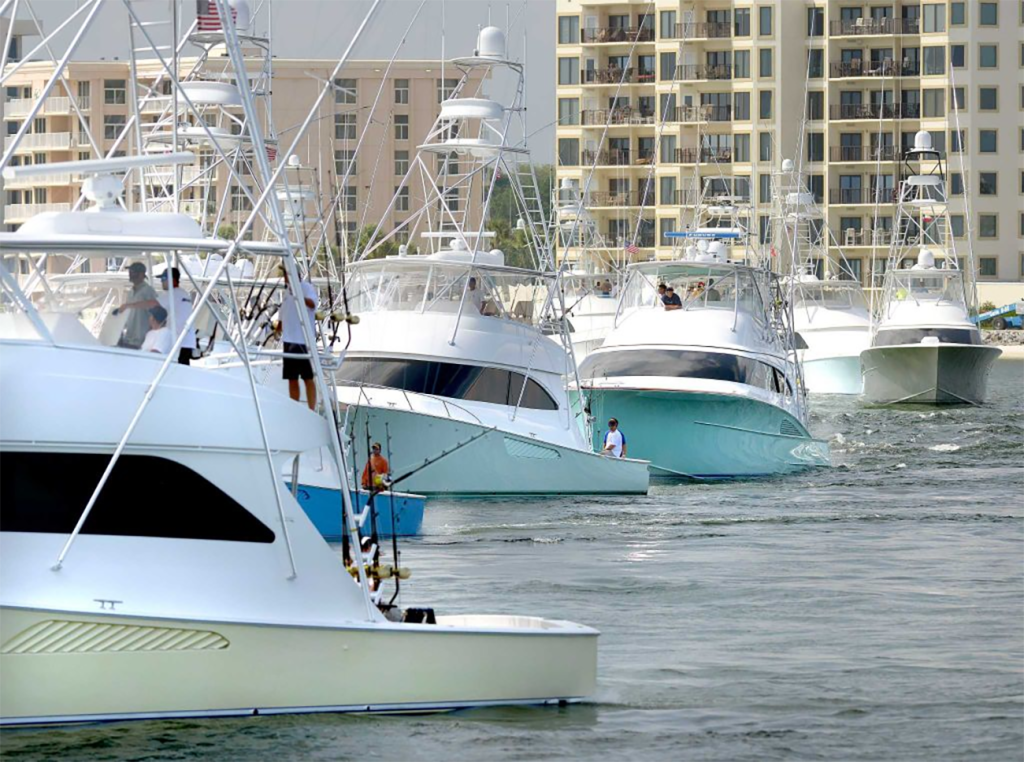
Congressman Bradley Byrne, Republican of the state’s first district, which encompasses Alabama’s two gulf counties, and State Auditor Jim Zeigler both spoke out Wednesday against the continuation of a federally-imposed nine day Red Snapper season. “A nine day Red Snapper season is a disgrace for Alabama’s fishermen,” wrote Byrne in a press release Wednesday. “This type of ‘derby-style’ season poses serious challenges and puts the safety of our fishermen at risk. There are plenty of Red Snapper in the Gulf, but the federal government continues to do a terrible job of counting the number of fish, as well as the number caught each year. The season, which will run this year from June 1st-June 10th is decided by the National Oceanic and Atmospheric Administration (NOAA). The administration makes the determination yearly based on “scientific studies of the Gulf and past catches of red snapper.” For-hire charter fishing boats will have a longer season, lasting 46 days from June 1st to July 17th. Byrne has long argued the determination of the prized fish’s season should be taken out of the hands of the federal government, and instead given to research institutions to decide, saying federal regulators consistently underestimate the amount of red snapper in the Gulf and overestimate the number caught each year. Zeigler echoed these concerns, calling the short season “unacceptable.” “These federal limits are totally unacceptable,” said the State Auditor. “They are based on bad science and improper counting of the snapper fishery. We need to get Alabama out from under federal regulation and have state conservation handle our fishery. Can you imagine paying for a boat to go snapper fishing and only being able to use it for nine days?” In 2015 the U.S. House passed legislation, championed by Byrne, which would have extended state water boundaries for each Gulf state to nine nautical miles from the coast and removed data collection and stock assessments from federal control, but it was never taken up the the Senate. “The House has passed reform legislation that would give us a real season again,” Byrne concluded, “and it is past time for the Senate to act on our legislation and bring relief to our fishermen.”
Bill would recognize 9-mile offshore limit for 3 Gulf states
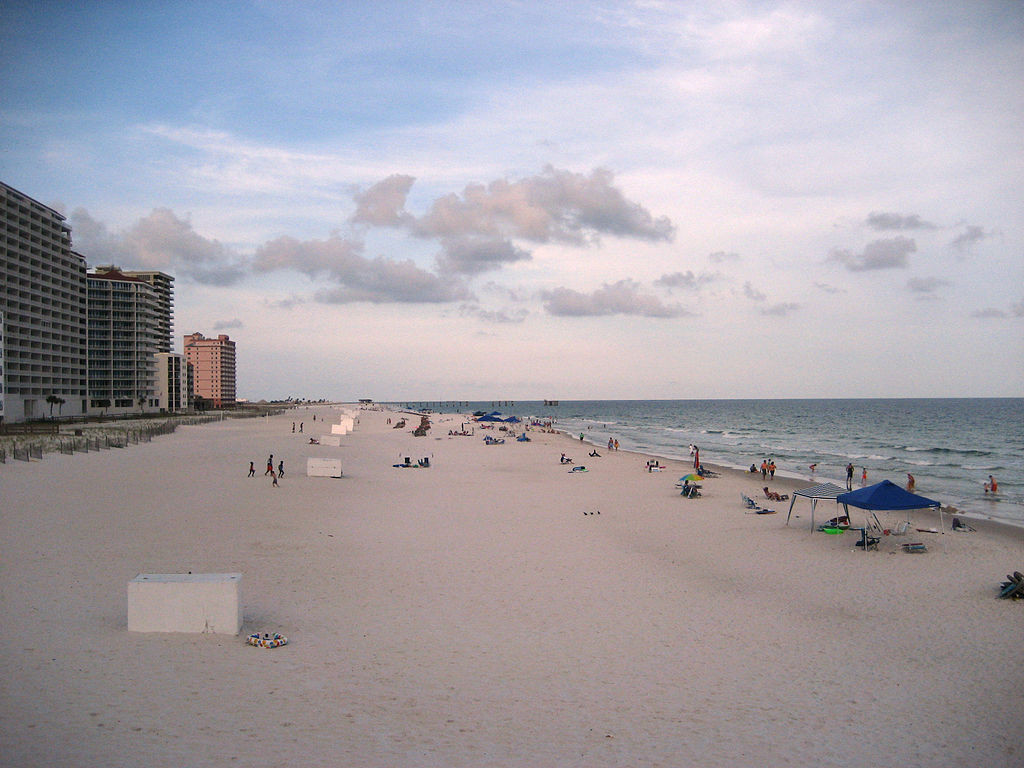
Since July 2013, Mississippi has claimed its state waters extend nine miles south into the Gulf of Mexico, but the federal government refuses to recognize the declaration. Mississippi’s senior U.S. senator is trying to change the government’s mind. The feds have been standing by a 1960 U.S. Supreme Court decision that determined the offshore boundary for Mississippi, Louisiana and Alabama was three miles out. The federal government also has not recognized Louisiana’s 2011 declaration of a nine-mile limit. On Thursday, the Senate Appropriations Committee, headed by Mississippi Republican U.S. Sen. Thad Cochran, wrote the nine-mile limit for all three states in a funding bill for the National Oceanic and Atmospheric Administration (NOAA) and other federal agencies. At stake is the Gulf states’ control of lucrative fishing rights and revenue from oil and gas production in near-offshore waters. “This would give these states greater influence in regulating Gulf state fisheries. Currently, only Texas and Florida enjoy nine-mile limits, and this provision would ensure parity among all Gulf Coast states,” Cochran said in a written statement. The bill now goes to the full Senate for consideration. “I am all for giving the state of Mississippi authority to oversee more of its own coast and allowing those with firsthand knowledge of the region’s needs, namely Mississippians, to have more influence its future,” Cochran said. The issue dates back to 1953, when Congress passed the Submerged Lands Act. The act established a coastal boundary for each state at three miles from the shore. The federal government retained control of water bottoms farther out. The act provided that Congress could vote to extend the boundaries up to 10 miles offshore if a state could prove the existence of a law or constitutional provision that established a boundary beyond three miles before that state joined the Union. In a 1960 lawsuit brought by the federal government, the five Gulf states argued that each qualified for an exception. The U.S. Supreme Court decided Texas and Florida had produced historical documents supporting a 10-mile boundary but it ruled Mississippi, Alabama and Louisiana had not. After 30 more years of litigation, the government, the Supreme Court and the states in 1992 set a legal definition of where each of the three states’ coastline began — and from there the three-mile limit would be determined. The decree did not extend the three-mile limit. Louisiana wildlife officials said the state Legislature gave authority to extend waters in 2011, but only after it was recognized by Congress or approved in litigation. The Mississippi law of 2013 mimics the Louisiana law, but without the reference to Congress. Cochran said the bill recommends funding for an independent assessment of reef fish stocks in the Gulf of Mexico, which will allow for an organization other than NOAA to conduct this research. He said NOAA is directed to count fish on artificial reefs and offshore energy infrastructure. The agency would also be required to incorporate this new, more accurate count into its stock assessments, which could potentially increase the allowable catch of red snapper for private anglers. “These provisions represent a straightforward effort to try to get past some of the contentious policies that have affected fishing in the Gulf,” Cochran said. Republished with permission of The Associated Press.
Gulf oil leak records cannot be kept secret, U.S. judge says
A federal magistrate judge has rejected a company’s bid to preserve the confidentiality of numerous emails and reports about its failed efforts to halt a Gulf of Mexico oil leak 10 years ago. The documents could be evidence in a lawsuit that environmental groups filed against Taylor Energy Co., which owned a platform that toppled during Hurricane Ivan in 2004. An Associated Press investigation recently revealed evidence that the leak at the site of the toppled platform is worse than Taylor or government regulators had publicly reported. U.S. Magistrate Judge Karen Wells Roby rejected arguments Wednesday by Taylor lawyers who said the documents contain valuable trade secrets. Taylor can ask to a district judge to review Wells Roby’s ruling. The AP has filed a public records request for some of the same confidential records. Republished with permission of The Associated Press.
US says decade-old Gulf oil leak could last another century
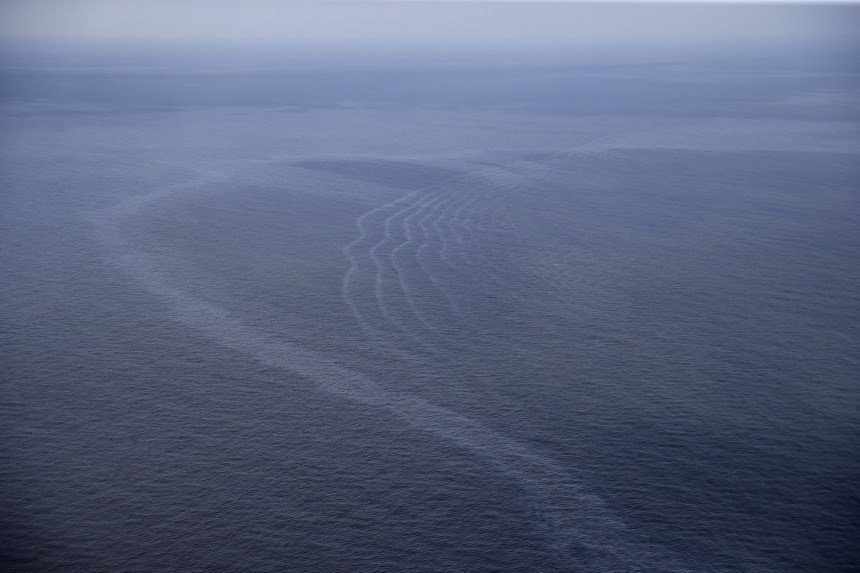
For more than a decade, oil has been leaking into the Gulf of Mexico where a hurricane toppled a drilling company’s platform off the coast of Louisiana. Now the federal government is warning that the leak could last another century or more if left unchecked. Government estimates obtained by The Associated Press provide new details about the scope of a leak that has persisted since Hurricane Ivan in 2004. Taylor Energy Co., which owned the platform and a cluster of oil wells, has played down the extent and environmental impact of the leak. The company also maintains that nothing can be done to completely eliminate the chronic oil slicks that often stretch for miles off the Louisiana coast. Taylor has tried to broker a deal with the government to resolve its financial obligations for the leak, but authorities have rebuffed those overtures and have ordered additional work by the company, according to Justice Department officials who were not authorized to comment by name and spoke on condition of anonymity. “There is still more that can be done by Taylor to control and contain the oil that is discharging” from the site, says an Interior Department fact sheet obtained by the AP. Federal regulators suspect oil is still leaking from at least one of 25 wells that remain buried under mounds of sediment from an underwater mudslide triggered by waves whipped up by Hurricane Ivan. A Taylor contractor drilled new wells to intercept and plug nine wells deemed capable of leaking oil. But a company official has asserted that experts agree the “best course of action … is to not take any affirmative action” due to the risks of additional drilling. An AP investigation last month revealed evidence that the leak is far worse than Taylor, or the government, has publicly reported during a secretive response to the slow-motion spill. The AP’s review of more than 2,300 Coast Guard pollution reports since 2008 showed a dramatic spike in sheen sizes and oil volumes since Sept. 1, 2014. That reported increase came just after federal regulators held a workshop last August to improve the accuracy of Taylor’s slick estimates and started sending government observers on a Taylor contractor’s daily flights over the site. Presented with AP’s findings, the Coast Guard provided a new leak estimate that is about 20 times greater than one recently touted by the company. In a February 2015 court filing, Taylor cited a year-old estimate that oil was leaking at a rate of less than 4 gallons per day. A Coast Guard fact sheet says sheens as large as 1.5 miles wide and 14 miles long have been spotted since the workshop. Since last September, the estimated daily volume of oil discharged from the site has ranged from roughly 42 gallons to 2,329 gallons, with a daily average of more than 84 gallons. Some experts have given far greater estimates of the leak’s extent. Based on satellite imagery and pollution reports, the watchdog group SkyTruth estimates between 300,000 and 1.4 million gallons have spilled from the site since 2004, with an annual average daily leak rate between 37 and 900 gallons. Marylee Orr, executive director of the Louisiana Environmental Action Network, said Taylor must be held responsible for stopping the leak “even if it takes 100 years.” “Every American citizen deserves to feel 100 percent confident that the response to this incident was rapid, effective and protective of the environment — and I don’t think we see that at this point,” said Orr, whose group is a plaintiff in a lawsuit filed against Taylor by the New York City-based Waterkeeper Alliance. In 2008, Taylor set aside hundreds of millions of dollars to pay for leak-related work as part of a trust agreement with the Interior Department. The company says it has spent tens of millions of dollars on its efforts to contain and halt the leak, but it hasn’t publicly disclosed how much money is left in the trust. The company sold all its offshore leases and oil and gas interests in 2008, four years after founder Patrick Taylor died, and is down to only one full-time employee. Justice Department officials say the company approached the government concerning the trust fund, but they declined to discuss the terms of its proposal. Federal agencies responded that more work was needed, including installing a more effective containment dome system, the officials said. One official said the company’s proposed resolutions involved trying to recoup money that was still in the trust, but those overtures were rejected. Federal officials declined to comment on the status of any negotiations. A spokesman for the company declined to comment Friday. In response to AP’s investigation, U.S. Sen. Bill Nelson last month called on federal officials to disclose technical data and other information about the leak. A spokesman for the Florida Democrat said Nelson had confirmed with the Interior Department that Taylor “was formally asking to be excused from any further cleanup costs.” “This case illustrates how hurricanes and oil rigs don’t mix,” Nelson said in a statement. “And I’m going to keep doing everything I can to make sure the Interior Department holds this company accountable.” Republished with permission of the Associated Press.
Drilling begins 3 miles from epicenter of BP oil spill
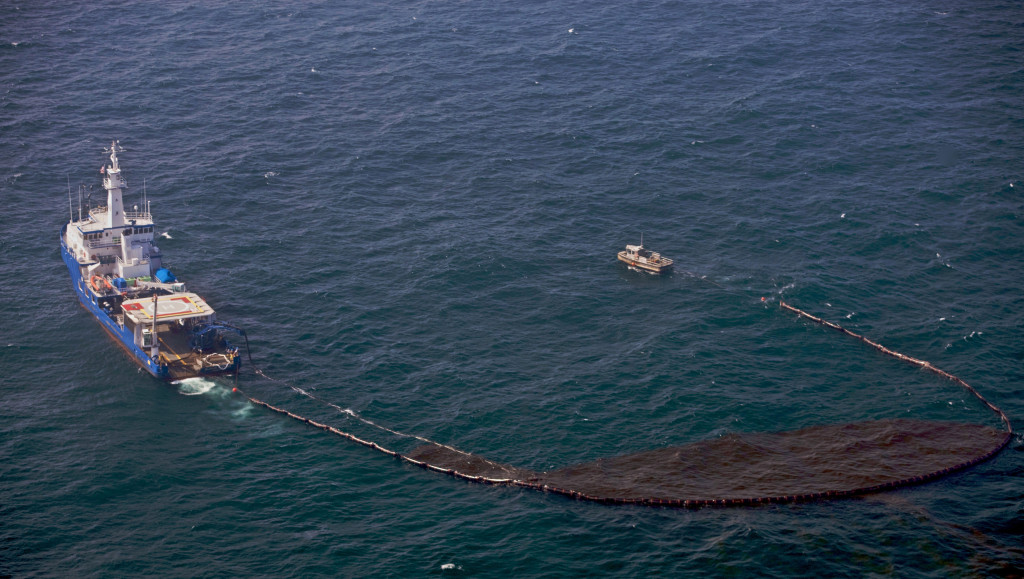
Just 3 miles from the catastrophic BP spill in the Gulf of Mexico, a Louisiana company is seeking to unlock the same oil and natural gas that turned into a deadly disaster. Drilling has begun in the closest work yet to the Macondo well, which blew wild on April 20, 2010, killing 11 people and fouling the Gulf with as much as 172 million gallons of crude in the nation’s worst oil spill. Federal regulators gave their blessing last month to LLOG Exploration Offshore LLC to drill the first new well in the same footprint where BP was digging before. The resumption of drilling at the former BP site comes as the oil industry pushes into ever deeper and riskier reservoirs in the Gulf. It reflects renewed industry confidence — even as critics say not enough has been done to ensure another disaster is avoided. “Now that five years have passed it seems that some of the emotions are less raw,” said Pavel Molchanov, an energy analyst with the investment firm Raymond James in Houston. If anything, drilling into BP’s Macondo reservoir may be safer now, he said. “Just because there was a spill there doesn’t mean it’s more dangerous,” he said. “It could make it less dangerous considering how much the seabed there has been studied.” Paul Bommer, a petroleum engineer at the University of Texas at Austin and a member of national panels investigating the BP disaster, said it was only a matter of time before drilling would resume there. There is just too much money at stake. Yet LLOG’s own exploration plans provide a window into the potential risks. In September exploration plans, LLOG estimated its worst-case scenario for an uncontrolled blowout could unleash 252 million gallons of oil over the course of 109 days. By comparison, the BP spill lasted 87 days and resulted in as much as 172 million gallons of oil pouring into the Gulf. “Our commitment is to not allow such an event to occur again,” said Rick Fowler, vice president for deep-water projects at LLOG. Fowler said the shallow part of the well has been drilled and that the deeper section will be completed later this year. LLOG’s permit to drill a new well was approved April 13 by the Bureau of Safety and Environmental Enforcement, which oversees offshore oil and gas drilling operations. Lars Herbst, the agency’s regional director, said in a statement that LLOG had demonstrated it could be trusted. “In order to obtain a permit to drill LLOG had to meet new standards for well-design, casing, and cementing which include a professional engineer certification,” he said. But Liz Birnbaum, former director of the Minerals Management Service, the former agency that oversaw oil drilling at the time of the BP spill, said allowing drillers to go after that oil is cause for concern because regulations covering well-control are not in effect and years away from being mandatory. Five years ago, BP, its contractors and federal regulators struggled to contain the blowout and kill the out-of-control well. In all, the federal government calculated that about 172 million gallons spilled into the Gulf. BP put the number much lower, closer to 100 million gallons. Richard Charter, a senior fellow with the Ocean Foundation and a longtime industry watchdog, said drilling into that reservoir has proved very dangerous and highly technical, and it raises questions about whether LLOG has the financial means to respond to a blowout similar to BP’s. The shallow part of the well was dug by the Sevan Louisiana, a rig owned by Sevan Drilling ASA, a large international drilling company based in Oslo, Norway. Another rig, the Seadrill West Neptune, will complete the well. Since 2010, LLOG has drilled eight wells in the area in “analogous reservoirs at similar depths and pressures,” Fowler said. The company has drilled more than 50 deep-water wells in the Gulf since 2002, he said. The company already has drilled three wells in the vicinity that tap into the same reservoir BP was going after in 2010. He said those wells were drilled without problems. He said the company has studied the investigations into the Macondo disaster and “ensured the lessons from those reports are accounted for in our design and well procedures.” BP spokesman Brett Clanton said an area even closer to the well, owned by BP, is an “exclusion zone” where oil and gas operations are off-limits both “out of respect for the victims” and to allow BP “to perform any response activities related to the accident.” Republished with permission of The Associated Press.
Court opens door to BP settlement appeals
A federal appeals court has opened the door for BP to appeal some claims related to a settlement reached after the 2010 Gulf of Mexico oil spill. The 5th U.S. Circuit Court of Appeals in New Orleans ordered a lower court judge to change a procedure that effectively blocked appeals. And the appeals court told the judge to reconsider a rule barring BP from appeals regarding the calculation of a business’ losses. However, the court upheld the lower court’s ruling that barred appeals dealing with payments to nonprofit groups. And, it said the court could continue to prevent appeals arising from BP’s contention that something other than the oil spill caused some businesses’ losses — an issue the oil giant has fought unsuccessfully for years. The opinion released late Friday is the latest dealing with a 2012 settlement of oil spill economic loss litigation. The settlement agreement was hailed by all involved when it was signed but soon became the subject of contention over the way it was interpreted by the district court in New Orleans and the court-appointed claims administrator. BP eventually won a change in the way losses are calculated after arguing that administrator Patrick Juneau wasn’t correctly matching businesses’ revenue and expenses. The appeals court, noting that the methodology has changed and has been the subject of numerous developments that “muddy the waters,” told the district court, where U.S. District Judge Carl Barbier, is overseeing spill cases, to take another look at the issue, and to provide reasons if the bar is continued. In 2012, BP estimated it would pay about $7.8 billion to resolve claims under the settlement. A fourth-quarter earnings statement put the estimate at closer to $10 billion, while noting that there were various factors that could change that number. BP and lawyers pursuing claims both found something to like in Friday’s ruling. “We are pleased that the 5th Circuit upheld our right to appeal individual claims determinations,” company spokesman Geoff Morrell said in an emailed statement. The company did not estimate how the decision might affect the cost of claims. “With regard to ‘alternative causation,’ we’re pleased the 5th Circuit saw through BP’s latest attempt to re-fight an issue that it has lost on every level,” plaintiffs’ attorneys Steve Herman and Jim Roy said in an email. “We’re further pleased the court shut the door on BP’s effort to deny the claims of nonprofit organizations.” Republished with permission of The Associated Press.
Gulf health 5 years after BP spill: Resilient yet scarred
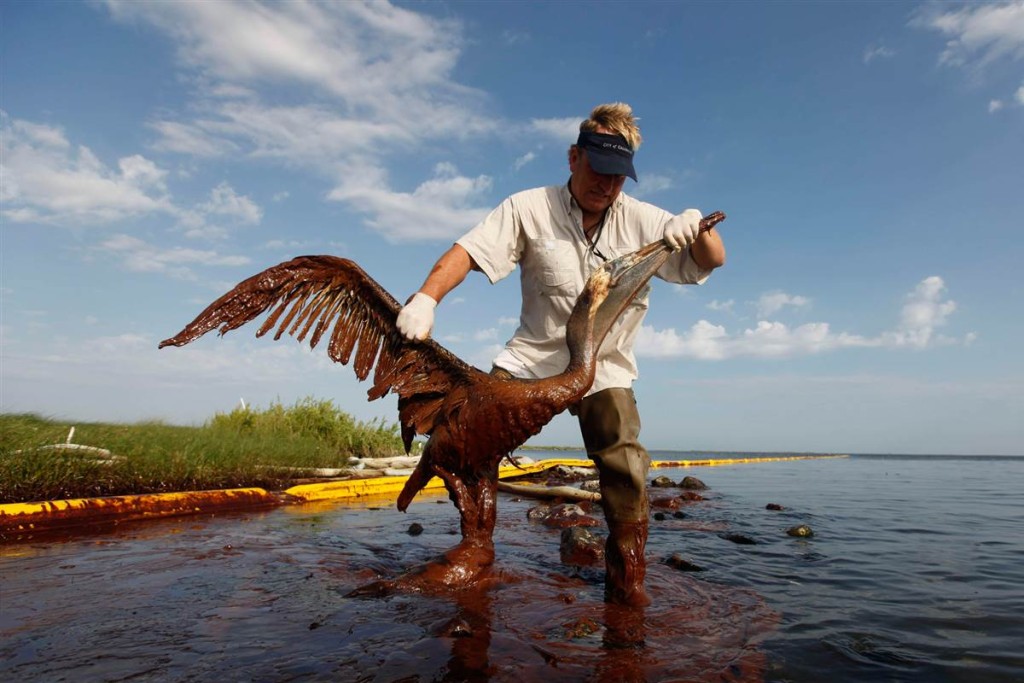
From above, five years after the BP well explosion, the Gulf of Mexico looks clean, green and whole again, teeming with life — a testament to the resilience of nature. But there’s more than surface shimmering blue and emerald to the aftermath of the Deepwater Horizon spill. And it’s not as pretty a picture — nor is it as clear. Federal data and numerous scientific studies show lingering problems. Splotches of oil still dot the seafloor and wads of tarry petroleum-smelling material hide in pockets in the marshes of Barataria Bay. Dolphin deaths have more than tripled. Nests of endangered Kemp’s Ridley sea turtles suddenly plummeted after the spill. Some fish have developed skin lesions along with oil in their internal organs. Deep sea coral are hurting. In some cases the connection to the BP spill is solid, in other cases it is harder to prove a direct causal link to the spill of millions of gallons of oil over 87 days. “Look, we put nature on a treadmill and I think it did very very well. We should consider ourselves lucky,” said Chris Reddy of the Woods Hole Oceanographic Institute. But then he said, “It’s the things that we don’t see that have been a concern.” To assess the health of the Gulf of Mexico, The Associated Press surveyed 26 marine scientists about two dozen aspects of the fragile ecosystem to see how the vital waterway has changed since before the April 2010 spill. On average, the researchers graded an 11 percent drop in the overall health of the Gulf of Mexico. The surveyed scientists on average said that before the spill, the Gulf was a 73 on a 0 to 100 scale. Now it’s a 65. In the survey, scientists report the biggest drops in rating the current health of oysters, dolphins, sea turtles, marshes, and the seafloor. The AP also interviewed more than two dozen other scientists. “The spill was — and continues to be — a disaster,” said Oregon State marine sciences professor Jane Lubchenco, who was the head of the National Oceanic and Atmospheric Administration during the spill. “The bottom line is that oil is nasty stuff. Yes, the Gulf is resilient, but it was hit pretty darn hard.” Lubchenco said some of her worst fears about dead zones or oil spreading farther didn’t materialize. But she added: “That’s not to say there is no impact.” BP put out a 40-page report in March, pronouncing the Gulf mostly recovered, noting that less than 2 percent of the water and seafloor sediment samples exceeded federal toxicity levels. “Data collected thus far shows that the environmental catastrophe that so many feared, perhaps understandably at the time, did not come to pass, and the Gulf is recovering faster than expected,” BP’s senior vice president and spokesman Geoff Morrell wrote in an email. “This is in large part due to the Gulf’s resilience, natural processes and the effectiveness of response and clean-up efforts mounted by BP under the direction of the federal government.” And in fact, there are experts who are surprised by how the Gulf has bounced back. Samantha Joye of the University of Georgia, who often paints a bleak picture of oil on the seafloor, recalled that in 2010 she dove in an area where the seafloor “was really hammered,” with no animals of any sort around. Then in 2014, she dove to the same place and it was quite different. “The fact that we saw living things on the bottom made me do a happy dance,” Joye said. “The system is absolutely resilient. Thank God for that. The biggest question is: Is it going back to the same point before the spill and that’s what we don’t know.” The federal government doesn’t think the Gulf is back. At least not yet. “Obviously the Gulf is not as healthy as it was,” NOAA chief scientist Richard Spinrad said. He ticks off how everything about the spill and its effects were large: the “massive kill-off” of coral, the dolphin deaths, the diseased fish, and problems with oil on the seafloor. There is no single, conclusive answer to how the Gulf of Mexico is doing, but there are many questions. Here are some of them: What happened to dolphins? Common bottlenose dolphins have been dying at a record rate in northern parts of the Gulf of Mexico since the BP spill, according to NOAA and other scientists who have published studies on the figures. From 2002 to 2009, the Gulf averaged 63 dolphin deaths a year. That rose to 125 in the seven months after the spill in 2010 and 335 in all of 2011, averaging more than 200 a year since April 2010. That’s the longest and largest dolphin die-off ever recorded in the Gulf. But the number of deaths has started to decline, said Stephanie Venn-Watson, a veterinary epidemiologist at the Marine Mammal Foundation and a lead author of studies on the dolphin mortality. She said there was a brief unrelated die-off in a different area of the Gulf before the spill, but afterward the dolphin deaths jumped in a way that “matched that of the timing, location and magnitude of the oil spill.” In its report on the Gulf five years after the spill, BP said necropsies of dolphins and “other information reveal there is no evidence to conclude that the Deepwater Horizon accident had an adverse impact on bottlenose dolphin populations.” What happened to turtles? The endangered Kemp’s Ridley sea turtle used to look like a success story for biologists. It was in deep trouble and on the endangered list, but a series of actions, such as the use of turtle excluder devices, had the population soaring and it was looking like the species soon would be upgraded to merely threatened, said Selina Saville Heppell, a professor at Oregon State University. Then, after the spill, the number of nests dropped 40 percent in one year in 2010. “We had never seen a drop that
