
Bradley Byrne: House makes regulatory reform a top priority
$1,000,000,000,000. That’s the estimated total cost of regulations issued by the Obama Administration. These regulations have resulted in over 754,000,000 hours of paperwork. These numbers are pretty remarkable. The wide range of regulations cover everything from energy to agriculture to the environment. In addition to having a negative effect on all those directly impacted, the regulations have a larger impact by stunting economic growth and increasing costs for consumers across the country. When I talk to Alabama employers, they almost always tell me the cost of regulations issued by the Obama Administration is the top reason they cannot create more jobs. One of the most frustrating things about most of these government regulations is the fact they are written and pushed out by unelected government bureaucrats. If Congress passes a law that negatively impacts the American people, then they can face repercussions in the next election. The unelected federal bureaucracies do not face that voter accountability. They can ignore the concerns of the American people because they are not accountable to them. But, for decades, liberal Congresses have given them more and more power. It is a deeply troubling situation. Thankfully, President-elect Donald Trump has pledged to make regulatory reform one of his top priorities. He has indicated he will remove two regulations for every one new regulation put in place. In Congress, we must also do our part. We have to take back the power to write the law from those who are unelected, stop the crushing effect of regulation on the economy, and make the regulatory process more open and transparent. And, over the last few weeks, the House has focused on bills to do just that. One of the very first bills we passed in the new year was the Regulations from the Executive in Need of Scrutiny (REINS) Act. This bill requires both the House and the Senate to vote on any new major rule or regulation before it can take effect. This change would ensure that the elected Congress has the ability to block costly, unnecessary, or illegal regulations. Last week, the House passed H.R. 5, the Regulatory Accountability Act. This bill puts in place a wide range of regulatory reforms including requiring agencies to choose the lowest-cost option, ensuring greater opportunity for public input and comments, and forcing agencies to publish plain-language, online summaries of new proposed rules. The Regulatory Accountability Act also reverses a Supreme Court decision that remarkably allows federal agencies to interpret what authority Congress has given them. We also passed the SEC Regulatory Accountability Act this week. The Dodd-Frank Act gave bureaucrats at the Securities and Exchange Commission (SEC) wide power to hand down crushing regulations without adequately considering the impact those regulations have on jobs. This bill would simply require the SEC to confirm that its regulation passes a cost-benefit analysis, meaning its benefits outweigh its cost to our economy. Sometimes presidents, including President Barack Obama, try and push through a large amount of regulations in the last days of their administration. Often times these rules are rushed and not well considered. In response to this, the House also passed the Midnight Rules Relief Act, which would allow Congress to overturn multiple proposed regulations issued by a lame duck Administration in one bill. Each of these bills demonstrate our effort to turn the tide away from a heavy-handed federal government back towards the free enterprise principles that empower the American people. • • • Bradley Byrne is a member of U.S. Congress representing Alabama’s 1st Congressional District.
Martha Roby: Finally. Replacing “No Child Left Behind”

Politicians have tried for decades to fix our schools with a “Washington-knows-best” approach. But, this top-down scheme hasn’t improved student achievement, and our schools are more bogged down in federal mandates and red tape than ever before. Teachers, parents, principals and superintendents that I’ve talked to all agree: one size does not fit all when it comes to education. They are frustrated with endless regulations and directives from Washington. Since coming to Congress, I’ve worked to replace “No Child Left Behind” with policies that return decision-making back to states and local communities where it should be. I’m pleased to report that this week the House acted to do just that by passing H.R. 5, the “Student Success Act.” This bill eliminates more than 65 ineffective, duplicative and unnecessary programs, replacing them with flexible grants that state and local districts can use to benefit students the best way they see fit. I’m further pleased to report that the bill includes language I proposed and have championed expressly prohibiting the federal government from using funding grants and policy waivers to coerce states into adopting certain standards and curricula. In addition to getting the federal government out of the standards and curricula business, this bill includes many other positive provisions supporting parents, locals and states: Eliminating the “Adequate Yearly Progress,” or “AYP” metric and returning the responsibility for proficiency systems to the states where they belong; Repealing the federal “Highly Qualified Teachers” requirements, or “HQT,” which will enable state and local-driven efforts to customize teaching evaluations; Enhancing student mobility and school choice by repealing Title I restrictions and allowing money to “follow the student” to the school of the parent’s choice, whether that’s a traditional public school or a public charter school; Supporting the start-up, replication and expansion of high-quality public charter schools, which Alabama can now access to support its recently-enacted charter school program; Of course this isn’t a perfect bill – I’ve yet to read one that is. But, the Student Success Act finally replaces top-down Washington mandates with conservative reforms that reduce the federal footprint in education, restore local control and empower parents, teacher and community leaders to improve their schools. Martha Roby represents Alabama’s 2nd Congressional District. She is currently serving her third term.
U.S. House of Representatives: July 6-10
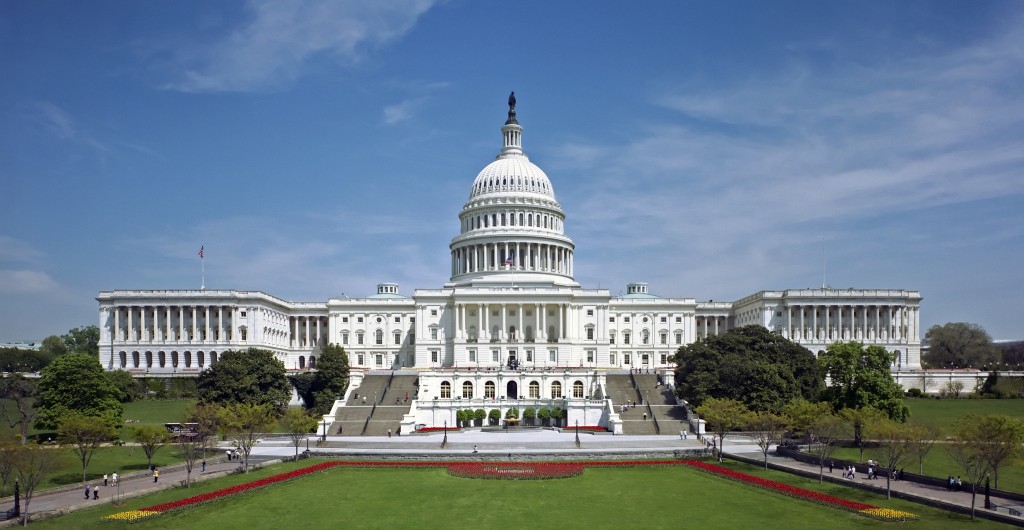
The U.S. House of Representatives returns Tuesday after a weeklong holiday recess ready to tackle a busy July agenda. They’ll begin with a vote on three noncontroversial bills under suspension of the rules. After Tuesday’s suspension votes, members will resume consideration of H.R. 2822: the Interior, Environment, and Related Agencies Appropriations Act for FY 2016. The bill provides a total of $30.2 billion in discretionary spending in FY 2016 for the Interior Department, the EPA, the Forest Service and a variety of other agencies. That total is $246 million (1 percent) less than current funding and $3.1 billion (9 percent) less than requested by the Obama administration. It’s considered a controversial bill because it decreases funding for EPA by 9 percent and limits the EPA’s regulatory authority. It also cuts funding for Forest Service activities and for the Fish and Wildlife Service. Other legislation on the floor for a vote this week includes: H.R. 5: the Student Success Act. The House originally began consideration of H.R. 5 in February, but postponed completing consideration at that time. The bill reauthorizes the Elementary and Secondary Education Act (ESEA, sometimes also referred to No Child Left Behind, NCLB). The bill makes fundamental changes to many ESEA programs. Alabama co-sponsors: Rep. Bradley Byrne (AL-1) H.R. 6: the 21st Century Cures Act. This bill is a bipartisan medical research and innovation bill intended to assure American leadership in biomedical research for the future and to allow drugs to get to patients more quickly, while also ensuring they are safe and effective for use. Alabama co-sponsors: Rep. Mike Rogers (AL-3) H.R. 2647: the Resilient Federal Forests Act of 2015. The bill would modify federal forest management practices by restoring fundamental land management capabilities to the U.S. Forest Service, such as routine thinning practices to improve forest health and reduce wildfire threats. Alabama co-sponsors: Rep. Gary Palmer (AL-6) Aside from the floor activity, the House will continue to work with the Senate through a conference committee to resolve the differences between their two versions of the National Defense Authorization Act. They are hoping to produce a final conference report before the August congressional recess, despite that President Barack Obama has threatened to veto the defense policy bills produced by both of the chambers.
