
WikiLeaks founder denies Russia behind Clinton campaign email hacking
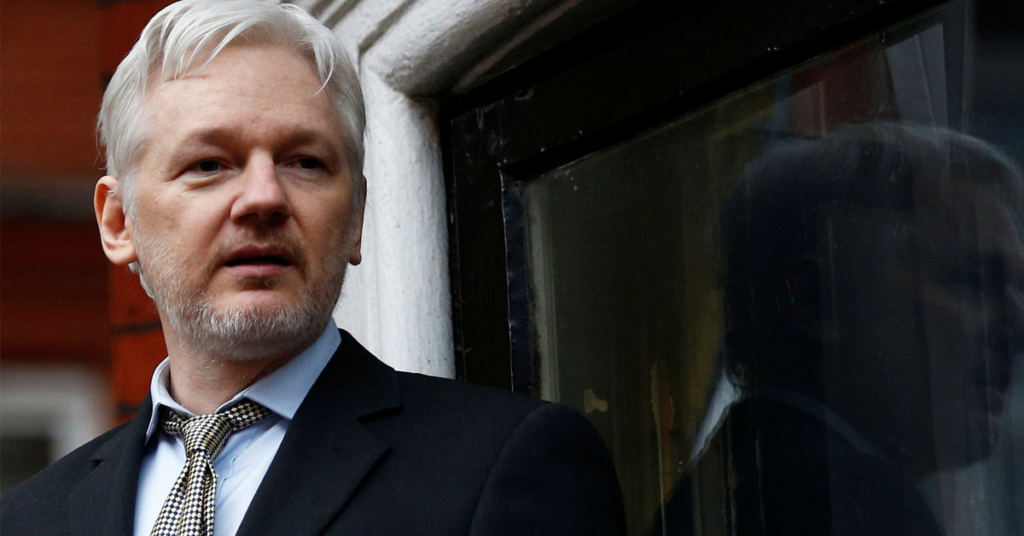
WikiLeaks founder Julian Assange denied Thursday that the Russian government or any other “state parties” were his group’s source for more than 50,000 hacked emails from the files of Hillary Clinton‘s campaign chairman, John Podesta. In separate statements from WikiLeaks and in an interview with a television network supported by the Russian government, Assange dismissed warnings that Russia was the main actor behind cyberintrusions on Podesta and other politically connected individuals and organizations. The WikiLeaks founder offered no evidence to support his denials in the face of U.S. government statements that American intelligence agencies have concluded that Russia was behind the hacking campaigns of Democratic entities in the U.S. Those breaches have raised alarms of potential intrusions on election day. WikiLeaks’ “sources for the Podesta emails currently being published are not state parties,” Assange said in a statement. He also told the RT network that warnings from Clinton and her campaign that Russia was behind the hacking of Podesta’s Gmail account were “false.” “Hillary Clinton has stated multiple times, falsely, that 17 U.S. intelligence agencies had assessed that Russia was the source of our publications,” Assange told the RT network, also known as Russia Today. “That’s false – we can say that the Russian government is not the source.” Russian officials have also denied any role. “Only Russia’s senior-most officials could have authorized these activities,” Director of National Intelligence James Clapper said in October. Clapper did not specifically name Russian President Vladimir Putin or other Russian officials, but U.S. cybersecurity experts concluded that hacking groups affiliated with Russian government and military intelligence services had roles in the breach of the Democratic National Committee. WikiLeaks began releasing nearly 20,000 emails last July hacked from the DNC’s computer system. Some of the emails disparaged Clinton’s rival, Sen. Bernie Sanders, eventually prompting the resignation of then-DNC chair Debbie Wasserman Schultz. U.S. officials and private computer crime specialists blamed that leak on Russian-linked hackers. Assange was granted asylum by Ecuador and lives in its embassy in London. He fled there in 2012 after Sweden pressed a warrant for his arrest on a sexual assault allegation. Media organizations have reported on each new daily WikiLeaks release of Podesta’s emails in recent weeks. Clinton campaign officials have declined to discuss the emails, questioning whether some of the material might be doctored. Thursday’s release of hacked Podesta emails include: In a March 2015 hacked email, Hillary Clinton told her top foreign policy adviser last year that Prime Minister Benjamin Netanyahu of Israel had created “an opening that should be exploited” after Netanyahu was forced to apologize for making remarks about Israeli Arabs that were condemned as racist. Clinton made the comment to adviser Jake Sullivan, who emailed a link to a New York Times story detailing the controversy in Israel over Netanyahu’s remarks and a fight between him and the Obama administration over remarks promising that no Palestinian state would ever be established on his watch. In a hacked email from September 2015, Clinton communications director Jennifer Palmieri told Podesta that Clinton would have to make herself more available to reporters if Vice President Joe Biden entered the presidential race. “But if Biden gets in – we are going to have to make time for her to do more press,” Palmieri wrote. “He will do a ton of it. It is free and he doesn’t have to travel anywhere to do. So I am thinking about a post-Biden press outreach plan, too.” In a hacked email chain from last February, Clinton’s campaign staff discussed whether to respond on the day the nation learned Supreme Court Justice Antonin Scalia had died. “I am having a hard time imagining what she would say,” Palmieri said. “In a day or two it could be appropriate to talk about SCOTUS stakes, but seems off for tonight.” Republished with permission of the Associated Press.
Hacked trove shows Hillary Clinton aides suggesting email jokes
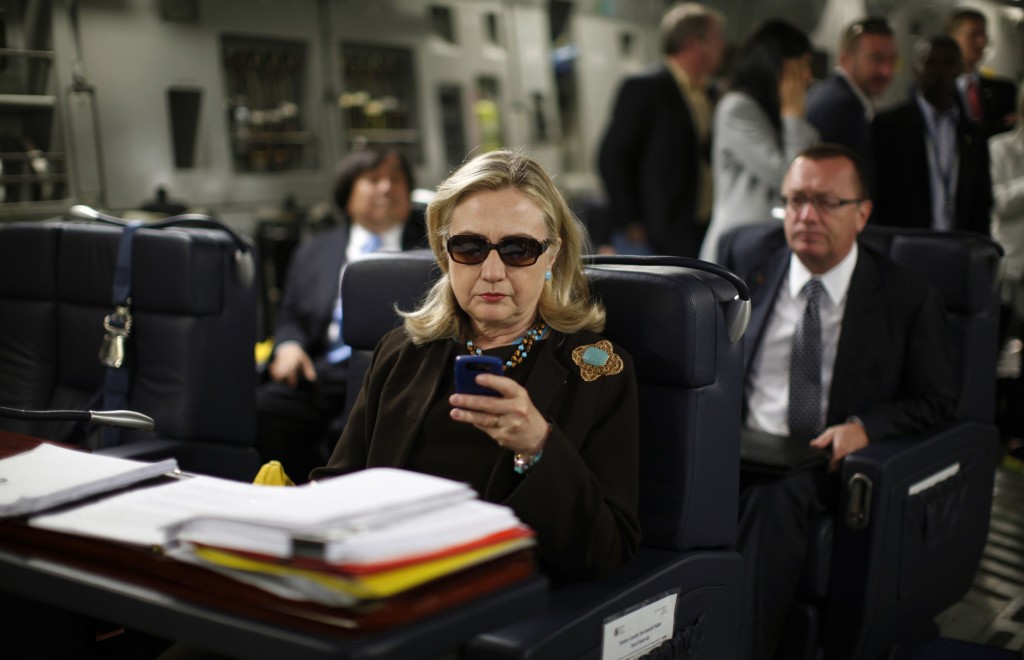
Hacked emails from the personal account of Hillary Clinton‘s top campaign official show her aides considered inserting jokes about her private email server into her speeches at several events – and at least one joke made it into her remarks. “I love it,” she told a dinner in Iowa on August 14, 2015, noting she had opened an online account with Snapchat, which deletes posts automatically. “Those messages disappear all by themselves.” The crack scored a laugh from the audience, but the issue was plenty serious. About a month earlier, news broke of an FBI investigation into whether some of the emails that passed through Clinton’s unsecured server contained classified information. Ultimately, the agency criticized Clinton for being reckless with classified information but declined to prosecute her. But hacked emails of John Podesta, Clinton’s top campaign official, show the Democratic candidate and her team were slow to grasp the seriousness of the controversy, initially believing it might blow over after one weekend. It did not, and became the most recent example of a penchant for secrecy that has fueled questions about Clinton’s trustworthiness, which she has acknowledged has been a political challenge. The joke was included in hacked emails that WikiLeaks began releasing earlier this month, saying they included years of messages from accounts used by Podesta. Podesta warned that messages may have been altered or edited to inflict political damage, but has not pointed to any specifics. Almost from the moment The Associated Press on March 3, 2015, called the campaign for comment on its breaking story that Clinton had been running a private server to five months later, campaign aides sought venues on Clinton’s schedule where she could show some humor over the issue, according to the hacked emails. In a series of emails on March 3, 2015 – the same day The Associated Press called for comment – staffers tossed around the idea of making jokes about the emails at a dinner hosted by EMILY’s List, a political action committee, that evening. “I wanted to float idea of HRC making a joke about the email situation at the EMILY’s List dinner tonight,” Jennifer Palmieri, director of communications for Clinton’s campaign, wrote at 2:37 p.m., using the candidate’s initials. “What do folks think about that?” The idea got a mostly favorable response at first. “I don’t think it’s nuts if we can come up with the right thing. But it could also be nuts,” replied campaign spokesman Nick Merrill a couple of minutes later. “I think it would be good for her to show some humor,” added Kristina Schake, now a deputy communications director. “…More jokes are welcome too.” But political consultant Mandy Grunwald nixed the idea after speaking with Jim Margolis, a media adviser to the campaign. “We don’t know what’s in the emails, so we are nervous about this,” Grunwald wrote to Merrill and Schake at 6:09 p.m. that night. “Might get a big laugh tonight and regret it when content of emails is disclosed.” Clinton’s campaign aides also considered using Virginia Gov. Terry McAuliffe‘s 2015 appearance at the Gridiron Dinner, an annual Washington joke-fest involving journalists and politicians, to try and defuse the email issue. McAuliffe is a longtime confidante and fundraiser for Clinton, and was chairman of her unsuccessful 2008 presidential bid. “Anyway what do we think about using gridiron to puncture the email story a little,” wrote Palmieri, who suggested possible joke topics, including one involving Jeb Bush. Clinton campaign manager Robby Mook expressed concern, saying reinforcing the idea that Clinton and McAuliffe are close “conjures the 90s stuff” – a reference, to Bill Clinton‘s two turbulent terms in office. McAuliffe’s routine at the Gridiron did not ultimately include the discussed email routine. Five months later, Hillary Clinton’s director of speechwriting, Dan Schwerin, shared a draft of a speech for the annual Iowa political event known as the Wing Ding dinner in an email to colleagues, asking for input. “I look forward to your feedback. (Also, if anyone has a funny email/server joke, please send it my way.),” he wrote on August 13. Republished with permission of the Associated Press.
