
Harry Reid, former Senate majority leader, dies at 82
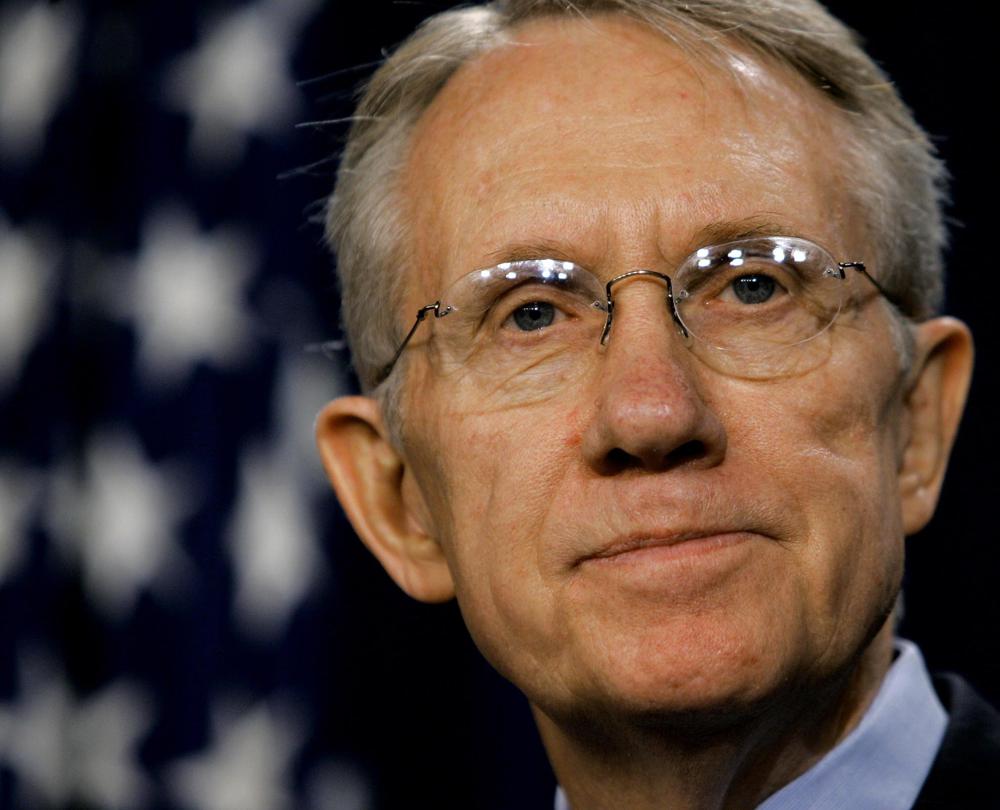
Harry Reid, the former U.S. Senate majority leader and Nevada’s longest-serving member of Congress, has died. He was 82. Reid died Tuesday “peacefully” and surrounded by friends at home in suburban Henderson, “following a courageous, four-year battle with pancreatic cancer,” according to family members and a statement from Landra Reid, his wife of 62 years. “Harry was a devout family man and deeply loyal friend,” she said. “We greatly appreciate the outpouring of support from so many over these past few years. We are especially grateful for the doctors and nurses that cared for him. Please know that meant the world to him,” Landra Reid said. Funeral arrangements will be announced in the coming days, she said. Harry Mason Reid, a combative former boxer-turned-lawyer, was widely acknowledged as one of toughest dealmakers in Congress, a conservative Democrat in an increasingly polarized chamber who vexed lawmakers of both parties with a brusque manner and this motto: “I would rather dance than fight, but I know how to fight.” Over a 34-year career in Washington, Reid thrived on behind-the-scenes wrangling and kept the Senate controlled by his party through two presidents — Republican George W. Bush and Democrat Barack Obama — a crippling recession and the Republican takeover of the House after the 2010 elections. President Joe Biden said that during the two decades they served together in Congress, and the eight years they worked together when Biden was vice president, Reid met the marker for what he believed was the most important measure of a person — their actions and their words. “If Harry said he would do something, he did it. If he gave you his word, you could bank on it. That’s how he got things done for the good of the country for decades,” Biden said in a statement. Reid retired in 2016 after an accident left him blind in one eye and revealed in May 2018 that he’d been diagnosed with pancreatic cancer and was undergoing treatment. Less than two weeks ago, officials and one of his sons, Rory Reid, marked the renaming of the busy Las Vegas airport as Harry Reid International Airport. Rory Reid is a former Clark County Commission chairman and Democratic Nevada gubernatorial candidate. Neither Harry nor Landra Reid attended the December 14 ceremony held at the facility that had been known since 1948 as McCarran International Airport, after a former U.S. senator from Nevada, Pat McCarran. Reid was known in Washington for his abrupt style, typified by his habit of unceremoniously hanging up the phone without saying goodbye. “Even when I was president, he would hang up on me,” Obama said in a 2019 tribute video to Reid. Reid was frequently underestimated, most recently in the 2010 elections when he looked like the underdog to tea party favorite Sharron Angle. Ambitious Democrats, assuming his defeat, began angling for his leadership post. But Reid defeated Angle, 50% to 45%, and returned to the pinnacle of his power. For Reid, it was legacy time. “I don’t have people saying ‘he’s the greatest speaker,’ ‘he’s handsome,’ ‘he’s a man about town,’” Reid told The New York Times in December that year. “But I don’t really care. I feel very comfortable with my place in history.” Born in Searchlight, Nevada, to an alcoholic father who killed himself at 58 and a mother who served as a laundress in a bordello, Reid grew up in a small cabin without indoor plumbing and swam with other children at a pool at a local brothel. He hitchhiked to Basic High School in Henderson, Nevada, 40 miles (64 kilometers) from home, where he met the wife he would marry in 1959, Landra Gould. At Utah State University, the couple became members of the Church of Jesus Christ of Latter-day Saints. The future senator put himself through George Washington University law school by working nights as a U.S. Capitol police officer. At age 28, Reid was elected to the Nevada Assembly and at age 30 became the youngest lieutenant governor in Nevada history as Gov. Mike O’Callaghan’s running mate in 1970. Elected to the U.S. House in 1982, Reid served in Congress longer than anyone else in Nevada history. He narrowly avoided defeat in a 1998 Senate race when he held off Republican John Ensign, then a House member, by 428 votes in a recount that stretched into January. After his election as Senate majority leader in 2007, he was credited with putting Nevada on the political map by pushing to move the state’s caucuses to February, at the start of presidential nominating season. That forced each national party to pour resources into a state that, while home to the country’s fastest growth over the past two decades, still only had six votes in the Electoral College. Reid’s extensive network of campaign workers and volunteers twice helped deliver the state for Obama. Obama in 2016 lauded Reid for his work in the Senate, declaring, “I could not have accomplished what I accomplished without him being at my side.” The most influential politician in Nevada for more than a decade, Reid steered hundreds of millions of dollars to the state and was credited with almost single-handedly blocking construction of a nuclear waste storage facility at Yucca Mountain outside Las Vegas. He often went out of his way to defend social programs that make easy political targets, calling Social Security “one of the great government programs in history.″ Reid championed suicide prevention, often telling the story of his father, a hard-rock miner who took his own life. He stirred controversy in 2010 when he said in a speech on the floor of the Nevada legislature it was time to end legal prostitution in the state. Reid’s political moderation meant he was never politically secure in his home state or entirely trusted in the increasingly polarized Senate. Democrats grumbled about his votes for a ban on so-called partial-birth abortion and the Iraq war resolution in 2002, something Reid later said it was his
On Super Tuesday eve, Joe Biden gets boost from former rivals
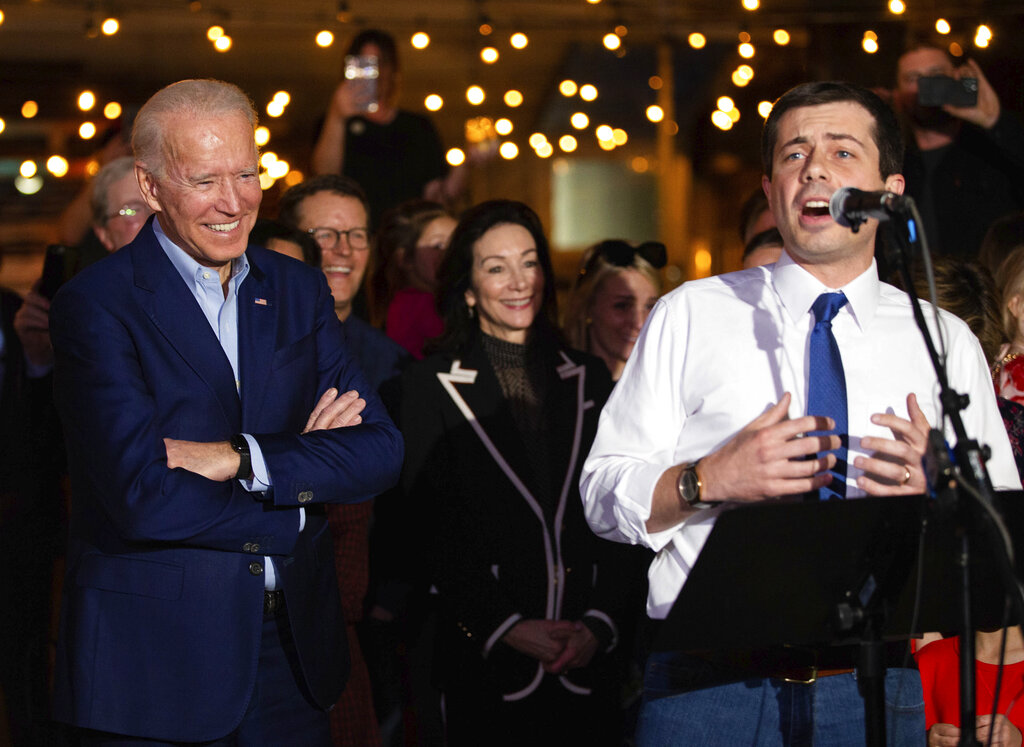
Biden received the support of former rivals, Pete Buttigieg and Amy Klobuchar.
Harry Reid: Brokered convention ‘not the end of the world’

A brokered convention hasn’t happened since the invention of the modern primary system five decades ago.
Conservative icon David Koch leaving business, politics
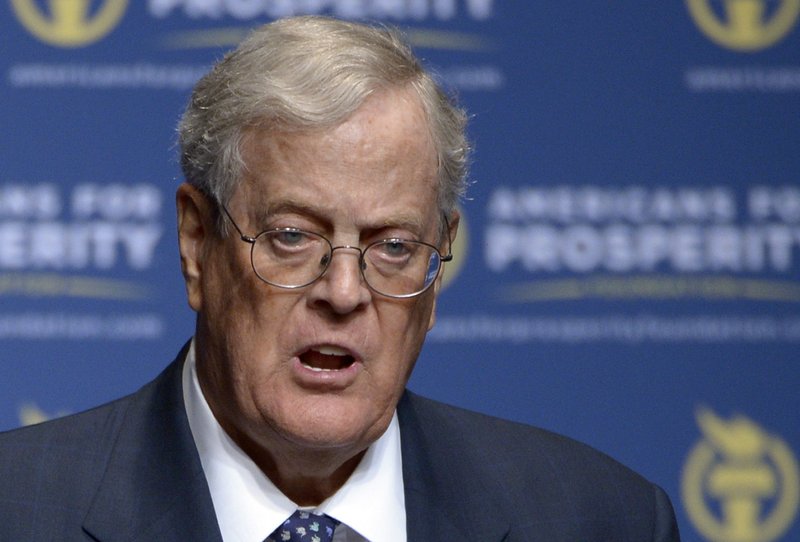
Billionaire conservative icon David Koch is stepping down from the Koch brothers’ network of business and political activities. The 78-year-old New York resident is suffering from deteriorating health, according to a letter that older brother Charles Koch sent to company officials Tuesday morning. Charles Koch wrote that he is “deeply saddened” by his brother’s retirement. “David has always been a fighter and is dealing with this challenge in the same way,” he wrote. David Koch is leaving his roles as executive vice president and board member for Koch Industries and a subsidiary, Koch Chemical Technology group, where he served as chairman and chief executive officer. Koch is also stepping down as chairman of the board for the Americans For Prosperity Foundation, the charity related to Koch brothers’ primary political organization. Charles Koch had assumed a more visible leadership role in the brothers’ affairs in recent years. He will continue to serve as the CEO of Koch Industries and the unofficial face of the network’s political efforts. Democrats have demonized the Koch brothers for their outsized influence in conservative politics over the last decade. Former Senate Majority Leader Harry Reid regularly attacked Republicans for what he called a “Koch addiction.” Yet the Kochs have clashed with the Trump administration at times. Citing concerns about Trump’s style and substance, the network refused to endorse either presidential candidate in the 2016 election. And while they have praised Trump’s policies on taxes, de-regulation and health care, they have aggressively attacked the Republican administration’s trade policies. On Monday, the Koch network announced a multi-million-dollar campaign to oppose Trump’s tariffs and highlight the benefit of free trade. Using the money they made from their Kansas-based family business empire, the Koch brothers have created what is likely the nation’s most powerful political organization with short- and long-term goals. Their network has promised to spend $400 million to shape the 2018 midterm elections. They have also devoted significant time and resources to strengthening conservative influence on college campuses, in the Hispanic community and in the nonprofit sector. David Koch, who served as the Libertarian Party’s vice presidential candidate in 1980, had begun focus more on philanthropy in recent years. The Manhattan resident donated $150 million to New York City’s Memorial Sloan Kettering Cancer Center in 2015, the largest gift in the organization’s history. He has also given $185 million in total donations to the Massachusetts Institute of Technology, his alma mater. In an April interview with the Washington Examiner, Charles Koch described his younger brother this way: “David is much more political than I am.” Charles continued: “David is a much better engineer than I am and is much more into the arts and social life. Obviously he’s got to be or he wouldn’t live in Manhattan. And David is much more into elective politics than I am.” In Tuesday’s letter, Charles Koch said his brother’s “guidance and loyalty, especially in our most troubled times, has been unwavering.” “David has never wanted anything for himself that he hasn’t earned, as his sole desire has always been to contribute,” he wrote. Republished with the permission of the Associated Press.
Lady Gaga hits stage for invite-only show for DNC delegates

Lady Gaga hit the stage at an invitation-only concert Thursday for delegates to the Democratic National Convention, covering classic songs from Woody Guthrie, Neil Young, the Beatles and others. Gaga opened with a jazzy version of Guthrie’s “This Land is Your Land” and then Young’s “Old Man.” She was introduced by Democratic U.S. Sen. Cory Booker, who called her a star who’s not afraid to speak out about sexual violence and mental health. She closed out her set with the Beatles’ “Come Together” and then sang Edith Piaf‘s “La Vie en Rose” as an encore. Lenny Kravitz, who also performed inside the convention on Wednesday night, ended his set Thursday by shouting, “We, the people! We, the people! We, the people!” DJ Jazzy Jeff spun tunes in between their sets. The show gives Camden, one of the country’s most impoverished cities, time in the Democratic convention spotlight. George Norcross and Susan McCue, president of General Majority PAC and a former chief of staff to U.S. Senate Majority Leader Harry Reid, hosted the “Camden Rising” event, held hours before Hillary Clinton formally accepts the Democratic Party’s nomination for president. Norcross is credited with working with Republican Gov. Chris Christie to help in redevelopment efforts in Camden, many partially funded through state grants and tax credits. The insurance executive is a Democratic superdelegate along with his brother, U.S. Rep. Donald Norcross. Both are supporting Clinton. Clinton delegate Suzanne Perkins, 47, of Ann Arbor, Michigan, said she thinks celebrities can help influence delegates and voters. After Kravitz’s set, she said Bernie Sanders supporters in her delegation who like his music and politics heard his support for Clinton and might think, “Maybe I ought to open my mind. Here’s a guy whose politics I agree with and he endorsed her.” Republished with permission of the Associated Press.
NRA ad claims Hillary Clinton is threat to gun rights
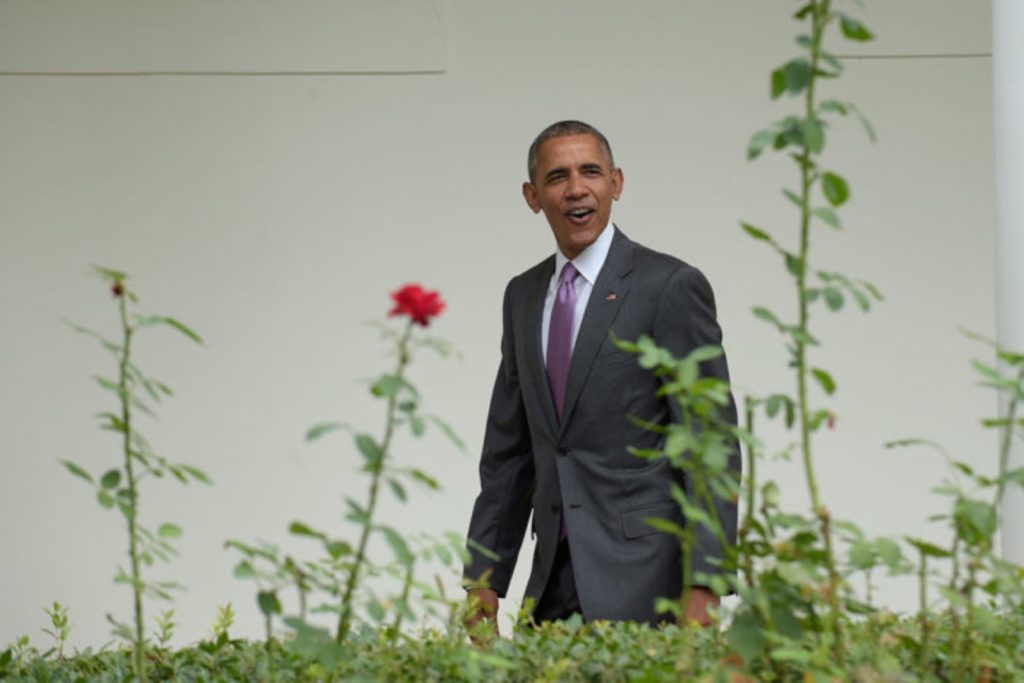
The Latest on the Democratic National Convention (all times EDT): 7:45 p.m. On the same day Hillary Clinton is set to claim the Democratic presidential nomination, the National Rifle Association is coming out with an ad saying Americans’ “right to own a gun for self-defense is at risk in this election.” The group says it plans to begin airing the 30-second ad on Thursday. It features a rape victim who confronted President Barack Obama over gun right at a town hall meeting this year. She tells viewers that “self-defense is your right. Don’t let it be taken away.” Word of the ad campaign comes as the Democratic Convention features speeches Wednesday night from relatives of the nightclub shooting in Orlando, Florida, and the 2012 shootings at Sandy Hook Elementary School in Connecticut. The ad’s narrator says Clinton “would take away your rights.” 7:30 p.m. Some Hillary Clinton supporters at the Democratic convention are becoming noticeably agitated by the continued protests of Bernie Sanders‘ most vocal supporters. Danielle Adams is a Clinton delegate from North Carolina. She says, “I’m so exhausted by it.” Some in the Colorado delegation at the Wells Fargo Center have scratched out letters in signs that say “Stronger Together” – and those signs now say “stop her.” Delegates from Louisiana and Delaware are standing in front of them holding their own signs and attempting to block the view. In California, an older woman in tears had to be led out of the arena because she was upset by some of the protesting Sanders backers. Cheryl Brown is a state representative from California. She says the way some Sanders delegates are behaving is exacerbating tensions between the two campaigns. 7 p.m. Harry Reid is speaking at his final Democratic National Convention as a senator, and the Senate’s Democratic leader is blasting Republicans and Donald Trump for wanting to – in his words – “tear down the pillars of middle-class security.” The retiring Nevada lawmaker has some harsh words for the Senate’s Republican leader, Kentucky’s Mitch McConnell. Reid says McConnell and the GOP have slandered the country’s first black president, whipped up fear of Muslims and sown hatred of Latinos. Reid says parents are right to worry about their kids hearing what comes out of Trump’s mouth. He says Trump learned it from watching Republicans. 6:50 p.m. Movie director James Cameron is calling Donald Trump “a madman,” and “incredibly reckless, incredibly dangerous” when it comes to global warming. The director of “Titanic” and “Avatar” has made a short film – airing Wednesday night at the Democratic convention – about how climate change is harming the United States. The film shows wildfires, heat waves and the aftermath of Superstorm Sandy – and then segues to Trump calling man-made global warming a hoax. Cameron tells reporters that attacking Trump on his rejection of mainstream climate change science is a winning strategy for Democrats. He calls Trump’s positions “incredibly reckless, incredibly dangerous” and later refers to Trump as “a madman saying we’re going to tear up” the landmark climate change agreement negotiated in Paris. 6:35 p.m. The Rev. Jesse Jackson says Hillary Clinton can be trusted to fight for issues such as a fair Supreme Court, gun control and progressive policies. The former presidential candidate says Clinton understands the impact of the Black Lives Matter movement and the shooting deaths of Trayvon Martin, Michael Brown and Alton Sterling. Jackson also is congratulating Bernie Sanders for energizing the campaign with “ideas and hope.” In Jackson’s words: “The Bern must never grow cold.” Still, he says, “It’s healing time. It’s hope time. It’s Hillary time.” 6:30 p.m. California’s governor is criticizing Donald Trump for failing to mention the words “climate change” or “global warming” during his acceptance speech at the Republican convention. Jerry Brown says it’ll take “heroic efforts on the part of many people and many nations” to combat climate change. But, the Democratic governor adds, “You wouldn’t know it by listening to Donald Trump.” Brown is speaking at the Democratic convention later Wednesday, and in his prepared remarks, he notes Trump has called global warming a hoax. That’s why Brown isn’t holding back: “I say Trump is a fraud.” Brown’s also disputing Trump’s assertion there’s no drought in California – only water mismanagement. Brown’s response: “I say Trump lies.” He says Trump and others who reject climate science “are dead wrong – dangerously wrong.” 6 p.m. President Barack Obama has a message for fellow Democrats, and all those watching the Democratic convention at home: There’s never been a man or a woman more qualified than Hillary Clinton to serve as president. It’s a theme Obama is stressing in his convention speech later Wednesday night. According to the White House, Obama plans to say “nothing truly prepares you for the demands of the Oval Office.” He intends to vouch for Clinton as someone who’s been part of his biggest decisions in the Oval Office and a leader who never quits – no matter the odds or “how much people try to knock her down.” The president is set to describe his 2008 campaign rival as someone who listens to people, keeps her cool and treats everybody with respect. Obama says, “that’s the Hillary I’ve come to admire.” 5:50 p.m. President Barack Obama plans to tell the Democratic convention that the America he knows is “full of courage and optimism and ingenuity.” The White House released a preview of Obama’s Wednesday speech to the convention a few hours before he’ll address delegates in Philadelphia. Obama says Americans have “real anxieties,” including paying their bills, protecting their children, frustrations with political gridlock and racial divisions. But he says during his travels as president, he’s “seen, more than anything, is what is right with America.” That includes people working hard and “a younger generation full of energy and new ideas.” 5:31 p.m. Six drafts and a few late nights went into the speech President Barack Obama will give at the Democratic convention. White House officials
A divided Senate answers Orlando with gridlock on gun curbs
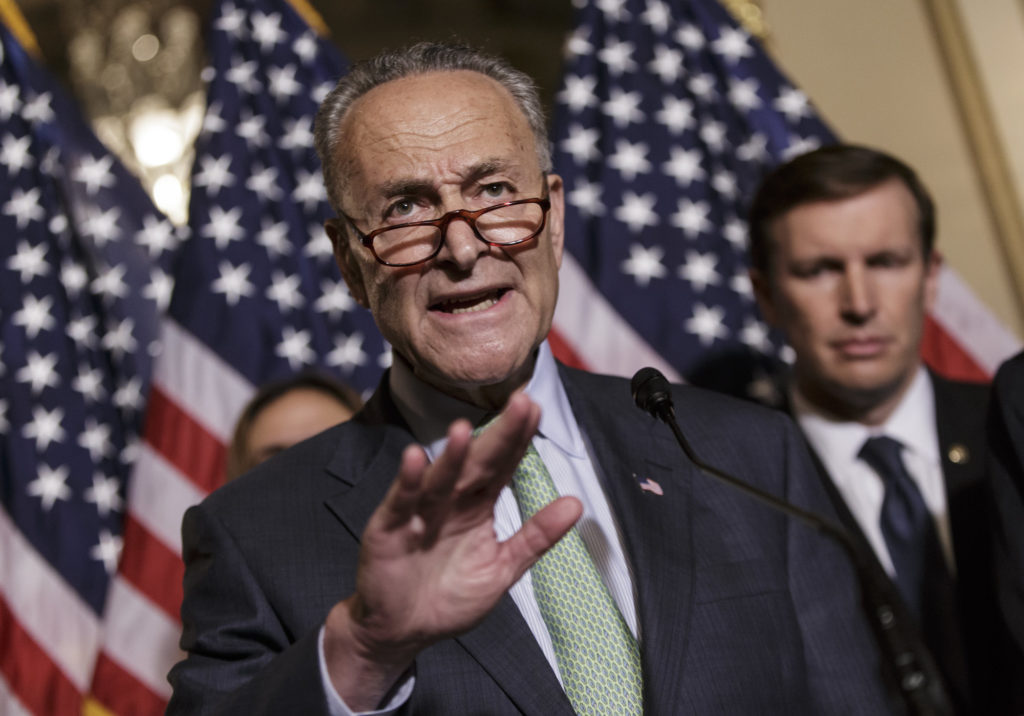
A divided Senate blocked rival election-year plans to curb guns on Monday, eight days after the horror of Orlando’s mass shooting intensified pressure on lawmakers to act but knotted them in gridlock anyway — even over restricting firearms for terrorists. In largely party-line votes, rejected were one proposal from each side to keep extremists from acquiring guns and another shoring up the government’s existing system of required background checks for many firearms purchases. With the chamber’s visitors’ galleries unusually crowded for a Monday evening — including people wearing orange T-shirts saying #ENOUGH gun violence — each measure fell short of the 60 votes needed to progress. Democrats called the GOP proposals unacceptably weak while Republicans said the Democratic plans were overly restrictive. The stalemate underscored the pressure on each party to give little ground on the emotional gun issue going into November’s presidential and congressional elections. It also highlighted the potency of the National Rifle Association, which urged its huge and fiercely loyal membership to lobby senators to oppose the Democratic bills. “Republicans say, ‘Hey look, we tried,’” said Senate Minority Leader Harry Reid, of Nevada. “And all the time, their cheerleaders, the bosses at the NRA, are cheering them.” Senate Majority Leader Mitch McConnell, R-Ky., said the Orlando shootings — in which the FBI says the American-born gunman swore allegiance to a leader of the Islamic State group — show the best way to prevent attacks by extremists is to defeat such groups overseas. “Look, no one wants terrorists to be able to buy guns or explosives,” McConnell said. He suggested that Democrats were using the day’s votes “as an opportunity to push a partisan agenda or craft the next 30-second campaign ad,” while Republicans wanted “real solutions.” That Monday’s four roll-call votes occurred at all was testament to the political currents buffeting lawmakers after gunman Omar Mateen‘s June 12 attack on a gay nightclub. The 49 victims who died made it the largest mass shooting in recent U.S. history, topping the string of such incidents that have punctuated recent years. The FBI said Mateen — a focus of two terror investigations that were dropped — described himself as an Islamic soldier in a 911 call during the shootings. That let gun control advocates add national security and the specter of terrorism to their arguments for firearms curbs, while relatives of victims of past mass shootings and others visiting lawmakers and watching the debate from the visitors’ galleries. GOP senators facing re-election this fall from swing states were under extraordinary pressure. One, Sen. Kelly Ayotte of New Hampshire, voted Monday for the Democratic measure to block gun sales to terrorists, a switch from when she joined most Republicans in killing a similar plan last December. She said that vote — plus her support for a rival GOP measure — would help move lawmakers toward approving a narrower bipartisan plan, like one being crafted by Sen. Susan Collins of Maine. Monday’s votes came after Sen. Chris Murphy, D-Conn., led a near 15-hour filibuster last week demanding a Senate response to the Orlando killings. Murphy entered the Senate shortly after the December 2012 massacre of 20 first-graders and six educators in Newtown, Connecticut, but that slaughter and others have failed to spur Congress to tighten gun curbs. The last were enacted in 2007, when the background check system was strengthened after that year’s mass shooting at Virginia Tech. With Mateen’s self-professed loyalty to extremist groups and his 10-month inclusion on a federal terrorism watch list, Sen. Dianne Feinstein, D-Calif., proposed letting the government block many gun sales to known or suspected terrorists. People buying firearms from federally licensed gun dealers can currently be denied for several reasons, chiefly for serious crimes or mental problems, but there is no specific prohibition for those on the terrorist watch list. That list currently contains around 1 million people — including fewer than 5,000 Americans or legal permanent residents, according to the latest government figures. No background checks are required for anyone buying guns privately online or at gun shows. The GOP response to Feinstein was an NRA-backed plan by Sen. John Cornyn, R-Texas. It would let the government deny a sale to a known or suspected terrorist — but only if prosecutors could convince a judge within three days that the would-be buyer was involved in terrorism. The Feinstein and Cornyn amendments would require notification of law enforcement officials if people, like Mateen, who’d been under a terrorism investigation within the past five years were seeking to buy firearms. Republicans said Feinstein’s proposal gave the government too much unfettered power to deny people’s constitutional right to own a gun. They also noted that the terrorist watch list has historically mistakenly included people. Democrats said the three-day window that Cornyn’s measure gave prosecutors to prove their case made his plan ineffective. The Senate rejected similar plans Feinstein and Cornyn proposed last December, a day after an attack in San Bernardino, California, killed 14 people. Murphy’s rejected proposal would widely expand the requirement for background checks, even to many private gun transactions, leaving few loopholes. Senate Judiciary Committee Chairman Charles Grassley of Iowa, defeated plan increased money for the background check system. Like Murphy’s measure, it prodded states to send more records to the FBI, which operates the background check system, of felons and others barred from buying guns. Grassley’s proposal also revamped language prohibiting some people with mental health issues from buying a gun. Democrats claimed that language would roll back current protections. Monday’s votes were 53-47 for Grassley’s plan, 44-56 for Murphy’s, 53-47 for Cornyn’s and 47-53 for Feinstein’s — all short of the 60 needed. Separately, Collins was laboring to fashion a bipartisan bill that would prevent people on the no-fly list — with just 81,000 names— from getting guns. There were no signs Monday that it was getting wide support or would receive a vote. Republished with permission of The Associated Press.
Guest lineups for the Sunday news shows

Guest lineups for the Sunday TV news shows: ABC’s “This Week” — White House chief of staff Denis McDonough; Sen. Mitch McConnell, R-Ky.; Republican presidential candidate John Kasich; Republican National Committee Chairman Reince Priebus. ___ NBC’s “Meet the Press” — Kasich, McConnell; Sen. Harry Reid, D-Nev. ___ CBS’ “Face the Nation” — Kasich; Democratic presidential candidate Bernie Sanders; Sen. Lindsey Graham R-S.C. ___ CNN’s “State of the Union” — Kasich, McConnell, Priebus. ___ “Fox News Sunday” — McDonough, Kasich, McConnell. ___ Republished with permission of the Associated Press.
Darryl Paulson: The Antonin Scalia battle: The stakes have seldom been as high
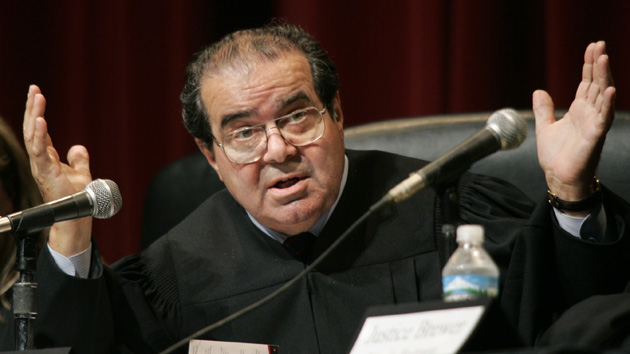
The passing of Supreme Court Justice Antonin Scalia on Feb. 3, has created an opportunity for both the executive and legislative branches to work together. If they can’t, American politics will face a crisis of enormous magnitude. That is how serious the situation has become. Whether liberal or conservative, most agree that Scalia was a judge who profoundly influenced the court during his three decades there. Many rank him among the giants such as John Marshall, Oliver Wendell Holmes, Jr., and William Brennan. Besides his opinions on court decisions, Scalia’s primary contribution was pushing the doctrines of “originalism” and “textualism.” Scalia’s doctrine of originalism argued against the grain of existing legal thought that the Constitution was a living document constantly in change. Scalia believed that the Constitution should be interpreted as the 18th-century framers understood it. In other words, there is no protection for abortion and gay rights, and no sanction for affirmative action. “Textualism” was a more widely accepted doctrine. According to Scalia, textualism meant that when interpreting laws, the courts must not look at the legislative history or Congressional intent, but the courts must only look at the words of the law. Among the current court, only Justice Stephen Breyer rejects textualism. There is little doubt about Scalia’s intellectual ability. He was valedictorian at Xavier High School, finished first in his class at Georgetown and was magna cum laude at Harvard Law School. After spending six years in private practice, he taught four years at the University of Virginia Law School. He then served as legal counsel for a federal agency before having a distinguished career at the University of Chicago Law School. Scalia had disappointments. When Ronald Reagan was elected president in 1980, Scalia wanted to be appointed Solicitor General. Instead, he lost out to Rex Lee and told his biographer that “I never forgot it.” Scalia was appointed to the District of Columbia Circuit Court in 1982. That circuit serves as a feeder to the Supreme Court, and that happened in 1986 when Reagan nominated Scalia to a position on the highest court. Scalia was confirmed 98-0 and would be the last ideological judge to be confirmed without opposition. The next year, the Senate rejected Robert Bork, and “borking” became the process of defeating ideologues. Within hours of the announcement of Scalia’s death, leaders in both parties were trying to define the nomination process. Senate Majority Leader Mitch McConnell announced that the Senate should wait until after the 2016 presidential election to confirm a replacement. “The American people have a voice in the selection of the next Supreme Court Justice,” said McConnell. “Therefore, this vacancy should not be filled until we have a new president.” Within minutes, Senate Democratic leader Harry Reid responded that the American people did have a voice. They elected Barack Obama as president in 2012. Reid argued that the nation cannot afford to go a full year with a split Supreme Court. “Failure to fill this would be a shameful abdication of one of the Senate’s most essential Constitutional responsibilities,” Reid said. To be confirmed, any Obama nominee would need a minimum of 50 senate votes in a body where Republicans now hold 54 of the 100 seats. The threat of a Republican filibuster would mean that the Democrats would need all 46 Democrats to support the nominee along with 14 of the 56 Republicans. That is very unlikely in the era of “borking.” The Supreme Court is facing many controversial issues this term including abortion, contraception, unions, voting rights and affirmative action. All may be affected by Scalia’s death and the possibility of a 4-4 deadlock on the court. For example, in the Fredricks v. California Teachers Association case, it appeared during oral arguments that it looked like a five-member majority would reverse a lower court decision requiring teachers who did not join the union to pay for the benefits of any collective bargaining agreement. Without Scalia, a 4-4 decision would mean the lower court decision would prevail. There are many political calculations at play. Will Obama nominate a moderate candidate to win Republican support? If so, will progressive Democrats balk? Will Obama nominate another liberal like Sonia Sotomayor or Elena Kagan? If so, will Republicans even hold hearings? Will moderate Republicans running for re-election in swing states pressure party leaders to hold hearings so that the party will not appear obstructionist? Will McConnell accept a moderate and risk jeopardizing his leadership position? Will Democrats accept a moderate and risk appearing to cave in to the Republican majority? When both sides shooting political bullets, will one of the parties be willing to holster the gun? Will that party look like the good guys acting responsibly, or will they look like political wimps unwilling to fight the good fight? The stakes are high; the outcome is indeterminate. *** Darryl Paulson is Professor Emeritus of Government at the University of South Florida St. Petersburg and resides in Palm Harbor, Florida.
White House, congressional negotiators near agreement on spending, tax cut deal
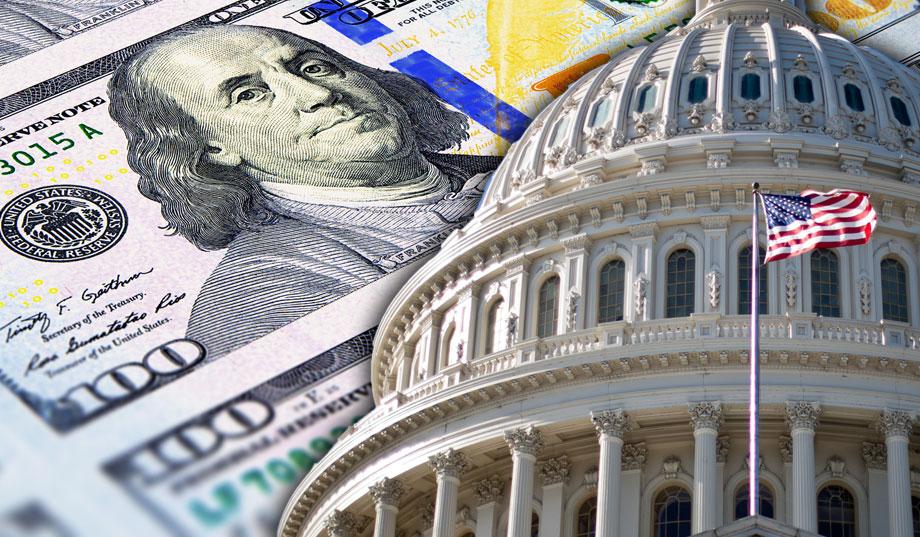
White House and congressional negotiators moved toward clinching a tax and spending compromise that would cap Congress’ year by extending numerous tax credits and financing government agencies in 2016. Eleventh-hour differences remained over Republican efforts to lift a ban on U.S. oil exports. House Speaker Paul Ryan said Tuesday morning that the deal would be released later in the day and come to a vote on Thursday. That would require passage of another short-term spending bill since government funding expires Wednesday at midnight. “I’m not going to predict how the vote count is going to go down. Look, in negotiations like this you win some, you lose some. Democrats won some, they lost some. We won some, we lost some,” Ryan, R-Wis., said at a breakfast hosted by Politico. “At the end of the day we’re going to get this done.” But on the Senate floor, Minority Leader Harry Reid, D-Nev., said Democrats would not relent on demands that in exchange for allowing American crude oil exports for the first time in four decades, his party wanted provisions aimed at encouraging alternative energy development and protecting Obama administration efforts to reduce greenhouse gas emissions. “If Republicans think reducing our carbon emissions and encouraging use of alternative energy is an unacceptable price to pay, we can move the rest of the package” without lifting the oil export ban, Reid said. He added, “It’s decision time.” Appearing with Ryan, Senate Majority Leader Mitch McConnell, R-Ky., avoided offering details but spoke of the benefits of a long-term deal to extend dozens of tax breaks sought by lawmakers on both sides. McConnell said such a deal would make a larger tax reform package easier to achieve next year, while satisfying business goals, including extending a research and development tax credit and a popular deduction for equipment purchases. “Making those permanent is, I think, an important shot in the arm to our economy,” McConnell said. A major priority for the GOP and some Democrats was lifting the 40-year-old bar against exporting U.S. crude oil, a remnant of the 1970s oil shortages that industry supporters consider unneeded with today’s explosion of domestic oil extraction. Critics say ending the prohibition would be a windfall to big oil companies that would damage the environment by encouraging more drilling. In exchange, Democrats were seeking concessions including renewing tax breaks for solar and wind energy producers for five years and reviving an environmental conservation fund. Democrats also wanted to block GOP efforts to roll back Obama administration environmental regulations, including one setting new emission standards for power generating plants. Negotiators had sorted through remaining disputes over environment, labor and other provisions in a $1.1 trillion bill financing federal agencies for 2016. The final package is expected to ignore conservative demands for language clamping down on Syrian refugees entering the U.S. Instead it would contain changes to the “visa waiver” program that allows visa-free travel to the U.S. for citizens of 38 countries, including France and Belgium, where many of the Paris attackers were from. Lobbyists said the spending package would likely lack a provision pushed by House Minority Leader Nancy Pelosi, D-Calif., easing curbs against gun violence research by the federal Centers for Disease Control and Prevention. Also in play were about 50 lapsed and expiring business and individual tax breaks that the two sides were looking to extend, in some cases permanently. The price tag of the overall package was unclear but it could mushroom to several hundred billion dollars over a decade, which would further add to federal deficits. “If I can play it right, both sides should walk out of here feeling pretty good,” said Sen. Orrin Hatch, R-Utah, chairman of the tax-writing Senate Finance Committee. Lobbyists said bargainers had tentatively agreed to postpone the launch of a tax on high-value health insurance plans from 2018 to 2020. There may also be a two-year pause in the existing 2.3 percent medical device tax and a one-year suspension of a levy currently imposed on health insurers, which the companies generally pass on to customers as higher premiums. Those three taxes were boosted as part of President Barack Obama‘s 2010 health care overhaul to pay for the law’s expanded coverage for millions of people. The administration has long resisted unraveling that statute, but there is strong bipartisan support in Congress for easing those taxes. The two sides also were working to make some expiring business tax credits permanent in exchange for doing the same to tax breaks for children, college students and lower-earning families. Republished with permission of the Associated Press.
Speaker John Boehner pushes for budget deal before leaving House
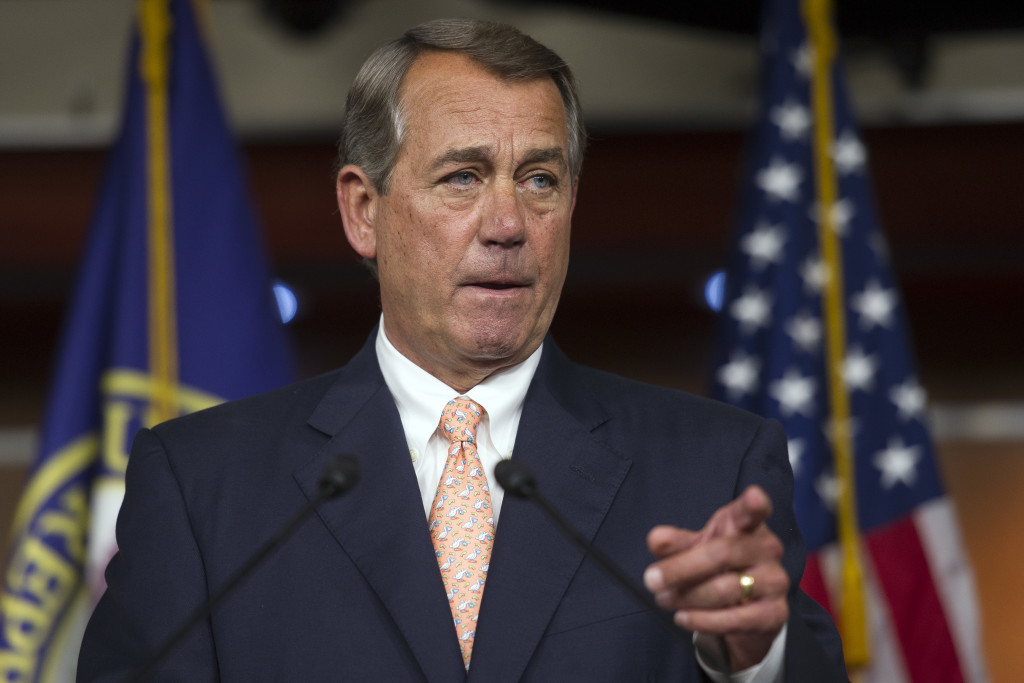
Speaker John Boehner is trying to make one last deal as he heads for the exits, pushing to finalize a far-reaching, two-year budget agreement before handing Congress’ top job over to Paul Ryan this week, congressional officials said Monday. The deal, in concert with a must-pass increase in the federal borrowing limit, would solve the thorniest issues awaiting Ryan, who is set to be elected speaker on Thursday. It would also take budget showdowns and government shutdown fights off the table until after the 2016 presidential election, a potential boon to Republican candidates who might otherwise face uncomfortable questions about messes in the GOP-led Congress. Congress must raise the federal borrowing limit by Nov. 3 or risk a first-ever default, while money to pay for government operations runs out Dec. 11 unless Congress acts. Top House and Senate aides have been meeting with White House officials in search of a deal that would give both the Pentagon and domestic agencies budget relief in exchange for cuts elsewhere in the budget. The measure under discussion would suspend the current $18.1 trillion debt limit through March 2017. After that it would be reset by the Treasury Department to reflect borrowing over that time. The emerging budget side of the deal resembles a pact that Ryan himself put together two years ago in concert with Sen. Patty Murray, D-Wash., that eased automatic spending cuts for the 2014-2015 budget years. Many conservatives disliked the measure and many on the GOP’s right flank are likely to oppose the new one, which would apply to the 2016-2017 budget years. “Fiscal negotiations are ongoing,” McConnell said as he opened the Senate on Monday afternoon. “As the details come in and especially if an agreement is reached, I intend to consult and discuss the details with our colleagues.” “We’re just trying to get something done as soon as we can,” Senate Democratic Leader Harry Reid of Nevada said earlier on Monday. Negotiators hoped to officially file the legislation Monday night but it’s not clear if they’ll meet the goal. GOP defense hawks are a driving force for an agreement. Democrats and the White House are pressing hard as well, demanding increases for domestic agencies on par with any Pentagon hikes. At the White House, press secretary Josh Earnest said: “Not everything has been agreed to. That means nothing at this point has been agreed to.” Obama wants roughly $74 billion in additional defense and non-defense spending this year to ease agency budget curbs imposed by strict spending caps set under a 2011 debt and budget deal. The measure wouldn’t provide full relief demanded by defense hawks and would award equal increases to defense and domestic programs. The pending talks focus on setting a new overall spending limit for agencies whose operating budgets are set by Congress each year. It will be up to the powerful House and Senate Appropriations committees to produce a detailed omnibus spending bill by the Dec. 11 deadline; those talks are likely to be arduous, especially as Republicans press policy provisions, known as “riders,” on a variety of topics, including the environment, travel to Cuba, and regulation of the Internet. Details were sketchy but the tentative pact anticipates designating increases for the Pentagon as emergency war funds that can be made exempt from budget caps. Non-defense spending would get an increase as well, though not the full amount demanded by Obama in his February budget. Offsetting spending cuts included reforms to the Agriculture department’s crop insurance program, a “site neutral” proposal that would curb Medicare payments for outpatient services provided by hospitals, and extending a 2 percentage point cut in Medicare payments to doctors through the tail end of a 10-year budget “window.” Lawmakers hoped to address two other key issues as well: a shortfall looming next year in Social Security payments to the disabled and a large increase for many retirees in Medicare premiums for doctors’ visits and other outpatient care. Social Security’s disability trust fund is projected to run out of money in late 2016. If that is allowed to happen, it would trigger an automatic 19 percent cut in benefits for 11 million disabled workers and their families. Congress and the White House have been discussing a temporary reallocation of payroll taxes from Social Security’s retirement fund to the disability fund. The move would be paired with changes to the disability program to fight fraud and to encourage disabled workers to return to work. Officials who described the discussions did so on condition of anonymity because they were not authorized to speak publicly about confidential negotiations. Just days are left for the deal to come together before Ryan, R-Wisconsin, is elected on Thursday to replace Boehner, R-Ohio, who is leaving Congress under pressure from conservative lawmakers disgusted with his history of seeking compromise and Democratic votes on issues like the budget. The deal would make good on a promise Boehner made in the days after announcing his surprise resignation from Congress last month. He said at the time: “I don’t want to leave my successor a dirty barn. I want to clean the barn up a little bit before the next person gets there.” Republished with permission of The Associated Press.
No shutdown: Congress approves bill to keep government open
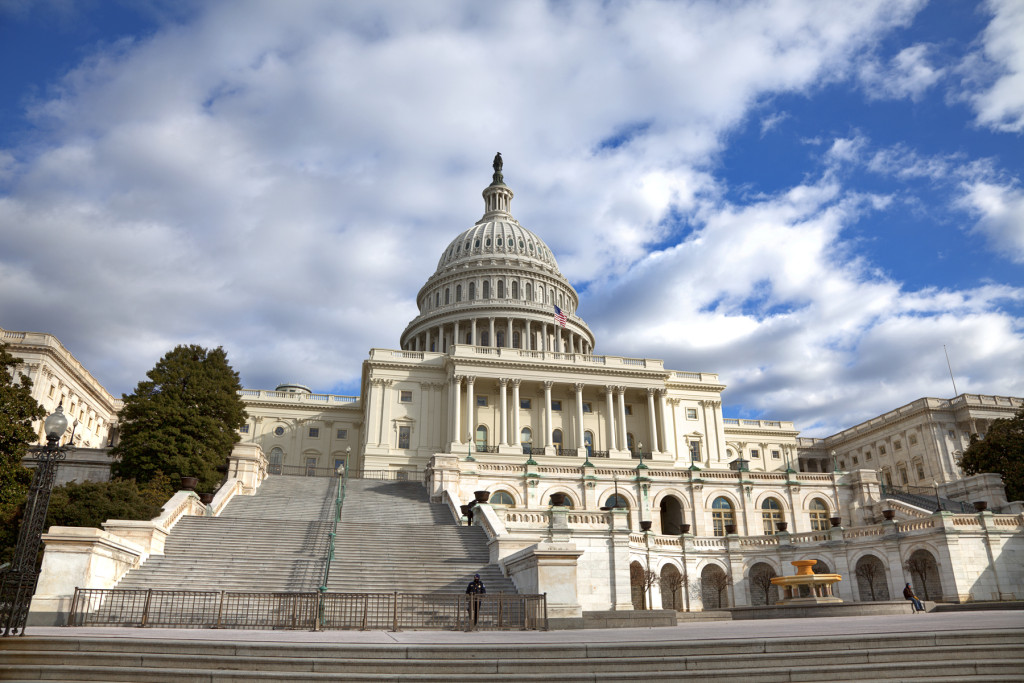
Just hours before a midnight deadline, a bitterly divided Congress approved a stopgap spending bill Wednesday to keep the federal government open – but with no assurance there won’t be yet another shutdown showdown in December. Democrats helped beleaguered House Republican leaders pass the measure by 277-151 – a lopsided vote shrouding deep disagreements within the GOP – after the Senate approved it by a 78-20 tally earlier in the day. President Barack Obama signed the bill Wednesday evening, but not without White House carping. “The American people deserve far better than last-minute, short-term legislating,” said spokesman Josh Earnest in pressing for a broader, longer-lasting budget deal. Approval of such stopgap measures used to be routine, but debate this year exposed acrimonious divisions between pragmatic Republicans such as House Speaker John Boehner and more junior lawmakers in the party’s tea party wing who are less inclined to compromise. The tea partyers had demanded that the must-pass measure be used to punish Planned Parenthood, stripping it of federal money because of its practice of supplying tissue from aborted fetuses for scientific research. House Republicans opposed the measure by a clear margin, but Democratic support was unanimous. The legislation finances the government through Dec. 11, providing 10 weeks to negotiate a more wide-ranging budget deal that would carry past the 2016 presidential election. But the talks promise to be difficult, and success is not assured. Boehner is resigning from Congress at the end of October, a decision he announced last week after informing Republicans he would not risk a government shutdown over Planned Parenthood. A similar fight over implementing Obama’s health care law sparked a 16-day shutdown two years ago that Boehner, Senate Majority Leader Mitch McConnell of Kentucky and other top Republicans did not want to repeat in election season. McConnell is seeking to protect embattled incumbents in Democratic-leaning states such as Wisconsin and Pennsylvania, while some GOP conservatives are more apt to use the battle to appeal to the party’s core voters on the right. “Today was a win for the Washington cartel, and another setback for the American people,” said Sen. Ted Cruz, R-Texas, who is using combat with Washington GOP leaders to help define his presidential campaign. “Republican leadership chose to abandon its constitutional power of the purse and to fund 100 percent of President Obama’s failed agenda.” Support from Democrats also helped power the measure through the Senate, all of the opposition coming from conservative Republicans. Longtime lawmakers bemoaned the chronic dysfunction on Capitol Hill and the collapse of the annual appropriations process that is supposed to be wrapped up by now. Democrats demanding a new budget deal have blocked work in the Senate, while a fight over the Confederate flag halted work in the House with only six of the 12 annual spending bills having passed. “It is to my great dismay that we are at this point again, requiring a temporary Band-Aid to buy us time to do our duty,” said Rep. Hal Rogers, R-Ky., chairman of the Appropriations Committee, during House debate. Tea party anger directed at Boehner over the Planned Parenthood issue helped prod the Ohio Republican’s announcement to step down. His decision – and other House leadership races – have highlighted divisions between more pragmatic Republicans and hardline conservative wing that is increasingly prominent in Congress, especially in the rough-and-tumble House. McConnell said Tuesday that he and Boehner spoke with Obama recently and that he expects budget negotiations to get underway soon. The turmoil in the House, where many conservatives want to block spending increases, is certain to complicate the talks, which are likely to focus on swapping near-term budget increases for the Pentagon and domestic programs for longer-term saving elsewhere in the budget. Majority Leader Kevin McCarthy, R-Calif., the likely new House speaker, hasn’t said whether he supports a deal. The Pentagon and domestic agencies all are still operating under automatic curbs that would effectively freeze their spending at current levels. Republicans are leading the drive to boost defense while Obama is demanding equal relief for domestic programs. The conversation among McConnell, Boehner and Obama took place in mid-September – before Boehner announced he was stepping down. Many of the conservative GOP lawmakers who helped bring Boehner down want to preserve stringent “caps” on the spending bills Congress passes every year. But Senate Republicans are generally more eager to rework the 2011 Budget Control Act that put them in place. “We have to stop devastating sequester cuts from hitting our military and middle class, even the Republican leader agrees,” said top Senate Democrat Harry Reid of Nevada. “Because a week or 10 days ago he said `We are inevitably going to end up in negotiations that that will crack the Budget Control Act once again. I say `hallelujah.’” Eight of the 20 Republican senators who opposed Wednesday’s bill are up for re-election in states carried by Mitt Romney in 2012. Presidential aspirants Lindsey Graham of South Carolina and Marco Rubio of Florida skipped the vote. Republicans have long targeted Planned Parenthood, and the group’s top official defended it in congressional testimony on Tuesday. Republicans say that videos made by abortion foes show Planned Parenthood has broken federal laws including a ban on for-profit fetal tissue sales. The organization says it has acted legally and the videos were deceptively edited. Republished with permission of The Associated Press.
