
Alabama legislative preview: April 4 – April 8, 2016
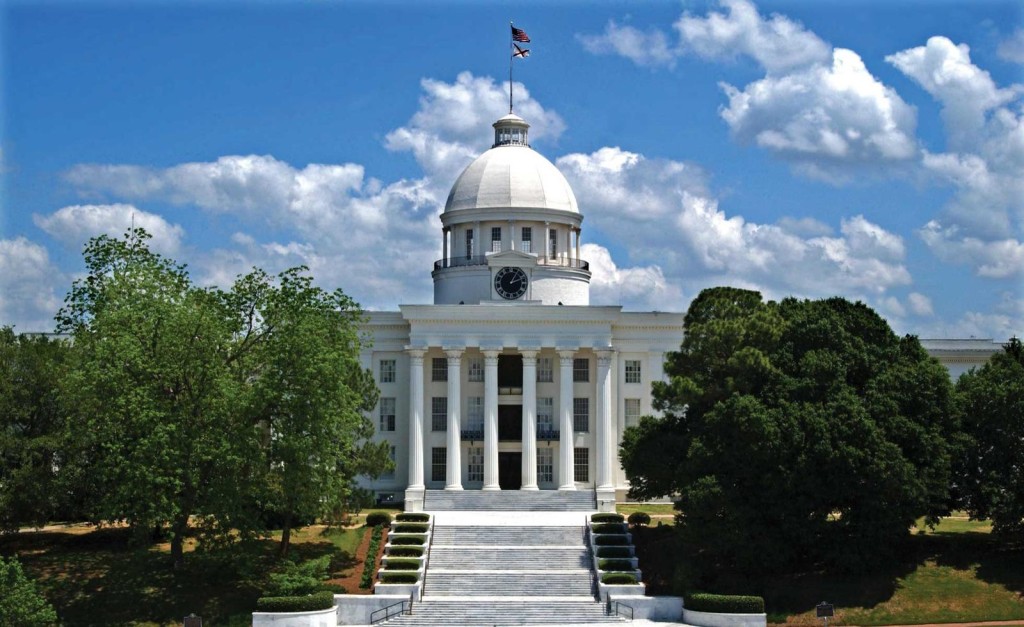
Legislators return to Montgomery this week after their spring break, with the House of Representatives convening at 1 p.m. and the Senate an hour later Tuesday. In the Senate, lawmakers are slated to take up SB342 from Sen. Vivian Figures (D-Mobile), which would make the transmission of an explicit message a Class A misdemeanor. The body will also take up SB347 from Sen. Paul Bussman (R-Cullman), which would legalize the manufacturing of industrial hemp in the state. The Senate will also take up SB14 from Sen. Gerald Allen (R-Tuscaloosa), which would allow citizens to carry a pistol in a vehicle without a permit. Over in the House, lawmakers will take up two alcohol-related bills: HB46 from Rep. Alan Boothe (R-Troy) would allow Alabama distilleries to sell their product for off-premise consumption and HB83 from Rep. David Faulkner (R-Birmingham) would allow state wineries to establish an off-site tasting room. On Wednesday, committee hearings will get underway. At 1 p.m. in room 325 of the state house, the Senate Judiciary Committee will take up the grandparent’s visitation rights bill, HB334 from Rep. Mike Jones (R-Andalusia), as well as HB115 from Rep. Paul Sanford (R-Huntsville), which would decriminalize possession of the marijuana-based, seizure-reducing medication CBD oil. At 1:30 p.m in room 727 at the state house, the Senate Rules Committee will take up SB97 from Sen Gerald Dial (R-Lineville), which would allow the Ten Commandments to be displayed on state property and at public schools. At 9 a.m. in room 429 of the state house, the House Health Committee will take up HB183 from Rep. Kerry Rich (R-Guntersville), which would require abortion providers to conduct a sonogram before providing an abortion. At 1:30 p.m. in room 418 of the state house, the House Committee on Education Policy will take up HB299 from Rep. Ed Henry (R-Decatur), which would prohibit local school boards from adopting or enforcing “zero tolerance” policies regarding drugs, alcohol, weapons or physical harm to another person. The bill would also require that the definition of firearm be “narrowly construed.”
Alabama legislative preview: March 21 – March 25, 2016
The Alabama House of Representatives will convene at 1 p.m. Tuesday, and the Senate an hour later, as state lawmakers gather for the 17th day of the regular session. This week, the Senate will take up SB89 from Sen. Arthur Orr (R-Decatur), which would require Alabama public school students to pass a civics test as a requirement for graduation. Orr’s legislation has been on the agenda for a while, but has likely been stalled due to a focus on more contentious issues. The body is also slated to take up SB148 from Sen. Jim McClendon (R-Springville), which would require all vehicle passengers to wear a safety belt, and SB114 from Sen. Paul Sanford (R-Huntsville), which would regulate fantasy contests and “exempt fantasy contests from certain criminal penalties associated with gambling activity.” The bill would increase spending by the Attorney General’s office, which would be responsible for overseeing such activities, by $1 million in the first year. Also on the Senate’s agenda this week are SB14 from Sen. Gerald Allen (R-Tuscaloosa), which would allow citizens to carry a firearm in their vehicle without a permit, and SB205 from Sanford, which would bar the Alabama Department of Human Resources from renewing health center licenses for an “abortion clinic or reproductive health center” within 2,000 feet of a school. In the House, lawmakers will take up HB46 from Rep. Alan Boothe (R-Troy), which would allow Alabama spirit makers to sell fifths for off-premise consumption. The body is also slated to debate HB13 from Rep. Alan Harper (R-Northport), which would allow citizens to vote on whether or not to allow a lottery in the state – the legislation provides no details on how proceeds from such an operation would be used, which is likely why it hasn’t been discussed thus far. HB218 from Rep. Dickie Drake (R-Leeds) is also on the agenda and would require that all elementary school students be instructed in cursive writing before the end of their third grade year. HB244 from Rep. Connie Rowe (R-Jasper) will also be taken up this week – the bill prohibits law enforcement from requiring victims of a sexual offense to take a polygraph examination. Committee hearings get underway Tuesday, though the vast majority take place on Wednesday, beginning with the Senate Judiciary Committee, which will take up SB237 from Sen. Quinton Ross (D-Montgomery). Ross’s legislation would make it unlawful for employers to request information regarding arrests and convictions on employment applications. The committee will also take up Sanford’s SB115, the Senate version of “Leni’s Law” from Rep. Mike Ball (R-Madison), which would decriminalize possession of the marijuana-based medicine cannibidiol. The Senate Committee on Constitution, Ethics and Elections will debate SB360 from Sen. Tom Whatley (R-Auburn), which would require voters to register as a Democrat or Republican before voting in a primary. Voters who do not will not be allowed to vote on party candidates, only on ballot measures and nonpartisan issues. The House Committee on Agriculture and Forestry will take up HB393 from Rep. Ken Johnson (R-Moulton), which would allow for the growing of industrial hemp in the state for use in a variety of products. The House Committee on Mobile County Legislation will mull over HB248 from Rep. Napoleon Bracy (D-Mobile), which would establish a $10.10 minimum wage in Mobile County. At the close of business this week, legislators will adjourn for spring break.
Alabama legislative agenda preview: March 7 – March 11, 2016
Alabama lawmakers will return to Montgomery Tuesday as the legislative session resumes, with the House convening at 1 p.m. and the Senate an hour later. Both chambers are still planning to tackle the General Fund and Education Trust Fund budgets before spring break, as well as a host of issues slated to be taken up this week. The Senate will debate SB89 from Sen. Arthur Orr (R-Decatur), which would require all Alabama public school students to pass a civics test to graduate – private schools could opt-in if they chose to. Also on the Senate’s agenda is SB148 from Sen. Jim McClendon (R-Springville), which would require all passengers in a vehicle to wear a safety belt. The legislation came up in last week’s session but was stalled due to opposition regarding further legislation on people’s car-riding habits. The Senate will also take up SB114 from Sen. Paul Sanford (R-Sanford), which would regulate “fantasy contests” in the state, and SB14 from Sen. Gerald Allen (R-Tuscaloosa), which would allow people to carry a firearm in their vehicle without a permit. Allen’s legislation was hotly contested in a recent committee hearing, when state law enforcement officers argued that the bill would make their jobs more difficult and dangerous. The House will also take up a bill aimed at regulating so-called “fantasy contests,” as well HB2 from Rep. Tommy Hanes (R-Scottboro), which would require wireless communications providers to supply law enforcement agencies with location information upon request. Perhaps the bills with highest interest to be taken up in the House this week are HB46 from Rep. Alan Boothe (R-Troy), which would allow Alabama distilleries to begin selling bottles for off-premise consumption, and HB13 from Rep. Alan Harper (R-Northport), which would allow the public to vote on whether or not to institute a state lottery. Committee hearings will get underway Tuesday morning before the start of session, though the majority will take place on Wednesday. The Senate Committee on Health and Human Services will hear discussion on two bills that will likely attract the outrage of Democrats – HB45 from Rep. April Weaver (R-Alabaster), which would outlaw the already-illegal practice of selling fetal tissue, and SB9 from Allen, which would prohibit abortions if providers don’t first determine a fetal heartbeat. The Senate Committee on General Fund Finance and Taxation will hear from Sen. Vivian Figures (D-Mobile) regarding SB136, a bill which would put forth a constitutional amendment to add an additional 5-mill tax to state properties, with the proceeds going to help Medicaid. The House Economic Development and Tourism Committee will hold public hearings regarding two alcohol-related bills – SB219 from Sen. William Beasley (R-Clayton), which would allow retail licensees and state liquor stores to conduct liquor and wine tastings, and HB325 from Rep. James Buskey (D-Mobile), which would allow businesses with a building split between wet and dry counties to serve alcohol. The House Committee on General Fund Ways and Means will take up the General Fund via SB125, which has already passed the Senate,
Alabama legislative agenda preview: Feb. 22 – Feb 26, 2016
The fourth week of the Alabama legislative session kicks off this week, with the House of Representatives convening at 1:30 p.m. Tuesday and the Senate just half an hour later. According to statements made last Thursday by House Speaker Mike Hubbard (R-Auburn) and Senate Pro Tem Del Marsh (R-Anniston), both chambers will likely begin looking at the General Fund budget this week, as well as a slate of other bills. The House is on schedule to take up HB2, a bill requiring wireless service providers to hand over customer location information upon law enforcement’s request. House members will also look at HB56, which will establish the Fantasy Contests Act and provide regulations for such gaming, and HB46, which would allow Alabama distilleries to sell “fifths” for off-premise consumption. Perhaps the most exciting piece of legislation to hit the House floor this week will be HB13, the bill from Rep. Alan Harper (R-Northport) to allow Alabama citizens to vote on whether or not to allow a lottery in the state. The legislation has been given flack for not specifying where the proceeds from such a lottery would be allocated, though sponsors hope to add such details to the legislation once a vote is taken by the people. The Senate will be mulling over SB89, which would require Alabama public school students to pass a civics test before graduating, and SB86, which would prohibit public colleges and universities from using funds or property to advocate for or against state and local ballot measures. The Senate will also take up one of the controversial bills from Sen. Gerald Allen (R-Tuscaloosa), which will prohibit the removal of historical monuments from public property and put the appeals process in the hands of a newly-established Joint Committee on Alabama Monument Protection. On Wednesday, committee hearings will get underway. The Senate Committee on Fiscal Responsibility and Economic Development will meet to take up a laundry list of bills, including a bill aimed at immortalizing Alabama’s status as a “Right-to-Work” state in the constitution and a bill aimed at limiting the responsibility that employers have for paying permanent total disability benefits to employees once they reach the age of 65. The committee will also take up three bills aimed at loosening Alabama’s restrictions on alcohol in relation to wineries, distilleries and brewpubs. The Senate Committee on Constitution Ethics and Elections will meet to take up a measure aimed at expediting the process by which Alabama felons are given back their voting rights and the Senate Committee on Tourism and Marketing will look at a bill from Sen. Trip Pittman (R-Montrose) to establish an Alabama lottery run in conjunction with other multi-state games. The House Committee on Economic Development and Tourism will meet to discuss a measure aimed at allowing wineries to establish an off-premise tasting room and the House Committee on Health will mull over the Assisted Suicide Ban Act, a bill that will allow healthcare providers to decline to perform services that violate their consciences and the Fetal Heartbeat Act. The House Judiciary Committee will take up a piece of legislation defining moral turpitude, the vague crimes of which can remove a person’s voting rights permanently.
