
Robert Bentley signs Leni’s Law, decriminalizes medical marijuana oil in Alabama
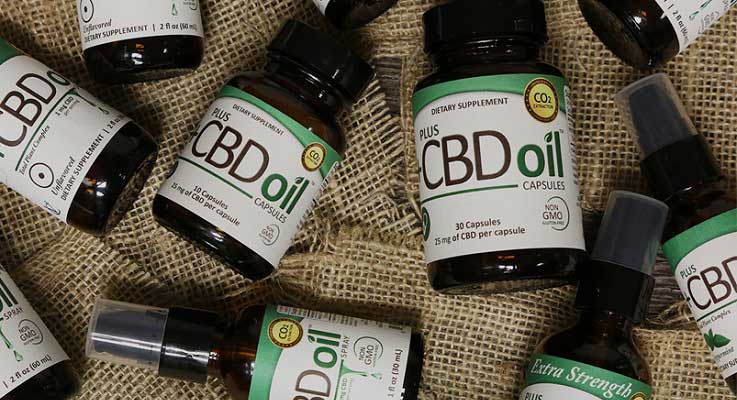
Alabama Governor Robert Bentley on Wednesday signed HB61, also known as Leni’s Law, which makes medical cannabidiol (CBD) available to Alabamians. CBD oil came into the Alabama lexicon with the passage of “Carly’s Law” last year, a piece of legislation which provided the University of Alabama at Birmingham the ability to conduct clinical trials of the cannabis-based medicine. But “Carly’s Law” left out many desperate children in Alabama deemed too sick to participate in the trials. Leni’s Law, introduced by Madison-Republican Rep. Mike Ball, was the solution. Named for Leni Young, a 4-year-old Alabama girl whose family was forced to move to Oregon to gain access to the medicine after she was excluded from the CBD study, Leni’s Law decriminalizes the possession of CBD oil and gives caretakers the ability to discuss the use thereof with physicians. “As a physician, I believe it is extremely important to give patients with a chronic or debilitating disease the option to consider every possible option for treatment,” Governor Robert Bentley said. “With Leni’s Law, citizens in Alabama will have access to cannabidiol that may help with treatment. Through a study at UAB, we have seen the benefit of cannabidiol to help with chronic seizures. I hope we will be able to collect information that will determine the efficacy of this substance in other chronic debilitating diseases.” The law will go into effect on June 1.
Senate committee hears arguments over decriminalization of cannabis oil
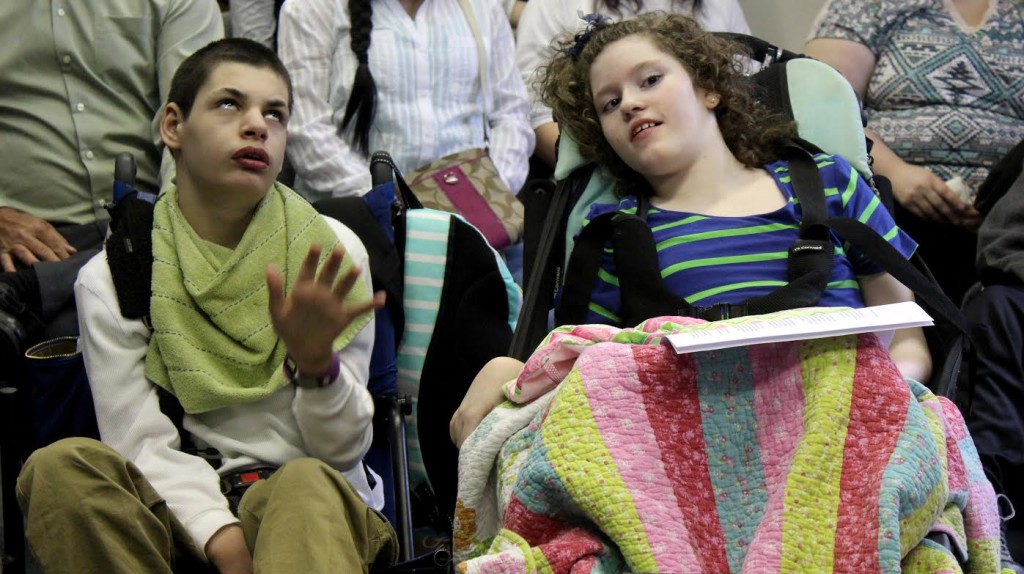
The Senate Judiciary Committee met Wednesday in a room filled to the brim with desperate families and ailing children. The contingent was on hand to hear the committee discuss SB115 from Sen. Paul Sanford (R-Huntsville), which would decriminalize possession of the seizure-reducing drug cannabidiol (CBD). The bill is the Senate version of HB61 from Rep. Mike Ball. Ball brought forth the legislation, also known as “Leni’s Law,” after the previously passed “Carly’s Law” left many needy children out of the CBD studies. Ball’s legislation is named for Leni Young, a 4-year-old Alabama girl whose family was forced to move to Oregon to gain access to the medicine after she was excluded from the CBD study. According to Amy Young, Leni’s mother, access to the marijuana-derived medication has allowed Leni to improve by leaps and bounds. The little girl is now verbal and able to sit on her own, two things she was not able to do before moving across the country. Ten minutes after the meeting was set to begin, the contingent was told to move to the seventh floor. Sanford introduced the legislation, referencing Leni and the failures of “Carly’s Law” to include more families. “Basically, an Alabama family has turned into refugees,” Sanford said. “I believe government is basically standing in the way right now.” Sanford said the new law would provided families with an “affirmative defense” against prosecution for possession of the medicinal oil. “These parents are not criminals,” Sanford said. “They’re trying to help their children.” Despite a public hearing being scheduled and there being no plans for a vote on the bill, Sen. Bobby Singleton (D-Greensboro) immediately called for a vote on the legislation. “We’re talking about the lives of children,” Singleton said, noting his disdain for opponents of the measure. “I think we need to go and vote on this bill and get it out of committee and give these children what they need.” Committee chairman Sen. Cam Ward (R-Alabaster) noted Singleton’s suggestion, but added that each side has a right to plead its case. One of the opponents was Dr. Roxanne Travelute, president of the Jefferson County Medical Society. Travelute contended that the bill’s allowance of CBD oil containing as much as 3-percent THC, the psychoactive chemical in marijuana, would cause addiction and neurological disorders, as well as widespread use for illnesses the drug was not designed to treat. Another opponent was Dr. Shannon Murphy, speaking on behalf of the American Academy of Pediatrics (AAP), who opposed the bill on the basis that CBD oil attained by parents may not be safe for patients. “We all sympathize greatly with these families,” Murphy said. “But as physicians, our Hippocratic Oath requires that we first do no harm.” Dr. Gina Dawson spoke in favor of the bill, saying that many of the claims made by opponents are patently false. Dawson noted that the AAP opposes legalization but has said exceptions should be made for “compassionate use.” She cited drugabuse.gov, which says that abuse of CBD oil is almost nonexistent, and remarked that the Epilepsy Foundation has called for legislation providing access to CBD oil to be passed. Dawson also noted that CBD oil is expensive and has no street value. Parents would willingly be on the hook for the cost of the medicine, but drug dealers would not be interested in a high-cost, low-potency drug for sale on the black market. Another proponent, Joe Church, noted that the ingredients in Tylenol or Ibuprofen are more dangerous than CBD oil, as are the mind-numbing drugs these children must take every day. He also alleged that much of the opposition to Leni’s Law comes from GW Pharmaceuticals, which has $1.1 billion invested in its stranglehold over the manufacturing of the oil. The committee is scheduled to take the legislation up again after spring break.
Alabama legislative preview: Mar. 14 – Mar. 18, 2016

The Legislative Session resumes Tuesday when the Alabama House of Representatives reconvenes at 1 p.m and the Senate an hour later. The Senate is slated to take up a slew of measures this week, including SB89 from Sen. Arthur Orr (R-Decatur) which would require all Alabama public school students to pass a civics test to graduate. SB148 from Sen. Jim McClendon (R-Springville), which would require all passengers in a vehicle to wear a safety belt, will also come up this week. The measure met with opposition when last it appeared on the floor, as lawmakers questioned the need for furthering meddling in people’s private matters. The “Fantasy Contests Act,” SB114 from Sen. Paul Sanford (R-Huntsville), will also come up for discussion this week, as well as SB14 from Sen. Gerald Allen (R-Tuscaloosa), which would authorize carrying weapons in vehicles without a permit. Over in the House, lawmakers will take up their version of the “Fantasy Contests Act,” as well as the lottery bill from Rep. Alan Harper (R-Northport). HB13 would allow people to vote on whether or not a lottery is allowed in the state, though it provides no details on how profits from such a lottery would be allocated. The body will also take up three bills from Rep. Mike Jones (R-Andalusia): HB332 which would abolish common law marriages; HB333, which would change laws related to judge’s ruling in divorce cases; and HB334, which would provide a process for grandparents to petition for visitation rights with their grandchildren. A slew of alcohol-related legislation is also scheduled to go before the House. The House was scheduled to take on the General Fund budget this week, but the activity calendar makes no mention of the legislation coming before the body. The Senate Committee on Agriculture, Conservation and Forestry is set to take up a bill that would legalize industrial hemp in the state on Wednesday and the Senate Judiciary Committee is slated to take up SB97 from Sen. Gerald Dial (R-Lineville), which would allow the Ten Commandments to be displayed on state and public school property. The Alabama Prison Transformation Initiative Act will once again appear before the Senate Committee on General Fund Finance and Taxation, where a vote is scheduled to take place. The House Committee on Public Safety and Homeland Security will take up HB98 from Rep. David Standridge (R-Hayden), which would provide a lifetime pistol permit to retired military veterans and the House Committee on Health will debate HB159 from Rep. Arnold Mooney (R-Birmingham), which would allow doctors to decline services that violates their conscience. The House Judiciary Committee will take up two marijuana-related bills: HB61, also known as “Leni’s Law,” from Rep. Mike Ball (R-Madison), which would decriminalize possession of the seizure-reducing medication cannabidiol, and HB257 from Rep. Patricia Todd (R-Birmingham), which would make possession of 1 ounce or less of marijuana punishable by only a fine.
