
Big differences between GOP health care bill, Obama-era law
At first glance, the health care bill from House Republicans appears to have similarities to the Obama-era law, such as tax credits, protections for people with health problems, and the ability of parents to keep young adults on their insurance. But in most cases, those components would work very differently under the GOP framework than is now the case with the Affordable Care Act. Important details about the Republican plan are unknown, including cost and coverage. A look at the current law and the GOP’s plan: ___ COVERAGE Current law: About 11 million people are covered by expanded Medicaid in the 31 states that accepted it. Nationwide, an additional 12 million buy private health insurance through government-sponsored markets that offer plans with subsidized premiums. National uninsured rate is below 9 percent, a historic low. GOP bill: Extent of coverage is unknown at this time, as is the impact on the uninsured rate. ___ COST Current law: Coverage costs of about $1.4 trillion from 2017-2026, based on Congressional Budget Office estimates. GOP bill: Unknown at this time; Republican aides say CBO numbers are coming. ___ MEDICAID Current law: States that accept expanded Medicaid receive a generous federal match, gradually phasing down to 90 percent. The expansion covers people with incomes up to 138 percent of the federal poverty line, or about $16,640 for an individual. Most new beneficiaries are low-income adults with no children living at home. More broadly, Medicaid is now the country’s largest health insurance program, covering more than 70 million people under a federal-state collaboration. It remains an open-ended entitlement, allowing states to draw down federal money for a portion of health costs incurred by low-income people, from children to nursing home residents. GOP bill: Ends the higher federal match for Medicaid expansion beneficiaries, starting in 2020. States can still continue to receive some enhanced federal payments, but only for expansion enrollees who were already covered before that. States will get a lower match for new enrollees. But more significantly, the bill would overhaul the framework of Medicaid, ending its open-ended federal financing. Starting with the 2020 budget year, each state would receive a limited, per-beneficiary amount based on enrollment and costs. States would gain flexibility to cap enrollment and change benefits. Federal payments would be increased according to a measure of medical inflation. Impacts are unclear. ___ PRIVATE COVERAGE FOR INDIVIDUALS Current law: Provides income-based tax credits for consumers buying government-regulated plans through HealthCare.gov and state insurance markets. The most generous assistance goes to people with low-to-modest incomes. Many solid middle-class households get no help despite sharp increases in premiums. GOP bill: Provides tax credits primarily based on age, gradually phasing down for individuals making over $75,000, or married couples earning more than $150,000. Credits can be used to buy any state-licensed health plan. More middle-class consumers will benefit, but there’s concern lower-income people would be disadvantaged. ___ DEDUCTIBLES Current law: Provides cost-sharing subsidies for low-to-moderate income people who buy a standard silver plan in the government markets. GOP bill: Eliminates the law’s cost-sharing subsidies, but allows people to make much higher contributions to tax-sheltered health savings accounts, to cover deductibles and copayments. Sets up a fund that states can use for a variety of purposes, including cost-sharing assistance. ___ PRE-EXISTING CONDITIONS Current law: Forbids insurers from turning people down on account of medical problems, or charging them more. GOP bill: Provides protection for people with health problems. But consumers who have not maintained continuous insurance coverage face a 30 percent premium penalty for a year. States can use federal funds to set up high-risk pools as insurers of last result. ___ GENERATIONAL BALANCE Current law: Insurers can charge their oldest customers no more than 3 times what they charge young adults. That benefits older adults prone to illness but has made coverage costly for young people. GOP bill: Insurers could charge older customers up to 5 times what they charge young adults. Advocates for older people complain that’s unfair. ___ YOUNG ADULTS Current law: Can stay on parental insurance until age 26. GOP bill: Same. Republished with permission of The Associated Press.
GOP hopeful Scott Walker offers health plan with tax credits
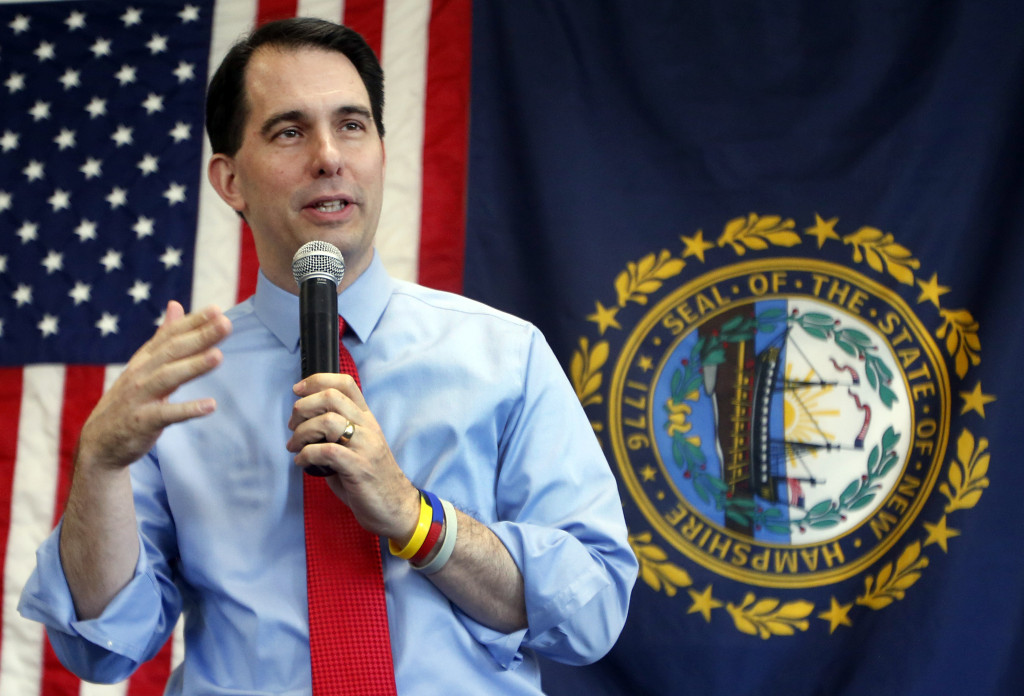
Republican presidential candidate Scott Walker‘s plan for replacing President Barack Obama‘s health care law would extend refundable tax credits to help pay for private health insurance based on age instead of income, restructure Medicaid and allow people to shop for insurance across state lines. The Wisconsin governor provided details of his proposal to The Associated Press in advance of a Tuesday speech in suburban Minneapolis where he was to outline his first major policy initiative of the presidential campaign. Walker’s plan does not include cost figures or an estimate of the number of people who would be covered, making it nearly impossible to compare with current law. For the period from April to June of this year, 11.4 percent of U.S. adults were uninsured, which translates to about 16 million people gaining coverage since the rollout of Obama’s health care law in 2013. Walker’s campaign said the plan would be paid for by eliminating $1 trillion in taxes that are levied under the current law and by making other changes to Medicaid and how health insurance is taxed. The Supreme Court in June upheld a key portion of the Affordable Care Act allowing for federal subsidies to defray the cost of coverage, a major defeat for opponents of the law. Walker and other Republican candidates have insisted they would repeal the law, starting on the first day of a GOP presidency. The biggest hurdle Walker, and any opponent of the law, faces is getting it repealed. That would take 60 votes in the Senate, and Walker’s plan does not address how he would undo the law in any other way. Walker, in excerpts of his speech released by his campaign, blamed fellow Republicans with not doing enough to repeal the law. “Republican leaders in Washington told us during the campaign last year that we needed a Republican Senate to repeal Obamacare,” Walker said in the prepared remarks. “Well, Republicans have been in charge of both houses of Congress since January and there still isn’t a bill on the president’s desk to repeal Obamacare.” Topher Spiro, vice president for health policy at the Center for American Progress, a think tank often aligned with the White House, said Walker’s plan would be a step backward. “The math only adds up if he’s slashing Medicaid and increasing taxes on middle-class people with employer plans,” Spiro said. While the Walker plan would repeal the Affordable Care Act, it appears to use some similar kinds of tools to promote coverage. For example, there would be no requirement for individuals to carry health insurance or face fines, as there is currently. But, in order to be guaranteed affordable coverage without regard to pre-existing medical problems, individuals would have to “maintain continuous, creditable coverage.” There’s merit to Walker staking out his position on the issue, even though he doesn’t explain how the law would be repealed, said economist Douglas Holtz-Eakin, president of the American Action Forum, a center-right think tank. “There’s a lot of this that is fairly standard conservative health policy reform,” Holtz-Eakin said. “The basic plan looks familiar.” Walker, similar to current law, would also provide tax credits to help with the cost of coverage for people whose employers don’t offer insurance. But unlike current law, those credits of between $900 and $3,000 would be based on age and not be keyed to a person’s income. So they may not help low- to moderate-income people as much as the existing tax breaks do. Walker’s plan calls for eliminating unspecified regulations in the current law, a move that Walker claims would lower premiums by 25 percent. Other elements of the plan would include extending a $1,000 refundable tax credit for anyone who signs up for a health savings account, allowing people to shop for health insurance across state lines, reorganizing Medicaid into smaller programs, and giving states more regulatory authority. He would also allow for new health insurance purchasing agreements and deregulate the long-term care insurance market. The reality of outright repealing the law as Walker wants to do is stark: Doing away with it completely would kick 19 million people off insurance in the first year, according to the Congressional Budget Office. Walker isn’t the first Republican to put forward a detailed plan for replacing Obama’s law. Louisiana Gov. Bobby Jindal released his plan last year and Florida Sen. Marco Rubio outlined his approach in an opinion piece published Monday. And while alternatives have been introduced in Congress, none has gotten traction as Republicans have yet to coalesce around any particular idea. Republished with permission of The Associated Press.
2016 presidential hopefuls react to SCOTUS Obamacare ruling
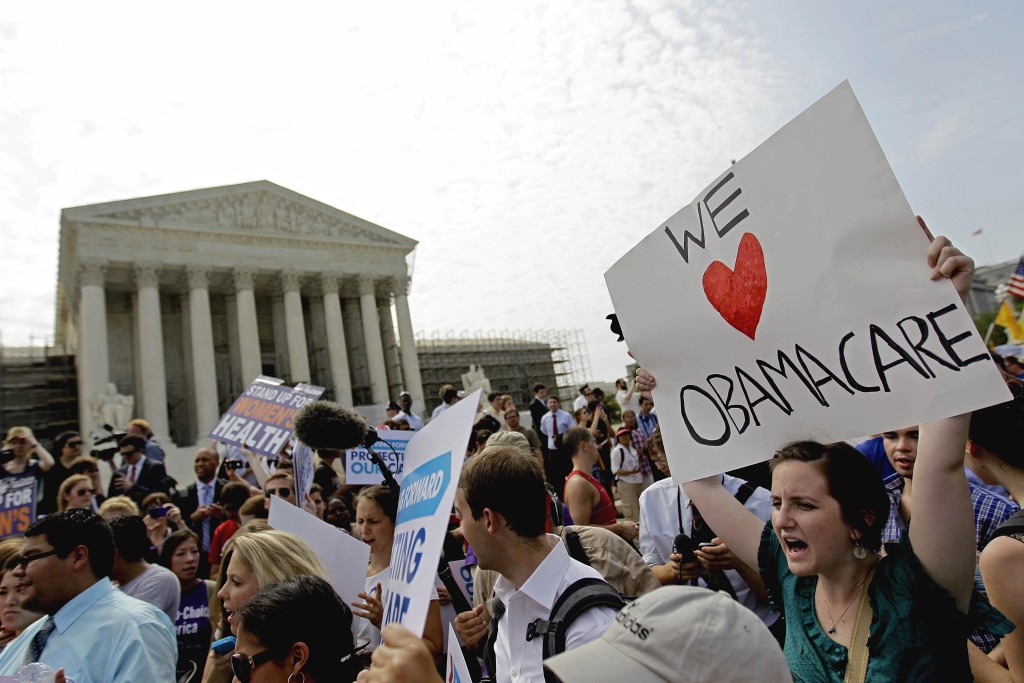
In the wake of Thursday’s Supreme Court ruling in favor of a key part of President Barack Obama‘s signature health care law on Thursday, 2016 presidential hopefuls were quick to weigh in with their opinions of the 6-3 decision. Here’s a compilation of how the candidates reacted to the SCOTUS Obamacare ruling: Former Florida Gov. Jeb Bush: I am disappointed by today’s Supreme Court ruling in the King v. Burwell case. But this decision is not the end of the fight against Obamacare. This fatally flawed law imposes job-killing mandates, causes spending in Washington to skyrocket by $1.7 trillion, raises taxes by $1 trillion and drives up health care costs. Instead of fixing our health care system, it made the problems worse. As president of the United States, I would make fixing our broken health care system one of my top priorities. I will work with Congress to repeal and replace this flawed law with conservative reforms that empower consumers with more choices and control over their health care decisions. Ben Carson: Obamacare fundamentally increases the power of the government over the people and healthcare providers. While I resent what the court has done, it only causes me to work even harder to make sure the next president will repeal and replace Obamacare with sensible consumer empowering solutions that remove the government from the patient/doctor relationship. Those of us who pledge to repeal Obamacare must redouble our efforts and not waste time and energy mourning today’s ruling. Hillary Clinton: I applaud the Supreme Court’s decision to affirm what the authors of the Affordable Care Act clearly intended and wrote into law: that health insurance should be affordable and available in every state across the country. Republicans in Congress have waged a sustained attack against this promise. They’ve voted more than 50 times to repeal or dismantle the law, roll back coverage for millions of Americans, and let insurers write their own rules again – all without proposing any viable alternatives. Now that the Supreme Court has once again re-affirmed the ACA as the law of the land, it’s time for the Republican attacks to end. It’s time to move on. Read more here Sen. Ted Cruz: Today’s decision in King v. Burwell is judicial activism, plain and simple. For the second time in just a few years, a handful of unelected judges has rewritten the text of Obamacare in order to impose this failed law on millions of Americans. The first time, the court ignored federal law and magically transformed a statutory ‘penalty’ into a ‘tax.’ Today, these robed Houdinis transmogrified a ‘federal exchange’ into an exchange ‘established by the state.’ As Justice Scalia rightfully put it, ‘Words no longer have meaning if an exchange that is not established by a state is ‘established by the state.” He also said, ‘We should start calling this law SCOTUSCare’ – I agree. Carly Fiorina: Obamacare has not lived up to what we were promised. Instead of allowing those with insurance to stay on the plans they knew and liked, millions of people have been compelled to buy health plans that they didn’t want. Many have been forced to move to Medicaid and yet more doctors are refusing to take Medicaid patients under this law. We were promised improved access and higher-quality care, but the complexity of ObamaCare is preventing the very competition that would allow more and better options for patients. Instead, hospitals, drug companies, and insurance companies are all consolidating. The lasting solution here is what we’ve been saying all along. We need to repeal ObamaCare. Sen. Lindsey Graham: If you want to repeal and replace Obamacare with something better for your family—bipartisan—vote Republican. Former Gov. Mike Huckabee: Today’s King v. Burwell decision, which protects and expands ObamaCare, is an out-of-control act of judicial tyranny,” Huckabee said in a statement. “Our Founding Fathers didn’t create a ‘do-over’ provision in our Constitution that allows unelected, Supreme Court justices the power to circumvent Congress and rewrite bad laws. The Supreme Court cannot legislate from the bench, ignore the Constitution, and pass a multi-trillion dollar ‘fix’ to ObamaCare simply because Congress misread what the states would actually do. The architects and authors of ObamaCare were intentional in the way they wrote the law. The courts have no constitutional authority to rescue Congress from creating bad law. The solution is for Congress to admit they screwed up, repeal the ‘nightmare of Obamacare’, and let states road-test real health care reforms. Gov. Bobby Jindal: Today, the Supreme Court had its say; soon, the American people will have theirs. President Obama would like this to be the end of the debate on Obamacare, but it isn’t. Now that the Supreme Court has ruled, the debate will grow. Conservatives must be fearless in demanding that our leaders in Washington repeal and replace Obamacare with a plan that will lower health care costs and restore freedom. Former Gov. Martin O’Malley: The Affordable Care Act has helped more than 17 million Americans access quality and affordable health coverage. Now that the Supreme Court has, once again, upheld the Affordable Care Act, we must continue to build and improve upon this hard-won progress. With the national goal of universal coverage now affirmed, we must reduce costs by improving wellness. Innovations for better coordinated care, personalized medicine, and the alignment of profit incentives to promote wellness make all of this possible. Sen. Rand Paul: This decision turns both the rule of law and common sense on its head. Obamacare raises taxes, harms patients and doctors, and is the wrong fix for America’s health care system. As President I would make it my mission to repeal it, and propose real solutions for our healthcare system. As a physician I know Americans need a healthcare system that reconnects patients, families, and doctors, rather than growing government bureaucracy. Former Gov. Rick Perry: The Obama Administration has ignored the text of the Affordable Care Act time and again, and today’s ruling allows them to continue to disregard the letter of the law. While I disagree with
State Senate leader files plan to check Medicaid, prison spending
Senate President Pro Tem Del Marsh has introduced a plan to address what he sees as the deeper issue in the current budget dilemma: growth in state spending on Medicaid and corrections. Late last week, Marsh filed Senate Bill 476 to limit the Alabama Medicaid Agency to no more than 10 percent Alabama’s total discretionary spending and to keep funding for the Alabama Department of Corrections below 5.5 percent. According to a Yellowhammer News report, Medicaid now accounts for about 9 percent of Alabama’s appropriations and corrections makes up 5.1 percent. Marsh told Yellowhammer News that he brought the bill because of his concerns over how the two programs have expanded in recent years. Here’s a quote from that interview: “Because of the budget situation, we have been forced to take a deep dive into the issues with the General Fund and look at ways to make deliverable changes in the way we spend taxpayer money,” Marsh said. “This bill gives both Medicaid and corrections room to grow from their current allocation but caps the amount so we can begin to control spending within those two programs.” Appropriations for both programs come from the state general fund: the Alabama Medicaid Agency absorbs about 35 percent of the general fund and corrections accounts for another 20 percent. However, Alabama’s healthiest revenue streams – personal income and sales taxes – are earmarked for the Education Trust Fund, not the general fund. The governor has cited lack of revenue in the general fund as the basis for his plan to increase taxes by $541 million. So far, lawmakers have failed to come to consensus on how to address the shortfall.
State mental health organizations rally to fight agency cuts
Mental-health service workers and recipients rallied across Alabama on Monday, asking lawmakers to not cut millions in funding for the Alabama Department of Mental Health. The department is at risk of losing $35.2 million in state funds and another $64 million in matching federal funds, which some say would be a severe setback for the thousands who depend on funding. Chris Stewart, president of The Arc of Jefferson County, a nonprofit organization working with the intellectually and developmentally disabled, told hundreds in Birmingham that Alabama ranks last in funding for the disabled. “How do you cut a percentage of a person’s health care? How do you cut a percentage of a person’s residential services? How do you cut a percentage of a person’s food? People are not something that can be dealt with in percentages,” Stewart said. The Legislature is considering a number of measures for how to fill a $290 million deficit in the state’s general fund budget. Gov. Robert Bentley has proposed a $541 million tax package to address both short-term and long-term budget issues, but lawmakers have been slower to consider raising new revenue. This past week, House Republicans unveiled their plan for new taxes that would raise less than a third of the revenue the governor has requested. In an April memo to legislators, Bentley said more than 24,000 people with mental illness would lose or experience reductions in services, and 1,080 community mental-health employees would lose their jobs. Speaking in Mobile at one of several rallies statewide, Bentley said outpatient mental-health services provide better and more financially efficient results than inpatient hospitals. However, many of those services would be reduced if budget cuts are enacted, he said. “People with intellectual disabilities should not be in institutions,” Bentley said. Cindy Smith, whose son Julian was diagnosed with schizophrenia at 19 during his first year at Brown University, said her son, now 43, depends on mental-health services from the state. He depends on funding from Medicare and Medicaid to pay for medication, which she said costs $5,000 a month. In an interview after the Birmingham rally, Smith said she worries what will happen to her son if he loses outpatient services: He would lose his place to live. He would lose his psychiatrist. He would be on his own, she said. “Hopefully he will come home and live with me, but what he does is, he goes in the front door and out the back door and I have no idea where he is,” she said. “And then he doesn’t take his medicine, and he would either be dead, in jail, in prison. It wouldn’t be good.” Republished with permission of The Associated Press.
