
Roundup of Sunday editorials from Alabama’s leading newspapers

A round-up of Sunday editorials from Alabama’s leading newspapers: The Anniston Star – Our ‘frustration’ over the Alabama Legislature In recent years, Alabama’s modern-day lawmakers have shown no willingness to right the state’s sinking financial ship. No one in their right mind should have thought these lawmakers would be any different this go-around. They weren’t, obviously. Oh, they passed a $1.64 billion General Fund budget Thursday, but it mimicked Monopoly money. Its value was nil. It didn’t solve the state’s budget crisis. It didn’t repair the $200 million hole in the General Fund. It didn’t remove the specter of closed state agencies, laid off state employees and shuttered state parks. It also didn’t escape the governor’s wrath. “It annoys me that the Legislature did not do their job within the allotted period of time,” Gov. Robert Bentley said, “but you can’t get frustrated.” Really? That’s exactly what Alabamians should be — frustrated, or worse, that lawmakers continue to subscribe to the discredited theory that the only way to write a sensible state budget is to cut fat like the grocery-store butcher. They don’t give a hoot about the ramifications: on public safety, on prisons, on state parks, on state employees, on the state’s reputation. All they care about — particularly the Republican members of their ranks — is adhering to a low-tax, small-government mantra that sounds good on Election Day but isn’t practical in reality. Bentley vetoed the budget because it doesn’t move the ball forward. It checked off a box — budget passed, mission accomplished — and that’s it. Bentley, eschewing his party’s no-new-tax beliefs, rightly prefers the state face reality that new revenue, through tax increases, is the wisest choice. Feelings of frustration should overtake us all. Alabama got in this situation because Montgomery’s men (and women) have played their roles well. They’ve fought tax increases. They’ve argued against most forms of revenue creation. They’re preached sermons that say small government equals good government. They’ve played shell games with the state’s finances, moving money from one account to another, borrowing from a rainy day account, relying on federal dollars. Everyone knew that one day, barring a massive influx of new money, that the spigot from which cash flows into the state’s coffers would run dry. Legislators have been in session since March and found no viable solution. That’s not merely frustrating. That’s reprehensible. The Decatur Daily: Legislature failed to do its job Governmental dysfunction is not surprising when an executive branch and legislative branch are controlled by different parties with contrasting ideologies. It’s been a feature of our federal government since Republicans controlled first the House and then the Senate, while a Democrat occupied the White House. The results at the federal level have been maddening, if not surprising. The Republican Congress doesn’t trust the agenda of the Democratic president, and consequently doesn’t trust his advice. Whether the topic is Iran or international trade pacts or the federal budget, suspicion and mistrust lead to inaction. Such stalemates come as a surprise when the same party controls both the legislative and executive branches, as has been the case in Alabama since 2010. When it comes to budgetary matters, Gov. Robert Bentley, a former Republican legislator, is ideologically indistinguishable from the Republicans who control the Statehouse. Bentley is an advocate of smaller government. He resents taxes. He successfully won the governor’s seat twice by touting his fiscal conservatism. He spent his first term acting on these principles, cutting agencies to skeletal levels and swearing the state could function without new revenue. For Bentley, reality finally intruded. He still favored small government and low taxes, but his day-to-day management of state government convinced him the state would fail its citizens if revenue dropped. And he knew, as did his Republican colleagues in the Legislature, that revenue had to drop. Years of one-time windfalls that had propped up the state finally were at an end. Something had to be done before fiscal 2016, which begins in October. So Bentley did what no conservative wants to do. He proposed new taxes. He reminded legislators fiscal responsibility is a cornerstone of conservatism. He explained he already had cut $1 billion from state government, and any further cuts would irreparably harm Alabama. So what did the Legislature do with this information from one of their own? They rejected it. In a rebuff that made two-party Washington look harmonious, one-party Montgomery could not find the level of cooperation needed to run the state. The result is inefficiency in a government that does not have the luxury of being inefficient. After the Legislature passed a budget the legislators themselves agreed was irresponsibly austere, Bentley vetoed it. State agencies and the people they serve have no idea what preparations to make for fiscal 2016. Bentley has promised a special session, which will cost the state $320,000 it doesn’t have. Senate Finance and Taxation General Fund Committee Chairman Arthur Orr, R-Decatur, received enthusiastic applause from his colleagues on the last day of the session. Yet the Legislature rejected his budgetary advice as well. Orr called the session “extremely frustrating.” “Just the inability to come to a consensus,” he said. “It took time for an agreement that there really is a significant problem and that just passing a cut budget is not the best answer to the problem.” Extremely frustrating? Yes. Also expensive, irresponsible and embarrassing. The Gadsden Times: Celebrate open meetings Alabama will soon have a stronger Open Meetings Act, and that’s news worth celebrating. It’s a common misconception that open meeting laws are for the benefit of media companies. The reality is that open meeting laws are for the benefit of the public. Most people aren’t going to attend public meetings even if they have a direct stake in the actions above and beyond being concerned about how their tax money is being spent. They rely on media outlets to report on the actions. Without open meeting laws, it’s more difficult for media companies to get that information
Lawmakers grant final approval to Right to Try bill
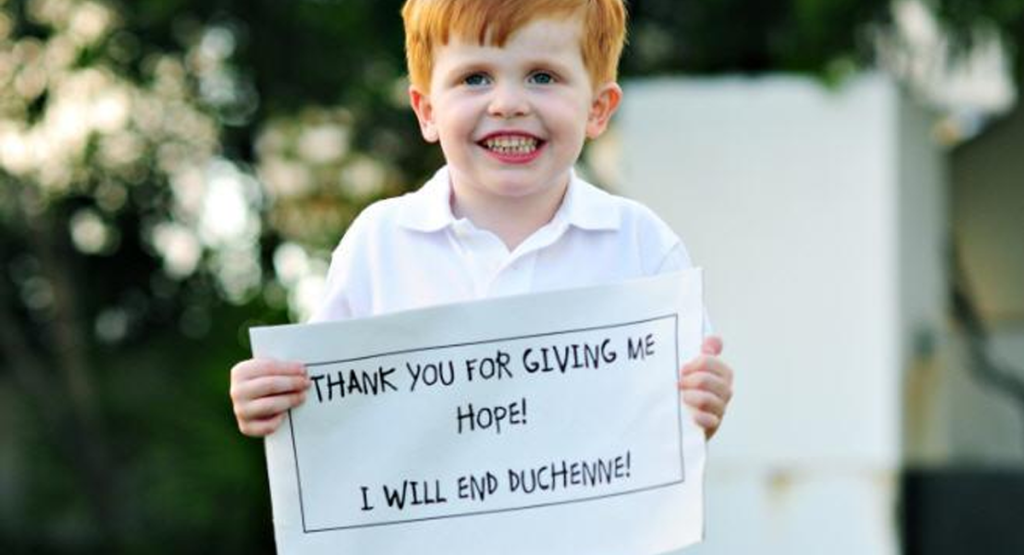
Alabama lawmakers granted final passage Thursday to a bill that would allow physicians to prescribe terminally ill patients promising, but unapproved medical treatments. House Bill 463, known as the Right to Try Act, passed the House of Representatives by a vote of 97-0. The bill says that doctors caring for people with terminal illnesses can prescribe medications that the Food and Drug Administration has deemed promising, but not yet ready for mass consumption. Thursday’s vote makes Alabama one of at least 12 states that have passed right to try legislation this year. House Bill 463 and Senate Bill 357 were inspired by 9-year old Gabe Griffin of Shelby County. At age 3, Gabe was diagnosed with Duchenne, one of nine types of Muscular Dystrophy. The disease causes generalized weakness and muscle wasting that increases over time and with muscle activity. Not only is the disease incurable, according to the Muscular Dystrophy Association, boys with Duchenne typically did not survive beyond their teens. Two Alabama lawmakers, Sen. Cam Ward and House health committee chair Rep. April Weaver, agreed to sponsor legislation that would help Gabe and other terminal patients work with their doctors to access medication in the earliest stages of FDA approval. Ward’s bill has already passed the Senate. When he introduced the Senate version of the bill, Ward said in a prepared statement: “Terminal patients should have a right to try, and as a father and an elected official I believe we should do everything we can to help remove unnecessary bureaucratic red tape from the process so that doctors and terminally ill patients can determine the best course of action in each individual situation.” The initial barriers, according to Gabe’s father, Scott Griffin, came from the Food and Drug Administration when the family tried to gain accelerated access to experimental treatments for Gabe. In a recent interview with Alabama Today, Griffin recalled one of his conversations with FDA administrators. “The first argument was that the patient population of one of the studies was too small: just 12 kids. Then they said the results in the study may have been just the natural difference in the disease … They said, ‘Well we have the best drug approval process in the world’ and ‘You have to understand that we have to worry about long-term side effects.’ And I said to them, ‘Explain to me what a long-term side effect is to a child who is going to die.’” The Food and Drug Administration has acknowledged that the accelerated approval process can be daunting for patients and medical providers. In a statement on the FDA website, assistant commissioner Peter Lurie M.D. said that although approvals can happen within days – or even hours – of a finished application, the process has given them cause for concern. “It called for 26 separate types of information and seven attachments,” Lurie wrote. “In fact, it was originally designed for manufacturers seeking to begin human testing, not for physicians seeking use by single patients.” According to Lurie, those concerns are what drove the FDA to announce a new streamlined process to allow patients access to experimental drugs. The FDA website says that the new forms “will be used for requesting the medications, and is designed to greatly simplify and accelerate the process by which a physician can request that FDA permit the use of an experimental — so-called ‘investigational’ — drug or biological product while it’s still being tested to establish its safety and effectiveness.” However, the forms are still going through the administrative rulemaking process and not yet available to the public. The official website gave no indication on when the final guidelines would be available for patients or providers. For the Griffins, the FDA roadblocks helped fuel their decision to lobby Alabama lawmakers. “We believe those drugs could save him, but we can’t get them because they’re not FDA approved,” Griffin said. “And after years of petitioning the FDA, we decided to take our fight to the state level.” The Griffins aren’t alone. According to the National Conference of State Legislatures, a growing number of states are considering legislation to work around those barriers and help patients gain access to experimental drugs. Thursday’s vote makes Alabama one of 12 states that have passed right to try bills so far this year. The NCSL reports that lawmakers in at least 36 states proposed “right to try” measures in 2015.
Alabama newspapers editorial roundup

Tuesday: The Anniston Star on being caught up in the crossfire of health care law opposition: Todd Gardenhire and Luis Lang aren’t household names, but their recent experiences with health care speak loud and clear about Obamacare and how it’s perceived by some Americans. Gardenhire is a Tennessee state senator from Chattanooga. This year, he joined his Republican colleagues on the Senate Health and Welfare Committee to kill a proposal to expand Medicaid coverage to 280,000 working Tennessee residents who can’t afford health insurance. When a proponent of the expansion pointed out that “virtually every member of the Tennessee General Assembly receives some form of tax-subsidized health care,” Gardenhire took exception. “I have very nice health care provided to me through my private employer,” he said. “My wife’s on Social Security.” Only later did the senator come to realize that, yes, the state of Tennessee is picking up a big chunk of the costs of his health insurance. According to a new report in The Tennessean, the state has paid almost $31,000 of Gardenhire’s insurance bill since 2008. The senator now says he asked to be dropped from the state coverage. There’s no form, however, to forgo the shame of being an uninformed blowhard. Lang’s story is much more heartbreaking. The Fort Mill, South Carolina, resident is in very real danger of losing his eyesight. Diabetes is the central reason for the bleeding in his eyes and a partially detached retina, according to an article in The Charlotte Observer. The problem is that Lang, 49, doesn’t have health insurance to cover the costs of surgery and the medical bills for treatment has drained his savings. Paying out-of-pocket was fine for Lang and his wife until February when he had a series of small strokes and his vision weakened. “He’s in a very bad situation,” Malcolm Edwards, Lang’s ophthalmologist, said. “The longer he waits, the poorer his results will be.” Several factors are working against Lang: Lang, a Republican, had previously defied the Obamacare mandate to purchase health insurance. By the time he applied for Obamacare, he had missed the enrollment date for this year. Unable to work and earn money as a self-employed handyman, his income is too low to qualify for subsidies to purchase private insurance. South Carolina is one of many states that has thus far refused to expand Medicaid to cover those who are trapped like Lang. (And, yes, Alabama is one of them, as well.) Who’s to blame for this crisis? Is it Lang, who by his own admission is a smoker and hasn’t been diligent in treating his diabetes? Is it South Carolina’s Republican-dominated elected leadership that refuses to expand Medicaid? It’s President Barack Obama and congressional Democrats, say the Langs. “We call it the Not Fair Health Care Act,” said Mary Lang, Luis’ wife. In a larger sense, the culprit is one of political leadership at the top of the Republican Party. It’s House Republicans who voted dozens of times to repeal it. It’s a relentless judicial assault on the law by conservative activists. It’s a slate of 2016 GOP presidential wannabes promising to tear the law apart. It’s members of Congress who won’t make peace with Obamacare and yet won’t offer a viable alternative. By this measure, Gardenhire and Lang are caught in the crossfire of an ideological war that shows no sign of ceasing. Online: https://www.annistonstar.com • • • Tuesday Dothan Eagle on special needs children: There’s been a lot of gloom and doom coming out of Montgomery, where Alabama lawmakers are charged with the task of balancing the state’s General Fund and looking for ways to close a gaping divide between revenue and expenses. We’ve all heard about the possibility of shutting down half of the state parks, decimating the state trooper force and other draconian measures. One has to wonder if the threats are empty, perhaps simply saber-rattling to make tax hikes and/or gambling expansion seem like the lesser evil. Regardless, turning special needs children into pawns in a political game is unconscionable, but that’s exactly what has happened. On Monday, people gathered at Vivian B. Adams School in Ozark to protest a potential $35 million reduction in mental health funding. The number is misleading, because the loss of that $35 million would mean the state couldn’t receive another $64 million in matching funds from the federal government. Mental health care programs in Alabama would lose a whopping $99 million. Lawmakers should have to see firsthand how their decisions will affect Alabama families. They had an opportunity in Ozark on Monday, but only one of 140 Alabama lawmakers showed up: Rep. Steve Clouse, the chairman of the House Ways and Means Committee, who lives in Ozark. We applaud Rep. Clouse for attending the rally and speaking with concerned residents, and appreciate his willingness to deliver their message to his colleagues in Montgomery. We wish he could take the clients of Vivian B. Adams School with him. If Alabama lawmakers had to look into the faces of clients like Diane Kautz‘s daughter, for whom the school is the “happiest place on earth,” they’d surely find a way to keep funding intact. Online: https://www.dothaneagle.com • • • Wednesday Decatur Daily on handguns: There are few public servants we respect more than law enforcement officers. As honest Americans and Alabamians, we have reason to take note of our appreciation to the men and women who patrol our cities, counties and state. Most of us can point to at least one specific instance when an officer responded in a time of need. It’s too bad we don’t think of such moments when we elect politicians who create laws that make their jobs harder and more dangerous. The so-called Second Amendment laws passed by our politicians, who pander to our most base and sometimes irrational fears, are a shining example. It was never hard to buy a gun in Alabama. And no one ever threatened to take them away. Yet some of our least sincere, or
State mental health organizations rally to fight agency cuts
Mental-health service workers and recipients rallied across Alabama on Monday, asking lawmakers to not cut millions in funding for the Alabama Department of Mental Health. The department is at risk of losing $35.2 million in state funds and another $64 million in matching federal funds, which some say would be a severe setback for the thousands who depend on funding. Chris Stewart, president of The Arc of Jefferson County, a nonprofit organization working with the intellectually and developmentally disabled, told hundreds in Birmingham that Alabama ranks last in funding for the disabled. “How do you cut a percentage of a person’s health care? How do you cut a percentage of a person’s residential services? How do you cut a percentage of a person’s food? People are not something that can be dealt with in percentages,” Stewart said. The Legislature is considering a number of measures for how to fill a $290 million deficit in the state’s general fund budget. Gov. Robert Bentley has proposed a $541 million tax package to address both short-term and long-term budget issues, but lawmakers have been slower to consider raising new revenue. This past week, House Republicans unveiled their plan for new taxes that would raise less than a third of the revenue the governor has requested. In an April memo to legislators, Bentley said more than 24,000 people with mental illness would lose or experience reductions in services, and 1,080 community mental-health employees would lose their jobs. Speaking in Mobile at one of several rallies statewide, Bentley said outpatient mental-health services provide better and more financially efficient results than inpatient hospitals. However, many of those services would be reduced if budget cuts are enacted, he said. “People with intellectual disabilities should not be in institutions,” Bentley said. Cindy Smith, whose son Julian was diagnosed with schizophrenia at 19 during his first year at Brown University, said her son, now 43, depends on mental-health services from the state. He depends on funding from Medicare and Medicaid to pay for medication, which she said costs $5,000 a month. In an interview after the Birmingham rally, Smith said she worries what will happen to her son if he loses outpatient services: He would lose his place to live. He would lose his psychiatrist. He would be on his own, she said. “Hopefully he will come home and live with me, but what he does is, he goes in the front door and out the back door and I have no idea where he is,” she said. “And then he doesn’t take his medicine, and he would either be dead, in jail, in prison. It wouldn’t be good.” Republished with permission of The Associated Press.
#Hope4Gabe family excited to see “Right to Try” Act move closer to finish line
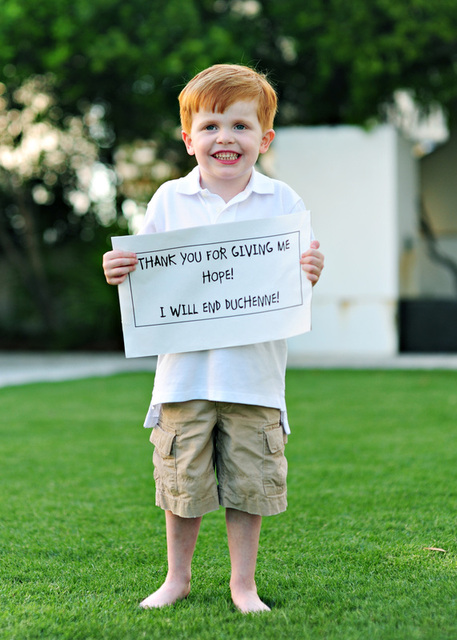
One family’s winding journey to secure medicine they hope could save their son’s life is several steps closer to the finish line. A group of Alabama lawmakers voted Wednesday in favor of House Bill 463, also known as the Right to Try Act. The bill says that doctors caring for people with terminal illnesses can prescribe medications that the Food and Drug Administration has deemed promising, but not yet ready for mass consumption. The Griffin family and their son, Gabe, are at the center of the legislation. Scott Griffin and his wife Traci live in Birmingham with their four children: Turner, age 14; Cooper, age 11; and 9-year-old twins, Gabe and Addie. In an interview with Alabama Today, Griffin said he and his wife had suspected since the twins were babies that Gabe wasn’t developing as quickly as his sister. “When you have a twin right beside him and she’s hitting all her benchmarks, and he’s not, it becomes a little evident that something’s not right,” Griffin said. “Our doctors kept saying, ‘Nothing’s wrong. He’s just a boy twin and they’re slower to develop.’ So we just kind of dismissed it. But something didn’t seem right.” The Griffin’s neighbor was the first to suggest that Gabe might need to be tested for muscular dystrophy. An occupational therapist, she sometimes babysat the kids and noticed subtle differences in Gabe’s attempts to stand and walk. She told the Griffins about Duchenne Muscular Dystrophy and recommended that 3-year-old Gabe see a doctor. Duchenne is one of nine types of Muscular Dystrophy. It causes generalized weakness and muscle wasting that increases over time and with muscle activity. The disease primarily effects boys and shows up between ages 3 and 5. According to the Muscular Dystrophy Association, boys with Duchenne typically did not survive beyond their teens. But advances in medical treatments and care have increased their life expectancy: “Survival into the early 30s is becoming more common and there are cases of men living into their 40s and 50s.” Scott Griffin says those medical advances could save Gabe’s life. “He’s 9 now. The typical progression of the disease is that by 10 or 12, they’re wheelchair bound. And then, between 17-20, they usually die.” He says that’s why the family started looking into cutting-edge therapies to slow – or even reverse – the degeneration of Gabe’s muscles. However, the drugs that the Griffins and their doctors feel would help Gabe are still going through the FDA approval process. “We believe those drugs could save him, but we can’t get them because they’re not FDA approved,” said Griffin. “And after years of petitioning the FDA, we decided to take our fight to the state level.” The Griffins started a foundation called Hope for Gabe (H4G) to raise awareness about Duchenne. They also enlisted the help of Michael Staley, former chief of staff to U.S. Congressman Spencer Bachus and current lobbyist at Birmingham law firm Waller Landsen Dortch and Davis, to educate legislators about the proposed law. Two lawmakers, Sen. Cam Ward and health committee chair Rep. April Weaver, agreed to sponsor legislation that would allow doctors to prescribe medication in the earliest stages of FDA approval to terminally ill patients. Sen. Ward’s bill has already passed the Senate. Today, Rep. Weaver’s legislation received a favorable report from the health committee and can move to the House floor for open debate. “Right to Try is the right thing to do,” Weaver said just after the committee vote. “I’m a mother and a nurse with more than 20 years in health care. I believe that anything that we can do to help doctors and terminal patients work together on their plan of care and remove barriers to treatment that might be beneficial is just the right thing to do.” Griffin said that the timing of the legislation is critical to securing medical treatment for Gabe. “Getting him these drugs now means that we can stop the disease before he needs a wheelchair or breathing tubes. They could even turn his condition around.” For Gabe, passing the Right to Try Act means being able to “ride a bike, run, and climb stairs like everybody else.” He said that he’s also looking forward to excelling in his favorite subject in school: physical education. Weaver said she hopes to see the bill head to the House floor by late next week.
House health committee in favor of patients’ “right to try”
Patients in Alabama with terminal conditions may soon have to the “right to try” certain promising medications. A House health panel gave a favorable report to a proposal brought by Rep. April Weaver that would allow doctors to prescribe drugs that the FDA has approved for clinical trials. Companion legislation has already passed the Senate. The legislation was inspired by 9-year old Gabe Griffin of Shelby County. Gabe suffers from an incurable disease called Duchenne Muscular Dystrophy. Duchenne causes generalized weakness and muscle wasting that increases over time and with muscle activity. Gabe and his family were at the committee meeting to hear the vote. Gabe offered a final plea to legislators considering the proposal: “I hope you pass my bill.” The panel passed the bill out of committee by unanimous voice vote.
Poll finds Medicaid recipients still choosing ER visits over primary or urgent care
Medicaid patients are still visiting emergency rooms rather than primary care or urgent care physicians, according to a poll released Monday by the American College of Emergency Physicians. More than half of 2,098 doctors surveyed (56 percent) said that the number of Medicaid patients visiting emergency rooms has increased during the past year. The ACEP poll also reported a sharp increase in the volume of emergency room patients since the Affordable Care Act insurance coverage mandate took effect. About 75 percent of doctors surveyed saw an overall increase in the volume of ER patients; 28 percent reported a significant rise in the number of emergency patients. The study writers said in a prepared statement that the statistics were evidence that efforts by policymakers and health insurance providers to drive Medicaid patients out of emergency departments and into primary care are not working. Those findings arrive at a crucial time in the debate over Medicaid expansion in Alabama. Democratic legislators continue to urge Gov. Robert Bentley to expand Medicaid. Senate Democrats pledged to shut down the rest of the Legislative Session with filibusters on every bill in protest to a resolution passed by Republican leaders opposing Medicaid expansion. Sen. Tripp Pittman, who sponsored the Senate resolution, told Yellowhammer News that he and other leaders harbored deep concerns about raising the number of people receiving public assistance. “This resolution expresses my resolve to be fiscally responsible and protect taxpayer funds,” Pittman said. “Medicaid reform legislation has already been put in place, and we need to measure the outcome of those reforms before rashly expanding Medicaid. Right now, we simply can’t afford to expand Medicaid.”
Law protects health workers refusing to perform care that runs against personal beliefs
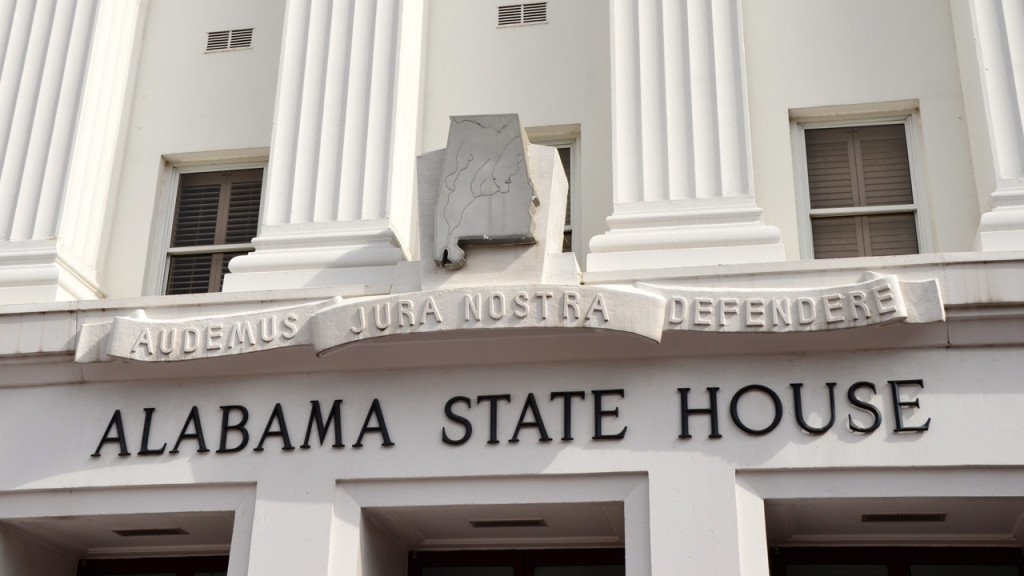
Healthcare providers could refuse to perform services that run against their beliefs under legislation considered in the House Committee on Health on Wednesday. Rep. Arnold Mooney is sponsoring House Bill 491 also known as the Healthcare Rights of Conscience Act. The bill gives providers the right to refuse to perform or participate in health care services that violate their moral or religious beliefs. Further, providers would be immune from any civil, criminal, or administrative liability for refusing to participate in services that go against their conscience. During Wednesday’s public hearing, Rep. Mooney said that in emergency situations, health care providers would be required to provide medical care until another worker is able to step in. Workers would be required to given their employer written notice of their objections at least 24 hours before the procedure. “This bill allows people to get the services they choose to have from providers who choose to provide it,” said Rep. Mooney. Several advocates spoke in favor of the bill, including one man who said it would treat “health care workers as human beings, not automatons.” Concerns over the bill included its potential to block a patient’s ability to make an informed decision, since practitioners could refuse to offer certain options based on their personal beliefs rather than on medical evidence or potential for health risk. Rep. Laura Hall suggested an amendment that would require health offices to post information clearly stating that that medical staff could refuse certain services. She compared the requirement to the Alabama law concerning placing signs outside of businesses where guns are not allowed. Rep. Mooney signaled that he would be unwilling to consider amending the bill. The committee declined to vote on Wednesday.
Senate Democrats call for Medicaid expansion
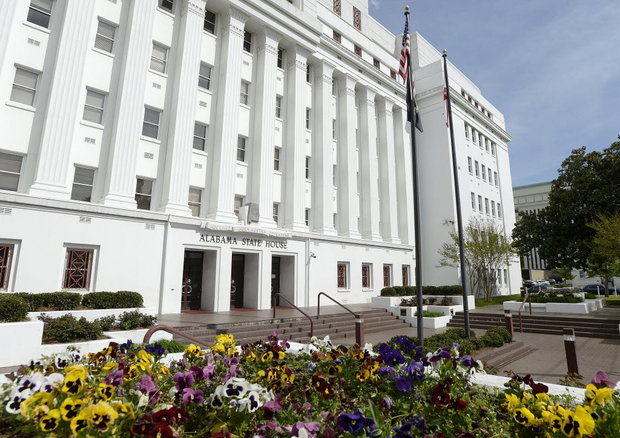
Democrats in the Alabama Senate are urging Gov. Robert Bentley to expand Medicaid under the Affordable Care Act. The Alabama Senate on Tuesday approved a resolution saying that Democrats and the one independent member of the Alabama Senate support Medicaid expansion. Senators said Medicaid expansion would provide health care coverage to 300,000 Alabamians. Senators approved the resolution on an 8-2 vote. While Republicans hold a majority in the Alabama Senate, most Republicans didn’t vote on the resolution. The resolution soothed a partisan fight that threatened to derail legislative business for several days. Republicans approved a resolution last week saying that it was the intent of the Alabama Legislature to not expand Medicaid. Democrats argued that was incorrect since Democrats in the Legislature favor expansion. Republished with permission from The Associated Press.
