
Heather Hull: ‘Poop train’ finally empty; sludge gone
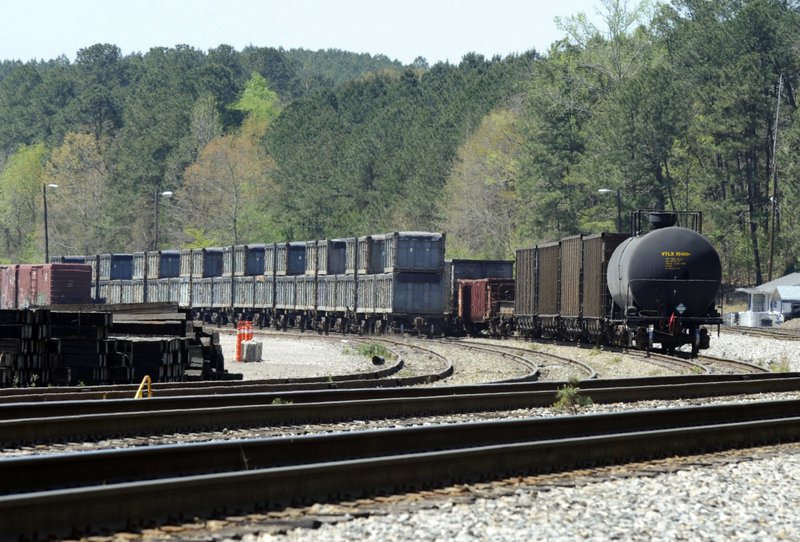
The last train car full of New York City sewage sludge that has stunk up a small Alabama community for more than two months has finally been emptied, the town’s mayor said this week. For more than two months, the sludge has blown an unbearable stench throughout the tiny town of Parrish, Alabama, population 982. All of the containers have now been emptied from the so-called Poop Train, Parrish Mayor Heather Hall said on social media Wednesday. Some of the containers are still at the site, awaiting shipment back to the northeast U.S., she said. The sludge is a byproduct of New Yorkers’ excrement. It was shipped to the nearby Big Sky landfill. Hall said after a public outcry, the Norfolk Southern railroad required Big Sky to hire more truck drivers so the sludge could be removed from the train cars more quickly. “Other towns and cities have been fighting this material in their towns for years,” Parrish said in announcing the end of what she described as a nightmare. “While what happened in Parrish was, to our understanding, an unprecedented event, there are still small towns like Parrish fighting this situation on a smaller scale.” Experts say some cities send their waste to Alabama and other Southern states due to low landfill fees and lax zoning laws. New York has discontinued shipments to Alabama for now. New York City has a goal of sending “zero waste” to landfills by 2030, according to its long-term strategy “One New York: The Plan for a Strong and Just City.” Environmental advocates say there’s nothing just about a city dumping waste in poor communities that lack the political clout to stop it. In Alabama, residents of tiny Parrish say they felt blindsided by the sudden horrid smells that enveloped their town in late January. “Would New York City like for us to send all our poop up there forever?” said Sherleen Pike, who lives about a half-mile from the railroad track in Parrish. She’s been dabbing peppermint oil under her nose because the smell is so bad. It has become more challenging and costly for New York City to dispose of its sewage sludge in recent years, city documents show. New York was forced to find new methods after the federal government in 1988 banned the city’s longtime practice of dumping it in the ocean. In recent years, New York City contractors had dumped the waste at landfills relatively close to the city, but those landfills have significantly reduced the amount of waste they will accept, according to a city budget document. Sending it to other communities also has prompted complaints about the smell. Two landfills in Pennsylvania, for instance, quit accepting sludge from New York City after odor complaints and violations, according to the documents. New York City projects higher disposal costs through fiscal year 2020, partly because the waste will have to be transported farther away from the city. In her Facebook post announcing that the last container of sludge had been removed, Hall remarked, “This material does not need to be in a populated area … period.” “It greatly diminishes the quality of life for those who live anywhere near it.” Republished with the permission of the Associated Press.
‘It smells like death:’ Alabama endures NYC ‘poop train’
A stinking trainload of human waste from New York City is stranded in a tiny Alabama town, spreading a stench like a giant backed-up toilet — and the “poop train” is just the latest example of the South being used as a dumping ground for other states’ waste. In Parrish, Alabama, population 982, the sludge-hauling train cars have sat idle near the little league ball fields for more than two months, Mayor Heather Hall said. The smell is unbearable, especially around dusk after the atmosphere has become heated, she said. “Oh my goodness, it’s just a nightmare here,” she said. “It smells like rotting corpses, or carcasses. It smells like death.” All kinds of waste have been dumped in Georgia, Alabama and other Southern states in recent years, including toxic coal ash from power plants around the nation. In South Carolina, a plan to store radioactive nuclear waste in a rural area prompted complaints that the state was being turned into a nuclear dump. In Parrish, townspeople are considering rescheduling children’s softball games, or playing at fields in other communities to escape the stink. Sherleen Pike, who lives about a half-mile from the railroad track, said she sometimes dabs peppermint oil under her nose because the smell is so bad. “Would New York City like for us to send all our poop up there forever?” she said. “They don’t want to dump it in their rivers, but I think each state should take care of their own waste.” Alabama’s inexpensive land and permissive zoning laws and a federal ban on dumping New Yorkers’ excrement in the ocean got the poop train chugging, experts say. Nelson Brooke of the environmental group Black Warrior Riverkeeper, describes Alabama as “kind of an open-door, rubber-stamp permitting place” for landfill operators. “It’s easy for them to zip into a rural or poor community and set up shop and start making a ton of cash,” he said. The poop train’s cargo is bound for the Big Sky landfill, about 20 miles (30 kilometers) east of Parrish. The landfill has been accepting the New York sewage sludge since early 2017. Previously, it was transferred from trains to trucks in nearby West Jefferson, but officials there obtained an injunction to keep the sludge out of their town. The sludge “smells of dead rotting animals as well as human waste,” West Jefferson’s attorney said in a lawsuit against Big Sky Environmental LLC. It also caused the community to become “infested with flies,” the complaint states. After West Jefferson went to court, the train stopped in late January in Parrish, which lacks the zoning regulations to block the train cars. It’s sat there ever since. “We’re probably going to look at creating some simple zoning laws for the town of Parrish so we can be sure something like this does not happen again,” the Parrish mayor said. Hall said she’s optimistic the sludge will all be trucked to the landfill soon. New York City has discontinued shipping it to Alabama for the time being, said Eric Timbers, a city spokesman. Its waste, recovered from the sewage treatment process and often called “biosolids,” has been sent out of state partly because the federal government in the late 1980s banned disposal in the Atlantic Ocean. In an earlier trash saga, a barge laden with 3,186 tons (2,890 metric tons) of non-toxic paper and commercial garbage from Long Island and New York City wandered the ocean for months in 1987, seeking a place to dump it after plans by a private developer to turn it into methane gas in North Carolina fell through. It was turned away by North Carolina, Alabama, Mississippi, Louisiana, Texas, Florida, Mexico, Belize and the Bahamas. Brooke’s Black Warrior Riverkeeper group last year opposed continued permits for the Big Sky landfill. Rural parts of Alabama are “prime targets” for landfills that accept out-of-state waste, it argued, meaning “that Alabama was becoming a dumping ground for the rest of the nation.” Big Sky officials did not return multiple email and phone messages from The Associated Press seeking comment. Nationally, the waste and recycling industry generates more than $93 billion in gross revenue annually, said Brandon Wright, a spokesman for the National Waste & Recycling Association. Wright said there are many reasons waste is sometimes transported out of state. There might not be enough landfill space nearby “and the waste has to go somewhere, so it gets transported out of state,” he said. Alabama and other Southern states have a long history accepting waste from around the U.S. A former state attorney general once described a giant west Alabama landfill as “America’s Pay Toilet.” It was among the nation’s largest hazardous waste dumps when it opened in 1977. At its peak, the landfill took in nearly 800,000 tons (72,570 metric tons) of hazardous waste annually. Plans to dump coal ash in Southern states have been particularly contentious. Each year, U.S. coal plants produce about 100 million tons (90 metric tons) of coal ash and other waste; more than 4 million tons of it wound up in an Alabama landfill following a 2008 spill in Tennessee. In Parrish, the mayor hopes the material in the train cars is removed before the weather warms up. “We’re moving into the summer, and the summer in the South is not forgiving when it comes to stuff like this,” she said. Republished with the permission of the Associated Press.
