
Joe Biden eyes defeated candidates for key administration roles

In politics, there can sometimes be an upside to losing. President-elect Joe Biden is eyeing several Democrats who lost congressional reelection races last month for key positions in his administration. They include outgoing Reps. Abby Finkenauer of Iowa, Donna Shalala of Florida, and Sen. Doug Jones of Alabama. Their consideration continues a long Washington tradition of defeated politicians seeking shelter in a new White House. Landing a job in a new administration can both position the losing candidates for future campaigns and provide the incoming president with important relationships on Capitol Hill. “It’s good to have people who know how to roam the halls of Congress,” said Andrew Card, who directed George W. Bush’s transition and later served as the Republican president’s chief of staff. Biden’s transition team declined to comment on the prospects of any individual contender for an administration role. He has already unveiled much of his economic and national security team and is expected to announce picks soon for key health positions. But there are still a large number of major Cabinet positions to be filled, including attorney general and leaders of the departments of Labor, Commerce, and Transportation. As Biden considers his options, his personal connection with some of the defeated lawmakers could carry significance. Finkenauer, who is under consideration as Labor secretary, owes her start in politics in part to Biden. As a college student, she worked on his ill-fated 2008 presidential campaign. A decade later, he headlined a rally for her winning congressional campaign. She was a key surrogate for Biden ahead of the Iowa caucuses. “I know they have a long relationship, and it’s been mutually supportive,” said former Assistant Dubuque City Manager Teri Goodman, who is a decades-long Biden supporter and has watched Finkenauer’s rise. Finkenauer narrowly lost her bid for a second term in a rural northeast Iowa district. But since then, the former state legislator, who made a name promoting public employee unions, has had conversations with senior Biden transition officials about leading the Labor Department, according to Democratic sources familiar with the communications. Jones, meanwhile, is in the mix to lead the Justice Department, partly due to his work as a U.S. attorney who helped convict Ku Klux Klansmen for the Birmingham church bombing that killed four Black girls. He narrowly won a special Alabama Senate election in 2017 but lost reelection last month. He also has a longstanding personal relationship with Biden, dating to Biden’s first presidential campaign in 1988. Biden spoke at Jones’ campaign kickoff in 2017, saying of Jones, “He knows your heart and will never let you down,” and was the first to telephone him on Nov. 3 after he’d lost the seat to Republican Tommy Tuberville. Shalala is perhaps the most administration-ready of 2020′s losing Democratic class. She spent eight years as secretary of health and human services under Bill Clinton and then served as president of the University of Miami before winning a south Florida House seat in 2018. She has heard from Biden transition officials. Beyond the outgoing members of Congress, Biden is also considering his former rivals in the Democratic primary for jobs. He already tapped California Sen. Kamala Harris as his vice president. Biden is weighing roles for Pete Buttigieg, the former South Bend, Indiana mayor who mounted a surprisingly strong campaign in the early stretch of the Democratic primaries. Biden has expressed deep affection for Buttigieg, who was one of the first major candidates to drop out of the race and endorse Biden. Montana Gov. Steve Bullock, who lost his Senate bid after leaving the White House race, is part of discussions for a Biden administration role, perhaps as secretary of agriculture. Another name under consideration for agriculture is former North Dakota Sen. Heidi Heitkamp, who lost in 2018 but has been a champion of reinvigorating rural America. “If they think I can be helpful, then good,” Heitkamp told The Associated Press recently. Presidents have often sought losing rivals for positions. Republican Donald Trump chose fellow 2016 GOP presidential candidates Rick Perry as energy secretary and Ben Carson for housing and urban development. Democrat Barack Obama notably chose former rival Hillary Clinton to be secretary of state after the 2008 election. Missouri Sen. John Ashcroft’s defeat in 2000 paved the way for his four years as attorney general under George W. Bush, including during the aftermath of the 2001 terrorist attacks in the United States. Former Senate Majority Leader Tom Daschle of South Dakota, who lost the election to a third term in 2004, was tapped after the 2008 election by Obama to head health and human services, which would have put him at the forefront of the health care debate. Daschle withdrew from consideration after questions arose about his failure to properly report and pay income taxes. The most successful losing congressional candidate of the past 50 years is George H. W. Bush, who as a two-term Republican U.S. House member from Texas lost his 1970 bid for Senate against Democrat Lloyd Bentsen. As a consolation, President Richard Nixon picked Bush to be ambassador to the United Nations, a disappointment for the up-and-comer who was hoping for a treasury job. But the post led to an ambassadorship to China, and the experiences were valuable when as president he found himself leading a global coalition in Operation Desert Storm. “The significance is that was the beginning of his self schooling and expertise in foreign affairs,” said Chase Untermeyer, director of White House personnel during George H. W. Bush’s administration. In a White House led by a Capitol Hill veteran like Biden, a team with a background in Congress is particularly valuable to those around the president, since Biden remains well acquainted with the rules and many members. But considering Biden hasn’t been a senator in nearly a dozen years, Card said those with more recent experience in Congress will be helpful. “More than helping the president, these people can help the White House staff dealing with members of Congress,” said Card. “They know where
Donald Trump picks Brett Kavanaugh for court, setting up fight with Democrats
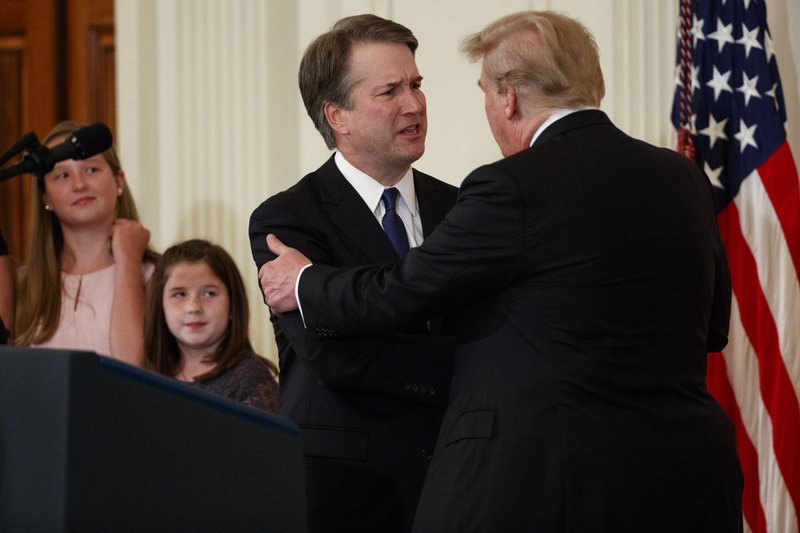
President Donald Trump chose Brett Kavanaugh, a solidly conservative, politically connected judge, for the Supreme Court Monday night, setting up a ferocious confirmation battle with Democrats as he seeks to shift the nation’s highest court ever further to the right. A favorite of the Republican legal establishment in Washington, Kavanaugh, 53, is a former law clerk for retiring Justice Anthony Kennedy. Like Trump’s first nominee last year, Justice Neil Gorsuch, Kavanaugh would be a young addition who could help remake the court for decades to come with rulings that could restrict abortion, expand gun rights and roll back key parts of Obamacare. “He is a brilliant jurist, with a clear and effective writing style, universally regarded as one of the finest and sharpest legal minds of our time,” Trump said in his prime-time televised White House announcement. He added: “There is no one in America more qualified for this position, and no one more deserving.” With Kavanaugh, Trump is replacing a swing vote on the nine-member court with a staunch conservative. Kavanaugh, who serves on the Court of Appeals for the D.C. Circuit, is expected to be less receptive to abortion and gay rights than Kennedy was. He also has taken an expansive view of executive power and has favored limits on investigating the president. Speaking at the White House, Kavanaugh pledged to preserve the Constitution and said that “a judge must be independent and must interpret the law, not make the law. A judge must interpret the Constitution as written.” A senior White House official said Trump made his final decision on the nomination Sunday evening, then phoned Kavanaugh to inform him. The official said Trump decided on Kavanaugh because of his large body of jurisprudence cited by other courts, describing him as a judge that other judges read. On Monday, Trump phoned retiring Justice Kennedy to inform him that his former law clerk would be nominated to fill his seat. Trump signed Kavanaugh’s nomination papers Monday evening in the White House residence. Top contenders had included federal appeals judges Raymond Kethledge, Amy Coney Barrett and Thomas Hardiman. Some conservatives have expressed concerns about Kavanaugh, questioning his commitment to social issues like abortion and noting his time serving under President George W. Bush as evidence he is a more establishment choice. But his supporters have cited his experience and wide range of legal opinions. With Democrats determined to vigorously oppose Trump’s choice, the Senate confirmation battle is expected to dominate the months leading up to November’s midterm elections. Senate Republicans hold only a 51-49 majority, leaving them hardly any margin if Democrats hold the line. Democratic senators running for re-election in states Trump carried in 2016 will face pressure to back his nominee. Senate Majority Leader Mitch McConnell called Kavanaugh “a superb choice” and said senators would start meeting with him this week. Some Republican senators had favored other options. Rand Paul of Kentucky had expressed concerns but tweeted that he looked forward to meeting with Kavanaugh “with an open mind.” Democrats and liberal advocacy groups quickly lined up in opposition. Signaling the fight ahead on abortion rights, Dawn Laguens, executive vice president of Planned Parenthood Federation of America, said in a statement: “There’s no way to sugarcoat it: With this nomination, the constitutional right to access safe, legal abortion in this country is on the line. The White House invited a number of senators to attend the Monday night announcement. Democrats who were invited but declined included Sens. Joe Donnelly of Indiana, Heidi Heitkamp of North Dakota, Doug Jones of Alabama, Joe Manchin of West Virginia and Dianne Feinstein of California. Feinstein is the ranking Democrat on the Judiciary Committee. The others are Republican targets for the confirmation vote who come from Trump-won states where they face re-election this fall. Democrats have turned their attention to pressuring two Republicans, Sens. Susan Collins of Maine and Lisa Murkowski of Alaska, to oppose any nominee who threatens Roe v. Wade. The two have supported access to abortion services. Kavanaugh is likely to be more conservative than Justice Kennedy on a range of social issues. At the top of that list is abortion. A more conservative majority could be more willing to uphold state restrictions on abortion, if not overturn the 45-year-old landmark Roe v. Wade decision that established a woman’s constitutional right. Kennedy’s replacement also could be more willing to allow states to carry out executions and could support undoing earlier court holdings in the areas of racial discrimination in housing and the workplace. Kennedy provided a decisive vote in 2015 on an important fair housing case. Like the other eight justices on the court, Kavanaugh has an Ivy League law degree, spending his undergraduate and law school years at Yale. Since 2006, he has been a judge on the federal appeals court in Washington. He also was a key aide to Kenneth Starr during Starr’s investigation of President Bill Clinton, worked on behalf of George W. Bush’s campaign during the election recount in 2000 and served in the Bush White House. Kavanaugh’s many written opinions provide insight into his thinking and also will be fodder for Senate Democrats who will seek to block his confirmation. He has written roughly 300 opinions as a judge, authored several law journal articles, regularly taught law school classes and spoken frequently in public. Kavanaugh’s views on presidential power and abortion are expected to draw particular attention in his confirmation hearing. Drawing on his experience working on the Clinton investigation and then in the Bush White House, he wrote in a 2009 law review article that he favored exempting presidents from facing both civil suits and criminal investigations, including indictment, while in office. That view has particular relevance as special counsel Robert Mueller is looking into Russian meddling in the 2016 election and whether the Trump campaign played any role in a foreign interference plot. On abortion, Kavanaugh voted in October to delay an abortion for a teenage immigrant who was in government
What to expect in the Supreme Court confirmation battle
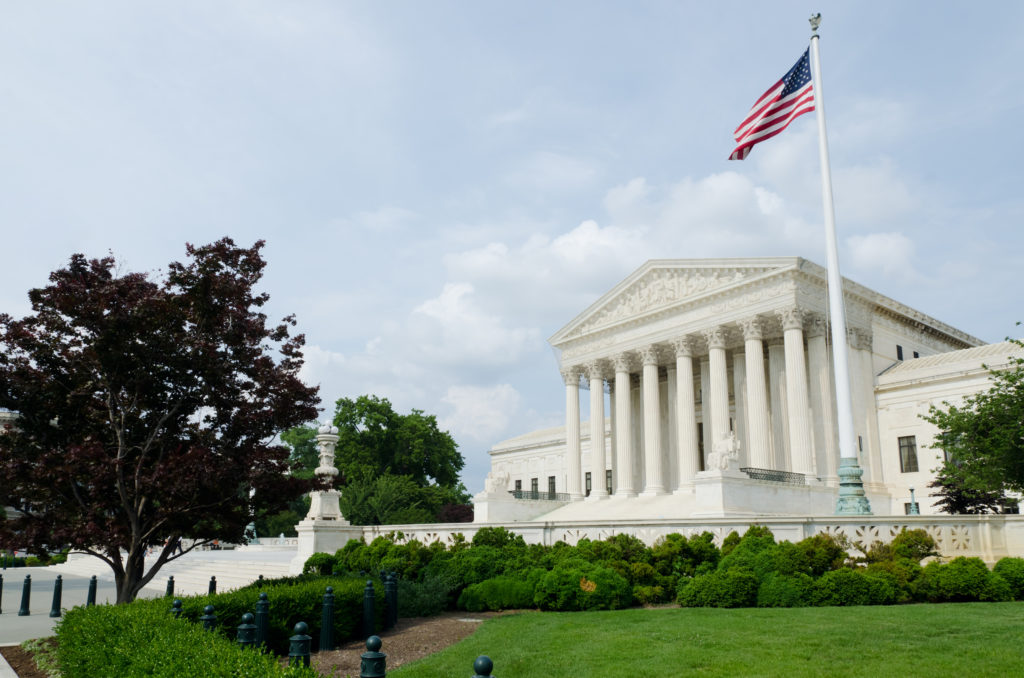
The coming battle over a Supreme Court nominee promises to be a bruising one. Republicans are eager for conservatives to gain a firm majority on the court. Democrats are voicing alarm about what the new justice could mean for charged issues such as abortion rights and gay rights. The stakes are enormous, and advocacy groups that don’t have to unveil their donors are spending heavily to shape the fight. President Donald Trump’s top contenders for the vacancy appear to be federal appeals judges Amy Coney Barrett, Thomas Hardiman, Brett Kavanaugh and Raymond Kethledge. Trump planned to announce his pick Monday night. Regardless of his choice, it’s likely that the closely divided Senate will be holding a momentous confirmation vote just weeks before the midterm election. A look at what to expect: Finding The Votes Republicans may have a narrower margin for error than they did when the Senate confirmed Trump’s first Supreme Court nominee, Neil Gorsuch, by a vote of 54-45 in April 2017. Democratic Sen. Doug Jones of Alabama has replaced Republican Sen. Luther Strange, cutting the GOP’s Senate majority to 51-49. Meanwhile, Republican Sen. John McCain of Arizona is battling brain cancer and has not been back to the Capitol since December. That increases the focus on two Republicans — Sen. Susan Collins of Maine and Lisa Murkowski of Alaska. Both support a woman’s right to have an abortion and will be looking for assurances that the nominee would not overturn the Roe v Wade decision establishing abortion rights. Trump pledged in 2016 that he would be “putting pro-life justices on the court.” On the Democratic side, the focus will be on Sens. Heidi Heitkamp of North Dakota, Joe Donnelly of Indiana and Joe Manchin of West Virginia. All three voted to confirm Gorsuch and are up for re-election in states that Trump won handily. Whatever they decide will upset a large group of voters in their home states. If Collins and Murkowski vote “no” and Democrats all vote “no,” the nomination would be blocked. If McCain were to miss the vote, only one GOP defection would be needed to block the nomination if all Democrats were opposed. Old Wounds Democrats are still stinging from Republicans refusing to even grant a hearing to President Barack Obama’s choice to serve on the Supreme Court, Merrick Garland. They are calling on Senate Majority Leader Mitch McConnell, R-Ky., to wait until after the November election to schedule a hearing and vote. McConnell has rejected that possibility, saying the decision to not fill the vacancy under Obama was prefaced on it being a presidential election year. Democrats say McConnell is being hypocritical in moving forward with the nomination. While that argument won’t sway Republicans, their strategy could stiffen Democratic resolve to oppose the nominee. Liberal advocacy groups are challenging Minority Leader Chuck Schumer, D-N.Y., to keep the Democrats united. Senate Relations Much of the groundwork for a successful confirmation comes in private meetings that the nominee will have with individual senators in the coming weeks. For lawmakers who are not on the Judiciary Committee, it may be their only chance to talk with the nominee personally before a final vote. Gorsuch met with nearly three-quarters of the Senate in advance of his hearings. The process is arduous, with the private meetings giving way to days of testimony before the Senate Judiciary Committee, which has 11 Republicans and 10 Democrats. Hearings for the most recent nominees to the Supreme Court have lasted four or five days, though there were 11 days of hearings for Robert Bork’s nomination in 1987. On average, for Supreme Court nominees who have received hearings, the hearing occurred 39 days after the nomination was formally submitted, according to the Congressional Research Service. The Judiciary Committee need not approve the nomination for it to advance. A negative recommendation or no recommendation merely alerts the Senate that a substantial number of committee members have reservations. The Fight Outside The Capitol Before the president has even made his announcement, advocacy groups are making clear they will play an important role in the coming fight. Groups that support abortion rights are planning a “Day of Action” for August 26, the anniversary of the 1920 adoption of the 19th Amendment giving women the right to vote. The liberal advocacy group Demand Justice will spend $5 million on ads through September and began airing spots Thursday in Maine and Alaska aimed at pressuring Collins and Murkowski. “Why won’t she rule out voting for Trump’s anti-choice picks?” both ads ask. It also plans to run ads next week in Manchin’s, Donnelly’s and Heitkamp’s home states with a softer tone, asking them to continue protecting people with pre-existing health conditions by opposing a nominee who’d threaten that. Meanwhile, the conservative Judicial Crisis Network is targeting vulnerable Democratic incumbents in its ad campaigns. The deep-pocketed group advertised against Senate confirmation of Garland and spent millions more advocating for Gorsuch. Republished with the permission of the Associated Press.
Mike Pompeo facing rare opposition from Senate panel
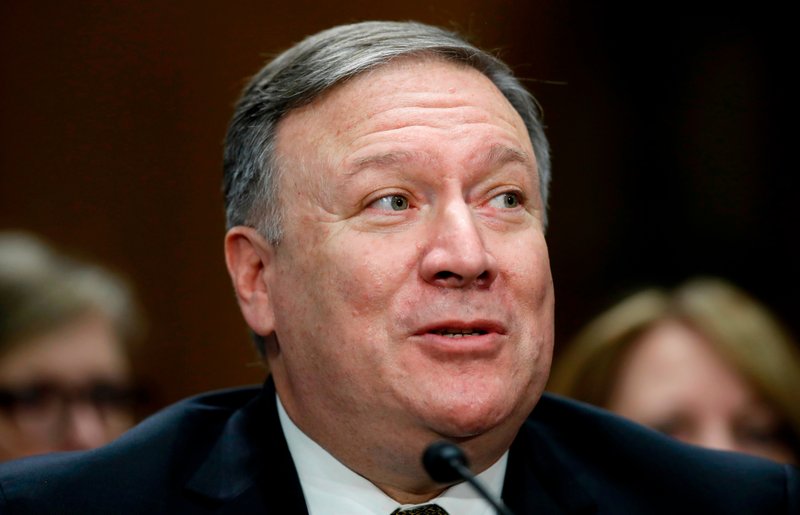
President Donald Trump’s nominee for secretary of state, Mike Pompeo, is facing serious opposition before the Senate Foreign Relations Committee, which may not have enough votes to recommend him for confirmation because all Democrats, and at least one Republican, have said they will oppose him. The full Senate is still expected to consider Pompeo’s nomination later this week. But the rare rebuke expected from the panel Monday, even after Pompeo’s recent visit with North Korean leader Kim Jong Un, would be the first time in years that a nominee for the high-level Cabinet position did not receive a favorable committee vote. Sen. Bob Corker, R-Tenn., the chairman of the committee, blamed partisan politics for opposition to Pompeo, now the CIA director, saying Pompeo is just as qualified as past secretaries of state nominees Hillary Clinton or John Kerry, both of whom received overwhelming support. “We are in an era where somebody like this, who is qualified, unfortunately, is likely to be voted out without recommendation or with a negative recommendation,” Corker said Sunday on “State of the Union” on CNN. “It’s just sad that our nation has devolved politically to this point.” Pompeo’s confirmation before the full Senate now hangs in balance, with the votes of just a handful of senators determining whether he becomes the nation’s top diplomat after Trump fired Rex Tillerson last month. Key Democrats, including some who had voted for Pompeo as CIA director last year, are peeling away, and Republican Sen. Rand Paul of Kentucky remains opposed, despite personal overtures from the president. Pressure is mounting on senators from both sides. White House allies are unloading ad campaigns against Democrats from Trump-won states, including North Dakota, Indiana and Missouri, to vote for the president’s nominee. But progressive groups are pounding senators’ offices in opposition to Pompeo’s hawkish foreign policy views and negative comments about gay marriage and Muslims. As soon as Sen. Heidi Heitkamp, D-N.D., announced her support last week, one group called on her to switch. “I don’t agree with every position he’s taken or every word he has spoken,” Sen. Susan Collins, R-Maine, said Sunday on “Meet the Press” on NBC. “But I believe he has an extensive knowledge of world affairs that has been enhanced by his time at the CIA.” Sen. Maggie Hassan, D-N.H., who met with the nominee last week, “has concerns about Mr. Pompeo’s nomination to serve as secretary of state,” said spokesperson Ricki Eshman. The senator “is reviewing his record before making a final decision.” In the committee, the opposition has been building ahead of Monday’s session. Sen. Chris Coons, D-Del., who was among the last Democrats on the panel to announce his no vote, said he’s is concerned that Pompeo “will embolden, rather than moderate or restrain” Trump’s “most belligerent and dangerous instincts.” “I do not make this decision lightly or without reservations,” Coons said in a statement Friday. “However, I remain concerned that Director Pompeo will not challenge the President in critical moments. On vital decisions facing our country, Director Pompeo seems less concerned with rule of law and partnership with our allies and more inclined to emphasize unilateral action and the use of force.” Rather than allow an unfavorable vote on the panel, where Republicans have a one-seat majority, senators could choose not to issue a recommendation if Pompeo cannot find enough backing. The committee action won’t necessarily stall Pompeo’s confirmation before the full Senate, but it would be an unusual setback not seen since the panel took a pass on John Bolton, President George W. Bush’s pick for ambassador to the United Nations. Sen. Tom Cotton, R-Ark., who has been among Pompeo’s most vocal champions in the Senate, lambasted his colleagues ahead of voting. “Democrats, especially on the Foreign Relations Committee, are really engaged in shameful political behavior,” Cotton said Sunday on CBS’ “Face the Nation.” But several Democratic senators who supported Pompeo for CIA director say Pompeo’s views are not reflective of those they want in the top diplomat. Republished with the permission of the Associated Press.
Senate confirms Alex Acosta as Donald Trump’s secretary of labor
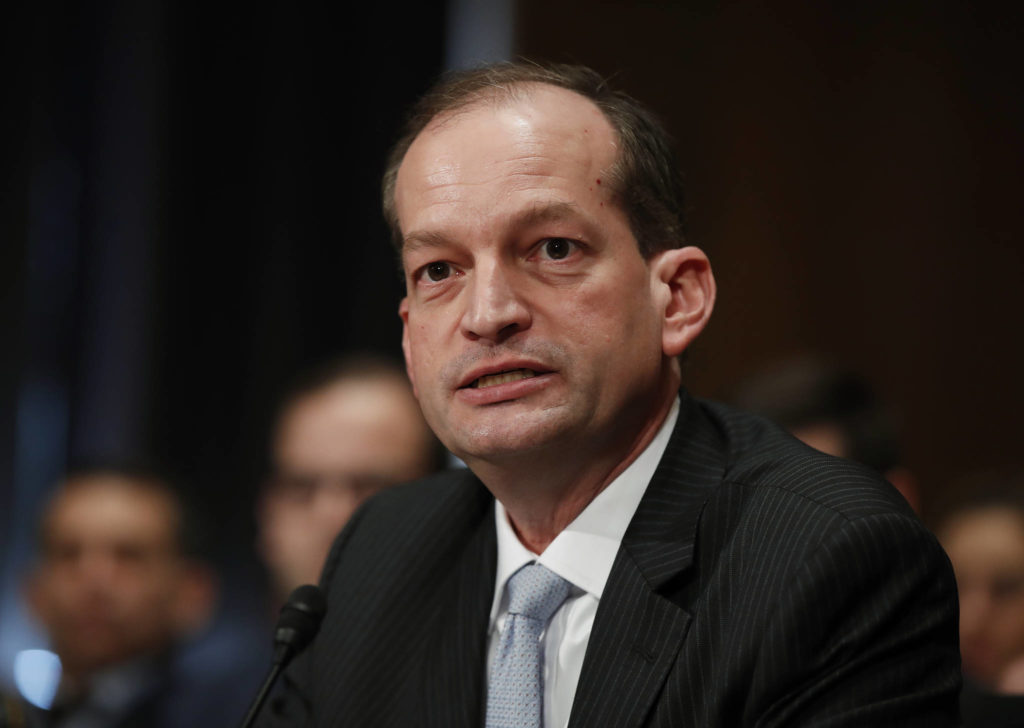
The Senate on Thursday confirmed Alex Acosta as Labor secretary, filling out President Donald Trump‘s Cabinet as he approaches his 100th day in office. The 60-38 vote confirms Acosta to the post. Once sworn as the nation’s 27th Labor secretary, the son of Cuban immigrants will lead a sprawling agency that enforces more than 180 federal laws covering about 10 million employers and 125 million workers. Sen. Tim Scott, R-S.C., spoke for many Republicans with a statement issued just after the vote saying he hopes Acosta’s focus will be “promoting labor policies that are free of unnecessarily burdensome federal regulations.” Scott said he wants Acosta to permanently revoke rules governing financial advisers and adding Americans eligible for overtime pay. Democrats said any Labor secretary should advocate for the American workers to whom Trump promised so much during his upstart presidential campaign. They said Acosta has given no such commitment. “Acosta failed this basic test,” tweeted Sen. Elizabeth Warren, D-Mass. Acosta has been a federal prosecutor, a civil rights chief at the Justice Department and a member of the National Labor Relations Board. He will arrive at the top post with relatively little clear record on some of the top issues facing the administration over key pocketbook issues, such as whether to expand the pool of American workers eligible for overtime pay. Acosta wasn’t Trump’s first choice for the job. Former fast food CEO Andrew Puzder withdrew his name from consideration last month, on the eve of his confirmation vote, after becoming a political headache for the new administration. Puzder acknowledged having hired a housekeeper not authorized to work in the U.S. and paying the related taxes years later — after Trump nominated him — and came under fire from Democrats for other issues related to his company and his private life. Acosta’s ascension would come at a key moment for Trump, just two days before he reaches the symbolic, 100-day marker. The White House has sought to cross the threshold with its own list of Trump’s accomplishments. Trump can say the Acosta vote was bipartisan, because eight Democrats and one independent voted yes. Joining the Republicans in his favor were Democratic Sens. Catherine Cortez Masto of Nevada, Heidi Heitkamp of North Dakota, Joe Manchin of West Virginia, Claire McCaskill of Missouri, Bob Menendez of New Jersey, Bill Nelson of Florida, Jon Tester of Montana and Mark Warner of Virginia. Independent Sen. Angus King of Maine also voted for Acosta. Labor secretary is the last Cabinet post for Trump to fill. Trump’s choice for U.S. trade representative, a job considered Cabinet-level, is awaiting a Senate vote. From the beginning, Acosta’s was a quiet march to confirmation that stood out because it didn’t attract the deep partisan battles faced by some of Trump’s other nominees, including Education Secretary Betsy DeVos and Secretary of State Rex Tillerson. Justice Neil Gorsuch‘s nomination provoked such a fight that majority Senate Republicans used the “nuclear option” to remove the 60-vote filibuster barrier for Supreme Court picks. Thursday’s vote marks the fourth time Acosta has been confirmed for the Senate. Democrats and most labor groups were mostly muted in their response to Acosta’s nomination. At his confirmation hearing, Democratic Sens. Patty Murray of Washington and Warren hammered Acosta for answers on a selection of issues important to labor and whether Acosta would cave to political pressure from Trump. Acosta refused to answer the policy questions until he’s confirmed, and he vowed to be an independent and fair voice for workers. Both senators said they had great concerns, and both voted no. Our standard can’t be ‘not Puzder,’” Murray said Wednesday on the Senate floor. But tellingly, even as Acosta’s nomination wound through the Senate, Democrats and their allies also tried to move on to other, labor-related issues — namely, a minimum wage hike to $15 an hour, which Trump opposes. Meanwhile, the Labor Department’s online landing page bears a glimpse of Acosta’s policy priorities: “Buy American, Hire American.” That’s the title of Trump’s executive order this week directing the secretaries of labor and other agencies to issue guidance within 60 days on policies that would “ensure that, to the extent permitted by law” federal aid “maximize the use of materials produced in the United States, including manufactured products; components of manufactured products; and materials such as steel, iron, aluminum, and cement.” Republished with permission of The Associated Press.
2 Dems to vote for Donald Trump’s court nominee; Chuck Schumer urges ‘no’
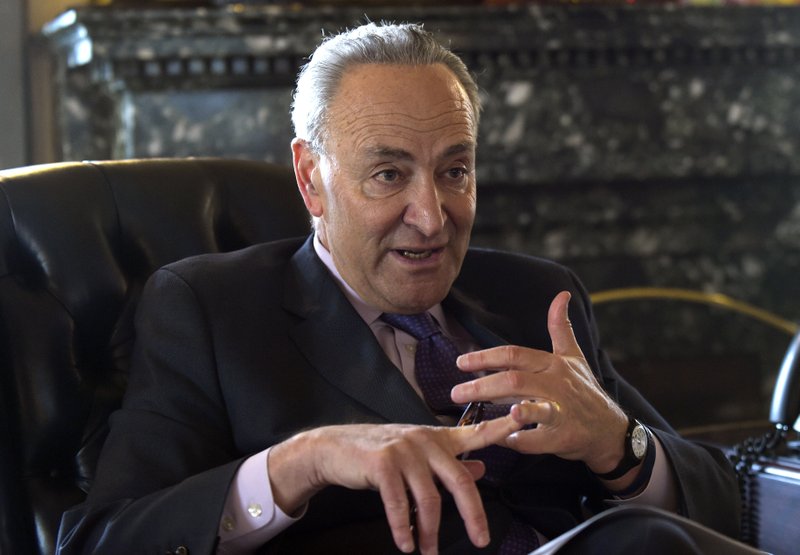
Two Democrats facing tough re-elections in GOP states said Thursday they will vote for President Donald Trump‘s Supreme Court nominee, even as the Senate Democratic leader strongly warned Republicans against changing Senate rules to confirm Judge Neil Gorsuch. Minority Leader Chuck Schumer of New York had tough words for his Republican counterpart, Majority Leader Mitch McConnell of Kentucky, in an interview with The Associated Press. “He’s bound and determined to change the rules and trample on Senate tradition” in order to get a conservative justice approved, Schumer said of McConnell. “Let the public judge whether that is a good thing.” Schumer spoke shortly after Sens. Joe Manchin of West Virginia and Heidi Heitkamp of North Dakota became the first Democrats to announce their support for Gorsuch, a Denver-based appellate judge. They join all 52 Senate Republicans, who argue Gorsuch is impeccably qualified to join the high court and accuse Democrats, and Schumer in particular, of playing politics by opposing him. The Senate confirmation vote is expected late next week. Unless 60 senators support Gorsuch — which would require six more Democrats to join Heitkamp and Manchin — Republicans would have to unilaterally change Senate rules to allow Gorsuch to be confirmed with a simple majority vote in the 100-member Senate. That scenario is looking increasingly inevitable, even though it is known on Capitol Hill as the “nuclear option” because it would amount to a dramatic departure from Senate norms of bipartisanship and collegiality. Although McConnell has yet to formally announce plans to take the step, Republican senators fully expect it and are prepared if regretful. Schumer conducted back-to-back interviews with several major news outlets Thursday to argue that it will be the fault of Republicans, not Democrats, if the rules change happens. “Senate Republicans are acting like if Gorsuch doesn’t get 60 votes they have no choice but to change the rules,” Schumer said. “That is bunk.” He claimed that Trump should produce a more mainstream nominee, instead. As for Manchin and Heitkamp, Schumer said: “I’ve made my arguments to every member, including them, and each member is going to make his or her own decision.” In his statement, Manchin said: “I hold no illusions that I will agree with every decision Judge Gorsuch may issue in the future, but I have not found any reasons why this jurist should not be a Supreme Court Justice.” Heitkamp said she expects Gorsuch to follow through on his promise of an independent judiciary that “acts as a proper check and balance on the other two branches of government.” In all, 34 Democrats and counting have said they will oppose Gorsuch. Also Thursday Missouri Democratic Sen. Claire McCaskill, who says she is torn over how to vote, highlighted the dilemma for Democratic senators running next year in states that Trump won. Should they vote for Gorsuch and anger their liberal base? Or vote to block Gorsuch and prompt Republicans to permanently change Senate rules to eliminate the filibuster? “It is obviously a really difficult situation,” McCaskill told reporters. McCaskill’s comments came after The Kansas City Star released audio of her talking to donors over the weekend. In the recording, which the Missouri Republican Party gave to the newspaper, McCaskill says the decision is difficult because if the filibuster is eliminated, Trump could nominate another justice without having to compromise with Democrats, and “all of a sudden, the things I fought for with scars on my back to show for it in this state are in jeopardy.” If confirmed, Gorsuch would replace another conservative, Justice Antonin Scalia, who died in February 2016. But if one of the more liberal justices dies or retires, Trump’s next pick could fundamentally alter the balance of the court. Justice Ruth Bader Ginsburg is 84 and fellow liberal Justice Stephen Breyer is 78. Justice Anthony Kennedy, the pivotal vote closest to the court’s center, is 80. Changing Senate rules would not be unprecedented. In 2013, Democrats were in the majority under the leadership of Sen. Harry Reid of Nevada and upset about the blockage of President Barack Obama‘s nominees to a powerful appellate court. The Democrats pushed through a rules change lowering the vote threshold on all nominees except for the Supreme Court from 60 to a simple majority. Schumer conceded Thursday that “We made one mistake, we shouldn’t have changed the rules for lower court judges … but we never did it for Supreme Court. This is a much bigger mistake on their behalf.” And he defended Democratic plans to filibuster Gorsuch, even though that step has very rarely been used against Supreme Court nominees. Schumer pointed to the treatment last year of Merrick Garland, Obama’s Supreme Court nominee, who never even got a hearing as McConnell led a Republican blockade. “Judge Garland didn’t even get the opportunity to be filibustered so let’s not say this is unprecedented,” Schumer said. Republished with permission of The Associated Press.
Ads supporting Jeff Sessions seek to pressure Dems for AG confirmation
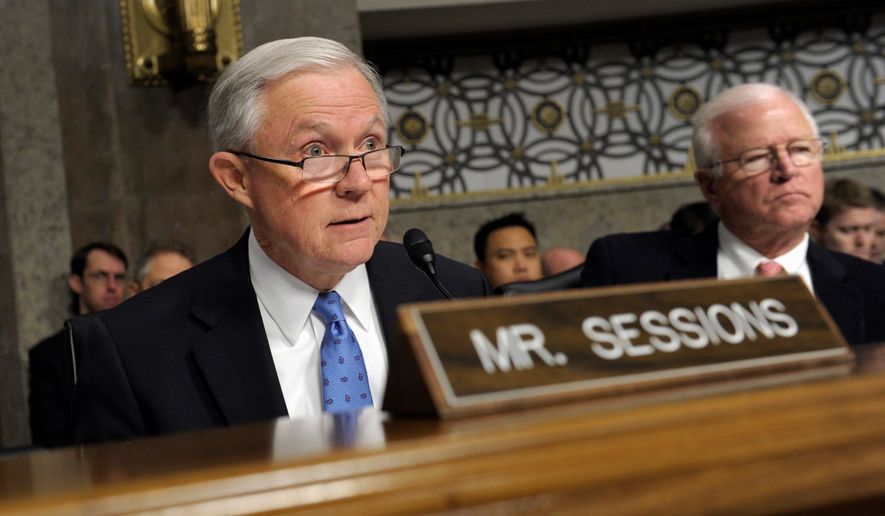
A new ad campaign produced by a conservative advocacy group is supporting Jeff Sessions’ confirmation as attorney general. As reported by POLITICO, the ads will run primarily in three conservative-leaning states with Democratic senators who will be pressured to confirm Donald Trump’s pick for top cop. The first round of pro-Sessions spots – coming from the Judicial Crisis Network – will start this weekend with a 30-second ad highlighting Alabama residents who praise Sessions as U.S. senator from Alabama. “Senator Sessions saw that there was a real need for the families that were losing their loved ones,” said Johnny Spann, an Alabama resident whose son, Mike, was the first American combat casualty in the 2001 war in Afghanistan. “For him to be in charge of the highest law enforcement agency, he’s the kind of person that needs to be there.” In honor of Mike Spann’s sacrifice, Sessions spearheaded legislation in 2002 to help facilitate private funds to be donated to widows and orphans of military and national security personnel killed during the U.S. war on terrorism. The digital and cable ad campaign, which POLITICO estimates at more than half a million dollars, will also run in Missouri, Indiana and North Dakota – states with Democrats targeted to bring bipartisan support of Sessions’ nomination. The three Democrats are Claire McCaskill of Missouri, Joe Donnelly of Indiana and Heidi Heitkamp of North Dakota. Sen. Joe Manchin of West Virginia, a red-state Democrat seeking re-election in 2018, has confirmed he would support Sessions. The ads will also appear in the Washington, D.C. area. “Senator Sessions is a good man whose service to his state makes it clear that he will turn DOJ around and make it an agency that every American can be proud of,” JCN chief counsel Carrie Severino told POLITICO. “He will abide by the Constitution, he will put public safety ahead of political agendas, and he will prosecute corrupt public officials regardless of political party.” The first ad, titled “Getting it Right” is now available on YouTube:
