
Growing number of Democrats call on Joe Biden to reverse plan to end Title 42
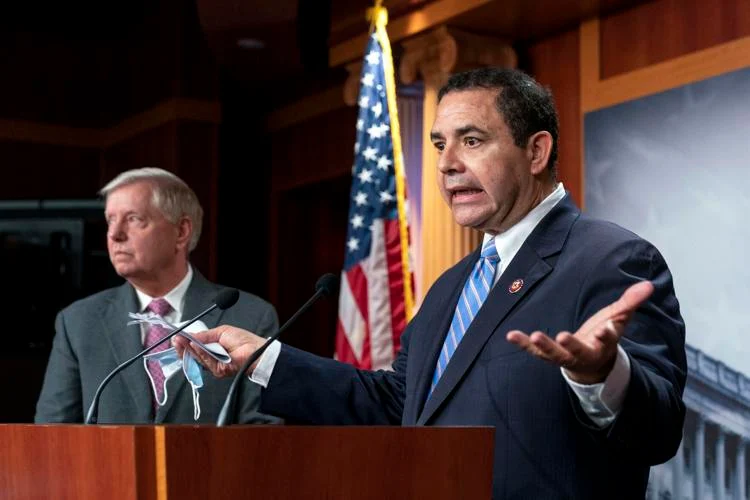
A Democratic governor and several Democrats in Congress are calling on President Joe Biden to reverse the U.S. Centers for Disease Control and Prevention’s decision to end Title 42. Title 42, a public health authority that enables federal agents to quickly expel illegal immigrants during a public health emergency, has been in effect since March 2020. On April 1, the CDC announced it was terminating it on May 23. U.S. Rep. Henry Cuellar, a Democrat from the border town of Laredo, Texas, told Fox News Sunday that Biden was listening to immigration activists, not border communities or their representatives such as himself. “But my question is, who’s listening to the men and women in green and in blue?” he asked, referring to Customs and Border Protection and Border Patrol agents. “And more importantly, who’s listening to the border communities, the sheriffs, the landowners, the rest of the people that live on the border?” he asked. Cuellar is facing a tough runoff election May 24 and, if he wins, a tough general election in November. “How can we have the federal public emergency extended to July 15 and say there’s a pandemic going on in the United States, but at the border, everything’s fine, and just let people into the United States,” he said, adding, “Those are mixed messages.” He also addressed the administration’s mixed messages when it comes to mandates. “How can you ask for international travelers to make sure … they’re vaccinated or even show their COVID-19 negative tests if they fly in?” Cueller asked, referring to vaccine mandates imposed on legal travelers when no such requirements exist for those who’ve entered the U.S. illegally and are then released into the U.S. by the Biden administration. Cuellar also posted pictures of existing overcrowded holding facilities at the border with Title 42 in place. “Title 42 is critical to ensuring the health and safety of migrants, law enforcement, and border residents,” he said. Democratic Nevada Gov. Steve Sisolak wrote Biden late last week expressing concerns about Title 42 ending. He asked him “to reconsider any intentions of undoing Title 42 until there is a comprehensive plan for how the United States can avoid the humanitarian crisis this policy change would spark.” The CDC issued a statement on April 1 announcing it was ending Title 42 due to “an increased availability of tools to fight COVID-19 (such as highly effective vaccines and therapeutics)” and said, “suspending the right to introduce migrants into the United States is no longer necessary.” Instead, the Department of Homeland Security was implementing “appropriate COVID-19 mitigation protocols, such as scaling up a program to provide COVID-19 vaccinations to migrants and prepare for resumption of regular migration under Title 8,” the CDC said. But on April 12, Health and Human Services Secretary Xavier Becerra announced he was renewing the national public health emergency order “as a result of the continued consequences of the Coronavirus Disease 2019 (COVID-19) pandemic.” He said the public health emergency “exists and has existed since January 27, 2020, nationwide,” and was renewed by the Trump and Biden administrations eight times. Set to expire April 15, it was renewed effective April 16 for an additional 90 days. Arizona Democratic U.S. Sen. Krysten Sinema argues extending the public health emergency “proves the need to delay lifting Title 42 to protect the health and safety of Arizona communities and migrants.” In a statement, she said she would “keep pushing for transparency and accountability from the administration to help secure the border, keep Arizona communities safe, and ensure migrants are treated fairly and humanely.” Earlier this month, she joined a bipartisan effort to prevent Title 42’s end until after the national public health emergency order ends. Sen. Mark Kelly, D-Ariz., the lead Democratic cosponsor, filed the Public Health and Border Security Act of 2022. Joining him as Democratic cosponsors were Sinema and Sens. Joe Manchin from West Virginia, Jon Tester from Montana, and Maggie Hassan from New Hampshire. U.S. Rep. Jared Goldman, D-Maine, was the lead Democratic cosponsor of the companion bill in the House. Joining him were Democratic cosponsors, Reps. Tom O’Halleran and Greg Stanton of Arizona, Chris Pappas of New Hampshire, Stephanie Murphy of Florida, Abigail Spanberger of Virginia, and Tim Ryan of Ohio. The bill isn’t likely to pass the House even if it were to pass the Senate. So far, 22 states have sued to stop the administration from halting Title 42 in two separate lawsuits. Unless the Biden administration is stopped by the courts, DHS announced last month measures it was putting in place to prepare for up to 18,000 people a day expected to enter U.S. custody once Title 42 is lifted. This estimate is in addition to the roughly 2 million people who were apprehended or encountered by Border Patrol agents in Biden’s first year in office while Title 42 was in place. All encounter numbers exclude “gotaways,” those who evade capture and don’t surrender at ports of entry. Republished with the permission of The Center Square.
Jerry Carl supports bill to allow flexibility in spending COVID-19 funds
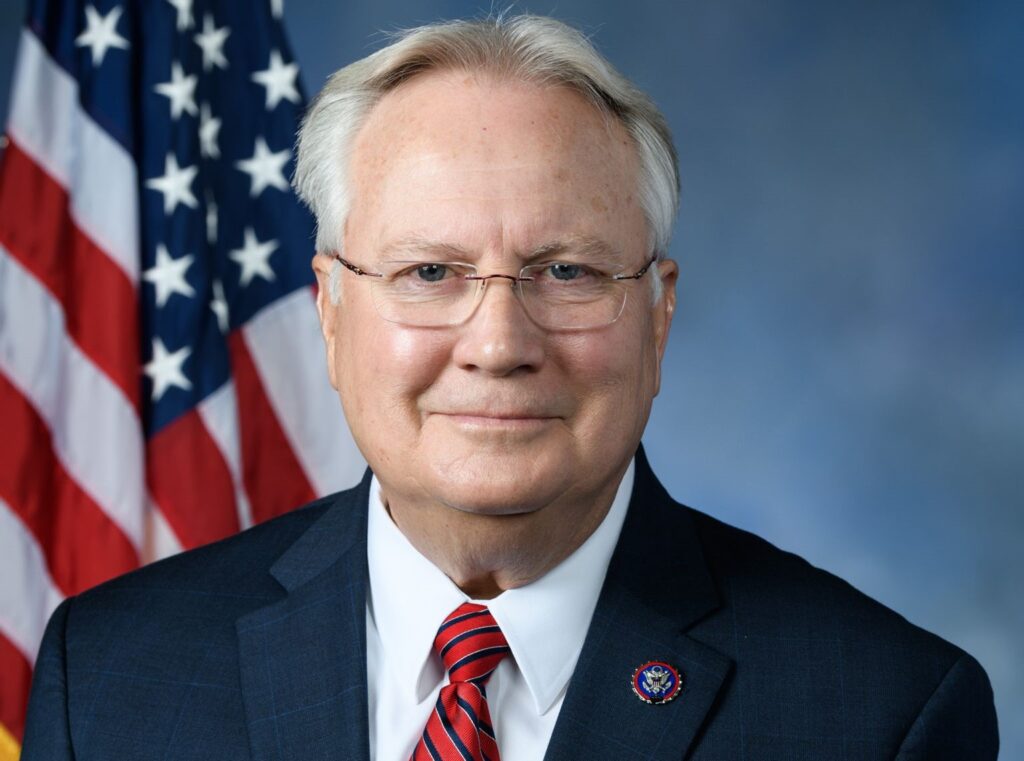
Congressman Jerry Carl announced he has co-sponsored a bipartisan bill to give state and local officials flexibility and time to spend the remainder of COVID-19 relief dollars. The State, Local, Tribal, and Territorial Fiscal Recovery, Infrastructure, and Disaster Relief Flexibility Act, introduced by Reps. Dusty Johnson and Carolyn Bourdeaux, aims to make various infrastructure investments eligible for payment with these funds. The legislation recently passed the U.S. Senate unanimously. Under the CARES Act, Congress did provide some flexibility for how COVID-19 funds could be spent, but the funds were not able to be used for infrastructure projects. This bill will give state and local officials additional flexibility and time to spend the remaining COVID-19 relief dollars responsibly. Carl supports the effort to add infrastructure spending as part of the COVID funding. Carl said in a statement, “South Alabama has a desperate need for investments in true infrastructure such as roads, bridges, ports, waterways, and broadband. As a former county commissioner, investing in our nation’s infrastructure is a top priority for me, so I’m proud to cosponsor this bipartisan bill to give states like Alabama the flexibility they need to spend unused COVID-19 relief dollars on critical investments in our nation’s infrastructure. “Unfortunately, Nancy Pelosi is holding the American people hostage by blocking this bill from being considered on the House floor. Despite passing the U.S. Senate unanimously and being introduced in the House by a large, bipartisan group, Nancy Pelosi is focused on raising our taxes, bankrupting America, and playing political games. It’s time to put the American people first and pass this bipartisan, commonsense bill.” South Dakota congressman Dusty Johnson posted on Twitter, “We need to cut the federal red tape. State governments need flexibility to administer remaining COVID-19 relief funds for critical infrastructure. Our bill would make that a reality & it’s already passed the Senate. Congress can get it done.” This legislation is cosponsored by Reps. Steve Scalise, Henry Cuellar, Rick Allen, Suzan DelBene, David Rouzer, Marilyn Strickland, Randy K. Weber, Jared Huffman, Steven Palazzo, Sanford D. Bishop, Jr., Andy Barr, Joseph Morelle, Dan Meuser, Albio Sires, Carlos A. Gimenez, Antonio Delgado, David B. McKinley, Kim Schrier, Peter Meijer, Darren Soto, Chris Pappas, Rick Crawford, Betty McCollum, William Timmons, Josh Gottheimer, Brad Wenstrup, Derek Kilmer, Don Young, and Tom O’Halleran.
Military base cuts affect schools, target ranges, and maintenance facilities

The Pentagon will cut funding from military projects like schools, target ranges and maintenance facilities to pay for the construction of 175 miles of fencing along the U.S.-Mexico border, diverting a total $3.6 billion to President Donald Trump’s long-promised barrier. Projects in 23 states, 19 countries and three U.S. territories would be stalled or killed by the plan, though just $1.1 billion in cuts would strike the continental U.S., according to a list released Wednesday by the Pentagon. Almost $700 million would come from projects in U.S. territories, with another $1.8 billion coming from projects on overseas bases. Trump’s move would take the biggest step yet in delivering on his promise to build a wall to block immigrants from entering the country illegally. But it may come at the expense of projects that the Pentagon acknowledged may be difficult to fund anew. Capitol Hill Democrats, outraged over Trump’s use of an emergency order for the wall, promised they won’t approve money to revive them. A senior defense official told reporters the Pentagon is having conversations with members of Congress to urge them to restore the funding. The official agreed that the department has “a lot of work ahead of us,” considering that Congress has given no guarantee it will provide money for the defunded projects. The official was not authorized to discuss the details publicly so spoke on condition of anonymity. In addition, new stretches of fencing proposed along the Rio Grande and through a wildlife refuge in Arizona promise to ignite legal battles that could delay the wall projects as well.The military base projects facing the chopping block tend to address less urgent needs like new parking at the U.S. Military Academy at West Point, New York, and a variety of small arms ranges at bases in Wisconsin and Oklahoma. But a “cyber ops facility” in Hampton, Virginia, and the expansion of a missile defense field at Fort Greeley, Alaska, face the ax, too. Trump has so far succeeded in building replacement barriers within the 654 miles of fencing built during the Obama and Bush administrations. The funding shift will allow for about 115 miles of new pedestrian fencing in areas where there isn’t any now. “The wall is being built. It’s going up rapidly,” Trump said Wednesday. “And we think by the end of next year, which will be sometime right after the election actually, but we think we’re going to have close to 500 miles of wall, which will be complete.” New stretches of fencing are sure to spark legal battles with angry landowners and environmentalists. The Pentagon plan also fuels the persistent controversy between the Trump administration and Congress over immigration policies and the funding of the border wall. “It doesn’t take any input from the local communities. It will take away from the private property rights,” said Rep. Henry Cuellar, Democrat-Texas. “We are going to do everything we can to stop the president.” Cuellar suggested Democrats will look at a must-pass funding bill this month — required to prevent a government shutdown Oct. 1 — to try to take on Trump. But a more likely venue for the battle could be ongoing House-Senate negotiations over the annual Pentagon policy measure. Lawmakers who refused earlier this year to approve nearly $6 billion for the wall must now decide if they will restore the projects that are being used to provide the money. “To pay for his xenophobic border wall boondoggle, President Trump is about to weaken our national security by stealing billions of dollars from our military,” said Rep. Debbie Wasserman Schultz, Democrat-Florida, who chairs a key military construction panel. “The House of Representatives will not backfill any projects he steals from today.” One of the Senate’s most endangered Republicans in the 2020 election, Arizona Sen. Martha McSally, reported that her state is getting nicked for just $30 million from a project that was being delayed anyway. Georgia, where two potentially competitive Senate races loom next year, would be spared entirely, though powerful Senate Majority Leader Mitch McConnell, Republican-Kentucky, himself facing re-election, would lose a $63 million middle school at Fort Campbell. “We need to secure our border and protect our military; we can and should do both,” McSally said. “I went to the mat to fight for Arizona projects and succeeded.”Elaine McCusker, the Pentagon comptroller, said the now-unfunded projects are not being canceled. Instead, the Pentagon is saying the military projects are being “deferred.” Congress approved $1.375 billion for wall construction in this year’s budget, same as the previous year and far less than the $5.7 billion that the White House sought. Trump grudgingly accepted the money to end a 35-day government shutdown in February but simultaneously declared a national emergency to take money from other government accounts, identifying up to $8.1 billion for wall construction. The transferred funds include $600 million from the Treasury Department’s asset forfeiture fund, $2.5 billion from Defense Department counterdrug activities and now the $3.6 billion pot for military housing construction announced Tuesday. The Pentagon reviewed the list of military projects and said none that provided housing or critical infrastructure for troops would be affected, in the wake of recent scandals over poor living quarters for service members in several parts of the country. Defense officials also said they would focus on projects set to begin in 2020 and beyond, with the hope that the money could eventually be restored by Congress. The government will spend the military housing money on 11 wall projects in California, Arizona and Texas, the administration said in a filing Tuesday in a lawsuit brought by the American Civil Liberties Union. The most expensive is for 52 miles (84 kilometers) in Laredo, Texas, at a cost of $1.27 billion. The Laredo project and one in El Centro, California, are on private property, which would require purchase or confiscation, according to the court filing. Two projects in Arizona are on land overseen by the Navy and will be the first to be built, no earlier
Richard Shelby says ‘The dialogue is good’ as wall deadline nears
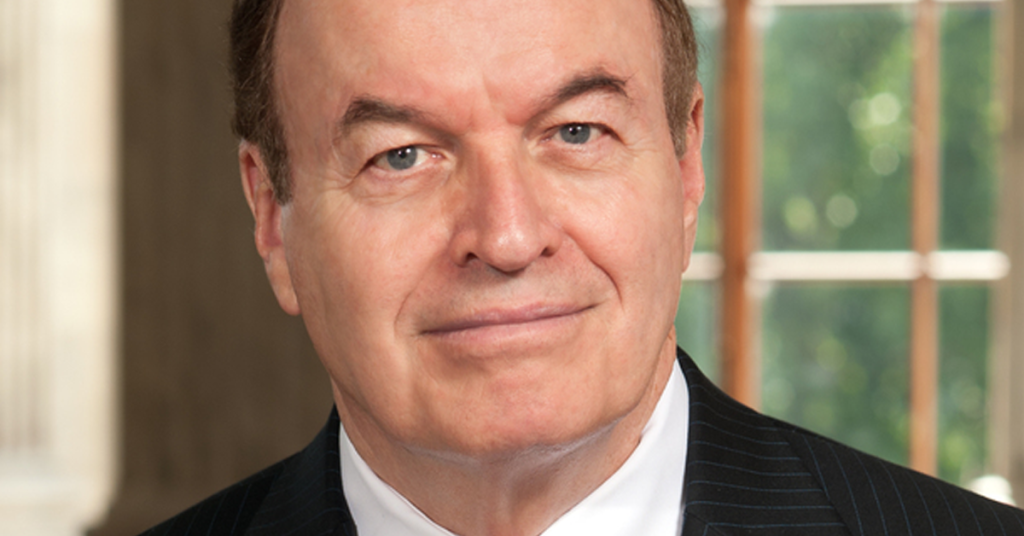
President Donald Trump and House Speaker Nancy Pelosi struck starkly different tones in their border security standoff Wednesday, as Trump planned a rally in a Texas border city he says exemplifies the need for a wall and Pelosi said she’d back any bipartisan deal congressional bargainers produce. The contrasting pathways — with Trump set to appear before raucous supporters and Pelosi signaling compromise — came with just over a week until a Feb. 15 deadline for negotiators to reach agreement or potentially face a renewed partial government shutdown. House-Senate bargainers say their talks have become increasingly substantive and some lawmakers — including Pelosi herself — expressed hopes that negotiators might produce an accord as soon as Friday. Participants said the two sides were narrowing differences in their talks. Rep. Chuck Fleischmann, Republican-Tennessee, a negotiator, said Democrats were showing some flexibility in the semantic dispute over the type of physical barriers they would accept while Republicans seemed potentially willing to limit where the structures might be built. “That basically sets the stage for a very reasonable, flexible negotiation,” he said. Other unresolved questions include the amount to be spent on border security, and whether — as Democrats have proposed — to reduce the number of detention beds for migrants available to the federal Immigration and Customs Enforcement agency, Fleischmann said. “If they come up with a bipartisan agreement, I’m happy to support it,” Pelosi, Democrat-California, told reporters. She said she hoped Trump would take “the same hands off” approach. Democrats have been in a position of strength in the talks, after Republicans lost House control in November’s elections, Trump forced a record 35-day federal shutdown and surrendered without getting $5.7 billion he’s demanded for a wall. Senate Majority Leader Mitch McConnell, Republican- Kentucky, has also given bargainers a green light to seek a deal that he’s said he hopes Trump would find “worth signing.” If Pelosi and McConnell embrace a bipartisan agreement, it could isolate Trump and pressure him to accept it without re-escalating the fight. Trump has threatened a new shutdown or a declaration of a national emergency to access other budget funds if he’s not satisfied with a deal — steps members of both parties oppose. Bargainers met Wednesday privately for nearly two hours with federal border patrol and customs officials to hear their recommendations on how to secure the Southwest border. But several lawmakers emerged with differing conclusions. No. 2 Senate Democratic leader Richard Durbin said lawmakers were told the top priority was technology that could screen vehicles for drugs or migrants at border ports of entry. “They don’t rule out barriers, they don’t rule out fencing, but that isn’t the first priority,” Durbin told reporters. But Sen. Richard Shelby, Republican- Alabama, said the officials suggested a three-pronged approach using barriers, technology and personnel. He said the closed-door session was constructive. “The dialogue is good. The tone is good. We’re talking about substance,” Shelby said. He also said that in a phone conversation with Pelosi, “I just said, ‘Look, can we reach a yes on this in any way or are we wasting our time.’ She said, ‘No, keep working together,’ and she would like to see a legislative solution, the sooner the better.” In comments that suggested a potential avenue for agreement, some lawmakers suggested that giving local officials a say would be pivotal. “We can probably get there on some sort of enhanced barriers with local input,” said another negotiator, Rep. Henry Cuellar, Democrat-Texas. Democrats have proposed spending as much as $1.6 billion for border security including some types of physical barriers, but it remains unclear how much more money they’d accept as part of a deal. Cuellar said $5.7 billion for the wall is “not going to happen.” Meanwhile, the White House said Trump will hold his first campaign rally of the year next Monday in El Paso, Texas. His campaign manager, Brad Parscale, tweeted that the rally will be held “less than 1000 feet from the successful border fence that keeps El Paso safe!” In his State of the Union address Tuesday, Trump cited El Paso as once having “extremely high rates of violent crime. He asserted that with its wall, “El Paso is one of the safest cities in our country.” In fact, El Paso has never been considered one of the nation’s most dangerous cities and its trends in violent crime mirror national swings. In 2005, the city had a murder rate of 2.5 for every 100,000 residents, compared with a national rate of 5.6. By 2010 after the wall was built, El Paso’s murder rate had dropped to 0.9 for every 100,000 residents, compared with a national average of 4.8. Rep. Veronica Escobar, Democrat-Texas, tweeted that “El Paso has been one of the safest cities in the nation long before the wall was built in 2008. #WallsDontWork.” “El Paso is safe due to its people, the good community relations with law enforcement, and the trust of all communities in our local institutions,” Fernando Garcia, executive director of the Border Network for Human Rights, said in a statement. “El Pasoans should be offended by the way the president used our community to advance his racist and xenophobic agenda.” Republished with permission from the Associated Press
Bill Clinton opening fundraising spree for wife’s campaign
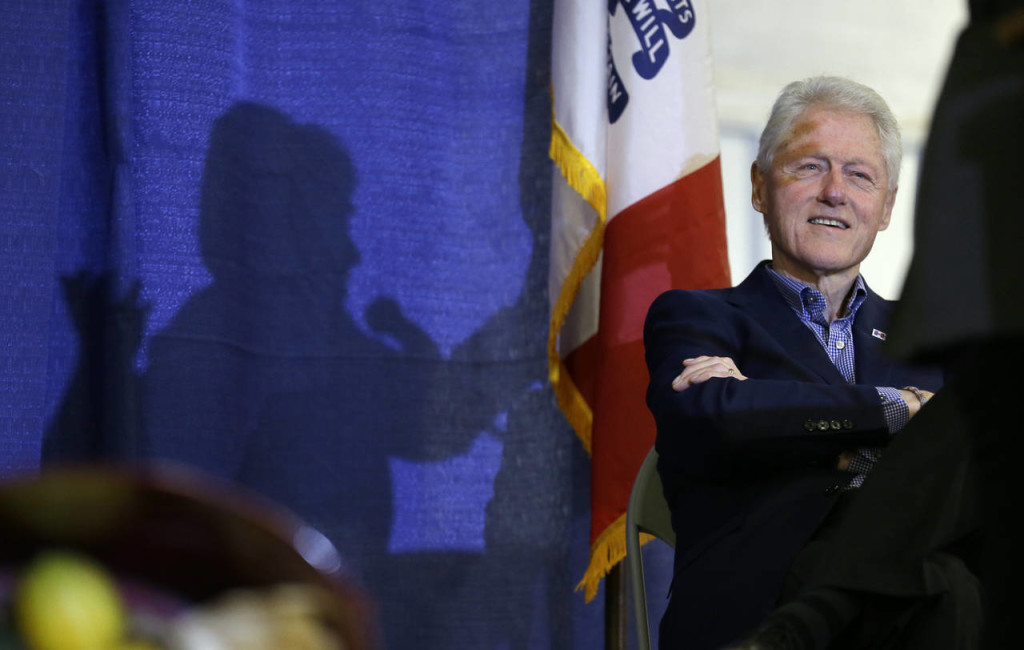
Former President Bill Clinton is going on a fundraising swing reminiscent of his presidential campaigns of the 1990s. But this time he’s doing it for his wife. Hillary Rodham Clinton‘s presidential campaign has scheduled more than a dozen December events featuring the former president as her team prepares for an end-of-year finance deadline ahead of the first contests in Iowa and New Hampshire. The fundraising blitz, Bill Clinton’s most aggressive stretch of the year, shows how Hillary Clinton’s campaign can multiply her money largesse with the help of her husband, one of the Democratic party’s most prolific rainmakers. Working together, the couple will hold at least five fundraising events on some single days in December. After staying behind the scenes for much of the year, Bill Clinton has slowly begun taking a larger public role in the campaign. And it isn’t just with fundraising. He introduced pop singer Katy Perry at a concert before the Iowa Democratic Party’s Jefferson-Jackson dinner last month and appeared with his wife at a party barbecue in Ames, Iowa, last week. “No one knows her better than him and no one knows the process better, so it’s a natural fit,” said Ira Leesfield, a Miami attorney and longtime Clinton donor. “It’s like Derek Jeter taking the field when he was 38.” The fundraising push comes as Vermont Sen. Bernie Sanders, Hillary Clinton’s main Democratic challenger, makes campaign finance reform a central part of his message. Hillary Clinton’s ties to Wall Street and financial industry donors will influence her agenda, Sanders has said. Bill Clinton kicks off December with fundraisers in Seattle, Los Angeles, the Phoenix area and in Laredo, Texas, where he will join with Rep. Henry Cuellar, a Texas congressman who represents the state’s Rio Grande Valley. The former president then raises money on Dec. 7 in Rhode Island with the state’s Democratic governor, Gina Raimondo, and Rhode Island’s congressional delegation. He headlines events in North Carolina later that same day. Later that week, the couple will show how they can spread their fundraising clout around the country. On Dec. 10, Hillary Clinton raises money in New York City while her husband meets with donors in Pennsylvania with stops in Pittsburgh, Bethlehem and Scranton. The next day, the former secretary of state will fundraise in Tulsa, Oklahoma, and St. Louis while her husband appears at events in the Chicago area and Munster, Indiana. In mid-December, the ex-president will raise money in Washington, D.C., including an event at the home of longtime Democratic powerbrokers Vernon and Ann Jordan. He will travel to Richmond later that day for a fundraiser with Virginia Gov. Terry McAuliffe, a friend and fundraiser for the Clintons. The Clintons will head into the holidays with a New York City dinner concert with musician Sting on Dec. 17. The event will benefit a new joint fundraising committee called the Hillary Victory Fund and will range from $33,400 per person to $100,000 for couples who serve as event chairs. David Brock, a Clinton supporter who runs several progressive groups aiding her candidacy, said Bill Clinton is a “gifted orator who has the ability to move people.” Brock recalled how in the spring of 2013 the former president spoke at a donor conference for two of his projects, American Bridge 21st Century and Media Matters. It was no standard stump speech, Brock said. “Rather, off the cuff, he wove an intricate tapestry for probably 45 minutes about the history of news and its relation to democracy,” he said. The 150 donors in the New York hotel ballroom were “in a trance,” Brock said. “There’s no one else at his level who is that good,” Brock said. “He says things about you that you can’t say about yourself, making him quite an effective endorser and validator.” Republished with permission of the Associated Press.
