
Ross Marchand: To avoid mile-long maintenance bills, maintain truck limits

Alabama’s roads and bridges are in a fiscal jam, as the state borrows more and more to keep things running smoothly. According to the Public Affairs Research Council of Alabama (PARCA), the state shoulders around $1 billion in road debt, with debt service alone “projected to rise to $114 million annually. That level of obligation for debt service will continue for 19 more years.” Unfortunately, some proposals from Washington, DC would compound the problem and force Alabama to go ever-deeper into debt to banish corrosion and pot-holes. Despite reasonable proposals to increase public-private partnerships and reduce the need for dwindling gasoline tax revenues, some lawmakers and pundits seem dead-set on allowing more dangerous vehicles on the highway that would increase maintenance and first responder costs. Many are calling for lawmakers to update truck limits imposed in 1982, and permit “Twin 33” foot double-trailers (read: really big trucks) on America’s roadways. While some proponents of relaxed truck size restrictions have painted the proposal as a panacea for lower costs, the change would lead to far more infrastructure costs down the road (pun intended). Taxpayers and customers must resist the allure of bold-sounding policies that open the door to billions of dollars more in repair costs and make roadways less safe. Periodically, the fight to increase maximum trailer length from 28 feet to 33 feet remerges in the halls of Capitol Hill and the editorials of leading publications, with proponents recycling the same tired arguments. Allowing more size flexibility, they argue, will lead to fewer accidents due to less rollovers and more vehicle stability. But vehicle safety arguments omit real risks that will likely increase accident costs on net. Even if rollovers were less common for Twin 33 compared to their current, shorter counterparts, accidents will be far more severe when rollovers do happen due to a larger “crash footprint.” And, according to the Insurance Institute for Highway Safety, “Multiple-trailer trucks have more handling problems than single-trailer trucks. In general, the additional connection points contribute to greater instability, which can lead to jackknifing, overturning, and lane encroachments.” The Institute notes that safety studies tend to conflict, in stark contrast to the “proven research” touted by amendment proponents. A point beyond debate, however, is the impact of Twin 33s on roadway maintenance costs. House Committee staff members have shown considerable foresight in warning “about the demands being placed on structurally deficient bridges…a significant increase in federal truck size could create greater funding needs.” Data shows a fairly straightforward relationship between vehicle size/weight and road damage, with a 9 ton big-rig inflicting roughly 40 times the amount of damage as a Hummer H2. Americans for Modern Transportation pushes back by claiming that any increased wear-and-tear can be more than offset by fewer trucks on the road. These theories, however, run into a brick wall due to something called “induced demand,” whereas more trucks and car drivers simply take up any freed up road space. A 2009 study by researchers at the University of Pennsylvania and the University of Toronto found that if road capacity in a city increases by 10 percent, the traffic volume in that city will increase by 10 percent. As a result, roads are just as congested as always, only with the addition of mega-trucks that drastically increase wear-and-tear. And, given that the Highway Trust Fund has required nearly $150 billion in taxpayer infusions over the past decade, these problems impact all citizens paying taxes. Proposed rule changes would mean a double-whammy for Alabamans, as greater infrastructure wear-and-tear would require increased federal and state taxes. Working toward less borrowing and taxation means keeping common-sense limits on vehicle sizes. Additionally, structural reforms can ensure that existing gasoline tax revenues are more directly funneled to infrastructure maintenance. Every year, for instance, Montgomery allows local governments a 95 percent matching rate for pedestrian and bike paths, funded via Alabama’s 22.91 cent per gallon gas tax. As the MacIver Institute points out, these kinds of programs encourage millions of dollars to be spent on bike paths adjacent to quiet roads, bike rack programs and pedestrian walkways in proximity to pre-existing routes. With better targeting of funds and sensible limits on truck size, taxpayers can have an easier time paying down Alabama’s looming transportation bills without raising gasoline taxes. ••• Ross Marchand is the director of policy with the Taxpayers Protection Alliance.
Marco Rubio wants to cut gas taxes by 80 percent
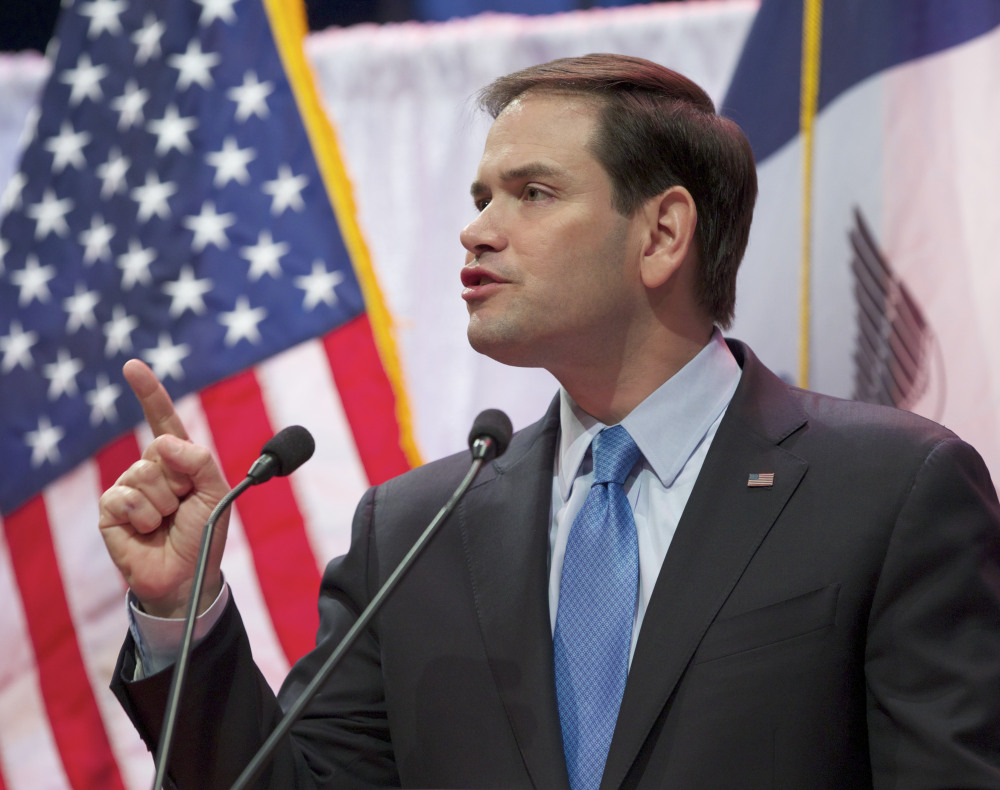
Many political analysts say the reason that Donald Trump and Ben Carson have been the most popular Republicans in presidential polls this year is the fact that they’re outsiders. It’s certainly not because of their policy positions, since, with the exception of Trump’s well known attitude on illegal immigration, the two-front runners aren’t talking that much about policy. Not the case with Marco Rubio. The Florida Senator sends often several statements a day from his office on the issues of the day, and on his campaign website, he’s released eight more policy positions, putting a total of 31 on his site. They include specifics on Cuba, small business owners, families, Social Security and Medicare, transportation, gun owners, health care and the Internet. On transportation, not only does Rubio not want to raise the gas tax which has been frozen since 1993, he actually wants to cut it by 80 percent. “Today, the Highway Trust Fund is running out of money, and the political establishments of both parties are propping it up with the same stale policies of the past,” he says in the post, titled, “A Transportation plan for the 21st Century.” “We can’t keep putting more money into this broken system,” he writes. “Marco will take a new approach in building the infrastructure for the next American century.” Rubio also wants to devolve the action to the states, and repeal the Davis-Bacon Act that he says “inflates” government costs by billions every year and is a “giveaway of taxpayer dollars to labor unions.” On guns, Rubio boasts about what he’s done to protect the 2nd Amendment: Voting to block the Manchin-Bloomberg expansion of background checks Fighting to defund the Department of Justice’s radical “Operation Choke Point” and other federal attacks on law-abiding gun manufacturers and dealers Pushing to bring fundamental Second Amendment rights back to D.C. residents Protecting the Second Amendment rights of veterans and their families Standing against any federal attempt to ban assault weapons and high-capacity magazines Pushing to make concealed-carry permits function like drivers’ licenses, so gun owners’ constitutional rights don’t end at state lines Opposing U.S. involvement in the U.N. Arms Trade Treaty Working to expand opportunities for sportsmen on federal land And on “Family,” Rubio touts his recently announced plan to create a new $2,500 per child partially refundable tax credit, to allow working parents to keep more of their money and fix the parent tax penalty. Although hailed by advocates for being the first Republican to talk about paid family leave, those same advocates dismissed his proposal, saying tax credits are never an incentive for businesses to offer such benefits.
This week in the U.S. House of Representatives: Nov. 2 – Nov. 6
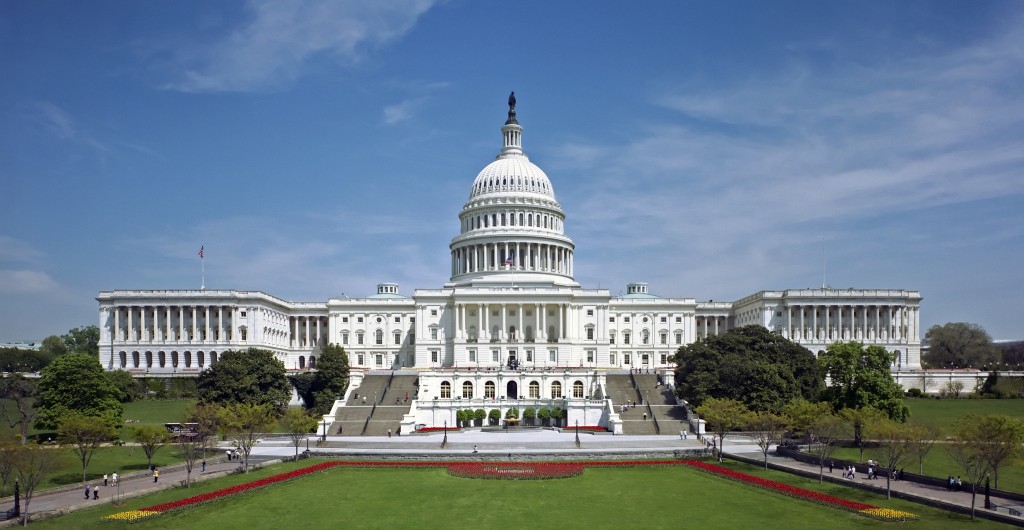
The U.S. House of Representatives has a new speaker — its youngest in 150 years — Rep. Paul Ryan (R-Wis.), and this is his first full week on the job. Up first for the new speaker — tackling a multi-year highway spending bill, then working toward a solution to the vetoed defense spending bill. On Monday, the House is in session and will consider several bills under suspension of the rules. A full list of bills can be found here. On the floor this week: H.R. 22: the DRIVE Act. The House will consider a House amendment to the Senate amendment to the initial bill, which passed the Senate. The amendment would take the Transportation and Infrastructure Committee‘s highway and transit provisions (H.R. 3763) would replace the Senate’s transportation provisions, while the Senate’s financing and offset language and certain other provisions, including an Export-Import Bank reauthorization, would remain. The proposed $325 billion measure would cover projected Highway Trust Fund shortfalls and provide full program funding for six years — but only if Congress can come up with a way to pay for the final three years of spending. Currently federal transportation spending is set to expire on Nov. 20, right before the busy holiday travel season begins. Once it passes the House, negotiators will move toward reconciling differences with their Senate counterparts ahead of the Nov. 20 deadline. The week, the House is also expected to tackle legislation related to the FY 2016 National Defense Authorization Act (NDAA). On Oct. 22, the President Barack Obama vetoed the 2016 NDAA, a sweeping $612 billion defense policy bill, leaving Congress to cobble together a new solution. Several options on how best to proceed are on the table. On Friday, the House of Representatives is not in session. Next week, the House is in recess and will return the following week, Nov. 16., only to recess the week after for the Thanksgiving holiday.
U.S. House of Representatives: Oct. 26 – Oct. 30
It’s a week of pressing deadlines in the U.S. House of Representatives because the Speakership must be filled as John Boehner departs the House, the debt limit must be addressed to avoid default and the highway trust fund must be re-authorized in order to continue dispersing money. First up, the Republican caucus will meet Wednesday to select it nominee to fill the vacancy for House Speaker, with the Speaker’s election by the full House slated for Thursday. Boehner is poised to exit Friday after 24 years in Congress. After weeks of back and forth and turmoil surrounding the Speaker’s race, House Ways and Means Committee chairman and 2012 vice presidential nominee Rep. Paul Ryan (R-Wis.) is expected to emerge as the new House Speaker should all votes go according to plan. The House is expected to consider legislation to raise or suspend the statutory debt limit. According to the Department of Treasury the United States will run out of borrowing authority by Tuesday, Nov. 3, making a government default is possible unless Congressional action is taken before then. The House is also likely to consider a short-term extension of the authorization of the Highway Trust Fund (HTF). The HTF has enough money to last into 2016, however, the current authorization to continue disbursing funds expires Oct. 29. On Monday and Tuesday, the House is in session and will consider several bills under suspension of the rules. A full list of bills can be found here. Also on the floor this week: H.R. 597: the Export-Import Bank Reform and Reauthorization Act. The bill is eligible for floor consideration on Monday pursuant to a successful discharge petition, where Democrats and several dozen Republicans who support the bank successfully gathered 218 signatures, bypassing the regular procedure of the Majority Leader bringing a bill to the floor. The bill reauthorizes the official export credit agency of the United States for four years; sets new, lower, lending caps; aims to increase accountability and transparency at the bank; and directs the president to initiate negotiations to reduce and eventually eliminate government export subsidies worldwide. The bank’s charter has previously expired at the end of June. Alabama co-sponsors: Rep. Mike Rogers (AL-03); Rep. Robert Aderholt (AL-04) H.R. 1090: the Retail Investor Protection Act. The bill prohibits the Labor Department from implementing a final rule on fiduciary standards for retirement investment advisers until after the Securities and Exchange Commission (SEC) conducts a study and issues a final rule setting standards of conduct for broker-dealers. Alabama co-sponsor: Rep. Mo Brooks (AL-05)
Alabama members call for longer-term transportation planning after trust fund vote
The U.S. House has passed H.R. 2353 — a bill approving temporary funding for the nation’s federal transportation trust fund for two months beyond an impending statutory cutoff — with the support of U.S. Reps. Bradley Byrne and, somewhat more surprisingly, Terri Sewell. But that didn’t stop either from expressing displeasure at the short-term nature of the bill passed Tuesday, a result of ongoing gridlock over myriad issues in the House. Byrne and Sewell, who respectively represent Alabama’s 1st and 7th Congressional Districts, each issued statements Tuesday evening saying a more predictable and comprehensive approach is required for maximum public good. “It is sometimes hard in Washington for Republicans and Democrats to find common ground, but both sides agree we need a long-term, reliable funding stream for the Highway Trust Fund,” Byrne said in his news release. “While I voted for today’s short term extension, I will not continue to support kicking the can down the road and putting off difficult decisions. Funding our nation’s highway system is a fundamental responsibility of Congress, and it is time we get serious about finding a solution. I intend to be a constructive participant in that process.” Sewell — breaking with most of her caucus, which opposed the measure — echoed those statements after her “yea” vote Tuesday afternoon. “The Highway Trust Fund Extension is nothing more than a Band-Aid. It’s disappointing that Congress is no closer to drafting a long-term solution to invest in our nation’s roads, bridges, and rails than we were this time last year,” Sewell said in her written statement. “Our nation’s investment in infrastructure is woefully inadequate to the detriment of our constituents.” “In Alabama, deteriorating roads cost motorists approximately $1.2 billion a year. Across our country, an estimated one in three fatal traffic accidents is caused by roads that are in poor or mediocre condition, and the American Society of Civil Engineers estimates that one out of every nine bridges in the U.S. is structurally deficient.” Sewell ended, however, on a hopeful note. “By building the infrastructure of tomorrow, we would also create thousands of good-paying jobs that help more hard-working Americans earn a living.”
