
Democrats argue that ‘right matters’ in Trump impeachment trial
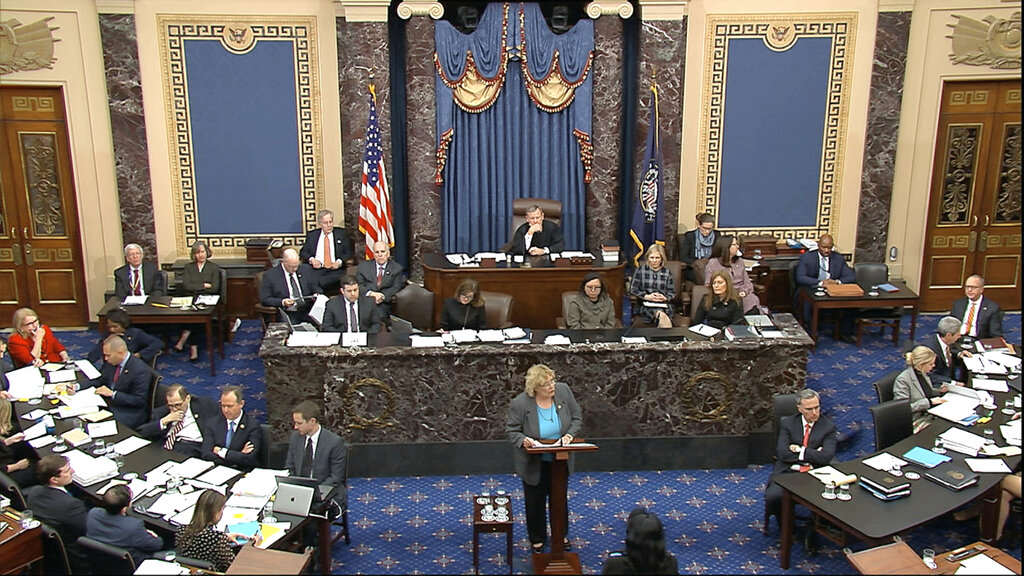
On Friday, Democrats will press their final day of arguments before skeptical Republican senators.
Joe Biden and Bernie Sanders’ rift could define closing days in Iowa
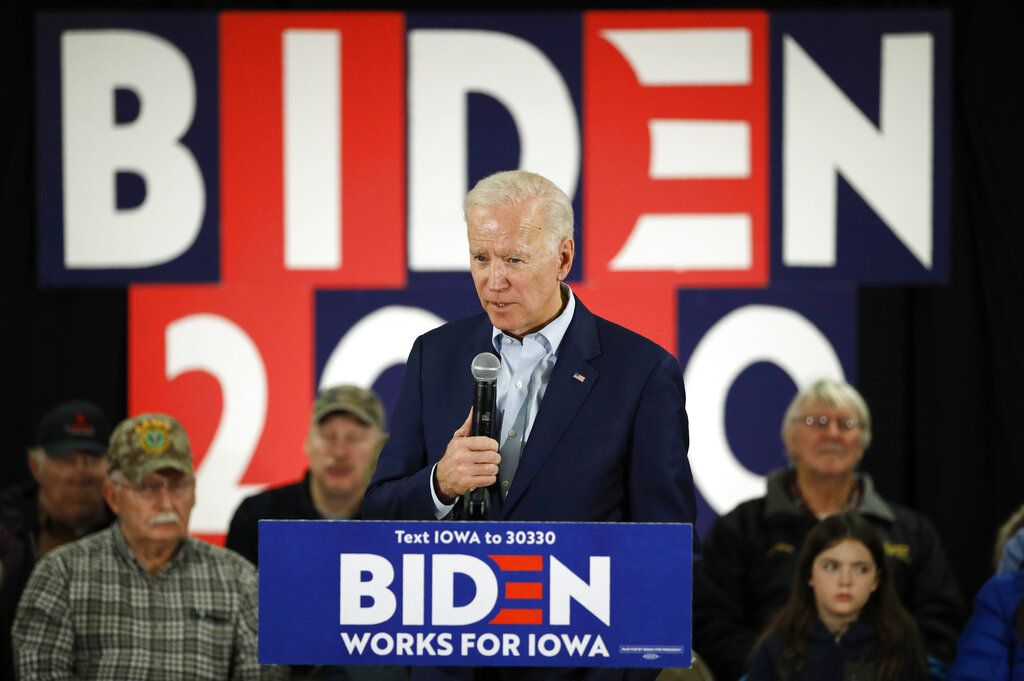
Sanders tweeted: “Let’s be honest, Joe. One of us fought for decades to cut Social Security, and one of us didn’t.”
Bernie Sanders distances himself from group backing his WH run
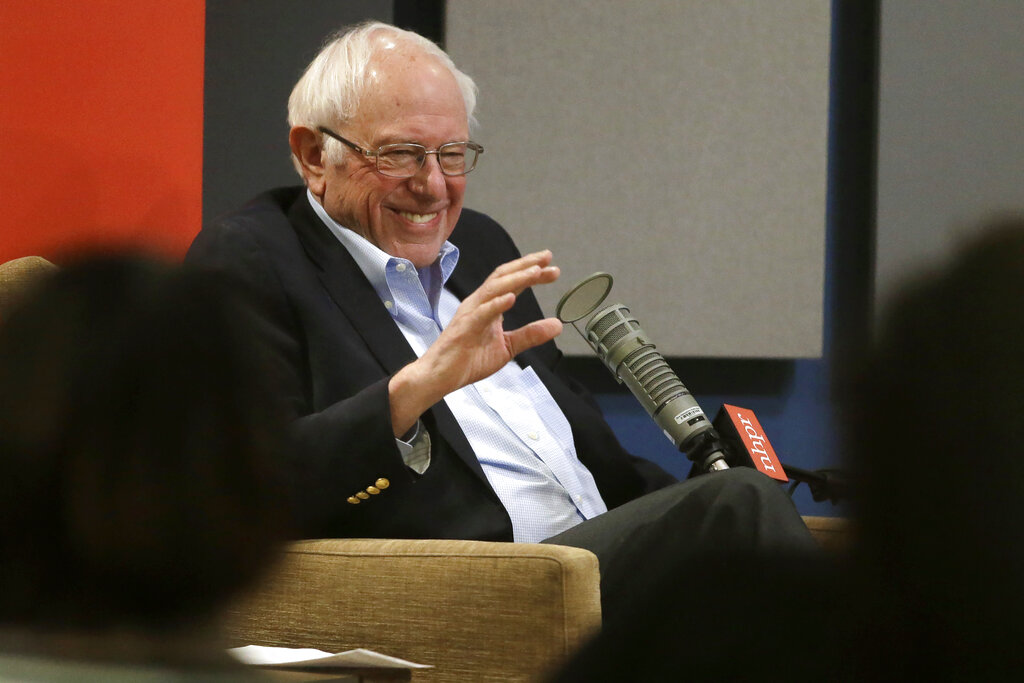
Sanders’ tax-exempt nonprofit functions much like a super PAC.
Key takeaways from Democratic presidential debate in Iowa
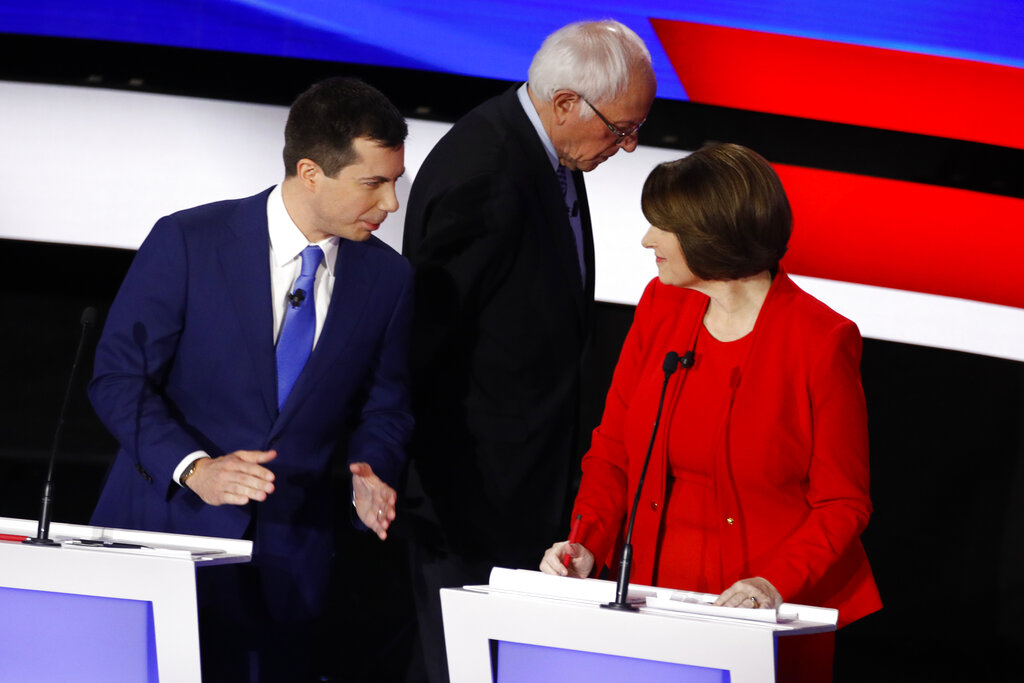
There were several notable moments in the debate.
Bernie Sanders didn’t think woman could win Presidency, Elizabeth Warren says
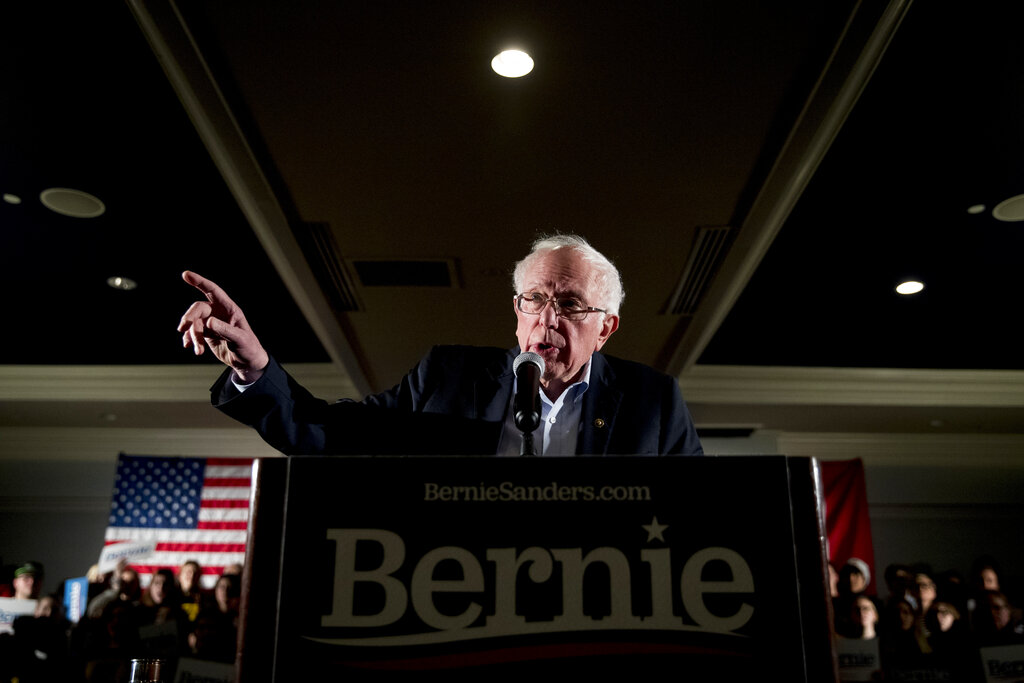
The statement drew a swift and strong denial from Bernie Sanders.
Elusive Quest for Momentum is On as Democrats Dash to Iowa

No candidate is a clear leader as the Iowa caucuses draw near.
2020 Watch: Messy primary finally meets election year
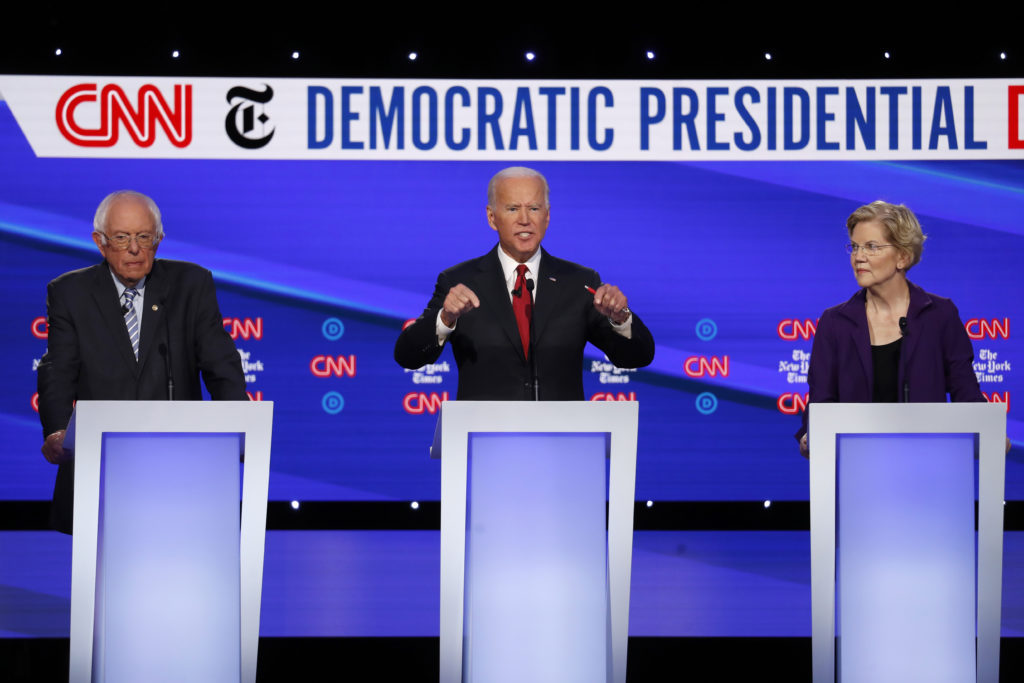
The presidential politics calendar turned to 2020 nearly a year ago. This week, the actual date catches up. What we’re watching as the preseason closes and election year opens: Days to Iowa caucuses: 35 Days to general election: 309 THE NARRATIVE The ups, downs and swerves of 2019 yielded a stable top slate. Former Vice President Joe Biden leads most national polls of Democratic primary voters, with Sens. Bernie Sanders of Vermont and Elizabeth Warren of Massachusetts within striking distance. Yet in the first caucus state of Iowa and the first primary state of New Hampshire, there’s a jumble of Biden, Sanders, Warren and Mayor Pete Buttigieg of South Bend, Indiana. At first glance, it’s a clean choice: Biden and Buttigieg hail from the center-left; Warren and Sanders come from the progressive left. Reality is more layered. All four have weaknesses within Democrats’ diverse electorate; each makes a different case for carrying the banner against President Donald Trump, who is now impeached but a near certainty to survive a Senate trial. If that’s not enough indecision, several wildcards — including two billionaires — still hope to scramble the contest. THE BIG QUESTIONS Money: Who can (sort of) compete with Michael Bloomberg’s wallet? The fourth-quarter fundraising period ends Tuesday. Warren and Sanders set the early curve for grassroots donations, outpacing Buttigieg and Biden, who tap traditional deep-pocketed contributors in addition to online donors. Now those small-donor juggernauts must compete with former New York Mayor Michael Bloomberg, who’s used a share of his estimated $50 billion personal fortune to blanket television and digital advertising and build an expansive staff in Super Tuesday states. For his rivals, it’s not so much about keeping up; Bloomberg can easily outspend every other campaign, including that of fellow billionaire Tom Steyer. But there’s only so much television time for sale, and if Warren and Sanders want to plow big money into Super Tuesday, especially the expensive television markets of California, they’ll need as much cash as possible ahead of time. Biden, meanwhile, has already secured his best fundraising quarter (a relative comparison for a candidate who’s lagged other top-tier contenders). The question is whether Biden’s “best” mollifies establishment Democrats who waved red flags when he reported having less than $9 million on hand at September’s end. Money, Part II: How long can Cory Booker keep going? The year-end deadline is critical for New Jersey Sen. Cory Booker as he reaches for relevance. The last of two African American candidates (along with former Massachusetts Gov. Deval Patrick), Booker made a do-or-die money appeal in September, and it worked. But it’ll take more than scraping by to fund the turnaround he envisions: a surprise finish in overwhelmingly white Iowa to kick-start a dramatic rise in more diverse primary states that follow (Barack Obama’s 2008 path). Campaigns that hit big fundraising numbers tend to leak that news before Federal Election Commission filings are due. Candidates with bad news tend to wait. So, it bears watching how Booker’s team plays it to start January. Is Amy Klobuchar being overlooked in Iowa? Those previously mentioned Iowa and New Hampshire jumbles omit Amy Klobuchar. But the Minnesota senator is plugging away in both states. She just hit her 99th Iowa county (that’s all of them), demonstrating her effort to use complex caucus rules that can reward candidates with a wide geographic footprint. Notably, Klobuchar’s strategy tracks Biden. Both aim for a more consistent appeal across 1,679 precincts than Warren, Sanders and Buttigieg muster on Feb. 3. The question becomes how many precincts give both Biden and Klobuchar the minimum 15 percent support required to count toward delegates. Anyone who doesn’t hit that viability mark drops from subsequent ballots, their backers going up for grabs. Biden’s Iowa hopes depend in part on picking up moderates on realignment votes (read: Klobuchar and Buttigieg supporters). If Klobuchar is as strong as she hopes to be, she could turn that strategy around on Biden, driving him below viability and attracting his supporters on later ballots. Biden returns to Iowa this week for another bus tour, though not as lengthy as his eight-day jaunt after Thanksgiving. Is Sanders a true contender this time? Sanders lost the 2016 nomination because of Hillary Clinton’s advantage among non-white Democrats. Since then, Sanders has deepened his ties among Latinos, African Americans and other non-whites. Warren and Buttigieg are still chasing that success. Sanders’ advisers believe the senator is well-positioned to challenge Biden among non-whites if he’s able to build early momentum in New Hampshire and Iowa, where Sanders will spend New Year’s Eve. If they’re right, that would open avenues to delegates Sanders didn’t get in 2016. Is Trump’s position improving? The president has never been popular judged in a vacuum. In 2016, he won GOP primaries with pluralities and lost the general election popular vote. As president, he’s never reached majority job approval in Gallup’s polling. But he’s still hovering in the 40s, not far from where his immediate predecessors were 11 months before winning second terms. Impeachment proceedings haven’t affected Trump’s standing. Meanwhile, the same Democratic-run House that impeached him approved his new North America trade pact. Top-line economic numbers shine, even if the on-ground reality is uneven. And Trump could be on the cusp of a peace deal in Afghanistan after the Taliban ruling council on Sunday agreed to a temporary cease-fire. As frenetic as Trump’s messaging is, he proved in 2016 that he relishes framing binary choices for voters, and he’s more than convinced he has a case in 2020. THE FINAL THOUGHT Most voters are just tuning into a presidential race that’s raged for a year. They’ll find a Democratic contest featuring stark options on policy and personality, but lacking an undisputed favorite. Candidates are navigating primary politics: dancing along the progressive-liberal-moderate spectrum and carefully choosing when to go after each other. At the same time, Trump dominates the 2020 narrative, a fact demonstrated most recently as Biden spent two days talking about whether he’d testify in a Senate trial on Trump’s removal from office.
Iowa swung fiercely to Donald Trump. Will it swing back in 2020?
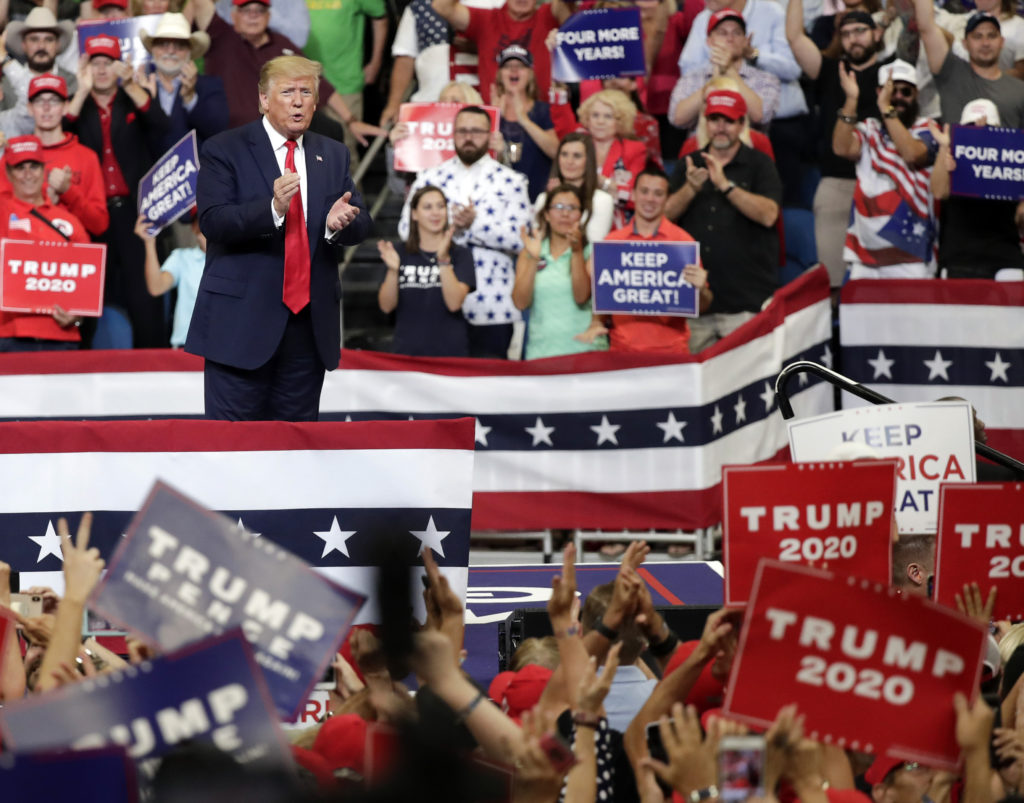
Few states have changed politically with the head-snapping speed of Iowa. Heading into 2020, the question is whether it’s going to change again. In 2008, its voters propelled Barack Obama to the White House, as an overwhelmingly white state validated the candidacy of the first black president. A year later, Iowa’s Supreme Court sanctioned same-sex marriage, adding a voice of Midwestern sensibility to a national shift in public sentiment. In 2012, Iowa backed Obama again. All that change proved too much, too fast, and it came as the Great Recession punished agricultural areas, shook the foundations of rural life and stoked a roiling sense of grievance. By 2016, Donald Trump easily defeated Hillary Clinton in Iowa. Republicans were in control of the governor’s mansion and state legislature and held all but one U.S. House seat. For the first time since 1980, both U.S. Senate seats were in GOP hands. What happened? Voters were slow to embrace Obama’s signature health care law. The recession depleted college-educated voters as a share of the rural population, and Republicans successfully painted Democrats’ as the party of coastal elites. Those forces combined for a swift Republican resurgence and helped create a wide lane for Trump. The self-proclaimed billionaire populist ended up carrying Iowa by a larger percentage of the vote than in Texas, winning 93 of Iowa’s 99 counties, including places like working-class Dubuque and Wapello counties, where no Republican since Dwight D. Eisenhower had won. But now, as Democrats turn their focus to Iowa’s kickoff caucuses that begin the process of selecting Trump’s challenger, could the state be showing furtive signs of swinging back? Caucus turnout will provide some early measures of Democratic enthusiasm, and of what kind of candidate Iowa’s Democratic voters — who have a good record of picking the Democratic nominee — believe has the best chance against Trump. If Iowa’s rightward swing has stalled, it could be a foreboding sign for Trump in other upper Midwestern states he carried by much smaller margins and would need to win again. “They’ve gone too far to the right and there is the slow movement back,” Tom Vilsack, the only two-term Democratic governor in the past 50 years, said of Republicans. “This is an actual correction.” Iowans unseated two Republican U.S. House members — and nearly a third — in 2018 during midterm elections where more Iowa voters in the aggregate chose a Democrat for federal office for the first time in a decade. In doing so, Iowans sent the state’s first Democratic women to Congress: Cindy Axne, who dominated Des Moines and its suburbs, and Abby Finkenauer, who won in several working-class counties Trump carried. Democrats won 14 of the 31 Iowa counties that Trump won in 2016 but Obama won in 2008, though Trump’s return to the ballot in 2020 could change all that. “We won a number of legislative challenge races against incumbent Republicans,” veteran Iowa Democratic campaign consultant Jeff Link said. “I think that leaves little question Iowa is up for grabs next year.” There’s more going on in Iowa that simply a merely cyclical swing. Iowa’s metropolitan areas, some of the fastest growing in the country over the past two decades, have given birth to a new political front where Democrats saw gains in 2018. The once-GOP-leaning suburbs and exurbs, especially to the north and west of Des Moines and the corridor linking Cedar Rapids and the University of Iowa in Iowa City, swelled with college-educated adults in the past decade, giving rise to a new class of rising Democratic leaders. “I don’t believe it was temporary,” Iowa State University economist David Swenson said of Democrats’ 2018 gains in suburban Des Moines and Cedar Rapids. “I think it is the inexorable outcome of demographic and educational shifts that have been going on.” The Democratic caucuses will provide a test of how broad the change may be. “I think it would be folly to say Iowa is not a competitive state,” said John Stineman, a veteran Iowa GOP campaign operative and political data analyst who is unaffiliated with the Trump campaign but has advised presidential and congressional campaigns over the past 25 years. “I believe Iowa is a swing state in 2020.” For now, that is not a widely held view, as Iowa has shown signs of losing its swing state status. In the 1980s, it gave rise to a populist movement in rural areas from the left, the ascent of the religious right as a political force and the start of an enduring rural-urban balance embodied by Republican Sen. Chuck Grassley and Democratic Sen. Tom Harkin. Now, after a decade-long Republican trend, there are signs of shifting alliances in people like Jenny O’Toole. The 48-year-old insurance industry employee from suburban Cedar Rapids stood on the edge of the scrum surrounding former Vice President Joe Biden last spring, trying to get a glimpse as he shook hands and posed for pictures. “I was a Republican. Not any more,” O’Toole said. “I’m socially liberal, but economically conservative. That’s what I’m looking for.” O’Toole is among those current and new former Republicans who dot Democratic presidential events, from Iowa farm hubs to working-class river towns to booming suburbs. Janet Cosgrove, a 75-year-old Episcopal minister from Atlantic, in western Iowa, and Judy Hoakison, a 65-year-old farmer from rural southwest Iowa, are Republicans who caught Mayor Pete Buttigieg’s recent trip. If such voters are a quiet warning to Trump in Iowa, similar symptoms in Wisconsin and Michigan, where Democrats also made 2018 gains, could be even more problematic. Vilsack has seen the stage change dramatically. After 30 years of Republican dominance in Iowa’s governor’s mansion, he was elected in 1998 as a former small-city mayor and pragmatic state senator. An era of partisan balance in Iowa took hold, punctuated by Democratic presidential nominee Al Gore’s 4,144-vote victory in Iowa in 2000, and George W. Bush’s 10,059-vote re-election in 2004. After the 2006 national wave swept Democrats into total Statehouse control for the
Bradley Byrne: Answering the call – fighting a phony impeachment
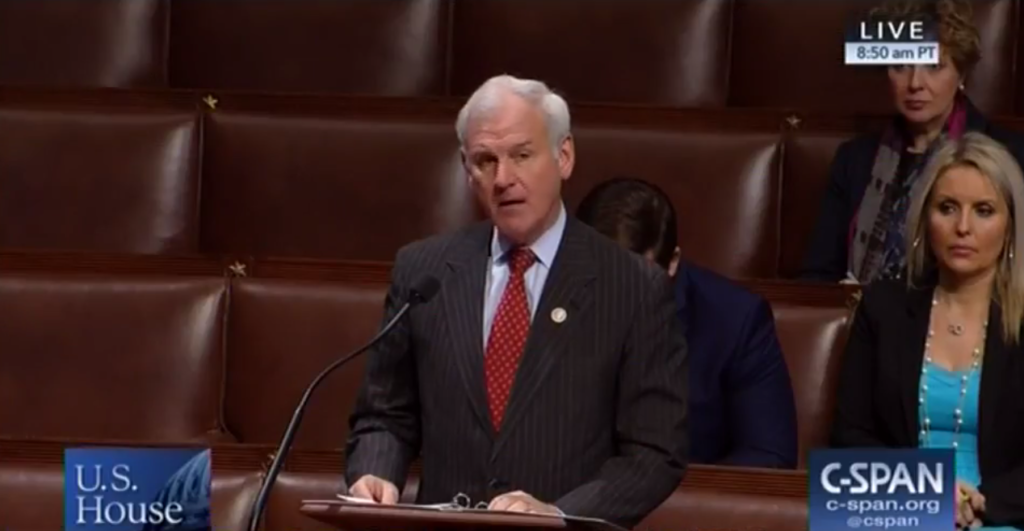
This year Democrats finally did what they have wanted to do since November 2016 – move to impeach President Donald Trump. This plan was politically motivated from the beginning, and I decided to lead the fight against it. This initial investigation into Donald Trump should never have begun in the first place. During the Obama Presidency, partisan government officials abused their power and used a phony dossier paid for by Democrat political operatives to justify the investigation. How could they run a phony investigation into then-candidate Trump while giving Secretary Hillary Clinton a pass on her many clear violations of the law? I introduced a bill called the Investigate the Investigators Act to get the answers the American people deserve. This bill would enable the Department of Justice to determine what President Barack Obama and his Administration knew and when they knew it and why numerous questionable decisions were made in 2016 and beyond. As expected, Nancy Pelosi had no interest in bringing to light answers that could undermine her impeachment scheme. One of the key facets of her plan was to hold proceedings in the House Intelligence Committee instead of the Judiciary Committee. The Intelligence Committee is one of the House’s smallest committees, where the Speaker essentially handpicks its members. Pelosi had a ready-made impeachment team loyal to her, led by Chairman Adam Schiff. Another characteristic of the Intelligence Committee is that it often examines classified material and has wide latitude to hold secret hearings to protect classified information. Schiff and Pelosi abused this to hold hearings in a classified meeting room called a SCIF, deep in the basement of the Capitol where the public and press could not access the facts. Even though the information they reviewed was not classified, the public was kept out. Several of my colleagues and I had enough. We entered the SCIF to observe the proceedings as we should be entitled to do as the people’s representatives. Amazingly, Adam Schiff shut down the hearings. But we kept up the pressure. Eventually Democrats agreed to release their secret transcripts. Let’s not forget what started this whole Ukraine mess – Hunter Biden’s shady foreign business dealings. While Hunter’s dad, Joe Biden, was Vice President of the United States, Hunter was making lucrative deals in countries like Ukraine and China. In Ukraine, where his dad was leading U.S. foreign policy efforts, Hunter was serving on the board of a sketchy energy company called Burisma Holdings. In the past, Joe Biden has bragged openly about successfully pressuring the Ukrainian government to remove Ukraine’s top prosecutor or risk losing United States assistance. That same prosecutor was allegedly investigating Burisma, the company on whose board Hunter Biden sat at the time! President Trump recognized the importance of rooting out corruption in a country to which we give millions of dollars in foreign aid, and he was totally justified in being skeptical of a new administration in a notoriously corrupt country. If the same facts in the Biden case occurred with someone named Trump or Byrne, Democrats would have already launched a full-scale investigation. I decided to expose this hypocrisy. In October, I introduced a House resolution calling for an investigation into the Bidens’ shady business dealings. Democrats will not consider it. The fact that they are continuing their sham Trump investigation while ignoring the real Biden scandal reveals their political motivations. Throughout this investigation, I’ve continued to lead the charge against Democrats’ phony charges and hypocrisy. Democrats will not let up working to remove President Trump from office, even after he is acquitted by the Senate. You can rest assured I will continue to be a strong leader in the fight to protect President Trump.
Bradley Byrne: The facts about Ukraine
With all the allegations being made against President Donald Trump, it’s important to examine some background and facts. First, let’s talk about what has been going on in Ukraine since the fall of the Soviet Union. Ukraine is one of the most corrupt countries on earth. Like many former Soviet countries, oligarchs control almost all the political power. Corruption is so rampant that many American business people refuse to operate there. For nearly 30 years, Republican and Democrat Presidents have pressured Ukraine to reform without much success. Part of that outreach was aimed at preventing Russia from gaining influence there. But five years ago, Russia invaded Ukraine, and the two countries have been at war ever since. After the invasion, President Barack Obama rightly began providing them non-lethal aide. But to maintain goodwill with the Russians, he would not sell them weapons. Now let’s move to 2016. During the 2016 campaign, President Trump ran on a deep skepticism of foreign aid. Partly as a result, senior members of the Ukrainian government took Secretary Hillary Clinton’s side. After his victory, Ukrainian officials scrambled to make amends with President Trump. Despite President Trump’s understandable skepticism towards Ukraine, he pursued policies towards Ukraine that began leading to progress. He began selling real weapons to Ukraine to help them fight the Russians, with enormous positive effects. However, a few individuals in the Administration tried to convince President Trump he should forget Ukraine’s past and immediately embrace its new President. They began, in their own words, working to change President Trump’s mind. It was office gossip among a handful of these individuals that led to the impeachment investigation. The drama started with the “whistleblower” (who lacked firsthand knowledge of what he reportedly blew the whistle on) alleging that President Trump made “demands” on President Zelensky on a phone call. He alleged President Trump threatened to withhold security assistance to Ukraine for political favors. But despite this allegation, President Zelensky has publicly, clearly, and repeatedly denied any demands were ever made on him. And the Justice Department reviewed this allegation and declined to pursue a criminal investigation. Further, President Trump released the transcript, and it showed that neither person said one word about the hold on that call! You would think that if President Trump were trying to use the aid for extortion, he would have at least mentioned it. President Zelensky did not mention the funds either because he did not know they were on hold and, as the transcript confirms, President Trump never told him! If that is the case, this would be a very strange quid pro quo indeed. Let’s use common sense here. With President Trump’s clear skepticism of foreign aid and Ukraine’s reputation for corruption, is it surprising his Administration would want to review millions in aid to a new Ukrainian President and parliament? In contradiction to the bureaucratic gossip fueling this latest Democrat impeachment fantasy, not one person has testified that they had any direct knowledge that President Trump ordered aid held in exchange for a political favor. Witnesses have speculated about the reason for the hold, but when pressed, they’ve all said some version of “I don’t know.” Despite this sham process, we have no evidence that President Trump ordered any kind of quid pro quo. The Ukrainians got the aid money, within days of even finding out it was on hold, and they got the meetings with President Trump and the Vice President that they wanted. There is no impeachable offense here, but most Democrats know that. This is all about defeating President Trump in the 2020 election, but I think their efforts will backfire as the American people learn the truth. Armed with the facts, I won’t quit fighting against this sham impeachment scheme.
Democrats push candidates to fully commit to 2020 nominee
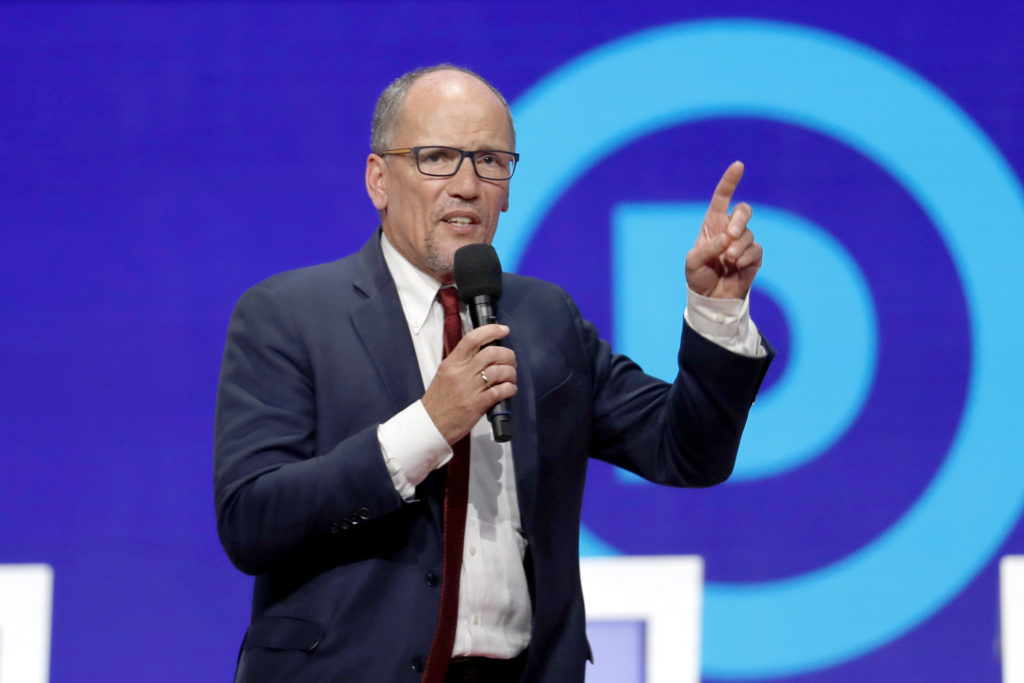
The Democratic National Committee is increasing pressure on its presidential candidates to commit to campaign actively for the party’s nominee in 2020, going beyond a previous loyalty pledge for White House hopefuls. The push from Chairman Tom Perez is part of a wide-ranging strategy designed to prevent the mistakes that cost Democrats the 2016 presidential election. It comes as the Republican National Committee continues to dwarf the Democratic Party in fundraising, while Democrats face the prospect of a bruising, expensive nominating fight that could last well into election year. “We’ll need every Democrat working together in order to defeat Donald Trump,” Perez said, repeating his pledge for a full national campaign even as most Democrats remain focused on the primary campaign. As an example, the DNC holds up former President Barack Obama, who is already raising money and remains neutral in a nominating fight that includes his vice president, Joe Biden, and who is already raising money for the party. An Oct. 25 email from Obama to grassroots donors produced the party’s best online fundraising day of the cycle, the DNC said, and the former president will headline a fundraising gala in California in November. DNC officials say Obama has already talked with party leaders about campaigning on behalf of the nominee, whoever it is. Perez is asking all candidates to commit, like Obama, to serve as surrogates, with a focus on battleground states in the weeks after the July 13-16 nominating convention in Milwaukee. And Perez wants each campaign, as candidates drop out, to designate a senior adviser to serve as a liaison to help the national party use the vestiges of individual candidates’ campaigns to build out Democrats’ general election campaign. DNC officials say the effort isn’t targeted at any campaign. But since President Donald Trump’s 2016 election, Democratic power players have lamented the bitterness that lingered among many supporters of Bernie Sanders after he lost the nomination to Hillary Clinton. Sanders endorsed and campaigned for Clinton, but some of his supporters never fully embraced her candidacy, and some Clinton loyalists blamed them for her narrow losses in key states like Wisconsin, Michigan and Pennsylvania. DNC officials say the overall purpose of what Perez calls a “unity effort” is to pool all Democratic resources, making them available to state parties in battleground states to benefit the presidential nominee and all other Democrats running for lower offices. Perez already has required candidates to pledge explicitly to support the nominee. Candidates also have been asked to help the party raise money and, as a condition of getting the DNC’s national voter file, pledge to give back the additional data they gather on voters once they drop out of the presidential race. The DNC says 10 candidates to date have sent fundraising emails and 15 have participated in fundraising events. That list includes Elizabeth Warren, who has shunned high-dollar fundraisers for her own campaign but agreed to help the party with events that include wealthy donors who legally can give the party hundreds of thousands of dollars. Sanders, Warren’s chief rival for the Democrats’ progressive faction, has sent a fundraising email but hasn’t yet hosted a DNC fundraiser. Sanders’ campaign says he is willing to attend such events provided they are open to low-dollar donors. Both Sanders and Warren have criticized Biden for leaning on wealthy donors and accepting the help of an independent political action committee that can accept unlimited contributions from individuals and corporations. The data requirements, meanwhile, are part of Democrats’ attempts to catch up to a Republican data operation that surprised the Clinton campaign in 2016 and to avoid the scenario under Obama, whose campaign ran its own sophisticated data operation but never fully integrated it with the party. Sanders also never turned over his voter data after ending his 2016 bid. By Bill Barrow Associated Press. Republished with the permission of the Associated Press.
38 people cited for violations in Hillary Clinton email probe
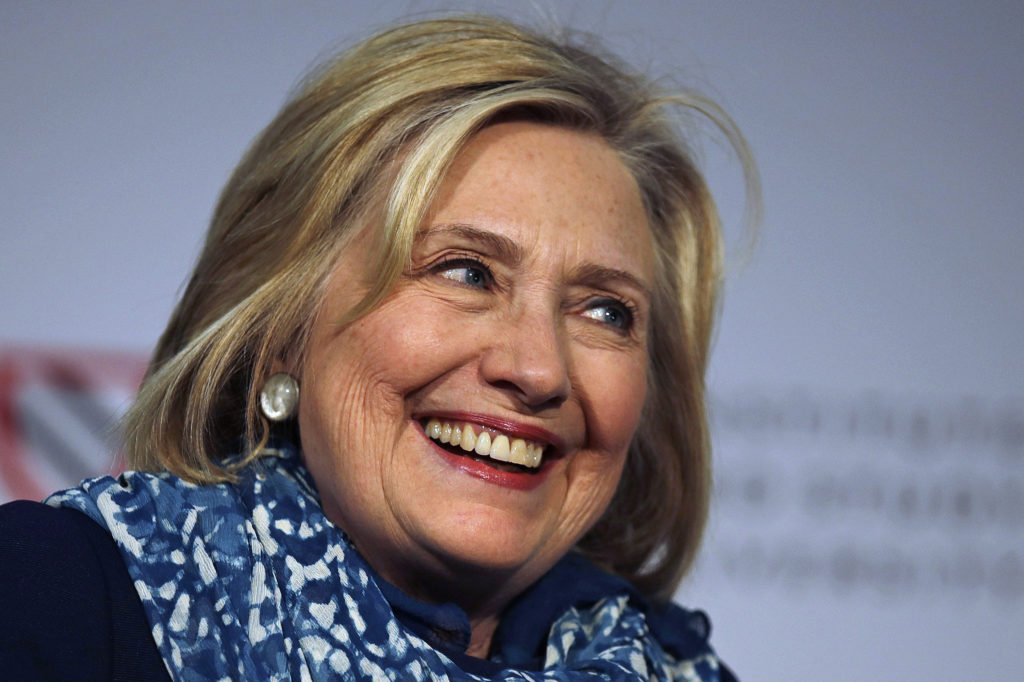
The State Department has completed its internal investigation into former Secretary of State Hillary Clinton’s use of private email and found violations by 38 people, some of whom may face disciplinary action. The investigation, launched more than three years ago, determined that those 38 people were “culpable” in 91 cases of sending classified information that ended up in Clinton’s personal email, according to a letter sent to Republican Sen. Chuck Grassley this week. The 38 are current and former State Department officials but were not identified. The investigation covered 33,000 emails that Clinton turned over for review after her use of the private email account became public. The department said it found a total of 588 violations involving information then or now deemed to be classified, but could not assign fault in 497 cases. For current and former officials, culpability means the violations will be noted in their files and will be considered when they apply for or go to renew security clearances. For current officials, there could also be some kind of disciplinary action. But it wasn’t immediately clear what that would be. The department began the review in 2016 after declaring 22 emails from Clinton’s private server to be “top secret.” Clinton was then running for president against Donald Trump, and the now-president made the server a major focus of his campaign. Then-FBI Director James Comey held a news conference that year in which he criticized Clinton as “extremely careless” in her use of the private email server as secretary of state but said the FBI would not recommend charges. The Justice Department’s inspector general said FBI specialists did not find evidence that the server had been hacked, with one forensics agent saying he felt “fairly confident that there wasn’t an intrusion.” Grassley started investigating Clinton’s email server in 2017, when he was chairman of the Senate Judiciary Committee. The Iowa Republican has been critical of Clinton’s handling of classified information and urged administrative sanctions. By Matthew Lee and Mary Clare Jalonick Associated Press Republished with the permission of the Associated Press
