
Jeb Bush, followed by Marco Rubio, fare best in GOP presidential field among Hispanics
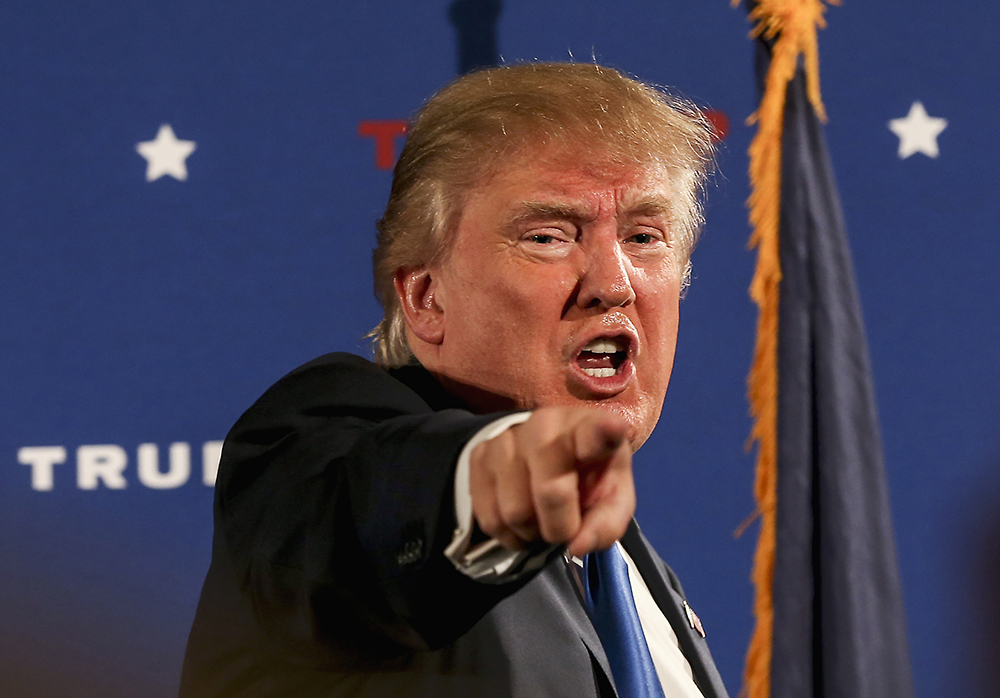
Republican front-runner Donald Trump is widely unpopular among the nation’s Hispanics, a new AP-GfK poll finds, challenging the billionaire’s oft-repeated assertion that he will win the Hispanic vote if he becomes his party’s nominee. The survey finds many of the Republican candidates running for president would probably struggle to win significant support among Hispanics in a general election. Jeb Bush and Marco Rubio are their favorites, but even they are a hard sell, the poll suggests. Even so, most in the field are unknown to enough Hispanics that they might have a shot at proving themselves. That’s a particular struggle for Trump, who began his campaign for president by calling some immigrants from Mexico rapists and has vowed to deport all of the estimated 11 million people living in the country illegally if he is elected president. Trump is viewed unfavorably by 72 percent of Hispanics, with 6 in 10 having a very unfavorable opinion of him, the AP-GfK poll finds. Only 11 percent view him favorably. Janet Murguia, president of the National Council of La Raza, the Hispanic civil rights advocacy group, said the findings are no surprise and “consistent from what we’ve heard from the community.” Trump’s provocative comments about the character of immigrants and his plans for mass deportation and construction of a wall all along the Mexican border stirred a backlash from Hispanic groups. He also bailed on an event with Hispanic business leaders. Nonetheless, Trump says Hispanics love him. “I have fantastic relationships with the Hispanics,” Trump said last week. “I employ thousands of Hispanics right now, tens of thousands over the years I’ve employed. They’re fantastic people.” He went on: “I think I will win with Hispanics when the word gets out.” The comments followed protests by a coalition of Hispanic groups infuriated over NBC’s decision to invite him to host “Saturday Night Live” next month. Among Trump’s rivals, Bush, who speaks fluent Spanish and married a Mexican-born woman, is viewed most favorably by Hispanics, with 26 percent giving the former Florida governor a positive rating. Rubio, a Florida senator and Cuban-American, comes in second, with 23 percent viewing him favorably. Still, both Bush and Rubio are viewed unfavorably by more than one-third of Hispanics polled. Trump does have a following of enthusiastic Hispanic backers who have launched groups like “Latinos Support Trump” on social media. During his visit to the Mexican border in the summer, for instance, he was cheered by a dozens of Hispanic supporters, many of whom were born in the country or entered legally and resented those who came against the law. But advocacy groups say the idea of Trump winning the Hispanic vote is less than unlikely. Javier Palomarez, president and CEO of the U.S. Hispanic Chamber of Commerce, said Trump is in for a rude awakening if he thinks Hispanics love him. “Nothing could be further from the truth.” Palomarez, whose group Trump was supposed to speak to before his abrupt cancellation, said the growing Hispanic population will be crucial to any candidate. “Never again will a president be elected without courting the Hispanic vote,” he said. “He’s going to find out that we’re the gatekeepers to the White House.” Palomarez said Trump “crystallized for the Hispanic community” whom they will vote against. Murguia said she doesn’t see much Trump can do to improve his standing with Hispanics. “He has dug himself in a pretty deep hole with the Latino community,” she said. “And while he talks about wanting to create jobs — and certainly our community cares about jobs and the economy — he has poisoned the well significantly with the Latino community.” She said he faces a long slog with Hispanics “if he doesn’t come to terms with the fact that he’s going to have to apologize or do a complete about-face.” After Mitt Romney‘s loss to President Barack Obama in 2012, the Republican Party called for passing an immigration overhaul and taking steps within the party to appeal to more Hispanics, in recognition of their growing influence. After advocating for self-deportation during his campaign, Romney won 59 percent of the white vote in that general election but just 27 percent from Hispanics. Republished with permission of the Associated Press.
Darryl Paulson: The zenith of Donald Trump
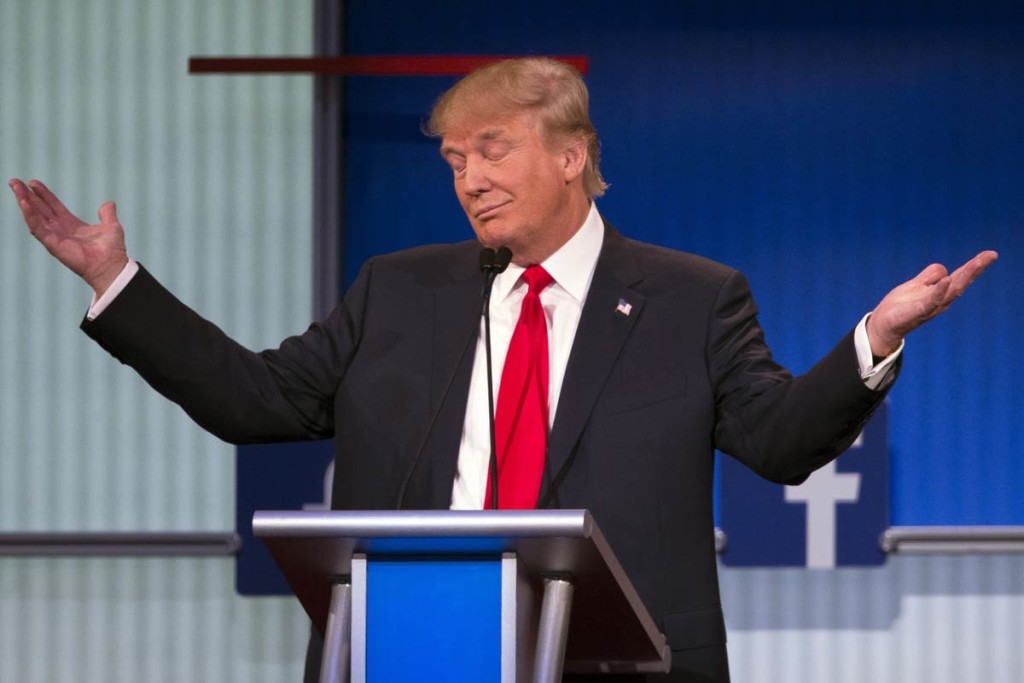
Here are two critical points concerning Donald Trump. First, he is barely a Republican. Second, he is certainly not a conservative. It is obvious that Trump is leading the field of 17 Republican candidates. His support in four recent polls all had Trump in first place, ranging from a low of 21 percent in the Bloomberg poll to 26 percent in both the Fox poll and the Monmouth University poll. That’s the good news for Trump. The bad news is that Trump may move up a few points, but he has reached the zenith of his support. A recent Economist/YouGov.com survey found that about a third of Americans had a favorable view of Trump and 58 percent had an unfavorable view. Trump will soon be taking the “down” elevator in public opinion polls. The same poll found that when the numbers were broken down by age, race, region, gender and income, Trump’s unfavorables were substantially higher in every category but one: voters 65 and older. His support among African-Americans, Hispanics and women is almost nonexistent. A Rasmussen Poll released Tuesday found strong evidence that the Trump decline may have already started. A survey of 651 likely Republican voters conducted between Sunday and Monday, found that support for Trump has declined from 24 percent to 17 percent in the past 10 days. Trump’s support among men has fallen from 30 percent to 19 percent, and support from women has dropped from 22 percent to 14 percent. Trump is at the top right now because he is perceived as the non-politician in the age where Americans of all political stripes hate the establishment. Voters are frustrated and alienated with politics and politicians, and Trump has successfully appealed to them. Trump’s supporters see him as the outsider who will shake-up the system, much like those who supported George Wallace and Ross Perot were viewed as political mavericks. Trump’s one major contribution to the presidential race us that he has demonstrated to the other candidates that the voters do not like them and their hollow promises one bit. Trump will falter for many reasons. As Larry Thornberry has written in The American Spectator, a leading conservative publication, Trump is “an arrogant, self-satisfied, crude and pompous windbag and bully who grossly overestimates his knowledge, his successes, and, not the least, his charm.” He attacks any critic as “stupid” or “loser,” but has a political glass jaw when he is criticized. Trump will lose because he is running as a Republican this year simply because he feels like it. He quit the party in 1999 saying that “Republicans are just too crazy right.” He then hired Roger Stone, who resigned as Trump’s campaign manager a few days ago, to consider a 2000 run as a Reform Party candidate. In 2009, Trump was back as a Republican. The next year he decided he was an independent and then in 2012, he was once again a Republican. His moving from one political party to another, all for political expediency, might remind Florida voters of Gov. Charlie Crist. Trump is the Bernie Sanders of the Republican Party. Both Trump and Sanders are running to lead a party that neither really calls home and that both have spent more time disparaging than uplifting it. During most of the first decade of the 21st century, the vast majority of the $1.5 million that Trump donated to political candidates went to Democrats, including contributions to Nancy Pelosi and $100,000 to the Clinton Foundation. When asked about his contributions to both Democrats and Republicans, Trump justified them by saying, “When you give, they do whatever you want them to.” I am sure that will appeal to Americans who hate politics for precisely that reason. Trump will lose because he is not a conservative in a party that is dominated by conservatives. In a 2000 book Trump called himself a “liberal” on health care. He supported a single-payer health plan that conservatives loathe, and he was once pro-choice, although he now says he is against abortion. A few years ago, Trump supported a 14.25 percent mega-tax on those making more than $10 million. Now he wants to cut income taxes in half. As Bruce Bartlett, former aide to U.S. Rep. Jack Kemp, said of Trump: “He is nothing if not inconsistent. He’s been on every side of every issue from every point of view as far as I can tell.” If you have not noticed, Trump is also delusional. He calls immigrants “rapists and murderers,” and then says he will win the Hispanic vote. He insults conservative icon Megyn Kelly for attacking him unfairly and having blood coming out her eyes and “whatever.” Trump also believes he will win the votes of women. Republicans, conservatives and Americans deserve better than Trump. “Donald, you’re fired!” Darryl Paulson is Professor Emeritus of Government at the University of South Florida St. Petersburg and resides in Palm Harbor.
Jeb Bush calls courtship of minority voters integral to campaign

Following his own advice, Jeb Bush is taking his presidential campaign to the neighborhoods and churches where Hispanics and African-Americans live and worship in an effort to broaden his appeal among minority voters. The former Florida governor was in Florida this week, speaking to a diverse group of 150 pastors and other religious leaders, repeating his oft-stated pledge to campaign in “every nook and cranny” of the country. On Friday, he’ll be one of only two Republican presidential candidates to address the National Urban League’s annual conference, joining Hillary Rodham Clinton and two other Democrats seeking the White House. “Republicans need to campaign everywhere. Not just amongst Latinos, but amongst blacks. It’s okay to get outside your comfort zone. It’s okay that not everybody agrees with my views,” Bush said Monday at his event outside Orlando. “It’s not OK to not try. That’s the difference.” It’s a lesson from Bush’s time running for office in Florida that he’s now applying to his race for president. In his first run for governor in 1994, Bush campaigned as a self-described “head-banging conservative” who said he’d do “probably nothing” for African-Americans, explaining he instead wanted “equality of opportunity” for all people. Bush lost that race, and then took a different tack four years later. After traveling the state to meet with minority groups that typically align with Democrats, he ran a winning campaign focused on schools and spoke often in black churches. William Andrews, executive director of Mercy Drive Ministries in Orlando, credits a statewide program Bush started once in office for helping him conquer his heroin and cocaine addiction. “Mr. Bush sold me on becoming a Republican,” said Andrews, who is black. Should Bush capture the GOP’s presidential nomination, repeating the campaign strategy he credits for his wins in Florida could be essential to his general election success in 2016. According to exit polls conducted for AP and television networks in 2012, 93 percent of blacks and 71 percent of Hispanics nationally voted to re-elect President Barack Obama. In 2008, Obama won the vote of 95 percent of blacks and 67 percent of Hispanics, who are likely to be especially crucial in the 2016 presidential race because of their growing numbers in swing states such as Colorado, Nevada and Florida. Democrats are eager to hold onto their decisive advantage among such voters, and argue blacks and Hispanics will ultimately reject Bush because of his support for policies that include repealing Obama’s health care overhaul, opposing a federal minimum wage and his record of tax cuts in Florida. “Bush’s failed policies of the past are no different than every other Republican in the field: He wants to divide families, hurt our economy, and let those like Jeb Bush, and only Jeb Bush, get ahead,” said Pablo Manriquez, the Democratic National Committee‘s Hispanic media director. For his part, Bush said this week his campaign does not have a Hispanic outreach strategy, because “outreach is a term that makes it sound like it’s on the periphery.” “There is no outreach plan here, this is an integral part of my campaign,” said Bush, who is fluent in Spanish and whose wife, Columba, is a Mexican immigrant. “I have Hispanic children. I have Hispanic grandchildren. I’m part of the community.” Bush isn’t alone in making an overt appeal to minority voters. Kentucky Sen. Rand Paul has addressed historically black universities, held public events at pilot schools for predominantly minority students in inner-city Chicago and discussed revisions to federal sentencing laws, which disproportionately affect minority offenders. In late June, the same day NBC announced it was severing ties with billionaire real-estate mogul and GOP candidate Donald Trump, who described some Mexican immigrants in the country illegally as “rapists” and “criminals” during his campaign announcement, Bush met privately with a racially mixed group of pastors in grief-stricken Charleston, S.C. Last week, Bush attended another meeting of about 40 pastors in Spartanburg, also split evenly between black and white ministers. Among those in attendance was the Rev. Windell Rodgers, a black Democrat from Greenville, who is supporting Bush in the state’s early voting Southern primary. “He has a love for what I gather are all people, and is willing to go into their areas,” he said. That includes Friday’s meeting of the Urban League, one of the nation’s oldest civil rights organizations. Bush and Ben Carson, a retired neurosurgeon and African-American, are the only two Republican candidates speaking at the event, where White House hopefuls are being asked to “share their visions for saving our cities.” “We have to campaign all across this country with joy in our heart rather than anger,” Bush said Monday. “And go to places where Republicans haven’t been seen in a long, long while.” Republished with permission of The Associated Press.
