
House Approves Measure to Restrain Trump’s Actions on Iran
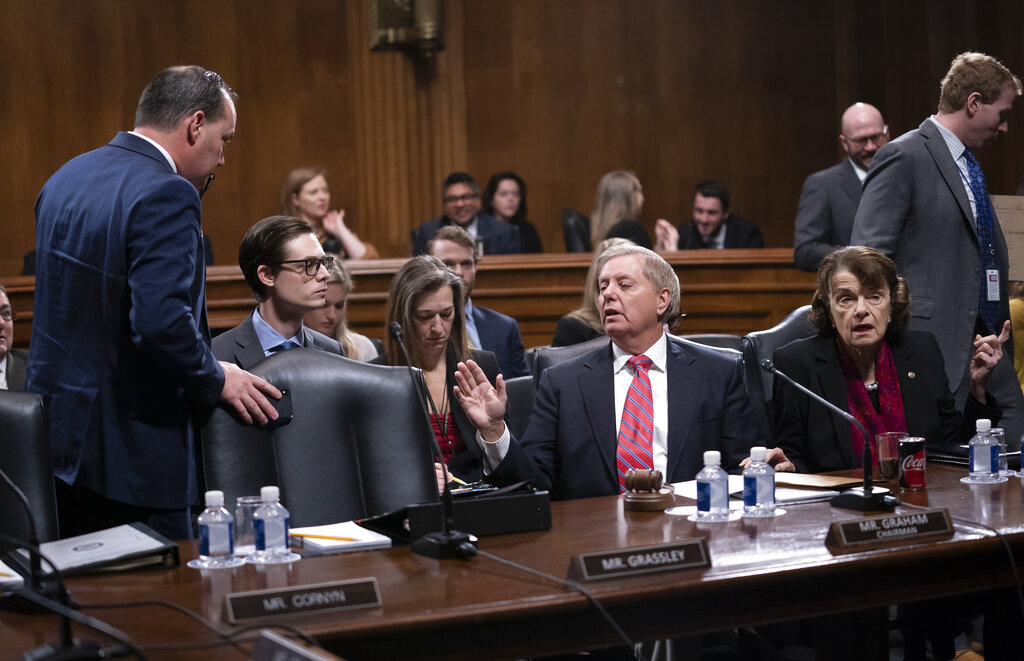
This resolution is not binding and is largely symbolic.
Border security bargainers trade offers as deadline nears

Congressional bargainers traded offers and worked toward a border security compromise Friday that would avert a fresh federal shutdown and resolve a clash with President Donald Trump that has dominated the opening weeks of divided government. differences Both sides’ negotiators expressed optimism that an accord could be reached soon on a spending package for physical barriers along the Southwest border and other security measures. Participants said the agreement would all but certainly be well below the $5.7 billion Trump has demanded to build his proposed wall, and much closer to the $1.6 billion that was in a bipartisan Senate bill last year. “That’s what we’re working toward,” said Rep. Lucille Roybal-Allard, Democrat-Calif., one of the bargainers. Besides the dollar figure, talks were focusing on the type and location of barriers, participants said. Also in play were the number of beds the federal Immigration and Customs Enforcement agency could have for detained migrants, and how much aid for natural disaster relief would be included. Money for high-tech surveillance equipment and more personnel was also expected to be included. No one ruled out that last-minute problems could emerge, especially with Trump’s penchant for head-snapping turnabouts. But the momentum was clearly toward clinching an agreement that Congress could pass by next Friday. The next day, government agencies would have to close again for lack of money, if no deal is reached. Negotiator Rep. Chuck Fleischmann, Republican-Tenn., said the latest Democratic offer was “much more reasonable.” And Democratic bargainer Rep. Pete Aguilar of California said, “Each time an offer and a counter is going back and forth the number of open items is reducing. That is progress.” Rep. Mark Meadows, Republican-N.C., who leads the hard-right House Freedom Caucus, said he spoke Thursday night to Trump, who he said was in “wait and see” mode. Meadows said he expects an agreement to provide something closer to $1.6 billion. “I’m not optimistic it’ll be something the president can support,” Meadows said. A conservative House GOP aide said to back a deal, Freedom Caucus members wanted at least $2 billion for barriers and no restrictions on new construction, land acquisition or new types of barriers that could be built. The aide also said the agreement need not contain the term “wall” — a word that was a premier plank of Trump’s presidential campaign, and which Trump has lately alternated between embracing and abandoning. The person would talk only on condition of anonymity to describe private talks. Meadows’ assessment of Trump’s view clashed with one expressed Thursday by Sen. Richard Shelby of Alabama, the chief GOP bargainer. He described the emerging deal to Trump in the Oval Office and told reporters the session was “the most positive meeting I’ve had in a long time.” Shelby said that if the final agreement followed the outline currently under discussion, he believed Trump “would sign it.” Trump has modest leverage in the battle. Besides facing unified Democratic opposition, there is virtually no GOP support in Congress for another shutdown. When congressional talks began, Trump called them a “waste of time.” “They’ve got to come to a solution that actually does what they promised they would do, which is protect the American people,” White House spokesman Hogan Gidley said on Fox News. Trump faces an aggressive, Democratic-led House that is ramping up investigations into Russian involvement in his campaign and businesses and trying to get access to his income tax returns. But ending the border security fight would close one chapter that’s bruised him, including his surrender after a 35-day partial federal shutdown that he started by unsuccessfully demanding taxpayer money to build the border wall. Even with a deal, it was possible Trump might try using claims of executive powers to reach for more wall funding. That could spark votes by Congress to block him, which Trump could veto but would still inflict political damage. Sen. Lindsay Graham, Republican-S.C., said Thursday that an accord could be “a good down payment” and added, “There are other ways to do it and I expect the president to go it alone in some fashion.” Acting White House Chief of Staff Mick Mulvaney said on Fox News Channel’s “Hannity” on Wednesday, “If Congress won’t participate or won’t go along, we’ll figure out a way to do it with executive authority.” Members of both parties have expressed opposition to Trump bypassing Congress by declaring a national emergency at the border, a move that would be certain to produce lawsuits that could block the money. Lawmakers have grown accustomed to expecting the unexpected from Trump. Before Christmas, both parties’ leaders believed he’d support a bipartisan deal that would have prevented the recently ended shutdown, only to reverse himself under criticism from conservative pundits and lawmakers. “There’s a small light at the end of the tunnel,” said Sen. Pat Roberts, Republican-Kan. “We just hope it’s not a train coming the other way.” Republished with permission from the Associated Press
Will economic boom complicate curbing immigration?
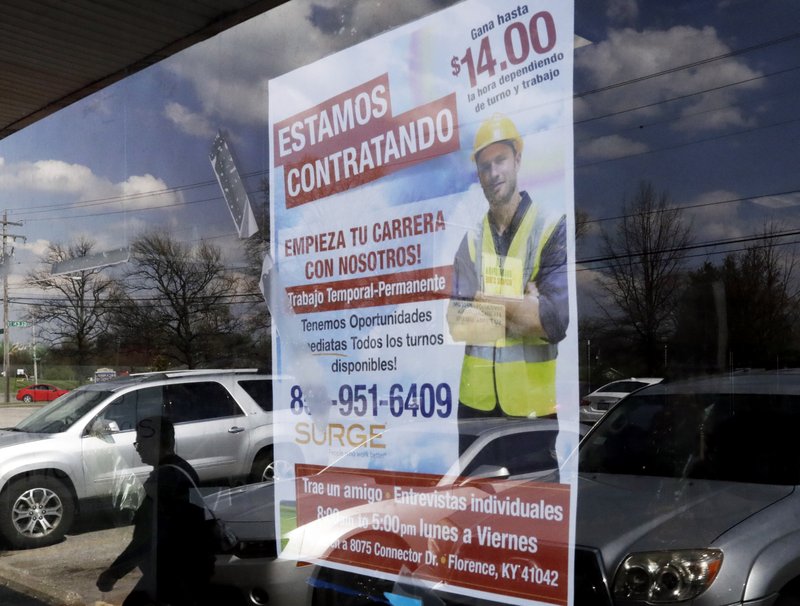
One of President Donald Trump’s priorities, low unemployment, is complicating another: curbing immigration. With the number of jobs available exceeding the number of Americans seeking jobs, employers are looking beyond the border to fill openings, and migrants are coming to the country in search of work. Hotel and restaurant owner Todd Callewaert is short more than two dozen workers this season for his Mackinac Island, Michigan, businesses. “You can’t hire a line cook right now, it’s impossible, even for 20 bucks an hour,” he said. “We usually fill the gap with visa workers, but we can’t even get those this year.” The Labor Department said Friday the unemployment rate was 3.9 percent, near the 18-year low set in May, and employers are adding jobs at a faster pace than last year. Trump has made clear employers should be trying to attract American workers through wage increases and other incentives, not filling jobs with immigrants. “Curbing immigration is essential to growing wages and ensuring available jobs go to American workers, not foreign workers,” Deputy White House Press Secretary Hogan Gidley told AP. “As immigration curbs are put into place, more and more Americans will be absorbed back into the workforce, especially those who have been left out due to poor work history or difficult life circumstances.” The administration has made it harder to come to the U.S. for work, legally or otherwise. Work visas are costly, complicated and limited. Large-scale, job-seeking migration through a porous border is long gone. This summer, the administration tried to deter would-be immigrants by adopting a “zero-tolerance” policy, prosecuting anyone caught crossing the border illegally. It resulted in nearly 3,000 children separated from their parents at the border, prompting international outrage. Trump eventually stopped the separations and the government was forced by a judge to reunify families. Still, tens of thousands of people cross the border illegally every month, many seeking asylum from violence. But often, they’re coming because of the prospect of work. Dala Edilson Ba Juc traveled with his 12-year-old daughter from Guatemala to the U.S. — only to be separated from her at the border, reunited and deported home. Sitting at an immigration facility in Guatemala City, he said they came for work. “I needed to try to make a better life for my family — I wanted them to have what I could not give them here,” he said. “There are many, many jobs in the States.” Frandy Frauville, 35, joined a wave of Haitians who came to Tijuana, Mexico, from Brazil starting in 2016. Brazil welcomed Haitians after Haiti’s 2010 earthquake. But Frauville grew tired of factory jobs in Mexico that barely allowed him to cover rent and food, and, lured by the prospects of better work and joining family near Miami, he lined up with his 5-year-old daughter at a border crossing. “I’ll take whatever I can get,” he said. And Rolando Antonio Bueso Castillo, who was separated from his infant Johan, was making only $10 a day driving a bus in Honduras. He was captured and quickly deported while his baby remained behind for five months. He said he made the difficult journey because his brother had secured him a job in Maryland. Someday, he said, his son will ask what happened, and why he had left him in the United States. “I’ll tell him the truth,” he said. “We thought we had a good plan to give him a better life.” Many economists say immigration is actually good for the economy and migrants provide complementary work to the jobs Americans do. Despite Trump’s push, some business owners say they just can’t get Americans to fill the jobs. A.J. Erskine is vice president of Cowart Seafood Group, which includes a Virginia oyster company of about 75 employees. “Entry-level is $12.13 an hour,” he said. “I don’t know how much higher we can go without being unable to sell oysters. He said the company has been in business more than a half-century, and that despite massive recruiting efforts, it can’t keep American workers. “We just don’t have people who want to come out and shuck oysters at 3 in the morning — and I don’t blame them,” he said. Some, like Erksine, are willing to front the cost associated with a temporary work visa, about $4,000 per employee for workers holding down seasonal, non-agricultural jobs. But the visas are capped at 66,000 annually, with 15,000 additional visas this year. Economists say the hiring crunch could be eased in part by increasing the number of visas available during boom years, and decreasing them when the economy is weaker. But those changes must be made by Congress. Those turning a blind eye to immigration status, or hiring people with false identification face crackdowns by immigration agents. Agents raided an Ohio garden center in the summer, arresting 114 workers and accusing the business of unlawful employment of aliens and fraud. “It’s not worth the risk for us to hire people we’re not sure about,” said Callewaert, the hotel and restaurant owner. But a lack of staff means the business can’t grow, he said. Rep. Dave Brat, R-Virginia., a member of the conservative House Freedom Caucus, said he did not think the lower unemployment rate would weaken efforts to restrict illegal immigration. “The irony is it makes it more transparent what the real problem of the labor market is,” Brat said, citing about 10 million Americans not in the labor force. He called for improved education and imposing work requirements on food stamp recipients to get more of these Americans in the workforce. “The answer is not to bring in 10 million folks from abroad,” Brat said. Republished with the permission of the Associated Press.
On Long Island, Donald Trump to speak on immigration, gang violence
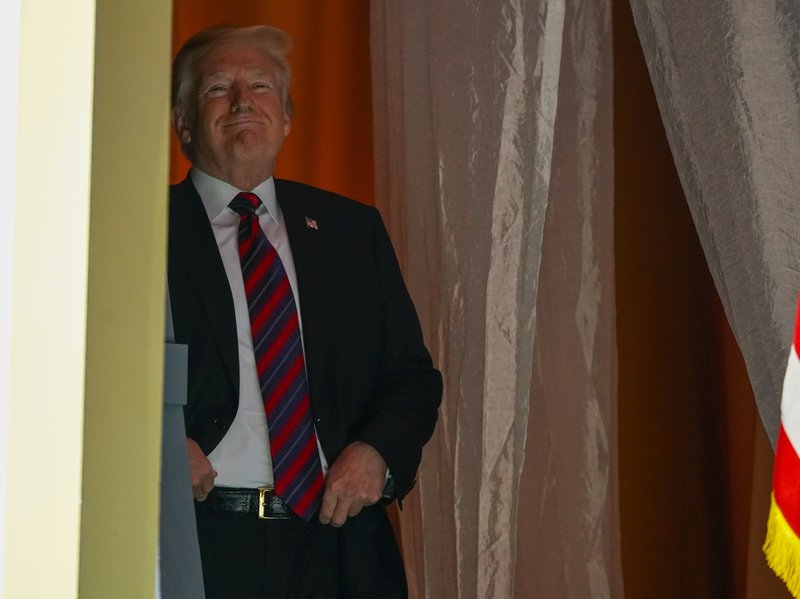
President Donald Trump will hold a roundtable discussion on Long Island on illegal immigration and gang violence that the White House is calling a “national call to action for legislative policy changes.” White House spokesman Hogan Gidley says the discussion with law enforcement and local leaders will focus on “immigration loopholes” that he said allows the violent MS-13 gang “to infiltrate our communities.” MS-13 has been blamed for some two dozen killings on Long Island the past two years. Trump has used the violence to bolster the urgency of his push to overhaul the nation’s immigration laws, as well as the need to build a border wall with Mexico and enact tougher travel restrictions. He’s also argued for loosening restrictions on law enforcement, encouraging police officers whom he calls “rough guys.” “Please don’t be too nice,” he told law enforcement officials in a similar trip he made to Long Island last July. Trump will also attend a fundraiser in his hometown of New York City on Wednesday evening. The 75-person dinner is expected to raise $5 million for the Republican National Committee and the president’s re-election campaign, the RNC said. Last week, Trump used the word “animals” to describe some people who enter the country illegally, in response to a comment about MS-13. The president says he will continue to use the term in referring to the gang. The White House also released a fact sheet Monday morning titled “WHAT YOU NEED TO KNOW ABOUT THE VIOLENT ANIMALS OF MS-13.” MS-13, or the Mara Salvatrucha, is believed by federal prosecutors to have thousands of members across the U.S., primarily emigrants from Central America. It has a stronghold in Los Angeles, where it emerged in the 1980s as a neighborhood street gang, but it also has wreaked violence in cities and suburbs across the U.S., including Long Island. The president has called for an end to “catch-and-release” policies, which generally refers to the release of unauthorized immigrants while they await immigration hearings instead of keeping them in custody as well as changes ro rules governing minors and asylum seekers. Gidley claims the policies “allow hundreds of thousands of illegal and unauthorized aliens to gain entry and release in the United States” and says they can be exploited by violent gangs, cartels, and drug dealers. Many teenagers on Long Island have been held on gang accusations, swept up in various federal investigations. But Immigration advocates say some teenagers arrested in the crackdowns in New York and California have been unfairly tied to gangs and wrongly held at detention centers. Republished with the permission of the Associated Press.
