
Richard Shelby: Border security talks ‘stalled’ as clock ticks
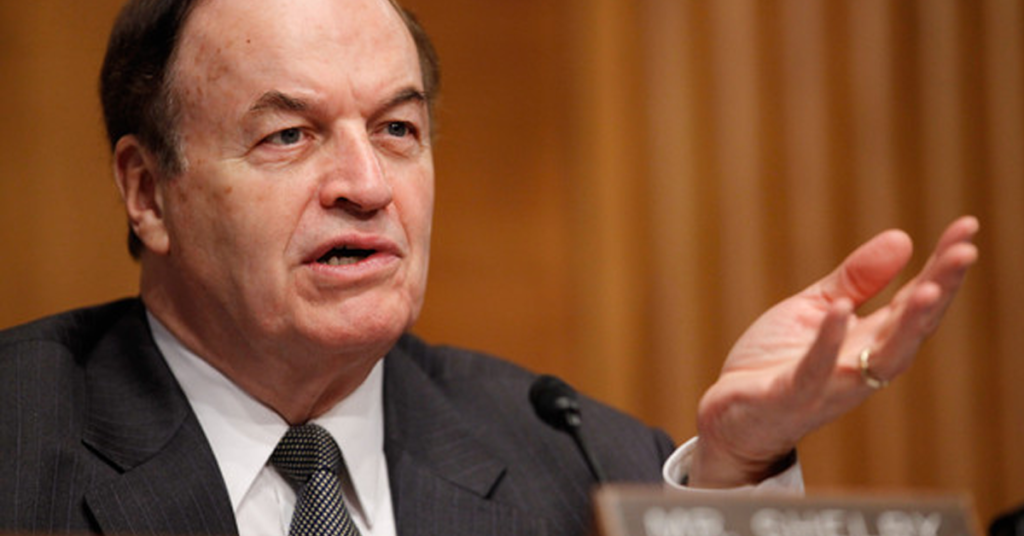
Bargainers clashed Sunday over whether to limit the number of migrants authorities can detain, tossing a new hurdle before negotiators hoping to strike a border security compromise for Congress to pass this coming week. The White House wouldn’t rule out a renewed partial government shutdown if an agreement isn’t reached. With the Friday deadline approaching, the two sides remained separated by hundreds of millions of dollars over how much to spend to construct President Donald Trump’s promised border wall. But rising to the fore was a related dispute over curbing Customs and Immigration Enforcement, or ICE, the federal agency that Republicans see as an emblem of tough immigration policies and Democrats accuse of often going too far. Acting White House chief of staff Mick Mulvaney, in appearances on NBC’s “Meet the Press” and “Fox News Sunday,” said “you absolutely cannot” eliminate the possibility of another shutdown if a deal is not reached over the wall and other border matters. The White House had asked for $5.7 billion, a figure rejected by the Democratic-controlled House of Representatives, and the mood among bargainers has soured, according to people familiar with the negotiations not authorized to speak publicly about private talks. “You cannot take a shutdown off the table, and you cannot take $5.7 (billion) off the table,” Mulvaney told NBC, “but if you end up someplace in the middle, yeah, then what you probably see is the president say, ‘Yeah, OK, and I’ll go find the money someplace else.’” A congressional deal seemed to stall even after Mulvaney convened a bipartisan group of lawmakers at Camp David, the presidential retreat in northern Maryland. While the two sides seemed close to clinching a deal late last week, significant gaps remain and momentum appears to have slowed. Though congressional Democratic aides asserted that the dispute had caused the talks to break off, it was initially unclear how damaging the rift was. Both sides are eager to resolve the long-running battle and avert a fresh closure of dozens of federal agencies that would begin next weekend if Congress doesn’t act by Friday. “I think talks are stalled right now,” Sen. Richard Shelby, Republican-Ala., said Sunday on “Fox News Sunday.” ″I’m not confident we’re going to get there.” Sen. Jon Tester, Democrat-Mont., who appeared on the same program, agreed: “We are not to the point where we can announce a deal.” But Mulvaney did signal that the White House would prefer not to have a repeat of the last shutdown, which stretched more than a month, left more than 800,000 government workers without paychecks, forced a postponement of the State of the Union address and sent Trump’s poll numbers tumbling. As support in his own party began to splinter, Trump surrendered after the shutdown hit 35 days without getting money for the wall. This time, Mulvaney signaled that the White House may be willing to take whatever congressional money comes — even if less than Trump’s goal — and then supplement that with other government funds. “The president is going to build the wall. That’s our attitude at this point,” Mulvaney said on Fox. “We’ll take as much money as you can give us, and we’ll go find the money somewhere else, legally, and build that wall on the southern border, with or without Congress.” The president’s supporters have suggested that Trump could use executive powers to divert money from the federal budget for wall construction, though it was unclear if he would face challenges in Congress or the courts. One provision of the law lets the Defense Department provide support for counterdrug activities. But declaring a national emergency remained an option, Mulvaney said, even though many in the administration have cooled on the prospect. A number of powerful Republicans, including Senate Majority Leader Mitch McConnell, Republican-Ky., have also warned against the move, believing it usurps power from Congress and could set a precedent for a future Democratic president to declare an emergency for a liberal political cause. The fight over ICE detentions goes to the core of each party’s view on immigration. Republicans favor tough enforcement of immigration laws and have little interest in easing them if Democrats refuse to fund the Mexican border wall. Democrats despise the proposed wall and, in return for border security funds, want to curb what they see as unnecessarily harsh enforcement by ICE. People involved in the talks say Democrats have proposed limiting the number of immigrants here illegally who are caught inside the U.S. — not at the border — that the agency can detain. Republicans say they don’t want that cap to apply to immigrants caught committing crimes, but Democrats do. In a series of tweets about the issue, Trump used the dispute to cast Democrats as soft on criminals. He charged in one tweet: “The Border Committee Democrats are behaving, all of a sudden, irrationally. Not only are they unwilling to give dollars for the obviously needed Wall (they overrode recommendations of Border Patrol experts), but they don’t even want to take muderers into custody! What’s going on?” Democrats say they proposed their cap to force ICE to concentrate its internal enforcement efforts on dangerous immigrants, not those who lack legal authority to be in the country but are productive and otherwise pose no threat. Democrats have proposed reducing the current number of beds ICE uses to detain immigrants here illegally from 40,520 to 35,520. But within that limit, they’ve also proposed limiting to 16,500 the number for immigrants here illegally caught within the U.S., including criminals. Republicans want no caps on the number of immigrants who’ve committed crimes who can be held by ICE. As most budget disputes go, differences over hundreds of millions of dollars are usually imperceptible and easily solved. But this battle more than most is driven by political symbolism — whether Trump will be able to claim he delivered on his long-running pledge to “build the wall” or newly empowered congressional Democrats’ ability to thwart him. Predictably each side blamed
Pentagon: Several thousand more troops to the Mexico border
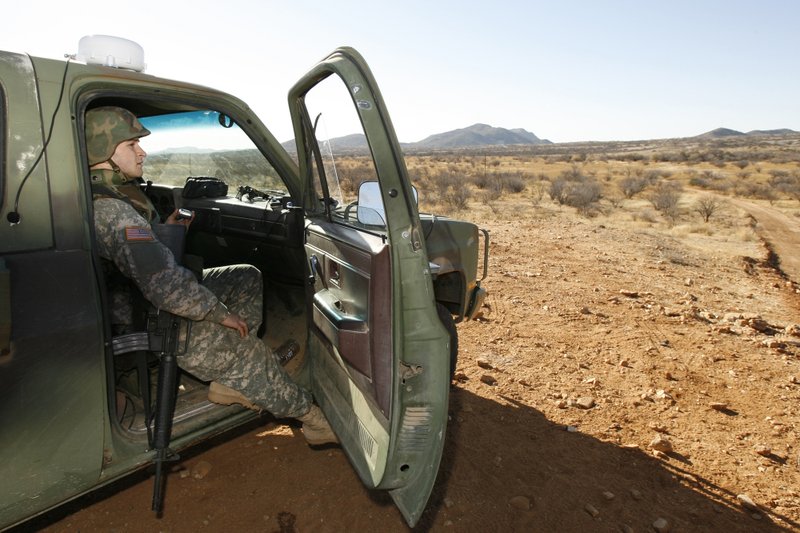
The U.S. will be sending “several thousand” more American troops to the southern border to provide additional support to Homeland Security, Acting Defense Secretary Pat Shanahan said Tuesday, providing for the first time new estimates for the next phase of the military aid. He said the troops will mainly be used to install additional wire barriers and provide a large new system of mobile surveillance and monitoring of the border area. Plans call for about 150 more miles of concertina wire placed mainly in the gaps between ports of entry. It’s still not clear how many of the roughly 2,400 active duty forces currently working the border mission will go home and not be replaced, but the Pentagon estimates that the total number of forces deployed there over the coming months will exceed 4,000. The Department of Homeland Security, said Shanahan “has asked us to support them in additional concertina wire and then expanded surveillance capability, and we’ve responded with, you know, here how many people it would take and this is the timing and mix of the people to support that.” The Pentagon has approved an extended U.S. deployment to the border through the end of September. As of Tuesday, officials were still working out exactly how many forces would be deployed and what units should be tapped. Shanahan’s comments came as members of the House Armed Services Committee grilled top defense and military leaders about the border mission, demanding details on its impact on military readiness and whether needed training and other jobs were not being done as a result. “What impact does it have to readiness to send several thousand troops down to the Southern border? It interrupts their training. It interrupts their dwell time,” said Rep. Adam Smith (Democrat-Washington) and chairman of the committee. Vice Adm. Mike Gilday, the director of operations for the Joint Staff, told the panel that he does not believe military readiness has been significantly affected. He said some units have missed training opportunities because of the deployment and others have seen less time at home between deployments than the military likes to provide. But he said there is an effort to rotate service members in and out of the mission every six to eight weeks in order to minimize any impact. He also said that the estimated cost of deploying the active duty personnel through the end of this month is $132 million, and the cost of deploying about 2,300 National Guard members to the border last year was $103 million and is estimated at $308 million for this year. Lawmakers said they’ve been told that troops remained at the border after they had finished their missions and had nothing to do, and that many were spending time playing sports or watching videos. Gilday acknowledged some trial and errors as the mission progressed. “We have tried really hard not to waste people’s time down to the border,” he said. “There have been occasions when we haven’t gotten it right with respect to numbers. And maybe we had excess capacity, but we have brought those people back when we realized that we have made a mistake.” Officials said that the majority of the troops going to the border now will be combat engineers and support forces who will install the additional barriers. The expectation is that they will complete the job in a few months and then be able to go home. Many of the others will start the expanded surveillance mission which will last at least through September. The U.S. forces will use Customs and Border Protection vehicles that have mounted surveillance cameras and they will monitor the border. Troops are not allowed to do any law enforcement duties, so they can’t detain migrants crossing the border. Instead, when they see suspicious activity they will alert CBP agents, who would then deal with any migrants involved. Republished with permission from the Associated Press.
Trump administration moves to detain migrant families longer
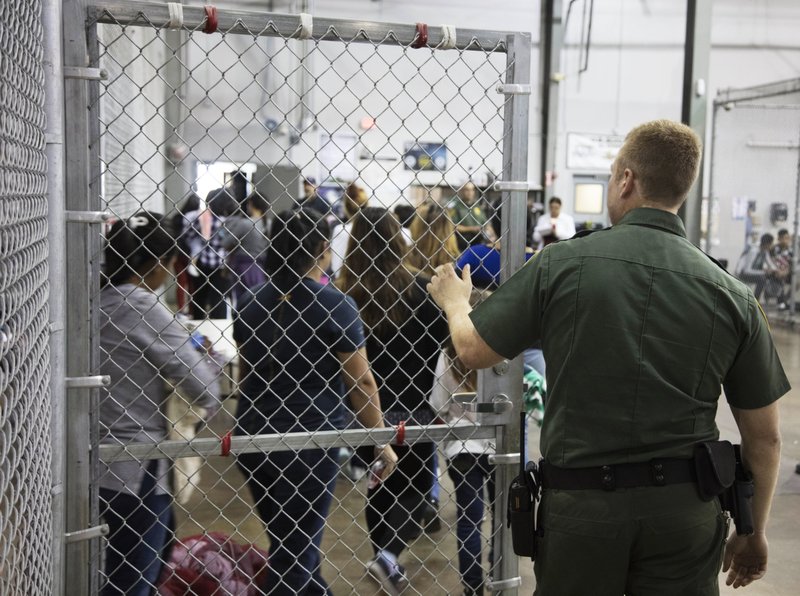
The Trump administration on Thursday moved to abandon a longstanding court settlement that limits how long immigrant children can be kept locked up, proposing new regulations that would allow the government to detain families until their immigration cases are decided. Homeland Security officials said that ending the so-called Flores agreement of 1997 will speed up the handling of asylum requests while also deterring people from illegally crossing the Mexican border. The move angered immigrant rights advocates and is all but certain to trigger a court battle. “It is sickening to see the United States government looking for ways to jail more children for longer,” said Omar Jadwat, director of the ACLU’s Immigrants’ Rights Project. “And it’s yet another example of the Trump administration’s hostility toward immigrants resulting in a policy incompatible with the most basic human values.” Vehicles leave the Port Isabel Detention Center, June 26, 2018, which holds detainees of the U.S. Immigration and Customs Enforcement in Los Fresnos, Texas. [Photo Credit: AP Photo/David J. Phillip, file] The Flores agreement requires the government to keep children in the least restrictive setting possible and to release them generally after 20 days in detention. For decades, because of those restrictions, many parents and children caught trying to slip into the country have been released into the U.S. while their asylum requests wind their way through the courts — a practice President Donald Trump has decried as “catch-and-release.” Such cases can drag on for years, and some immigrants stop showing up to court when it becomes clear their asylum requests are going to be denied. The newly proposed rules would allow the government to hold families in detention until their cases are completed. Homeland Security did not say how long it expects families to be kept locked up. But immigration officials say asylum cases involving detained families move much more quickly, taking months instead of years to resolve, in part because there are none of the delays that result when immigrants set free in the U.S. fail to show up for a hearing. “Today, legal loopholes significantly hinder the department’s ability to appropriately detain and promptly remove family units that have no legal basis to remain in the country,” said Homeland Security Secretary Kirstjen Nielsen. “This rule addresses one of the primary pull factors for illegal immigration and allows the federal government to enforce immigration laws as passed by Congress.” Earlier this summer, a federal judge in California rejected a request by the administration to modify Flores to allow for longer family detention. Administration officials say they have the authority to terminate the agreement, but that is likely to be tested in court. “They’re essentially trying to accomplish through regulation what the court has not permitted,” said Peter Schey, an attorney representing immigrant children under the settlement and president of the Center for Human Rights and Constitutional Law. Schey said he will oppose any effort to end Flores unless the government proposes acceptable regulations for the safe and humane treatment of youngsters. “Refugee children should not be made to suffer inhumane treatment and prolonged and unnecessary detention just to satisfy President Trump’s zero-tolerance approach to refugees seeking safety in the United States from the violence and lawlessness spreading throughout Central America,” Schey said. The Flores agreement became an issue last spring when the Trump administration adopted a policy of prosecuting anyone caught crossing illegally. More than 2,900 children were separated from their parents, prompting international outrage. Trump eventually backed down and stopped the separation of families. A federal judge ordered parents and children reunited; the government has said it has done so in as many cases as it could. But hundreds of parents were deported without their children, while others had criminal records or were not parents as they claimed to be, officials said. Because under Flores children cannot be kept in criminal custody with their parents or held for an extended period in immigration detention, the administration has limited options when dealing with families. The government operates three family detention centers that can hold a total of about 3,000 people, and they are at or near capacity. Homeland Security and the Pentagon have been working to line up as many as 12,000 beds for family members at Fort Bliss in El Paso, Texas. Another request for up to 20,000 beds for youngsters who arrive without parents is also pending. The ACLU’s Jadwat accused the administration of “trying to expand the trauma it is inflicting on these children in order to deter other people from coming to the country.” Rachel Prandini, staff attorney at the Immigrant Legal Resource Center, said the erosion of Flores’ protections would subject children to worsening conditions. “The Trump administration’s decision to exacerbate the suffering of kids, by imposing the cruel policy of family separation earlier this summer and now with this rule change to vastly expand detention of children, is horrifying,” she said. The regulations will be published in the Federal Register and will be subject to a 60-day public comment period starting Friday. Republished with the permission of the Associated Press.
Incoming Homeland Security Secretary Elaine Duke has served 3 presidents

Elaine Duke, set to become acting U.S. homeland secretary on Monday, has the rare distinction of serving in high-level positions in three administrations. She was DHS undersecretary for management from 2008 to 2010, tapped by President George W. Bush and kept on by President Barack Obama. After she headed her own business consulting firm in the Washington area for seven years, President Donald Trump nominated her to return to government as deputy secretary and the Senate approved her appointment 85-14 without a hitch. Homeland Security Secretary John Kelly, who was named Trump’s chief of staff on Friday, said at a conference last week that Duke was “a wonderful woman” with deep experience in government. He said her biggest assignment as the sprawling department’s No. 2 official was to bring more efficiency. Duke will manage an annual budget of more than $40 billion and 240,000 employees. Created in 2003 in the aftermath of the terror strikes on the World Trade Center and Pentagon, Homeland Security comprises more than 20 agencies, from the Coast Guard and Secret Service to the Federal Emergency Management Agency and Immigration and Customs Enforcement. Customs and Border Protection is the nation’s largest law enforcement agency with 60,000 employees. Her positions and background have largely kept her out of the spotlight on some of the department’s most politically charged assignments, like deporting people in the country illegally and deciding who enters the country by air, land and sea. “She is a very experienced person when it comes to all aspects of management in the federal government,” Michael Chertoff, Homeland Security secretary during the final years of the Bush administration, said Friday night. “In terms of ability to understand all management elements in the department, you couldn’t find a better person.” Duke began her government career 28 years ago as an Air Force contracting officer and worked in the Navy, the Federal Railroad Administration and the Smithsonian Institution before joining Homeland Security in 2008. Sen. Rob Portman, a Republican who represents Duke’s home state of Ohio, said at her confirmation hearing this year that she was an expert on contracting, property management, organizational change and human resources. Republished with permission of The Associated Press.
U.S. to expand pool of people targeted for deportation

The Trump administration is greatly expanding the number of people living in the U.S. illegally who are considered a priority for deportation, including people arrested for traffic violations, according to agency documents released Tuesday. The documents represent a sweeping rewrite of the nation’s immigration enforcement priorities. The Homeland Security Department memos, signed by Secretary John Kelly, lay out that any immigrant living in the United States illegally who has been charged or convicted of any crime — and even those suspected of a crime — will now be an enforcement priority. That could include people arrested for shop lifting or minor traffic offenses. The memos eliminate far more narrow guidance issued under the Obama administration that resources strictly on immigrants who had been convicted of serious crimes, threats to national security and recent border crossers. Kelly’s memo also describes plans to enforce a long-standing but obscure provision of the U.S. Immigration and Nationality Act that allows the government to send some people caught illegally crossing the Mexican border back to Mexico, regardless of where they are from. One of the memos says that foreigners sent back to Mexico would wait for their U.S. deportation proceedings to be complete. This would be used for people who aren’t considered a threat to cross the border illegally again, the memo said. It’s unclear whether the United States has the authority to force Mexico to accept foreigners. That provision is almost certain to face opposition from civil libertarians and officials in Mexico. Historically, the government has been able to quickly repatriate Mexican nationals caught at the border but would detain and try to formally deport immigrants from other countries, routinely flying them to their home countries. In some cases, those deportations can take years as immigrants ask for asylum or otherwise fight their deportation in court. The memos do not change U.S. immigration laws, but take a far harder line toward enforcement. The pair of directives do not have any impact on President Barack Obama‘s program that has protected more than 750,000 young immigrants from deportation. The Deferred Action for Childhood Arrivals remains in place though immigrants in the program will be still be eligible for deportation if they commit a crime or otherwise are deemed to be a threat to public safety or national security, according to the department. Republished with permission of The Associated Press.
Homeland Security pick cites securing border as top priority
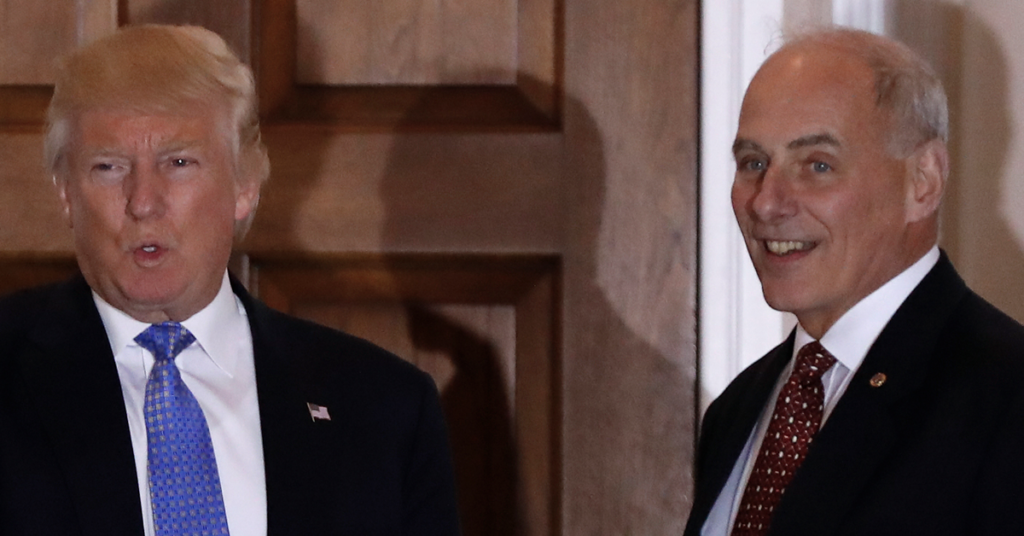
Donald Trump‘s choice to lead the Department of Homeland Security says closing the border to the “illegal movement of people and things” will be his top priority if confirmed. Retired Marine Gen. John Kelly outlined his priorities in a detailed questionnaire to senators. The questionnaire was released Tuesday ahead of Kelly’s confirmation hearing later in the day. Kelly embraced Trump’s call for a strong border wall with Mexico. He said that achieving his top priority of shutting down illegal movements “starts with physical obstacles like a border wall and supporting surveillance technologies.” He said it will also require constant patrols from federal and local law enforcement. The confirmation of Kelly, a retired Marine general, is almost assured, but members of the Senate Homeland Security and Governmental Affairs Committee will likely use the hearing to debate the tough immigration and border security policies that were centerpieces of Trump’s presidential campaign. Kelly is one of several retired generals tapped for top positions by Trump. That has raised some concerns about undue military influence in his administration, weakening the American tradition of civilian control of government. But Kelly is widely respected by Democrats and Republicans alike, and his military experience is applicable to his Homeland Security role. He’s the former head of the military’s Southern Command, based in South Florida, which routinely works with the Department of Homeland Security to combat human trafficking and drug smuggling. The military command has also partnered with Immigration and Customs Enforcement, a part of Homeland Security, to help rescue unaccompanied child immigrants trying to make their way from Central America to the United States alone. In the questionnaire, Kelly said he is committed to telling “truth to power.” The commitment addresses concerns that some lawmakers have about the president-elect’s willingness to take in points of view that clash with his own. Kelly told the committee that his that his greatest successes during 40-plus years in the military are: “taking care of my people, speaking ‘truth to power,’ and successfully completing every mission I have ever been assigned.” He said he has worked with many senior U.S. officials during his career. “I never hesitated to disagree with any of them, or make difficult recommendations when appropriate,” Kelly said. Also, in newly released ethics disclosures, Kelly said that if confirmed he will resign positions with multiple consulting and government contractor firms and defense contractor DynCorp. Kelly listed his salary with DynCorp, a company awarded a 2016 contract from DHS to train Immigration and Customs Enforcement agents, as more than $166,000. In a statement prepared for the Senate hearing, Republican chairman Ron Johnson of Wisconsin praised Kelly as having a “deep knowledge and understanding of the grave security threats facing our nation and the sacrifices that are required to keep us safe.” Kelly joined the Marine Corps in 1970. He is a battle-hardened, blunt-talking veteran who served three tours in Iraq. He was also the highest-ranking officer to lose a child in combat in Iraq or Afghanistan. His son, Marine 1st Lt. Robert Kelly, was killed in November 2010 in Afghanistan. Kelly would be the fifth person to lead the department, which includes agencies that protect the president, respond to disasters, enforce immigration laws, protect the nation’s coastlines, stop drug smuggling and secure air travel. Kelly, in his statement for the committee, said he has a “profound respect for the rule of law” and as secretary “will always strive to uphold it.” That is likely to resonate with Republicans, who have complained that President Barack Obama has been too lax in his enforcement of immigration laws and have generally supported Trump’s proposals. Trump has vowed to deport millions of immigrants living in the U.S. illegally, focusing first on criminals. Kelly is likely to be asked his views on how to accomplish that. Trump pledged during the campaign to build a border wall – and have Mexico pay for it – though since winning the White House he has softened his stance on both the kind of barrier he wants and how it will be financed. Last week, Republicans suggested the wall could be paid for from regular spending legislation authorized by Congress. Trump insists that Mexico would reimburse the United States for the costs, but Mexico says it will not do so. Republish with permission of The Associated Press.
