
Richard Shelby, Gary Palmer petitioning FDA on behalf of Duchenne muscular dystrophy patient
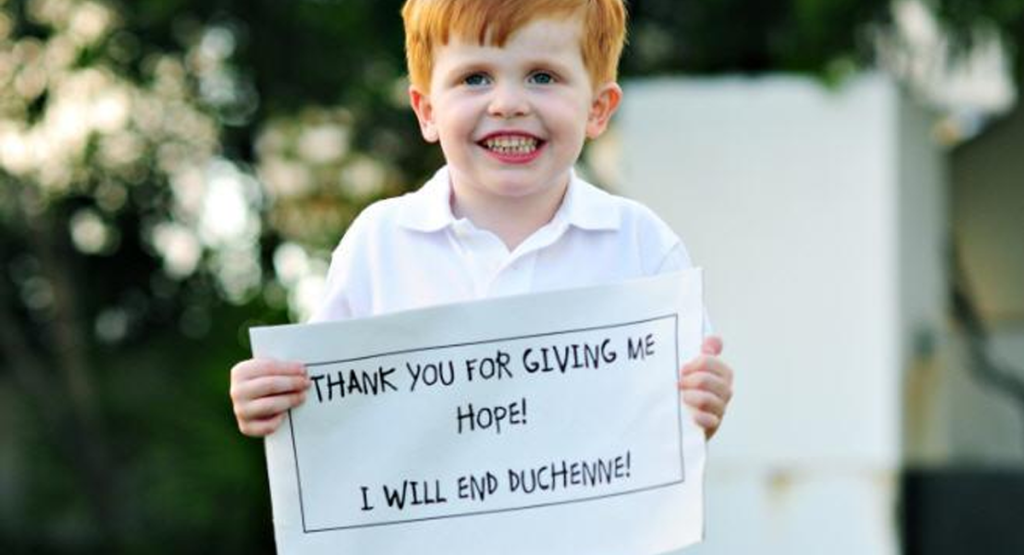
Two members of Alabama’s congressional delegation – Sen. Richard Shelby and Rep. Gary Palmer – have written the federal Food & Drug Administration on behalf of a Montgomery family whose son has Duchenne muscular dystrophy, a rare degenerative disease. The pair of lawmakers hopes to amplify the voice of Scott and Tracy Griffin, whose son Gabe Griffin suffers from Duchenne as well as terrible side effects from a class of drugs call corticosteroids, which helps delay the worst muscular effects of the disease, but does not address the ailment’s causes. Shelby and Palmer are asking for a meeting with an FDA Commissioner with the Griffins in Washington, D.C. “Sadly, Gabe’s muscles will continue to deteriorate until he can’t walk, breathe or eat by himself,” Shelby wrote in a missive co-authored by Palmer. “Without access to new treatment, these devastating effects of Duchenne will impact Gabe well before he turns twenty years old.” “Gabe is currently prescribed FDA-approved steroids with side effects of stunted growth, extreme sensitivity to light, postponed puberty, and brittle bones. However these drugs do nothing to target the underlying problem, a missing protein, which causes Duchenne.” Towards the end of getting patient feedback directly to the agency about refining available drugs, Palmer said, a meeting is in order. Griffin is the eponym of the “Gabe Griffin Right to Try Act” signed into law by Gov. Robert Bentley in June, which removes restrictions on the prescription of experimental drugs if willing patients sign a waiver which releases the state from liability. The Griffin family responded to an FDA public comment invitation earlier this summer, where according to a release from their foundation Hope for Gabe, they submitted remarks that reflect a range of views which include: Opposition to randomized placebo-controlled trials for Duchenne patients, with a reminder that the FDA’s own website states that ‘a child should not be deprived of a treatment in a clinical trial that is necessary for the child’s health;” A request for the FDA to use its authority to approve [experimental drugs] Eteplirsen and Drisapersen and accelerate the approval of subsequent and follow-on drugs using the same underlying approach; A request for the FDA to encourage an effort to collect and publish data regarding the size of different subgroups of patients within the Duchenne and related dystrophinopathy communities; and Support for the FDA’s authority to use “fewer, smaller, or shorter clinical trials for the intended patient population or targeted subpopulation without compromising or altering the high standards of the FDA for the approval of drugs.” Palmer formally requested a meeting for the Griffins with an FDA agent “at a mutually convenient time in the future.”
Support Right to Try Act: Give hope for Gabe
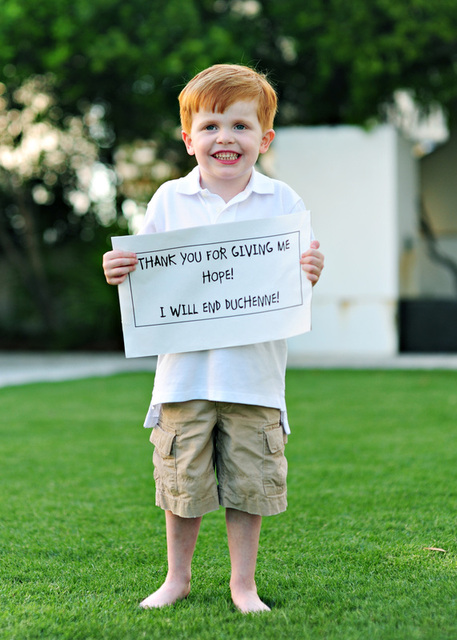
A lot of time is spent in both Montgomery and Washington, D.C., on unimportant things. On Thursday’s Alabama House calendar there was House Bill 286 to designate the Queen Honey Bee as the official agricultural state insect of Alabama. Occasionally, however, there comes legislation that will change a life and in this case possibly save a life. The Right to Try Act, Senate Bill 357 was sponsored by state Senators Cam Ward, Clay Scofield, Greg Reed, Priscilla Dunn, Jacob Thomas, “Jabo” Waggoner and Larry Stutts and House Bill 463 was sponsored by state Rep. April Weaver. It would “authorize a terminally ill patient to use a drug or device that has completed phase 1 of a clinical trial under certain conditions.” On the website Hope for Gabe, Scott and Traci Griffin describe their family’s story this way, “With one phone call on June 6, 2008, our hopes, plans, and dreams changed forever. Our beautiful 3-year-old twin boy, Gabe Griffin, was diagnosed with a terminal disease called Duchenne. We did not realize it at the time, but this disease has no cure and is tremendously underfunded.” When I heard Gabe’s story last year I was changed and determined to help where I could and now I’m asking for you to help as well. As a mother, I can’t imagine the enormous weight that Gabe’s parents or any parents of a child with a terminal illness feels. What’s worse is the idea that anyone can be told by their child’s healthcare provider that there is treatment available but that the government is in the way is more crushing. We need to encourage our members to pass these important acts and thank the bill sponsors for their commitment to young Gabe and those like him. You can learn more about Duchenne on the Hope For Gabe website.
