
Paul Ryan elected 62nd House speaker
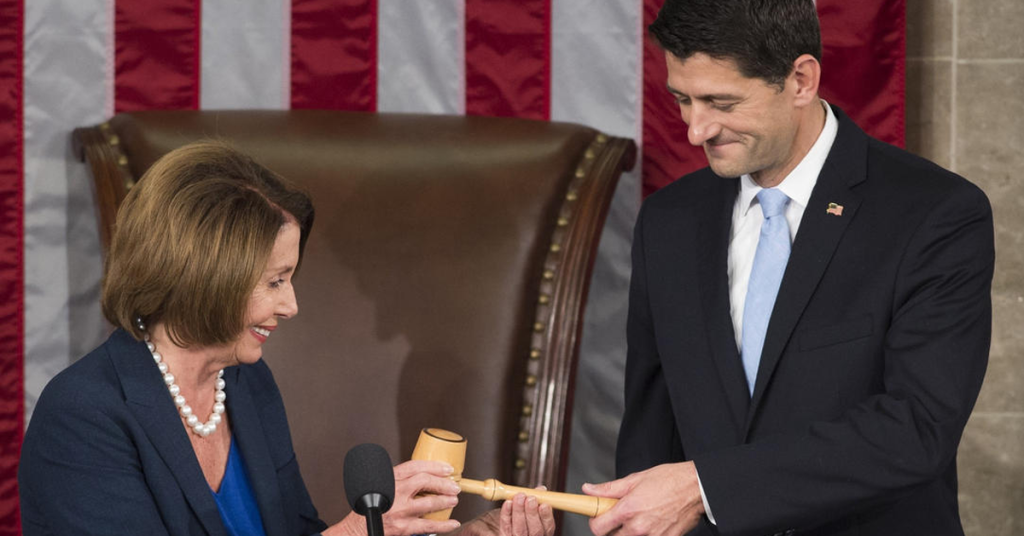
It’s a big day for Rep. Paul Ryan. The U.S. House of Representatives welcomes the Wisconsin Republican as the 62nd speaker of the House. Largely a formality – after House Republicans nominated him for the position on Wednesday afternoon – Ryan won the support of 236 House members during Thursday morning’s vote. After cinching the position, Ryan arrived on the House floor to a sea of applause. There both Republicans and Democrats joined in congratulating him on his position before House Minority Leader Nancy Pelosi, a California Democrat, passed the gavel his way. “It’s not till you hold this gavel and stand in this spot and look out and see all 435 members of the House – as if all of America was sitting right in front of you,” Ryan began his first speech as House Speaker. “It’s not till then that you feel it: the weight of responsibility, the gravity of the moment.” Ryan continued, “I never thought I’d be the Speaker. But early in my life, I wanted to serve in the House. I thought the place was exhilarating – because here, you could make a difference. If you had a good idea and worked hard, you could make it happen. You could improve people’s lives. To me, the House represented the best of America: the boundless opportunity to do good.” The GOP’s vice-presidential nominee in 2012 and the current chairman of the House Ways and Means Committee, the new House Speaker began his Capitol Hill career as a legislative aide in 1992 and won his Wisconsin House seat in 1998, at 28. At just 45 years old, the reluctant leader is the youngest speaker since 1869.
Mess awaits as Paul Ryan prepares to ascend to House speaker
The honeymoon might be over before it even begins for House Speaker-in-waiting Paul Ryan when he is elevated to the top job this week. The Wisconsin Republican, on track to prevail in secret-ballot GOP elections Wednesday and in a full House vote Thursday, would take over at a moment of chaos notable even for a Congress where crisis has become routine. Lawmakers are barreling toward a Nov. 3 deadline to raise the federal borrowing limit or face an unprecedented government default, and there’s no plan in sight for averting it. Crucial highway funding authority is about to expire, requiring a short-term extension that no one supports. And early December will bring the next chapter in the government shutdown wars, with a must-pass deadline for spending legislation a ripe opportunity for brinksmanship. It’s all happening amid fierce fighting among Republicans, on Capitol Hill and in the presidential campaign, as angry voters demand change and establishment-aligned politicians do battle with outsiders and hard-liners. This is the atmosphere that produced Ryan’s candidacy for speaker after the incumbent, Rep. John Boehner, R-Ohio, announced his resignation under conservative pressure, and Majority Leader Kevin McCarthy, R-Calif., abruptly bowed out of competition for Boehner’s job. That led party leaders to draft a reluctant Ryan. Now Ryan, the GOP’s 2012 vice presidential nominee, will face immediate – and perhaps competing – tasks: passing must-do debt and spending bills likely to be opposed by a majority of Republicans, even while he attempts to unite a badly fractured House GOP. “I don’t know that it’s going to be the honeymoon suite. It might be some economy version,” said Rep. Matt Salmon of Arizona, one of the conservative rebels who forced Boehner out by threatening what would have amounted to a vote of no confidence on the House floor. But Salmon and other Republicans said Ryan would get leeway for how he navigates the immediate crises he inherits, including the debt ceiling, if it’s not dealt with before he assumes the speakership. “If we get six months down the road and nothing’s really changed, if we get eight months down the road and nothing’s really changed, then I think it’s, ‘Everybody needs to get a helmet’ time,’ ” said GOP Rep. Mark Amodei of Nevada. “There’s a reason John Boehner decided to resign.” After announcing his surprise plans last month to leave Congress on Oct. 30, Boehner expressed a desire to “clean the barn” of messy must-pass legislation, rather than leave it for his successor. The debt limit was at the top of the list, given the impending deadline and the reluctance of most Republicans to pass an increase without accompanying spending cuts the White House is ruling out. But Boehner has yet to announce his approach, after leadership backtracked on tentative plans to get the ball rolling with legislation linking a debt limit increase to deep spending cuts and a balanced budget plan. That bill faced certain rejection in the Senate, and partly as a result was looking short of votes among House Republicans. Now, though GOP leaders won’t yet say so, it seems inevitable that the House will end up voting on a “clean” debt ceiling increase devoid of spending cuts or other attempts at reform. Such legislation would pass with almost entirely Democratic votes. As of now GOP leaders are claiming they may not even be able to muster the 30-odd Republicans who would be needed to get it through. It’s a situation certain to provoke howls from the GOP base, especially if it ends up being the first item on a newly installed Speaker Ryan’s to-do list. Although most GOP lawmakers, including tea party-backed conservatives, seem inclined to give Ryan a pass, the same may not be true of voters egged on by conservative talk radio and outside groups. “If we have to do a clean debt limit vote on the first day … if certain people want to say that’s a signal of things to come, that it’s more of the same, that’s kind of unfair,” said GOP Rep. Tom Rooney of Florida. Ryan formalized his candidacy for speaker only after winning the support of the three major caucuses in the House GOP, representing moderate Republicans, mainstream conservatives and hard-liners. But his support from the latter group, the Freedom Caucus that pushed Boehner to the exits, will be contingent on making good on promises of changes to House rules and procedures, aimed generally at including rank-and-file lawmakers in decision-making and opening up the legislative process. Ryan’s speakership will rise or fall largely on whether he can make a sustained peace with the obstreperous Freedom Caucus, which has routinely banded together to bring down leadership-backed legislation it opposes or force confrontation on issues like immigration or trade. For now, at least some of the hard-liners are sounding an optimistic tone of unity for the House GOP. “For several years we’ve been dealing with eating crumbs off the table,” said Salmon, a Freedom Caucus member. “Now we’ve got the opportunity to sit at the table and actually partake in the meal and I think that’s a new day.” Republished with permission of the Associated Press.
