
Katie Britt: Human trafficking is modern-day slavery, and it’s time to end it

While the spike in violent crime nationwide last year has rightfully grabbed headlines, one heinous crime wave continues to go relatively under the radar. Human trafficking, already the second-largest criminal industry in the world at $32 billion annually, is also the fastest-growing. While this might seem like a distant problem to our state, the reality is that human trafficking is hitting Alabama communities and some of the most vulnerable among us every day. Human trafficking cases have been reported all across our state, from Montgomery and Birmingham to Fort Payne, Huntsville, Albertville, and Guntersville to Dothan and Mobile. The Alabama Human Trafficking Task Force, which brings together public and private sector stakeholders to address the critical issue in the Yellowhammer State, hosted its 8th annual Human Trafficking Summit this past Friday. This is a prime example of the type of awareness and education initiatives that are needed to bring attention, resources, and solutions to the professionals that have the greatest opportunity to help end human trafficking in Alabama, as well as the general public – who can also play a significant role in spotting and reporting signs of human trafficking. As defined by the Trafficking Victims Protection Act of 2000, human trafficking – referred to as Modern Day Slavery – can take the form of both labor trafficking and sex trafficking. Traffickers gain complete control of their victims through coercion, force, or fraud. The statistics behind this barbaric criminal enterprise are difficult to think about yet important to understand. While 80% of human trafficking victims are female, males can certainly be victims, too. Additionally, members of the LGBTQ community are specifically targeted by traffickers. While many adults are victims of trafficking, the average age of entry into sex trafficking is 11-14 years for victims. Of the estimated 27 million slaves globally, approximately half are children. And two children are trafficked into sexual exploitation every single minute. Yes, you read that right. The U.S. Department of Health and Human Services details that the top sex trafficking venues include hotels, motels, truck stops, escort services, and online advertising-based platforms. For labor trafficking, the top venues reportedly include traveling sales crews, restaurant and hospitality services, domestic work, begging rings, and health and beauty services. This is a worldwide scourge, and it’s spreading across Alabama, as well. In fact, the I-20 corridor between Birmingham and Atlanta has the unenviable title of being the “Sex Trafficking Superhighway” and “America’s number one road for human sex trafficking.” While a project by The University of Alabama’s College of Social Work put the number of reported Alabama human trafficking cases to law enforcement and social workers at about 1,200 for 2017, estimates project that the annual number of victims was probably 10 times that across the state. As of 2019, the Global Slavery Index estimated that there are over 6,000 victims of human trafficking on any given day in Alabama. The brazenness and number of online ads by human traffickers in Alabama is even more startling. The College of Social Work at UA reportedly put the number of digital human trafficking ads at 641,000 in 2017 alone in Alabama. A large part of the problem with this growing crisis in the modern age is Big Tech’s unwillingness or inability to crack down on the advertisements. Meta, parent company of Facebook, just last week announced that it has reaffirmed its existing policy of allowing solicitation for human smuggling on its platforms. This effectively allows human traffickers to identify and lure especially susceptible victims. As Alabama’s next Senator, I’ll fight to end human trafficking across Alabama and our nation, and I will always support the victims of this inhumane cruelty. In the Senate, I’ll work tirelessly to ensure our incredible law enforcement and other first responders have the resources and training needed to spot trafficking and address it in their local communities. In addition to awareness and education initiatives, one major step we can and must make on the federal level is to secure our porous southern border, which is enabling and encouraging human traffickers right now. I will also push to strengthen efforts to identify, prevent, and address human trafficking in our supply chains, as well as build capacity to prevent the importation of goods produced with forced labor from places like China. We are grateful for the law enforcement officers, truckers, educators, medical personnel, and other professionals combatting trafficking in our state. And we certainly appreciate the nonprofit workers and volunteers who dedicate their time to fighting this battle. There is a long road to go to ending this conscience-shocking criminal industry. Together, we will protect the most vulnerable Alabamians and make our communities safer and stronger for our children and our children’s children. Katie Britt is a Christian conservative Republican candidate to serve as the next U.S. Senator for Alabama. An Enterprise native, Katie resides in Montgomery with her husband, Wesley, and their two children, Bennett and Ridgeway.
2 arrested when deputy spots signs of human trafficking

A traffic stop on Interstate 10 in Florida’s Panhandle led to the arrest of two men suspected of human trafficking, officials said. A Santa Rosa County Sheriff’s deputy stopped a vehicle and noticed indicators of possible human trafficking. Two teenage boys from Guatemala were inside the vehicle, the Florida Department of Law Enforcement said in a news release. The deputy called for assistance from the Florida Highway Patrol. The boys were recently smuggled into the United States from Mexico, the news release said. Agents believe the men were taking the boys to different cities in central and South Florida. “A deputy’s keen eye and immediate multiagency cooperation were instrumental in rescuing two children,” said Chris Williams, Chief of Investigations for FDLE Pensacola Regional Operations Center. Investigators said the boys were likely trafficked to the U.S. for forced labor. The victims told investigators their families each paid more than $1,000 to be smuggled into the country. The teens were told they would have to work to pay off additional travel debt, the release said. Agents arrested Frank Moreno, 39, of Odessa, Texas, and Jackson Perez-Godinez, 21, Guatemala. They are each charged with two counts of human trafficking and two counts of human smuggling. The men were booked into the Santa Rosa County Jail and were being held without bond. Attorneys for the men were not listed on court records. Republished with the permission of the Associated Press.
Martha Roby: We can all help fight human trafficking
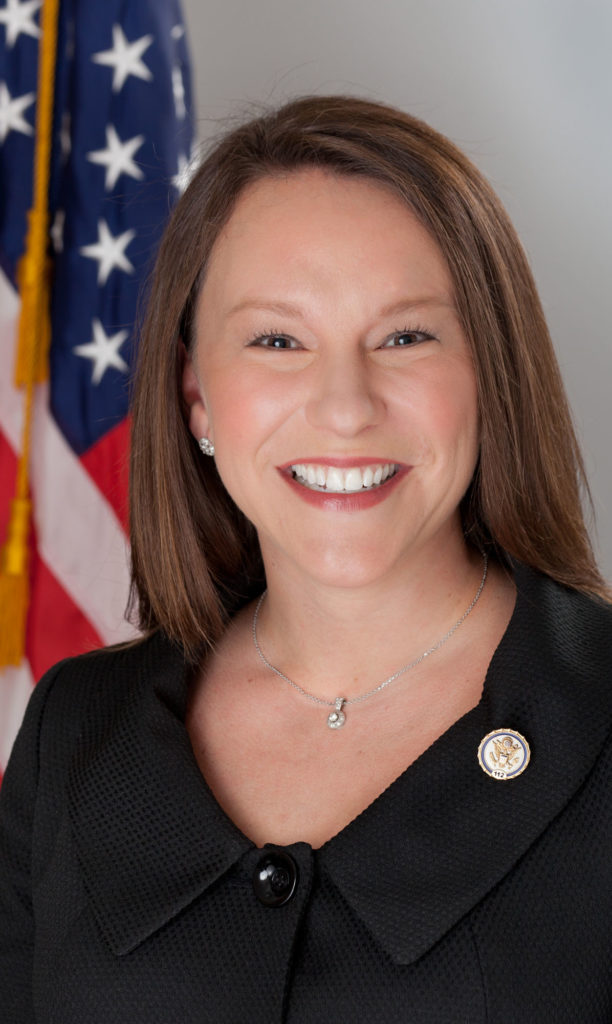
Congresswoman Roby outlines efforts to combat human trafficking.
Steve Marshall promises ‘relentless’ pursuit of human traffickers

Alabama Attorney General Steve Marshall isn’t holding back on Human Trafficking Awareness Day — he’s promising relentless pursuit of traffickers. On Friday, Marshall vowed to actively pursue traffickers across the Yellowhammer State. “Not only is human trafficking a global tragedy, it is heartbreakingly present in our own state of Alabama. Human trafficking is only behind drug trafficking as the second largest criminal industry in the world, with an all-time high of 27 million victims enslaved today,” explained Marshall. “It is hard for us to fathom that such a vile practice as slavery exists in our midst, but we must acknowledge it, be vigilant, and fight it. Right here in Alabama, our interstates–I-20, I-85, I-10 and I-65—are major routes for human trafficking. According to the National Human Trafficking Hotline at least 36 human trafficking cases were reported in the Yellowhammer State in 2018. They also report more than 107 victims of human trafficking in Alabama have called its hotline for help last year. Marshall continued, “Human trafficking involves victims being used for commercial sex or forced labor. Traffickers target those who are most vulnerable, using threats or torture to wear down its victims and render them powerless to seek help. Tragically, the average age of victims is reported to be 12 years old, and one-third of runaway children are victimized within the first two days of leaving home. “I want to remind human traffickers of the promise I made them last year: We are coming after you. This year, another promise: We will only become more relentless—until the day we End It. Marshall explained his office is working in conjunction with the Alabama Human Trafficking Task Force to put an end to human trafficking in the Yellowhammer State. “We ask that you be watchful of those who may be in trouble. Please do not try to intervene, but instead, immediately report any suspicions to law enforcement. Together, we can save victims, one at a time, and reduce the terrible suffering caused by the trafficking of our fellow human beings. You may call the National Human Trafficking Hotline at 1-888-373-7888,” Marshall concluded.
Martha Roby: Congress and the Administration are fighting human trafficking

In the spirit of welcoming a new year, I have recently spent time reflecting upon the many positive developments we experienced in our district, state, and country in 2018. Unemployment is historically low, our economy is booming, and hardworking Americans are getting to keep more of the money they earn thanks to our tax reform overhaul. 2018 brought many accomplishments that we should absolutely celebrate, but last year also included a devastating statistic that we cannot ignore: In the United States, more than 8,500 human trafficking cases were reported to the National Human Trafficking Hotline (NHTH) in the last 12 months alone. According to the NHTH, for the first half of 2018, there were 36 human trafficking cases reported in Alabama. There are nearly 25 million victims of human trafficking worldwide, and until this number is zero, we have work to do. This problem is out of control, and I am glad to report that President Trump has designated the month of January 2019 as National Slavery and Human Trafficking Prevention Month. In recent weeks, he has signed into law four bills that demonstrate our commitment to ending human trafficking and bringing these criminals to justice. Most recently, the President signed S. 1862, the Trafficking Victims Protection Reauthorization Act, which tightens criteria for whether countries are meeting standards for eliminating trafficking. Last month, President Donald Trump signed into law the Abolish Human Trafficking Act, which strengthens programs supporting survivors and increases resources for combatting this modern-day form of slavery. Here in Alabama, there are several organizations that provide shelter, transitional housing, and other services to individuals who have been trafficked. You can visit www.enditalabama.org/resources to learn more about these critical resources available to survivors in our state. The President also recently signed the Frederick Douglass Trafficking Victims Prevention and Protection Reauthorization Act. This legislation authorizes $430 million to fight sex and labor trafficking. Finally, President Trump signed into law S. 1312, the Trafficking Victims Protection Act, to establish new prevention, prosecution, and collaboration initiatives to bring human traffickers to justice swiftly. It is imperative that we hold these criminals responsible for their heinous crimes, and I am proud of this measure to do so. Human trafficking is plaguing our country, but the underground nature of the problem often makes it difficult for authorities to estimate the full scale of its impact. Still, it happens in our communities every single day in plain sight, and it is our responsibility to tackle the issue head-on. It is especially important that we act quickly when we see these crimes occur. If at any point you have information or believe you see something questionable, immediately call the Alabama State Bureau of Investigation at 334-242-1142, or file a report online at https://app.alea.gov/SAR. The National Human Trafficking Hotline can be reached by calling 1-888-373-7888. It’s hard to grasp the severity of a problem that often goes unseen, and it is especially difficult to combat it. That’s why I am very grateful that Congress and the Trump Administration are working together to make real strides towards addressing this crisis. We must continue to make it crystal clear that this horrendous form of modern-day slavery has no place in the United States and that we are committed to fighting it every step of the way. Martha Robyrepresents Alabama’s Second Congressional District. She lives in Montgomery, Alabama, with her husband Riley and their two children.
Kay Ivey signs increased penalties for human trafficking into law
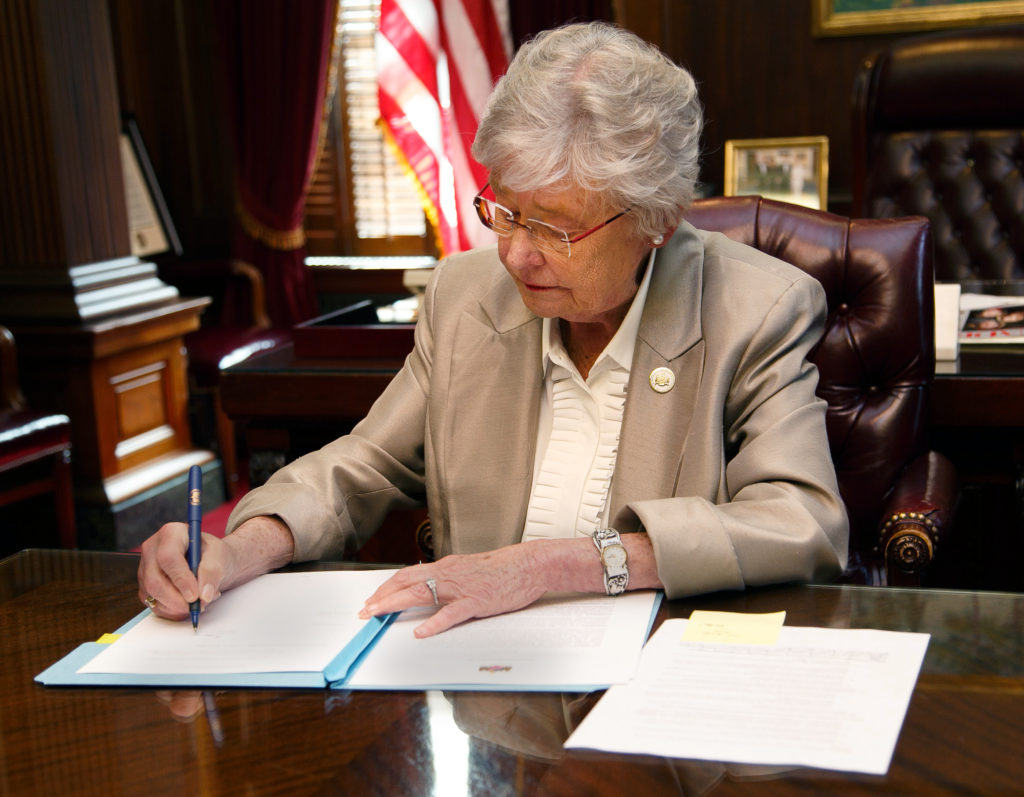
Alabama Governor Kay Ivey signed legislation on Wednesday enhancing the criminal penalties for obstructing the enforcement of the human trafficking laws in Alabama. “I was proud to be the House sponsor for a bill this last legislative session that significantly increased the penalties for human trafficking,” said Rainbow City-Republican State Rep. Mack Butler on Facebook. “This crime is on the rise in all 50 states and is a $32 billion a year industry. I’m very thankful the governor gave her quick approval and signed this bill into law.” While many Alabamians are unaware of its ongoings, sex trafficking is actively happening not only abroad, but also in Alabama. According to the National Human Trafficking Hotline at least 36 human trafficking cases were reported in the Yellowhammer State in 2017. They also report more than 111 victims of human trafficking in Alabama have called its hotline for help this year. Under the new law, a person commits the crime of human trafficking in the first degree if: He or she knowingly subjects another person to labor servitude or sexual servitude through use of coercion or deception. He or she knowingly obtains, recruits, entices, solicits, induces, threatens, isolates, harbors, holds, restrains, transports, provides, or maintains any minor for the purpose of causing a minor to engage in sexual servitude. For purposes of this section, it is not required that the defendant have knowledge of a minor victim’s age, nor is reasonable mistake of age a defense to liability under this section. A corporation, or any other legal entity other than an individual, may be prosecuted for human trafficking in the first degree for an act or omission only if an agent of the corporation or entity performs the conduct which is an element of the crime while acting within the scope of his or her office or employment and on behalf of the corporation or entity, and the commission of the crime was either authorized, requested, commanded, performed, or within the scope of the person’s employment on behalf of the corporation or entity or constituted a pattern of conduct that an agent of the corporation or entity knew or should have known was occurring. Any person who obstructs, or attempts to obstruct, or in any way interferes with or prevents the enforcement of this section shall be guilty of a Class A felony. Human trafficking in the first degree would be a Class A felony. Under the new law, a person commits the crime of human trafficking in the second degree if: A person knowingly benefits, financially or by receiving anything of value, from participation in a venture or engagement for the purpose of sexual servitude or labor servitude. A person knowingly recruits, entices, solicits, induces, harbors, transports, holds, restrains, provides, maintains, subjects, or obtains by any means another person for the purpose of labor servitude or sexual servitude. A corporation, or any other legal entity other than an individual, may be prosecuted for human trafficking in the second degree for an act or omission only if an agent of the corporation or entity performs the conduct which is an element of the crime while acting within the scope of his or her office or employment and on behalf of the corporation or entity, and the commission of the crime was either authorized, requested, commanded, performed, or within the scope of the person’s employment on behalf of the corporation or entity or constituted a pattern of conduct that an agent of the corporation or entity knew or should have known was occurring. Any person who obstructs, or attempts to obstruct, or in any way interferes with or prevents the enforcement of this section shall be guilty of a Class B felony.
Alabama Senate increases penalties for child sex traffickers
As Human Trafficking Awareness Month comes to a close, Alabama lawmakers passed a bill on Tuesday to making a lasting impact in the efforts to stop the horrific and barbaric exploitation. The Alabama State Senate unanimously passed a bill Tuesday that enhances the criminal penalties for those found guilty obstructing the enforcement of the human trafficking laws in Alabama. Sponsored by Alabaster-Republican state Sen. Cam Ward, SB179, is part of the Senate Republicans’ “Fighting for Alabama” 2018 agenda. “This issue is truly one of the most horrific blights on our society, and tragically, most often the victims are children,” Ward said. “Increasing penalties for those who would aid traffickers is a crucial step in ending this monstrous practice. This bill will hold them just as accountable as the traffickers themselves.” The bill would enhance the penalties already in place, increasing the offense to a Class A felony, with a minimum jail sentence of ten years. Under current law, the obstruction of an investigation into child trafficking is only a Class C felony – meaning conviction could result in merely one year in prison. According to the Alabama Human Trafficking Task Force, the average age of sex trafficking victims is between 11-14 years old. It is estimated that two children are trafficked into sexual exploitation every minute. “There is nothing more important than protecting the most vulnerable members of our communities, our children,” Ward added. “We want to give law enforcement every tool they need to ensure no child is ever harmed in this manner.” While many Alabamians are unaware of its ongoings, sex trafficking is actively happening not only abroad, but also in Alabama. According to the National Human Trafficking Hotline at least 36 human trafficking cases were reported in the Yellowhammer State in 2017. They also report more than 111 victims of human trafficking in Alabama have called its hotline for help this year.
Alabama mayors join Jr League Birmingham to fight human trafficking

Mayors all over Alabama are stepping up to fight human trafficking. Julia Meyers, Junior League Birmingham (JLB) chairwoman of the Anti-human Trafficking Committee, has been working tirelessly with the state legislative Human Trafficking Task Force in order to get regional government officials to proclaim January human trafficking awareness month. Mayors of Mountain Brook, Homewood, Vestavia Hills, and Hoover have all signed proclamations. “I reached out to 18 mayors in Jefferson County and immediately Over the Mountain mayors responded,” Meyers told the Over the Mountain Journal. “That, for me, was very exciting. In the areas where we think this problem isn’t going on, they are actually taking action.” “I’d like our city to know that Vestavia Hills Police Department actively participates in a task force with some of my old colleagues from my FBI days in addressing this issue,” said Vestavia Hills mayor, Ashley Curry. “We’re doing what we can and just ask that everybody look out for certain signs … if you see something that you don’t think is right, give us a call.” The city of Cullman, Ala. has also stepped up to the task with Mayor Woody Jacobs not only proclaiming January as human trafficking awareness month, but establishing January 11 as a Human Trafficking Awareness Day. “Human trafficking is a problem everywhere, even here in our community. I greatly respect the work that the Task Force has done and continues to do to help prevent this terrible crime in Cullman and Cullman County.” Newly elected Birmingham Mayor Randall Woodfin also joined Meyers in declaring January as human trafficking awareness month, as evidenced in this tweet by the Junior League of Birmingham: Junior League of Birmingham(JLB) President, Katy Roe Eldridge, and JLB Anti-Human Trafficking Chair, Julia Meyers, join Mayor Randall Woodfin as he and City Council proclaim January as “Human Trafficking Awareness Month”. Thank you for supporting JLB in this effort! pic.twitter.com/bBRq1GvkG2 — Jr. League of Bham (@JLBirmingham) January 10, 2018 “Junior League of Birmingham(JLB) President, Katy Roe Eldridge, and JLB Anti-Human Trafficking Chair, Julia Meyers, join Mayor Randall Woodfin as he and City Council proclaim January as “Human Trafficking Awareness Month”. Thank you for supporting JLB in this effort!” Birmingham is an important participant in human trafficking awareness month because of it’s closeness to the issue. Interstate I-20 between Atlanta and Birmingham is known as the Sex Trafficking Superhighway. “It cuts right there through downtown Birmingham, and what we’re finding, unfortunately with the interstate system that you and I use to get from Birmingham to Montgomery — is that people are using it to bring in girls, for example, for a short period of time. Buyers are available, and then they leave,” said David Pinkleton, fundraising chair for the Alabama Human Trafficking Task Force. Other Alabama officials have responded to the Task Force’s urges. Sen. Cam Ward introduced SB179 on Tuesday to increase the criminal punishment for those found guilty of obstruction or enforcement of current human trafficking laws. Gov. Kay Ivey is also expected to sign a proclamation later this month in observance of National Human Trafficking Awareness Month. In addition to the proclamations, Meyers is promoting the Rescue Innocence Project Gala, a fundraiser for the National Center on Sexual Exploitation. The event features guest speaker Ed Smart whose daughter was abducted in 2002 and miraculously returned to her family after nine grueling months. Smart and his daughter Elizabeth are now active voices in the fight against sexual exploitation. Although Alabama has it’s own human trafficking task force, new laws to punish those who would sexually exploit children, and lawmakers who are willing to step up and make a difference; Alabama only scores an 83.5 on the Shared Hope International report card. According to the report; “A juvenile sex trafficking victim will be identified as dependent or as a child in need of supervision rather than as delinquent, but Alabama law does not provide a statutory avenue to specialized services.” Under the Safe Harbor law, which passed in Alabama in 2016, minors who are arrested for prostitution are not sent to juvenile detention centers or convicted of prostitution. But therein lies the problem; the state of Alabama has no where else to put them. Minors are currently sent back into the situations that sent them there in the first place, or turned over to DHR. “They were denied education and have no skills. They don’t even have family to turn to.” Meyers told the Over the Mountain Journal. This is a problem Meyers and the National Center on Sexual Exploitation hopes to solve. By providing training, specialized staff, and intake facilities for minors who are victims of human trafficking; Alabama would finally have somewhere to send victims in desperate need of care. Funds collected from the Gala will go towards providing these facilities in Alabama and states around the nation.
Legislative session weekly wrap-up: Budget introduction, Medicaid work reqs, ridesharing on the move
Alabama lawmakers faced cold weather and icy roads this week as they made their way to the State House where they managed to move a handful of bills in both chambers. The Legislature has now used four of its available 30 meeting days for the 2018 Regular Session, and only 26 meeting days remain. Here are the highlights out of Montgomery this week: In the Governor’s office: Some Medicaid recipients in Alabama may be required to work. As part of her General Fund Budget proposal, Ivey instructed Alabama’s Medicaid Commissioner Stephanie Azar to develop a policy for implementing a work requirement for Medicaid receivers. All work requirements would only be applicable to “able-bodied” adults, with exemptions being made for the elderly, people with disabilities, and children. Ivey’s current plan would also require copay increases for Medicaid recipients. Her goal is to “increase efficiency and decrease costs related to Medicaid, all in an effort to be good stewards of taxpayer dollars.” Alabama’s jobless rate holds steady at record 3.5 percent low. Ivey announced on Friday that 2,093,063 people were counted as employed in December, the most ever recorded. Alabama’s preliminary, seasonally adjusted December unemployment rate is 3.5%, maintaining last month’s record rate. The new figures also indicate the Yellowhammer State is ahead of the national employment average as the U.S. jobless rate is holding at 4.1 percent. Senate news: Tripp Pittman introduces Kay Ivey’s General Fund budget. SB178, otherwise known as the proposed budget, appropriates funds for functions of government, debt service, and capital outlay for fiscal year ending September 30, 2019. According to the Governor’s office, it does so “sensibly” and “funds state government with prudence and care.” Bill to remove marriage licenses passes. The Alabama Senate approved a bill on Wednesday to remove marriage licenses and begin a new process under which probate judges would accept affidavits from couples as an official record of marriage. Under the legislation, the requirement of a ceremony to honor the marriage would be erased. The cost would be the same as the current cost of marriage licenses in the state. Bill introduced to increase penalties for human trafficking. Introduced on Tuesday, the bill would enhance the criminal penalties for obstructing the enforcement of the human trafficking laws in Alabama. Ridesharing bill on the move. The bill, which passed the Senate Tourism and Marketing Committee on Thursday, would create a ridesharing network across the state for companies and place it under the control of the Alabama Public Service Commission (PSC). A single permit issued by the PSC would then allow the companies to operate statewide under uniform regulations rather than requiring each municipality to file for their own permits and regulations. House news: Legislation proposed to scrap partisan primaries. One Alabama lawmaker wants to scrap partisan primaries in favor of open elections that would send the two top vote-getters, regardless of party affiliation, on to the general election, thus eliminating the need for run-off elections. Of special note: State Representative George Bandy dies at 72. Longtime Alabama lawmaker, State Representative George Bandy Sr. died early Tuesday morning in a Macon, Ga., hospital, according to Alabama House spokesman Clay Redden.
Cam Ward introduces bill to increase penalties for human trafficking
An Alabama state senator introduced a bill on Tuesday to enhance the criminal penalties for obstructing the enforcement of the human trafficking laws in Alabama. Alabaster-Republican State Sen. Cam Ward introduced SB179, which was cosponsored by Tom Whatley (R-Auburn) and Gerald Dial (R-Lineville). According to the Federal Bureau of Investigation (FBI), human trafficking is believed to be the third-largest criminal activity in the world. “It is a form of human slavery which must be addressed at the interagency level. Human trafficking includes forced labor, domestic servitude, and commercial sex trafficking.” “This awful crime preys predominately on children,” Ward tweeted of the bill on Wednesday. While many Alabamians are unaware of its ongoings, sex trafficking is actively happening not only abroad, but also in Alabama. According to the National Human Trafficking Hotline at least 36 human trafficking cases were reported in the Yellowhammer State in 2017. They also report more than 111 victims of human trafficking in Alabama have called its hotline for help this year. In fact, the stretch of I-20 between Atlanta and Birmingham is known as the Sex Trafficking Superhighway. “It cuts right there through downtown Birmingham, and what we’re finding, unfortunately with the interstate system that you and I use to get from Birmingham to Montgomery — is that people are using it to bring in girls, for example, for a short period of time. Buyers are available, and then they leave,” David Pinkleton, fundraising chair for the Alabama Human Trafficking Task Force told CBS 42 last year. Under existing law, human trafficking is a crime. Additionally, obstruction of the enforcement of the laws criminalizing human trafficking is a crime. Under the proposed law, a person commits the crime of human trafficking in the first degree if: He or she knowingly subjects another person to labor servitude or sexual servitude through use of coercion or deception. He or she knowingly obtains, recruits, entices, solicits, induces, threatens, isolates, harbors, holds, restrains, transports, provides, or maintains any minor for the purpose of causing a minor to engage in sexual servitude. For purposes of this section, it is not required that the defendant have knowledge of a minor victim’s age, nor is reasonable mistake of age a defense to liability under this section. A corporation, or any other legal entity other than an individual, may be prosecuted for human trafficking in the first degree for an act or omission only if an agent of the corporation or entity performs the conduct which is an element of the crime while acting within the scope of his or her office or employment and on behalf of the corporation or entity, and the commission of the crime was either authorized, requested, commanded, performed, or within the scope of the person’s employment on behalf of the corporation or entity or constituted a pattern of conduct that an agent of the corporation or entity knew or should have known was occurring. Any person who obstructs, or attempts to obstruct, or in any way interferes with or prevents the enforcement of this section shall be guilty of a Class A felony. Human trafficking in the first degree would be a Class A felony. Under the bill if a person commits the crime of human trafficking in the second degree if: A person knowingly benefits, financially or by receiving anything of value, from participation in a venture or engagement for the purpose of sexual servitude or labor servitude. A person knowingly recruits, entices, solicits, induces, harbors, transports, holds, restrains, provides, maintains, subjects, or obtains by any means another person for the purpose of labor servitude or sexual servitude. A corporation, or any other legal entity other than an individual, may be prosecuted for human trafficking in the second degree for an act or omission only if an agent of the corporation or entity performs the conduct which is an element of the crime while acting within the scope of his or her office or employment and on behalf of the corporation or entity, and the commission of the crime was either authorized, requested, commanded, performed, or within the scope of the person’s employment on behalf of the corporation or entity or constituted a pattern of conduct that an agent of the corporation or entity knew or should have known was occurring. Any person who obstructs, or attempts to obstruct, or in any way interferes with or prevents the enforcement of this section shall be guilty of a Class B felony. Rainbow City-Republican State Representative Mack Butler is expected to sponsor a similar bill in the House.
Illegal immigrant deported multiple times, trafficked son in Alabama
An illegal immigrant — who has twice been deported, once in 2011 and again in 2012 — is being held in federal custody for forcing his teenage son into a sexual relationship with a Huntsville, Ala. man in exchange for money. In 2014, the man reentered the United States, illegally smuggling his son from Honduras with him and has since forced in son into at least one sexual relationship. Madison County investigators arrested Huntsville-resident Billy Randolph Edwards in late September following an ongoing investigation by the sheriff’s office and the Department of Homeland Security. Edwards was paying money to be in a sexual relationship with the boy. He faces sex abuse, sodomy, and human trafficking with the teen. Court documents reveal a note found in Edwards’ home from the victim’s father asking Edwards to pay $25,000 even after the sexual relationship ended, threatening Edwards that he would go to the authorities. Jail records reveal Edwards posted bail the same day as his arrest. He has a hearing in Huntsville November 2. The boy’s father remains in federal custody.
Daniel Sutter: Can we end illegal immigration?
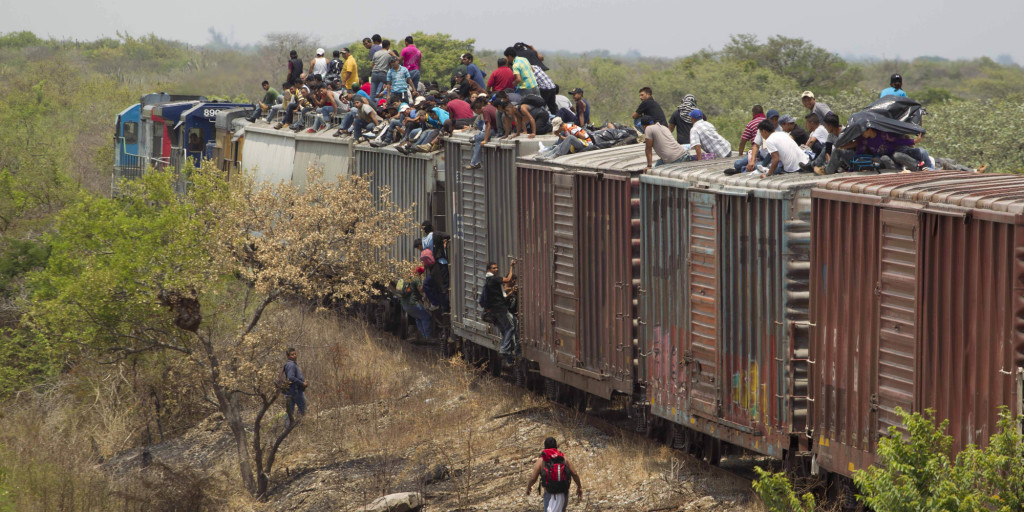
Our immigration policy prior to the election of President Donald Trump could be fairly described as strict limits on legal immigration combined with toleration of large-scale illegal immigration. Tolerated illegal immigration as policy has a number of weaknesses. I think that we should put immigration on a legal footing. We could end tolerated illegal immigration by ratcheting up enforcement of current laws, which is what President Trump promised on the campaign trail and what his efforts to complete the border wall with Mexico implies. Or we could significantly increase legal immigration. I think either option may now be preferable to hypocrisy as policy. Let’s consider the current limits on legal immigration. The wait for visas under the family reunification program can be a decade or more, while the H-1B and lottery visa programs have far more applicants than available slots (13.6 million lottery applications for 50,000 visas in 2008). Generally only graduate or professional degree holders can secure long-term work visas. Illegal immigration is also far from easy. Almost 250,000 people were deported in 2016, and over 500,000 were apprehended trying to enter illegally. The difficulty of legal or illegal entry allows human traffickers to charge huge sums for assistance: $4,000 to cross from Mexico, and $60,000 for entry from India. And this hefty payment does not guarantee entry. Over the past decade, over 3,700 people have died crossing from Mexico. Large-scale illegal immigration entails several costs. For starters, illegal immigrants are vulnerable to abuse and exploitation because they cannot turn to law enforcement for protection once here. Reports of sex trafficking and sweatshops in the U.S. frequently involve illegal immigrants. Illegality creates space for truly inhumane treatment. Persons here illegally can impose avoidable costs on Americans. For example, many illegal immigrants drive without licenses and insurance, contributing to 12% of drivers nationally who are uninsured. Billions of dollars of accident costs each year then get passed on to insured drivers. More ominously, we cannot perform background checks on illegal immigrants. While the overwhelming majority of legal and illegal immigrants come here to work, we can and should protect against entry by criminals and terrorists. We essentially outsource background checks, which should be done by the Department of Homeland Security, to the human traffickers. Perhaps most significantly, tolerated illegal immigration causes a loss of respect for the law. The law should assist people in leading productive lives. Order in society relies on people largely voluntarily following the rules regulating our behavior, like driving and paying taxes. We follow the rules because we understand that life is better when everyone does so. Furthermore, our policy basically forces Americans who just want to run businesses to break the law. Many firms must hire undocumented workers to remain cost competitive because few Americans are willing to do jobs in agriculture, food service, and construction. And some entrepreneurs get prosecuted for hiring illegal workers, which the system essentially forced them to do. Should we end illegal immigration by more enforcement or liberalizing legal immigration? One’s answer depends on one’s personal values. Each option entails costs and consequences. As the status quo demonstrates, enforcement has limits. Immigrants come here illegally because wages are much higher than in their home countries. Consequently tougher enforcement will just increase the price of illegal crossings. The cost of totally securing the border may be prohibitive. Furthermore, tougher enforcement will leave us with fewer immigrants willing to do hundreds of thousands of jobs, which might go unfilled. A lack of labor will increase prices for many of the things that we buy. And it could increase imports: we might have to import grapefruit and tomatoes from countries where labor is available. Ultimately I think increasing legal immigration will increase respect for the law and improve border security. President Trump should make sure that the border wall has a big gate to welcome people wanting to come here to work. This will put most of the human traffickers on the border out of business and allow us to focus on people still trying to enter illegally. ••• Daniel Sutter is the Charles G. Koch Professor of Economics with the Manuel H. Johnson Center for Political Economy at Troy University and host of Econversations on TrojanVision. The opinions expressed in this column are the author’s and do not necessarily reflect the views of Troy University.
