
Katie Britt: Human trafficking is modern-day slavery, and it’s time to end it
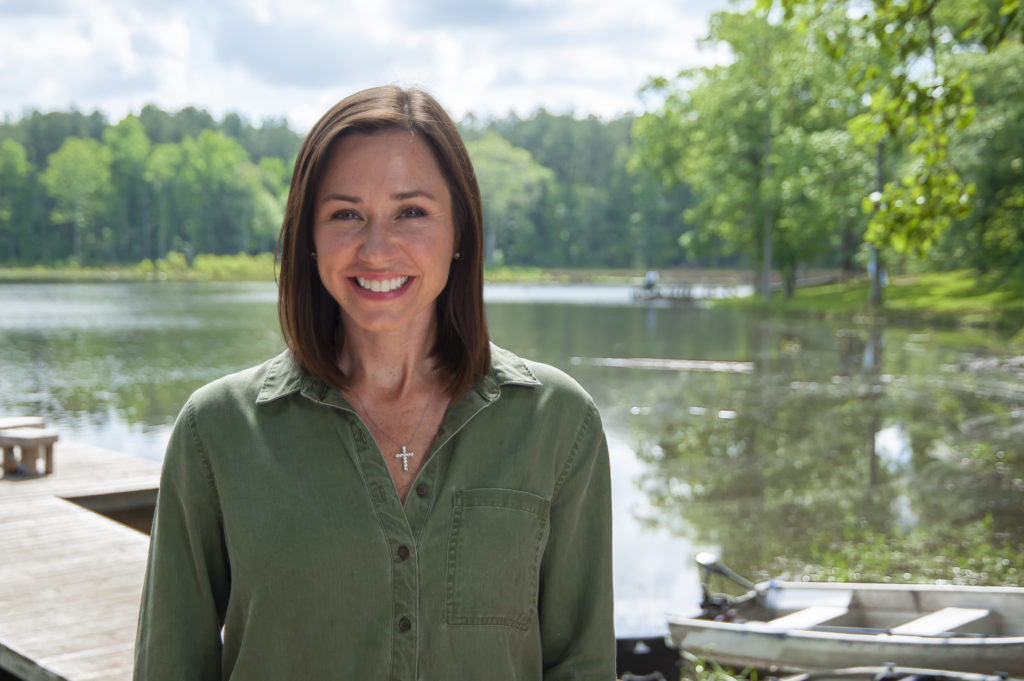
While the spike in violent crime nationwide last year has rightfully grabbed headlines, one heinous crime wave continues to go relatively under the radar. Human trafficking, already the second-largest criminal industry in the world at $32 billion annually, is also the fastest-growing. While this might seem like a distant problem to our state, the reality is that human trafficking is hitting Alabama communities and some of the most vulnerable among us every day. Human trafficking cases have been reported all across our state, from Montgomery and Birmingham to Fort Payne, Huntsville, Albertville, and Guntersville to Dothan and Mobile. The Alabama Human Trafficking Task Force, which brings together public and private sector stakeholders to address the critical issue in the Yellowhammer State, hosted its 8th annual Human Trafficking Summit this past Friday. This is a prime example of the type of awareness and education initiatives that are needed to bring attention, resources, and solutions to the professionals that have the greatest opportunity to help end human trafficking in Alabama, as well as the general public – who can also play a significant role in spotting and reporting signs of human trafficking. As defined by the Trafficking Victims Protection Act of 2000, human trafficking – referred to as Modern Day Slavery – can take the form of both labor trafficking and sex trafficking. Traffickers gain complete control of their victims through coercion, force, or fraud. The statistics behind this barbaric criminal enterprise are difficult to think about yet important to understand. While 80% of human trafficking victims are female, males can certainly be victims, too. Additionally, members of the LGBTQ community are specifically targeted by traffickers. While many adults are victims of trafficking, the average age of entry into sex trafficking is 11-14 years for victims. Of the estimated 27 million slaves globally, approximately half are children. And two children are trafficked into sexual exploitation every single minute. Yes, you read that right. The U.S. Department of Health and Human Services details that the top sex trafficking venues include hotels, motels, truck stops, escort services, and online advertising-based platforms. For labor trafficking, the top venues reportedly include traveling sales crews, restaurant and hospitality services, domestic work, begging rings, and health and beauty services. This is a worldwide scourge, and it’s spreading across Alabama, as well. In fact, the I-20 corridor between Birmingham and Atlanta has the unenviable title of being the “Sex Trafficking Superhighway” and “America’s number one road for human sex trafficking.” While a project by The University of Alabama’s College of Social Work put the number of reported Alabama human trafficking cases to law enforcement and social workers at about 1,200 for 2017, estimates project that the annual number of victims was probably 10 times that across the state. As of 2019, the Global Slavery Index estimated that there are over 6,000 victims of human trafficking on any given day in Alabama. The brazenness and number of online ads by human traffickers in Alabama is even more startling. The College of Social Work at UA reportedly put the number of digital human trafficking ads at 641,000 in 2017 alone in Alabama. A large part of the problem with this growing crisis in the modern age is Big Tech’s unwillingness or inability to crack down on the advertisements. Meta, parent company of Facebook, just last week announced that it has reaffirmed its existing policy of allowing solicitation for human smuggling on its platforms. This effectively allows human traffickers to identify and lure especially susceptible victims. As Alabama’s next Senator, I’ll fight to end human trafficking across Alabama and our nation, and I will always support the victims of this inhumane cruelty. In the Senate, I’ll work tirelessly to ensure our incredible law enforcement and other first responders have the resources and training needed to spot trafficking and address it in their local communities. In addition to awareness and education initiatives, one major step we can and must make on the federal level is to secure our porous southern border, which is enabling and encouraging human traffickers right now. I will also push to strengthen efforts to identify, prevent, and address human trafficking in our supply chains, as well as build capacity to prevent the importation of goods produced with forced labor from places like China. We are grateful for the law enforcement officers, truckers, educators, medical personnel, and other professionals combatting trafficking in our state. And we certainly appreciate the nonprofit workers and volunteers who dedicate their time to fighting this battle. There is a long road to go to ending this conscience-shocking criminal industry. Together, we will protect the most vulnerable Alabamians and make our communities safer and stronger for our children and our children’s children. Katie Britt is a Christian conservative Republican candidate to serve as the next U.S. Senator for Alabama. An Enterprise native, Katie resides in Montgomery with her husband, Wesley, and their two children, Bennett and Ridgeway.
Alabama mayors join Jr League Birmingham to fight human trafficking

Mayors all over Alabama are stepping up to fight human trafficking. Julia Meyers, Junior League Birmingham (JLB) chairwoman of the Anti-human Trafficking Committee, has been working tirelessly with the state legislative Human Trafficking Task Force in order to get regional government officials to proclaim January human trafficking awareness month. Mayors of Mountain Brook, Homewood, Vestavia Hills, and Hoover have all signed proclamations. “I reached out to 18 mayors in Jefferson County and immediately Over the Mountain mayors responded,” Meyers told the Over the Mountain Journal. “That, for me, was very exciting. In the areas where we think this problem isn’t going on, they are actually taking action.” “I’d like our city to know that Vestavia Hills Police Department actively participates in a task force with some of my old colleagues from my FBI days in addressing this issue,” said Vestavia Hills mayor, Ashley Curry. “We’re doing what we can and just ask that everybody look out for certain signs … if you see something that you don’t think is right, give us a call.” The city of Cullman, Ala. has also stepped up to the task with Mayor Woody Jacobs not only proclaiming January as human trafficking awareness month, but establishing January 11 as a Human Trafficking Awareness Day. “Human trafficking is a problem everywhere, even here in our community. I greatly respect the work that the Task Force has done and continues to do to help prevent this terrible crime in Cullman and Cullman County.” Newly elected Birmingham Mayor Randall Woodfin also joined Meyers in declaring January as human trafficking awareness month, as evidenced in this tweet by the Junior League of Birmingham: Junior League of Birmingham(JLB) President, Katy Roe Eldridge, and JLB Anti-Human Trafficking Chair, Julia Meyers, join Mayor Randall Woodfin as he and City Council proclaim January as “Human Trafficking Awareness Month”. Thank you for supporting JLB in this effort! pic.twitter.com/bBRq1GvkG2 — Jr. League of Bham (@JLBirmingham) January 10, 2018 “Junior League of Birmingham(JLB) President, Katy Roe Eldridge, and JLB Anti-Human Trafficking Chair, Julia Meyers, join Mayor Randall Woodfin as he and City Council proclaim January as “Human Trafficking Awareness Month”. Thank you for supporting JLB in this effort!” Birmingham is an important participant in human trafficking awareness month because of it’s closeness to the issue. Interstate I-20 between Atlanta and Birmingham is known as the Sex Trafficking Superhighway. “It cuts right there through downtown Birmingham, and what we’re finding, unfortunately with the interstate system that you and I use to get from Birmingham to Montgomery — is that people are using it to bring in girls, for example, for a short period of time. Buyers are available, and then they leave,” said David Pinkleton, fundraising chair for the Alabama Human Trafficking Task Force. Other Alabama officials have responded to the Task Force’s urges. Sen. Cam Ward introduced SB179 on Tuesday to increase the criminal punishment for those found guilty of obstruction or enforcement of current human trafficking laws. Gov. Kay Ivey is also expected to sign a proclamation later this month in observance of National Human Trafficking Awareness Month. In addition to the proclamations, Meyers is promoting the Rescue Innocence Project Gala, a fundraiser for the National Center on Sexual Exploitation. The event features guest speaker Ed Smart whose daughter was abducted in 2002 and miraculously returned to her family after nine grueling months. Smart and his daughter Elizabeth are now active voices in the fight against sexual exploitation. Although Alabama has it’s own human trafficking task force, new laws to punish those who would sexually exploit children, and lawmakers who are willing to step up and make a difference; Alabama only scores an 83.5 on the Shared Hope International report card. According to the report; “A juvenile sex trafficking victim will be identified as dependent or as a child in need of supervision rather than as delinquent, but Alabama law does not provide a statutory avenue to specialized services.” Under the Safe Harbor law, which passed in Alabama in 2016, minors who are arrested for prostitution are not sent to juvenile detention centers or convicted of prostitution. But therein lies the problem; the state of Alabama has no where else to put them. Minors are currently sent back into the situations that sent them there in the first place, or turned over to DHR. “They were denied education and have no skills. They don’t even have family to turn to.” Meyers told the Over the Mountain Journal. This is a problem Meyers and the National Center on Sexual Exploitation hopes to solve. By providing training, specialized staff, and intake facilities for minors who are victims of human trafficking; Alabama would finally have somewhere to send victims in desperate need of care. Funds collected from the Gala will go towards providing these facilities in Alabama and states around the nation.
Montgomery convention seeks to tackle Alabama human trafficking

A multitude of groups gathered at Embassy Suites in Montgomery Friday for a convention aimed at finding ways to end the scourge of human trafficking in the state, the majority of which threatens minors. Rep. Jack Williams (R-Vestavia Hills) chairs the state’s Human Trafficking Task Force and was on-hand to welcome guests to Friday morning’s convention. “I don’t want to sound like Donald Trump,” Williams said. “But this is going to be a great conference.” “The whole idea here is to exchange ideas and learn,” Williams continued, after brief statements from Alabama Attorney General Luther Strange. “The issue that we’re dealing with, for many, many years, was an issue in the rough part of town. This is no longer an urban problem, this is a problem that’s pushing outward.” At the conclusion of Williams’ statements, Raleigh Avenue Baptist Church Pastor Nic Seaborn made brief statements concerning his own encounters with the illegal sex trade in Alabama, which he said is taking place only blocks from his church. “The problem of sex trafficking is knocking on our door,” Seaborn said, as he rapped on the podium. “It’s like a cancer, it is spreading into our neighborhoods.” The first speaker of the day was Rachel Harper of Shared Hope International, who touched on the specifics of Alabama’s human trafficking problems and ways to tackle it. Just between January and February of this year, more than 1,900 ads for female escorts were displayed in Alabama. An Alabama State University study found that, in the 15 markets explored, one in 20 men are soliciting sex online, about 90,000 men in Alabama. “It’s everywhere,” Harper said. “It’s rampant.” Harper noted that 80 percent of buyers say jail time or public exposure would thwart their efforts, but Alabama is lacking in substantive laws to protect children and prosecute buyers. According to a presentation from Harper, Alabama is one of only a handful of states with no Commercial Sexual Exploitation of Children (CSEC) laws, meaning the state’s laws are designed to capture traffickers rather than buyers, which are more often than not complicit in the maltreatment of enslaved children. In Alabama, the law requires proof of “force, fraud or coercion” before a human trafficking charge can be levied, leaving buyers an out if they claim ignorance to the age or conditions of the purchased sex worker. Further, according to Harper’s presentation, there is no legal differentiation in the state between purchasing sex from an adult or a child. While the various groups gathered distributed handouts regarding ways to identify endangered children – inability/fear to make eye contact, may have “brand” tattoo, lying about age or possessing false identification and more – people are encouraged not to attempt to rescue victims. Human trafficking, also known as “Modern Day Slavery,” is the second largest criminal industry in the world and generates about $32 billion annually and predominantly victimizes females, a large portion of which are children. Williams plans to bring forth a “Safe Harbor Act” during this year’s legislative session, which will ensure that children ensnared by human trafficking are classified as victims rather than criminals.
