
Donald Trump rejects Puerto Rico hurricane death toll, blames Dems
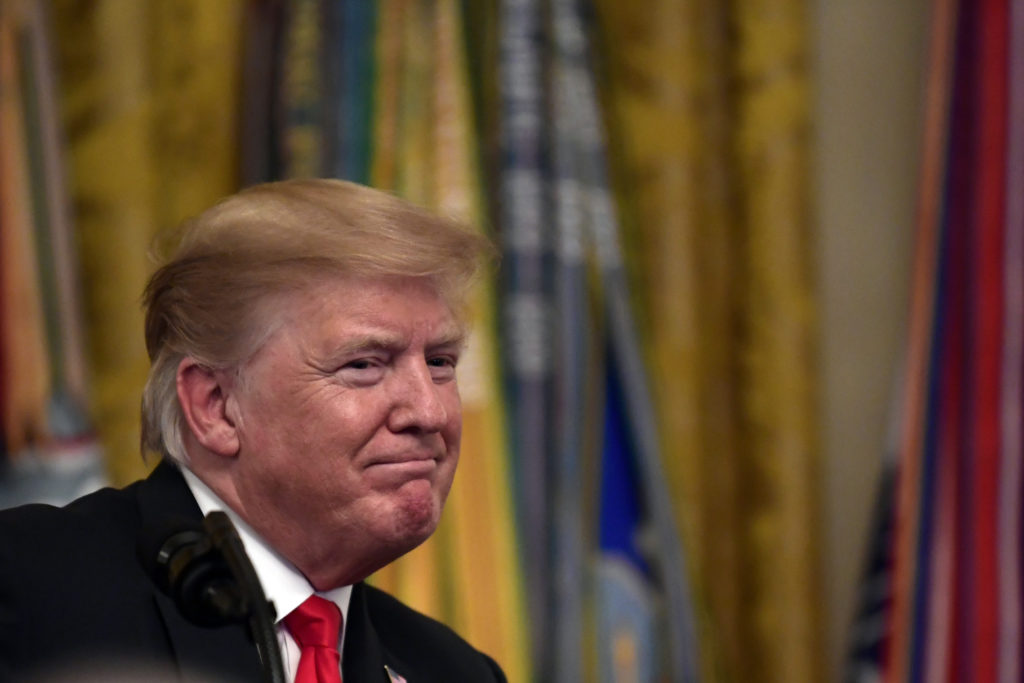
President Donald Trump on Thursday rejected the widely accepted conclusion that nearly 3,000 died in Puerto Rico from Hurricane Maria, arguing without evidence that the number was wrong and calling it a plot by Democrats to make him look bad. As Hurricane Florence approached the Carolinas, the president picked a fresh fight over the administration’s response in Puerto Rico, tweeting: “When I left the Island, AFTER the storm had hit, they had anywhere from 6 to 18 deaths. As time went by it did not go up by much. Then, a long time later, they started to report really large numbers, like 3000.” 3000 people did not die in the two hurricanes that hit Puerto Rico. When I left the Island, AFTER the storm had hit, they had anywhere from 6 to 18 deaths. As time went by it did not go up by much. Then, a long time later, they started to report really large numbers, like 3000… — Donald J. Trump (@realDonaldTrump) September 13, 2018 Trump added: “This was done by the Democrats in order to make me look as bad as possible when I was successfully raising Billions of Dollars to help rebuild Puerto Rico.” …..This was done by the Democrats in order to make me look as bad as possible when I was successfully raising Billions of Dollars to help rebuild Puerto Rico. If a person died for any reason, like old age, just add them onto the list. Bad politics. I love Puerto Rico! — Donald J. Trump (@realDonaldTrump) September 13, 2018 Puerto Rico’s governor last month raised the U.S. territory’s official death toll from Hurricane Maria from 64 to 2,975 after an independent study found that the number of people who succumbed in the sweltering aftermath had been severely undercounted. The estimate of nearly 3,000 dead in the six months after Maria devastated the island in September 2017 and knocked out the entire electrical grid was made by researchers with the Milken Institute School of Public Health at George Washington University. The study says the original estimates were so low because doctors on the island had not been trained to properly classify deaths after a natural disaster. The elderly and impoverished were hardest hit by the hurricane. Republished with permission from the Associated Press.
Donald Trump says Puerto Rico can’t get hurricane aid ‘forever’
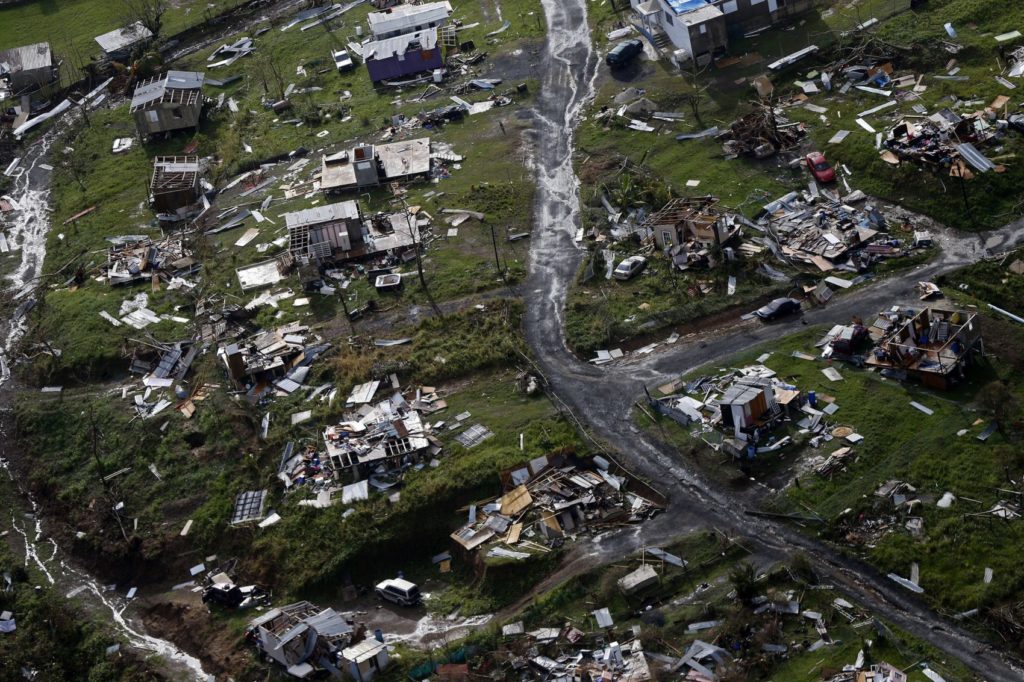
President Donald Trump lashed out at hurricane-devastated Puerto Rico on Thursday, insisting that federal help will be limited and blaming the U.S. territory for its financial struggles. The broadside came as the House headed toward passage of a $36.5 billion disaster aid package, including assistance for Puerto Rico. Puerto Rico has been reeling since Hurricane Maria struck three weeks ago, leaving death and destruction in an unparalleled humanitarian crisis. Forty-five deaths in Puerto Rico have been blamed on Maria, 90 percent of the island is still without power and the government says it hopes to have electricity restored completely by March. Trump tweeted: “We cannot keep FEMA, the Military & the First Responders, who have been amazing (under the most difficult circumstances) in P.R. forever!” In a series of tweets, the president said “electric and all infrastructure was disaster before hurricanes.” He blamed Puerto Rico for its looming financial crisis and “a total lack of accountability.” Democrats said Trump’s attacks were “shameful,” given that the 3 million-plus U.S. citizens on Puerto Rico are confronting the kind of hardships that would draw howls of outrage if they affected a state. One-third of the island lacks clean running water and just 8 percent of its roads are passable, according to government statistics. “It is shameful that President Trump is threatening to abandon these Americans when they most need the federal government’s help,” said Maryland Rep. Steny Hoyer, the second-ranking House Democrat. The legislative aid package totals $36.5 billion and sticks close to a White House request. For now, it ignores huge demands from the powerful Florida and Texas delegations, which together pressed for some $40 billion more. A steady series of disasters could put 2017 on track to rival Hurricane Katrina and other 2005 storms as the most costly set of disasters ever. Katrina required about $110 billion in emergency appropriations. The bill combines $18.7 billion for the Federal Emergency Management Agency with $16 billion to permit the financially troubled federal flood insurance program pay an influx of Harvey-related claims. An additional $577 million would pay for western firefighting efforts. Up to $5 billion of the FEMA money could be used to help local governments remain functional as they endure unsustainable cash shortfalls in the aftermath of Maria, which has choked off revenues and strained resources. House Speaker Paul Ryan, R-Wis., planned to visit Puerto Rico on Friday. He has promised that the island will get what it needs. “It’s not easy when you’re used to live in an American way of life, and then somebody tell you that you’re going to be without power for six or eight months,” said Resident Commissioner Jenniffer Gonzalez-Colon, who represents Puerto Rico as a nonvoting member of Congress. “It’s not easy when you are continue to suffer – see the suffering of the people without food, without water, and actually living in a humanitarian crisis.” The GOP-run Congress had protracted debates last year on modest requests by former President Barack Obama to combat the Zika virus and help Flint, Michigan, repair its lead-tainted water system. Now, it is moving quickly to take care of this year’s crises, quickly passing a $15.3 billion measure last month and signaling that another installment is coming next month. Several lawmakers from hurricane-hit states said a third interim aid request is anticipated shortly – with a final, huge hurricane recovery and rebuilding package likely to be acted upon by the end of the year. Republished with permission from the Associated Press.
Lawmakers seek Puerto Rico exemption to law that slowed aid
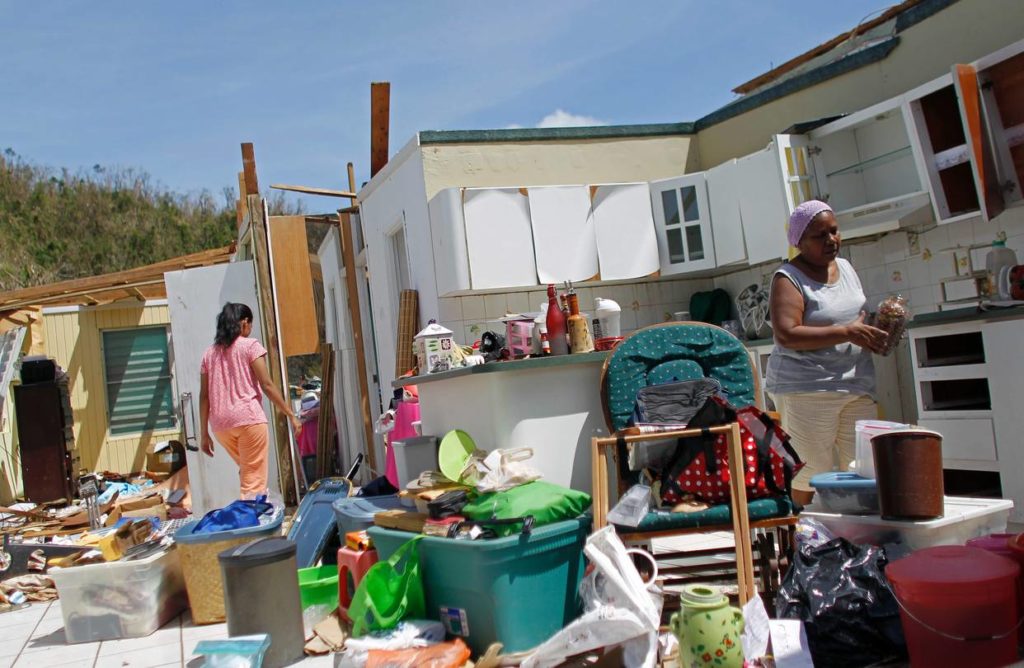
Republicans and Democrats in Congress are pushing to exempt Puerto Rico from a federal law that prohibits foreign-flagged ships from shuttling goods between U.S. ports. President Donald Trump temporarily waived the Jones Act last month amid criticism that the once-obscure law hindered relief efforts to in Puerto Rico following Hurricane Maria. The 10-day waiver expired on Sunday night and was not renewed. A spokesman for the Department of Homeland Security said an extension was not needed to support relief efforts on the island, adding that there’s “an ample supply” of U.S.-flagged vessels to ensure cargo reaches Puerto Rico. Sen. John McCain, R-Ariz., said Monday that the expiration of the Jones Act waiver added renewed urgency to his push to permanently exempt Puerto Rico from what he called an “archaic and burdensome law.” “Until we provide Puerto Rico with long-term relief, the Jones Act will continue to hinder much-needed efforts to help the people of Puerto Rico recover and rebuild from Hurricane Maria,” he said. Rep. Nydia Velázquez, D-N.Y., said the temporary waiver should be extended for at least a year while Congress debates a permanent exemption for Puerto Rico. “Significant numbers of Puerto Ricans remain displaced and still lack food, drinking water and electricity,” she wrote in a letter to Trump. “If the Jones Act is reinstated, building supplies will cost significantly more in Puerto Rico, compared to costs on the mainland. This will serve only to slow Puerto Rico’s long-term recovery.” The Trump administration initially said a waiver was not needed because there were enough U.S.-flagged ships available to ferry goods to Puerto Rico. Delays in getting relief supplies to Puerto Rico occurred because of bottlenecks that resulted from the island’s damaged ports and blocked roads, not a lack of ships, officials said. Even so, Trump waived Jones Act restrictions on Sept. 28, just as he had done to help ease fuel shortages in the Southeast following hurricanes Harvey and Irma. Rep. Pramila Jayapal, D-Wash., called the Jones Act “incredibly important to our country’s economy and to the maritime industry,” which she said supports nearly 500,000 jobs and is responsible for more than $92 billion in annual gross economic output. In Washington state, the Jones Act supports more than 16,000, mostly unionized jobs, Jayapal said. “Without these jobs, our economy would suffer tremendously,” she said. “To be clear, everywhere in the country where we have Jones Act jobs, they are better jobs, better wages and a better future for our Americans across the country,” Jayapal said last week in a speech on the House floor. Republished with permission from the Associated Press.
Trump budget chiefs says no bailout for Puerto Rico debt
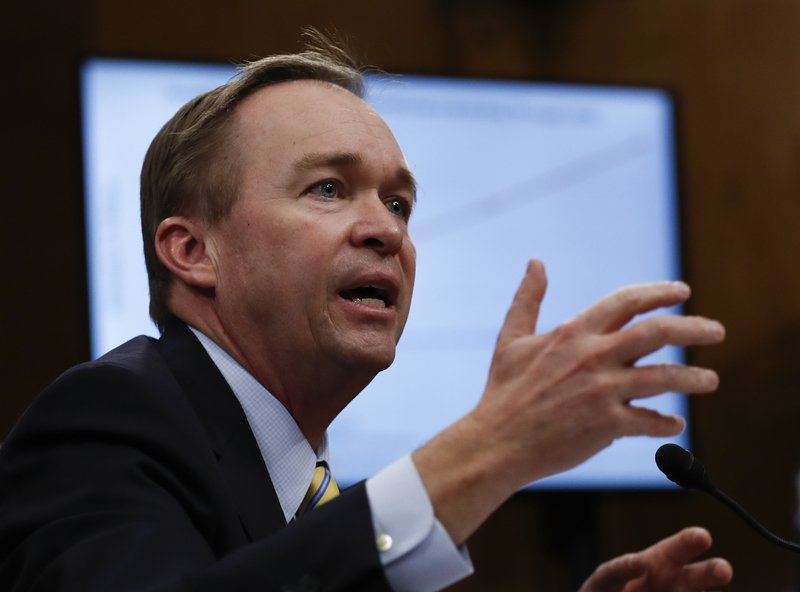
The White House’s budget director says Puerto Rico shouldn’t expect a federal bailout of its debt – even after President Donald Trump spoke of the need to “wipe out” that red ink as part of the island’s recovery after Hurricane Maria. Mick Mulvaney tells reporters that the administration plans to send Congress a disaster aid package that’ll include money for the U.S. territory. But Mulvaney says: “We are not going to be offering a bailout for Puerto Rico or for its current bondholders.” Trump told Fox News on Tuesday that federal officials would have to look at Puerto Rico’s debt structure and “we’re going to have to wipe that out.” Before the hurricane, Puerto Rico’s government was negotiating with creditors to restructure a portion of its $73 billion in debt. Republished with permission from the Associated Press.
