
Supreme Court begins election year term full of big cases
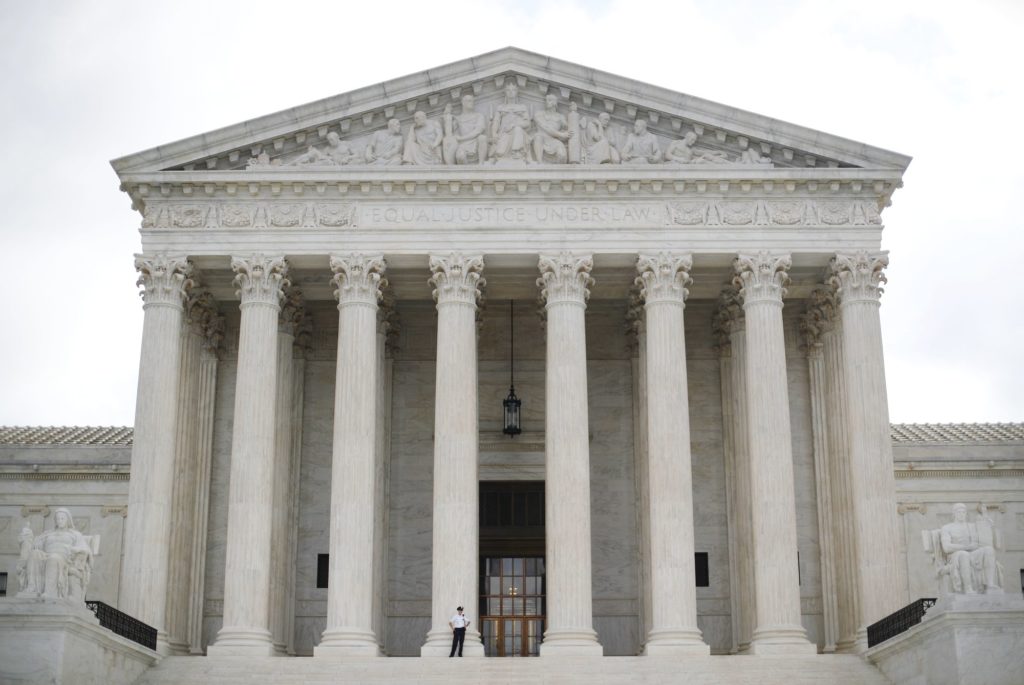
The justices are returning to the Supreme Court bench for the start of an election year term that includes high-profile cases about abortions, protections for young immigrants and LGBT rights. The court meets Monday morning for its first public session since late June. First up is a death penalty case from Kansas about whether states can abolish an insanity defense for criminal defendants. The justices also will hear arguments Monday in a challenge to a murder conviction by a non-unanimous jury in Louisiana. The term could reveal how far to the right and how fast the court’s conservative majority will move, even as Chief Justice John Roberts has made clear he wants to keep the court clear of Washington partisan politics. The court is beginning its second term with both of President Donald Trump’s Supreme Court appointees, Justices Neil Gorsuch and Brett Kavanaugh, on board. The justices could be asked to intervene in disputes between congressional Democrats and the White House that might also involve the possible impeachment of the Republican president. Roberts would preside over a Senate trial of Trump if the House were to impeach him.Its biggest decisions are likely to be handed down in late June, four months before the election. The court also could be front and center in the presidential election campaign itself, especially with health concerns surrounding 86-year-old Justice Ruth Bader Ginsburg.For now, though, the court has plenty of significant cases to deal with, including whether federal civil rights law that bars workplace discrimination on the basis of sex covers LGBT people. The justices will hear arguments Tuesday in two cases on that topic, their first foray into LGBT rights since the retirement of Justice Anthony Kennedy, who wrote all the court’s major gay-rights rulings. Next month, the fate of the Deferred Action for Childhood Arrivals program is in front of the justices. Lower courts have blocked Trump from ending the Obama-era program, which has shielded roughly 700,000 people from deportation and provided them with permits to work.During the winter, the justices will take up a challenge to a Louisiana law that would force abortion providers to have admitting privileges at local hospitals. It’s another test of whether the change in the court’s composition will result in a different outcome. With Kennedy in the majority, the court in 2016 struck down a virtually identical Texas law. By Mark Sherman Associated Press Republished with the permission of the Associated Press.
Grant money to help assist immigrant crime victims

Nearly $700,000 in federal grant money will go to a nonprofit group that works with Hispanic immigrants in central Alabama. An announcement from the governor’s office says the Birmingham-based Hispanic Interest Coalition of Alabama is receiving the money to work with immigrants who become victims of crimes in Blount, Chilton, Jefferson and Shelby counties. Advocates say immigrants are sometimes hesitant to report crimes because of fear of entanglement with law enforcement and cultural differences. A statement by Gov. Kay Ivey says crime victims deserve assistance regardless of their background, and she is praising the immigrant-aid group for its work. The money will help provide services including support groups and advocacy for crime victims. The Justice Department grant is being administered by the state. Republished with the permission of the Associated Press.
U.S. government opens new holding center for migrant children

A former oilfield worker camp off a dirt road in rural Texas has become the U.S. government’s newest holding center for detaining migrant children after they leave Border Patrol stations, where complaints of overcrowding and filthy conditions have sparked a worldwide outcry. Inside the wire fence that encircles the site are soccer fields, a giant air-conditioned tent that serves as a dining hall, and trailers set up for use as classrooms and as places where children can call their families. The long trailers once used to house workers in two-bedroom suites have been converted into 12-person dorms, with two pairs of bunk beds in each bedroom and the living room. The Department of Health and Human Services (HHS) said about 225 children are being held at the site in Carrizo Springs, with plans to expand to as many as 1,300, making it one of the biggest camps in the U.S. government system. The government said the holding center will give it much-needed capacity to take in more children from the Border Patrol and prevent their detention in stations like the one in Clint, Texas, where lawyers last month reported some 250 youngsters were being held in cells with inadequate food, water and sanitation. Of the children held at Carrizo Springs, 21 had previously been detained at Clint, HHS spokesman Mark Weber said. HHS said the Carrizo Springs location is a comfortable environment for children while they wait to be placed with family members or sponsors in the U.S. But immigrant advocates and others liken such places to child prison camps and worry that the isolated location 110 miles (180 kilometers) from San Antonio, the nearest major city, will make it more difficult to find lawyers to help the teenagers with their immigration cases. Advocates have complained that HHS’ largest holding centers — a facility in Homestead, Florida, a converted Walmart in Brownsville, Texas, and a now-closed tent camp at Tornillo, Texas — have traumatized children through overcrowding and inadequate staffing. “All of this is part of a morally bankrupt system,” said Rep. Joaquin Castro, a San Antonio Democrat. There’s also the huge cost: an average of $775 per day for each child. HHS plans to pay the nonprofit Baptist Child and Family Services up to $300 million through January to run the Carrizo Springs site. The government allowed The Associated Press to visit on Tuesday and distribute photos and video, though the AP could not show children’s faces because of privacy restrictions. Boys and girls are kept in separate buildings and follow separate schedules. They have decorated their rooms with drawings of superheroes and the flags of their home countries, including Guatemala and El Salvador. Many children smiled and greeted visitors as they walked by. Several girls knitted yarn hats and armbands. A series of tents serves as the infirmary, with nurses on hand treating a few children for lice and flu-like symptoms. Breakfast is at 7 a.m., followed by soccer, then six hours of classes in reading, writing, social studies, science and math. In reading class on Tuesday, the students were asked to practice reciting the Pledge of Allegiance in English. Many did so haltingly before the teachers called one student to the front to help lead them. After he finished, the whole class applauded. HHS said the goal is to move the children through the holding center and others like it as quickly as possible. The department said it has sped up placing children with sponsors to an average of 45 days, down from 93 days last November. One key, HHS said, was lifting a requirement that all adult relatives be fingerprinted before they can take a child out of custody. “This facility is all about unification,” said Weber, the HHS spokesman.The holding center is opening amid record numbers of family members apprehended at the border and thousands of children traveling without their parents as they flee violence and poverty in Central America. Baptist Child and Family Services also ran the Tornillo camp, which opened last summer as thousands of children were separated from their parents by Trump administration policy. Tornillo reached as many as 2,800 children until it was closed in January. BCFS CEO Kevin Dinnin said he had refused in December to take more children at Tornillo because the camp was holding them for so long, a decision that led to its closing. Dinnin said he resolved never to open another emergency center like it, but the conditions reported in Border Patrol custody changed his mind. He said he also believes HHS is doing more to process children more quickly. “At the end of the day, our philosophy has been … to keep kids out of CBP jail cells,” Dinnin said. Jonathan Ryan, executive director of the legal group RAICES, said his organization is ready to send lawyers to Carrizo Springs but is waiting for the OK from the government. “We just want to get inside and work with those kids,” Ryan said. “Children who have been detained, who have gone through deprivation and cages in Border Patrol custody, are potentially being released without ever having had access to legal advice and screening.” By Nomaan Merchant Associated Press Republished with the permission of the Associated Press.
Paul Ryan vents frustration over GOP infighting over immigration

A frustrated Speaker Paul Ryan chided House Republicans for election-season infighting over immigration that sank the party’s farm bill last week, participants in a closed-door meeting said Tuesday. Leaders said they will schedule a late- June showdown over immigration, an issue that has divided the GOP for years. “I think he said ‘gee whiz’ and ‘gosh’ and used the word ‘crap’ once,” Rep. Mark Amodei, R-Nev., said of Ryan’s remarks to his colleagues. “For Paul Ryan, ‘crap’ is pretty blue language.” At a news conference minutes later, the Wisconsin Republican criticized anew an effort by GOP moderates to force votes on immigration by collecting signatures from a majority of House members on a little-used procedure called a discharge petition. The centrists need just five more GOP signatures to prevail. “I can guarantee you a discharge petition will not make law,” Ryan said. That was a reference to the expectation that the votes moderates want to have would produce a bill that President Donald Trump would consider too weak and veto. Ryan also defended himself against calls from conservatives that he step down as speaker in the wake of the party’s anarchy over the farm bill and continuing disarray on immigration. Ryan will retire from the House after this year but has said he will remain as speaker until he leaves office. “Members drafted me into this job because of who I am and what I stand for,” he said. He was elected speaker in 2015 after conservatives pressured his predecessor, John Boehner, R-Ohio, to step aside. Asked if he would remain as speaker all year, he said, “Obviously I serve at the pleasure of the members.” He said Republicans should concentrate on the party’s legislative agenda and not have “a divisive leadership election.” Lawmakers exiting the GOP meeting said leaders told them the House would vote on immigration during the third week of June. They said it was unclear exactly what they would vote on. The centrist push for immigration votes is considered likely to result in passage of a middle-ground measure backed by a handful of Republicans and all Democrats. Ryan has said he will avert that outcome, though it’s unclear how, and many conservatives consider it intolerable. Conservative and moderate GOP leaders negotiated privately Monday over ways to win centrist support for a conservative-backed measure that for months has floundered short of the 218 Republican votes it would need for House passage. They discussed changes that would help young “Dreamer” immigrants brought to the U.S. illegally as children and immigrant farm workers stay longer in the U.S., said one lawmaker who described the private discussions on condition of anonymity. The conservative bill would currently reduce legal immigration, clear the way for construction of President Donald Trump’s border wall with Mexico and let Dreamers stay in the U.S. for renewable three-year periods. All Democrats oppose the measure and it would have no chance of clearing the more moderate Senate. The farm bill crashed last Friday, partly because of opposition by members of the hard-right House Freedom Caucus. They had refused a leadership offer for a vote on the conservative immigration bill in June, which they said was too late. Some members of the Freedom Caucus suggested it would be time for Ryan to step down should moderates prevail. “If we run an amnesty bill out of a Republican House, I think all options are on the table,” said Rep. Scott Perry, R-Pa., a member of the group, when asked if Ryan should remain as speaker if the moderates’ effort succeeds. Many conservatives say legislation protecting immigrants in the U.S. illegally from deportation is amnesty. Other Republicans said it seemed unlikely Ryan would abandon his post. They said potential successors including Majority Leader Kevin McCarthy, R-Calif., so far lack the GOP votes they’d need to win the job. The moderates need 218 signatures — a House majority — on a petition to force votes on immigration bills. With all 193 Democrats expected to sign, the moderates need five more than the 20 signatures they already have. If they succeed, a vote could occur no earlier than late June. Republished with the permission of the Associated Press.
US Supreme Court weighs case on detention of immigrants
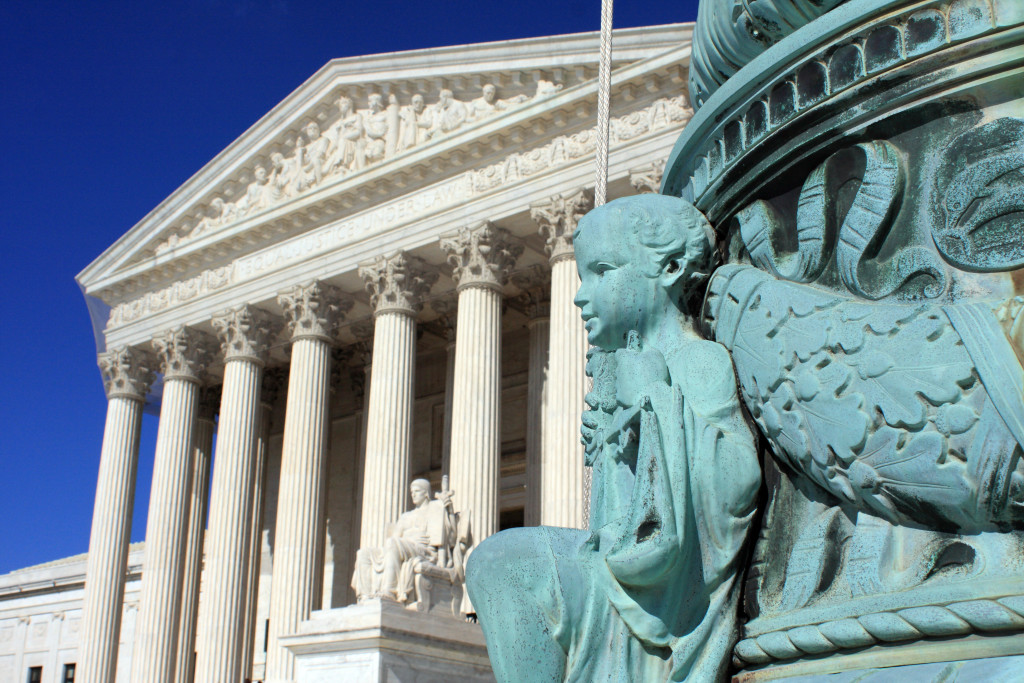
The Supreme Court wrestled for a second time Tuesday with whether the government can indefinitely detain certain immigrants it is considering deporting without providing a hearing. An eight-member court, deadlocked 4-4, didn’t decide the issue last year. Now that Justice Neil Gorsuch has joined the court he will presumably break a tie. But the justices seemed to struggle Tuesday with the issue just as they did when the case was first heard last November. The case the justices were hearing is a class-action lawsuit brought by immigrants who’ve spent long periods in custody. The group includes some people facing deportation because they’ve committed a crime and others who arrived at the border seeking asylum. The San Francisco-based U.S. Court of Appeals for the 9th Circuit ruled for the immigrants, saying they generally should get bond hearings after six months in detention, and then every six months if they continue to be held. The court said the government must show why they should remain locked up. The government disputes that ruling, a position shared by the Obama and Trump administrations. The American Civil Liberties Union, which brought the case on behalf of the immigrants, says about 34,000 immigrants are being detained on any given day in the United States, and 90 percent of immigrants’ cases are resolved within six months. But some cases take much longer. In the case before the justices, Mexican immigrant Alejandro Rodriguez was detained for more than three years without a bond hearing. He was fighting deportation after being convicted of misdemeanor drug possession and joyriding, and was ultimately released and allowed to stay in the United States. The court’s liberal justices suggested sympathy for immigrants like Rodriguez who face lengthy detention. Justice Stephen Breyer said that in most other cases where someone is detained they get a hearing to determine whether they should be freed. “We give triple ax murderers, at least people who are accused of such, bail hearings,” Breyer said. Justice Elena Kagan told the government’s lawyer, Malcolm Stewart, that asylum seekers have some constitutional rights, such as “not to be tortured, not to be placed in hard labor.” She suggested a similar right “not to be placed in arbitrary confinement.” But the appeals court’s decision that a hearing is necessary at six months and every six months thereafter seemed to give other justices pause. Justice Samuel Alito told ACLU lawyer Ahilan Arulanantham that “it’s quite something to find six months in the Constitution.” “Where does it say six months in the Constitution? Why is it six? Why isn’t it seven? Why isn’t it five? Why isn’t it eight?” he asked. A decision in the case, Jennings v. Rodriguez, 15-1204, is expected by June. Republished with permission from the Associated Press.
A torn Donald Trump still weighing fate of young immigrants

With a deadline looming, President Donald Trump remains torn over the fate of hundreds of thousands of young immigrants who were brought into the country illegally as children — a decision that will draw fury no matter what he decides. Trump railed against the Deferred Action for Childhood Arrivals program during his campaign, slamming it as illegal “amnesty.” But he changed his tune after the election, calling DACA one of the most difficult issues he’s grappled with. The program has given nearly 800,000 people a reprieve from deportations. It has also provided the ability to work legally in the U.S. in the form of two-year, renewable work permits — permits the Trump administration has continued to grant as the president has mulled the issue. On Wednesday, White House press secretary Sarah Huckabee Sanders said DACA was still the subject of “a very lengthy review” process. “It’s something that’s still being discussed and a final decision hasn’t been made,” she said. Activists on both sides of the issue — as well as some people close to the White House — strongly expect the president to announce as soon as this week that he will move to dismantle the program, perhaps by halting new applications and renewals. But others caution that Trump remains torn as he faces a September 5 deadline set by a group of Republican state lawmakers, who are threatening to challenge DACA in court if the administration does not start to dismantle it by then. To buy more time, administration officials have considered asking the lawmakers to push back their deadline by several months, according to two people familiar with the discussions. The people, who spoke on condition of anonymity because they were not authorized to publicly discuss the matter, said such a delay was seen as a chance to avoid forcing a contentious immigration showdown in Congress at the same time lawmakers are trying to pass a budget deal, raise the debt ceiling and provide relief for states devastated by Harvey. Texas Attorney General Ken Paxton, leading the group threatening to sue, is likely to be consumed by storm recovery efforts in coming months, providing possible cover for the delay. Trump could also simply ignore the deadline, leaving the matter up to Congress and the courts. Trump’s administration has been split, as usual, between immigration hard-liners such as senior policy adviser Stephen Miller and Attorney General Jeff Sessions, who argues DACA is unconstitutional, and more moderate individuals such as the president’s son-in-law Jared Kushner and daughter Ivanka, who want to protect the so-called “dreamers,” according to people close to the administration. Trump’s former chief strategist, Steve Bannon, also urged him to make good on his campaign promise to eliminate the program. “The White House is deeply split,” said former House Speaker Newt Gingrich, an informal Trump adviser. He said targeting DACA would be a dire mistake for the president, earning the ire of nearly 800,000 people, along with their friends and families. “To me, it would be utterly irrational to pick a fight over the dreamers,” Gingrich said, adding that ending the program would further hamper the president and isolate his administration. Gingrich said senior Trump aides who believe DACA is unconstitutional were using the lawsuit threat as an “excuse” to push Trump to act. Instead, he said, the president would be wise to let the deadline pass, and call on Congress to approve legislation protecting those covered by the program. Meanwhile, activists supporting DACA have been mounting a furious lobbying effort, operating phone banks, meeting with lawmakers, sending letters and staging protests to draw attention to the fate of what are undoubtedly the most sympathetic immigrants living in the country illegally. Many came to the U.S. as young children and have no memories of or connection to the countries they were born in. Trump had been unusually candid about his struggles with the issue. During a February press conference, Trump said the topic was “a very, very difficult subject for me, I will tell you. To me, it’s one of the most difficult subjects I have.” “You have some absolutely incredible kids — I would say mostly,” he said, adding, “We’re going to show great heart.” The decision comes at a fraught time for the president, who finds himself increasingly under fire, with his poll numbers hanging at near-record lows. In the wake of his much-criticized response to the violence in Charlottesville, Virginia, and continued questions about his campaign’s ties to Russia, Trump is increasingly isolated and concerned about maintaining the loyalty of his core supporters. “His campaign promise was solid. It was that he was going to end DACA. He didn’t say he was going to phase it out. He said he would end it,” said Rep. Steve King of Iowa, a vocal opponent of the program. King said he expected Trump to make good on his promise, and he rejected another possible solution: using DACA as a bargaining chip to win funding for Trump’s southern border wall or other immigration legislation. “It would be immoral to trade away our Constitution,” he said. But Mario H. Lopez, president of the conservative Hispanic Leadership Fund, which disagreed with the way the Obama administration implemented the policy, said there were no upsides to punishing people who were brought to the country through no fault of their own. “Punishing kids for what their parents did is just a bad idea,” he said. “It’s bad politics, it’s bad policy. It’s just bad all around.” If permit renewals are put on hold, more than 1,400 recipients will lose their ability to work each day, according to a report by the Center for American Progress and FWD.us, two advocacy groups. The Obama administration created the DACA program in 2012 as a stopgap way to protect some young immigrants from deportation as it continued to push for a broader immigration overhaul in Congress. Republished with permission from the Associated Press.
Martin Dyckman: What have we become in the time of Trump?

A young woman who works at a store that we frequent told of a recent experience that haunts my mind, as I hope it will yours. She and her husband were homebound from a European vacation. As the aircraft waited on the tarmac at Amsterdam’s airport, an announcement told three named passengers to identify themselves to a flight attendant. Every name, she noted, sounded Middle Eastern. Each was asked to produce a passport, even though all the passengers had had theirs inspected at least twice before boarding. A young man near her was one of those singled out. As he stood to retrieve his bag from the overhead bin, she saw that his hands were trembling. She wondered whether he would even be able to handle the bag. A flight attendant checked the passport and left him alone. He took his seat, still shaking. “Are you all right?” she asked him. “I am an American,” he said. “I was born here.” So that is what we have come to in the time of Trump. Concurrently, wire services reported that Khizr Khan, the Gold Star parent who denounced Donald Trump at the Republican convention and challenged him to read the U.S. Constitution, had canceled a speaking engagement in Canada after being told, or so it was said, that “his travel privileges are being reviewed.” His son, Captain Humayun Khan, was protecting his troops in Iraq when he was killed by a suicide bomber. “This turn of events is not just of deep concern to me but to all my fellow Americans who cherish our freedom to travel abroad. I have not been given any reason as to why,” Kahn said. The statement did not say who told him about it. The cancellation was announced on the same day as Trump signed a new travel ban targeting Muslims abroad. The speech Khan had been scheduled to give in Toronto was on the subject of “tolerance, understanding, unity and the rule of law.” Khan, a native of Pakistan, has been an American citizen for more than 30 years. There is no legal ground for the government to restrict travel of a citizen who is not accused of crime. A statement from an unnamed Customs and Border Patrol official, quoted by POLITICO, declined to comment on the specific report but asserted that the agency doesn’t contact travelers in advance of their foreign trips. It hinted, however, that questions might have been raised about Kahn having or having applied for trusted traveler status, which speeds up airport security checks. We need to know more about this. Was it only a rumor that reached Kahn? Was it a misunderstanding? Or something more sinister? In any event, it was reasonable for Kahn to be concerned in the time of Trump. Now imagine, if you will, the terror of that young man aboard the airplane multiplied millions of times by Americans with dark skins or foreign-sounding names now that ICE — Immigration and Customs Enforcement — agents are on a rampage. It’s about American citizens, not just immigrants who are unauthorized. It’s no longer about targeting only those who commit serious crimes — which they do less frequently than legal residents. It’s about expelling everyone that ICE and its allies in some police agencies can get their hands on. Even Dreamers, those brought here as children, whom a humane president had promised to suspect, are being swept up. There are an estimated 11 million of these vulnerable people, by the way and they are your neighbors. They could be the people who built your house, picked the fruit for your breakfast, and tidied up the hotel room where you last stayed. Think of our country without them. It will be a different country if Trump has his way, and it won’t be a better one. The statistics are sobering. According to a draft paper published in November by the National Bureau of Economic Research, unauthorized immigrants account for about 3 percent of our gross domestic product (GDP). Take that away, and it spells recession. They represent 18 percent of the workforce in agriculture, 13 percent of construction employment, and 10 percent of the leisure and hospitality sector. They’re particularly significant to the economies of five states: California, Texas, New York, Illinois and, yes, Florida. The report’s authors, professors at Queens College of the City University of New York, calculated that if their presence were legalized, their contribution to GDP would increase, significantly, to 3.6 percent. It would no longer be easy for unscrupulous employers to exploit them. “Documented foreign-born workers,” they added, “are about 25 percent more productive … with the same levels of education and experience,” as the undocumented. Legal workers would not replace most of them. A 2013 North Carolina study noted that “natives prefer almost any labor market outcome … to carrying out menial harvest and planting labor.” Here, from The New York Times, are some other pertinent facts: About 60 percent of the 11-million have been here 10 years or more. Many are homeowners. A third of those 15 or older live with at least one child born here, who has citizenship by birth. (Where will the foster care be for so many Trump orphans?) The proportion of the estimated 300,000 with felony records is half the rate of felons in the overall population. Illegal border crossings are declining; a growing number of unauthorized immigrants simply overstayed their visas. The 11 million are here, for the most part, because America has needed their labor and the taxes they pay. The entire nation collectively turned a willfully blind eye to the underlying illegality, just as it did during Prohibition. Every president before now has tried to reform the situation in a humane way. Only now is one catering to a minority — and they are a minority — who vote their hatreds instead of the religions they profess. A young citizen trembling on a plane. A prominent naturalized citizen who fears to travel. Parents
Donald Trump mulling fate of young immigrants protected by Barack Obama
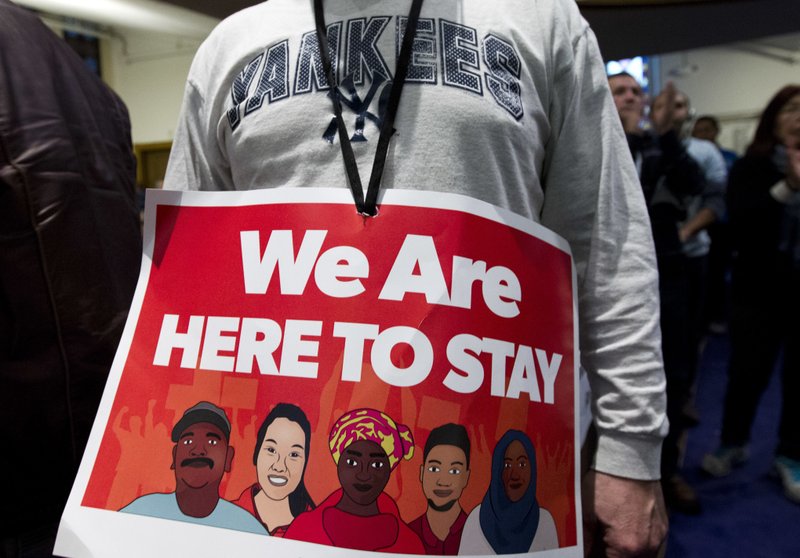
Missing from President Donald Trump‘s blitz of immigration orders was any mention of the fate of hundreds of thousands of young immigrants protected from deportation by former President Barack Obama. That omission has left immigration advocates hopeful Trump has softened his opposition to what he once derided as “illegal amnesty,” while others say he has quickly abandoned a core campaign pledge. Trump and Republican leaders in Congress have said they are working on a plan that will address the status of the roughly 750,000 immigrants currently protected by the Deferred Action for Childhood Arrivals program, or DACA. The program allows young people who were brought into the country illegally as children to stay and obtain work permits. Neither the president nor GOP leaders have disclosed details on their discussions, although both have suggested those currently protected under the program won’t face immediate deportation. Whether they will be allowed to continue to work remains unclear. Trump said this past week he intends to reveal a proposal within a month. “They shouldn’t be very worried,” Trump told ABC News. “I do have a big heart. We’re going to take care of everybody. … Where you have great people that are here that have done a good job, they should be far less worried.” Trump’s delay and the tone of his remarks were a striking shift from the campaign, when he promised to quickly end the program and labeled it amnesty. “We will immediately terminate President Obama’s two illegal executive amnesties, in which he defied federal law and the constitution to give amnesty to approximately 5 million illegal immigrants,” Trump said in August. His current approach appears to be a concession to Republican leaders in Congress who have called for a less aggressive stand on an issue that has pushed some Latino voters away from the party. House Speaker Paul Ryan, R-Wis., has argued for a more compassionate approach in dealing with these young immigrants. He has discussed the issue privately with the president and recently said congressional Republicans had been working with his team on a solution. DACA was arguably the most significant and high-profile change Obama made to immigration policy, one he said he made only after Congress failed to enact a broader immigration overhaul. The status of the immigrants, some of whom have little or no connection to the country where they were born, has been a focus of advocates’ anxiety and activism since Trump’s election. The program would be relatively simple for Trump to reverse. The policy does not require an executive order. As of Friday afternoon, the U.S. Citizenship and Immigration Services said it was still processing DACA-related work permits. Trump’s White House is thought to be divided on the how to handle the issue. Those who have pushed Trump to embrace more restrictive immigration policies, including policy guru Stephen Miller, are said to prefer a harder line. On the other side are those in the White House considered more moderate, including chief of staff Reince Priebus, who said recently that the White House is planning to work with House and Senate leadership “to get a long-term solution on that issue.” Under a draft executive order first published by the news site Vox, the government would immediately halt processing new DACA applications, but would allow those who already have work permits to retain them until they expire sometime over the next two years. Trump faces pressure from GOP hard-liners, including Iowa Rep. Steve King, who has chafed at signals from Trump aides that immigrants covered by DACA are not a priority for deportation. King said Trump risks a backlash from his political base if he doesn’t act swiftly “because it was a clear and definitive promise that he made.” “And when you hear these kinds of statements coming out of the chief of staff and some of these statements that echo pretty closely out of the speaker of the House, it gives real pause to rule of law conservatives,” he said. Advocates on both sides are expecting a compromise in which the president perhaps ends DACA and then works with Congress on a permanent solution that allows these immigrants to stay in the country. Mark Gonzales, the president of the Hispanic Action Network, said Trump’s actions this past week have “definitely shaken up our Hispanic community and the immigrant community in particular.” But he said that he’s confident from Trump and his aides’ rhetoric that young immigrants currently protected by DACA don’t have to be alarmed. “He’s making clear that even though they’re going to repeal DAPA and DACA, the Dreamers are not the ones they’re going to be coming after,” said Gonzales. “They’re going to find a way to deal with the Dreamers in the way that is not deportation. That’s good news to our ears.” Mark Krikorian, the executive director of the conservative Center for Immigration Studies, which advocates for tighter restrictions on immigration, said he’s open to a compromise in which, for instance, those previously covered by DACA receive green cards in exchange for other concessions. “Suspending DACA processing is an extremely simple, clear-cut thing. And if they haven’t done it by now, there’s some reason for it,” said Krikorian. Young people covered by the program have been glued to their televisions anytime Trump takes action, said California lawyer Sergio Garcia, who estimates he’s handled more than 15,000 DACA applications. There’s “a lot of anxiety, uncertainty of not knowing what tomorrow holds,” he said. Republished with permission of The Associated Press.
DHS freed nearly 20,000 convicted criminal immigrants in 2015

The U.S. repeatedly tried to deport Jean-Jacques, an immigrant living in the U.S. illegally, but his native Haiti wouldn’t take him back after he served more than a decade in a state prison for attempted murder and committed multiple parole violations. Each time Jacques was arrested on a parole violation, he would serve a sentence in state prison and then be released to immigration custody. At least three times, Haiti refused to take him back, so Immigration and Customs Enforcement officials in early 2015 did the same thing they do thousands of times a year – they released a violent criminal immigrant from jail. Six months later, Jacques killed Casey Chadwick, a young Norwich, Connecticut, woman. He was convicted of murder last April and faces sentencing this summer. Jacques is a textbook example of the kind of immigrant living in the U.S. illegally that the Obama administration says should be returned to his home country. But that’s easier said than done. Jacques’ release and that of more than 19,700 convicted criminal immigrants during the 2015 budget year reveal yet another complication in the country’s complicated immigration system. ICE has released tens of thousands of convicted criminals. Combined, those people have been convicted of hundreds of thousands of crimes, including murder and sexual assault. Jacques’ case and those of others like him show how difficult it would be to carry out proposals by some politicians, including presumptive Republican presidential nominee Donald Trump, which immigration officials simply find and deport the estimated 11 million immigrants living in the country illegally. ICE Director Sarah Saldana told Congress recently that agents routinely have little choice but to release immigrants. Saldana said the agency is bound by a complex set of immigration laws and rules that govern which immigrants have to be detained and which ones can be set free while they wait for an immigration judge to rule on their case. Add to the mix a yearslong immigration court backlog of nearly half a million cases and some criminal immigrants could be free in the United States for years before being ordered out of the country. “What is unacceptable is even one (release). Why did you release even one person?” Rep. Jason Chaffetz, R-Utah, asked Saldana. Saldana also told lawmakers that an effort to develop a system to alert local authorities about a newly released criminal immigrant is underway. But lawmakers and others say it’s not enough. “They got caught committing a crime. They were convicted of the crime and instead of following the law and deporting them; you released them … and they commit more crimes,” Chaffetz said. “That is so wholly unacceptable.” Chester Fairlie, the Chadwick family’s lawyer, said criminal immigrants like Jacques need to stay in jail. And the government could pressure other governments to take back their citizens, he said, by cutting aid packages or reducing the number of visas available for their citizens to come to the United States. “It seems to me that our State Department should have enough leverage to say to them, you cannot arbitrarily refuse to take these people back,” Fairlie said. The House Judiciary Committee approved a bill in March 2015 that would allow the U.S. to continue to detain some criminal immigrants even if their home country won’t take them back. It hasn’t progressed beyond the committee. But Chaffetz said the administration already can pressure foreign governments to take their citizens back by curbing visas. He said Homeland Security officials need to ask the State Department to impose those visa sanctions. “By U.S. law, these countries must accept deportations or we won’t give any more visas,” Chaffetz said. “All I’m asking is that the administration enforces current law.” The State Department said Wednesday it has been asked to curb visas in the past, and a meeting is planned between State and DHS officials. It is expected that DHS officials will make a new request for some visa sanctions, but it’s unclear which countries may be targeted. The government has briefly stopped issuing some temporary work visas for immigrants from certain countries that have refused the return of their citizens, including Guyana in 2001. Such efforts can be a sort of signal to other nations considering blocking the return of some criminal immigrants. “You can do it in a targeted way and stop issuing certain categories of visas,” said Igor Timofeyev, a former director of immigration policy and a special adviser for refugee and asylum affairs at DHS during President George W. Bush‘s administration. But the effort can be fraught with political and diplomatic complications, Timofeyev said. In the case of China, for instance, a complicated political and economic relationship means that being able to send home criminal immigrants is not the only consideration for an administration. Nevertheless, Chaffetz and other Republican lawmakers have repeatedly pressed DHS officials to kick-start efforts to penalize countries whose governments have refused to cooperate with deportation efforts. “They shouldn’t be getting federal aid,” Chaffetz said during the hearing on the issue. “And we shouldn’t be giving them visas so that more people from those countries can come to the United States.” Republished with permission of the Associated Press.
Chris Christie casts himself as best prepared to keep America safe
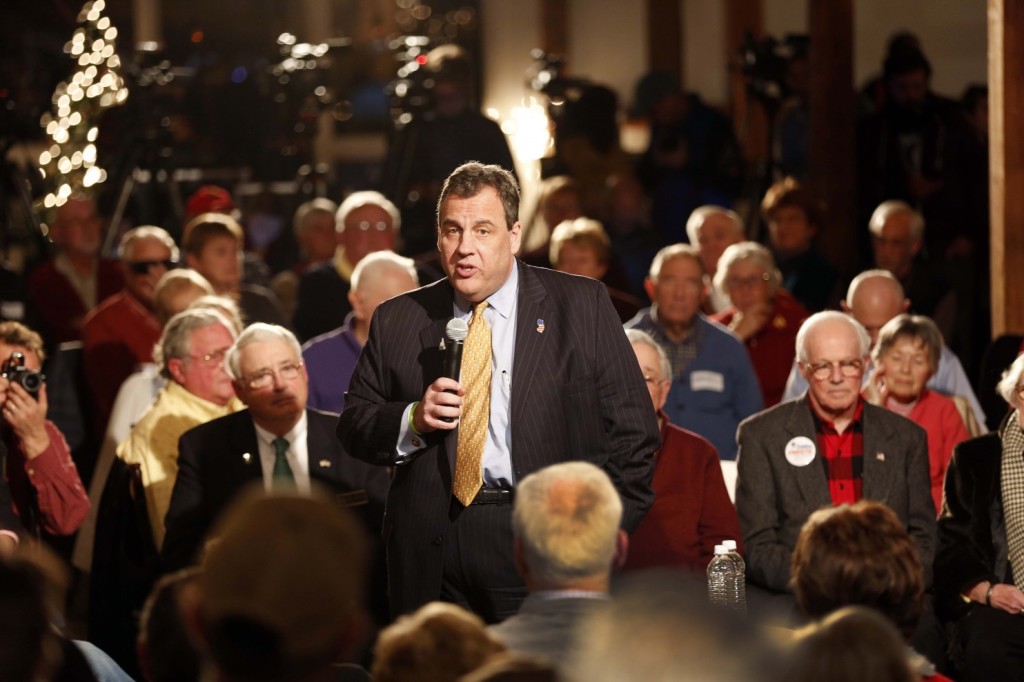
In a Republican primary increasingly focused on national security, New Jersey Gov. Chris Christie is painting a picture of a dangerous world that he is the candidate best prepared to lead. “We know that we’re in the midst of the next world war. It’s a world war that’s not going to look like the first two that we engaged in,” Christie told a crowd Friday night in New Hampshire. “As our country confronts that issue, all those other issues seem real small now.” Christie is seeing his candidacy pick up steam in the first primary state, in part because of the new national focus on security and terrorism in the wake of attacks in Paris and San Bernardino, California. Christie avoided criticizing his rivals by name in Friday’s town hall, instead recounting his own family’s scare on 9/11 because Christie’s wife, Mary Pat, worked near New York’s Twin Towers, which were attacked that day. But in an earlier interview with The Associated Press, Christie suggested two of his chief Republican rivals don’t have the right experience or priorities to keep the country safe. Texas Sen. Ted Cruz, Christie said, hurt the country by voting against extending the National Security Agency’s bulk collection program of phone records which ended days before the shooting in California. Christie advocates reinstating the program and giving law enforcement and intelligence agencies more ways to track terrorism. “You can’t, in these dangerous times, take tools away from the government, and he’s made the country weaker,” Christie said of Cruz. Florida Sen. Marco Rubio, whom Christie is battling for second place in the state, simply doesn’t have the necessary experience, he said. “He’s not ready to be president, he’s a first-term U.S. senator, we just went through that,” Christie said. “You can’t do on-the-job training with the presidency.” Christie declined opportunities to attack GOP front-runner Donald Trump directly in questions from the crowd and in an interview. But he said there are better ways to ease Americans’ fears about terrorism than by suggesting a ban on Muslims entering the country, as Trump has done. An Associated Press-GfK poll taken before Trump’s remarks showed three-quarters of Republican voters think the United States is taking too many immigrants from the Middle East. “These are not people who are biased or prejudiced people — they’re scared and they want to protect their families,” Christie said of those worried about immigration. Part of the way to keep people safe, Christie said, is to engage with the Muslim community, as he did in New Jersey after 9/11. “Most people understand you can’t lump everybody in to the same basket,” Christie told the AP. “I think what they want is for the government to do their job and be effective. I don’t think that they care exactly how you do it — they just want to be safe.” Now, he’s trying his hardest to convince them he’s the best candidate to do that. “I spent 13 years of my life actually doing it,” he told the AP. “Especially in the aftermath of September 11.” Republished with permission of The Associated Press.
Donald Trump: Deport children of immigrants living illegally in U.S.

Republican presidential candidate Donald Trump wants more than a wall to keep out immigrants living in the country illegally. He also wants to end “birthright citizenship” for their children, he said Sunday. And he would rescind Obama administration executive orders on immigration and toughen deportation, allowing in only “the good ones.” Trump described his expanded vision of how to secure American borders during a wide-ranging interview Sunday on NBC’s “Meet The Press,” saying that he would push to end the constitutionally protected citizenship rights of children of any family living illegally inside the U.S. “They have to go,” Trump said, adding: “What they’re doing, they’re having a baby. And then all of a sudden, nobody knows…the baby’s here.” Native-born children of immigrants — even those living illegally in the U.S. — have been automatically considered American citizens since the adoption of the 14th amendment of the U.S. Constitution in 1868. The odds of repealing the amendment’s citizenship clause would be steep, requiring the votes of two-thirds of both houses of Congress and support from three-fourths of the nation’s state legislatures. Republicans in Congress have pushed without success to repeal that provision since 2011. “They’re illegal,” Trump said, describing native-born children of people living illegally in the US. “You either have a country or not.” Trump’s remarks came as his campaign website posted his program for “immigration reform.” Among its details: Making Mexico pay for a permanent border wall. Mandatory deportation of all “criminal aliens.” Tripling the force of immigration officers by eliminating tax credit payments to immigrant families residing illegally in the U.S. He said that families with U.S.-born children could return quickly if deemed worthy by the government. “We’re going to try and bring them back rapidly, the good ones,” he said, adding: “We will expedite it so people can come back in. The good people can come back.” Trump did not elaborate on how he would define “good people.” But echoing earlier controversial remarks that Mexico was sending criminals across the border, Trump said a tough deportation policy was needed because “there’s definitely evidence” of crimes linked to immigrants living in the country illegally. The New York businessman also said he would waste little time rescinding President Barack Obama’s executive actions aimed at allowing as many as 3.7 million immigrants living illegally in the U.S. to remain in the country because of their U.S.-born relatives. Obama’s November 2014 actions were halted by temporary injunctions ordered by several federal courts in rulings challenging his executive powers to alter immigration policies without Congressional approval. The cases could lead to the U.S. Supreme Court. “We have to make a whole new set of standards,” Trump said. “And when people come in, they have to come in legally.” On Sunday, Ohio Gov. John Kasich echoed Trump’s call to finish construction of an incomplete system of barriers on the nation’s southern border with Mexico. There are still gaps in the barriers, which have been under construction since 2005. Speaking on CBS’ “Face the Nation,” Kasich said he would “finish the wall” but would then work to legalize 12 million immigrants now estimated to live in the U.S. illegally. Kasich said he would “make sure we don’t have anybody — any of the criminal element here.” He would also revive the guest-worker programs that previously brought in temporary workers to aid in farming and other industries hobbled by labor shortages. Most other GOP candidates also back completing the border wall but differ over how to treat immigrant families already living in the U.S. Former Florida Gov. Jeb Bush recently released his own immigration plan calling for the use of forward bases and drones to guard the border, but also backing an eventual plan to legalize the status of immigrant families. Bush disagrees with Obama’s use of executive actions to unilaterally enforce the policy. Florida Sen. Marco Rubio worked with senators from both parties to develop a comprehensive plan in 2013 that would have legalized the status of many immigrant families. But Congress balked at the idea as tea party Republicans opposed the deal and Rubio has since backed away from his support. Republished with permission of the Associated Press.
