
Bradley Byrne: The New Way Forward Act is an assault on our borders
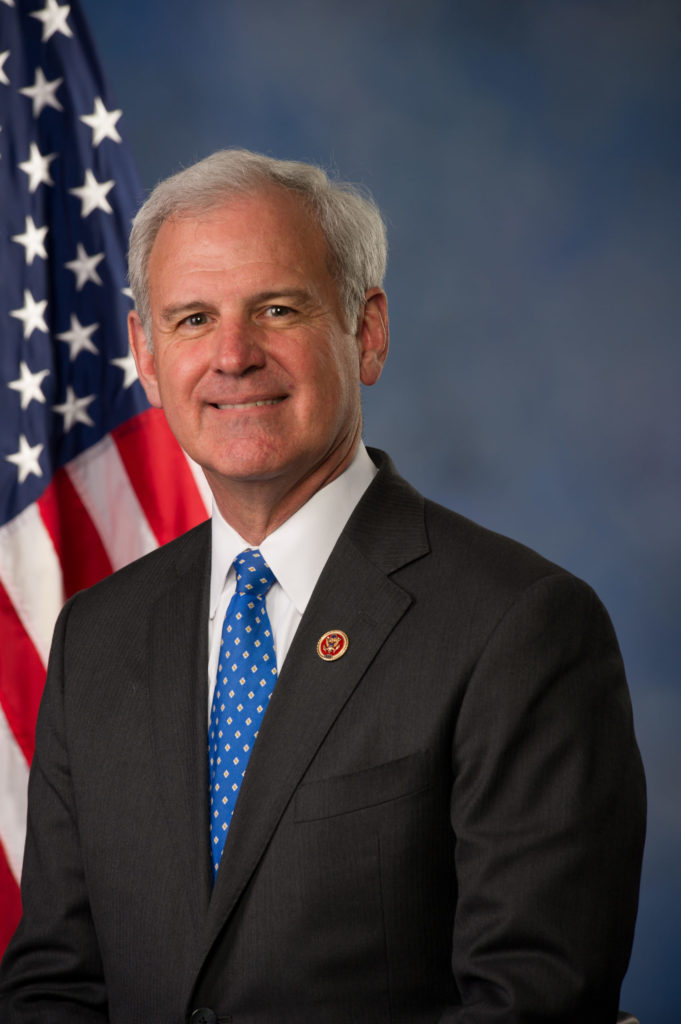
Bradley Byrne discusses the newly introduced New Way Forward Act.
Donald Trump, GOP to huddle as outrage builds over border policy
Calls are mounting on Capitol Hill for the Trump administration to end the separation of families at the southern border ahead of a visit from President Donald Trump to discuss legislation. Trump’s meeting late Tuesday afternoon with House Republicans comes as lawmakers in both parties are up in arms over the administration’s “zero tolerance” approach to illegal border crossings. Under the policy, all unlawful crossings are referred for prosecution — a process that moves adults to the custody of the U.S. Marshals Service and sends many children to facilities run by the Department of Health and Human Services. Under the previous administration, such families were usually referred for civil deportation proceedings, not requiring separation. Nearly 2,000 children were separated from their families over a six-week period in April and May. The fight is erupting as the House is already embroiled in an election-year struggle over immigration legislation that threatens to hurt Republicans in November. Democrats have seized on the family separation issue, swarming detention centers in Texas to highlight the policy. They are demanding that the administration act to keep migrant families together. Republicans are increasingly joining Democrats in that call. Michigan Republican Rep. Fred Upton called for an immediate end to the “ugly and inhumane practice,” adding, “It’s never acceptable to use kids as bargaining chips in political process.” Kansas GOP Sen. Pat Roberts said he is “against using parental separation as a deterrent to illegal immigration.” “The time is now for the White House to end the cruel, tragic separations of families,” Sen. Lisa Murkowski, R-Alaska, said in a statement. The Trump administration insists the family separations are required under the law. But after signaling Monday that it would oppose any fix aimed solely at addressing the plight of children separated from their parents under the crackdown, the White House said Tuesday that it is reviewing emergency legislation being introduced by Sen. Ted Cruz, R-Texas, to keep migrant families together. Asked if the White House supports the Cruz measure, Mercedes Schlapp, director of strategic communications, told reporters “we’re looking into the legislative text on the Cruz bill.” The senator’s bill would add more federal immigration judges, authorize new temporary shelters to house migrant families, speed the processing of asylum cases and require that families that cross the border illegally be kept together, absent criminal conduct or threats to the welfare of any children. At a White House briefing Monday, Homeland Security Secretary Kirstjen Nielsen declared, “Congress alone can fix it.” That line has been echoed by others in the administration, including Trump, who has falsely blamed a law passed by Democrats for the “zero tolerance” approach to prosecutions of families crossing the border. Two immigration bills under consideration in the House could address the separations, but the outlook for passage is dim. Conservatives say the compromise legislation that GOP leaders helped negotiate with moderates is inadequate. Rep. Jim Jordan, R-Ohio, a member of the Freedom Caucus, said he’s skeptical that even a full-throated endorsement from Trump will be enough to get the compromise bill through the House. The compromise bill shifts away from the nation’s longtime preference for family immigration to a new system that prioritizes entry based on merits and skills. It beefs up border security, clamps down on illegal entries and reinforces other immigration laws. To address the rise of families being separated at the border, the measure proposes keeping children in detention with their parents, undoing 2-decade-old rules that limit the time minors can be held in custody. Rep. Dave Brat, R-Va., another Freedom Caucus member, said he expects the GOP compromise bill to be defeated if it reaches the floor. “There’s not enough votes because it doesn’t solve the problem,” he said. Faced with the prospect of gridlock in the House, senators appear willing to take matters into their own hands. Sen. John Cornyn of Texas, the No. 2 Republican leader, said Senate Republicans are working on language to address the family separations that could receive a floor vote, potentially as part of a spending bill package. “I don’t think the answer to family separation is to not enforce the law. I think the answer to family separation is: Don’t separate families while you’re enforcing the law,” Cornyn told reporters. “It’s all within our power, and people have to overcome their desire to preserve an issue to campaign on.” Sen. Chuck Grassley of Iowa, the Republican chairman of the Judiciary Committee, said he wants to do away with a legal settlement that requires the government to release children from custody and to their parents, adult relatives or other caretakers, in order of preference. GOP senators including Lindsey Graham of South Carolina, Jeff Flake of Arizona and Susan Collins of Maine also said they’ve been discussing family separation legislation. Graham told reporters the measure would keep migrant families together, provide additional judges so detained families would face shorter waiting periods, and supply facilities for the families to stay. He said he did not know how much the proposal would cost. The administration, meanwhile, is hoping to force Democrats to vote for the bills or bear some of the political cost in November’s midterm elections. Democrats brushed aside that pressure. “As everyone who has looked at this agrees, this was done by the president, not Democrats. He can fix it tomorrow if he wants to, and if he doesn’t want to, he should own up to the fact that he’s doing it,” said Senate Democratic leader Chuck Schumer of New York. Senate Democrats have rallied behind an immigration bill from Sen. Dianne Feinstein, D-Calif. Her bill would prohibit the separation of migrant children from their parents, with exceptions for findings of child abuse or trafficking. If separations occur, Homeland Security would have to provide clear guidelines for how parents can contact their kids. One House Republican in a swing district, Rep. Mike Coffman of Colorado, said he’s willing to endorse the Feinstein bill if that’s what it takes. “I reached out to Sen. Feinstein’s office
Daniel Sutter: Can we end illegal immigration?

Our immigration policy prior to the election of President Donald Trump could be fairly described as strict limits on legal immigration combined with toleration of large-scale illegal immigration. Tolerated illegal immigration as policy has a number of weaknesses. I think that we should put immigration on a legal footing. We could end tolerated illegal immigration by ratcheting up enforcement of current laws, which is what President Trump promised on the campaign trail and what his efforts to complete the border wall with Mexico implies. Or we could significantly increase legal immigration. I think either option may now be preferable to hypocrisy as policy. Let’s consider the current limits on legal immigration. The wait for visas under the family reunification program can be a decade or more, while the H-1B and lottery visa programs have far more applicants than available slots (13.6 million lottery applications for 50,000 visas in 2008). Generally only graduate or professional degree holders can secure long-term work visas. Illegal immigration is also far from easy. Almost 250,000 people were deported in 2016, and over 500,000 were apprehended trying to enter illegally. The difficulty of legal or illegal entry allows human traffickers to charge huge sums for assistance: $4,000 to cross from Mexico, and $60,000 for entry from India. And this hefty payment does not guarantee entry. Over the past decade, over 3,700 people have died crossing from Mexico. Large-scale illegal immigration entails several costs. For starters, illegal immigrants are vulnerable to abuse and exploitation because they cannot turn to law enforcement for protection once here. Reports of sex trafficking and sweatshops in the U.S. frequently involve illegal immigrants. Illegality creates space for truly inhumane treatment. Persons here illegally can impose avoidable costs on Americans. For example, many illegal immigrants drive without licenses and insurance, contributing to 12% of drivers nationally who are uninsured. Billions of dollars of accident costs each year then get passed on to insured drivers. More ominously, we cannot perform background checks on illegal immigrants. While the overwhelming majority of legal and illegal immigrants come here to work, we can and should protect against entry by criminals and terrorists. We essentially outsource background checks, which should be done by the Department of Homeland Security, to the human traffickers. Perhaps most significantly, tolerated illegal immigration causes a loss of respect for the law. The law should assist people in leading productive lives. Order in society relies on people largely voluntarily following the rules regulating our behavior, like driving and paying taxes. We follow the rules because we understand that life is better when everyone does so. Furthermore, our policy basically forces Americans who just want to run businesses to break the law. Many firms must hire undocumented workers to remain cost competitive because few Americans are willing to do jobs in agriculture, food service, and construction. And some entrepreneurs get prosecuted for hiring illegal workers, which the system essentially forced them to do. Should we end illegal immigration by more enforcement or liberalizing legal immigration? One’s answer depends on one’s personal values. Each option entails costs and consequences. As the status quo demonstrates, enforcement has limits. Immigrants come here illegally because wages are much higher than in their home countries. Consequently tougher enforcement will just increase the price of illegal crossings. The cost of totally securing the border may be prohibitive. Furthermore, tougher enforcement will leave us with fewer immigrants willing to do hundreds of thousands of jobs, which might go unfilled. A lack of labor will increase prices for many of the things that we buy. And it could increase imports: we might have to import grapefruit and tomatoes from countries where labor is available. Ultimately I think increasing legal immigration will increase respect for the law and improve border security. President Trump should make sure that the border wall has a big gate to welcome people wanting to come here to work. This will put most of the human traffickers on the border out of business and allow us to focus on people still trying to enter illegally. ••• Daniel Sutter is the Charles G. Koch Professor of Economics with the Manuel H. Johnson Center for Political Economy at Troy University and host of Econversations on TrojanVision. The opinions expressed in this column are the author’s and do not necessarily reflect the views of Troy University.
Venturing to Mexico, Donald Trump defends right to build huge wall

On Mexican soil for the first time as the Republican presidential nominee, a firm but measured Donald Trump defended the right of the United States to build a massive border wall along its southern flank, standing up for the centerpiece of his immigration plan in a country where he is widely despised. Trump, who previously derided Mexico as a source of rapists and criminals, praised Mexicans Wednesday as “amazing people” following a closed-door meeting at the official residence of the country’s president, Enrique Pena Nieto. Trump and the Mexican president, who has compared the New York billionaire to Adolf Hitler, addressed reporters from adjacent lecterns before a Mexican flag. The trip, 10 weeks before America’s presidential Election Day, came just hours before Trump was to deliver a highly anticipated speech in Arizona about illegal immigration. That has been a defining issue of his presidential campaign, but also one on which he’s appeared to waver in recent days With political risks high for both men, Trump stayed on script, declining to repeat his promise to force Mexico to pay for a wall along the border between the two countries when pressed by reporters. While he and Pena Nieto talked about the wall, Trump said they didn’t discuss who would pay for a cost of construction pegged in the billions. “Having a secure border is a sovereign right and mutually beneficial,” Trump said, reading from prepared remarks. “We recognize and respect the right of any country to build a physical barrier or wall on any of its borders to stop the illegal movement of people, drugs and weapons. Cooperation toward achieving this shared objective — and it will be shared — of safety for all citizens is paramount to both the United States and to Mexico.” Trump’s presence on Wednesday, his first meeting with a head of state abroad as a presidential candidate, sparked anger and protests across Mexico’s capital city. Former Mexican President Vicente Fox bluntly told the celebrity businessman that, despite Pena Nieto’s hospitality, he was not welcome. “We don’t like him. We don’t want him. We reject his visit,” Fox said on CNN, calling the trip a “political stunt.” Pena Nieto was less combative as he addressed reporters alongside Trump. He acknowledged the two men had differences and defended the contribution of Mexicans working in the United States, but he described the conversation as “open and constructive.” He and Trump shook hands as the session ended. Pena Nieto’s performance came in for immediate condemnation from his many critics in Mexico. “Pena ended up forgiving Trump when he didn’t even ask for an apology,” said Esteban Illades, the editor of Nexos magazine. “The lowest point of the most painful day in the history of the Mexican presidency.” After saying during his Republican primary campaign he would use a “deportation force” to expel all of the estimated 11 million people living in the United States illegally, Trump suggested last week he could soften that stance. But he still says he plans to build a huge wall — paid for by Mexico — along the two nations’ border. He is under pressure to clarify just where he stands in the Wednesday night speech, which had been rescheduled several times. Trump’s running mate, Indiana Gov. Mike Pence, told CBS earlier in the day that Trump would make clear “that there will be no path to legalization, no path to citizenship. People will need to leave the country to be able to obtain legal status or obtain citizenship.” The buildup to the speech was abruptly interrupted Tuesday night by the news that Trump would visit Mexico, accepting on short notice an invitation offered last week by Pena Nieto. The newspaper El Universal wrote in an editorial that Trump “caught Mexican diplomats off guard.” Campaigning in Ohio earlier in the day, Democrat Hillary Clinton jabbed at Trump’s Mexican appearance as she promoted her own experience working with foreign leaders as the nation’s chief diplomat. “People have to get to know that they can count on you, that you won’t say one thing one day and something totally different the next,” she told the American Legion in Cincinnati. “And it certainly takes more than trying to make up for a year of insults and insinuations by dropping in on our neighbors for a few hours and then flying home again.” Trump has promised, if elected, to deport millions of immigrants who are in the United States illegally, force Mexico to pay for the construction of a wall to secure the nearly 2,000-mile border and renegotiate the NAFTA trade agreement to make it more favorable to the United States. Pena Nieto suggested there was room to improve the trade deal, which Trump described as unfair to American workers. The New York businessman promised to promote trade deals that would keep jobs in the Western Hemisphere. Pena Nieto made his invitation to both Trump and Clinton, who met with him in Mexico in 2014. The inclusion of Trump puzzled many in Mexico, who said it wasn’t clear why their own unpopular president would agree to meet with someone so widely disliked in his country. Pena Nieto has been sharply critical of Trump’s immigration policies, particularly the Republican’s plans to build a wall and have Mexico pay for it. In a March interview, he said that “there is no scenario” under which Mexico would do so and compared Trump’s language to that of dictators Hitler and Benito Mussolini. Pena Nieto did not repeat such criticism on Wednesday, but acknowledged Trump’s comments had “hurt and affected Mexicans.” “The Mexicans deserve everyone’s respect,” he said. Republished with permission of The Associated Press.
Guns, immigration and Zika top agenda as Congress returns

Gun control, immigration and money to combat the Zika virus top the congressional agenda as lawmakers sprint toward the political conventions this month and a seven-week summer recess. Amid all that, Republicans plan to squeeze in a meeting with Donald Trump on Thursday. The House and Senate have just eight legislative days before their break, and lawmakers have scheduled a handful of politically charged votes with implications for incumbents in November’s election. In the House, legislation to fight terrorism and a gun control measure that already failed in the Senate are planned for this week. House Speaker Paul Ryan said a GOP plan to keep suspected terrorists from obtaining firearms would do so “without compromising a citizen’s basic bill of rights,” including the rights to bear arms and receive due process under the law. In the Senate, immigration bills and legislation to impose labeling on genetically modified food are on tap. Unclear is whether Republicans and Democrats can resolve the dispute over funds for the mosquito-borne Zika virus now that summer is in full swing, or whether the matter will have to wait until September when Congress returns. A look at the issues: ___ ZIKA Back in February, President Barack Obama requested $1.9 billion in emergency money to fight Zika, which causes grave birth defects and has infected 287 pregnant women in the United States and 250 in U.S. territories, according to the most recent numbers from the Centers for Disease Control. Congress has failed to fund the request as the issue has been caught up in partisan fights and the typical dysfunction. House Republicans rammed through a bill that would provide $1.1 billion by cutting money from other government agencies. The legislation, to the anger of Democrats, would bar new funding for Planned Parenthood clinics in Puerto Rico and allow pesticide spraying that environmentalists argue would be harmful. Senate Democrats have blocked the bill and another vote is expected this week, although progress is unlikely. ___ GUN CONTROL Bowing to election-year pressure from Democrats, Ryan, R-Wis., says the House will vote on a GOP proposal aimed at keeping suspected terrorists from obtaining firearms, a measure backed by the National Rifle Association. Democrats want to vote on their own gun control bills, and they haven’t ruled out a return to disruptive tactics if they’re rebuffed. Ryan indicated on Tuesday that Democrats are unlikely to get a vote. Democrats staged a sit-in on the House floor that lasted nearly 26 hours last month to call attention to their demand for gun-control votes. The sit-in followed the June 12 mass shooting in Orlando, Florida, that killed 49 people and heightened attention on the national toll taken by firearms. The GOP bill would let the government block firearms purchases for suspected terrorists, but only if prosecutors can prove in court that the buyer is involved in terrorism. It would also establish a new office within the Department of Homeland Security to focus on preventing extremist groups from recruiting followers. Democrats say the Republican bill is too weak. They want votes on one measure expanding background check requirements for gun buyers, and a second banning firearms sales to terror suspects without requiring prosecutors to first prove the buyer was embarking on terrorism. ___ FAA REAUTHORIZATION Key House and Senate lawmakers are close to a deal on a bill to extend the Federal Aviation Administration’s programs and policies, which are due to expire on July 15. Rep. Bill Shuster, R-Pa., chairman of the House Transportation Committee, has agreed to temporarily drop his contentious plan to privatize the nation’s air traffic control system in order to allow a bill to move forward. Negotiations have focused on what policy provisions to include in the extension. There is strong support in both chambers to include an array of proposals to enhance airports security in light of recent airport attacks in Istanbul and Brussels. Proposals to extend new protections to airline consumers, relax medical requirements for private pilots and lift some restrictions on commercial drone flights are also under discussion. ___ TRUMP House and Senate Republicans are slated to meet with the GOP’s presumptive presidential nominee less than two weeks before the party convention in Cleveland. Among those expected to attend the separate sessions are Sens. Bob Corker of Tennessee, Jeff Sessions of Alabama and Joni Ernst of Iowa, all of whom have been mentioned as possible running mates for the blustery billionaire. Trump’s short list of possible vice presidential candidates is heavy with Washington insiders who could help usher his agenda through Congress. ____ IMMIGRATION Senate Democrats are expected to block a GOP bill that would withhold congressional funding from so-called sanctuary cities that shield residents from federal immigration authorities. Republicans also are proposing a bill to impose a mandatory minimum sentence of five years for any person who illegally re-enters the country after being removed. Republicans have pushed for action since last year when 32-year-old Kathryn Steinle was shot in San Francisco. The man charged in the killing was in the country illegally despite a long criminal record and multiple prior deportations. He had been released by San Francisco authorities despite a request from federal immigration authorities to keep him detained. Republished with permission of the Associated Press.
