
Jeff Sessions: Judges costing taxpayers with immigration rulings
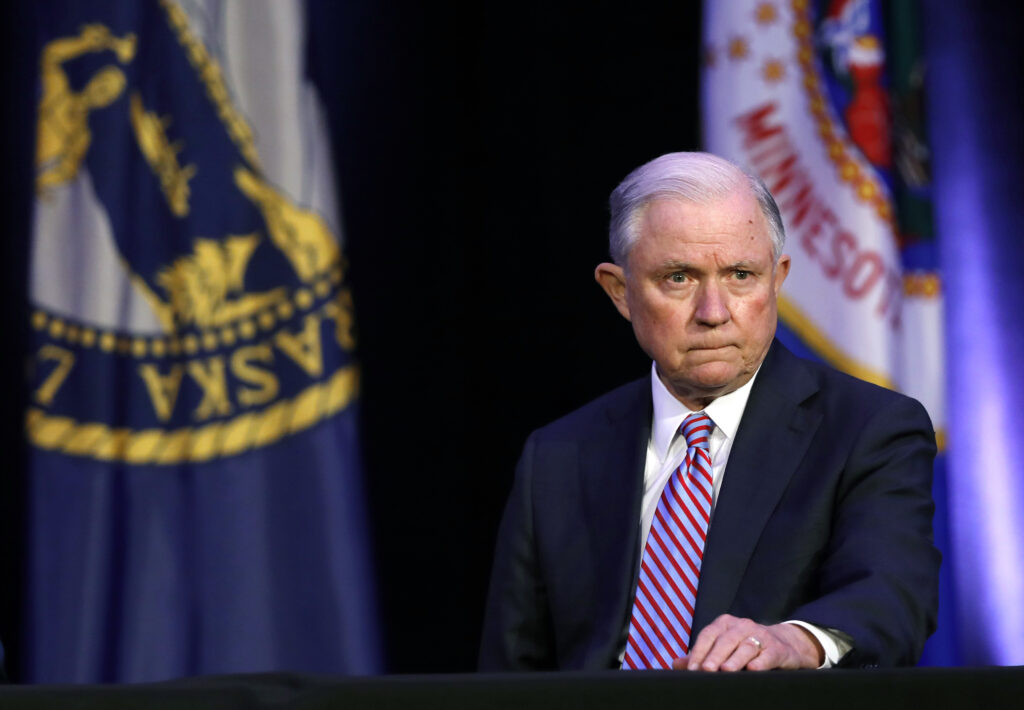
U.S. Attorney General Jeff Sessions told an audience of hundreds of judges and attorneys on Friday that “erroneous rulings” by federal judges have been costly to taxpayers, and he criticized judges who’ve thwarted some of President Donald Trump‘s immigration policies. Sessions, speaking during a judicial conference in Des Moines, also lambasted what he said was an increasing number of federal appeals courts that have issued nationwide injunctions on federal policy. He cited a case involving Chicago, which filed a lawsuit challenging the Trump administration’s sanctuary cities policy, and decisions by judges that repeatedly halted Trump’s travel ban that targeted mostly Muslim countries. “I got to tell you, it’s not the duty of the courts to manage the executive branch or to pass judgment on every policy the executive branch was elected to carry out,” Sessions told the roughly 700 people attending the Eighth Judicial District Conference. “Judges aren’t sent from Olympus. They’re not always correct,” he added. Trump has also panned judges who’ve blocked his immigration policies, including those who ruled against his administration’s effort to end the Deferred Action for Child Arrivals program, or DACA. The program, enacted during President Barack Obama‘s administration, has authorized around 700,000 people brought to the U.S. illegally as children to obtain work permits and driver’s licenses. A federal judge halted a deportation process earlier this month and threatened to hold Sessions in contempt if the mother and daughter weren’t returned to the U.S. During his Friday speech, Sessions was complimentary of Trump’s choices for federal judges — but he didn’t address criticisms levied against him by Trump this week. Trump has openly criticized Sessions for recusing himself from special counsel Robert Mueller‘s investigation into Russian involvement in the 2016 campaign. This week, Trump tweeted “if we had a real Attorney General” the investigation would never have been started. U.S. Supreme Court Justice Neil Gorsuch — appointed to the nation’s highest court by Trump last year — also addressed the conference, which was open to those in the legal profession from seven Midwest states. He discussed among other things the importance of the rule of law and separation of powers. “I think that the right to have an independent judge tell you what the law is, no matter who you are, is one of the great liberties and genius of the constitutional design,” Gorsuch said. “It’s something that’s very real today for the immigrant, the criminal defendant, the unpopular, the minority.” Guy Cook, a trial lawyer from Des Moines, said he thought Sessions was engaging and covered a wide range of topics. But he said he found it remarkable that the attorney general chose a conference of federal judges and lawyers to make remarks critical of federal judge rulings challenging the Trump administration. “He did seem to go out of his way to emphasize the three equal branches of government, and from that made the argument that the judicial branch should not overstep its bounds,” he said. Outside the convention center hosting the event, about 100 people staged a “No Hate In Our State” protest targeting Sessions for his hardline positions on immigration, including support of the Trump administration’s separation of children from their parents at the U.S.-Mexico border. Community organizer Matthew Covington said Sessions has not been kind to any marginalized group and has actively undermined voting rights. “We’re just a variety of groups and individuals who agree that his message of hate shouldn’t be allowed in this state,” Covington said. Republished with permission from the Associated Press.
Will economic boom complicate curbing immigration?

One of President Donald Trump’s priorities, low unemployment, is complicating another: curbing immigration. With the number of jobs available exceeding the number of Americans seeking jobs, employers are looking beyond the border to fill openings, and migrants are coming to the country in search of work. Hotel and restaurant owner Todd Callewaert is short more than two dozen workers this season for his Mackinac Island, Michigan, businesses. “You can’t hire a line cook right now, it’s impossible, even for 20 bucks an hour,” he said. “We usually fill the gap with visa workers, but we can’t even get those this year.” The Labor Department said Friday the unemployment rate was 3.9 percent, near the 18-year low set in May, and employers are adding jobs at a faster pace than last year. Trump has made clear employers should be trying to attract American workers through wage increases and other incentives, not filling jobs with immigrants. “Curbing immigration is essential to growing wages and ensuring available jobs go to American workers, not foreign workers,” Deputy White House Press Secretary Hogan Gidley told AP. “As immigration curbs are put into place, more and more Americans will be absorbed back into the workforce, especially those who have been left out due to poor work history or difficult life circumstances.” The administration has made it harder to come to the U.S. for work, legally or otherwise. Work visas are costly, complicated and limited. Large-scale, job-seeking migration through a porous border is long gone. This summer, the administration tried to deter would-be immigrants by adopting a “zero-tolerance” policy, prosecuting anyone caught crossing the border illegally. It resulted in nearly 3,000 children separated from their parents at the border, prompting international outrage. Trump eventually stopped the separations and the government was forced by a judge to reunify families. Still, tens of thousands of people cross the border illegally every month, many seeking asylum from violence. But often, they’re coming because of the prospect of work. Dala Edilson Ba Juc traveled with his 12-year-old daughter from Guatemala to the U.S. — only to be separated from her at the border, reunited and deported home. Sitting at an immigration facility in Guatemala City, he said they came for work. “I needed to try to make a better life for my family — I wanted them to have what I could not give them here,” he said. “There are many, many jobs in the States.” Frandy Frauville, 35, joined a wave of Haitians who came to Tijuana, Mexico, from Brazil starting in 2016. Brazil welcomed Haitians after Haiti’s 2010 earthquake. But Frauville grew tired of factory jobs in Mexico that barely allowed him to cover rent and food, and, lured by the prospects of better work and joining family near Miami, he lined up with his 5-year-old daughter at a border crossing. “I’ll take whatever I can get,” he said. And Rolando Antonio Bueso Castillo, who was separated from his infant Johan, was making only $10 a day driving a bus in Honduras. He was captured and quickly deported while his baby remained behind for five months. He said he made the difficult journey because his brother had secured him a job in Maryland. Someday, he said, his son will ask what happened, and why he had left him in the United States. “I’ll tell him the truth,” he said. “We thought we had a good plan to give him a better life.” Many economists say immigration is actually good for the economy and migrants provide complementary work to the jobs Americans do. Despite Trump’s push, some business owners say they just can’t get Americans to fill the jobs. A.J. Erskine is vice president of Cowart Seafood Group, which includes a Virginia oyster company of about 75 employees. “Entry-level is $12.13 an hour,” he said. “I don’t know how much higher we can go without being unable to sell oysters. He said the company has been in business more than a half-century, and that despite massive recruiting efforts, it can’t keep American workers. “We just don’t have people who want to come out and shuck oysters at 3 in the morning — and I don’t blame them,” he said. Some, like Erksine, are willing to front the cost associated with a temporary work visa, about $4,000 per employee for workers holding down seasonal, non-agricultural jobs. But the visas are capped at 66,000 annually, with 15,000 additional visas this year. Economists say the hiring crunch could be eased in part by increasing the number of visas available during boom years, and decreasing them when the economy is weaker. But those changes must be made by Congress. Those turning a blind eye to immigration status, or hiring people with false identification face crackdowns by immigration agents. Agents raided an Ohio garden center in the summer, arresting 114 workers and accusing the business of unlawful employment of aliens and fraud. “It’s not worth the risk for us to hire people we’re not sure about,” said Callewaert, the hotel and restaurant owner. But a lack of staff means the business can’t grow, he said. Rep. Dave Brat, R-Virginia., a member of the conservative House Freedom Caucus, said he did not think the lower unemployment rate would weaken efforts to restrict illegal immigration. “The irony is it makes it more transparent what the real problem of the labor market is,” Brat said, citing about 10 million Americans not in the labor force. He called for improved education and imposing work requirements on food stamp recipients to get more of these Americans in the workforce. “The answer is not to bring in 10 million folks from abroad,” Brat said. Republished with the permission of the Associated Press.
Border measures part of President Donald Trump’s bigger immigration crackdown

The separation of families at the U.S.-Mexico border caught the attention of the world and prompted mass outrage, but it only tells a small part of the story surrounding President Donald Trump‘s administration’s immigration policy. In reality, the government is working to harden the system on multiple fronts to curb immigration, carving a path around various court rulings to do so. The administration is seeking to lock up families indefinitely, expand detention space and tighten asylum rules and apply more scrutiny to green card applications. Many of the initiatives received little attention during the chaos over separated families, but they show how determined President Donald Trump is to stop immigrants from coming — both legally and illegally — even in cases where the administration has been stymied by the courts. Other administrations may have faced similar problems with illegal immigration and tried similar solutions, but all have been unable to stem the flow of migrants streaming through southern border. No other president, however, has campaigned so vociferously on the topic. “The United States will not be a migrant camp and it will not be a refugee holding facility,” President Donald Trump declared days before putting an end to the separation of parents from their children. “Not on my watch.” This week’s headlines were dominated by stories of reunions of immigrant parents and their young children that the Trump administration had to carry out under a court order. The White House said it “worked tirelessly” to complete the reunifications and make sure the children were put back into safe homes. In the same week, however, the administration made other moves to clamp down on immigrant families, asylum seekers and those seeking green cards. The administration’s attempts to deter Central American families and children from making the trip north are designed to send the message to immigrants — and Trump’s supporters in an election year — that reaching the United States is going to get harder, and so will getting papers to stay in the country legally. “All of these things, I think, are part of a bigger ultimate aim, which is to significantly reduce immigration of all kinds to the United States over the longer term, and in the process, the real desire is to change the character of the country,” said Doris Meissner, a former commissioner of the Immigration and Naturalization Service in the Clinton administration. Before departing the White House this week for his European trip, Trump offered his own solution for the government missing a court-mandated deadline to reunite some families: “Don’t come to our country illegally.” In Europe, the president hasn’t shied away from offering his views on the flow of immigration across the pond. Trump pressed ahead with his complaints that European immigration policies are changing the “fabric of Europe” and destroying European culture. He reiterated a position he articulated in a British tabloid where he said: “I think allowing millions and millions of people to come into Europe is very, very sad.” The Trump administration announced plans in April to prosecute illegal border crossers with the crime of improper entry, and in doing so, jailed some parents caught on the border and placed their children in government custody. The U.S. government was sued and the public was outraged, prompting Trump to halt the separations. The chaos over the separations has put the administration in the difficult position of having to release families with ankle-monitoring bracelets into the public — a practice Trump has decried — while at the same time attempting a series of legal maneuvers to argue for tougher enforcement capabilities. That’s because two court cases in California restrict what the government can do in carrying out hardline immigration policies. One requires the government to release immigrant children generally after 20 days in detention. The other has banned the separation of families and placed the government under tight deadlines to reunite parents and children. In an attempt to comply with both rulings, the White House wants to present families with a choice: Stay together in detention or release the child to a government program for immigrant youth for potential placement with a relative while the parent remains locked up. It’s unclear whether the administration has enough detention beds to do so, but it’s looking. Homeland Security has formally requested 12,000 beds for family detention, with 2,000 beds to be made available immediately at U.S. military bases. The Defense Department has said it also received a request to house up to 20,000 unaccompanied immigrant children. Officials are also seeking to send immigrants back to their countries sooner and make it harder for them to seek asylum in a backlogged courts system where it can take years to get a ruling. Trump officials say too many people are claiming they are persecuted when they are not, adding that only 20 percent of asylum claims are granted. Asylum officers tasked with screening immigrants stopped at the border were told this week to heed a recent opinion by Attorney General Jeff Sessions that gang and domestic violence should not generally be a reason for asylum — reasons cited by many immigrants fleeing bloodshed in Central America. The result: fewer immigrants will pass these initial screenings that enable them to seek asylum before an immigration judge, said Megan Brewer, an immigration attorney in Los Angeles and former asylum officer. “If they don’t comply, all their decisions are going to be sent back to them,” she said. “The average officer will go with the path of least resistance.” Immigrants in the country legally also face new hurdles under various policies. Since taking office, the administration has ended protected status for hundreds of thousands of people from countries recovering from war and natural disasters, slashed the number of refugees allowed into the United States and said it will seek to strip the U.S. citizenship of those suspected of cheating to get it. And applicants for green cards and other immigration benefits are facing longer waits and more detailed questions. Immigration
Bradley Byrne: Border security must always come first

If you have turned on your television recently, you have probably heard about the ongoing immigration debate in our country. Here in Congress, it is an issue that has drawn much of our attention as well. Since being elected to Congress, I have held two top principles when it comes to the immigration debate. First, I do not and will not support granting amnesty to those who are in our country illegally. Second, any immigration reform bill must start with a sincere and tangible effort to secure the border. Until the border is secure, any other immigration efforts would be in vain. Recently, the House voted on two separate immigration bills that were designed to help crack down on illegal immigration. One bill, the Securing America’s Future Act, earned my support. The bill included very strong border security provisions, made the E-Verify program mandatory, and satisfied President Trump’s four pillars for immigration reform. Unfortunately, the bill failed by a vote of 193 to 231. Another bill, the Border Security and Immigration Reform Act, failed to earn my support. The bill would have created a special pathway to citizenship for over 1.8 million illegal immigrants. The legislation would have unfairly allowed these illegal immigrants to jump in front of thousands who are waiting to come into our country the right way. Thankfully, the bill did not receive the support necessary to pass. Despite the failure of these two bills, we must not give up in our efforts to secure the border, close loopholes in our immigration system, and ensure our immigration laws are fully enforced. This issue is far too important to the safety and security of the American people. The immigration issue has also hit close to home with reports that the Department of Homeland Security and the Department of Defense are considering housing up to 25,000 illegal immigrants at Navy outlying airfields in south Baldwin County. I am working with local leaders and my Alabama colleagues to once again fight this flawed proposal tooth and nail. Housing anyone in tents on the Gulf Coast during the heat of summer and the heart of hurricane season would be inhumane and a major mistake. Not to mention that these airfields lack even basic infrastructure, such as running water, housing, or restroom facilities, to provide even basic needs for detained immigrants. I also believe we need to return these illegal immigrants to their home countries as quickly as possible. It makes no sense to bring them so far away from the border when the ultimate goal is to return them to their home countries. Another issue that has drawn national attention is the Trump Administration’s zero tolerance policy, which says that anyone who crosses the border illegally will be prosecuted. I strongly support the policy because we are a nation of laws, and we must enforce the laws. That said, like President Trump, I do not support separating children from their families at the border. This is why I have co-sponsored a bill from Senator Ted Cruz (R-TX) and Congressman Dave Brat (R-VA) that would allow families to stay together while speeding up the processing and review of asylum cases. The bill would also devote funding to double the number of federal immigration judges and authorize the construction of new temporary shelters close to the border to keep families together. As we continue to crack down on illegal immigration and ensure our borders are secure, I welcome your ideas and feedback. aThese are complicated and difficult issues, but they are so critical to the future of our country. We cannot become a country with open borders and no rule of law. • • • Bradley Byrne is a member of U.S. Congress representing Alabama’s 1st Congressional District.
House rejects Republican immigration bill, ignoring Donald Trump
The Republican-led House resoundingly rejected a far-ranging immigration bill Wednesday despite an eleventh-hour endorsement by President Donald Trump, as the gulf between the GOP’s moderate and conservative wings proved too deep for leaders to avert an awkward election-year display of division. The bill was killed 301-121, with nearly half of Republicans opposing the measure. The depth of GOP opposition was an embarrassing showing for Trump and a rebuff of House leaders, who’d postponed the vote twice and proposed changes in hopes of driving up the tally for a measure that seemed doomed from the start. The roll call seemed to empower GOP conservatives on the fraught issue. Last week a harder-right package was defeated but 193 Republicans voted for it, 72 more than Wednesday’s total. In Wednesday’s vote, 112 Republicans voted “no,” including many of the party’s most conservative members. “We need to start securing the border and not reward bad behavior, and that’s what this bill did,” said Rep. Roger Williams, R-Texas. Conservatives have opposed the bill’s provision offering a chance at citizenship for hundreds of thousands of immigrants who came to the U.S. illegally as children. Calling it amnesty, they have said it doesn’t do enough to limit the number of relatives who immigrants here legally can sponsor for residence. Even if it passed, the bill rejected Wednesday would have been dead on arrival in the closely divided Senate, where Democrats have enough votes to kill it. House Democrats voted unanimously against it. “Show some compassion,” said Rep. Adriano Espaillat, D-N.Y., who came to the U.S. from the Dominican Republic with his parents at age 9. “Will we step up to be the country that allowed me, as a young boy, to find safety with my mother and father?” GOP leaders have been considering a Plan B: a bill focused narrowly on barring the government from wresting children from migrant families caught entering the country without authorization. With television and social media awash with images and wails of young children torn from parents, many Republicans have wanted to pass a narrower measure addressing those separations before Congress leaves at week’s end for its July Fourth break. But that seemed unlikely. GOP aides said Republicans had yet to agree on bill language, and the effort was complicated by a federal judge who ordered that divided families be reunited with 30 days. Republicans have been working on legislation that would keep migrant families together by lifting a court-ordered, 20-day limit on how long families can be detained. Senators are trying craft a bipartisan plan. Trump has issued an executive order reversing his own family separation policy, but around 2,000 children remain removed from relatives and are generating damaging daily stories that Republicans would love to halt. Besides creating a pathway to citizenship for some young immigrants, the defeated bill would provide $25 billion for Trump to build his coveted wall on the border with Mexico. It would restrict family-based immigration and bar the Homeland Security Department from taking migrant children from parents seized crossing into the country without authorization. In a startling turnabout earlier Wednesday, Trump made an all-caps pitch for the bill. Just Friday, he’d urged Republicans to stop wasting time on the effort until after the November elections. In his latest display of whiplash on the issue, Trump tweeted, “HOUSE REPUBLICANS SHOULD PASS THE STRONG BUT FAIR IMMIGRATION BILL, KNOWN AS GOODLATTE II, IN THEIR AFTERNOON VOTE TODAY, EVEN THOUGH THE DEMS WON’T LET IT PASS IN THE SENATE.” The vote capped months of futile GOP efforts to pass wide-ranging legislation on an issue that could color scores of congressional races in this fall’s contest for House and perhaps Senate control. The Senate rejected three proposals in February, including one reflecting Trump’s hard-line policies and two bipartisan plans. Democrats and centrist Republicans from swing districts say the GOP could suffer because the party, steered by Trump’s anti-immigrant harangues, could be alienating pivotal moderate voters. But conservatives relish such tough stances. Conservative Rep. Steve King, R-Iowa, who voted “no,” said lawmakers “couldn’t go home and face their constituents and say ‘I just gave you the largest amnesty ever without really a guarantee of enforcement.’” But Rep. Tom Cole, R-Okla., who backed the measure, said, “Some people can’t get to yes no matter what you do, and some people are just afraid of the issue.” Rep. Carlos Curbelo, R-Fla., and Rep. Jeff Denham, R-Calif., from competitive districts with large numbers of Hispanic voters, helped force Ryan to stage immigration votes. This spring they launched a petition that could have led to House passage of liberal-leaning measures creating a pathway to citizenship, bills backed by Democrats but opposed by most Republicans. Leaders headed off the petition by urging GOP lawmakers to not sign it, partly by crafting the compromise package the House rejected Wednesday. After the vote, Curbelo said too many lawmakers “simply lacked the courage” to help “victims of a broken immigration system.” Denham said the vote made it “very obvious that we need to have a bipartisan solution” — an avenue that the approach of campaign season makes highly unlikely. The more conservative bill the House rejected last week clamped down on legal immigration and provided no way for the young immigrants to become citizens. Republished with permission from the Associated Press.
Donald Trump urges House GOP to back immigration bill
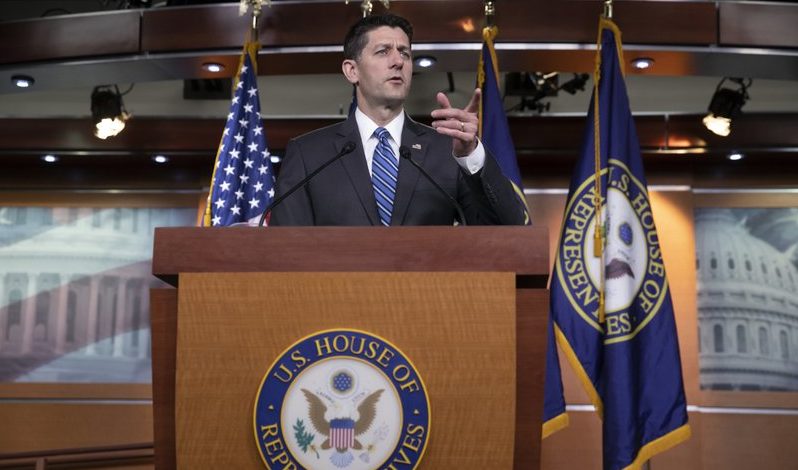
President Donald Trump made a startling last-minute pitch Wednesday for a far-reaching Republican immigration bill that remained on track for defeat, just days after telling House lawmakers to stop wasting time on the effort until after the November elections. In his latest instance of whiplash on the issue, Trump tweeted Wednesday: “HOUSE REPUBLICANS SHOULD PASS THE STRONG BUT FAIR IMMIGRATION BILL, KNOWN AS GOODLATTE II, IN THEIR AFTERNOON VOTE TODAY, EVEN THOUGH THE DEMS WON’T LET IT PASS IN THE SENATE.” The tweet — which referenced Rep. Bob Goodlatte, R-Va., one of the bill’s sponsors — could well garner additional votes for a measure that was still expected to fail Wednesday. It was also the latest example of Trump’s erratic dealings with Congress. On Friday he dashed off a tweet, saying Republicans should “stop wasting their time on Immigration until after we elect more Senators and Congressmen/women in November.” Trump had heard from House Majority Leader Kevin McCarthy, R-Calif., who urged him to publicly support the bill, said a person familiar with the conversation who wasn’t authorized to speak publicly. McCarthy, who is hoping to succeed Speaker Paul Ryan as speaker next year, and Trump have forged a close relationship. Hours later, the White House sent a letter to lawmakers restating its support, saying the legislation would “support the administration’s goals” on immigration. The bill’s defeat would be a telling rebuff of the leaders of a divided GOP. Staring down the possibility, the party’s lawmakers were considering Plan B: passing more narrow legislation by week’s end curbing the Trump administration’s contentious separating of migrant families. After months of trying to bridge the chasm between moderates and conservatives and two postponed votes, top Republicans braced for a showdown roll call Wednesday. Speaker Paul Ryan, R-Wis., labeled the legislation “a great consensus bill” and tried putting the best face on the likely outcome. “What we have here is the seeds of consensus that will be gotten to, hopefully now but if not, later,” he told reporters Tuesday. The vote caps months of futile GOP efforts to pass wide-ranging legislation on an issue that could color scores of congressional races in this fall’s contest for House and perhaps Senate control. The Senate rejected three proposals in February, including one reflecting Trump’s hard-line policies and two bipartisan plans. Democrats and centrist Republicans from swing districts say the GOP could suffer because the party, steered by Trump’s anti-immigrant harangues, could be alienating pivotal moderate voters. But conservatives relish such tough stances. And rather than achieving middle ground, leaders’ efforts have largely underscored how irreconcilably divided the GOP is on the topic. The Republican compromise would provide a shot at citizenship for hundreds of thousands of immigrants brought illegally to the U.S. as children. It would provide $25 billion for Trump to build his coveted wall with Mexico, restrict family-based immigration and bar the Homeland Security Department from taking migrant children from parents seized crossing into the country without authorization. Leaders were adding eleventh-hour provisions aimed at winning votes. One would make it easier for migrant farmworkers to stay longer in the country, the other would gradually require companies to use an electronic database to verify their employees’ U.S. citizenship. But those amendments didn’t remove the key stumbling block — the reluctance by conservatives to back legislation helping people who arrived illegally become citizens. Many Republicans deride that plan as amnesty for lawbreakers, a potential attack line their next primary challenger could wield against them. Also unhelpful has been Trump, who last week swerved from voicing support for the GOP immigration drive to denouncing it as a waste of time, since Democrats have the numbers in the closely divided Senate to kill any legislation they oppose. “He was helpful Tuesday, but Friday he wasn’t,” Rep. Carlos Curbelo, R-Fla., lamented about Trump. Even the evolving, separate measure focused sharply on preventing family separation was hurting the compromise bill’s prospects. It offers Republicans a chance to vote to address the high-profile problem without backing pieces of the broader measure that might anger conservatives Democrats solidly oppose the GOP bill as punitive. Curbelo and Rep. Jeff Denham, R-Calif., from districts with large numbers of Hispanic voters, helped force Ryan to stage immigration votes. This spring they launched a petition that could have led to House passage of liberal-leaning measures creating a pathway to citizenship, bills backed by Democrats but opposed by most Republicans. Leaders headed off the petition by urging GOP lawmakers to not sign it, partly by crafting the compromise package the House was voting on Wednesday. The House rejected a more conservative bill last week clamping down on legal immigration and lacking a way for the young immigrants to become citizens. With television and social media awash with images and wails of young children torn from migrant families, Republicans want to pass a narrower measure addressing those separations should the broader bill fail. Trump has issued an executive order reversing his own family separation policy, but around 2,000 children remain removed from relatives. GOP senators have rallied behind legislation ending the 20-day court-imposed limit on detaining families — along with steps aimed at speeding their prosecutions — and House Republicans are considering something similar. Many want to pass it by week’s end, when Congress starts a weeklong July 4 recess. “It’s a concern from a humanitarian standpoint, and we want to make sure that Republicans prove we can do both, we can uphold the law, we can also take care of families,” said Rep. Mark Walker, R-N.C., an influential House conservative. Senate Majority Leader Mitch McConnell, R-Ky., expressed hope that senators could negotiate a bipartisan accord that could pass easily. No. 2 Senate GOP leader John Cornyn of Texas said he hoped that would happen this week. But one of the four senators negotiating the legislation said more time will be needed. Sen. Diane Feinstein, D-Calif., said in a brief interview that a ban against separating migrant families — the key feature of a bill she’s
Bradley Byrne leads colleagues in opposition to Baldwin County immigration site
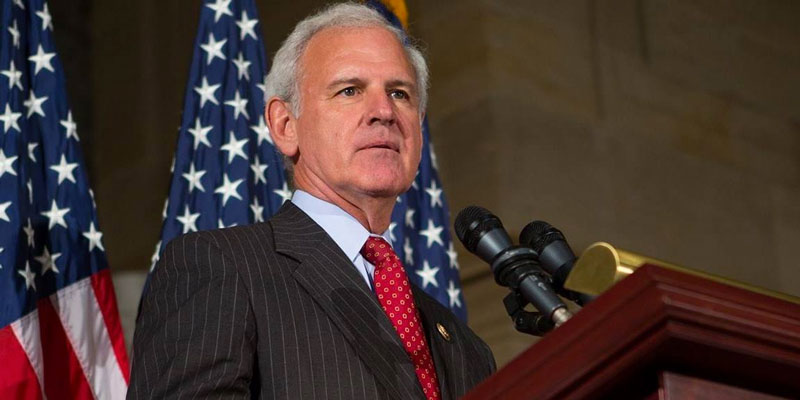
Alabama 1st District U.S. Rep. Bradley Byrne on Tuesday lead a group of colleagues from Alabama and Florida in sending a letter to urge the Department of Homeland Security (DHS) and the Department of Defense (DOD) to halt efforts to house illegal immigrants at two Navy outlying airfields in south Baldwin County, Alabama. In a letter to Secretary of Defense James Mattis and Secretary of Homeland Security Kirstjen Nielsen, the Members of Congress outlined why the lack of infrastructure at the airfields and the unique coastal environment make the sites completely unacceptable for housing. “I appreciate my Alabama and Florida colleagues joining me to express our serious concerns about any proposal to house illegal immigrants in Baldwin County,” Byrne said of the letter. “I am hopeful our concerns will be taken seriously and this flawed idea will be taken off the table, just like it was back in 2016.” Within the Alabama delegation, the letter was signed by all the Republican House Members: 4th District U.S. Rep. Robert Aderholt, 5th District U.S. Rep. Mo Brooks, 6th District U.S. Rep. Gary Palmer, 2nd District U.S. Rep. Martha Roby, and 3rd District U.S. Rep. Mike Rogers. The full text of the letter can also be found below. Dear Secretary Mattis and Secretary Nielson: We write to express strong opposition to the consideration of Naval Air Station Whiting Field’s Naval Outlying Field (NOLF) Silverhill in Silverhill, Alabama and NOLF Wolf in Orange Beach, Alabama as detention facilities for illegal immigrants detained from the U.S. southern border as these locations cannot adequately meet the needs of housing and sustaining migrants. While the Department of Homeland Security (DHS) has not formally asked the Department of Defense (DOD) for assistance to house migrants, it has come to our attention that DHS is working with DOD to develop a plan to house immigrants in temporary tent structures, including the possibility of using the above-mentioned sites. These locations are undeveloped military airfields. They lack even basic infrastructure, such as running water, housing, or restroom facilities, to provide even rudimentary needs for detained immigrants. Given this lack of infrastructure, individuals would be housed in tents and potentially exposed to disease carrying insects that are prevalent in the coastal environment. There are also serious natural hazards that should be taken into consideration at these sites. The Gulf Coast region is prone to severe weather including hurricanes, tornadoes, flash floods, thunder storms, severe heat waves, and high humidity. These natural hazards could present serious risks to those housed at these facilities, particularly to those housed in tent structures, as well as the personnel responsible for overseeing the facilities. Additionally, having to evacuate an additional 25,000 individuals from the airfields would place a further strain on what is already a complex hurricane evacuation system. This is not the first time a proposal has been made to use these airfields to house illegal immigrants. In 2016, the Obama Administration ultimately abandoned a similar effort to use these sites after intense pushback from Congress and local officials. During that discussion, based upon similar arguments, the House of Representatives passed an amendment to the annual Military Construction and Veterans Affairs Appropriations bill (H.R. 4974), which barred funds in the bill from being used to modify a military installation in the United States to provide temporary housing for unaccompanied alien children. H.R. 4974, with the amendment included, passed the House on May 19, 2016, by a bipartisan vote of 295 to 129. It is our sincere hope that the Trump Administration will come to the same conclusion that these airfields are not a legitimate option to house illegal immigrants. To be clear, we look forward to working with the Trump Administration to ensure that our nation’s immigration laws are fully enforced and to stem the flow of illegal immigrants at our nation’s southern border. As we work together, we hope you can assure us that the naval airfields in Baldwin County will not be used to house illegal immigrants.
Donald Trump says he was ‘very happy’ to sign order
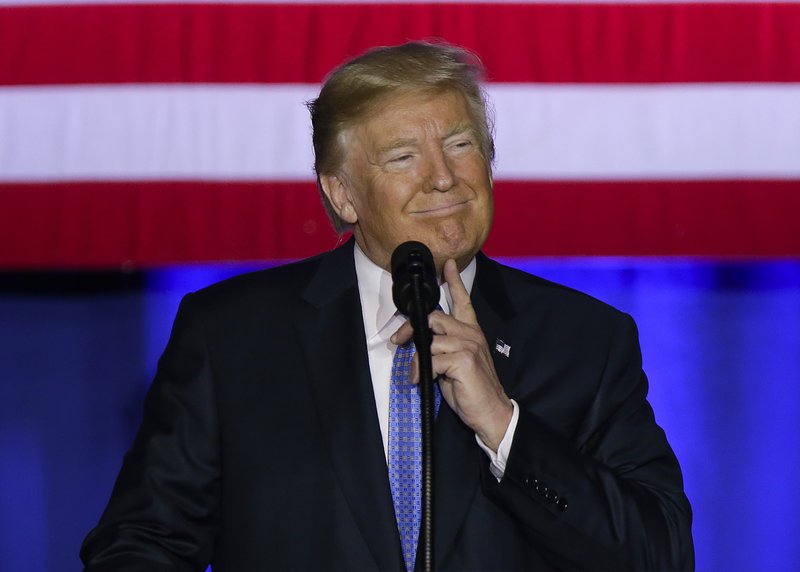
The Latest on immigration legislation (all times local): 2:41 p.m. President Donald Trump is continuing to rail against U.S. immigration policies days after signing an executive order reversing his administration’s insistence on separating migrant children from their parents at the border. Trump said, as he met with Jordan’s King Abdullah II at the White House, that the executive order was “great” and that he was “very happy” he’d signed it. But he’s continued to call for an overhaul of U.S. immigration laws, calling them “obsolete” and “horrible” and saying, “The laws have to be changed.” He says he wants to put in place a “nice, simple system” in which people who aren’t supposed to be in the country are immediately sent back without appearing before judges. He’s also continuing to blame Democrats, accusing them of wanting open borders and claiming that they don’t care about crime. ____ 9:55 a.m. House Republicans aides say GOP leaders are weighing legislation aimed at addressing the uproar over the Trump administration’s separation of migrant families caught crossing the U.S. border. The bill is being discussed as an alternative to a broader immigration package that seems headed toward defeat in a planned House vote this week. The staffers provided no detail on what the narrower legislation would say. Republican lawmakers are eager to vote on legislation letting authorities keep detained families together for longer than 20 days, the current legal standard. President Donald Trump’s “zero tolerance” policy of prosecuting families caught illegally entering the U.S. has resulted in nearly 2,300 children being separated from parents. Trump reversed that policy under bipartisan fire. The aides spoke on condition of anonymity to discuss private conversations. ___ 9:15 a.m. President Donald Trump says the legal due process given to people caught trying to cross the U.S. border illegally is dysfunctional and “not the way to go.” Trump says in a series of typo-filled tweets that, “Hiring many thousands of judges, and going through a long and complicated legal process, is not the way to go – will always be dysfunctional.” Trump says that people trying to gain entry “must simply be stopped at the Border and told they cannot come into the U.S. illegally” and that children should be sent back to their home countries. He adds that, “If this is done, illegal immigration will be stopped in it’s tracks.” His comments Monday were similar to those over the weekend in which he compared people crossing the border to invaders. Trump is also complaining about media coverage of his immigration policies, saying they’re the “same” as the Obama administration’s, although that’s not the case. ___ 8 a.m. Rep. Mark Meadows, chair of the House Freedom Caucus, says the House will likely reject the latest compromise immigration bill and that leadership will present separation legislation that would address family separations at the border. Meadows says on Fox News Monday that even as GOP leadership planned a Tuesday evening vote, lawmakers were still negotiating over the phone this weekend on the details. One hang-up among Republicans, he said, was whether young immigrants known as “Dreamers” would be allowed to bring their parents to the U.S. When asked if the bill will pass or fail, Meadows said “I would think fail right now.” Meadows said if that happens as he expects, Rep. Cathy McMorris Rodgers, who chairs the Republican Conference, would present “follow-up piece of legislation within days.” He says Rodgers “has some real thoughtful insight in terms of how we keep those families together,” which is something “that a lot of us want to do.” ___ 12:20 a.m. GOP leaders’ election-year struggle to shove an immigration bill through the House this week are being hampered by President Donald Trump and fears of conservative voters, leaving prospects dubious. Party leaders are trying to finally secure the votes they need for their wide-ranging bill with tweaks they hope will goose support from the GOP’s dueling conservative and moderate wings. But more importantly, wavering Republicans want Trump to provide political cover for immigration legislation that’s despised by hard-right voters. His recent statements on their immigration bill — supporting it one day and later recommending they drop it — and his history of abruptly flip-flopping on past health care and spending measures have not been reassuring. Republished with the permission of the Associated Press.
House rejects hard-right immigration bill, baring GOP divide
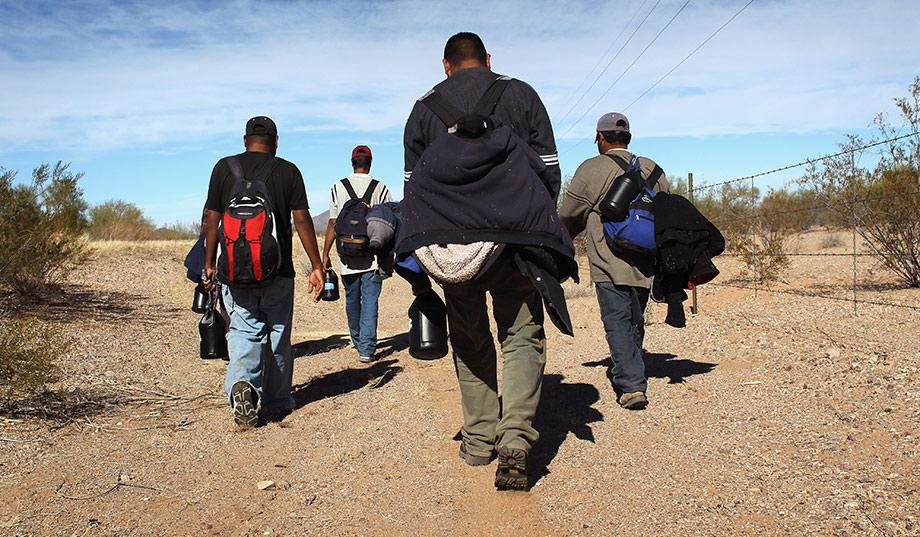
The House killed a hard-right immigration bill Thursday, and Republican leaders delayed a planned vote on a compromise GOP package with the party’s lawmakers fiercely divided over an issue that has long confounded them. The conservative measure was defeated 231-193, with 41 Republicans — mostly moderates — joining Democrats in voting against it. Those defections — nearly 1 in 5 GOP lawmakers — underscored the party’s chasm over immigration and the election-year pressures Republicans face to stay true to districts that range from staunchly conservative to pro-immigrant. Thursday’s vote set the stage for debate on the second bill, this one crafted by Republican leaders in hopes of finding an accord between the party’s sparring moderate and conservative wings. That compromise was considered too lenient by some conservatives and seemed likely to fall, too, and aides said the final roll call would wait till Friday. Rejection of both would represent an embarrassment for President Donald Trump, who had embraced them. As if the internal GOP turmoil was not enough, the party’s political exposure on the issue has been intensified by heartbreaking images of migrant children separated from families and complicated by opaque statements by Trump. At the White House, Trump defended his administration’s “zero tolerance” policy of prosecuting all migrants caught illegally entering the country, a change that has caused thousands of families to be divided while the parents are detained. He said without it, “you would have a run on this country the likes of which nobody has ever seen.” He said he was inviting Congress’ top two Democrats, House Minority Leader Nancy Pelosi and Senate Minority Leader Chuck Schumer, to the White House for immigration bargaining. He called them “extremist open-border Democrats.” And in a tweet that seemed to undermine House leaders’ efforts to round up votes, he questioned the purpose of their legislation by suggesting it was doomed in the Senate anyway. Trump issued an executive order Wednesday aimed at reversing his own policy of taking immigrant children from their detained parents, but emotions remained high. “I was welcomed here,” a tearful Rep. Norma Torres, D-Calif., said during House debate, describing her journey to the U.S. as a child from Guatemala. “I was not put in a freezing cell.” In an embarrassing detour, the House used an early procedural vote to correct what Republicans called a drafting error — language providing $100 billion more than they’d planned to help build Trump’s proposed border wall with Mexico. Instead of giving initial approval for $24.8 billion spread over the next five years, the legislation said it would open the door to $24.8 billion “for each” of the next five years. The rejected conservative bill would have granted no pathway to citizenship for young “Dreamers” who arrived in the country illegally as children, curbed legal immigration and bolstered border security. The second was a compromise between GOP moderates and the party’s conservatives that included an opportunity for citizenship for the young immigrants. It provides $25 billion for Trump’s wall, restrictions on legal immigration and language requiring the Homeland Security Department to keep migrant families together while they’re being processed for illegal entry to the U.S. Democrats oppose both measures as harsh. “It is not a compromise,” House Minority Leader Nancy Pelosi, D-Calif., told reporters. “It may be a compromise with the devil, but it is not a compromise with the Democrats.” Even before votes began, Trump complicated GOP efforts to round up votes. “What is the purpose of the House doing good immigration bills when you need 9 votes by Democrats in the Senate, and the Dems are only looking to Obstruct (which they feel is good for them in the Mid-Terms),” Trump wrote. “Republicans must get rid of the stupid Filibuster Rule-it is killing you!” In the unlikely event that the House approved the GOP compromise, it seemed certain to go nowhere in the GOP-run Senate. Democrats there have enough votes to use procedural delays to kill it. Sixty votes are needed to end filibusters. On Wednesday, Trump reversed himself and took executive action aimed at curbing the separation of families. His order seemed to stem some of the urgency for Congress to act. But GOP leaders were eager to hold the votes anyway. The roll calls would let Republicans assert to voters that they tried addressing the immigration problem. “Our members wanted to express themselves on an issue they care a great deal about,” Speaker Paul Ryan said. Passage of the GOP compromise was always a long shot, but failure may now come at a steeper price. Republicans and Trump have raised expectations that, in control of Congress and the White House, they can fix the nation’s long-standing immigration problems. When the crisis of family separations erupted at the border, GOP leaders revised the compromise bill to bolster a provision requiring parents and children to be held together in custody. It did so by eliminating the 20-day cap on holding minors and allowing indefinite detentions. Even though Trump has acted unilaterally to stem the family separations, lawmakers still prefer a legislative fix. The administration is not ending its “zero tolerance” approach to border prosecutions. If the new policy is rejected by the courts, which the administration acknowledges is a possibility, the debate could move back to square one. Senate Republicans, fearing Trump’s action will not withstand a legal challenge and eager to go on record opposing the administration’s policy, have unveiled their own legislation to keep detained immigrant families together. In the House, moderate Republicans forced the immigration debate to the fore by threatening to use a rare procedure to demand a vote. Led by Curt Curbelo and Rep. Jeff Denham, R-Calif., many are from states with large populations of young “Dreamer” immigrants who now face deportation threats under Trump’s decision to end the Obama-era Deferred Action for Childhood Arrivals program. A federal court challenge has kept the DACA program running for now. Republished with permission from the Associated Press.
With eyes on midterms, Donald Trump embraces immigration fight
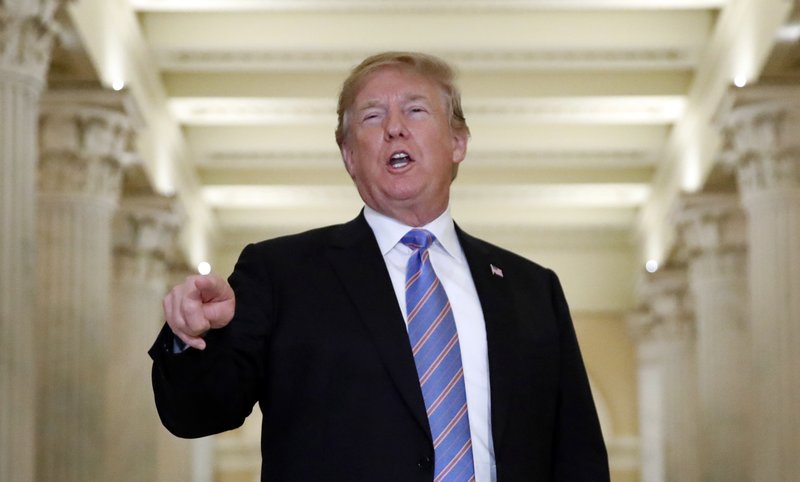
Calling the shots as his West Wing clears out, President Donald Trump sees his hard-line immigration stance as a winning issue heading into a midterm election he views as a referendum on his protectionist policies. “You have to stand for something,” Trump declared Tuesday, as he defended his administration’s immigration policy amid mounting criticism over the forced separation of children from their parents at the U.S.-Mexico border. The chorus of condemnation includes Democrats, as well as Republicans, who are increasingly worried that reports about bereft children taken from their parents could damage the GOP’s chances in November. Still, Trump believes that his immigration pledges helped win him the presidency and that his most loyal supporters want him to follow through. He made a rare trip to Capitol Hill late Tuesday to meet with GOP legislators and endorse a pair of bills that would keep detained families together, among other changes, but he remains confident that projecting toughness on immigration is the right call, said five White House officials and outside advisers who spoke on condition of anonymity because they were not authorized to speak publicly. “It’s amazing how people are surprised that he’s keeping the promises he made on the campaign trail now,” said Trump political adviser Bill Stepien. While the White House signaled Trump may be open to a narrow fix to deal with the problem, the president spent the day stressing immigration policies that he has championed throughout his surprise political career. He has resisted calls to reverse the separation policy, saying any change must come through Congress. In a speech to a business group earlier Tuesday, Trump said he wanted to see legislation deal with family separation, which, he said, “We don’t want.” He also emphasized border security and again made the false argument that Democrats are to blame for the family separation problem. Said Trump: “Politically correct or not, we have a country that needs security, that needs safety, that has to be protected.” Several White House aides, led by adviser Stephen Miller, have encouraged the president to make immigration a defining issue for the midterms. And Trump has told advisers he believes he looks strong on the matter, suggesting that it could be a winning culture war issue much like his attacks on NFL players who take a knee for the national anthem. Former Trump senior adviser Steve Bannon said the president is emphasizing the policies that brought him to the White House. “I think this is one of his best moments. I think this is a profile in courage. This is why America elected him,” Bannon said. “This is not doubling down, it is tripling down.” Still, Trump, a voracious watcher of cable news who is especially attuned to the power of images, appeared to acknowledge later Tuesday that the optics could be doing damage. During his closed-door meeting with lawmakers on the Hill, Trump said his daughter Ivanka had encouraged him to find a way to end the practice, and he said separating families at the border “looked bad,” according to several attendees. “He said, ’Politically, this is bad,’” said Rep. Randy Weber, R-Texas. “It’s not about the politics. This is the right thing to do.” Trump’s immigration standoff comes as he escalates his nationalist trade moves, imposing new tariffs on imports and threating more. With few powerful opposing voices remaining in the West Wing, Trump is increasingly making these decisions solo. Some key advisers have left, and chief of staff John Kelly appears sidelined. Republicans, particularly those in more moderate districts, are worried they will be damaged by the searing images of children held in cages at border facilities, as well as by audio recordings of young children crying for their parents. The House Republicans’ national campaign chairman, Ohio Rep. Steve Stivers, said Monday that he’s asking “the administration to stop needlessly separating children from their parents.” Other conservatives also raised concerns, but many called for Congress to make changes instead of asking Trump to directly intervene. Ralph Reed, chairman of the Faith & Freedom coalition of evangelical voters, added to the drumbeat to end the child separation policy Tuesday, calling on Congress to pass legislation that would end the process as part of a broader immigration overhaul. But asked if the border policy was bad for Trump politically, Reed suggested core supporters remain on the president’s side. He said the group’s members are “more than willing to give the president and his administration the benefit of the doubt that this is being driven by a spike in people crossing the border, a combination of existing law and court decisions require this separation, and the fact that the Democrats refused to work with the administration to increase judges so that this can be dealt with more expeditiously.” Trump on Tuesday mocked the idea of hiring thousands of new judges, asking, “Can you imagine the graft that must take place?” Worried that the lack of progress on his signature border wall will make him look “soft,” according to one adviser, Trump has unleashed a series of tweets playing up the dangers posed by members of the MS-13 gang — which make up a minuscule percentage of those who cross the border. He used the loaded term “infest” to reference the influx of immigrants entering the country illegally. As the immigration story becomes a national flashpoint, Trump has been watching the TV coverage with increasing anger, telling confidants he believes media outlets are deliberately highlighting the worst images — the cages and screaming toddlers — to make him look bad. The president has long complained about his treatment by the media, but his frustrations reached a boiling point after he returned from his Singapore summit with North Korea’s Kim Jong Un to face news reports questioning his negotiating skills. He complained to one adviser that the media had not given him enough credit after the summit and was continuing to undermine him on immigration, according to a person familiar with the conversation but
House Republicans to offer 2 separate bills on immigration
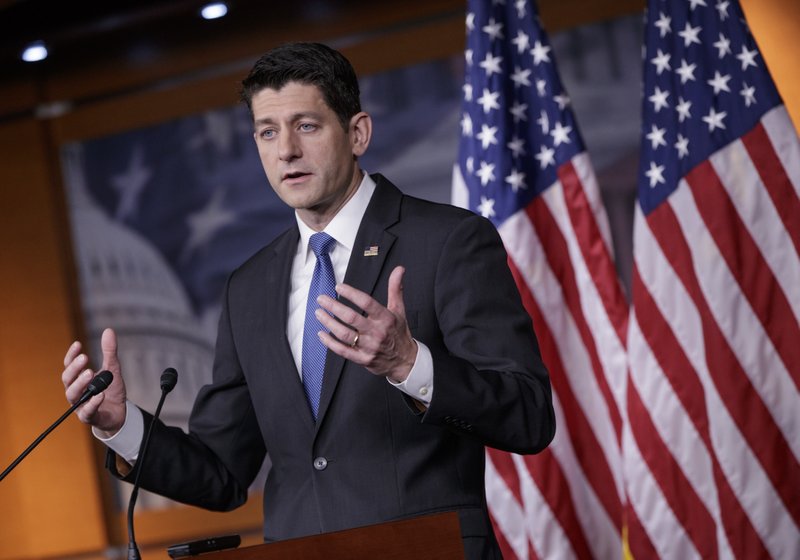
House Republicans are considering next steps on two immigration bills after GOP leaders persuaded moderate Republicans to drop their renegade effort to force votes on legislation that would have protected young “Dreamer” immigrants with a path to citizenship. Instead, leaders reached a deal with moderates and conservatives that will allow two votes on other bills, starting as soon as next week. Moderates were promised a vote on a compromise immigration plan, which remains a work in progress but will likely include a citizenship pathway for the young immigrants who have been living in the country illegally since they were children. Conservatives were guaranteed a vote on their favored approach, which provides a path to legal status but not citizenship. With a truce between the GOP’s factions, House Republicans were set to meet behind closed doors Wednesday to assess the process forward on an issue that has divided the party for years — and that leaders worried would damage the GOP ahead of the election season. A spokeswoman for Speaker Paul Ryan, R-Wis., AshLee Strong, announced the decision late Tuesday after a bargaining session with the lawmakers from the GOP’s conservative and moderate factions ended without agreement on a single package all sides could support. Moderates had been collecting signatures on a petition drive to would force a vote. Strong said the decision to consider two bills would avert the petition drive “and resolve the border security and immigration issues.” Leaders feared if the moderates had been able to collect the 218 votes needed, mostly from Democrats, it would embarrass Republicans by passing a bill that conservatives decried as amnesty for the young immigrants. Rep. Carlos Curbelo, R-Fla., a leader of the moderates’ petition drive, credited his group for forcing the issue to the fore. “Our goal has always been to force the House to debate and consider meaningful immigration reform, and today we’re one step closer,” Curbelo said. Conservatives were also pleased, certain that neither bill would necessarily win enough votes to pass, but confident the outcome would show the political strength of their preferred approach, a bill from Rep. Bob Goodlatte, R-Va. Rep. Mark Meadows, R-N.C., a leader of the conservative Freedom Caucus, said even if the bill fails, voting would show “we can just amend the Goodlatte bill” and try again. Strong said votes on the two bills would happen next week. But Meadows said a vote on the compromise plan may slip to the end of the month as talks continue crafting the legislation. For weeks, the party’s two wings have hunted for ways to provide a compromise that would provide the citizenship pathway and also bolster border security, but have failed to find middle ground. The House ended Tuesday’s session as moderates fell short of their stated goal of having 218 signatures — a majority of the chamber — on a petition that would force votes on other immigration bills that GOP leaders oppose. They had promised to do that by Tuesday in order to trigger those votes later this month. Instead, the centrists accumulated the names of all 193 Democrats but just 23 Republicans — two short of the number required. GOP leaders have strongly opposed the rarely used petition tactic, asserting those votes would probably produce a liberal-leaning bill backed by Democrats and just a smattering of Republicans. They’ve actively lobbied other moderates to not sign the petition, and in talks bargainers have sought legislation both sides could back or alternatively a way for each faction to get a vote on legislation they could support. The alternative measure is still under discussion. But a Republican familiar with the discussions said it would likely be based on a proposal by moderates that would grant the Dreamers a chance for citizenship but also provide the $25 billion President Donald Trump wants for his border wall with Mexico. It would also hew close Trump’s ideas for ending the diversity visa and impose curbs on legal immigration for some immigrant family members, changes that conservatives want. That Republican spoke on condition of anonymity to describe private talks. House Minority Leader Nancy Pelosi, D-Calif., criticized the GOP approach. “If Republicans plan to use Dreamers as a way to advance @realDonaldTrump’s xenophobic, anti-immigrant agenda, they will get a fight from House Democrats,” Pelosi said in a tweet. Any compromise bill would probably also include provisions changing how immigrant children are separated from their families at the border, aides said. Trump’s recent clampdown on people entering the U.S. illegally has resulted in hundreds of children being separated from their families and a public relations black eye for the administration. No law requires those children to be taken from their parents. A 2-decade-old court settlement requires those who are separated to be released quickly to relatives or qualified programs. But the White House has sought to change that and Republicans are seeking language to make it easier to keep the families together longer, said several Republicans. Advocates for immigrants have said the Goodlatte bill would allow minors to be detained longer than is now currently allowed. As talks between the House GOP’s factions continued, leaders worked to derail the moderates’ petition. As part of the effort, party leaders promised votes to later this year on a bill dealing with migrant agricultural workers and requirements that employers use a government online system to verify workers’ citizenship, according to three aides familiar with the negotiations. The Republicans spoke on condition of anonymity to describe private talks. Congress has been forced to deal with the immigration after Trump last year terminated the Deferred Action for Childhood Arrivals program, or DACA. Hundreds of thousands of young immigrants have benefited from DACA or could qualify for it, but risked of deportation as the program ended, though federal court orders have kept the program functioning for now. Senate efforts to pass immigration legislation failed earlier this year. Republished with permission from the Associated Press.
Immigration fight, tension on tariffs await Congress’ return
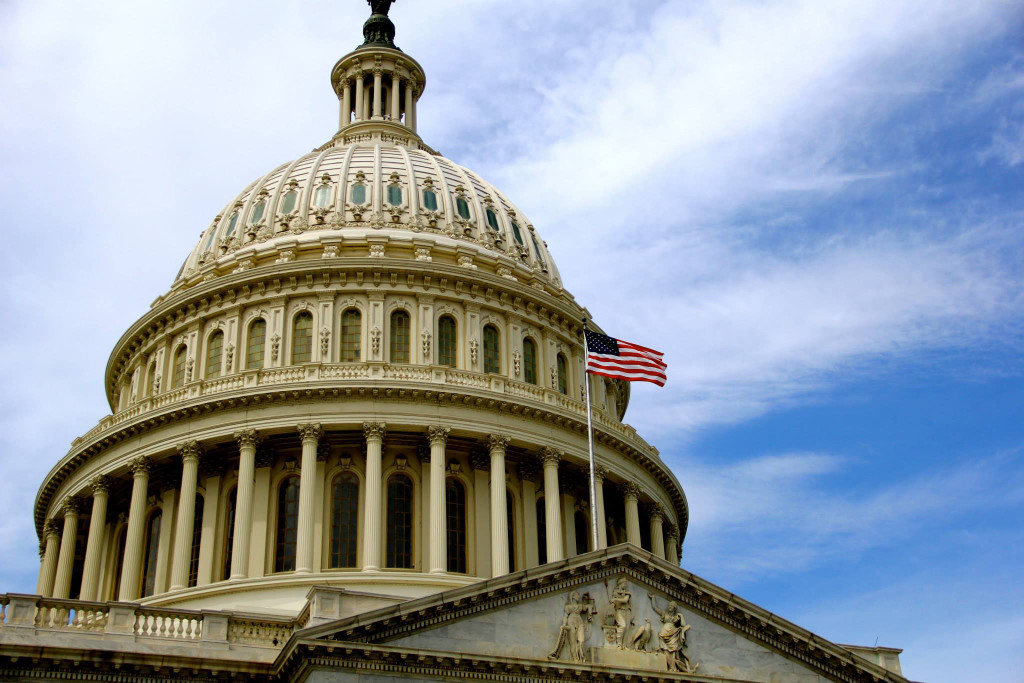
This was supposed to be the quiet time on Capitol Hill, but Congress returns to work Monday facing a showdown in the House over immigration while Senate Republicans are trying to stop an all-out trade war after President Donald Trump’s decision to impose import tariffs on close U.S. allies. Tensions are running particularly high as Senate Majority Leader Mitch McConnell is threatening to cancel the traditional August recess as he fights Democratic opposition to GOP priorities in a show of busy-work before the midterm election. It’s shaping up to be far from the typical summer slowdown when legislating usually makes way for campaigning. “Another summer, another heavy work load,” tweeted Sen. Chuck Grassley, R-Iowa, as he pushed to confirm nominations. “NOW is the time to vote on Fridays (even wknds!).” The Senate often is not in session on Fridays. Congress faces a few should-do items in the weeks ahead. Topping the agenda is passage of the annual defense bill, which includes pay raises for the troops. It has already cleared the House. The Senate could begin consideration of its defense bill this week. But the Senate version carries a warning to Trump with a trade provision to block any White House plan to lift penalties on the China-based telecommunications company ZTE, which faces trade law violations over selling sensitive technologies to U.S. adversaries. Trump’s moves on trade are expected to consume conversations among Senate Republicans this week. They’re worried about a wider trade war spiking prices for home-state businesses and consumers if Trump imposes steel and aluminum tariffs, as planned, on imports from Canada, Mexico and the European Union. Republicans will be making the case to the administration that the tariffs could dampen the economic gains from the GOP tax cuts and sour the mood among voters as lawmakers are campaigning to protect the Republican majority in Congress. Some Republicans are also hoping Trump simply changes his mind and doesn’t follow through with it. But aides said others may be signing on to a bill from Sen. Mike Lee, R-Utah, that would subject all trade actions by the executive branch, including tariffs, to congressional approval. Rep. Will Hurd, R-Texas, said he would support a similar move in the House. “Congress has shared our responsibility when it comes to trade with the executive branch over the last couple of decades, and I think that’s something that we need to re-evaluate,” he told CBS’ “Face the Nation.” Meanwhile, House Republicans face a self-imposed deadline Thursday for resolving an immigration standoff between GOP centrists who are forcing a vote on legislation to protect young immigrants who were brought to the country illegally as children and conservatives who want stricter immigration enforcement with money for Trump’s border wall. The centrists want to provide a way for the young immigrants to become permanent residents, which can lead to citizenship. Conservatives are opposed to creating a new pathway to staying in the U.S. permanently, equating it with granting amnesty to lawbreakers. Speaker Paul Ryan, R-Wis., and Majority Leader Kevin McCarthy, R-Calif., are trying to craft a Republican-led bill as a compromise between the factions, but it’s difficult. House leaders plan a two-hour private meeting of GOP lawmakers Thursday morning to hash out whether talks among the party’s factions have produced an immigration compromise that can win broad support. Underscoring the sensitivity of the session, staff is to be excluded. They’re trying to prevent the moderates from joining with Democrats to pass the “Dreamer” protections, which polls suggest are popular, but which would be a setback for GOP leaders and expose the majority to complaints from the conservative base. Without a deal, the moderates say they’ll push ahead with enough signatures on a so-called discharge petition to force the vote over the leadership’s objections. Hurd said moderates have the votes already, but are “engaged in conversations to figure out … is there another path. I don’t believe that there is.” Rep. Carlos Curbelo, R-Fla., said in an interview last week that he saw a 50-50 chance of those talks succeeding. He warned that if they didn’t bear fruit, he and his supporters “fully expect” to continue pushing their petition. Curbelo said the young immigrants must “be guaranteed a future in our country, meaning they cannot be exposed to deportation.” He said, “They must have permanent status immediately and they must have the option of a bridge into the legal immigration system,” meaning a pathway to citizenship. The moderates’ effort has won the backing of GOP Sen. John McCain, fighting brain cancer back home in Arizona, who tweeted on Saturday: “Congress can’t ignore this critical issue — and the many lives it impacts — any longer.” Starting Monday in the Senate, McConnell has teed up votes on three nominees to serve as federal district court judges, including the first Hispanic lawyer whom Trump nominated for the bench, Fernando Rodriguez Jr. of Texas. The selections are expected to receive bipartisan support, though more contentious votes are expected in coming weeks. Republicans have made it a top priority to get Trump’s nominees on the bench, to the alarm of Democrats, who say Republicans are working to stack the federal judiciary with young ideologues who will shape it for decades to come. Republished with the permission of the Associated Press.
