‘Fail Not:’ What to watch ahead of Donald Trump’s Senate trial
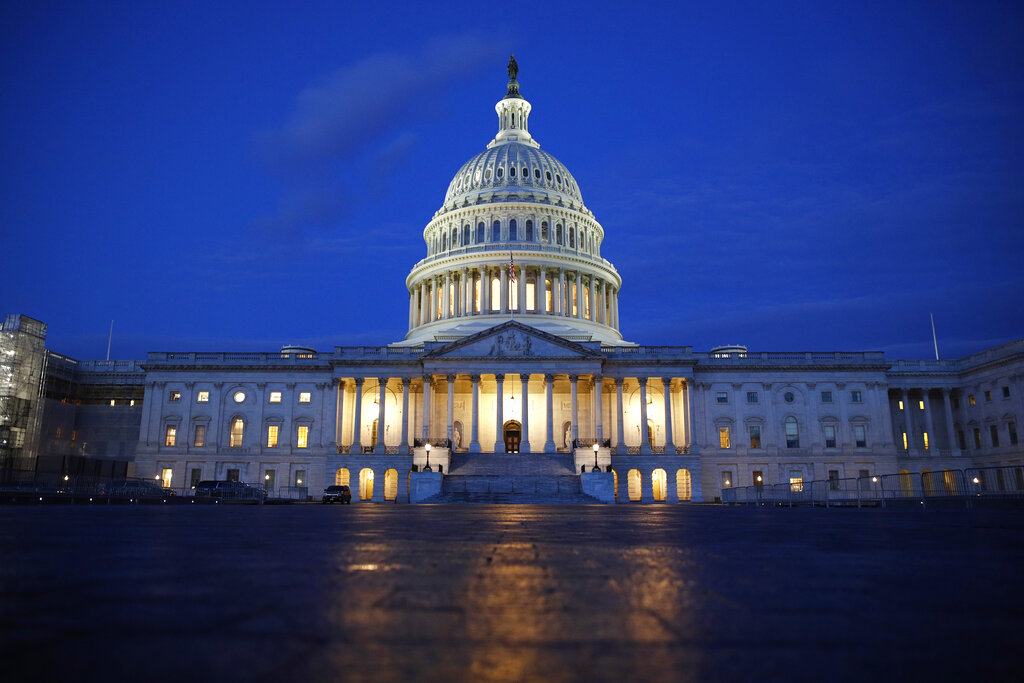
There are a lot of uncertainties in the yet to be scheduled impeachment trial.
Nancy Pelosi Says She Will ‘Soon’ Transmit Impeachment to Senate
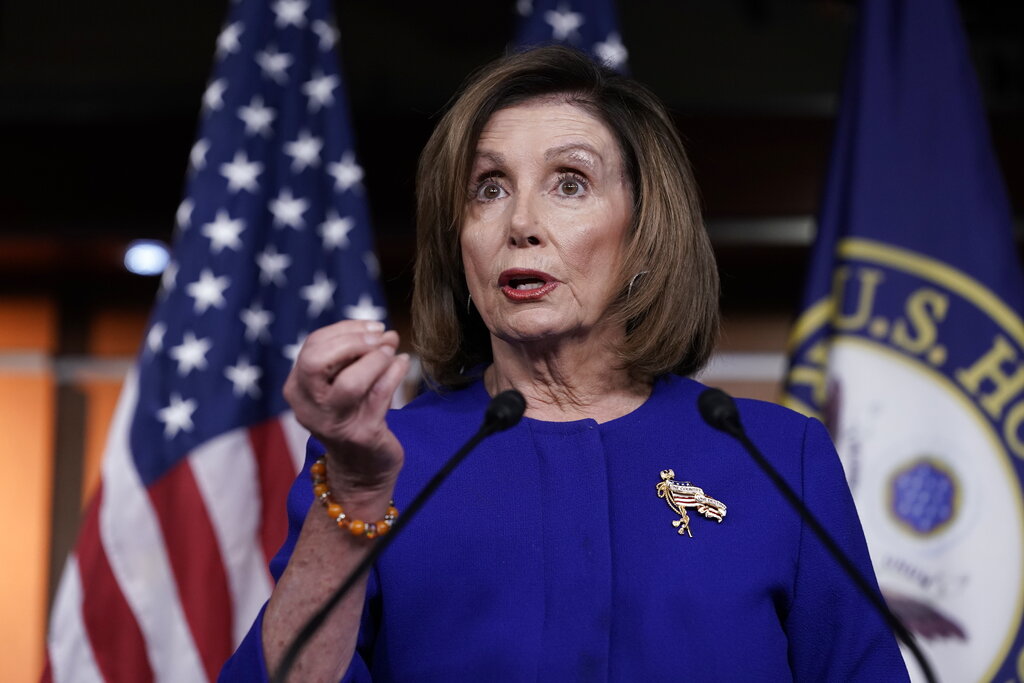
Speaker of the House Nancy Pelosi refuses to say exactly when she will transmit the articles of impeachment to the Senate.
Nancy Pelosi’s Next Move on Impeachment Unclear as Senate Waits

Pelosi has given little indication what she will do next.
McConnell: GOP Will Start Impeachment Trial, Delay Witnesses
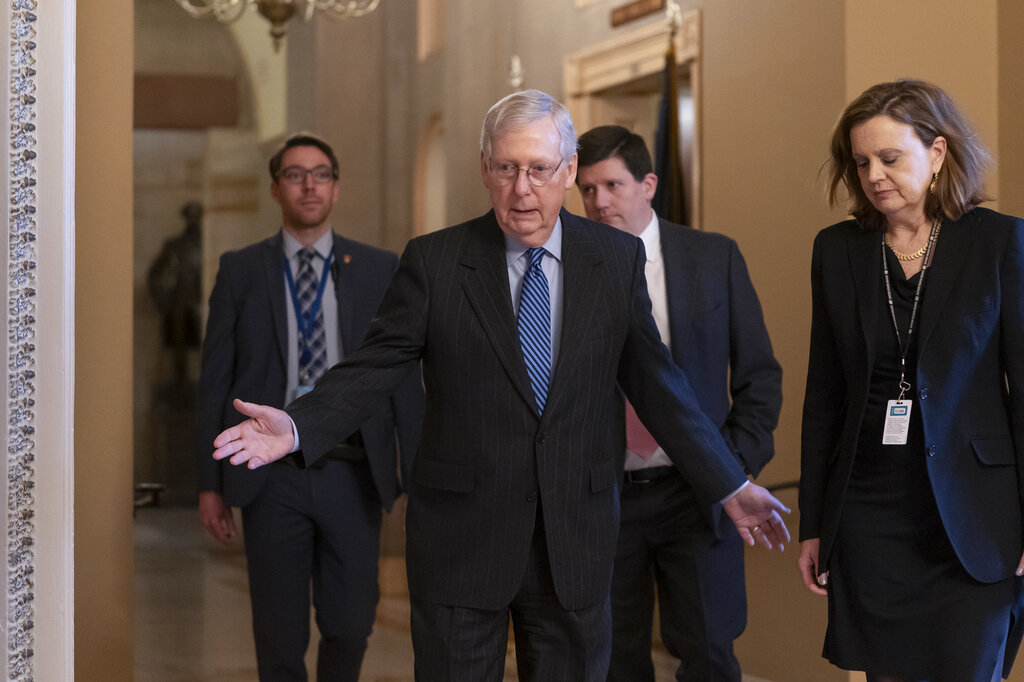
McConnell says he has enough Republican votes to start Donald Trump’s impeachment trial.
Bolton Willing to Testify in Impeachment Trial if Subpoenaed

Bolton has said he has first-hand knowledge of events in the impeachment case.
Trump Returns to Washington to Face a Pair of Challenges

Donald Trump faces a new crisis in the Middle East and an upcoming Impeachment Trial.
Steve Flowers: New Year Begins. It’s a Presidential Year

Steve Flowers discusses the upcoming Presidential election.
John Roberts will tap his inner umpire in impeachment trial
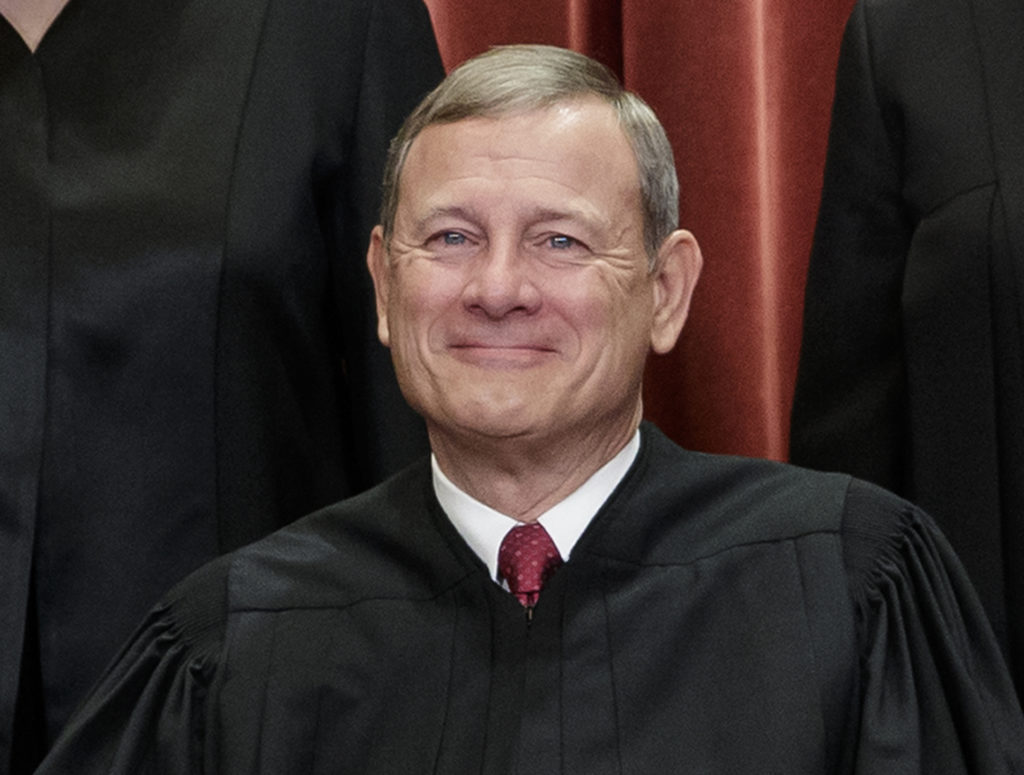
America’s last prolonged look at Chief Justice John Roberts came 14 years ago, when he told senators during his Supreme Court confirmation hearing that judges should be like baseball umpires, impartially calling balls and strikes. “Nobody ever went to a ballgame to see the umpire,” Roberts said. His hair grayer, the 64-year-old Roberts will return to the public eye as he makes the short trip from the Supreme Court to the Senate to preside over President Donald Trump’s impeachment trial. He will be in the national spotlight, but will strive to be like that umpire — doing his best to avoid the partisan mire. “He’s going to look the part, he’s going to play the part and he’s the last person who wants the part,” said Carter Phillips, who has argued 88 Supreme Court cases, 43 of them in front of Roberts. He has a ready model he can follow: Chief Justice William Rehnquist, who never became the center of attention when he presided over President Bill Clinton’s Senate trial. As Roberts moves from the camera-free, relative anonymity of the Supreme Court to the glare of television lights in the Senate, he will have the chance to demonstrate by example what he has preached relentlessly in recent years: Judges are not politicians. He has stuck to his mantra even as he and his fellow, Republican appointees hold a firm 5-4 conservative majority on the Supreme Court. Roberts has a solidly conservative voting record on the court, with a couple of notable exceptions that include sustaining President Barack Obama’s health care law. Trump has been among Roberts’ critics, blasting the chief justice for his health care votes. While Roberts ignored those remarks, at least publicly, he clashed with the president last year when Trump lashed out at an “Obama judge” who ruled against the president’s migrant asylum policy. It’s not as though there isn’t plenty of controversy brewing in his regular place of work. Before the end of June, the justices are expected to decide cases involving guns, abortion, subpoenas for Trump financial records, workplace protections for LGBT people and the fate of an Obama-era program that shields young immigrants from deportation. It’s possible the court will be asked to hear yet another case on the health care law before the term ends. The high court has moved to the right with the addition of two Trump appointees, Justices Neil Gorsuch and Brett Kavanaugh, a development that has made Roberts the justice closest to its ideological center and most able to decide how far the court will move to the right, or left, in any case that otherwise divides liberals and conservatives. In the Senate, though, the chief justice’s powers are limited because any ruling he makes can be overridden by a majority vote. He is not likely to put himself in the position of inviting reversal, said Paul M.Collins Jr., a political scientist and director of legal studies at the University of Massachusetts, Amherst. “Any controversial rulings in support of either party will threaten the viewpoint that the court should be above politics. Democrats would perceive any ruling for Republicans as partisan and if he ruled against the president, Republicans would allege he is holding a grudge,” Collins said. The Senate’s impeachment rules allow Roberts to put questions to a Senate vote, without first ruling himself. Rehnquist looked back on his role in the Clinton trial with a smile. “I did nothing in particular and I did it very well,” Rehnquist recalled two years after the trial, borrowing a line from a Gilbert and Sullivan operetta. Like Rehnquist, Roberts has virtually no experience running a trial, as opposed to the appellate proceedings at the Supreme Court. “I would be shocked if he suddenly becomes a very rigid jurist with respect to technical evidentiary rules,” Phillips said. The mechanics of the trial are not yet clear. Rehnquist had his top aide at the court, James Duff, and at least one law clerk on hand. He regularly consulted with the Senate parliamentarian before announcing rulings. Roberts runs a more flexible Supreme Court than Rehnquist, who would cut off lawyers mid-sentence when the red light came on to show their time was up. Whenever Roberts appears in public, inside the courtroom or elsewhere, he exudes a calm confidence that comes at least in part from preparation. As a leading Supreme Court advocate earlier in his career, Roberts would practice for high court arguments with his main points on five index cards. He rehearsed so that he could make those points in any order and be ready to answer 1,000 questions, even if he might only face 80 to 100 queries during a typical 30-minute argument, he told author Bryan Garner in an interview early in his tenure as chief justice. He also has a quick wit that he has used to settle confusing situations. When the lights dimmed and then went out during arguments in 2016, Roberts quipped, “I knew we should have paid that bill.” Soon after he became chief justice, a light bulb exploded in the courtroom, startling the crowd, justices and court police included. Roberts helped restore calm by calling the incident “a trick they play on new chief justices all the time.” By Mark Sherman Associated Press. Republished with the Permission of the Associated Press.
Nancy Pelosi says impeachment leaves ‘spring’ in people’s step
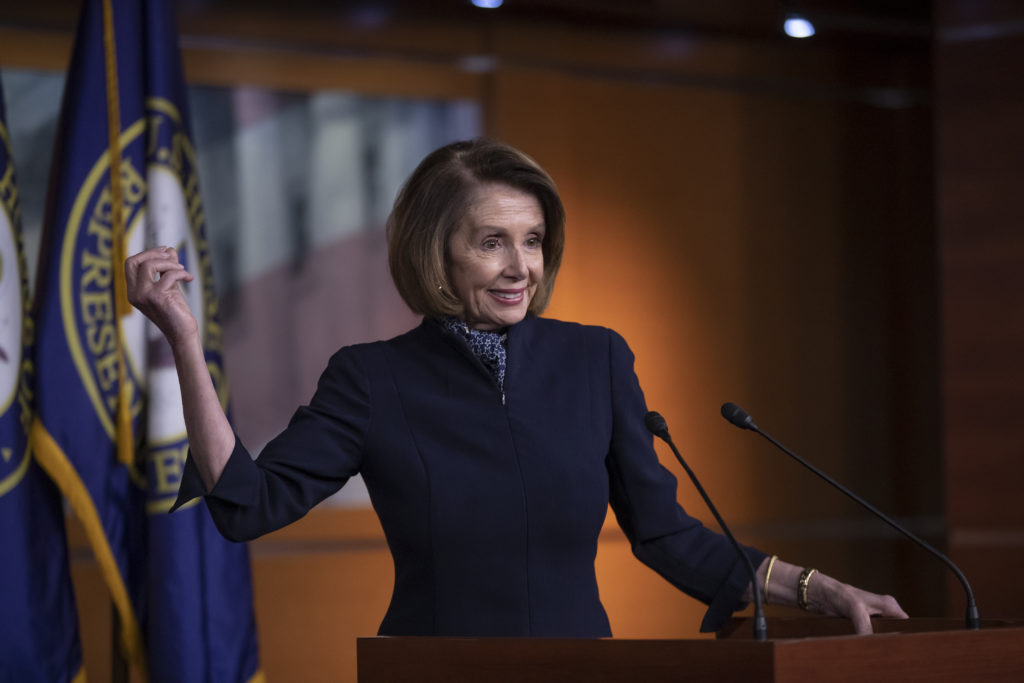
Speaker Nancy Pelosi said Thursday that people have a “spring in their step” after the House impeached President Donald Trump, but she insisted the Senate must provide more details about the expected trial in that chamber before she agrees to send the House charges over. Pelosi’s unexpected procedural delay — looking for leverage in trial arrangements — was getting a sour response from Senate Majority Leader Mitch McConnell and from Trump himself. McConnell said Democrats are “too afraid” to send the charges to the Senate, where Trump would be expected to be acquitted by the Republican majority. Trump tweeted, “Now the Do Nothing Party want to Do Nothing with the Articles.” He claimed that if the Democrats didn’t transmit the articles of impeachment “they would lose by Default,” though there is no constitutional requirement to send them swiftly, or at all. Some White House officials argued that delaying the trial indefinitely actually would play to their advantage and help them make the case that Democrats have manipulated the impeachment process. The trial has been expected to begin in January. Pelosi was upbeat the morning after the historic vote that made Trump only the third president in U.S. history to be impeached. The House impeached Trump on two charges — abusing his presidential power and obstructing Congress — stemming from his pressure on Ukraine to announce investigations of his political rival as Trump withheld U.S. aid. “We’ve been hearing from people all over the country,” Pelosi told reporters at the Capitol. “Seems like people have a spring in their step because the president was held accountable for his reckless behavior.” Pressed about next steps, Pelosi wouldn’t say. Democrats are insisting on more witnesses, testimony and documents than McConnell appears willing to provide before they name the House “managers” who would prosecute Trump in the Senate. “The next thing will be when we see the process that is set forth in the Senate,” Pelosi said. “Then we’ll know the number of managers we may have to go forward and who we would choose.” She said the previous night, “So far we haven’t seen anything that looks fair to us. So hopefully it will be fair. And when we see what that is, we’ll send our managers.” The Democratic speaker and the top Senate Democrat, Chuck Schumer of New York, met privately Thursday at the Capitol after Republican Senate Leader McConnell signaled in the strongest terms yet that his chamber intended to hold a swift trial and acquit the president of both charges. McConnell denounced the “most unfair” House impeachment and reassured Trump and his supporters that “moments like this are why the United States Senate exists.” As for what the Senate would do, he said, “It could not be clearer which outcome would serve the stabilizing, institution-preserving, fever-breaking role for which the United States Senate was created and which outcome would betray it.” McConnell described Trump’s impeachment as “the most rushed, least thorough and most unfair impeachment inquiry in modern history.” Fighting back and using McConnell’s own words, Schumer said the Republican leader was plotting the “most rushed, least thorough and most unfair” impeachment trial in history by declining to agree to call witnesses including former Trump national security adviser John Bolton, who declined to testify before the House. “McConnell claimed the impeachment was motivated by partisan rage,” said Schumer. “This from the man who said proudly, ‘I am not impartial.’” “What hypocrisy.” Pelosi said that McConnell “says it’s OK for the foreman of the jury to be in cahoots with the lawyers of the accused. That doesn’t sound right to us.” McConnell was meeting later Thursday with Schumer to begin negotiations on how to conduct a Senate trial. The two leaders have a tense relationship, and McConnell holds a tactical edge if he can keep his 53-member Senate majority united. Complicating any decision to delay are House Democrats’ arguments in recent weeks that Trump’s impeachment was needed “urgently,” arguing his actions were a threat to democracy and the fairness of the upcoming 2020 election. By Mary Clare Jalonick, Laurie Kellman, and Zeke Miller Associated Press Associated Press writers Alan Fram and Lisa Mascaro contributed to this report. Republished with the Permission of the Associated Press.
Donald Trump impeached by U.S. House on 2 charges
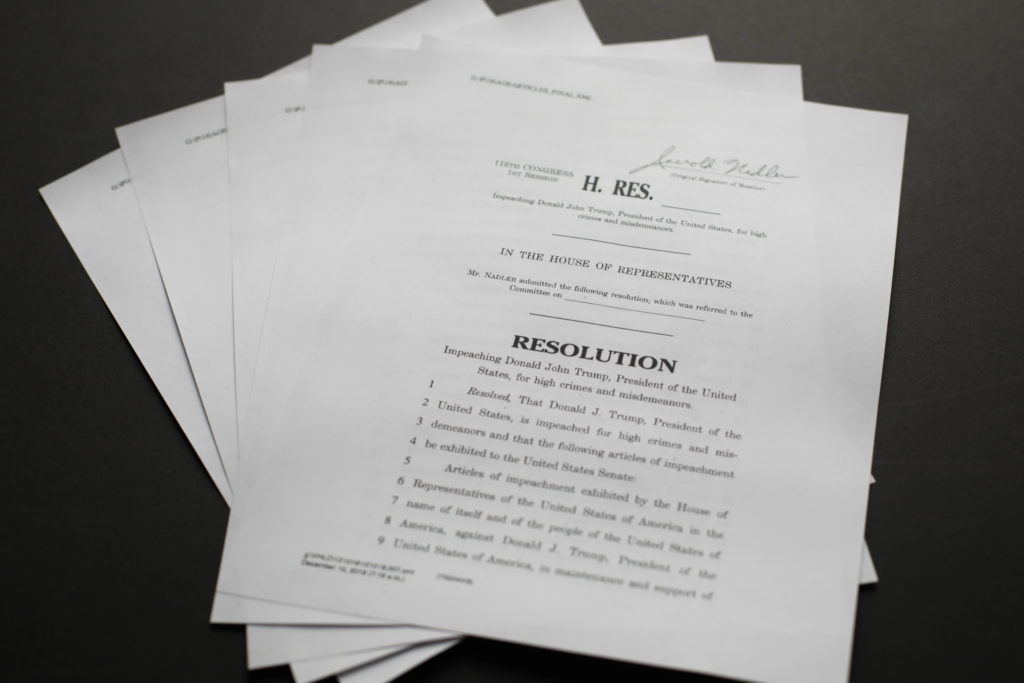
President Donald Trump was impeached by the U.S. House of Representatives Wednesday night, becoming only the third American chief executive to be formally charged under the Constitution’s ultimate remedy for high crimes and misdemeanors. The historic vote split along party lines, much the way it has divided the nation, over a charge that the 45th president abused the power of his office by enlisting a foreign government to investigate a political rival ahead of the 2020 election. The House then approved a second charge, that he obstructed Congress in its investigation. The articles of impeachment, the political equivalent of an indictment, now go to the Senate for trial. If Trump is acquitted by the Republican-led chamber, as expected, he still would have to run for reelection carrying the enduring stain of impeachment on his purposely disruptive presidency. He saw the blame flowing the other direction. He told a political rally in Michigan that “crazy Nancy Pelosi’s House Democrats have branded themselves with an eternal mark of shame.” The votes were 230 for impeachment and 197 against on the first count, 229-198 on the second. Democrats led Wednesday night’s voting, framed in what many said was their duty to protect the Constitution and uphold the nation’s system of checks and balances. Republicans stood by their party’s leader, who has frequently tested the bounds of civic norms. Trump called the whole affair a “witch hunt,” a “hoax” and a “sham,” and sometimes all three. The trial is expected to begin in January in the Senate, where a vote of two-thirds is necessary for conviction. While Democrats had the majority in the House to impeach Trump, Republicans control the Senate and few if any are expected to diverge from plans to acquit the president ahead of early state election-year primary voting. Pelosi, once reluctant to lead Democrats into a partisan impeachment, gaveled both votes closed, risking her majority and speakership to follow the effort to its House conclusion. “Today we are here to defend democracy for the people,” she said earlier during floor debate. Trump, who began Wednesday tweeting his anger at the proceedings, pumped his fist before an evening rally in Battle Creek, Michigan, boasting of “tremendous support” in the Republican Party and saying, “By the way it doesn’t feel like I’m being impeached.” No Republicans voted for impeachment, and Democrats had only slight defections on their side. Voting was conducted manually with ballots, to mark the moment. On the first article, abuse of power, two Democrats, Rep. Jeff Van Drew of New Jersey, who is considering switching parties to become a Republican, and Rep. Collin Peterson of Minnesota voted against impeaching Trump. On the second article, obstruction, those two and freshman Rep. Jared Golden of Maine voted against. Democratic Rep. Tulsi Gabbard of Hawaii, who is running for president, voted “present” on both. What Pelosi called a sad and solemn moment for the country, coming in the first year that Democrats swept control of the House, unfolded in a caustic daylong session that showcased the nation’s divisions — not only along party lines, but also by region, race and culture. The House impeachment resolution laid out in stark terms the two articles of impeachment against Trump stemming from his July phone call when he asked the Ukraine president for a “favor” — to announce it was investigating Democrats ahead of the 2020 election. He also pushed Ukrainian President Volodymyr Zelenskiy to probe unsubstantiated corruption allegations against Joe Biden, the former vice president and 2020 White House contender. At the time, Zelenskiy, a young comedian newly elected to politics, was seeking a coveted White House visit to show backing from the U.S. ally as it confronts a hostile Russia at its border. He was also counting on $391 million in military aid already approved by Congress. The White House delayed the funds, but Trump eventually released the money once Congress intervened. Narrow in scope but broad in its charge, the resolution said the president “betrayed the nation by abusing his high office to enlist a foreign power in corrupting democratic elections,” and then obstructed Congress’ oversight like “no president” in U.S. history. “President Trump, by such conduct, has demonstrated that he will remain a threat to national security and the Constitution if allowed to remain in office,” it said. Republicans argued that Democrats are impeaching Trump because they can’t beat him in 2020. “This vote is about one thing, and one thing only: They hate this president,” said Rep. Chris Stewart, R-Utah. “They want to take away my vote and throw it in the trash.” But Democrats warned the country cannot wait for the next election to decide whether Trump should remain in office because he has shown a pattern of behavior, particularly toward Russia, and will try to corrupt U.S. elections in 2020. “The president and his men plot on,” said Chairman Adam Schiff, Democrat-California, of the Intelligence Committee that led the inquiry. “The danger persists. The risk is real.” The outcome brings the Trump presidency to a milestone moment that has building almost from the time the New York businessman-turned-reality-TV host unexpectedly won the White House in 2016 amid questions about Russian interference in the U.S. election — and the rise of the “resistance.” Democrats drew from history, the founders and their own experiences, as minorities, women and some immigrants to the U.S., seeking to honor their oath of office to uphold the constitution. Rep. Lou Correa, Democrat-California, spoke in Spanish asking God to unite the nation. “In America,” said Rep. Hakeem Jeffries, Democrat-New York, “no one is above the law.” Republicans aired Trump-style grievances about what Arizona Rep. Debbie Lesko called a “rigged” process. “We face this horror because of this map,” said Rep. Clay Higgins, Republican-Alabama, before a poster of red and blue states. “They call this Republican map flyover country, they call us deplorables, they fear our faith, they fear our strength, they fear our unity, they fear our vote, and they fear our president.” The political fallout from the
What to watch as Donald Trump impeachment moved to House floor
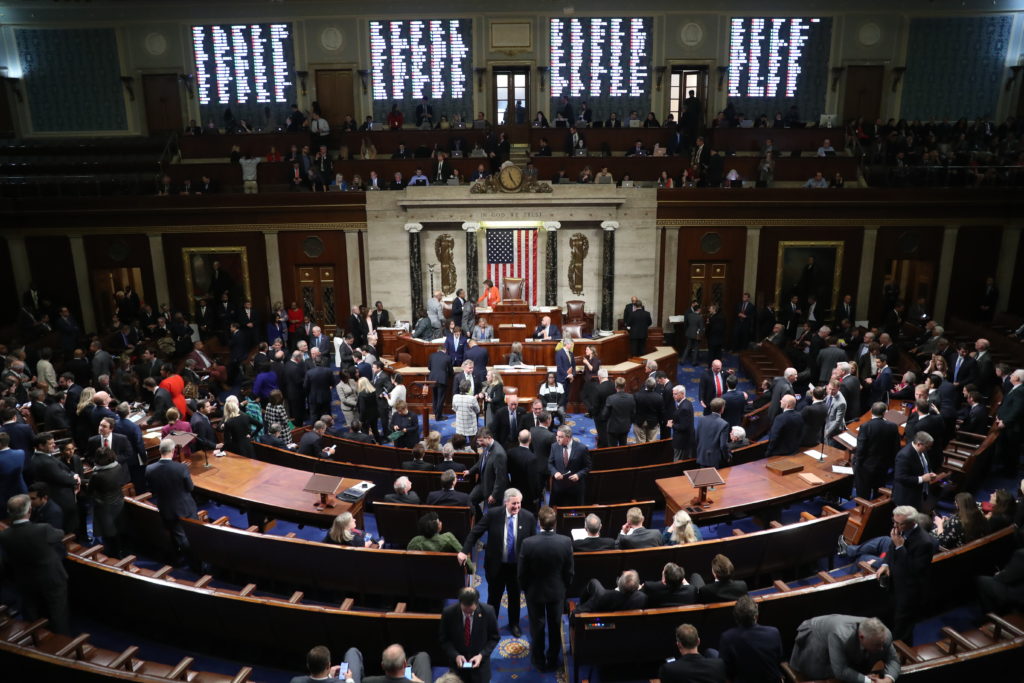
American history is happening in the U.S. House of Representatives. Democrats are driving President Donald Trump to the brink of impeachment Wednesday as the House takes up charges Trump abused his power and obstructed Congress in pressuring Ukraine to investigate political rivals and refusing to cooperate with the ensuing congressional probe. The nation’s 45th president is on track to become only the third commander in chief to be impeached. But first, watch for a daylong showdown that’s been boiling for years between Republicans loyal to Trump and Democrats who say his conduct toward Ukraine makes him unfit for office. Look, too, for legacy moments for Washington’s political veterans on the eve of the 2020 election year. What to watch during a historic day on Capitol Hill that begins at 9 a.m. EST and is expected to end with a final vote between 6:30 and 7:30 p.m.: SPOILER ALERT Trump is heading for impeachment. When the House opens debate, the outcome will have been known for some time. A tally compiled by The Associated Press found that a majority of House members have said they will vote to approve the charges and send them to the Senate for a trial next month. The GOP-led Senate is not expected to convict and remove Trump from office. PARTISANS, MOSTLY Expect most Democrats to vote for impeachment and all Republicans to vote against it. But there are exceptions. One freshman Democrat, Jeff Van Drew of New Jersey, has indicated he will oppose impeachment, then switch parties to become a Republican. Earlier this year, Michigan conservative Rep. Justin Amash left the GOP when he favored impeachment. He is expected to vote yes to impeach. One new Democratic congressman, Jared Golden of Maine, said he would vote to impeach on abuse of power but not obstruction. AMERICANS Expect the House to take the nation’s us-vs-them political culture out for a spin before a global audience. But it’s not clear the proceedings are changing many minds. Trump’s approval ratings have held steady since a whistle-blower report and a partial transcript revealed he had pressured Ukraine’s president to investigate Democrats. Wide shares of Democrats both disapprove of the president and support impeachment, while wide shares of Republicans approve of Trump and want him to remain in office. New polls from The Washington Post/ABC News and CNN find support for impeachment and removal remains at about half of Americans. ‘PROFOUND DISGRACE’ Impeachment will subject Trump to what former Presidents Gerald Ford and Jimmy Carter called a “profound disgrace” that stains a president’s legacy forever. Only two presidents have been impeached: Andrew Johnson in 1868 and Bill Clinton in 1998. Richard Nixon chose to resign instead. Trump has mocked the articles of impeachment as weak. TRUMP’S DAY He’s heading to Michigan, the Democratic state he flipped in 2016. Vice President Mike Pence is on a bus tour across the state and expected to join Trump at the rally in Battle Creek. On the eve of the floor action, Trump gave a nearly six-page preview of his approach in a rambling letter to House Speaker Nancy Pelosi. in which he cast himself as a victim and accused the Democrats of smarting over their election losses. “You are the ones bringing pain and suffering to our Republic for your own selfish, personal political and partisan gain.” PELOSI It’s legacy time for her, too. In her second turn as speaker, the House veteran of more than three decades says relentlessly that impeachment is a somber time, not one for celebration. She says the Clinton impeachment proceedings were too divisive for the county and resisted opening impeachment proceedings against President George W. Bush after the Iraq War. She refused to launch impeachment proceedings against Trump over his obstruction of the Russia investigation, saying she’d be against doing so unless there was bipartisan sentiment for it. That still doesn’t exist for the impeachment articles now headed for passage. But Pelosi has said Trump’s conduct toward Ukraine, while holding up military aid to that country, left her no choice. “Very sadly, the facts have made clear that the President abused his power for his own personal, political benefit and that he obstructed Congress,” Pelosi wrote to colleagues. “In America, no one is above the law.” NEXT STOP: SENATE After votes on each of the two amendments, the House is expected to authorize Pelosi to name a team of prosecutors for the Senate trial. Lobbying for the jobs is well underway. The wagering begins with the two lead House impeachment chairmen, Adam Schiff of Intelligence and Jerrold Nadler of Judiciary, playing roles. The trial is expected to begin in January, with Chief Justice John Roberts presiding. Senate Majority Leader Mitch McConnell and Minority Leader Chuck Schumer have begun negotiating, and sniping, over how the trial will be conducted. McConnell set the partisan tone by declaring that he’s “not an impartial juror.” By Laurie Kellman Associated Press Follow Kellman on Twitter at: https://www.twitter.com/APLaurieKellman Republished with the Permission of the Associated Press.
Bradley Byrne: Answering the call – fighting a phony impeachment
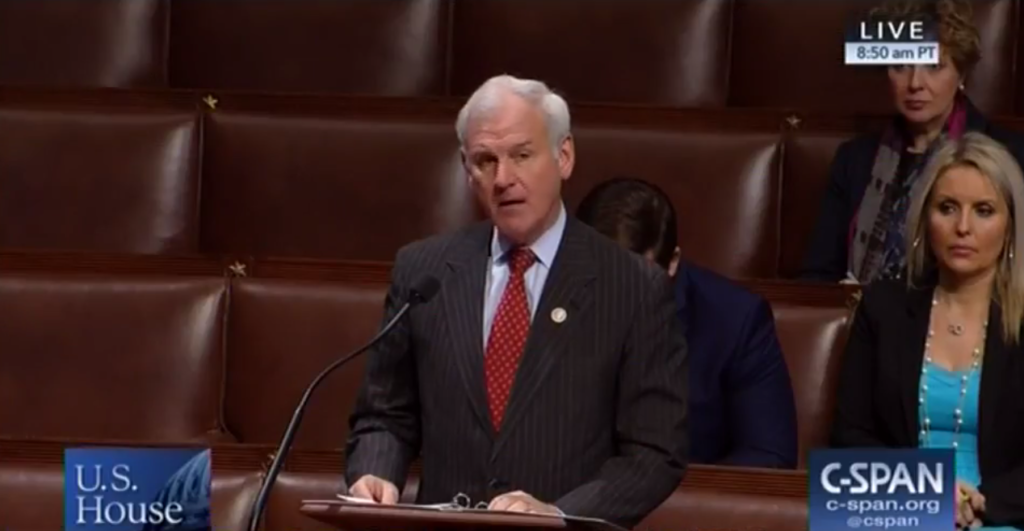
This year Democrats finally did what they have wanted to do since November 2016 – move to impeach President Donald Trump. This plan was politically motivated from the beginning, and I decided to lead the fight against it. This initial investigation into Donald Trump should never have begun in the first place. During the Obama Presidency, partisan government officials abused their power and used a phony dossier paid for by Democrat political operatives to justify the investigation. How could they run a phony investigation into then-candidate Trump while giving Secretary Hillary Clinton a pass on her many clear violations of the law? I introduced a bill called the Investigate the Investigators Act to get the answers the American people deserve. This bill would enable the Department of Justice to determine what President Barack Obama and his Administration knew and when they knew it and why numerous questionable decisions were made in 2016 and beyond. As expected, Nancy Pelosi had no interest in bringing to light answers that could undermine her impeachment scheme. One of the key facets of her plan was to hold proceedings in the House Intelligence Committee instead of the Judiciary Committee. The Intelligence Committee is one of the House’s smallest committees, where the Speaker essentially handpicks its members. Pelosi had a ready-made impeachment team loyal to her, led by Chairman Adam Schiff. Another characteristic of the Intelligence Committee is that it often examines classified material and has wide latitude to hold secret hearings to protect classified information. Schiff and Pelosi abused this to hold hearings in a classified meeting room called a SCIF, deep in the basement of the Capitol where the public and press could not access the facts. Even though the information they reviewed was not classified, the public was kept out. Several of my colleagues and I had enough. We entered the SCIF to observe the proceedings as we should be entitled to do as the people’s representatives. Amazingly, Adam Schiff shut down the hearings. But we kept up the pressure. Eventually Democrats agreed to release their secret transcripts. Let’s not forget what started this whole Ukraine mess – Hunter Biden’s shady foreign business dealings. While Hunter’s dad, Joe Biden, was Vice President of the United States, Hunter was making lucrative deals in countries like Ukraine and China. In Ukraine, where his dad was leading U.S. foreign policy efforts, Hunter was serving on the board of a sketchy energy company called Burisma Holdings. In the past, Joe Biden has bragged openly about successfully pressuring the Ukrainian government to remove Ukraine’s top prosecutor or risk losing United States assistance. That same prosecutor was allegedly investigating Burisma, the company on whose board Hunter Biden sat at the time! President Trump recognized the importance of rooting out corruption in a country to which we give millions of dollars in foreign aid, and he was totally justified in being skeptical of a new administration in a notoriously corrupt country. If the same facts in the Biden case occurred with someone named Trump or Byrne, Democrats would have already launched a full-scale investigation. I decided to expose this hypocrisy. In October, I introduced a House resolution calling for an investigation into the Bidens’ shady business dealings. Democrats will not consider it. The fact that they are continuing their sham Trump investigation while ignoring the real Biden scandal reveals their political motivations. Throughout this investigation, I’ve continued to lead the charge against Democrats’ phony charges and hypocrisy. Democrats will not let up working to remove President Trump from office, even after he is acquitted by the Senate. You can rest assured I will continue to be a strong leader in the fight to protect President Trump.