
US proposes tariffs on $50 billion in Chinese imports
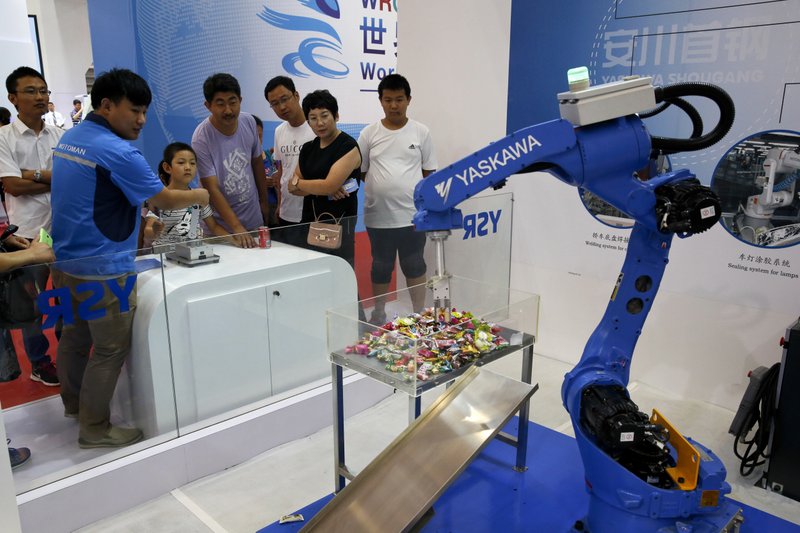
The Trump administration on Tuesday escalated its aggressive actions on trade by proposing 25 percent tariffs on $50 billion in Chinese imports to protest Beijing’s policies that require foreign companies to hand over their technology. China immediately said it would retaliate against the new tariffs, which target high-tech industries that Beijing has been nurturing, from advanced manufacturing and aerospace to information technology and robotics. The Office of the U.S. Trade Representative issued a list targeting 1,300 Chinese products, including industrial robots and telecommunications equipment. The suggested tariffs wouldn’t take effect right away: A public comment period will last until May 11, and a hearing on the tariffs is set for May 15. Companies and consumers will have the opportunity to lobby to have some products taken off the list or have others added. The latest U.S. move risks heightening trade tensions with China, which on Monday had slapped taxes on $3 billion in U.S. products in response to earlier U.S. tariffs on steel and aluminum imports. “China’s going to be compelled to lash back,” warned Philip Levy, a senior fellow at the Chicago Council on Global Affairs and an economic adviser to President George W. Bush. The cherry industry in Washington state is worried its exports to China will be hurt by a growing trade war that escalated Monday when that country raised import duties on a $3 billion list of products. (April 3) Early Wednesday in Beijing, China’s Commerce Ministry said it “strongly condemns and firmly opposes” the proposed U.S. tariffs and warned of retaliatory action. “We will prepare equal measures for U.S. products with the same scale” according to regulations in Chinese trade law, a ministry spokesman said in comments carried by the official Xinhua News Agency. The U.S. sanctions are intended to punish China for deploying strong-arm tactics in its drive to become a global technology power. These include pressuring American companies to share technology to gain access to the Chinese market, forcing U.S. firms to license their technology in China on unfavorable terms and even hacking into U.S. companies’ computers to steal trade secrets. The administration sought to draw up the list of targeted Chinese goods in a way that might limit the impact of the tariffs — a tax on imports — on American consumers while hitting Chinese imports that benefit from Beijing’s sharp-elbowed tech policies. But some critics warned that Americans will end up being hurt. “If you’re hitting $50 billion in trade, you’re inevitably going to hurt somebody, and somebody is going to complain,” said Rod Hunter, a former economic official at the National Security Council and now a partner at Baker & McKenzie LLP. Kathy Bostjancic of Oxford Economics predicted that the tariffs “would have just a marginal impact on the U.S. economy” — unless they spark “a tit-for-tat retaliation that results in a broad-based global trade war.” Representatives of American business, which have complained for years that China has pilfered U.S. technology and discriminated against U.S. companies, were nevertheless critical of the administration’s latest action. “Unilateral tariffs may do more harm than good and do little to address the problems in China’s (intellectual property) and tech transfer policies,” said John Frisbie, president of the U.S.-China Business Council. Even some technology groups that are contending directly with Chinese competition expressed misgivings. “The Trump administration is right to push back against China’s abuse of economic and trade policy,” said Robert Atkinson, president of the Information Technology and Innovation Foundation think tank. However, he said the proposed U.S. tariffs “would hurt companies in the U.S. by raising the prices and reducing consumption of the capital equipment they rely on to produce their goods and services.” “The focus should be on things that will create the most leverage over China without raising prices and dampening investment in the kinds of machinery, equipment, and other technology that drives innovation and productivity across the economy,” Atkinson added. The United States has become increasingly frustrated with China’s aggressive efforts to overtake American technological supremacy. And many have argued that Washington needed to respond aggressively. “The Chinese are bad trading partners because they steal intellectual property,” said Derek Scissors, a China specialist at the conservative American Enterprise Institute. In January, a federal court in Wisconsin convicted a Chinese manufacturer of wind turbines, Sinovel Wind Group, of stealing trade secrets from the American company AMSC and nearly putting it out of business. And in 2014, a Pennsylvania grand jury indicted five officers in the Chinese People’s Liberation Army on charges of hacking into the computers of Westinghouse, US Steel and other major American companies to steal information that would benefit their Chinese competitors. To target China, Trump dusted off a Cold War weapon for trade disputes: Section 301 of the U.S. Trade Act of 1974, which lets the president unilaterally impose tariffs. It was meant for a world in which much of global commerce wasn’t covered by trade agreements. With the arrival in 1995 of the Geneva-based World Trade Organization, Section 301 largely faded from use. Dean Pinkert of the law firm Hughes Hubbard & Reed, found it reassuring that the administration didn’t completely bypass the WTO: As part of its complaint, the U.S. is bringing a WTO case against Chinese licensing policies that put U.S. companies at a disadvantage. China has been urging the United States to seek a negotiated solution and warning that it would retaliate against any trade sanctions. Beijing could counterpunch by targeting American businesses that depend on the Chinese market: Aircraft manufacturer Boeing, for instance, or American soybean farmers, who send nearly 60 percent of their exports to China. Rural America has been especially worried about the risk of a trade war. Farmers are especially vulnerable targets in trade spats because they rely so much on foreign sales. “Beijing right now is trying to motivate US stakeholders to press the Trump Administration to enter into direct negotiations with China and reach a settlement before tariffs are imposed,” the Eurasia Group consultancy said in a
US Customs vows to block imports made by North Korea workers
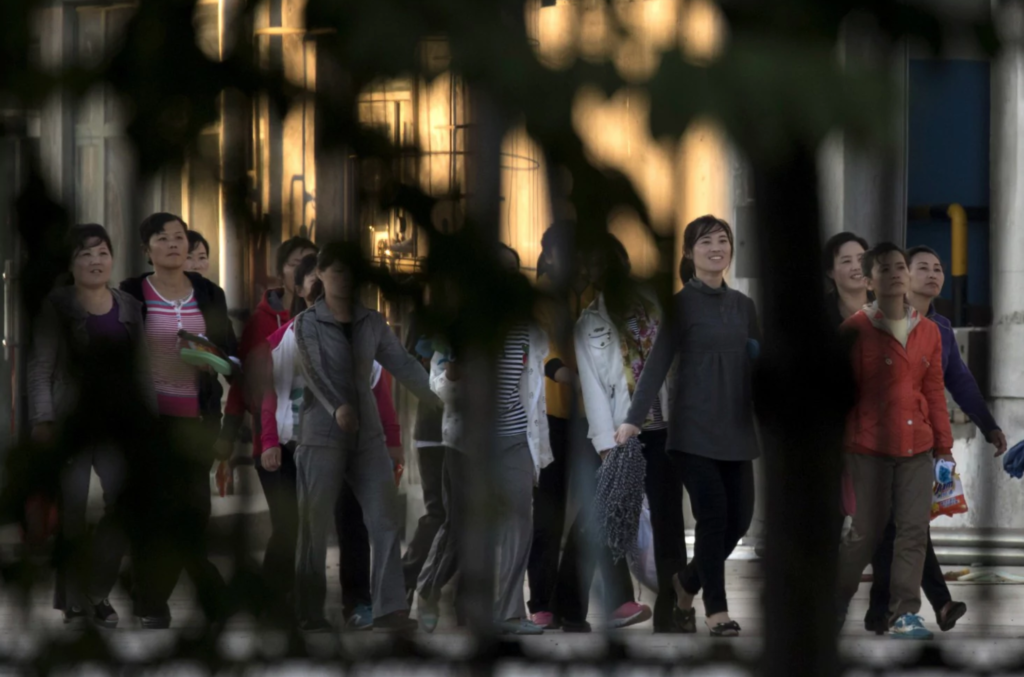
U.S. Customs and Border Protection says it is ready to block U.S. imports of seafood – as well as any other goods – produced by North Korean laborers who work in China. An Associated Press investigation tracked salmon, squid and cod processed by North Koreans working at Chinese factories and shipped to American stores, including Walmart and ALDI. The North Korean workers found in Chinese factories aren’t allowed to leave, and receive only a fraction of their pay – most goes straight to the North Korean state. This means that American consumers buying seafood labeled “Caught in the USA, Processed in China” may inadvertently be subsidizing the government of Kim Jong Un as it builds nuclear weapons, and also supporting forced labor. U.S. Customs and Border Protection said in a statement Thursday it is reviewing the allegations and if warranted, would “pursue all enforcement actions and prohibit goods from importation as appropriate.” The companies that responded also vowed to investigate ties with suppliers. GOP Congressman Chris Smith from New Jersey, who has repeatedly called for tougher enforcement, said the Labor Department has already identified trafficking in 12 sectors of goods exported by China. “CBP should be stopping every shipment from those sectors – and now trafficking-tainted salmon too,” he said. A White House National Security Council spokesman said the North Korean government’s scheme to outsource its labor underscores why the United States has pushed for restrictions on North Korean foreign workers. The spokesman said all countries should, at a minimum, ban companies from bringing in North Korean crews, as pledged in recent United Nations sanctions. China is among the countries that have promised to comply, already banning imports of North Korean seafood, and saying no more North Korean workers will be allowed starting next year. “But all nations must go further and reject what is clearly a despicable practice that only serves the regime’s nuclear ambitions,” said the NSC spokesman, who spoke on condition of anonymity because he wasn’t authorized to comment. Walmart said its supplier has addressed the problem, although it did not specify how. Walmart and ALDI said they are committed to human rights and fair labor practices, and expect the same from their business partners. At a time when North Korea faces sanctions on many exports, the government is sending tens of thousands of workers worldwide, bringing in revenue estimated at anywhere from $200 million to $500 million a year. That could account for a sizable portion of North Korea’s nuclear weapons and missile programs, which South Korea says have cost more than $1 billion. North Koreans overseas work in construction in the Gulf states, shipbuilding in Poland, logging in Russia. In Uruguay, authorities told AP, about 90 North Koreans crewed fishing boats last year. “I am not surprised at all,” said Anthony Talbott, who directs the University of Dayton’s Human Rights Center. “North Korea has probably the single highest level of state-sanctioned slavery in the world, it’s a major source of income for them.” Among those North Korean laborers in China, roughly 3,000 are believed to work in the northeast industrial hub of Hunchun, just a few miles from the borders of both North Korea and Russia. AP documented North Koreans in several Hunchun seafood processing plants, and tracked their supply chains to importers, including Sea-Trek Enterprises in Rhode Island, where managers said they are being inundated with phone calls from customers and suppliers since the AP story. Sea-Trek’s owners said that they hadn’t visited China and were unaware of the makeup of the workers, but would immediately cease dealings with the plant until the situation is resolved. “Sea-Trek will not purchase product from any company using forced labor,” said vice president Mitch Sarnoff. Mark Liszt, owner of Lawrence Wholesale, a national food distributor in Southern California, said it would investigate its suppliers as well. “We’re middlemen,” said Liszt. “We do make a practice of trying to go and visit the plants that we buy from in person, but it’s not a perfect world that we can see into every single one.” Some U.S. brands and companies had indirect ties to the North Korean laborers in Hunchun, including Chicken of the Sea, owned by Thai Union. Trade records show shipments came from a sister company of the Hunchun factory in another part of China, where Thai Union spokeswoman Whitney Small says labor standards are being met and the employees are all Chinese. Small said the sister company should not be penalized. AP observed North Korean workers in Chinese factories building hardwood flooring, sewing garments and manufacturing electronics. Fordham University economics professor Giacomo Santangelo said he doubts it’s just fish processed by North Korean workers that reaches the U.S. markets. “Now we need to ask, how many other products imported from China are made with North Korean labor?” he said. Top Senate Democrat Chuck Schumer of New York said U.S. officials must keep products made by North Koreans out of the United States. “The administration needs to ramp up the pressure on China to crack down on trade with North Korea across the board,” he said. Ohio’s Democratic Sen. Sherrod Brown, who helped pass North Korea, Iran and Russia sanctions this summer, said corporations also have a responsibility to make sure they are abiding by U.N. sanctions and U.S. laws. However, Bucknell University political science professor Zhiqun Zhu said a sanction-based approach that cracks down on imports isn’t going to solve the problem. “It has so many loopholes,” he said. “All sticks and no carrots will not make the North Korea problem disappear.” Republished with permission from the Associated Press.
GOP-led Congress prepared to let Export-Import Bank expire
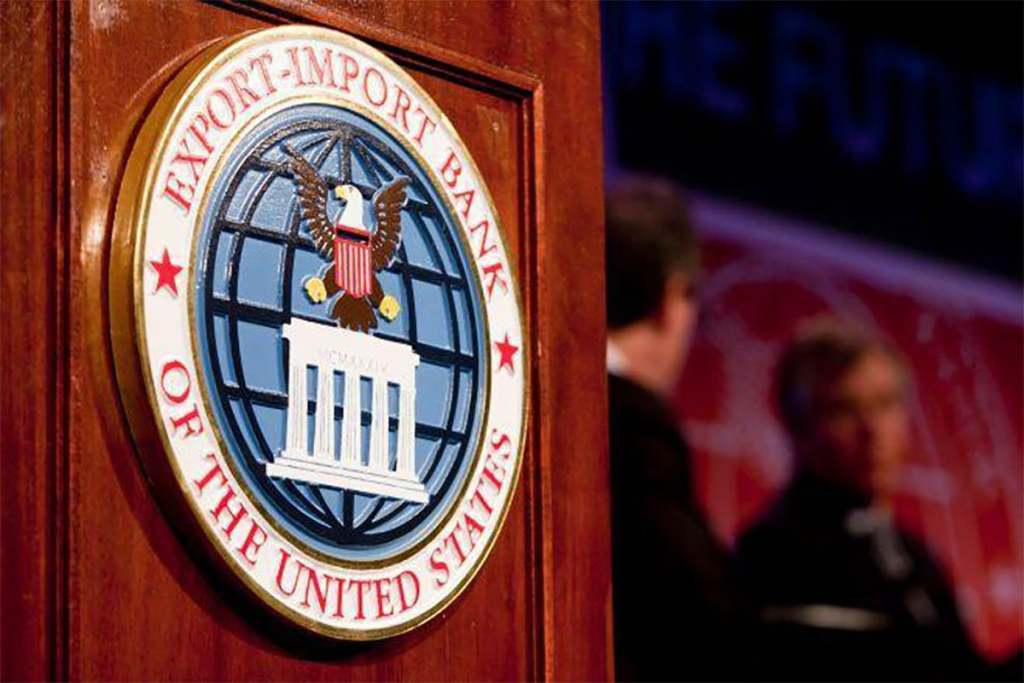
Congressional Republicans are poised to deal a sharp blow to their traditional allies in the business community by allowing the federal Export-Import Bank to go out of business at the end of the month. But it may only be temporary. The 81-year-old bank is a little-known federal agency created during the Depression that makes and guarantees loans to help overseas buyers purchase U.S. products, from airplanes to bridges to baby clothes. Over the past year it’s also become a surprising test of GOP purity, as Tea Party-backed lawmakers and outside conservative groups have denounced the bank as crony capitalism and vowed to get rid of it, pressuring fellow Republicans to go along. “It is the purest form of corporate welfare, where you have a government agency that basically exists to subsidize Boeing airplanes and GE engines and Caterpillar tractors,” said Dan Holler of Heritage Action for America, one of the conservative groups pushing congressional Republicans to stand against the bank. Supporters at the U.S. Chamber of Commerce and other business groups disagree, arguing that the agency helps many smaller companies and is necessary to keep U.S. businesses competitive, especially because key foreign competitors such as China have generous export credit agencies helping their homegrown industries. “The fact that all the major exporting countries have export credit agencies means American exporters would be competitively disadvantaged if the bank goes away,” said Boeing spokesman Tim Neale. “The opposition has thrown a lot of stuff out there that’s frankly pretty misleading.” The Export-Import Bank, which says it supported $27 billion in U.S. exports last year, still counts supporters in both parties on Capitol Hill. But a number of high-profile Republicans including Senate Majority Leader Mitch McConnell, R-Ky., and House Majority Leader Kevin McCarthy, R-Calif., have abandoned past support for the bank under pressure from the party’s conservative wing. Most of the party’s leading presidential candidates have also lined up against reauthorizing the bank. “The Export-Import Bank is essentially welfare for big corporations, both foreign and domestic,” Texas Sen. Ted Cruz, one of the GOP hopefuls, said in a Wednesday speech at the Heritage Foundation. “Do nothing, let it expire, and end the gravy train for Washington lobbyists on the Export-Import Bank.” Republican House Speaker John Boehner of Ohio, a longtime business booster, has pushed his Financial Services Committee Chairman Jeb Hensarling, R-Texas, to come up with a plan to reform the bank or wind it down. Hensarling has responded, instead, by pushing for the bank’s charter to expire without a vote June 30. With Congress heading out on recess next week and no prospect of action on the Export-Import Bank before then, Hensarling and fellow tea party conservatives will get their wish. But their victory may be short-lived. Lawmakers of both parties on Capitol Hill expect a reauthorization of the bank could move in the Senate in July. If attached to must-pass legislation extending the federal highway trust fund, it could make it through the House as well. The fate of the Export-Import Bank has become enmeshed in Congress’ contentious debate over trade after Washington Democratic Sen. Maria Cantwell withheld her support on a key trade vote last month until she said she got a commitment from McConnell to allow a vote on the bank. What exactly was agreed to is now a matter of dispute on Capitol Hill, and McConnell says he’s already fulfilled his commitment by allowing a symbolic vote on the Export-Import Bank earlier this month that allowed supporters to demonstrate they command at least 65 votes in favor. Still, McConnell and other GOP leaders sound open to adding a reauthorization of the bank to the highway bill next month. “The highway bill, of course, will be open for amendment, and it’s pretty obvious that that would be a place for this vote to occur,” McConnell said Tuesday. Asked about the issue Wednesday, Boehner said: “I think some expectation has been that it’ll come over here on some must-pass bill. The only commitment I’ve made is that if it does, it would be considered under an open process.” Some supporters seem resigned to a brief lapse in the bank’s charter. But some Democrats say even a temporary standstill will jeopardize projects and U.S. jobs. They also question whether Congress has abandoned its habit of solving problems only when a deadline looms – in favor of solving them only after the deadline has come and gone. “There’s a whole lot of people who think that it doesn’t matter; it does matter. It matters to the jobs that are out there. We have $11 billion in credit in the pipeline at the Ex-Im Bank. That $11 billion is now going to be stalled out,” said Sen. Heidi Heitkamp, D-N.D. “I hope that the message this place gets is do things on time, don’t wait.” Republished with permission of The Associated Press.
