
Victory lap: Donald Trump heads for Indianapolis, Cincinnati
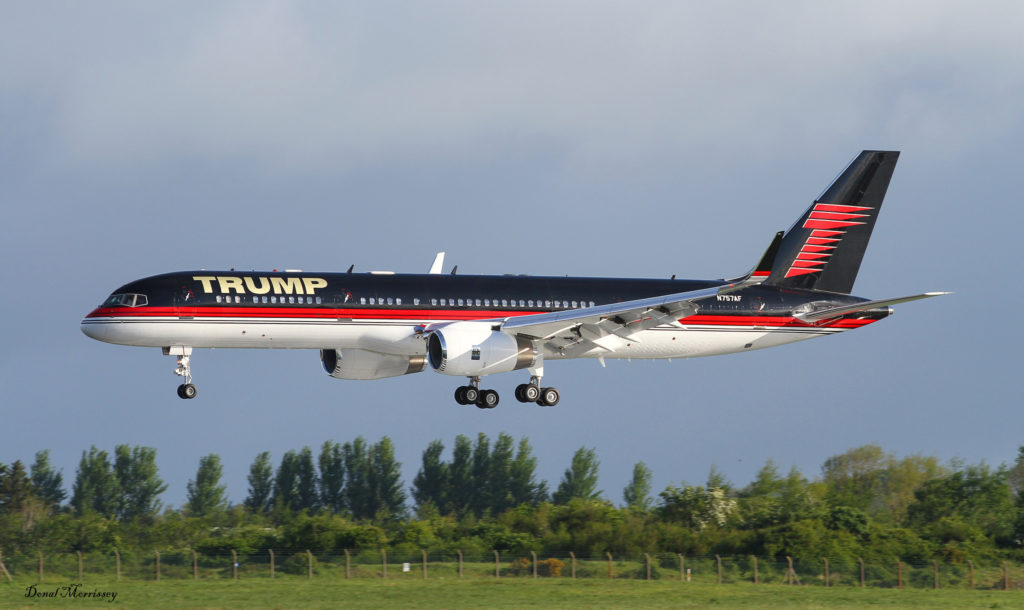
President-elect Donald Trump headed out on a victory lap Thursday, appearing first in Indiana to salute workers at a factory where he says he saved hundreds of jobs from moving to Mexico and then in Ohio on the first stop of a “Thank You Tour” to honor supporters in states that helped him to his stunning victory. Thursday’s Midwest swing will be the first time that Trump, who has shown an early inclination to revel in the role of showman-in-chief, has barnstormed across the country since the campaign. But now his signature rallies will carry the imprimatur of president-elect. And both stops will feature Trump declaring victory after a campaign built on the lament that “we don’t win anymore” as a nation. But now the question arises: Which Trump will appear at the rally? A newly serious Trump embracing the gravity of the job who will conduct a spirited but formal rally befitting a president? Or will he revert to the campaign Trump, flying off the teleprompter with inflammatory remarks and encouraging raucous crowds chanting “Build the wall” and vilifying critics? And some questions remain about the extent of victory at Carrier, which announced this week that it will keep an Indianapolis plant open. In February, the heating and air conditioning company said that it would shut the plant and send jobs to Mexico, and video of angry workers being informed about the decision soon went viral. The Republican businessman made it a key theme in his campaign, pledging to save that factory and ones like it as part of his plan to rebuild the American manufacturing industry while preventing jobs from fleeing overseas. He said this week that Carrier had agreed to keep some 800 union jobs at the plant. Seth Martin, a spokesman for Carrier, said Thursday that Indiana offered the air conditioning and furnace manufacturer $7 million in tax incentives after negotiations with Trump’s team to keep some jobs in the state. Indiana economic development officials did not immediately respond to a request for comment. The company’s decision is something of a reversal, since earlier offers from the state had failed to sway Carrier. Trump threatened during the campaign to impose sharp tariffs on any company that shifted its factories to Mexico. And his advisers have since promoted lower corporate tax rates as a means of keeping jobs in the U.S. “Big day on Thursday for Indiana and the great workers of that wonderful state. We will keep our companies and jobs in the U.S. Thanks Carrier,” Trump tweeted Tuesday. Trump will tour the factory with his running mate Mike Pence – who, as the outgoing governor of Indiana, was well-situated to aid negotiations – and then the president-elect will give a speech about the deal, aides said. By enabling the plant to stay open, the deal spares about 800 union workers whose jobs were going to Mexico, according to federal officials who were briefed by the company. This suggests that hundreds will still lose their jobs at the factory, where roughly 1,400 workers were slated to be laid off. Neither Trump nor Carrier has said yet what the workers might have to give up, or precisely which other threats or incentives might have been used, to get the manufacturer to change its mind. “Today’s announcement is possible because the incoming Trump-Pence administration has emphasized to us its commitment to support the business community and create an improved, more competitive U.S. business climate,” the company said in a statement Wednesday. Trump’s deal with Carrier may be a public relations success for the incoming president but also suggests that he has unveiled a new presidential economic approach: actively choosing individual corporate winners and losers – or at least winners. To critics who see other Indiana factories on the verge of closing, deals like the one at Carrier are unlikely to stem the job losses caused by automation and cheap foreign competition, and the prospect that the White House might directly intervene is also a concern to some economists. The other victory Trump will celebrate Thursday is far more clear-cut: his own on Election Day. Trump will hold a campaign-style rally in Cincinnati, the first of several stops on a tour this month. Trump, who has long spoken of feeding off the energy of his raucous crowds, first floated the idea of a victory tour just days after winning the election but has instead prioritized filling some Cabinet positions. The rally in Cincinnati, which Pence also will attend, will take place in the same downtown sports arena where Trump appeared in late October and drew about 15,000 people in what was one of his loudest – and most hostile to the media – crowds of the campaign. Trump, who convincingly won Ohio, is also expected to hold rallies in battleground states including Pennsylvania, Florida, North Carolina and Michigan in the coming weeks, though details have yet to be announced. Republished with permission of The Associated Press.
GOP team addresses America Saturday
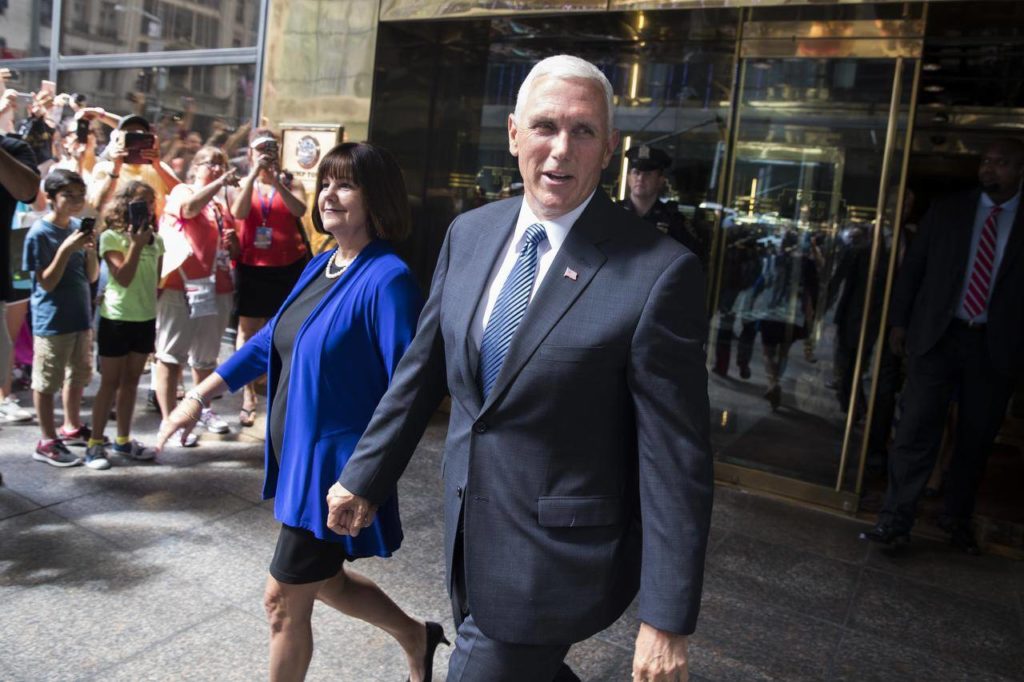
After frenzied, final decision-making, Donald Trump announced Indiana Gov. Mike Pence as his running mate Friday, adding an experienced politician with deep Washington connections to the Republican presidential ticket. Trump’s pick was aimed in part at easing some Republicans’ concerns about his temperament and lack of political experience. Pence spent 12 years in Congress before being elected governor and his demeanor is as calm as Trump’s is fiery. While some conservatives are skeptical of Trump’s political leanings, Pence has been a stalwart ally on social issues. Yet Pence is largely unknown to many Americans. And his solidly conventional political background runs counter to Trump’s anti-establishment mantra. The two men scheduled a news conference for Saturday in New York to present themselves to America as the Republican team that will take on Hillary Clinton and her Democratic running mate in November. The duo will head to Cleveland next week for the Republican National Convention. As Pence arrived for a private meeting with Trump Friday, he told reporters he “couldn’t be more happy for the opportunity to run with and serve with the next president of the United States.” In choosing Pence, Trump appears to be looking past their numerous policy differences. The governor has been a longtime advocate of trade deals such as NAFTA and the Trans-Pacific Partnership, both of which Trump aggressively opposes. Pence also has been critical of Trump’s proposed temporary ban on foreign Muslims entering the United States, calling the idea “offensive and unconstitutional.” The reaction to the Pence choice from Republican officials was overwhelmingly positive — no small feat for Trump, given how polarizing he’s been within his own party. “It was a pick that clearly shows he is pivoting to the general election,” said GOP chairman Reince Priebus, who was in the midst of an interview with The Associated Press when Trump announced his decision. “He is choosing a person who has the experience inside and outside Washington, Christian conservative, very different style that I think shows a lot of maturity.” Pence, a staunchly conservative 57-year-old, served six terms in Congress before being elected governor and could help Trump navigate Capitol Hill. He is well-regarded by evangelical Christians, particularly after signing a law that critics said would allow businesses to deny service to gay people for religious reasons. Clinton’s campaign moved quickly to paint him as the “most extreme pick in a generation.” “By picking Mike Pence as his running mate, Donald Trump has doubled down on some of his most disturbing beliefs by choosing an incredibly divisive and unpopular running mate,” said John Podesta, Clinton’s campaign chairman. Clinton spent Friday holding meetings in Washington about her own vice presidential choice. Massachusetts Sen. Elizabeth Warren, a favorite of liberals and one of the Democrats’ most effective Trump critics, and Colorado Gov. John Hickenlooper, were seen in separate cars that left Clinton’s home. Housing Secretary Julian Castro also met with Clinton, according to a person familiar with the meeting who spoke on condition of anonymity to describe the private gathering. Trump spent weeks weighing vice presidential contenders, including former House Speaker Newt Gingrich and New Jersey Gov. Chris Christie, and only zeroed in on Pence in recent days. In fact, the selection process appeared on the verge of sliding out of control in the final hours before the announcement, sparking speculation that Trump might be changing his mind. Word that Pence would be joining the Republican ticket began trickling out in news reports Thursday before Trump had made a final decision or called Pence to offer him the job, according to a Republican familiar with the situation. Trump was in California for fundraisers, separated from his closest aides, and was fuming about leaks that he viewed as an attempt to pressure him into the decision. Still, Trump called Pence Thursday afternoon to offer him the job and ask him to fly to New York for a Friday morning news conference. Pence accepted and boarded a private plane, along with his wife. A few hours later, a huge truck barreled through a crowded holiday celebration in Nice, France, killing more than 80 people. With Pence sitting in a New York hotel, Trump decided to postpone the announcement. The billionaire businessman then went on Fox News to say he had not yet settled on his “final, final” choice. He also held a midnight conference call with his top aides to discuss the situation, according to two people with knowledge of the call. By Friday, plans were back on track. Trump sent out a Twitter message saying he was pleased to announce Pence as his running mate. Moments later, one of Pence’s aides filed paperwork with the Indiana Secretary of State’s office withdrawing him from the governor’s race. Pence was up for re-election, and state law prohibits candidates from being on ballots in two contests. Trump’s formal announcement came about an hour before Pence’s noon Friday deadline for withdrawing. Paul Manafort, Trump’s campaign chairman, strongly rejected suggestions that the candidate considered changing his mind about Pence. “Never waffled once he made his decision,” Manafort wrote in an email. Gingrich, one of the finalists for the vice presidential spot, said he was “very comfortable” with Trump’s decision and praised Pence as someone who could help unite the party. But as of Friday afternoon, Gingrich had yet to share his support with Trump himself. He told The Associated Press he had not received a call from Trump telling him he wasn’t getting the job. Meanwhile, Trump did speak with Christie, according to a person familiar with their conversation. Ironically, Christie traveled with Trump to Indiana in April to help introduce the candidate to Pence when Trump was trying to win his endorsement ahead of India’s primary. Pence endorsed Trump’s rival Ted Cruz instead. Republished with permission of the Associated Press.
Running mate Mike Pence: Conservative but not angry about it
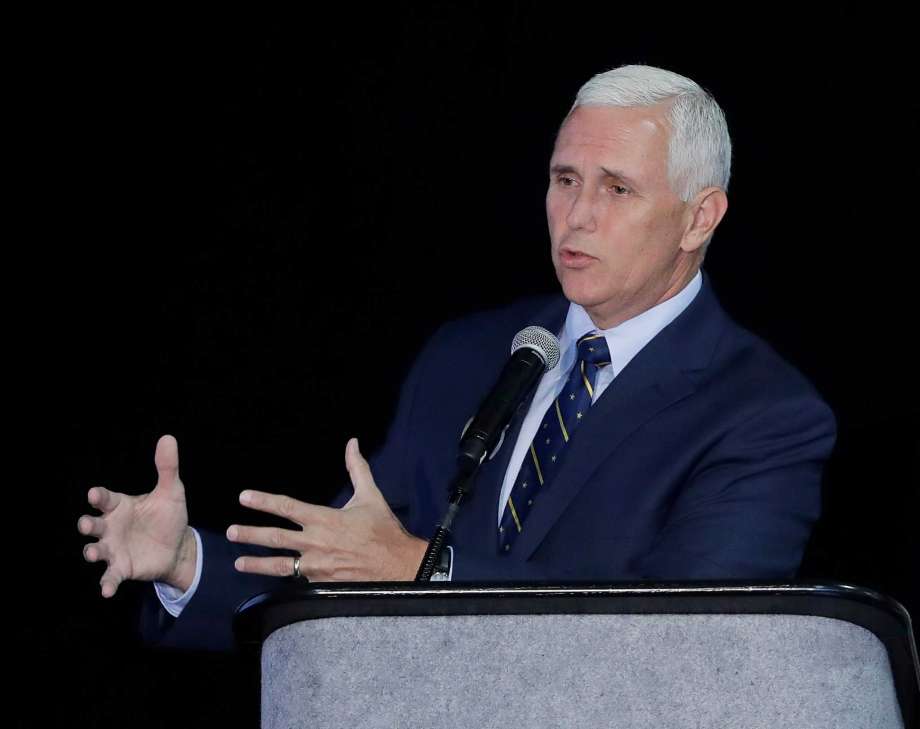
As a conservative talk-radio host in the 1990s, Mike Pence described himself as “Rush Limbaugh on decaf.” Two decades later, Pence is the unflappable conservative governor of Indiana who’s being plucked by Republican presidential contender Donald Trump as his running mate. Where Trump is impulsive, Pence is cool-headed. Where Trump makes conservatives suspicious, Pence has credibility. And where Trump struggles to draw evangelical Christians, Pence is well-regarded by them. A favorite quote highlights how Pence might smooth some of the sharp corners of the Trump campaign and its supporters. “I’m a conservative,” Pence says. “But I’m not angry about it.” The former congressman also is a proven fundraiser with close ties to billionaire industrialists David and Charles Koch and their network of wealthy donors, many of whom have been dismissive of Trump. “One thing you can say about Mike Pence is he’s got a very calm, steady demeanor that in some ways is a little Reaganesque,” said Christine Mathews, a Republican pollster for former Indiana Gov. Mitch Daniels. “He’s a counterbalance to Trump in that way.” Trump announced on Twitter Friday morning that he’s selected Pence as his running mate, capping a wild 24 hours of speculation interrupted by the truck attack in Nice, France, that left scores dead. Not so long ago, their relationship was a little awkward. Trump met privately with Pence before Indiana’s primaries, seeking his endorsement. Instead, Pence, under pressure from national conservatives, tepidly endorsed Trump’s rival, Texas Sen. Ted Cruz, while still lavishing praise on Trump. Trump won that primary. Before the night was over, Cruz had quit the race. For Pence, a former six-term congressman, Trump’s selection offers a return to national politics after his embrace as governor of conservative social issues sidelined his own presidential ambitions. Pence describes himself as “a Christian, a conservative and a Republican, in that order.” In 2015 he provoked a national backlash after signing a law that critics said would have allowed businesses to deny service to gay people for religious reasons. Even some Indiana Republicans have questioned his decisions, suggesting Pence has at times seemed more interested in appealing to national conservatives than doing what’s best for the state. Pence’s support of the state’s religious objections law led to a revolt from the business community, which joined gay rights advocates in successfully pushing for changes to the law. Raised in Columbus, Indiana, in an Irish-Catholic family, Pence revered the Kennedys growing up and has said he voted for Jimmy Carter in 1980. He later identified as an evangelical Christian and was inspired to join the Republican Party by former President Ronald Reagan, whose “happy warrior” rhetorical style Pence has since tried to emulate. After attending Hanover College, Pence graduated from Indiana University Law School in 1986. He met his wife, Karen, around the same time and twice unsuccessfully ran for Congress before taking a job at Indiana Policy Review, a conservative think-tank. In a 1991 essay titled “Confessions of a Negative Campaigner,” Pence swore off harsh political tactics he used in “one of the most divisive and negative campaigns in Indiana’s modern congressional history” while calling for “basic human decency.” “That means your First Amendment rights end at the tip of your opponent’s nose — even in the matter of political rhetoric,” Pence wrote, though he backtracked in the face of a difficult re-election campaign in Indiana. In Congress, Pence sponsored a few bills that became law as amendments in other legislation. But he built a national following among conservatives for his willingness to buck his own party after opposing President George W. Bush‘s Medicare expansion and the No Child Left Behind education overhaul. During the early years of President Barack Obama‘s administration, Pence helped lead the opposition to the Democrat’s agenda. “He has a particularly strong talent, a gift if you will, for being able to stick to principle while making his political opponents or those who disagree with him feel like they are being heard and respected,” said Ryan Streeter, a former Pence aide and George W. Bush staffer who is now a public affairs professor at the University of Texas. Pence’s congressional experience is one trait that Trump, who has never held public office, wanted in a running mate. Marc Short, a former Pence aide and top Koch brothers operative, elaborated: “He’s worked with (House Speaker) Paul Ryan. He’s worked with the team in House leadership. He’s somebody who has deep relationships in the evangelical movement, and he’s somebody who has foreign affairs experience.” Pence’s one term as governor has drawn mixed reaction, and he has managed to alienate moderate Republicans over social issues. Groups threatened boycotts over last year’s religious objections law and late-night television hosts mocked the policy, leading lawmakers to approve changes. This year Pence clashed with the local Catholic archdiocese by opposing the settlement of Syrian refugees in Indianapolis. Pence was also slammed for the planned 2015 launch of “JustIN,” a state-operated news service that was ditched after critics panned it as “Pravda on the Plains.” But he has also presided over Indiana’s improving economy and plummeting unemployment rate, which Republicans credit to the state’s low taxes, limited regulation and pro-business climate. Republished with permission of the Associated Press.
Mike Pence with Donald Trump on blocking some immigration

The Latest on the 2016 presidential campaign (all times local): 10:40 p.m. Indiana Gov. Mike Pence says he supports Donald Trump‘s call to “temporarily suspend immigration from countries where terrorists’ influence and impact represents a threat to the United States.” Pence spoke Friday on Fox News Channel’s “Hannity,” giving his first TV interview since Trump invited him to join the Republican ticket for the White House. Last year, Pence came out against Trump’s proposed temporary ban on foreign Muslims entering the United States, calling such a ban “offensive and unconstitutional.” Trump’s spokeswoman recently said he no longer supports his proposed religious test. Pence says he “stepped up without hesitation” when Trump asked him to be his running mate. He says Trump “understands the anxiety and the aspiration of the American people” like no leader since President Ronald Reagan. __ 9:10 p.m. Hillary Clinton is expressing support for the government of Turkish President Recep Tayyip Erdogan after an attempted military coup rocked Turkey’s capital. The Democratic presidential candidate is urging “calm and respect for laws, institutions, and basic human rights and freedoms — and support for the democratically elected civilian government.” She says, “All parties should work to avoid further violence and bloodshed, and the safety of American citizens and diplomatic missions must be ensured.” Turkish officials say the government appears to have repelled the attempted coup following a night of explosions, air battles and gunfire across Ankara. __ 8:10 p.m. A leader of conservatives making a last-ditch attempt to block Donald Trump’s nomination says she’s dropping her effort to force the Republican National Convention to vote on her plan to let delegates back any presidential candidate they want. The convention rules committee has already rejected Colorado delegate Kendal Unruh‘s proposal to “unbind” delegates from the candidates they were committed to by state primaries and caucuses. Unruh had been saying that despite that defeat, she’d get enough support to force a full convention vote next week on her plan to let delegates vote their conscience. But she said Friday that the Trump campaign and party officials have peeled away that support. She says she and her supporters believe delegates already have the right to vote their conscience and will oppose Trump’s nomination. ___ 5:35 p.m. Donald Trump says the taxes he pays are a private matter. But for candidates auditioning to be his running mate, similar reluctance wasn’t an option. Vice presidential search finalist Newt Gingrich said Thursday that Trump’s campaign required him to submit more than a decade worth of tax returns as part of the vetting process. Vetting potential vice presidents’ tax returns is a standard practice for candidates in both parties — but Trump has so far refused to make his own returns public on the grounds that he is being audited by the Internal Revenue Service. But tax scholars and former IRS officials have noted there is no rule against releasing tax filings during audits and say Richard Nixon released his returns while under audit in 1973. __ 5:15 p.m. Housing and Urban Development Secretary Julian Castro has met with Hillary Clinton at her Washington home as the presumptive Democratic presidential nominee considers her choice for vice president. That’s according to a person familiar with the Friday gathering, who spoke on condition of anonymity to discuss the private meeting. Two other senior Democrats also appeared to meet with Clinton on Friday. Massachusetts Sen. Elizabeth Warren and Colorado Gov. John Hickenlooper were seen in separate cars that departed Clinton’s home Friday afternoon. Clinton is also vetting Virginia Sen. Tim Kaine for the vice presidency and campaigned with him in his home state Thursday. Castro is considered a rising star in the party and is a former mayor of San Antonio. ___ 4:40 p.m. Colorado Gov. John Hickenlooper has visited Hillary Clinton’s Washington home as the presumptive Democratic presidential nominee ponders her choice for vice president. Hickenlooper was in a car that departed Clinton’s Washington home Friday afternoon. The Democratic governor declined to comment on his visit. The apparent meeting came after Massachusetts Sen. Elizabeth Warren visited Clinton’s house earlier Friday. Other candidates Clinton is known to be vetting are Virginia Sen. Tim Kaine and Housing and Urban Development Secretary Julian Castro. A person who spoke on condition of anonymity to discuss internal matters said earlier that Clinton was holding meetings Friday about her running mate selection. ___ 4 p.m. Delegates to the Republican National Convention are embracing Donald Trump‘s choice for vice president — even those who have yet to warm up to Trump. Some delegates hope the choice of Indiana Gov. Mike Pence will help unite Republicans and fire up the party base to support Trump. Not everyone is on board. But at the very least, Trump has all but assured that next week’s convention vote for vice president will go smoothly. Pence has a strong reputation among fellow Republicans as a social conservative. The former congressman has plenty of Washington experience and a calm, thoughtful demeanor that stands in stark contrast to the bombastic Trump. New Hampshire delegate Tom Rath called Pence a solid pick who should reassure a lot of people in the party. __ 3:40 p.m. An application by Bernie Sanders‘ campaign for a permit to rally during the Democratic National Convention has been denied. A spokeswoman for Philadelphia Mayor Jim Kenney says it was rejected because of the requested location in a park across from the convention site. She says the campaign sought to use a certain field that can only be used for recreational purposes. The application said the July 24 rally would be in support of Sanders’ campaign and estimated the crowd size at 15,000 to 40,000 people. Kenney’s spokeswoman, Lauren Hitt, says it’s not too late for the campaign to apply for a different location, if it is still interested. Sanders said Friday he won’t be holding any large rallies during the July 25-28 convention, but will focus on attending smaller events and talking to delegates. __ 3:30 p.m.
Donald Trump taps Indiana Gov. Mike Pence as his Vice Presidential running mate
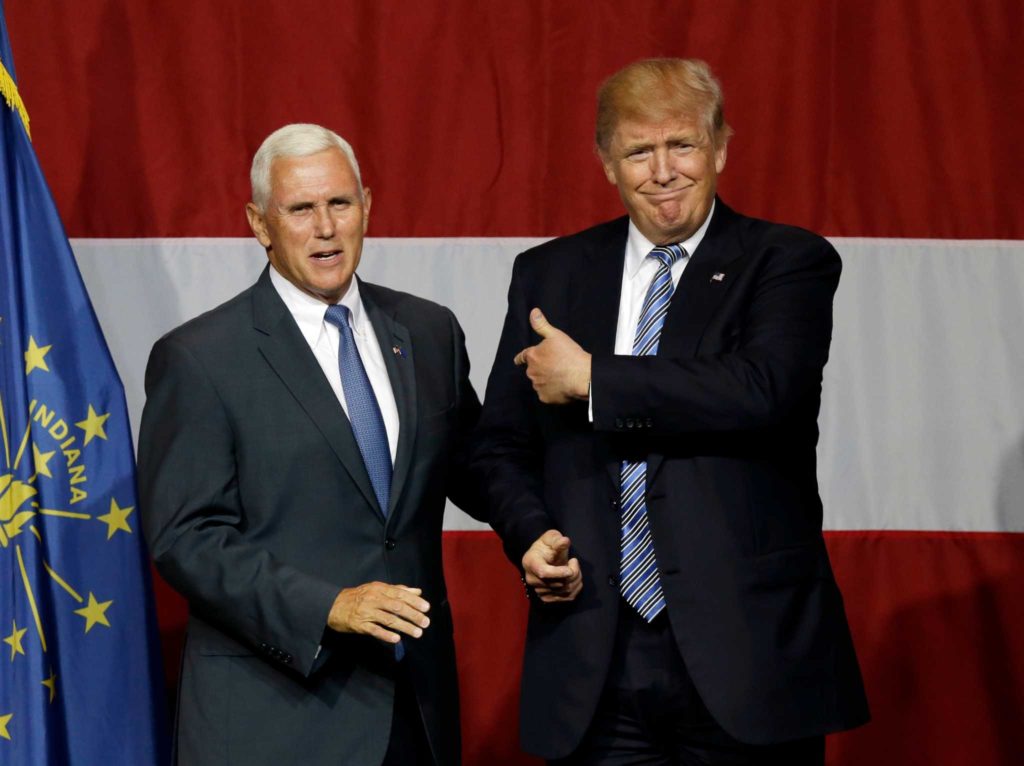
Donald Trump has offered Mike Pence the vice presidential spot on his Republican ticket, and Trump aides have told the Indiana governor the formal announcement event could be made on Saturday. That’s according to a Republican with direct knowledge of the process, who spoke on condition of anonymity because the person was not authorized to publicly discuss the details of Trump’s search for a running mate. Trump made the offer and Pence accepted Thursday afternoon, before the governor traveled to New York, the Republican said. The announcement had been planned for Friday morning in midtown Manhattan, but Trump delayed his plans after the truck attack in Nice, France, that left more than 80 people dead. The staunchly conservative Pence, who is 57, served six terms in Congress before being elected governor and could help Trump navigate Capitol Hill. He’s well-regarded by evangelical Christians, particularly after signing a law that critics said would have allowed businesses to deny service to gay people for religious reasons. The announcement delay created a complication for Pence. He’s up for re-election in Indiana, but state law requires him to withdraw from that race by noon Friday if he’s joining Trump on the Republican ticket. Pence’s team has drawn up the paperwork for the withdrawal, the Republican said, but as of Friday morning, the documents had not been submitted. Trump’s frenetic decision-making process was made more complicated by the fact that the businessman was in California Thursday for a series of fundraisers, isolated from nearly all of his closest advisers, including his three adult children and his campaign chairman, Paul Manafort. Frustration among Trump and his advisers mounted because of news reports that Pence was the pick, sending top aides scrambling to insist no final decision had been made. The billionaire said in a series of television interviews Thursday night that he’d not yet settled on a “final, final” choice, leaving open the possibility the unpredictable presumptive nominee could change his mind. But Manafort said Friday morning he believed Trump had “reached a decision but he isn’t prepared to announce it yet.” Manafort dismissed suggestions in an interview on Fox News Channel that Trump was having second thoughts about his choice. He said Trump was planning on making an announcement this weekend. A second Republican said Friday he spoke to Trump on Thursday morning, and the New York real estate mogul said he had chosen Pence and would be calling the governor to make the offer and ask him to fly to New York. That Republican also spoke on condition of anonymity, because the person was not authorized to publicly discuss the conversation. Trump’s prospective choice of Pence as his running mate adds political experience – and a dose of unflappability – to the Republican presidential ticket. Pence would be a reliably conservative No. 2 with a calm demeanor and deep ties to Washington. His apparent selection signals Trump is serious about addressing GOP concerns about his own conservative credentials and lack of Washington experience. Trump also seriously considered offering the running mate post to former House Speaker Newt Gingrich and New Jersey Gov. Chris Christie, according to people familiar with the process. In a brief interview with The Associated Press Friday morning, Gingrich said he had still not been told by Trump that he would not be the choice. After spending much of Thursday in Indianapolis, Pence flew to New York. Local television stations posted video showing him arriving at a private airport outside New York and then entering a hotel. Trump has little time to re-schedule his announcement. The Republican convention kicks off in Cleveland Monday. Top party officials are already in Cleveland, where a committee voted late Thursday to rebuff a push to let delegates vote for any presidential candidate they’d like. It was a major blow to Republican foes of Trump who have been working to try to thwart his nomination. Pence would have the backing of GOP leaders and ease some of their concerns about Trump’s political inexperience and volatile temperament. Pence also has influential allies in Trump’s inner circle. But some of Trump’s children, who have been closely advising their father, were said to favor different candidates. Republished with permission of The Associated Press.
Dan Coats says Donald Trump hasn’t made up his mind on VP
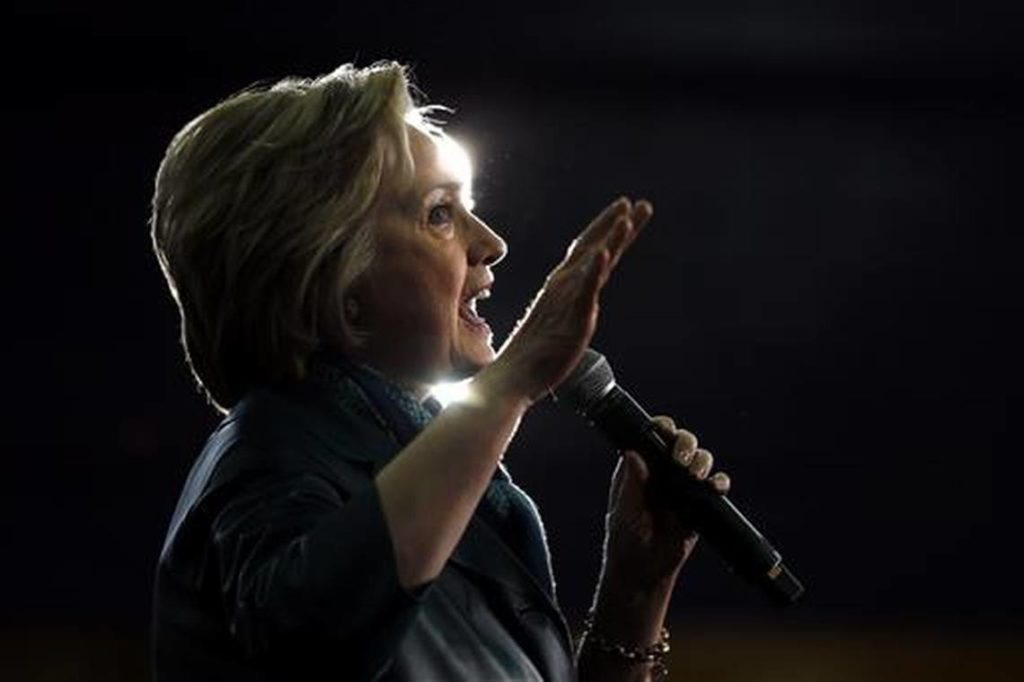
The Latest on the 2016 presidential campaign ahead of the Republican and Democratic national conventions (all times EDT): 1:30 p.m. Indiana Sen. Dan Coats says Donald Trump hasn’t made up his mind about who to select as his running mate. Coats told The Associated Press Wednesday that he spoke with Gov. Mike Pence late Tuesday — one of the names on Trump’s shortlist of potential running mates — and Pence told him there’s still no decision. “I think he’s the front-runner,” Coats said, adding, “I think he ought to be the front-runner.” Coats said Pence is “pretty calm about the whole thing.” He added that Trump is cognizant that he needs to make a decision by Friday given gubernatorial succession rules in Indiana. But he concluded that “reading Donald Trump’s mind is not the easiest thing to do.” ___ 1:20 p.m. Hillary Clinton says the Republican Party of Abraham Lincoln has been transformed into “the party of Trump.” Rattling off a series of attacks against her GOP rival, Clinton says Trump is “dangerous,” ”divisive,” ”fear-mongering” and is “pitting American against American.” Even stalwart Republicans, she says, should be alarmed by Trump’s policies and racist rhetoric. Clinton is casting Trump as ignorant of the Constitution, dismissive of U.S. law and lacking the character to be trusted with American security. “Imagine if he had not just Twitter and cable news to go after his critics and opponents, but also the IRS – or for that matter, our entire military,” she says. “Do any of us think he’d be restrained?” ___ 1:07 p.m. Hillary Clinton is calling on the country — including herself — to “do a better job of listening” rather than fueling political and other divisions after a series of high-profile shootings. Clinton says the country must address both gun violence, criminal justice reform and find ways to better support police departments. “I know that just saying these things together may upset some people,” she says. “But all these things can be true at once.” Clinton is speaking in the Illinois Old State House chamber in Springfield, the site of Abraham Lincoln’s his famous address about the perils of slavery. She is trying to use the symbolic site to contrast her call for civility with what she sees as rival Donald Trump’s polarizing campaign. Clinton said she has work to do, as well. She says that as someone “in the middle of a hotly fought political campaign, I cannot claim that my words and actions haven’t sometimes fueled the partisanship that often stands in the way of our progress.” Clinton adds, “I recognize that I have to do better too.” ___ 12:29 p.m. Donald Trump is meeting with finalists for the job of his vice presidential running mate. Trump met Tuesday with New Jersey Gov. Chris Christie and his family. Early Wednesday, Trump and his children met with Indiana Gov. Mike Pence and his family. Former House Speaker Newt Gingrich also was said to be a finalist. All three have auditioned for the job by opening for Trump at campaign rallies over the past week. Trump was expected to make an announcement on Friday. ___ 10:20 a.m. Republican Donald Trump huddled with Indiana Gov. Mike Pence at the governor’s mansion in Indiana on Wednesday morning amid swirling speculation about Trump’s vice presidential deliberations. Pence and Trump walked out of the residence together just before 10:30 a.m. The pair was joined inside by Pence’s wife, Karen, as well as Trump’s daughter, Ivanka, and his son-in-law Jared Kushner. Trump is said to have narrowed his short list down to a trio of top contenders, including Pence. Pence joined Trump at a fundraiser and a rally on Tuesday where he received a warm reception from the crowd. ___ 10:15 a.m. The lead super PAC backing Democratic presidential candidate Hillary Clinton has begun targeting Spanish-speaking voters in Colorado, Nevada and Florida as part of a $35 million online effort it announced earlier this year. An online ad from Priorities USA features video clips of Trump calling Hispanics “drug dealers” and “criminals” and leading his supporters in the chant: “Build that wall! Build that wall! Build that wall!” In Spanish, an on-screen message declares that “hatred is growing in our country.” The ad campaign also includes a website: unidoscontratrump.org, which means “united against Trump.” The same message will appear in banner ads on social media. The three targeted states all have significant Latino populations. Trump insists he can do better among Hispanics than the less-than-30 percent Republican Mitt Romney drew in 2012 after calling for “self-deportation” for immigrants in the country illegally. ___ 7:35 a.m. Bernie Sanders says he agrees with the harsh remarks that Justice Ruth Bader Ginsburg has made about Republican presidential candidate Donald Trump. The Vermont senator declined to say whether it is appropriate for a sitting Supreme Court justice to openly criticize a White House contender. But he tells ABC’s “Good Morning America” that he agrees Trump is a “total opportunist” and said “the record clear is quite clear that he lies just a whole lot of the time.” Ginsburg in a series of interviews with The Associated Press, The New York Times and CNN has called Trump unqualified to be president and joked that she would move to New Zealand if he won. Trump said in a tweet that Ginsburg should resign. Sanders’s comments came a day after he formally endorsed Hillary Clinton as the Democratic nominee for president. Asked if he is open to being her running mate, Sanders said, “I doubt that will happen.” He said his focus is on helping Clinton win. He says, “We cannot have a man with Trump’s temperament with the nuclear code and running this country.” 5:25 a.m. Hillary Clinton is turning to the symbolism of Abraham Lincoln’s “House Divided” speech to argue that the nation needs to repair its divisions after high-profile shootings in Texas, Louisiana and Minnesota. Clinton’s campaign says the Democratic presidential candidate will talk about the importance of uniting
Darryl Paulson: Donald Trump the demagogue: Have you no sense of decency?

(First of three parts) With Donald Trump‘s victory in Indiana and the withdrawal of his last two opponents, he is assured a first ballot victory at the July convention in Cleveland. The good news is that there will be no riots as Trump threatened with a deadlocked convention. The bad news is that Donald Trump is the Republican presidential nominee. Lincoln must be spinning in his grave. On June 9, 1954, Joseph Welch was testifying before the Army/McCarthy Hearings in Washington. Welch was chief counsel for the U.S. Army while that branch of the service was under investigation for communist activities before Sen. Joe McCarthy‘s Senate Permanent Subcommittee on Investigations. During the hearings, McCarthy attacked Fred Fisher, an attorney in Welch’s law firm. While a student at Harvard, Fisher had joined the Lawyers Guild, identified by the FBI as a communist-front organization. Fisher had notified Welch of his “youthful indiscretion,” and did not participate in the hearings. Nevertheless, McCarthy persisted in his attacks. Welch asked McCarthy not to “assassinate this lad further, Senator.” McCarthy continued his assault on Fisher. Welch interrupted and berated McCarthy. “You’ve done enough. Have you no sense of decency, sir, at long last? Have you left no sense of decency?” Welch’s confrontation with McCarthy attracted national attention. It was the beginning of the end for McCarthy and McCarthyism. Within three years, McCarthyism was dead and so was the senator. Has Trumpism now replaced McCarthyism? Right before the Indiana primary, Trump went on Fox and Friends and attacked Rafael Cruz, the father of Ted Cruz. Trump accused the elder Cruz of being involved with Lee Harvey Oswald in the assassination of President John F. Kennedy. Trump told Fox viewers that “this was reported and nobody talks about it.” Who reported the story? The National Enquirer, long known for its exposés on Hollywood starlets and their Martian babies. David Peeker, the CEO of the Enquirer, is a Friend of Trump and has endorsed his candidacy. The Enquirer previously ran a story accusing Cruz of having affairs with five women. McCarthy and Trump both destroy lives based on little or no evidence and a lot of lies. As long as their goal is advanced, it matters not what happens to the wrongly accused. New York Times columnist David Brooks has called Trump the “most dishonest person to run for high office in our lifetime.” Trump is “oblivious to accuracy.” In a position that demands the highest level of maturity, we are left with a childish man lacking a moral compass. Here are a baker’s dozen of reasons why Trump is unqualified to be president: Trump has called for “a total and complete shutdown of Muslims entering the U.S.” Forget that means 1.2 billion individuals and that it violates both U.S. and international law. Trump accuses Mexican illegals as “bringing drugs. They’re bringing crime. They’re rapists.” Trump wants to deport all 11 million illegals, but offers no plan on how to do it. Trump’s proposal to eliminate ISIS is very simple, and I mean that in the worse way possible. Trump says he would “bomb the shit out of them.” Now, that’s a plan. Carly Fiorina has an “ugly face! Would anyone vote for that?” Megyn Kelly asks a tough question of Trump and he accuses her of being unbalanced due to her period. Trump accuses Ben Carson of being “pathological” and, thus, unfit to be president. He stretches Carson’s youthful temper tantrums by comparing it to child molesters. Child molesters are “pathological” and “you don’t cure a child molester.” Trump attacks John McCain as not being a war hero because his plane was shot down over North Vietnam. “I like people who weren’t captured.” When asked to renounce the endorsement of longtime Klansman David Duke, Trump responded that he doesn’t know anything about Duke. Strange. In 2000, Trump wrote an opinion piece for The New York Times saying he was leaving the Republican Party because of its ties to Duke. Trump frequently asks participants at his rallies to raise their right arm and pledge allegiance to him. The salute reminded many of salutes to Adolf Hitler when he controlled Germany. Der Spiegel, a German magazine, called Trump “the world’s most dangerous man,” and the leader of a “hate-filled movement.” Trump encourages torture against terrorists and the killing of families of terrorists. Both would violate U.S. and international law. At his rallies, Trump spoke of wanting “to punch protesters in the face.” After a Black Lives Matter protester was assaulted, Trump said, “Maybe he should have been roughed up.” Trump’s language seeks to divide Americans rather than unite them. Trump talks about “you” and “we” needing to attack the dangerous “them.” His opponents are branded as “stupid,” “weak,” or “losers.” Trump often attacks people and then denies doing so. He said he would never “call Megyn Kelly a bimbo because that would be politically incorrect.” He called her a bimbo and then said he would never do it. Trump consistently distorts the truth, changes positions and lies. PolitiFact called Trump’s collection of misstatements the “lie of the year.” It found that 76 percent of the 77 Trump statements were False, Mostly False or Pants on Fire. Trump is the first and only presidential candidate to defend the size of his penis in a debate. I wish reason would be sufficient to sway individuals from supporting Trump, but I know that reason seldom succeeds. Like in most mass movements, Trump’s supporters will deny that Trump ever said or did the things he has done. They will rally to his defense. Trump is not fit to be president. The sooner Americans realize this, the sooner we can end this national nightmare that is Donald Trump. Part II on Monday: Democracy and Demagogues will examine why demagogues so frequently emerge in democracies. *** Darryl Paulson is Emeritus Professor of Government at USF St. Petersburg.
John Kasich dropping out, AP sources say; Donald Trump on clear GOP path
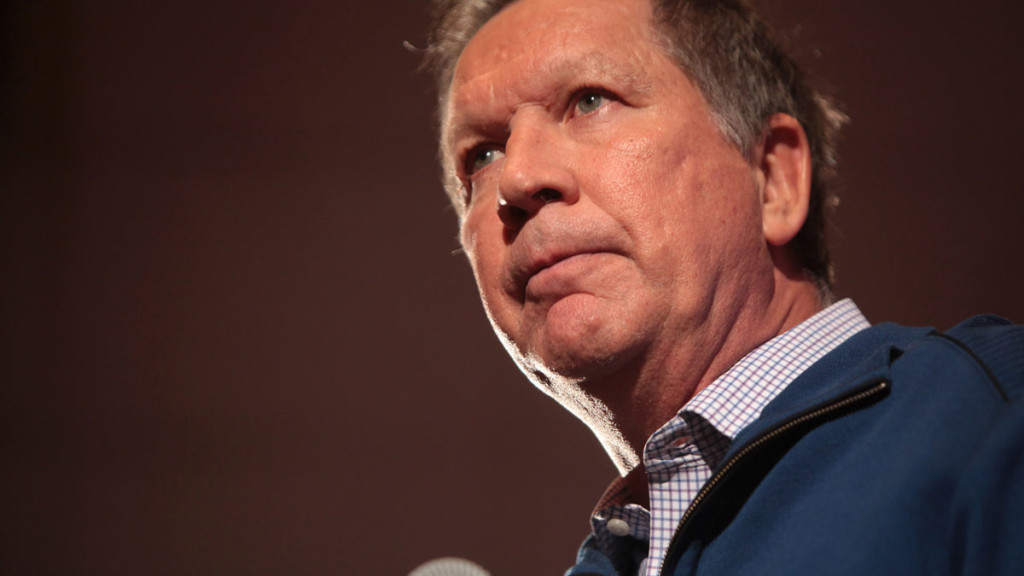
Ohio Gov. John Kasich is leaving the Republican presidential contest, giving Donald Trump a clear path to his party’s nomination. Kasich will announce the end of his underdog White House bid on Wednesday, according to three campaign officials who spoke on the condition of anonymity because they were not authorized to discuss the candidate’s plans. The decision comes a day after Trump’s only other rival, Ted Cruz, dropped out. With no opponents left in the race, Trump becomes the Republican Party’s presumptive presidential nominee to take on the Democratic nominee in November — presumably Hillary Clinton. Though armed with an extensive resume in politics, the second-term Ohio governor struggled to connect with Republican primary voters in a year dominated by anti-establishment frustration. Kasich was a more moderate candidate who embraced elements of President Barack Obama‘s health care overhaul and called for an optimistic and proactive Republican agenda. Even before news of Kasich’s decision surfaced, Trump signaled a new phase of his outsider campaign that includes a search for a running mate with experience governing and outreach to one-time competitors in an effort to heal the fractured Republican Party. “I am confident I can unite much of” the GOP, Trump said Wednesday on NBC’s “Today Show, as several prominent Republicans said they’d prefer Democrat Clinton over the New York billionaire. In a shot at his critics, Trump added: “Those people can go away and maybe come back in eight years after we served two terms. Honestly, there are some people I really don’t want.” His comments on several networks came a few hours after Trump, once dismissed as a fringe contender, became all-but-certainly the leader of the Republican Party into the fall campaign against Clinton. The former secretary of state suffered a defeat Tuesday in Indiana to her rival, Bernie Sanders, but holds a definitive lead in Democratic delegates who will decide the Democratic nomination. The Republican competition changed dramatically with Trump’s Indiana victory and Ted Cruz’s abrupt decision to quit the race. Trump won the Indiana contest with 53.3 percent of the vote, to Cruz’s 36.6 percent and Ohio Gov. John Kasich’s 7.6 percent, according to unofficial results. Some Republican leaders remain acutely wary of Trump and have insisted they could never support him, even in a faceoff against Clinton. “The answer is simple: No,” Tweeted Nebraska Sen. Ben Sasse, who has consistently said he could not support Trump. What’s their plan moving forward? “Prayer,” responded Republican strategist Tim Miller, a leader of one of the GOP’s anti-Trump groups. “Donald Trump is just going to have an impossible time bringing together the Republican coalition.” Some conservative leaders were planning a Wednesday meeting to assess the viability of launching a third party candidacy to compete with him in the fall. Such Republicans worry about Trump’s views on immigration and foreign policy, as well as his over-the-top persona. Hours before clinching victory in Indiana, Trump was floating an unsubstantiated claim that Cruz’s father appeared in a 1963 photograph with John F. Kennedy‘s assassin, Lee Harvey Oswald — citing a report first published by the National Enquirer. Trump defended his reference to the Enquirer article on Wednesday morning as “Not such a bad thing,” but the line of attack was the final straw for some Republican critics. “(T)he GOP is going to nominate for President a guy who reads the National Enquirer and thinks it’s on the level,” Mark Salter, a top campaign aide to 2008 Republican nominee John McCain, wrote on Twitter on Tuesday. He added Clinton’s slogan: “I’m with her.” On finding a running mate, Trump told MSNBC’s “Morning Joe” that he’ll “probably go the political route,” saying he’s inclined to pick someone who can “help me get legislation passed.” Trump didn’t identify any of the names under consideration. He also said he’s hoping to decide within a week how to fund a general election campaign, but said he didn’t want to accept money from super PACs. He told ABC’s “Good Morning America” that he would begin to accept more political donations. “I’m really looking at small contributions, not the big ones. I don’t want anyone to have big influence over me,” he said. A prominent Cruz donor, Mica Mosbacher, quickly signaled support for Trump and urged others to follow. “I call on fellow conservatives to unite and support our new nominee Trump,” said Mosbacher, widow of a member of George H.W. Bush‘s cabinet. “My heart goes out to Cruz who has a bright future. He did the unselfish thing to drop out.” Vermont Sen. Bernie Sanders eked out a victory over Clinton in Indiana, 52.5 percent to 47.5 percent. But the outcome will not slow the former secretary of state’s march to the Democratic nomination. Heading into Tuesday’s voting, Clinton had 92 percent of the delegates she needs. “I know that the Clinton campaign thinks this campaign is over. They’re wrong,” Sanders said defiantly in an interview Tuesday night. But Clinton already has turned her attention to the general election. She and Trump now plunge into a six-month battle for the presidency, with the future of America’s immigration laws, health care system and military posture around the world at stake. While Clinton heads into the general election with significant advantages with minority voters and women, Democrats have vowed to not underestimate Trump as his Republican rivals did for too long. Republished with permission of the Associated Press.
In Indiana, Ted Cruz faces make-or-break moment to stop Donald Trump
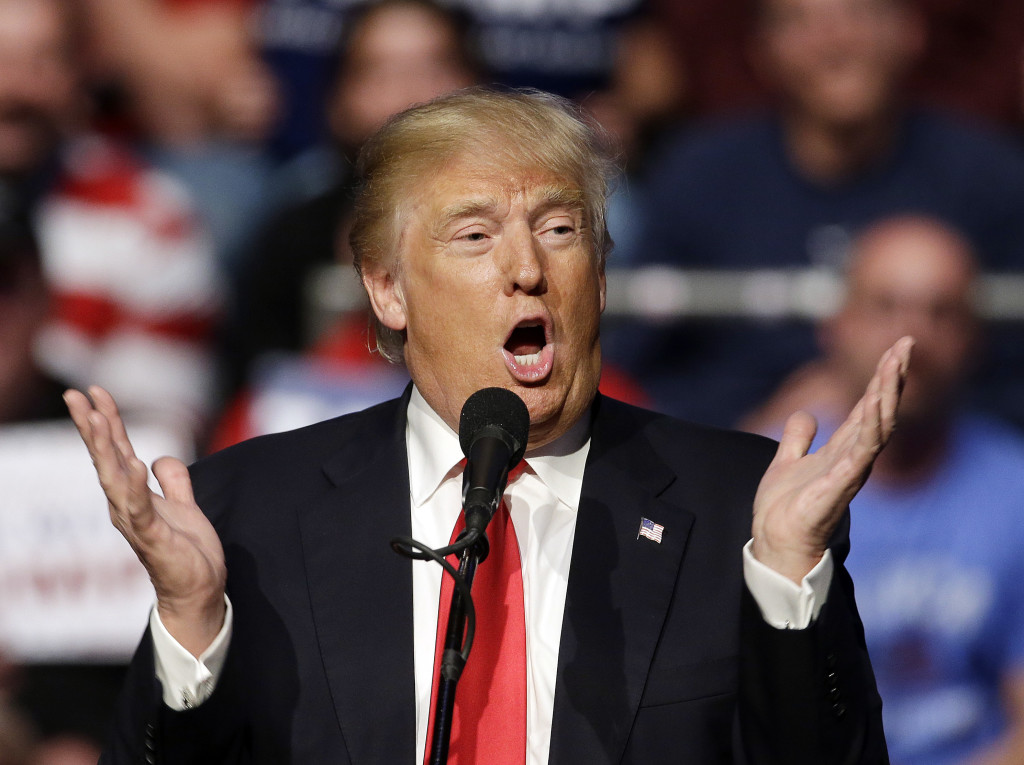
Facing a make-or-break moment for his slumping campaign, Texas Sen. Ted Cruz was blitzing through Indiana on Monday in a desperate bid to overtake Donald Trump in the state’s primary and keep his own White House hopes alive. A victory for Trump in Indiana on Tuesday would be a dispiriting blow for Cruz and other forces trying to stop the front-runner, leaving them with few opportunities to block his path. Trump is the only candidate in the race who can reach the 1,237 delegates needed for the GOP nomination through regular voting, though Cruz is trying to push the race toward a contested convention. “This whole long, wild ride of an election has all culminated with the entire country with its eyes fixed on the state of Indiana,” Cruz said Sunday at a late night rally. “The people of this great state, I believe the country is depending on you to pull us back from the brink.” Several hundred people came to see him Monday at Bravo Cafe in Osceola, where he predicted a close finish in the primary and said: “We need every single vote.” “You’re the perfect man for the job,” a man told him as diners consumed coffee and eggs. “God bless you,” Cruz said, gripping his hand. Cruz was holding five events across Indiana on Monday. Trump was holding a pair of rallies in the state, though he was already confidently looking past Cruz and setting his sights on Democratic front-runner Hillary Clinton. Trump made clear Monday that he would keep up his accusation that Clinton is playing gender politics: “We’re making a list of the many, many times where it’s all about her being a woman.” “I haven’t started on Hillary yet,” he told CNN, although actually he’s been trashing her record for quite some time. For her part, Clinton told thousands at an NAACP dinner in Detroit on Sunday that President Barack Obama‘s legacy can’t be allowed to “fall into Donald Trump’s hands” and be consumed by “these voices of hatred.” She cited Trump’s “insidious” part in the birther movement that questioned Obama’s citizenship. Clinton’s campaign announced Monday that she had raised $26 million in April. Vermont Sen. Bernie Sanders has vowed to stay in the Democratic race, though he acknowledged Sunday that he faces an “uphill climb.” His only path rests on a long-shot strategy of winning over superdelegates, the elected officials, lobbyists and other party insiders who are free to back either candidate. Trump can’t win enough delegates Tuesday to clinch the Republican nomination. But after his wins in five states last week, Trump no longer needs to win a majority of the remaining delegates in coming races to lock up the GOP nomination. The importance of Indiana for Cruz became evident even before he and fellow underdog John Kasich formed an alliance of sorts, with the Ohio governor agreeing to pull his advertising money from Indiana in exchange for Cruz doing the same in Oregon and New Mexico. But that strategy, which appeared to unravel even as it was announced, can’t help either man with the tens of thousands of Indiana voters who had already cast ballots: Early voting began in Indiana three weeks before they hatched their plan. It also risks alienating those who have yet to vote, said veteran Indiana Republican pollster Christine Matthews. She said she believes many have continued to vote for Kasich in Indianapolis and in the wealthy suburbs north of the city. “Indiana voters don’t like the idea of a political pact, or being told how to vote,” Matthews said. Trump went after Cruz on Sunday, suggesting evangelical conservatives have “fallen out of love with him” and mocked his decision to announce former GOP presidential candidate Carly Fiorina as his running mate. “They’re like hanging by their fingertips,” he said, mimicking Cruz and Kasich: “Don’t let me fall! Don’t let me fall!” Trump let on that he’s eager to move on to a likely general election race against Clinton. He said the end game of the primary battle with Cruz is “wasting time” that he could be spending raising money for Republicans running for the Senate. “It would be nice to have the Republican Party come together,” Trump told supporters in Fort Wayne. “With that being said, I think I’ll win anyway.” Republished with permission of the Associated Press.
Gov. Mike Pence passes up presidential bid, but future still cloudy
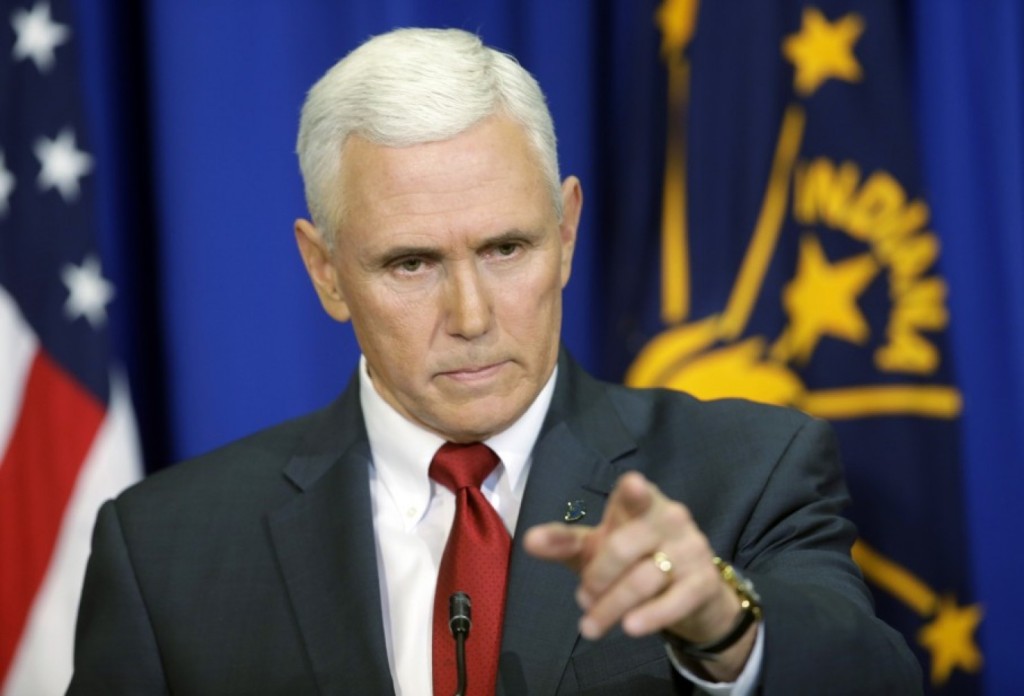
Indiana Gov. Mike Pence‘s decision not to fulfill the political buzz and chase White House dreams in 2016 doesn’t necessarily clear up questions about his future. Pence plans to formally announce his bid for a second gubernatorial term next month. But lingering unhappiness over the handling of a religious objections law this spring that critics viewed as anti-gay and businesses spoke out against in force could make him the first sitting governor to face a serious primary challenge since the state adopted the system in the 1970s. Two wealthy Republican businessmen are already talking about launching or supporting challenges to Pence. If they follow through, the race could expose the depth of GOP turmoil caused by this year’s debates over similar religious initiatives in states such as Indiana, Arkansas and Louisiana. Republican pollster Christine Matthews said the tumult left many people questioning Pence’s motivations. “I think he still has some work to do to mend things with the business community — not just the business community but a fair chunk of the Republican Party,” she said. Pence championed social issues during 12 years in Congress but largely sidestepped them early in his governorship. He had been seen by some in GOP circles as someone who could unite the party’s religious and business wings, and stoked talk of a national run with speeches to prominent party and conservative groups and trips overseas. Those prospects faded quickly when he signed the state’s Religious Freedom Restoration Act in late March, touching off national criticism and following on the heels of last year’s battle over a proposed state constitutional ban on gay marriage. Fears that the law would give business owners legal license to discriminate against gays based on religious beliefs prompted companies to ban travel to the state and some conventions to threaten cancellations — a politically dangerous fallout as Indianapolis has thousands of jobs tied to major sporting and business events. Already, Indiana has made the first $750,000 payment of what’s expected to be a $2 million image-rebuilding contract with a New York public relations firm. Business leaders torched Pence, saying the measure painted Indiana as an intolerant place. And after the law was revised, some in his conservative base accused him of caving in to pressure. By April, Pence’s approval ratings had steeply dropped. Pence enters the campaign with huge advantages in fundraising and name recognition over possible opponents — although Democrats and gay rights supporters are likely to push for adding sexual orientation to civil rights protections, adding to the political thorn in his side. “Pence won’t really be able to control that,” said Matthews, who did polling work for former Gov. Mitch Daniels’ campaigns and noted that Pence will have to rebuild his reputation among voters. “It’s going to become like the scab that doesn’t heal over.” Pence campaign spokesman Robert Vane said the governor is confident of his support among Republicans and pointed to his work with the GOP-dominated Legislature to advance many initiatives. “The governor was very clear that he regretted what happened and he regretted some of the noise around it,” Vane said of the religious objections law. “But they worked together, not only to craft a fix, but also to do dozens and dozens of other good things for Hoosiers on things like education, a balanced budget amendment, infrastructure.” Bob Thomas, who owns auto dealerships in Indianapolis and Fort Wayne, said he was weighing a challenge to Pence in the GOP primary because the governor has ignored important issues, such as methamphetamine abuse and an overhaul of the troubled state Bureau of Motor Vehicles. Many business leaders lost confidence in Pence over the religious objection law, he said. “That was because of Mike Pence,” Thomas said. “He talks about all this stuff. He energized the religious right to bring these issues to the Legislature. He told them he would sign it.” Thomas spent nearly $600,000 of his own money for an unsuccessful 2010 Republican primary challenge to then-U.S. Rep. Mark Souder in northeastern Indiana. A major player in business and political circles, Angie’s List CEO Bill Oesterle, announced last month he was stepping down as leader of the Indianapolis-based consumer review company to become more involved in state politics and help repair the damage from the religious objections law. Oesterle hasn’t said whether he’ll seek office himself or support other candidates, although he did run Daniels’ 2004 gubernatorial campaign and gave at least $150,000 to Pence’s 2012 campaign. Vane said it was still speculation whether any Republicans will actually challenge Pence. Two Democrats have already announced candidacies for their party’s 2016 nomination, including former Indiana House Speaker John Gregg, who narrowly lost to Pence in the 2012 gubernatorial election. Democratic state schools Superintendent Glenda Ritz, who has clashed repeatedly with Pence on education policy, could also enter the mix. Republished with permission of The Associated Press.
