
Bradley Byrne: Maintaining a Navy
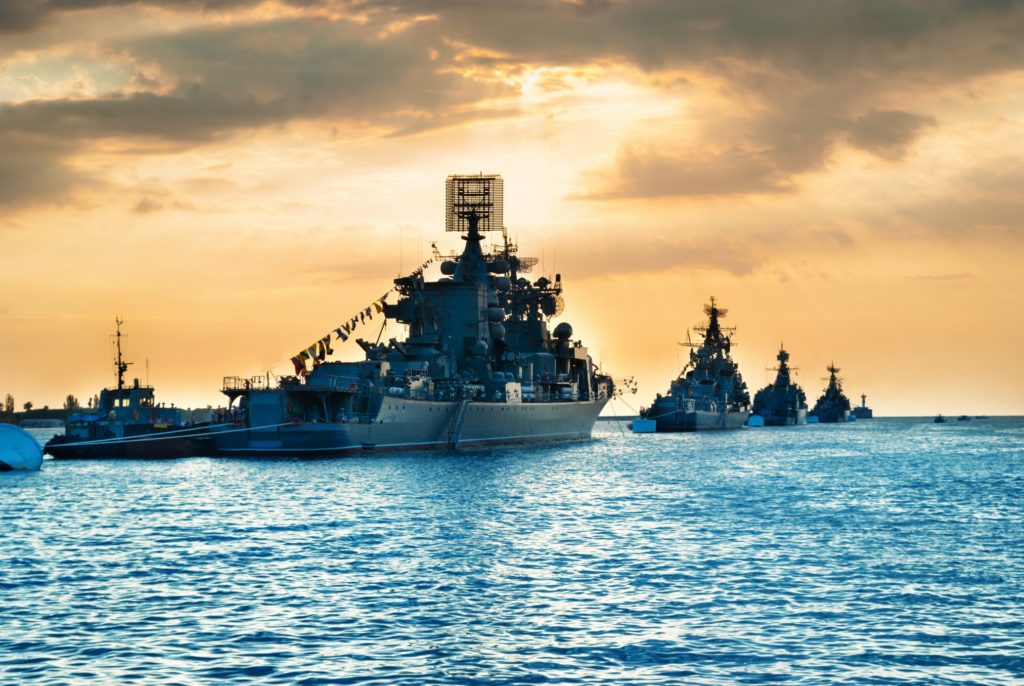
The shipbuilding industry has always been critically important to those of us living on and around the Gulf Coast. Our area has a proud tradition of building warships and supporting the military. For example, we build the Littoral Combat Ship and Expeditionary Fast Transport at Austal in Mobile. Important military vessels are also built at Ingalls Shipbuilding in Pascagoula and Eastern Shipbuilding in Panama City. Given the importance of shipbuilding to our area, it should not come as a surprise that I am a huge advocate of the United States Navy, Marines, and Coast Guard. But, my support is about much more than just supporting the local economy. I recently had the opportunity to speak with two important nationwide organizations: the Surface Navy Association and the Amphibious Warship Industrial Base Coalition. In my talks with these organizations, I spent much time outlining why it is in the best interest of the United States to build up our fleet. The Constitution gives Congress the express authority to “raise” an Army, but it says Congress is to “provide and maintain” a Navy. This is an important distinction that makes clear our Founding Fathers’ intention for our country to consistently have a fully capable Navy fleet. One of the top reasons for having a strong Navy relates directly to our economy. 90% of world trade goes by sea and at least four million jobs in the United States are connected to sea trade. Who helps keep these sea lanes open and free for commerce? The United States Navy. Over 80% of the world’s population lives within 60 miles of the sea. That is a pretty remarkable statistic that demonstrates just how important it is for the United States to have the ability to freely navigate the sea and respond to issues. For example, when a disaster like the tsunamis in Japan or the earthquake in Haiti occurs, the world needs the United States and our Navy to respond and provide assistance quickly. A lesser known issue relates to the world’s communication systems. 95% of all voice and data are transferred under the ocean by cable. It would not take much for our adversaries to disrupt these cables and bring a lot of our daily lives to an abrupt stop. In Congress, I am honored to serve on the Subcommittee on Seapower and Projection Forces. This position allows me to be involved in all discussions about the future of our nation’s fleet and the need to project strength around the globe. We currently have only 274 ships, and a recent Navy Force Structure Analysis found the need for 355 ships in order to meet the most critical demands. That is why I am so pleased President Trump has made clear his support for a 350 ship fleet. Now, I am proud to be a staunch proponent for less federal spending, but I believe we can make the investments needed to build up our military while also making cuts in other, less critical areas. In other words, we can be fiscally responsible at the same time we are building up our Navy. In fact, President Thomas Jefferson was one of our country’s greatest advocates for a smaller government and less spending, but even he understood the importance of maintaining a strong Navy. During his presidency, he grew the Navy to protect the flow of commerce around the globe. So, I think we can, and we must, make real progress in building up our Navy. The safety and security of the American people and the success of the economy depends on nothing less. • • • Bradley Byrne is a member of U.S. Congress representing Alabama’s 1st Congressional District.
Bradley Byrne: Committee assignments highlight top priorities
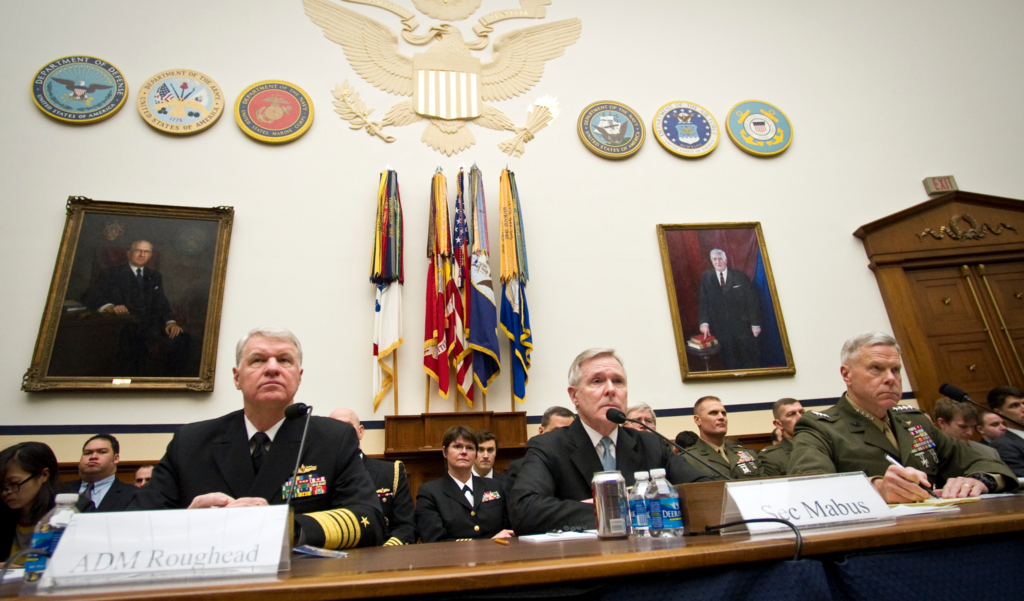
When I am not casting a vote on the floor of the House of Representatives or visiting with groups in my office, a large percentage of my time in Washington is spent serving on committees. There are currently twenty standing committees in the House, and each member of Congress serves on at least one committee. These committees are where much of the legislative work is actually done. Committees hold hearings that focus on issues under their jurisdiction. These could be oversight hearings with agency heads and cabinet officials or hearings with stakeholders or people impacted by the legislation being discussed. Committees are also where most legislation is written, revised, and vetted. After a bill is introduced in the House, it is sent to the appropriate committee. From there, the committee chairman can decide whether or not to hold a hearing on the bill or if the bill should be brought up for a vote. I am honored to serve on three committees: Armed Services, Education and the Workforce, and Rules. I want to briefly take a look at each of these assignments and outline our top priorities. The Armed Services Committee has jurisdiction over the entire U.S. military. We focus on everything from procurement of new military equipment to the health care benefits of service members to overall defense strategy. A top priority of mine on the Armed Services Committee is seapower issues, including building up our nation’s naval fleet. I believe a strong Navy is critical in terms of keeping the sea lanes open for commerce and ensuring the American people remain safe and secure. I also use my position on the Armed Services Committee to support the important military shipbuilding projects based on the Gulf Coast. This includes the impressive work at the Austal shipyard in Mobile, but also the work done at neighboring Ingalls Shipbuilding in Pascagoula. As a member of the Education and the Workforce Committee, I get to work on policies relating to K-12 education, higher education, workforce training, labor, employment, and pensions. We focus on ensuring every American has the education they need to be successful in the workforce, but also on policies that support our nation’s current workers. I am especially excited that Chairwoman Virginia Foxx selected me to serve as Chairman of the Subcommittee on Workforce Protections. Our subcommittee deals with issues ranging from wages and hours of workers to mine safety to the Family and Medical Leave Act. I really look forward to using this Chairmanship to advance policies that make life easier for our nation’s workers. Finally, I serve on the House Rules Committee. The Rules Committee is different than every other committee in the House, and it is actually one of the oldest and most powerful committees. It is the job of the Rules Committee to prepare bills for debate on the House floor. Our committee sets the terms of debate before a bill can come up for a vote. For example, we may have to decide which amendments should be allowed for debate and how long the debate should last. The Rules Committee is an especially busy committee, but it gives me a unique opportunity to have an input on almost every bill that comes up for a vote in the House. All told, I believe these committee assignments put me in a strong position to advocate for policies and legislation that are important to families, workers, students, teachers, service members, and small businesses in Southwest Alabama. • • • Bradley Byrne is a member of U.S. Congress representing Alabama’s 1st Congressional District.
Ingalls Shipbuilding in Pascagoula secures U.S. Navy contract, could total $3.1B
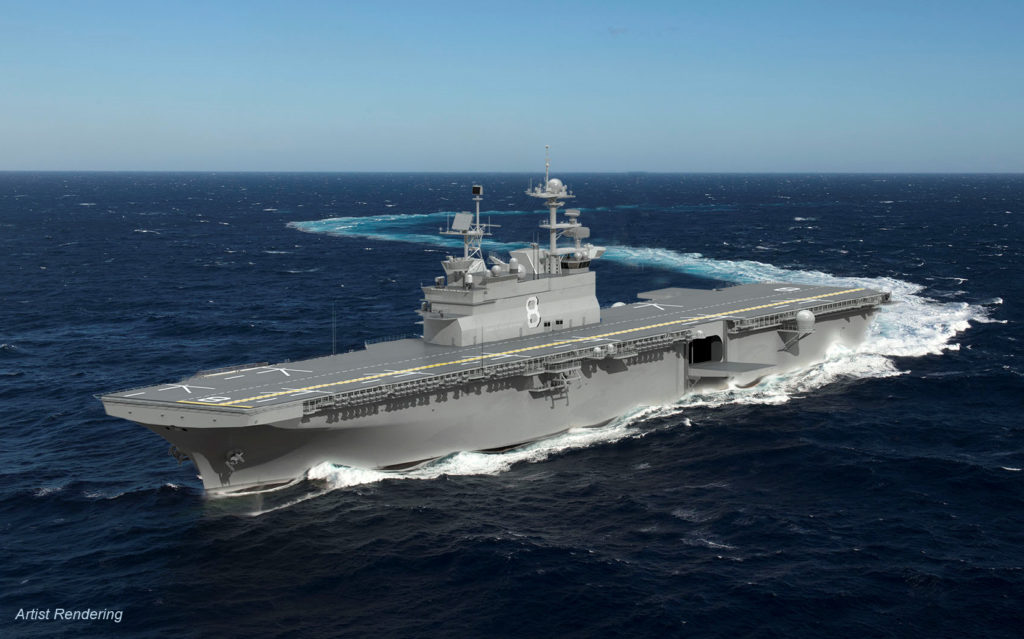
Just minutes outside of the Alabama border in Pascagoula, MS, Ingalls Shipbuilding has secured a contract to build U.S. Navy the next large-deck amphibious assault warship, LHA 8. “This award adds to the successful amphibious shipbuilding legacy at Ingalls since the 1950s,” said Ingalls Shipbuilding President Brian Cuccias in a news release. “Our shipbuilders have proved this success by delivering 14 vital and capable large-deck warships to our nation’s amphibious fleet. This contract shows the Navy’s confidence in our ability to build these ships to the highest-quality standards and to do so affordably for the American taxpayers. We look forward to delivering another great ship.” Current day contract value, for the planning, advanced engineering and procurement of long-lead material, is just over $272 million. The award includes options that, if exercised, would bring the cumulative value of the contract to $3.1 billion. Ingalls is currently the sole builder of large-deck amphibious ships for the Navy. The shipyard delivered its first amphibious assault ship in 1966. “We appreciate the partnerships we continue to have with the Navy/Marine Corps team,” Cuccias continued. “We are also proud of the support we get from a large, nationwide industrial base of suppliers, who remain an essential ingredient to the construction of these capable and survivable amphibious warships.”
