
Terri Sewell promotes ACA health care open enrollment period

Alabamians who wish buy insurance on the individual market could start signing-up for plans Wednesday and Alabama’s 7th District U.S. Rep. Terri Sewell wants to be sure her constituents, and fellow Alabamians, know. The open enrollment period for EnrollALA, the state’s Affordable Care Act marketplace, runs now through December 15. “The open enrollment period is a great opportunity for my constituents to shop for new coverage with the help of premium assistance,” said Sewell. “Enroll Alabama and the free support provided by Alabama’s local health care navigators makes it easy for families to find insurance that fits their needs. Whether you already have coverage through the individual marketplace or you are looking to get covered next year, I encourage everyone to check out their health care options during the open enrollment period.” Sewell continued, “As hospitals in my district face financial challenges and families struggle to afford doctor’s visits, I am deeply disappointed by the Trump Administration’s decision to cut advertising for the open enrollment period. Too many Americans do not know how to navigate the insurance enrollment process and I believe we have a responsibility to raise public awareness about how to sign up for affordable health insurance.” “We must do everything in our power to increase coverage, reduce costs, and stabilize the insurance marketplace for all Americans.” Individuals who need assistance in signing-up may contact (844) 248-7698. A list of Alabama’s local navigators, who can provide free guidance on signing up for health care through the individual marketplace, is also available here. See Sewell’s video remarks on the beginning of open enrollment below:
White House: Government to make health law payments this month
The government will make this month’s payments to insurers under the Obama-era health care law that President Donald Trump still wants to repeal and replace, a White House official said Wednesday. Trump has repeatedly threatened to end the payments, which help reduce health insurance copays and deductibles for people with modest incomes, but remain under a legal cloud. A White House spokesman said “the August payment will be made,” insisting on anonymity to discuss the decision ahead of the official announcement. The so-called “cost-sharing” subsidies total about $7 billion this year and are considered vital to guarantee stability for consumers who buy their own individual health insurance policies. Insurers say they want to the administration to do more, and guarantee the payments at least through next year. But on Capitol Hill, a senior Republican applauded Trump’s move. “State insurance commissioners have warned that abrupt cancellation of cost-sharing subsidies would cause premiums, copays and deductibles to increase and more insurance companies to leave the markets,” said Sen. Lamar Alexander, R-Tenn., chairman of the Health, Education, Labor and Pensions Committee. “Congress now should pass balanced, bipartisan, limited legislation in September that will fund cost-sharing payments for 2018.” The Congressional Budget Office reported this week that premiums for a popular type of individual health care plan under the Affordable Care Act would rise sharply, and that more people would be left without options for coverage, if Trump kept his threat to stop the payments. Moreover, ending the payments would only increase federal deficits since it would trigger a rise in separate health law subsidies for premiums, wiping out any potential savings. The subsidies are snared in a legal dispute over whether the Obama health care law properly approved the payments to insurers. Adding to the confusion, other parts of the law clearly direct the government to reimburse the carriers. The disagreement is over whether the law properly provided a congressional “appropriation,” similar to an instruction for the Treasury to pay the money. The Constitution says the government shall not spend money unless Congress appropriates it. House Republicans trying to thwart the health law sued the Obama administration in federal court in Washington, arguing that it lacked specific language appropriating the cost-sharing subsidies. A district court judge agreed with House Republicans, and the case has been on hold before the U.S. appeals court in Washington. For months, Trump has been raising the prospect of terminating payments as a way to trigger a crisis and get Democrats to negotiate on a health care bill. After the GOP drive to repeal “Obamacare” collapsed, the president tweeted: “As I said from the beginning, let ObamaCare implode, then deal. Watch!” Trump elaborated in another tweet, “If a new HealthCare Bill is not approved quickly, BAILOUTS for Insurance Companies…will end very soon!” But with polls showing the public would blame Trump for “Obamacare” problems on his watch, congressional Republicans are not keen on going that route. It’s estimated that nearly 18 million people purchase individual health insurance policies. About half of them pay the full cost themselves and would risk the biggest disruptions from a spike in premiums. Republished with permission of The Associated Press.
What if there’s no affordable health insurance to buy?

Leslie Kurtz needed three plates, eight screws and a big assist from her insurer after breaking every bone in her ankle while white water rafting. Coverage she purchased through a public insurance exchange established by the federal health care law paid $65,000 toward surgery and the care she needed after the 2015 accident. But that protection may not exist next year because insurers have abandoned the Knoxville, Tennessee resident’s exchange. As of now, Kurtz has no future coverage options, and she is worried. “I can’t afford to have everything I’ve worked for taken away because I fell down the steps,” Kurtz said. Her county is one of 16 in Tennessee that lack even a single insurance company committed to offering coverage for 2018 on the exchange, after Humana announced last month plans to exit. Exchanges set up by the Affordable Care Act were designed to give customers a chance to shop for coverage and then buy a plan, most with help from tax credits. The idea was that such a marketplace would push insurers to offer affordable plans to compete for customers. But insurers in many markets have been pulling back from the exchanges after losing money. According to an analysis by the Associated Press and the health care firm Avalere Health, more than 1,000 counties, where about 2.8 million people are insured through the exchanges, are down to their last insurance carrier, according to the most recent data. With less competition, that could mean sharply higher rates. And with more insurers still considering leaving other markets, customers around the country could be stuck like Kurtz with no affordable coverage options in 2018. Insurers still have a few more weeks to decide to stay in their exchanges, and other insurers may jump into new markets, though that can be expensive and risky for them. The government recently announced several short-term fixes for the exchanges, and insurers have welcomed the moves. But they want to see the final version of the improvements before deciding on 2018. “No insurer wants the negative public backlash from dropping insurance for lots of people, but the companies need to feel like the market is stable and that there’s a chance of making money,” said Larry Levitt, a health insurance expert with the nonprofit Kaiser Family Foundation. Chief among undecided companies is the Blue Cross-Blue Shield carrier Anthem Inc. It is the lone insurer on exchanges in 300 counties in seven states, according to data compiled by the AP and Avalere. Anthem CEO Joseph Swedish would not commit to participating on exchanges next year and said in a statement last month that the market is sliding toward “significant deterioration and requires changes to ensure future stability and affordability.” Anthem and the many other companies that sell coverage under the Blue Cross-Blue Shield brand will be crucial to the fate of the exchanges because they often specialize in insurance for individuals, and many have a long-standing presence in their markets. They also are the only remaining option on exchanges in nearly a third of the nation’s 3,100 counties. For instance, Blue Cross and Blue Shield of North Carolina is the lone exchange option in 95 counties, covering more than 500,000 people, according to the analysis by AP and Avalere. The North Carolina insurer, which is not owned by Anthem, declined to comment on its 2018 plans. Insurers typically are still sorting out coverage plans at this time of year, so it’s not unusual for them to be undecided about 2018. But never before have insurers bluntly stated that they can’t commit until they see what the government does to improve the exchanges. The Kaiser Family Foundation’s Levitt says insurers are worried about losses, but they also may be using the leverage their indecision gives them. “Insurers kind of want the threat that they may pull out to be taken seriously now, so that they get some of the changes they are looking for,” he said. Customers can buy coverage outside the exchanges, if insurers are selling individual plans in their market. But then they won’t be able to use tax credits to help pay the bills, which may be particularly painful since many markets have seen prices soar. Customers won’t know for certain who is selling on their exchanges until next fall. While insurers have to apply to sell coverage on their exchanges generally by late spring or early summer, they can drop out later if claims turn out worse than expected, noted Dave Dillon, a fellow of the Society of Actuaries. Last fall, Blue Cross and Blue Shield Nebraska announced a little more than a month before open enrollment started that it was shuttering its exchange business due to a loss of $140 million. Insurance experts have said bigger metropolitan areas usually have more choice on their exchanges. But smaller cities or rural areas could be hurt most if more insurers pull back. Customers who already lost exchange options for 2018 are concerned. Knoxville resident Melissa Nance bought her Humana plan on the exchange without a subsidy, but she’s worried that she won’t find an affordable replacement after that insurer leaves. The 45-year-old is fighting an aggressive form of leukemia. She needs insurance to cover blood tests and CT scans to detect whether the cancer has returned. “I’m a sick person now,” she said. “I am constantly having to go to the doctor.” Fellow Knoxville resident Leslie Kurtz is thinking about moving. The self-employed television producer needs subsidies to afford coverage for her family of four. Kurtz says she would have gone bankrupt if she had no insurance when she broke her ankle. “I don’t have $65,000, I would have had to sell the house,” she said. “We need access to health care because (stuff) happens.” Republished with permission of The Associated Press.
Rise in premiums lays bare 2 Americas on health care

Michael Schwarz is a self-employed business owner who buys his own health insurance. Subsidized coverage through “Obamacare” offers protection from life’s unpredictable changes and freedom to pursue his vocation, he says. Brett Dorsch is also self-employed and buys his own health insurance. But he gets no financial break from the Affordable Care Act. “To me, it’s just been a big lie,” Dorsch says, forcing him to pay more for less coverage. Schwarz and Dorsch represent two Americas, pulling farther apart over former President Barack Obama‘s health care law. Known as the ACA, the law rewrote the rules for people buying their own health insurance, creating winners and losers. Those with financial subsidies now fear being harmed by President Donald Trump and Republicans intent on repealing and replacing the ACA. But other consumers who also buy their own insurance and don’t qualify for financial help feel short-changed by Obama’s law. They’re hoping repeal will mean relief from rising premiums. The ACA sought to create one big new market for individual health insurance in each state. It required insurers to accept all customers, regardless of medical problems. And it provided subsidies to help low- and moderate-income people afford premiums. These newly vested ACA customers joined consumers already in the market, to make a new insurance pool. Policies offered to all had to be upgraded to meet new federal standards for comprehensive benefits, raising premiums. And many of the new customers turned out to be sicker than insurers expected, pushing rates even higher. Consumers who didn’t qualify for government financial help wound up bearing the full cost of premiums. They also faced the law’s new requirement to carry health insurance or risk fines. “One (group) is angry and one is incredibly grateful,” said Robert Blendon of the Harvard T.H. Chan School of Public Health. If Trump and congressional Republicans aren’t careful, their actions could stoke fresh grievances without solving longstanding problems of access and cost. Consider what happened to Schwarz and Dorsch this year, as premiums for a standard plan through HealthCare.gov jumped an average of 25 percent. Schwarz and his wife are in their mid-20s and live in Tampa, Florida. He has his own commercial photography business and she’s pursuing a graduate degree in speech-language pathology. The sticker price of their HealthCare.gov policy went up about 20 percent, but what they pay monthly is about $115 lower than last year. Not only did their subsidy cover the rise in premium, they’re also getting more help because their income went down when Schwarz’s wife returned to school full time. “Being uninsured is not an option,” said Schwarz. If Republicans take away his subsidy, “I would have to change careers and find a job that offered health insurance,” he said. Dorsch and his wife live in Wilmington, Delaware, and are in their mid-50s. He has a wholesale business supplying electronics to retail stores and has been buying his own health insurance for years. He gets no financial help from the ACA. Dorsch said their insurance company wanted to raise the monthly premium to $2,050, or nearly $25,000 a year. They settled for a skimpier plan that still costs $1,350 a month and has a very high deductible. “In four years my health insurance has more than doubled and I have less coverage,” said Dorsch. “It’s ludicrous.” He voted for Trump. “He saw the reality that Obamacare has been a nightmare for most Americans, unless you are poor or in a very difficult situation,” said Dorsch. The Congressional Budget Office estimates that the pool of people buying individual health insurance is basically split down the middle among subsidized customers like Schwarz and those who get no help, like Dorsch. Republican proposals to tie tax credits to age, not income, would help Dorsch. But they may not be generous enough for Schwarz. “It’s trying to find the way to help the one without hurting the other that’s really tricky,” said Nicholas Moriello, a health insurance broker from Newark, Delaware. “If we had a way to help the person whose premium has become unaffordable without hurting the person we are currently subsidizing.” Caroline Pearson, of the consulting firm Avalere Health, studied consumers on government marketplaces like HealthCare.gov — where nearly 90 percent get subsidies — and compared them with those who purchase directly from an insurer and pay full cost. Among Avalere’s findings: — The majority of consumers in the government marketplaces live in lower-income neighborhoods with high unemployment. However, among those who purchase directly from an insurer, about 30 percent live neighborhoods with a median income of $100,000 or more. — Consumers in the subsidized market are generally costlier to cover. For those with a standard plan, per-person medical claims averaged $376 per month in 2015, compared to $312 for unsubsidized customers who bought policies directly from an insurer. — The subsidized market is important in states that voted for Trump. In Florida, for example, 70 percent of individual policyholders purchase through HealthCare.gov. In Georgia, it’s 62 percent. “Obamacare helped a lot of lower-income people with high health needs who previously couldn’t afford insurance,” said Pearson. “It overlooked the fact that there are a lot of people who are relatively healthy and who didn’t want the increased benefits. More sick people drove up premiums, which is resulting in some people feeling like they are worse off.” Republished with permission of The Associated Press.
Alabama is home to some of America’s worst drivers, study says

Cut off on your way to the office this morning? Saw someone get pulled for speeding over the weekend? As you shake your head and fists at other Alabama drivers in disapproval, know you’re not alone. A new study has revealed Alabama is home to some of America’s worst drivers. Recently, New York City financial technology company SmartAsset identified the states with the worst drivers, and Alabama took the sixth spot. Turns out, relatively few people are insured in Alabama. The state ranks seventh-worst in that category with just 80.40 percent insured. And, Alabama had the 12th-highest number of deaths per thousand drivers. There was one bright spot for Alabama, however — the state has the fourth-best score with only 1.42 DUI arrests per thousand drivers. That statistic does not tell the whole story, though, as 33 percent of deaths in Alabama resulted from a driver being over the legal alcohol limit. Here’s how Alabama ranks by the numbers: Percentage of driver’s insured: 80.4 percent DUI arrests per 1,000 drivers: 1.43 Vehicular related deaths per 1,000 drivers: 0.2 Google Trend “driving tickets:” 67.88 Index: 55.57 Check out the country’s top 10 states with the worst drivers below: In order to find out which state had the worst drivers, SmartAsset collected data across four metrics, then indexed each factor for every state giving equal weighting, and then finding the average score per state to create the final index. Percentage insured: data is taken from the Insurance Research Council. DUI per thousand drivers: number of drivers is taken from the Federal Highway Administration. Number of DUIs is taken from the State Justice Department. Deaths per thousand drivers: data is taken from the Fatality Analysis Reporting System, which is part of the National Highway Traffic Safety Administration. Google trends on driving tickets: the average of the scores each state received in Google Trends for the eight phrases: speeding ticket, “speeding ticket,” speeding tickets, “speeding tickets,” traffic ticket, “traffic ticket,” traffic tickets and “traffic tickets.”
Insurers laud passage of state ridesharing insurance bill
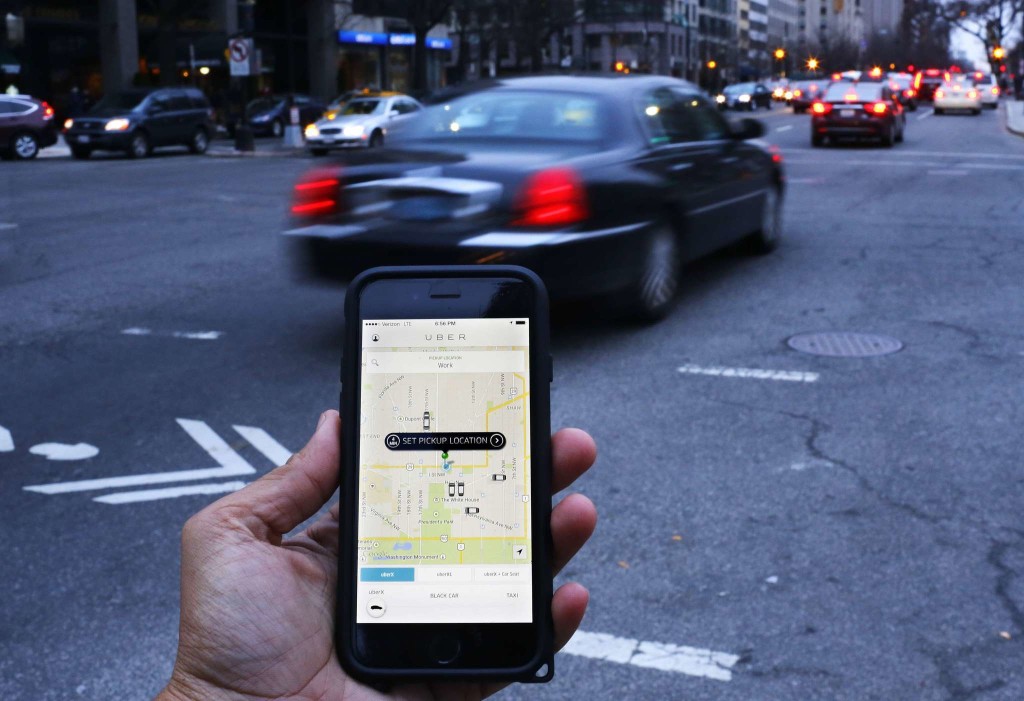
One of the nation’s largest insurance interests took a moment Thursday to applaud Montgomery lawmakers for their work on so-called “ridesharing.” The state Legislature passed a bill this week that Property Casualty Insurers Association of America state government manager says will “close the insurance gap” for customers when they use popular ride-hailing apps like Uber and Lyft. The legislation, SB 262 sponsored by Sen. Shay Shelnutt and Rep. David Faulkner, would require such services — called Transportation Network Companies or TNCs under state law — to insure their drivers when they are engaged in ridesharing, whether they have a passenger at the time or not. “Over the past several months, transportation network companies (TNCs) such as Uber have experienced tremendous growth in Alabama as they operate in several cities across the state including Birmingham, Mobile and Montgomery,” said PCCI’s Logan McFaddin. “However, SB 262 was needed to strike the right balance in protecting the public, closing the insurance coverage gaps and allowing for an increase in entrepreneurial activity. This bill ensures that the TNC driver who picks you up and drives you across town is properly insured, so that you and the public are not at risk if an accident were to occur.” “PCI commends Senator Shelnutt and Representative Faulkner for their great work and attention to this issue. SB 262 requires rideshare drivers to have the necessary insurance coverage from the time they log in to the app to the time they log out, which is a critical component to effectively protecting consumers and drivers,” concluded McFaddin. The bill provides insurance on each TNC driver’s call for up to $1 million for death, bodily injury, and property damage. Should Gov. Robert Bentley sign the bill which now awaits his signature, the bill will go into effect on the first day of the third month following its approval.
